Home Blog Page 2070

1 year of Udaipur Murder: Hindus living in fear, shops shut after 6 pm, business down by 50% in market where Kanhaiya Lal was murdered

June 28 this year will mark one year of the spine-chilling murder that was reported from the Udiapur district of Rajasthan. Kanhaiya Lal, a Hindu tailor was beheaded in Udaipur on June 28, 2022, by two Islamists named Mohammad Riyaz and Ghouse Mohammad for supporting former BJP spokesperson Nupur Sharma on social media. Nupur Sharma’s remarks on Prophet Muhammad stirred the country with violent protests by Islamists.

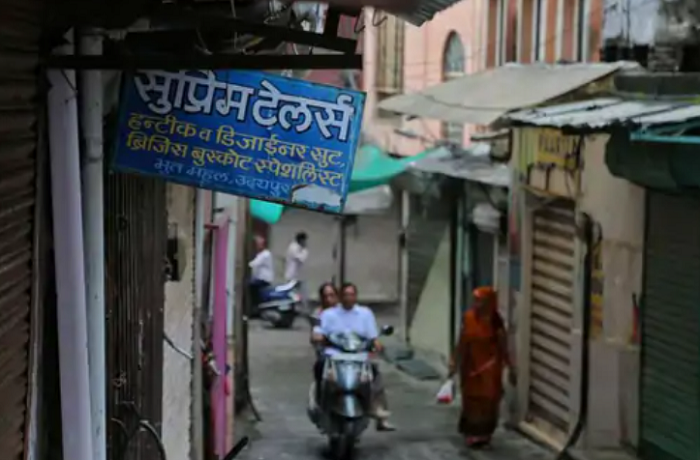
Kanhaiya Lal, who had a tailoring shop in the city’s Maldas Street, was attacked by the culprits who posed as customers. The duo fled away from the spot on their bike after they brutally murdered Lal last year in June. A year after the incident, team Dainik Bhasker reached the spot to witness that the shopkeepers at the Maldas street continue to live in fear and some of the businessmen have even left the locality out of fear.

According to the report, there are around 300 shops in the busy Maldas market street area, and Kanhaiya Lal’s tailoring shop named ‘Supreme Tailors’ existed in one of the lanes. Maldas Street is widely known and famous as the textile market and people from nearby areas including Chittorgarh, Dungarpur, Rajsamand, Banswara, Bhilwara, and Pratapgarh used to approach the markets for textile trade. But a year after, Maldas Street has become mute and the existing shopkeepers continue to operate their businesses in fear.

Further, the lane in which the deceased Kanhaiya Lal had his shop has 15-20 other shops out of which only two are currently operating. The local shopkeepers also refused to talk to the media fearing that they would be targeted by the Islamists for speaking on the issue.

However, one of the businessmen said on the condition of anonymity that people staying or doing business in the area are scared by the incident. “Some of them have left the locality while the others continue to stay in fear. People now 24 by 7 lock their residences from outside and nobody is interested to do business here,” he said.
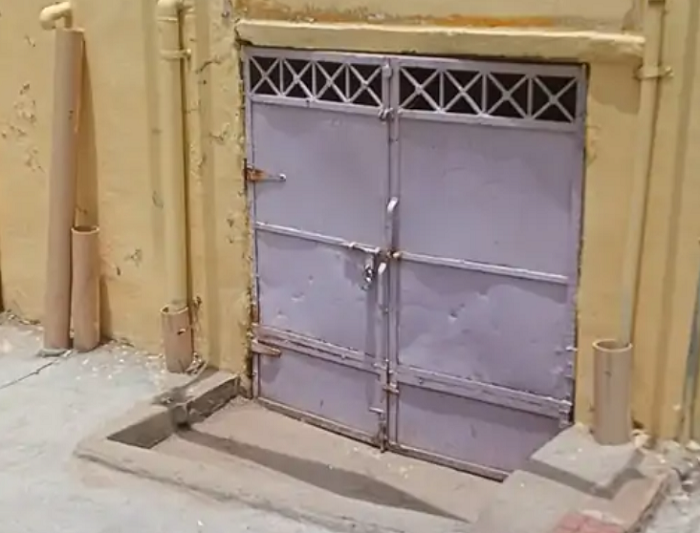
People locking their residences 24 by 7 (Image- Dainik Bhasker)

“I also have a tailoring shop in the area. Earlier I used to operate the business till 9 pm, but now we all on Maldas Street close our shops by evening 6. Our respective families start calling us if someday we get late. Now I also am studying law and will practice it in the future since I see no future in the tailoring business given the shop location at Maldas Street,” the businessman added.

The other businessman also confirmed that many people had shifted their businesses from Maldas street as the customers stopped coming to the area for shopping or trade. “It’s been a year since that incident. People are scared but now there’s no point in thinking about that. Businesses should go on,” said he who continues to operate the business for the maximum time on the street.

Business at Maldas street reduced by 40% to 50%

The team further happened to interview Dinesh Dalal, a tailor shop owner who has a business 150 mt away from Kanhaiya Lal’s shop. Dalal who has been owning a shop in the area for around 27 years said, “The market has completely changed. Customers also are scared to come to the market since the murder. Many of the shops today have shut down. Some people left work due to the recession. Only one or two tailor shops are open,” he said.

“Earlier, people used to come here from Dungarpur, Sagwada, Banswada, etc but now nobody comes here out of fear. The market growth has diminished from 40% to 50%. The Islamists by committing the murder have ruined the image of the entire locality and have spread the environment of fear here. The market used to be full of people earlier, not it’s just mute,” he added.

Islamists pretended to be customers and slit Kanhaiya Lal’s throat

On June 28 last year, Kanhaiya Lal was brutally murdered by Mohammed Riyaz and Mohammed Ghous who posed themselves as customers to enter the tailoring shop. Kanhaiya Lal was killed for extending support to ex-BJP spokesperson Nupur Sharma after her alleged ‘blasphemous’ remarks. Before the murder, Kanhaiya Lal was arrested by police for supporting Nupur Sharma and was released on bail.

The Islamists, who had entered the shop pretending to be customers, slit Kanhaiya Lal’s throat and stabbed him around 26 times on his body, especially on the neck. They also recorded the murder on a video and released it on social media platforms. After the incident, the killers released a video claiming responsibility for the act. The duo had also later threatened PM Modi with murder.

Earlier, the business in the area where the incident occurred on June 28 was reduced by 90 percent. There are a total of 15 shops on Maladas Street in Udaipur which generated good business until June 28 last year. After the murder of the Hindu tailor, almost 13 of the total 15 shops preferred to remain shut and they continue to remain shut. People including the customers and the shopkeepers are scared to even enter the street for business.

The curfew-like situation continues to scare the citizens of Udaipur even after one year of the brutal murder.
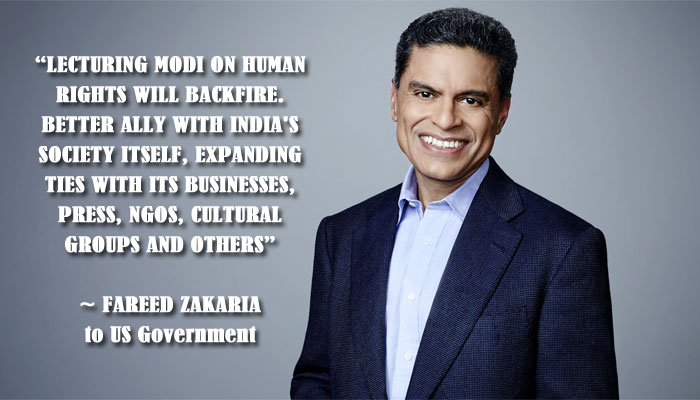
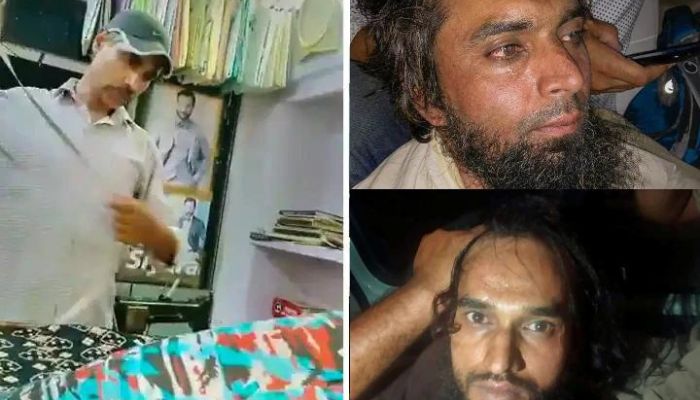
US journalist Fareed Zakaria, whose father was a Congress minister, rants against Modi and India, cites debunked reports to lecture on ‘democracy’

On June 25 (local time), CNN released an episode of India-born US journalist Fareed Zakaria titled ‘The Decay of Democracy in India‘. In the almost 6:30 minutes video, Zakaria talked extensively about Prime Minister Narendra Modi’s official State Visit to the US and urged the US government to interfere in India’s internal affairs directly. Quoting Barkha Dutt initially, Zakaria claimed India would never become America’s ally no matter how warmly the US embraces it; thus, the US “should not succumb to irrational exuberance about the two countries’ relations”.

According to him, the reason was India’s focus on its own national interest insinuating that the ideal ally of the US should prioritize US interests above its own interests. Zakaria gave the example of India’s refusal to condemn Russia’s military action against Ukraine and presented it as if it was wrong of India to think about its own people and not accepting the West’s commands.

Siding with the West is unnecessary for India, and the government has made it clear multiple times.

Minister of External Affairs Dr S Jaishankar has said in reply to media queries and during interviews that India has to look for the interest of its 130 crore population. Stating siding with the West is not necessary for India, Dr. Jaishankar then pointed out that before pressuring India not to buy Russia’s cheap crude oil, Western countries should look at their own purchases from Russia that were much higher.

He advocated for (the US govt) to ally with India’s businesses, press, NGOs, and cultural groups, indirectly hinting that the US government should invest in regime change tactics instead of seeking healthy bilateral relations with India.

Irrational claims on India’s foreign policy

Zakaria then claimed that India has given “little emphasis on foreign policy” and devoted its energies to managing the complexity of its own society that is based on “thousands of castes and communities, dozens of major languages and huge regional diversity”. While India is concentrating on its people first, it is astonishing to see a journalist with “international expertise” miss how India has worked extensively on its foreign policy.

For the first time in 75 years, the world is looking at India as a leader. India has shown its power as a possible supply chain hub, foreign investment hub, and world leader. When the West neglected the developing nations during a pandemic, it was India that came forward to help them with vaccines and more. Because of India’s reformed foreign policy, even Western countries are looking at India’s leadership to solve international issues like the Russia-Ukraine war.

Zakaria then gave a lecture to India on developing foreign policy based on Western ideas of “democracy” even if “it won’t be feasible in every case to apply them”. Basically, Zakaria wants India to follow the rules set by the Western countries without mincing a word, even if it goes against the interest of its people. An emerging world power like India that believes in ‘Sabka Saath, Sabka Vikas, Sabka Vishwas’, how feasible or right will it be not to think about its own interests just to satisfy a handful of Western countries? It is not, and it will never be.

India needs to stick to its stand strongly without bending the rules to please anyone. If we had done this in the past few years, we might have ended up buying all the vaccines from the West and paying almost double the price of the oil that we are now paying.

Zakaria quoted dubious reports against India

Zakaria then quoted “think tanks” like V Dem, claiming, “India no longer ranks as a democracy at all”. He claimed that the Indian Government under Prime Minister Narendra Modi is not treating the minorities properly. He said the press, the judiciary and other independent agencies of the democratic system are saying so, and “many of these critiques are accurate”. Running the same propaganda repeatedly does not work, and the likes of Zakaria have to understand it.

Since PM Modi came to power, there has been a standard propaganda being run by the opposition parties, NGOs, and so-called civil society that minorities, especially Muslims, are not safe in India. Think tanks and organizations like V Dam, Reporters Without Borders, and Genocide Watch have made irrational claims. Based on their claims, other anti-India organizations have spread misleading reports and half-baked information in media and social media.

For example, OpIndia recently rubbished the ‘Reporters Without Borders’ press freedom Ranking of India, which stood at 161 out of 180 countries. We found that the ranking was based on old misleading reports, dubious data on ad spending by the Indian government and more. Our detailed report can be checked here.

Furthermore, OpIndia has debunked claims of V Dem, a George Soros-funded think tank, that can be checked here. Organizations like Genocide Watch have used disinformation on CAA and NRC to claim India is against Muslim citizens, which is false and planned propaganda against India. CAA was never meant for Indian Muslims, and the government of India has not even released a draft of the national NRC.

Zakaria then moved ahead and admitted that the “elite liberals” in India are disconnected from the roots. Quoting former US ambassador to India, John Kenneth Goldbreath, he said the first Prime Minister of India, Jawaharlal Nehru, once told him that he was the “last Englishman” to rule India. He rightly said that the “founders” created the country based on the values drawn from the British and the West. This is what Prime Minister Narendra Modi aims to end.

Recently, the Government of India has started an initiative to break the shackles of slavery that India still has around it from the British rulers. Installing Subhash Chandra Bose’s statue and renaming Raj Marg to Kartavya Path is just the beginning. India is revisiting History and bringing unsung heroes to the mainstream. This is what is hurting people like Zakaria and the liberal “jamaat” of India.

Zakaria said, “I sometimes wonder whether all these countries are revealing that the values of an open society, pluralism, tolerance, secularism, were an import from the era of the West’s dominance in the world and that the erosion with these ideas is gradually revealing a more authentic, less tolerant nationalism.”

Zakaria urged US government to meddle in India’s internal affairs

He then urged the Biden administration not to “lecture” PM Modi on human rights as it would backfire. Of course, it will backfire. America and the West have no right to lecture anyone, especially India, on human rights. He said, “That would backfire not only with him but also with most Indians who would resent Western bullies.”

However, Zakaria believes it will be “Far better to ally with India’s society itself, expanding ties with its businesses, press, NGOs, cultural groups and others.” This is where the problem starts. The elites, liberals and even the opposition in India think that it is okay to ask foreign nations to meddle with India’s internal affairs. They find it okay to use businesses, the press, NGOs, cultural groups and more to spread their agenda in India.

Take the example of George Soros. He has pledged a billion dollars to remove PM Modi from power. He is funding NGOs, media, and cultural groups directly or indirectly in India. Individuals and organizations like him are why the Indian government is sensitive towards foreign funds coming into India via FCRA and other means. When the government tightens the rules or takes action on organizations and media houses for trying to influence Indians as part of international propaganda, they intensify the attack. Misinformation and disinformation are the biggest tools to establish anti-government sentiments, and this is what these individuals and organizations are doing.

Interestingly, opposition leaders like Rahul Gandhi are riding the same boat. During his US visit, Gandhi recently called for the direct intervention of foreign powers in India’s affairs. For what? Just to get back into power. The vested interests of the opposition leaders give way to a sinister plan against India which they are obviously ignoring to address.

India is progressing to become a 5 trillion economy. While the West is pacing towards inevitable recession, India has managed to keep it at bay. Free ration, housing, electricity, and LPG, along with better roads, infrastructure, free healthcare, tap water, toilets, and cheap medicines, are only a handful of offerings from the current government to the people of India.

Zakaria’s father was a Congressman

While Zakaria spoke the language of left liberals, it has to be noted that his father, Rafiq Zakaria, was a Congressman and an Islamic religious cleric. He had served as a cabinet minister in the Maharashtra government and later served as deputy to Indira Gandhi, then-leader of the Congress Party in the Lok Sabha.

Film to be made on Kanhaiya Lal- the Udaipur Hindu tailor who was beheaded by Islamists last year for supporting ex-BJP leader Nupur Sharma

On the dreadful day of June 28 last year, two Islamists identified as Riyaz and Ghous Mohammad brutally beheaded a poor Hindu tailor Kanhaiya Lal in Udaipur, Rajasthan. He was murdered for posting a social media message in support of former BJP spokesperson Nupur Sharma. The murderers had also made a video boasting about their heinous act, basking in false bravado over killing the hapless poor man inside his shop.

One year after the brutal murder, a production house named Jani Firefox Media Private Limited is all set to make a movie on the Udaipur Hindu Tailor. According to a report by ABP News, deceased Kanhaiya Lal’s elder son Yash has confirmed the development.

Speaking to the media house, Yash confirmed that Amit Jani, the director of the media house spoke to him over the phone and expressed his desire to make a film on his father. He spoke with Kanhaiya Lal’s other family members also who were initially reluctant but later gave their permission to make the film.

After this, the production house team decided to visit Udaipur on June 28, 2023, which is the first death anniversary of the Hindu tailor, to gather details about Kanhaiya Lal, his family, his brutal murder and all others who were involved in the heinous crime.

According to reports, besides showing the life and the heinous murder of Kanhaiya Lal, the movie will also show the story of two youths of Rajsamand, who had displayed exemplary courage and helped the police nab the accused- Riyaz and Ghous Mohammad.

The brutal murder of Kanhaiya Lal

Islamists Riyaz and Ghous Mohammad had come to Kanhaiya Lal’s tailor shop posing as customers. As the tailor was taking their measurements, they took out their heavy meat cleavers and brutally hacked him to death, while making a video of the incident. Kanhaiya Lal’s body had over 30 wounds. Kanhaiya Lal’s ‘fault’ was that a post supporting the statement of ex-BJP spokesperson Nupur Sharma was shared from his phone.

After brutally murdering Kahaiya Lal, Riyaz and Ghous had made a chilling video, brandishing their blood-stained weapons and gloating about the heinous act. They had asserted the Islamist slogan “Gustakh-e-Nabi ki ek hi saza, Sar tan se juda” and had boasted that they had killed the man for the sake of Islam.

The brutal act of murder was supported and even hailed by some of Ajmer Dargah’s custodians (Chishtis). Despite the brutality and wanton display of Islamic terrorism involved in the act, many media outlets had tried their best to tone it down, and had even shared reports of the news as ‘just another crime’.

‘We will fight in court, not on streets’: Wrestlers call off protest after IOA grants exemption from trials, Sakshi Malik and Vinesh Phogat announce break from social media

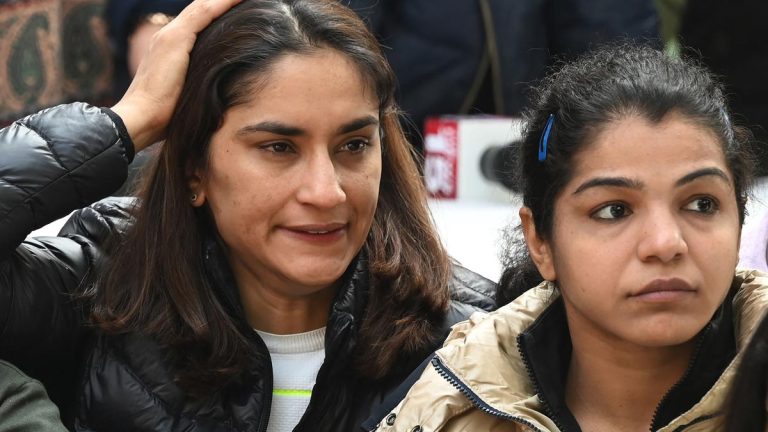
The protesting wrestlers have announced that since the cases against former WFI chief Brij Bhushan Sharan Singh are in court and a charge sheet has been submitted, they will keep their fight on, but in court, not in the streets.

In a statement circulated on social media, the protesting wrestlers have stated that the process for the elections for the next WFI president and the executive committee has already started and the polls are scheduled to be held on July 11, they will wait for the implementation of the assurances given by the government.

The wrestlers have stated that their fight will continue until they get justice, but the contest will be in court, legally, not on the streets.

Wrestlers Sakshi Malik and Vinesh Phogat have announced that they will be away from social media for some days.

With this, the wrestlers’ protest, going on and off for several months, seems to have come to an end.

On June 23, the Indian Olympics Association announced that the six wrestlers, Sakshee Malikh, her husband Satyawart Kadian, Vinesh Phogat, Sangeeta Phogat, her husband Bajrang Punia, and Jitendra Kinha will have to win just one bout against the winners of trials in their respective categories to secure their place in the Indian team. Considering that the said wrestlers have been busy with their protests and have been away from practice, the govt had even postponed their trials to August while others have to appear for trials in July.

Following the trial exemptions announced for the protesting wrestlers, many other wrestlers have called it unfair and spoken against it. Ugly fights and matches of allegations-counter allegations between the wrestlers were witnessed on social media.

“I’m not sure what criteria the IOA committee used to decide on the trials, and that too for these six wrestlers only. Ravi Dahiya is an Olympic silver medalist as well as a CWG gold medalist, Deepak Punia is a CWG gold medalist, Anshu Malik is a World silver medalist, Sonam Malik is also there and many others. I don’t understand why these six wrestlers have been granted an exemption. This is utterly wrong. Even in the old WFI setup, this was not done,” Dutt had said.

The wrestlers’ protest

The wrestlers have been protesting against former Wrestling Federation of India chief Brij Bhushan Sharan Singh, demanding his arrest. Female wrestlers have alleged that Singh sexually harassed them. Two FIRs were registered against Singh on the complaint of seven female wrestlers, including one allegedly minor wrestler. Singh was booked under relevant sections of the Indian Penal Code (IPC) and POCSO Act. However, recently it was reported the minor wrestler withdrew her statement in front of the magistrate and recorded a new one under Section 164 of the CrPC.

On June 15, the Delhi Police submitted the charge sheet on Brij Bhushan Sharan Singh following their investigation on the allegations of sexual harassment of women wrestlers.

For the first time, investments made in all 75 districts of Uttar Pradesh, says CM Yogi Adityanath at the inauguration of a global robotics company factory

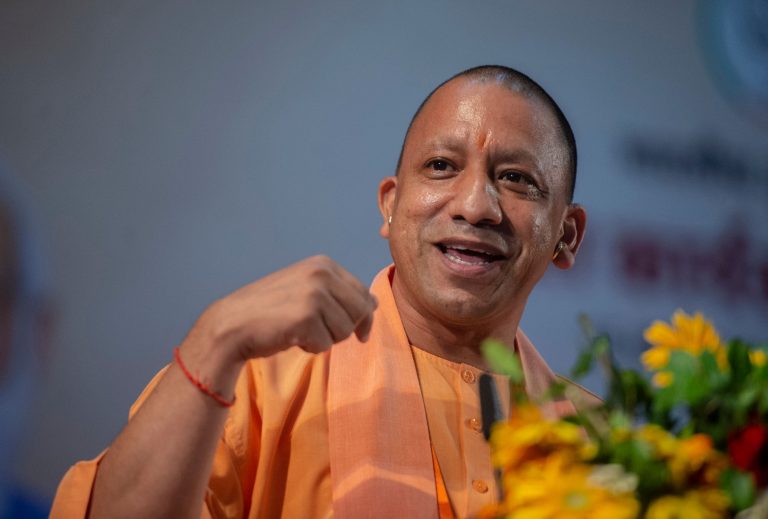
Uttar Pradesh Chief Minister Yogi Adityanath, on Sunday, inaugurated the factory of Addverb Technologies (a global robotics company based out of India) in the Gautam Buddh Nagar district. 

Addressing the inauguration ceremony, CM talked about the developmental works carried out in the district and the progress it made over the last few years. He said, “For the first time in Uttar Pradesh, investments have been made in all the 75 districts of the state, which were once reckoned as ‘aspirational’ districts, lacking development”. 

“Before 2017, in Gautam Buddh Nagar, despite being a part of the National Capital region, possibilities of investments were merely imagination and it lacked the level of competition it needed. But under Prime Minister Modi’s ‘ease of doing business’ vision, it has emerged as a great destination of investment, not only in the NCR but also across the country”, said CM Yogi. 

The Chief Minister added, “On February 10 to 12, Uttar Pradesh organised the second global investor’s summit in the capital, Lucknow. From the state’s point of view, it was the first summit. We got investment proposals more than worth Rs 36 lakh crores. Most of them were for Gautam Buddha Nagar”. 
CM further added, “Investments are done keeping in mind the law and order situation, infrastructure, safety environment, and convenience which we can witness here and across the state”. 

Talking about the development work in the state, he added, “We have made the air connectivity better. There are 9 active airports in the state. Work is in progress on 12 more. By the end of this year, Uttar Pradesh will become the first state in the country to have 5 international airports. Looking at the Indian Railways, the state has the best rail network. There is a rail network of 16,000 kilometres”. 

CM Yogi further suggested that the youths be technically capable. “I would like to say to the Addverb technologies that we should make our youths technically capable”, said the Chief Minister. 

He also thanked the company for assisting its young employees with higher studies. 

Talking about the New Education Policy, he said, “The NEP gives us the liberty to continue our jobs along with studies”. 

Further, the Chief Minister expressed his gratitude towards Addverb Technologies for making an investment in the district and providing employment opportunities to the youth. 

(This news report is published from a syndicated feed. Except for the headline, the content has not been written or edited by OpIndia staff)

Bharat Petroleum holds negotiations with Russia’s Rosneft to buy discounted crude oil priced on the Dubai benchmark

Bharat Petroleum Corporation Limited (BPCL), a state-run refiner in India, is currently in talks with Rosneft, a Russian petroleum refinery company, to buy approximately 6 million metric tons (43.8 million barrels) of discounted Russian crude. As per a Reuters report, the pricing of this deal is expected to be pegged with the Dubai benchmark.

If the deal is finalised, it would strengthen India’s partnership with Russia, which has become India’s largest oil supplier, particularly in the wake of the Western sanctions imposed on Moscow. Further, in that case, it would also reflect Rosneft’s continued shift to link its oil price with the Middle Eastern benchmark that is commonly used in Asia and shift away from the predominantly Europe-based Brent benchmark.

The details of the ongoing deal

The report added that under this pending deal, Rosneft would deliver the equivalent of 6 to 7 cargoes, each consisting of about 700,000 to 720,000 barrels, per month through March 2024 to the state-run refiner, BPCL.

According to Reuters, the ongoing discussions have reached an advanced stage. Now both parties have been actively negotiating to work out details including terms of payment, for a potential contract. Currently, the deal needs approval from BPCL’s board. If approved then it would further expand the share of Russian oil purchased by the world’s third-largest oil importer.

With an approximate share of 40 percent, Russia has become India’s top oil supplier. It is important to note that in the past Indian refiners rarely bought Russian oil because of its high transport cost. However, when the West imposed sanctions on Moscow, it diverted its supplies away from Europe and started selling crude at a discounted price. 

From the 5th of December, the European Union (EU) nations have stopped purchasing Russian oil. Subsequently, to limit Russia’s economic leverage, the Group of Seven (G7) countries joined the EU and imposed a price cap of $60 per barrel on Russian crude. 

As per the report, Russian crude sold to BPCL would be priced at a discount of $8 per barrel to the Dubai benchmark.

Earlier in April, Indian Oil Corp (IOC), the country’s top refiner, struck a deal with Rosneft for buying up to 1.5 million metric tons of oil per month. Reportedly, the crude was pegged with the Middle East benchmark and the discount was around $8 to $10 per barrel.

Russian refinery companies are shifting away from Europe-dominated Brent benchmark

Due to Western sanctions, Russia began redirecting its crude oil shipments toward Asia. As a result, Rosneft has gradually moved away from the Europe-dominated Brent benchmark. Notably, both benchmarks are denominated in dollars. Further, they are set by the S&P Global Platts which is a unit of US-based S&P Global Inc. 

The Dubai benchmark is largely influenced by oil trading in Asia and the Middle East, whereas Brent is primarily used to price crude from Europe, Africa, and South America. Reuters reported that like most of the Indian refiners, BPCL also makes spot purchases of Russian oil and it is mostly done from traders. Additionally, in the ongoing contract negotiations, BPCL intends to import a range of Russian oil grades including Sokol, Varandey, and Urals.

UP CM Yogi Adityanath renames a prominent road in Noida after renowned journalist Ram Nath Goenka, bats for media freedom

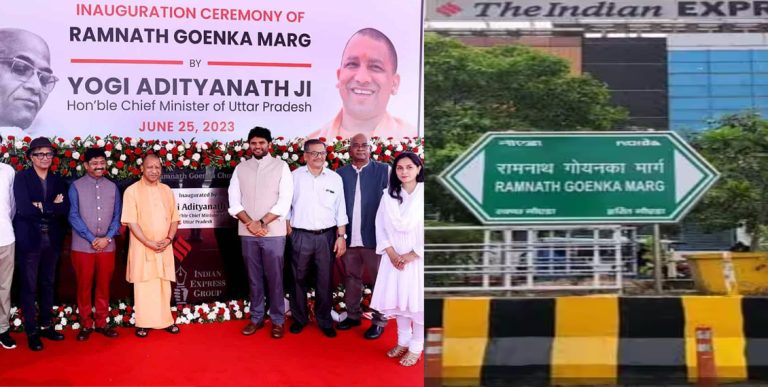
On Sunday, June 25, Uttar Pradesh Chief Minister Yogi Adityanath officially renamed a key road in Noida as ‘Ramnath Goenka Marg’ in honour of the founder of The Indian Express. 

Speaking at an event at the office of The Indian Express, UP CM Yogi said, “Today, it is a matter of pride for me that I am getting the opportunity to inaugurate this road named after him in Noida, which is known as the financial capital of Uttar Pradesh.” 

The road was earlier known as Amaltash Road. The route connects Rajnigandha Chowk in Noida’s Sector 16 to Sector 12, and the Noida office of the Indian Express is located on this road.

The Chief Minister further stated that today is an emotional day for him. It is an important day from the point of view of saving democracy. He noted that he does not consider this a coincidence that this road had to be named after Ramanth Goenka today only on June 25, 48 years after the imposition of a nationwide Emergency.  

CM Yogi also took a moment to recall and honour those individuals who dedicated themselves to restoring democracy during the period of Emergency, which lasted till 1977.

CM Yogi added, “On this occasion, I pay humble tribute to all those ‘fighters of democracy’, including Goenka, who fought for democracy in this country.”

He also lauded the journalistic endevaours of the founder of The Indian Express and stressed that his name will be remembered with reverence and respect. 

CM Yogi said, “Ramnath Goenka ji is a shining pole star of the media world. Whenever there will be talk about freedom of the media and democracy, Ramnath Goenka ji’s name would always be remembered with reverence and respect.”

The office of the UP CM shared a video clip of the event and the CM officially renaming the road as ‘Ram Nath Goenka Marg’.

Prior to this announcement, the route was known as Amaltash Road. This busy route connects Rajnigandha Chowk in Sector 16 to Sector 12. The road comes under the management of the local Noida Authority which functions under the Uttar Pradesh government. Notably, the office of The Indian Express also falls on this route.

UP CM bats for media freedom

Apart from the renaming of the road, UP CM Yogi Adityanath also advocated for the freedom of the media as he recalled June 25, 1975, as a “black day” in the history of Indian democracy. 48 years ago, on this very date, the Indira Gandhi-led government imposed a nationwide Emergency.

CM Yogi said, “I say this with full commitment and assure you that for the media — the fourth wheel, the fourth pillar of democracy — we also should get the opportunity to work together for it.”

Yogi Adityanath also reflected on Goenka’s remarkable journey as the founder of The Indian Express Group in 1936, along with his significant contribution as a participant in India’s freedom movement.

CM Yogi highlighted that Goenka not only stood for the media’s freedom but also he got elected to the Parliament to amplify the voice of India’s democracy. 

CM added that it is an important day for him that India’s most populous state where anti-democracy conspiracies were being hatched, the voice which had risen prominently against it was from Uttar Pradesh. 

Furthermore, the UP CM said, “This day is also important since the Goenka family contributed to saving democracy and set parameters for what could be the clean and dignified role of the media ever since the founding of this media group. Along with this, Ramnath Goenka ji was also associated with the nationalist mission with which we are associated.”

UP CM Yogi Adityanath made these statements during an event hosted at The Indian Express office.

Gujarat: Female students in Ahmedabad catch up and beat molester near Bhulabhai Park before handing them over to police

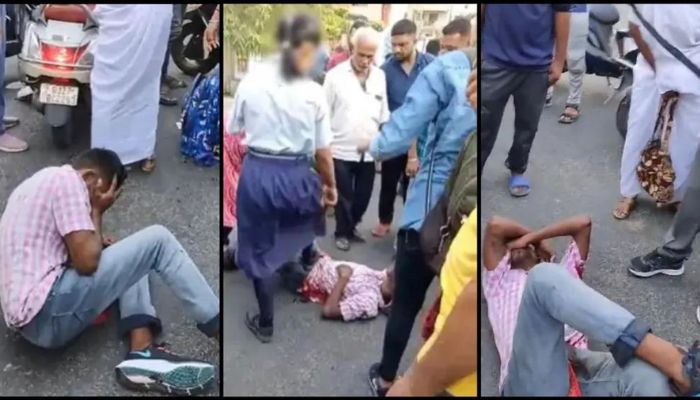
Despite Gujarat, particularly Ahmedabad, being widely regarded as a safe city for women, isolated incidents occasionally raise concerns about the direction of societal trends. One such incident unfolded at Bhulabhai Park Square in Ahmedabad, where a youth molesting and teasing girls was caught and beaten by a group of female students.

A video has rapidly gained traction on social media since Thursday afternoon, capturing a disturbing scene wherein a young man lies on the road with his face concealed. Two students can be seen beating him with a belt, while onlookers in the vicinity display evident anger.

According to reports, this incident occurred early in the morning near Bhulabhai Park Square in Ahmedabad, when a female student was on her way to school. During her journey, a young man began following and molesting the girl. In a brave act of resistance, the girl vociferously called out for assistance from the passersby on the road. Responding swiftly to the distressing situation, local residents promptly intervened and apprehended the perpetrator and beat him.

As evident from the video, the victim of the molestation incident fervently appealed to the surrounding individuals for assistance, leading to the immediate apprehension of the accused perpetrator. In a united display of solidarity, both local men and women came together to confront and beat the molester before handing him over to the Kagadapith police. Authorities promptly initiated the necessary procedures for the arrest of the youth, identified as Vijay Sarkare, who is reported to reside in close proximity to Bhulabhai Park. Additionally, community members have alleged that the accused youth had a history of repeatedly molesting women or girls along the same road.

The remarkable display of courage exhibited by this young girl student in steadfastly resisting harassment throughout this incident deserves utmost admiration. If all the girls across the nation possess such tremendous bravery, it will undoubtedly serve as a deterrent, preventing any potential molester from daring to cast an evil gaze upon any girl in the future.

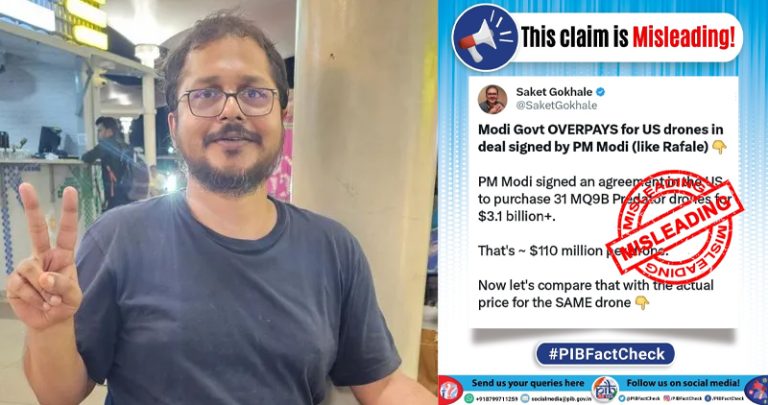
TMC’s Saket Gokhale spreads fake news by claiming that MQ-9B drone deal is overpriced, ‘challenges’ govt to say reports are wrong hours after govt said the same

On Sunday, 25th of June, the Press Information Bureau (PIB) fact-checked the claims being made on social media regarding the ongoing acquisition deal of MQ-9B drones between India and the United States of America. On its part, the nodal agency of the Government of India found that the claims were uncalled for, had ulterior motives, and were aimed at derailing the due acquisition process.

Going a step further, From its official fact-checking Twitter handle, PIBFactCheck, the agency explicitly called out the repeat offender and well-known fake-news peddler Saket Gokhale for making these misleading claims.  

In the tweet, it shared the Ministry of Defence’s official statement regarding the ongoing deal and procurement process. Along with this, the agency outrightly clarified in two points that the claims made by TMC spokesperson Gokhale are misleading. Further, it stated that the purported price doing rounds in media reports is the price quoted by the US govt.

The agency categorically stated that the Price & the terms of purchase are yet to be finalised & are subject to negotiations.  

On June 24, Gokhale posted a series of tweets, claiming that the drone deal is worth $3.1 billion, and compared with some other deals for the MQ-9B drone to claim that it is overpriced. He claimed that while the drone’s list price is $56.5 million per drone, the UK had purchased it at around $12.5 million per drone.

He had claimed, “Just like the Rafale deal, it seems that Modi Govt is AGAIN purchasing US drones at a SUPER OVERPRICED cost.”

Along with it, he also posted some media reports which claimed that the armed forces didn’t want the drone or wanted it in lesser numbers, but Modi govt is 31 of them under the pressure of the US govt.

However, the govt of India has clarified that no price has been fixed for the acquisition, and it will be decided only after negotiation, after comparing with prices paid by other countries for the drone. The defence ministry released a statement earlier today saying that while US has quoted $3.072 billion for the deal, it has not been accepted and finalised yet.

Even after the PIBFactCheck tweet, Saket Gokhale stuck to his claim that the deal is worth $3.1 billion. He cited news reports claiming the amount, choosing to ignore the defence ministry clarification saying that media reports are incorrect.

He even ‘challenged‘ PIB to issue a statement saying that the price reported by the news outlets is wrong is misleading, completely ignoring that the PIB has already done it. In fact, the PIBFactCheck tweet included the link to the defence ministry statement published on the PIB website, which specifically said that the reports claiming the price are fake news. While he responded to the tweet, he chose to ignore the statement linked in the tweet.

Official statement of the Ministry of Defence

Earlier in the day, the Defence Ministry refuted claims that the MQ-9B drone deal with the US is worth $3 billion. It also emphasised that the price has not been finalised yet. The ministry stated that some speculative reports emerged in sections of social media referring to the price and other terms of purchase. 

It said, “These are uncalled for, have ulterior motives and aimed at derailing the due acquisition process. Price and other terms & conditions of the purchase are yet to be finalised and subject to negotiations.”

The Ministry further stated that while issuing the Acceptance of Necessity (AoN) on June 15 for the deal, the Defence Acquisition Council (DAC) noted the estimated cost of 3,072 million US dollars provided by the US Government, but it has not been accepted and finalised.

The Ministry said, “However, the price will be negotiated once policy approval of the US Government is received.” 

The Ministry also asserted and ensured that the Ministry of Defence will compare the acquisition cost with the best price offered by General Atomics to other countries.

India is purchasing 31 drones made by General Atomics in a government-to-government deal, which includes 16 Sky Guardian and 15 Sea Guardian drones. According to media reports, some of the drones will be assembled in India, and some of them will be armed.

General Atomics MQ-9 Reaper, also known as Predator B, is a High Altitude Long Endurance (HALE) Remotely Piloted Aircraft System (RPAS), developed by General Atomics Aeronautical Systems. Originally developed for intelligence gathering, reconnaissance and surveillance, it is also used for offensive purposes as it can carry guns, bombs and missiles.

The air force version of the drone is called SkyGuardian, and its maritime version is called SeaGuardian. India Navy already operates two MQ-9B SeaGuardian drones, taken on lease. 

More than two-thirds of Rs 2000 notes have returned to banks: RBI governor Shaktikanta Das

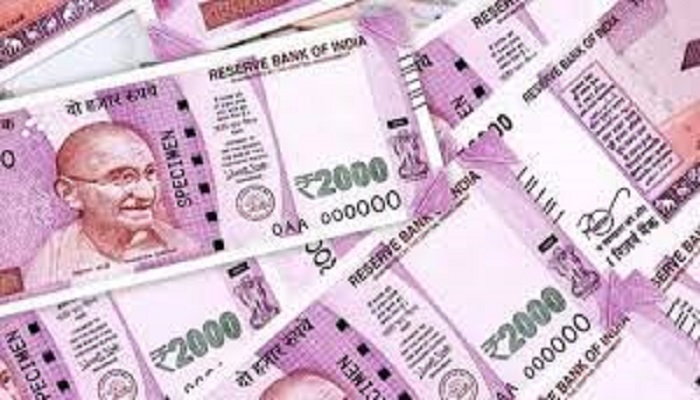
RBI Governor Shaktikanta Das has announced that nearly two-thirds of Rs 2000 notes have been deposited or exchanged in banks within just a month of its withdrawal decision. 

Now, within just a month of making a significant announcement to withdraw Rs 2,000 notes from circulation, the RBI has stated that 72 per cent of the pink notes have been deposited or exchanged in banks.

Last week, RBI Governor informed this when he sat for an interview with PTI Bhasha at the RBI Headquarters. He said, “More than two-thirds or ₹ 2.41 lakh crore worth of the ₹ 3.62 lakh crore (as of March 31, 2023) of the now-recalled 2000 banknotes have come back to the system as of mid-last week.” 

He added that out of the total money that has returned to the system, nearly 85 percent came in the form of deposits, while the remaining Rs 2000 notes were exchanged in the form of currency.

Although the RBI has set September 30th as the last day for exchanges and deposits, Governor Das stressed that the deadline is not fixed in stone. Consequently, he urged people not to rush in exchanging or deposing their money.

Nevertheless, he expressed uncertainty regarding whether he would request the government to revoke the legal tender status of these ₹2000 currency notes once the September 30 deadline passes.

During the previous monetary policy review on June 8, the RBI governor announced that approximately ₹1.8 lakh crore worth of Rs 2,000 notes had been returned or deposited with the banks. This was around 50 per cent of the notes that were in circulation as of March 31st. 

RBI’s May 19th decision

Earlier, on the 19th of May, the RBI announced its decision to withdraw Rs 2,000 notes from circulation. The RBI, however, gave sufficient time for depositing or exchanging these now-recalled 2000 currency notes. For this purpose, it asked citizens to exchange them at banks by the 30th of September.

Back then, the Bankers Bank said, “To complete the exercise in a time-bound manner and to provide adequate time to the members of the public, all banks shall provide deposit and/or exchange facility for Rs 2,000 banknotes until September 30, 2023.” 

However, to ensure operational convenience and to avoid disruption of the regular activities of bank branches, the RBI had set an exchange limit of Rs 20,000 at a time at any branch which commenced on the 23rd of May. 

In its notification, RBI explained that about 89 percent of the Rs 2000 denomination banknotes were issued prior to March 2017 and are at the end of their estimated life span of 4 to 5 years.