Home Blog Page 2228

SC directs Varanasi collector to hold a meeting to provide “wazu” facilities at the Gyanvapi complex

0

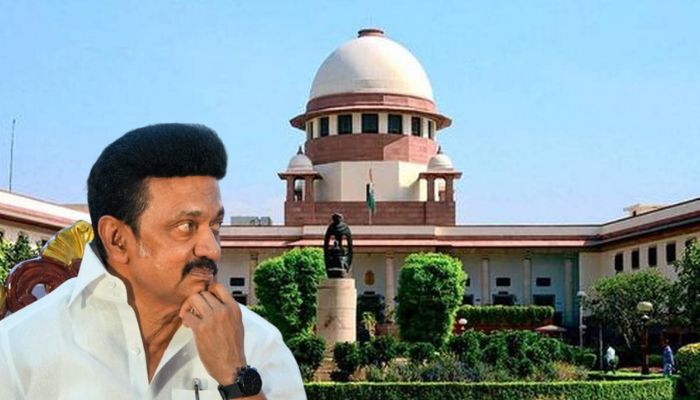
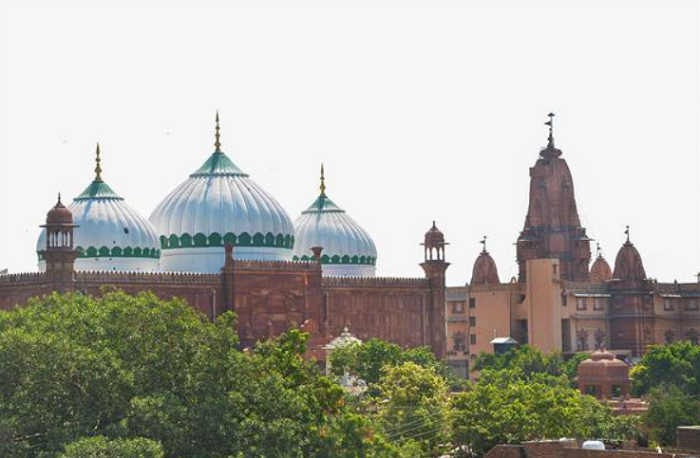
On Monday, the Supreme Court ordered the Varanasi district collector to convene a conference to provide “congenial” working arrangements for ‘wuzu’, Muslim worshipers’ rites of bathing at the disputed Gyanvapi mosque complex. It also said that it would deliver official verdicts on whether “Wuzu,” an Islamic ritual, could be conducted at the disputed Gyanvapi premises, where a mosque is located, on Friday, April 21.

The appeal of the Committee of Management Anjuman Intezamia Masjid was presented to the bench later in the week after the Solicitor General of India (SG) Tushar Mehta promised that a meeting with the parties involved would be held tomorrow to discuss a resolution. In the plea, it was requested that Wuzu be performed in the contested location and that Ramzan pilgrims have access to restrooms.

A bench comprising Chief Justice of India DY Chandrachud, Justice PS Narasimha and Justice JB Pardiwala was hearing an application filed by the Committee of Management Anjuman Intezamia Masjid. “The Wuzu was being held at the fountain area. There were washrooms there too. But now the entire area has been sealed,” the committee informed to the Supreme Court.

Later, Solicitor General Tushar Mehta was asked for a solution by the Chief Justice. “The order has already been passed and it is being complied with and I have no issues if the authorities want to take care of the same,” Mehta said.

However, the SG warned the top court that if an order was made without careful consideration because Wuzu was being sought in the same region as the Shivling, it may cause issues. After the committee’s attorney, Huzeifa Ahmedi informed the court that even portable restrooms would suffice, the SG said that it is crucial to preserve the sanctity of the location under all circumstances.

The Supreme Court referred to its judgement from May 20 of last year, in which it had ordered that worshipers be given ‘wazu’ and lavatory facilities after some interior sections had been sealed off. “The problem is that the area where wuzu performance is being sought has the Shivling and that may create an issue,” SG Mehta was quoted as saying.

The mosque management committee’s declaration that it would be content even with mobile restrooms was noted by the bench. The issue has now been set for another hearing on Friday, and the court has ordered that if a solution is found at the meeting, it may be put into effect immediately and a formal order may be made at the next hearing.

Last year, the Supreme Court extended permanently the temporary protection for the region where a Shivling was discovered at the contentious Gyanvapi site in Varanasi. The Varanasi District Magistrate on May 13 was instructed to seal the area by the local court where the ‘Shivling’ had been discovered. The District Magistrate, Police Commissioner, and CRPF Commandant of the city were each given personal obligations by the court to safeguard the restricted area.

On May 17, the Supreme Court of India affirmed the Varanasi Court’s ruling but amended it so that it will not restrict Muslims’ access to the mosque or their use of it for praying and other religious activities.

Previously, the Supreme Court had declined to order the Varanasi Gyanvapi-Shringar Gauri complex survey to continue in its current course. The inspection, videography, and evidence-gathering procedures surrounding the presence of Hindu deities within the Gyanvapi Mosque complex, which is adjacent to the Kashi Vishwanath temple, had been disallowed by the court.

SC refuses to entertain pleas filed against Ram Navami violence, asks petitioners to approach respective high courts

0

On Monday, April 17, the Supreme Court refused to hear petitions seeking the registration of FIRs in recent incidents of violence witnessed during Ram Navami processions in different parts of the country.

The petition was filed by Hindu Front for Justice (Trust), through advocate Vishnu Shankar Jain. Alleging that disturbances and violent acts are committed by members of the Muslim community every year during Ram Navami processions across the country, the plea sought the filing of FIRs in the violent incidents that took place during this year’s Ram Navami celebrations in various parts of the country.

The petitioner demanded that chief secretaries of each state involved produce a report on the violence and called for action against the culprits. Additionally, it requested guidance from the affected state governments on how to calculate the loss suffered by those who were hurt or died as a result of the violence.

“It is submitted that this year on the occasion of Ram Navami, large-scale violence has been committed by the members of the Muslim community in a pre-planned manner in different parts of the country, namely, at Howrah, Uttar Dinajpur (West Bengal), Sasaram and Nalanda (Bihar), Hyderabad (Telangana), Aurangabad (Maharashtra), Vadodara (Gujarat), Jamshedpur (Jharkhand),” the petition said.

Rejecting the plea, the apex court asked the petitioner to approach the high courts of the respective states where the incidents were reported.

Ram Navami violence

Ram Navami or the birth anniversary of Lord Rama is an auspicious occasion in the Hindu calendar year.  However, like every year, Hindus came under attack when they celebrated one of their most revered festival on March 30 this year. There were reports of stone-pelting and violence in many cities of the country. One person was killed in West Bengal and one in Maharashtra in these violent incidents. Apart from this, there have also been reports of stones pelting on the Shobha Yatra of Ram Navami in Gujarat and Uttar Pradesh.

In fact, a fact-finding team, probing the violence that had erupted in West Bengal this year during Ram Navami Shobha Yatra, had alleged that the “riots were pre-planned, orchestrated and instigated.” It said that the West Bengal Police allowed the violence to go on during a Ram Navami Shobha Yatra in the Hooghly district. 

The Calcutta HC also observed that Ram Navami violence in West Bengal was prima facie ‘pre-planned.’

OpIndia recently documented the current status of each such case. While we provided a summary of the incidents of violence, we also included the action taken by the police and their statements of the incidents, and in many cases, we also documented the versions of those Hindus who were victims of the hate crime.

Gujarat: Couple behead themselves as a part of black magic, made sure heads roll into fire after their death

0

In a horrific incident, a young farmer couple in Gujarat’s Rajkot beheaded themselves to death using what seemed to be a guillotine, most likely as part of a black magic ceremony.

Children of farmer Hemu Makwana, 38, and his wife Hansa Makwana, 35, who had been staying briefly at their maternal uncle’s home in a neighbouring village on Sunday morning, were horrified to discover their parents’ severed heads on their own property. The boy (13), and the daughter (12), promptly sounded the alarm and informed the neighbours.

The couple had murdered themselves voluntarily and no one was to blame, according to a handwritten Gujarati message that was discovered after the police were called. The note also included a thumbprint of the pair. In order to conduct a forensic post-mortem, the remains were brought to Rajkot civil hospital.

“The couple used a make-shift guillotine to end their lives. It is believed that they pulled up the blades of the guillotine themselves and released it in such a manner that their heads fell into a havan kund,” said Vinchiya police sub-inspector Indrajitsinh Jadeja.

Jadeja said, “We are recording statements to ascertain the reason behind the extreme step,” and added that the couple had left their kids to live with their maternal uncle the day before the incident.

Hansa was not doing well, according to a note that was discovered next to the bodies and their cell phones. Hansa’s cousin Jayanti Jatapara denied claims of financial hardship, saying that the couple were not having trouble paying for basic expenditures. She reportedly informed authorities, “Nor were they having any marital or family disputes.”

The duo executed it in such a manner that their heads rolled into the fire after getting severed, Jadeja added. A case of accidental death has been registered in the case and the dead bodies have been sent for the post-mortem. Further investigations are underway.

Karnataka Congress MLA Srinivas Murthy, whose house was burnt by an Islamist mob during Bengaluru riots, resigns over denial of ticket

0

On April 16, Sunday, Karnataka Congress MLA R Akhanda Srinivas Murthy tendered his resignation as the MLA from the Pulakeshinagar constituency. The decision came after Murthy was denied a ticket by the party for the upcoming assembly polls. Incidentally, he is the same Congress MLA whose house was burnt down by rabid Islamists during last year’s Bengaluru riots.

According to reports, the Congress MLA went to Sirsi in Uttara Kannada district and submitted his resignation to Karnataka Assembly Speaker Vishweshwar Hegde Kageri on Monday (April 17).

After handing over his resignation Murthy told the media that he was disappointed that his name did not appear in the candidate lists.

“I am a legislator who has secured the highest number of votes. I was very disappointed when my name did not appear in any of the three lists. My constituency members and I were hurt, so I decided to resign.” Srinivas Murthy said.

Srinivas Murthy further stated that he has not yet made up his mind on his next move. He hinted that he might run as an independent in the elections.

When asked if any of the party member’s actions has hurt him, Murthy said, “If the party hasn’t announced my name in any of the lists, it’s implied who hurt me. My constituency people were hurt, and concerned daily about whether I would get the ticket or not.”

“All Hindus, Muslims and Christians are united in my constituency. This is also where I grew up and we are all united. I have faced injustice by attention being paid to the words of someone else. I want to avoid this injustice. So I am resigning as the MLA, not from the party itself. That’s why I approached the Speaker,” he added.

Islamists had burnt down the house of Karnataka Congress MLA R Akhanda Srinivas Murthy

It may be recalled that last year during the horrifying Bengaluru riots, a huge mob of Muslims rampaged on the streets and attacked the DJ Halli and KG Halli police stations, torched police vehicles and numerous other vehicles and caused immense damage to public property. In the incident, Congress MLA R Akhanda Srinivas Murthy’s house was also burnt down.

Reminiscing the horrifying incident, the Congress MLA said that a mob of 3000-4000 Muslim rioters arrived at his house, pelted stones, poured petrol, burnt tires and set the house on fire. “They attacked with swords, hatchets, sticks and also threw petrol bombs at my residence”, he had recalled.

The MLA had also blamed ‘outsiders’ for instigating the riots and urged the local residents to help him nab the culprits. He requested that the case be handed over to the CBI, or CID for a thorough investigation.

‘India-Russia bilateral trade crossed target of $30 billion before 2025, will go further up’: EAM Dr Jaishankar

0

External Affairs Minister S Jaishankar on Monday said that India and Russia have crossed bilateral trade target of USD 30 billion before 2025 adding that it is expected that the trade will continue to increase.

While addressing the India-Russia Business Dialogue in Delhi, he said, “We have crossed the bilateral trade target of USD 30 billion before the year 2025 which was the target year given to us by our leaderships. And in fact for the period April 2022 – February 2023, I understand that the trade is actually about USD 45 billion and the expectation is that this will continue to grow.”

Jaishankar said that India and Russia need to motivate businesses on both sides. He said that they are determined to make India a “global manufacturing hub.”

“We need to motivate business on both sides. You can see that there are big changes going on like Make in India. We are determined to make India a global manufacturing hub. I want to emphasise the opportunity of Make in India and Russia as Russia is known for its technological strength,” Jaishankar said.

Speaking about the relations between India and Russia, Jaishankar said that the two nations have historic people-to-people ties. He also spoke about the possibility for greater business between the two nations in the tourism sector.

In his remarks at the India-Russia Business Dialogue, Jaishankar said, “Our two countries historically have also had a strong people-to-people connection. But, I must point out that we actually get less than 1 per cent of Russia’s outbound tourism. So, now when we are talking today of exploring new areas and new opportunities, I would also flag that whether more direct flights to more destinations will provide a possibility for greater business when it comes to tourism.”

EAM Jaishankar emphasised that the ties between India and Russia have not changed. He said, “Our partnership today is a subject of attention and comment, not because it has changed, but because it has not. Indeed, it has been among the steadiest of the major relationships of the world in the contemporary era. But that by itself is not enough.”

Jaishankar said that Russia is looking more towards Asia and for India, it means broadening of engagement between the two nations which was overly dependent on military, nuclear and supply space cooperation.

“We share a commitment to a multipolar world and that also means a multipolar Asia. Russia is today looking much more towards Asia, a reassessment from its traditional focus. For India, this could mean a broadening out of our engagement that was overly reliant on the triad of military, nuclear and supply space cooperation,” Jaishankar said.

“For Russia also it presents a broader set of options as Russia looks eastwards, its resources and technology complementarity can be a powerful contribution to India’s growth. And this is a growth of a 3.5 trillion economy that is expected to grow at more than 7 per cent for at least a decade or more. And I would say that our ties, our cooperation are best advanced through more intensive bilateral engagement,” he added.

In his address at the India-Russia Business Dialogue, he said, “We are discussing the importance of connectivity and the north-south and maritime corridors have been considered. There is also discussion on payment issues like International trade settlement in the Indian Rupee.”

EAM Jaishankar said that there is concern regarding the trade imbalance. He highlighted the need to work with Russia on a very urgent basis to address the trade imbalance. He said that addressing the issue means addressing the impediments, whether they are market access impediments, non-tariff barriers or they are regarding payment and logistics.

“There is also understandable concern about the trade imbalance which these new volumes have created. And we need to work together with our Russian friends on a very urgent basis of how to address that imbalance. And addressing that imbalance really means addressing the impediments, whether they are market access impediments, whether they are non-tariff barriers, whether they are related to payments or to logistics,” Jaishankar said.

He further said, “I really cannot emphasize this enough. I think we should also, in a business gathering be honest about the short and medium-term challenges that we face. And there could be, quite frankly, there could be over compliance there could be over anxiety or even over caution on our side and equally on the Russian side there could be an inadequate appreciation of the concerns and the risks that Indian businesses face. So I would say what really the future of our economic cooperation requires is the willingness, the ability to really look at it from the point of view of the other party and then come up with solutions which will overcome the obstacles.”

In his remarks at the India-Russia Business Dialogue, Russian Deputy Prime Minister Denis Manturov said that his country is looking forward to intensifying negotiations on Free Trade Agreement (FTA) with India.
While addressing the Russia-India Business Dialogue, Manturov who is also the Russian minister of industry and Trade said, “Together with Eurasian Economic Commission, we are looking forward to intensifying negotiations on Free Trade Agreement with India.”

(This news report is published from a syndicated feed. Except for the headline, the content has not been written or edited by OpIndia staff)

Atiq’s murderer chanting JSR is ‘Hindutva terror’ but Pulwama attack because Adil hated ‘gaumutra drinking Hindus’ is not religious terrorism

Over the past couple of days, Indians are expressing outrage and frustration over what they perceive as a blatant display of hypocrisy in the labelling of crimes as “terror” and “hate crime” based on the religious affiliations of the perpetrators. The recent killing of Gangster Atiq by three assailants, who allegedly chanted “Jai Shri Ram” after the murder, has been labelled as “Hindutva terror” by some media outlets and activists. Several netizens have pointed out that the horrific attack by Adil Ahmed Dhar, who blew up 40 CRPF jawans in a suicide bombing, has not been classified as an act of religious terrorism, despite his Islamist fundamentalist views and statements.

In fact, people are often told that terror has ‘no religion’ but perhaps this statement holds true only in the case of Islamist terror attacks.

Many netizens have argued argue that if the killers of gangster Atiq, who chanted “Jai Shri Ram” after the murder, can be labelled as “Hindutva terrorists,” then Adil Ahmed Dhar, who openly expressed his hatred towards “cow urine drinking Hindus” and carried out a deadly suicide bombing, should also be classified as religious terrorism.

For years now, Islamists have referred to Hindus as ‘cow urine drinkers’ or used ‘gau mutra’ jibes to derisively mock and insult Hindus. However, the Pulwama terrorist attack was a watershed moment, given that the attack led to the death of 40 CRPF soldiers and a video released in its aftermath saw the terrorist responsible for the ghastly attack spewing venom against Hindus.

This shameful mainstreaming of ‘gau mutra’ jibes for Hindus holds uncanny similarity with the “hooked nose” stereotype that Jews were subjected to in the past. The damaging consequences of such stereotyping became apparent only in the early part of the 20th century, when supporters of Hitler used those archaic typecasts to inflame public sentiments against the Jews.

Jai Shri Ram Allahu Akbar

A truck driver who ran over 20 people on a bike path in Manhattan was reported to have yelled “Allahu akbar” before being shot by a police officer. The same slogan was yelled by the men who attacked the French weekly Charlie Hebdo in 2015. The same words were heard as a British soldier was run over and subsequently hacked to death in 2013 close to military barracks. There are thousands of other terrorist attacks where the slogan was raised by Islamist terrorists.

In recent years, the slogan “Jai Shri Ram” has become a subject of controversy, with some segments of the media and political groups labelling it as a war cry or an aggressive slogan. However, “Jai Shri Ram” is not a call for violence, but rather a slogan that represents the awakening of Hindus from centuries of intellectual and political slumber, and embodies the ideas of universal peace and brotherhood.

The term “Jai Shri Ram” is a Sanskrit phrase that translates to “Victory to Lord Rama,” one of the most revered deities in Hinduism. Lord Rama is considered to be an embodiment of righteousness, virtue, and compassion, and his story of valour and sacrifice is celebrated in the Hindu epic, the Ramayana. “Jai Shri Ram” is often used as a form of greeting or salutation among Hindus, and it is chanted during religious ceremonies, festivals, and processions.

Contrary to the portrayal by some sections of the media, “Jai Shri Ram” is not a call for violence or aggression. It is a slogan that symbolizes the pride and reverence that Hindus have towards their culture, heritage, and spirituality. It is seen as a way to express devotion to Lord Rama and seek his blessings for victory over ignorance, injustice, and evil.

“Jai Shri Ram” is seen as a rallying cry for Hindus to assert their identity and assert their rights in the face of such challenges.

Furthermore, “Jai Shri Ram” is an assimilative slogan that embodies the ideas of universal peace and brotherhood. Hindu philosophy teaches the concept of Vasudhaiva Kutumbakam, which means “the world is one family.” The slogan is seen as a call for harmony and unity among all individuals, irrespective of their caste, creed, or religion. It is considered a way to foster inclusiveness, tolerance, and mutual respect among different communities.

’13 MLAs of Sharad Pawar’s NCP are in contact with BJP, may switch sides’, say reports

If media reports are to be believed, Maharashtra could be eyeing another political upheaval with at least 13 MLAs of Sharad Pawar’s National Congress Party (NCP) joining the saffron camp. On Monday, April 17, India TV quoted Maha Vikas Aghadi ‘sources’ as hinting that as many as 13 NCP MLAs are currently in touch with the state BJP and may soon switch over.

Sources in the NCP reportedly claimed that these MLAs are under pressure to defect from Sharad Pawar’s party. Sharad Pawar has reportedly made several attempts to convince these MLAs, but they are hell-bent, reported India TV.

Meanwhile, two days ago, Shiv Sena (UBT) leader Sanjay Raut claimed that when they met Sharad Pawar recently, the NCP chief told them that the way Shiv Sena was broken by using ED, CBI and Police, the same tactics are now being used to break NCP.

“NCP MLAs are under pressure, they are being threatened. Some people may leave the party under pressure but NCP will not align with the BJP,” Sanjay Raut quoted Sharad Pawar as saying.

It is pertinent to recall here how in June last year, a major political crisis gripped Maharashtra when Uddhav Thackeray, who was running the government in alliance with Congress and NCP, lost his power after Eknath Shinde led a revolt against him because he disagreed with Thackeray’s decision not to end the alliance with Maha Vikas Aaghadi. Shinde’s faction was successful in seizing control of the party and, with the help of the BJP, establishing a new government in Maharashtra.

In a recent development, the Election Commission of India (ECI) withdrew the national party status of Sharad Pawar’s Nationalist Congress Party, reassigning it as a regional party. Besides, Sharad Pawar’s NCP, Mamata Banerjee’s Trinamool Congress and the Communist Party of India (CPI) also lost their national party status.

In a statement, the poll panel announced that it was withdrawing the status of three recognized National Parties- AITC, CPI, and NCP. The Election Commission said they are doing it “following due process and providing the sufficient opportunity of two Parliamentary elections and 21 State Assembly Elections”.

Ali, Atiq Ahmed’s son lodged in Naini jail, not hospitalised, media reports suggesting he banged his head on prison wall untrue

Media reports had suggested that Ali Ahmed, the son of deceased gangster-politician Atiq Ahmed, had injured himself after repeatedly hitting his head on the wall of his prison cell.

As per a report by Times Now Navbharat, Ahmed tried to inflict self-harm after learning about the death of his father and brother. When the matter came to light, the jail administration swung into action and admitted him to a hospital.

It must be mentioned that Ali Ahmed is currently lodged in Naini Central jail in the Prayagraj City of Uttar Pradesh.

Screengrab of the news report about Ali Ahmed’s hospitalisation

A similar claim was made by Bharat 24 news on social media.

Screengrab of the news report about Ali Ahmed’s hospitalisation

However, the police have rubbished media reports about Ali Ahmed’s hospitalisation.

While speaking about the matter to ANI, DG Prison Office informed, “Atiq Ahmed’s son, Ali who is lodged in Naini Central Jail is absolutely fine. A few reports regarding him circulating in media are false.”

Atiq Ahmed and his brother Ashraf were shot dead from point-blank range in Prayagraj on the night of April 15, 2023. The assassins were identified as Lavlesh Tiwari, Arun Maurya and Sunny.

Atiq’s son Asad Ahmed and aide Ghulam were also neutralised in an encounter operation by the Uttar Pradesh Police last week.

FT’s American journalist claims he was thrown out of an India-Russia event: Here’s what happened

John Reed, an American ‘journalist’ for the Financial Times, on Monday, April 17, took to Twitter to claim that he was kicked out of an Indo-Russia event over “security concerns.”

“I just got kicked out of this event (which I was invited to and registered for) for security reasons,” Reed lamented on Twitter, along with sharing details of the event, which included complimentary snacks.

The event in question was organised by FICCI and titled ‘India Russia Business Conclave’ had Indian External Affairs Minister S Jaishankar and Russian Deputy Prime Minister Denis Manturov as chief guests.

The event, which was organised at Delhi’s The Leela Hotel, entailed remarks from industry representatives from the Russian and the Indian side, followed by a special address by Mr Manturov and a keynote address by Dr S Jaishankar.

However, the lack of details about what transpired at the venue leading to his supposed ouster left many to wonder if the action was in response to FT’s snub to the Adani Group for not removing its article that the business conglomerate said was misleading and malicious.

An AAP supporter claimed that the Indian government expelled a “renowned” journalist from the FT for its refusal to take down their article on the Adani Group.

Another Twitter user could not bring herself to terms with the fact that a WION journalist was tweeting from the event while an FT journalist was allegedly shown the door.

Yet another Twitter user insinuated that the action was in response to the Financial Times’ coverage of the Adani Group.

As insinuations linking the FT journalist’s expulsion from the event to his newspaper’s reports on the Adani Group spread on social media, just about a quarter to the next hour, Reed informed on Twitter that he was asked to leave by a Russian and not an Indian.

And hours later, after many social media users pointed out his fallacy, the Financial Times scribe revealed that the journalists were asked to leave after the event was converted to a closed-door event four minutes before it started.

Nevertheless, the entire incident showcases the Financial Times journalist’s disinclination towards uncovering the truth and generating controversy around a non-issue.

Adani Group slams Financial Times’ report as mendacious and a deliberate smear campaign

The episode shines a spotlight on the recent coverage of the Financial Times on the Indian business conglomerate Adani Group following the Hindenburg Research report earlier this year. The Financial Times published an article on 22 March 2023 that said the business conglomerate’s foreign direct investment came from offshore entities linked to his family. In response to the article, the Adani Group had written a letter to the Financial Times, asking it to pull down its article, which it said was a “mendacious, deliberate effort to paint the Adani Group and the Adani family in the worst possible light.”

Slamming the Western publication, the Adani Group said the article demonstrated a willingness to be selective in using publicly available facts, lazy in its approach to understanding disclosures to which its reporters were directed, and made false insinuations against it.

The anti-Modi antecedents of John Reed

It is worth noting that American journalist John Reed has been a staunch anti-Modi critic, with his prejudiced and lopsided articles attacking the Modi government published frequently in the Financial Times. In one such malicious piece by him and published in October 2022, Reed presented a dystopian picture and scaremongered over the alleged shrinking of freedom of expression in India.

The article projected conscientious action by India’s investigative agencies to curb corruption and administrative malpractices against politicians as politically motivated and commissioned by the Centre, with no evidence to back their claims. The article also quoted controversial individuals, including advocate Vrinda Grover, a lawyer who represented Alt News co-founder Mohammed Zubair in a case over his Hinduphobic social media posts and Siddharth Varadarajan, an American national and the founder of propaganda website The Wire, which had to suffer the ignominy of retracting its Tek Fog and Meta stories after they were proven to be fake and fictitious.

Pakistan: Chinese engineer arrested for ‘insulting Islam’ after he asked his Pakistani subordinates to work faster during Ramzan

On Sunday, April 16, Pakistan police arrested a Chinese engineer working at a hydropower project in Kohistan District in Khyber Pakhtunkhwa province in the country on accusations of blasphemy. The Chinese national working in China Gezhouba Group Company was accused of ‘insulting’ Allah.

He had allegedly commented about the slow pace of work during the Islamic holy month of Ramzan during an argument with his Pakistani subordinates at his workplace.

The accused, identified in a formal complaint to the police by two Pakistani dumpster drivers as “Mr Tian, in charge of heavy machinery,” was detained by police late on Sunday from a residential camp for Chinese workers near Dasu, about 350 km north of Islamabad ‘to avert a serious situation.’

Dasu Dam is a hydroelectric gravity dam under construction in Kohistan District, Khyber Pakhtunkhwa Province in Pakistan. China’s Gezhouba Group Company Limited has undertaken main civil works.

According to South China Morning Post, Tian had allegedly commented about the slow pace of work during the Islamic holy month of Ramzan, which infuriated the Pakistani employees of the company. As the news of the argument and alleged blasphemy spread, a charged mob of several hundred people, chanting death threats against Tian, gathered outside the residential camp and began pelting it with stones.

Hundreds of people from nearby villages also gathered to block the Karakoram Highway connecting Pakistan to China to protest against the Chinese citizen.

The police intervened and fired aerial warning shots at the mob to prevent a riot. The mob kept creating a ruckus for almost four hours and only dispersed after the police assured that the Chinese engineer would face legal repercussions.

Meanwhile, after the aforementioned incident, the security of the Chinese nationals working on the World Bank-financed Dasu hydropower project has been tightened.

Attack on Chinese nationals in Pakistan

In addition to the persecution of minorities, Pakistan has recently been under fire for the increase in attacks on Chinese people living there. In September last year, an unidentified gunman opened fire inside a dental clinic in Karachi, Pakistan, killing a Chinese national and injuring two others. The suspect managed to flee the murder scene with the assistance of an accomplice who had parked his motorcycle around the corner on Preedy Street.

Prior to this, three Chinese nationals were killed in a suicide bombing at Karachi University in April by the separatist Baloch Liberation Army, which is hostile to China’s involvement in Balochistan and accuses China and Pakistan of exploiting the resource-rich province.

In 2021, at least 10 people lost their lives and 39 were injured after a bus carrying staff members working on Dasu Dam was blown up. Of the four dead, 4 were Chinese nationals.

In fact, after the string of attacks reported in the recent past, reports emerged on how Pakistan’s security systems are no longer trusted by the Chinese population, particularly the Chinese labourers there. Chinese employees in Pakistan feel frightened and don’t trust Pakistan’s security apparatus to keep them safe in an emergency.

Last year, owing to the repeated attacks on Chinese nationals, a top-level tri-service military group from Pakistan visited China from June 9 to 12 to address various issues with senior military and government officials from Beijing. During the discussion, the attacks on Chinese citizens by Baloch militants were brought up.

Beijing requested Army Chief General Qamar Javed Bajwa to take appropriate actions to avoid attacks on Chinese people working on the China-Pakistan Economic Corridor (CPEC) facilities in Pakistan’s Balochistan province.

It’s worth mentioning that China has made major infrastructural investments in Pakistan. The projects, one of which being the China-Pakistan Economic Corridor (CPEC), rely heavily on Chinese manpower and funds.