No matter how hard the leftist historians try to deny it, atrocities against Hindus in India during Islamic rule are no secret. Like all his predecessors, the tyrannical Mughal ruler Aurangzeb, who is highly revered by Left-liberal ‘historians’ and intellectuals, killed countless Hindus and non-Muslims and plundered and destroyed numerous Hindu temples including the revered Kashi Vishwanath temple in Varanasi, the Kalka Temple in Delhi and the Ram Temple in Ayodhya, to name a few.
The Hindus, who had somehow accustomed themselves to living with the Mughals during their early rule, were in for a rude shock when the dominion passed to Aurangzeb, a fanatic of Islam.
He, in his quest to persecute and oppress the Hindus, reimposed the ‘jizya tax’, a special kind of tax imposed on non-Muslims, significantly Hindus, with high rates. This cruel Islamic tax was a kind of reminder to the ‘kafirs’ that they are living in a Muslim land, governed by Sharia. Notably, this tax was abolished under the rule of the third Mughal ruler Akbar. But it was restarted during Aurangzeb’s reign. As a result, the already downtrodden and poor Hindus continued to become further oppressed and impoverished.
Historians confirm that Hindus were obliged to pay taxes on everything during the Mughal era. Be it animals, trees or daily essentials, nothing came readily to the persecuted Hindus. Under the Mughal dynasty, Hindus were even forced to pay the discriminatory jizya tax in order to marry off their children. Muslims, on the other hand, were exempt from the Jizya tax.
In fact, to impose the Jizya tax on Hindus, Aurangzeb, a religious fanatic who tried to propagate Islam and suppress Hinduism and other religions, in the year 1679 ordered the division of Hindus into categories based on their economic status. Hindus were thus divided into rich, middle and poor classes. The Hindus with annual income exceeding Rs 2500 used to be categorised as rich. They were required to pay a tax of 48 dirhams, which summed up to Rs 13 then. Similarly, Hindus with an annual income of Rs 250 were classified under the middle-class category and they were expected to pay a Jizya tax of 24 dirhams or Rs 6.50.
The worst hit by this cruel tax system were those Hindus who fell under the third bracket which is the poor category. The people with an annual income of 52 rupees or less were classified as poor. They were required to pay a tax of 12 dirhams or Rs 3.25. According to these data, the wealthiest had to pay 0.52%, the middle-class Hindus 2.6%, and the destitute Hindus 6.25% as tax to the Mughal Empire. They had to face severe repercussions if they did not pay.
After collecting the exorbitant jizya tax from the poor and oppressed Hindus, Aurangzeb spent this entire money waging wars against Hindu states. Imagine, this hard-earned money, which Hindus earned while enduring atrocities and torture induced on them by the Mughals, went into the upkeeping of the army which in turn slaughtered innumerable Hindus and non-Muslims, raped Hindu women and children and plundered and destroyed Hindu places of worship. To be more precise, Hindus, during Aurangzeb’s regime, were being forced to fund their own genocide.
This was the reason why many Hindus converted to Islam. They were, in fact, forced to convert in order to protect their families. Immumarable Hindus switched to Islam to avoid having to pay Jizya. The Hindus, because of whom India was named the ‘golden bird’ kept becoming poorer and poorer under Aurangzeb’s regime. Despite this, several leftist historians claim that by the end of Aurangzeb’s reign, there was no money left in the coffers of the Mughals.
The Jizya tax was intended not only to offend Hindus but also to appease Mullahs and Clerics. Because the Rajputs and Marathas were a source of contention for Aurangzeb, he employed this strategy to rally the Muslim populace behind him. Under the cover of Jizya, Mullahs and clerics tortured poor Hindus. Jizya was collected from the locals with the help of the army personnel. Those in charge of this task were given full authority to torture non-Muslims.
The Mullah-Maulvi elite now had a new source of revenue. Nonetheless, three years before his death, Aurangzeb was compelled to remove the Jaziya tax in South India in order to avoid turmoil. He hoped to persuade the Marathas to reach an accord with him by doing so. But how could someone who rose to power by imprisoning his own father, killing his own brother, and serving him on a platter in front of his father become a beneficent monarch?
In actuality, the Mughals’ objective in enforcing Jizya was to spread Islamic law in their domains and to depict Muslims as superior to everyone else. For a long time, leftist historians justified the Jizya tax by citing the ‘political motives’ for its imposition. They completely overlooked the reality that it was governed by Sharia and that religious intolerance was the primary motive for its implementation. In reality, Jaziya was created in order to publicly humiliate and degrade Hindus.
In fact, historian Marc Jason Gilbert in his book ‘South Asia in World History’ has mentioned how Aurangzeb, to suppress and humiliate Hindus, ordered the Jizya fees to be paid in person, in front of a tax collector. While paying the tax, the Hindus were compelled to recite a verse from the Quran which referred to non-Muslims as inferiors.
Here is a an account of the secular Aurangzeb by RC Majumdar. Jizya was reimposed ‘with the object of spreading Islam and overthrowing infidel practices’. From Masir-I-Alamgiri by MSM Khan, but Ganga Jamuni types prefer @AudreyTruschkepic.twitter.com/kif0jJDItZ
— Sanjay Dixit ಸಂಜಯ್ ದೀಕ್ಷಿತ್ संजय दीक्षित (@Sanjay_Dixit) November 24, 2018
Besides oppressing Hindus by making them pay higher taxes in the form of Jizya, Aurangzeb did whatever it took to not humiliate and subjugate the non-Muslims. During his reign, no non-Muslims were given any significant rank in his court. All the important ranks were held only by Muslims.
Aurangzeb appointed several Muslims to the revenue department to collect Jizya. In 1687, he created an Inspector General to make rules more stringent. The Qazis ruled during Aurangzeb’s reign, which is why even music was banned.
Aurangzeb also decreed that women had no right to wear ‘tight attire,’ and that their clothing should be loosely draped over their bodies. At the same time, he defined the length of the beard and instructed Muslims not to grow beards longer than four fingers. Along with this, a law was enacted to remove the moustache, since he believed that if the moustache covered the lips, the sound of Allah’s name would not reach heaven.
Hindu religious fairs were forbidden, as were public celebrations of their festivals. Under these conditions, opposition to Islamic bigotry manifested itself in violent rebellions against the Mughal ruler. This open hostility of Aurangzeb against non-Muslims inadvertently resurrected Hindu nationalism. Rebellions and imperial suppression started becoming palpable across the country.
Aurangzeb was opposed not only by the Marathas and Marwad but also by Chhatrasal in Bundelkhand, who had by then created his own separate kingdom. In the same circumstances rose the Jat rebellion of 1669. The Ahoms of Assam were also at war with Aurangzeb’s army. Aurangzeb’s socio-economic policies driven by his bigotry and religious fanatism gave rise to widespread rebellions and resistance to Mughal rule and eventually contributed to the empire’s downfall.
Several media reports had widely speculated that the National Council of Educational Research and Training (NCERT) has amended its publications, notably the 12th-class History book, and removed certain chapters on the Mughal empire. Islamists and Mughal sympathising liberals on social media started insinuating that future generations would never know about Mughals because of this change in the coursebooks. Such tweets soon came under constructive criticism that future generations should know about Chhatrapati Shivaji Maharaj far more than Mughal tyrants and when they study the tyrants, they should lean about the full extent of their atrocities instead of the glorification they are taught today.
Defending the Mughal-sympathising point of view, Sujata Anandan – the editor of the fraud-accused Congress mouthpiece National Herald – tweeted, “Taj Mahal is no abomination. It is one of the seven wonders of the world and India gets maximum tourist returns from that monument. Chhatrapati Shivaji was great, of course. But his exploits would be reduced to nothing without the Moghuls he fought against. Defied them. Was captured by them. Escaped their high-security dungeons. Defeated them in many battles. Was a constant thorn in the side of Emperor Aurangzeb who could never overcome Shivaji. Take away the Moghuls and you take away the raison d’etre of Chhatrapati Shivaji.”
In this tweet, Sujata essentially attributed the glory of courage of Shivaji Maharaj to the Mughals as well, saying that Shivaji would be ‘nothing’ had the Mughals not been tyrants invading Bharat.
Taj Mahal is no abomination. It is one of the seven wonders of the world and India gets maximum tourist returns from that monument. Chhatrapati Shivaji was great, of course. But his exploits would be reduced to nothing without the Moghuls he fought against. Defied them. Was… https://t.co/gydB8F9NCQ
In the next tweet, Sujata Anandan wrote, “How twisted is the bigoted sense of RSS history. Even Shivaji’s army was looting and raping, that was what conquering armies did in those days. Your great icon Savarkar labelled Chhatrapati Shivaji Maharaj a rank fool for not raping the daughter-in-law of the Muslim governor of Kalyan and pulling up his soldiers for involving women in their war. Closer home, Bilkis Bano’s rapists are sharing platforms with your ministers.”
How twisted is the bigoted sense of RSS history. Even Shivaji’s army was looting and raping, that was what conquering armies did those days. Your great icon Savarkar labelled Chhatrapati Shivaji Maharaj a rank fool for not raping the daughter-in-law of the Muslim governor of… https://t.co/zaHMOJ1DWj
What Sujata Anandan has tried to insinuate through these tweets is a perversion due to an ‘unpleasant’ decisive defeat of the Mughals and their governors like Nizam in the Decccan and Nabab of Bengal at the hands of Maratha powers that flourished after Chhatrapati Shivaji Maharaj. While Twitter banter is a separate genre altogether, the dangerous lies being spread by the National Herald editor have to be countered summarily.
Chhatrapati Shivaji Maharaj’s army always respected women
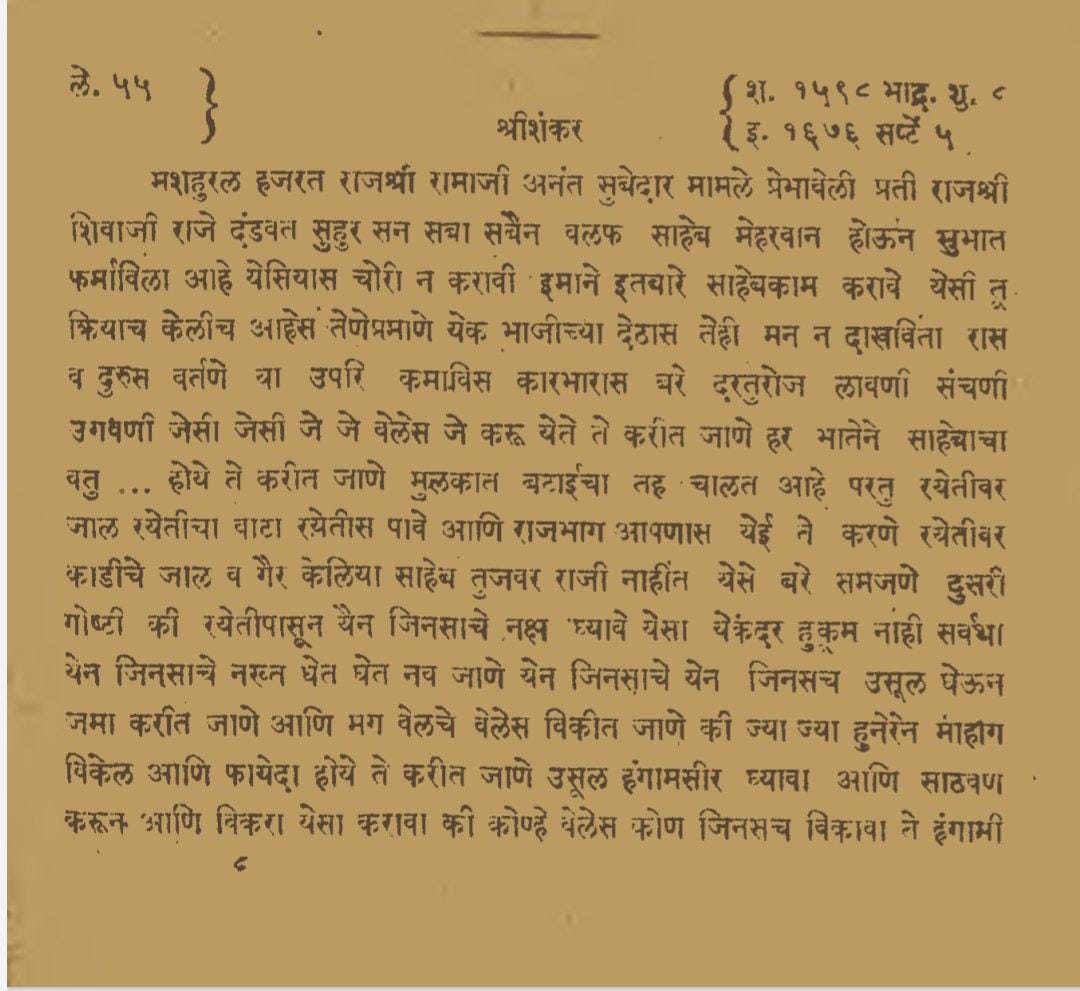
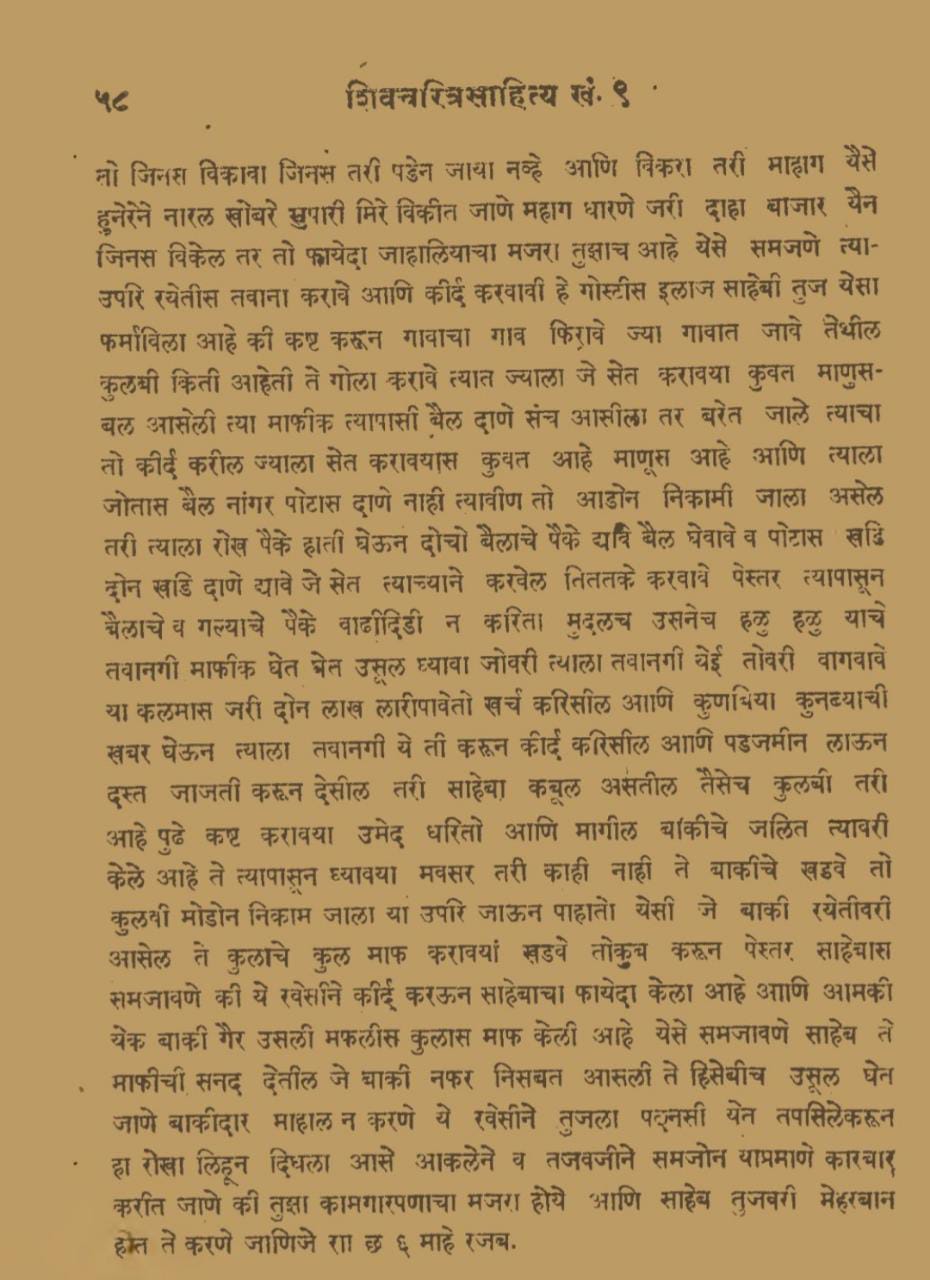
As far as Chhatrapati Shivaji Maharaj’s army is concerned, there is hardly any evidence to support the claim that Chhatrapati Shivaji Maharaj’s army committed rapes. In fact, the Hindu king instructed his commanders in one of his letters to ensure that during any military expedition, they should ensure not a single stalk of the farm produce shall be harmed. There is documentary proof that Chhatrapati Shivaji Maharaj also cared for the trees and forests in his empire. Let alone raping women of enemy soldiers and commanders, there is an incident when Chhatrapati Shivaji Maharaj ensured that women relatives and other family members of even the Mughal tyrant Aurangzeb are not harmed.
Shivacharitra Sahitya, Vol.9, no.55
Shivacharitra Sahitya, Vol.9, no.55
Aurangzeb’s maternal uncle Shahitakhan had captured the Lal Mahal in Pune. Chhatrapati Shivaji Maharaj had spent a few years of his childhood in this mansion. Shahistakhan instructed his troops from the Lal Mahal where he had made his temporary residence as he conquered Pune and its surroundings. Chhatrapati Shivaji Maharaj executed a raid on Lal Mahal and chopped his fingers. Shahistakhan somehow escaped, leaving behind some of his family members. Chhatrapati Shivaji Maharaj and his army did not harm the women from this enemy camp.
Why Maratha forces are falsely accused of atrocities and rapes?
Maratha Empire established by Chhatrapati Shivaji Maharaj underlined its Dharmik inclinations with the Hindu king getting coronated with Hindu rituals in 1674. The subsequent Maratha rulers like Chhatrapati Sambhaji Maharaj and his son Chhatrapati Shahu Maharaj gave a fierce fight to the Mughals and reduced the foreign dynasty’s rule to ruins. In fact, Mughals remained nominal rulers at the mercy of Marathas – that is the story of the 18th century in a nutshell. Maratha commanders like Balaji Vishwanath Peshwa, Bajirao Peshwa, Malharrao Holkar and Ranoji Shinde expanded the Hindu empire across the lengths and breadths of the country imparting many decisive defeats to Mughals and their various regional governors.
It is because of this valour of Marathas that Islamist historians, colonialism enthusiasts, and Islamo-apologetic liberal Mughal sympathizers often attempt to demean, discredit, disregard, or defame the Maratha army in general and the supreme commanders of the Hindu empire in particular. These Aurangzeb worshippers can never make peace with the fact that in his donation letters, Chhatrapati Sambhaji Maharaj would often mention his father Chhatrapati Shivaji Maharaj as “Mlechchha-Kshay-Dixit” which literally means one who is spiritually initiated to kill the Mlechchhas – the tyrant Islamist foreigners.
It is because of the glory achieved by Marathas and their military commanders that attempts are often made to defame them by accusing them of rape and atrocities. Wherever a void in the documented history is seen, it is filled by misleading information that may create, propagate, and strengthen the faultlines among Hindus.
It is also important to understand that the Islamic tyrants heaped several atrocities against the Hindus throughout their invasion. There are several documented facts about rape being used as a tool against Hindu women and how they were enslaved by the tyrants. In fact, the famous incident from Chittor, where Hindu women along with Rani Padmavati committed Jauhar so as to not be brutalised by Islamic tyrants bears testament to the atrocities against Hindus. For the Left historians, attempting to prove that Hindu Kings and their men would also rape women is merely a way to whitewash the atrocities by the Mughals to show that rape as a tool of war was an order of the time and the Mughals did not subjugate Hindus for religious considerations.
Making a perverted version of Indic history has been a top priority of the colonialistic agenda of the Islamic and British rules in medieval India. Thus, fictional books, poetries, and stories would be taken as a source to support the claims while writing history whose literal Indic translation ‘Itihasa‘ means ‘so it happened’.
Jadunath Sarkar – a Hindu historian – is often cited by liberals to defame Marathas
The so-called eminent historian of his kind, Jadunath Sarkar (knighted by Britain in 1929) has also succumbed to such imaginative sources while writing the history of medieval India. Jadunath Sarkar has for sure praised Maratha warriors for their bravery, war tactics, and contributions to the Indic kingdom at certain places in his works, but most of the time he employed a colonial lens to observe the expeditions, moves, and motives of the force that arose from the Deccan and the consequences of them all put together.
British-Knighted Jadunath Sarkar said “Marathas were notorious for gang-rape”, using this Maharashtra Purana Bangāli book which was in reality undiscovered & unheard of till 1904!
He then used Goan PORTUGUESE Padre’s asinine source from 1680s to support this Bangāli propaganda!
Though his bibliographies and references cover multiple historic records, Sarkar primarily relied upon the accounts of anti-Maratha forces even while documenting the valourous victories of Marathas. In the case of Maratha’s military expedition of Bengal, Sarkar’s native province, he found some fictional accounts supporting the Mughal narrative as well, thereby unleashing a dubious gap wide enough for the anti-Hindu “liberals” to accuse Marathas of rape and atrocities.
When historians and opinion makers either depend upon unauthentic documents (either by locals or foreigners) to write the “authentic facts” or peddle blatant lies and insinuations as history, and generations of an independent nation rely on the courses framed by ideological successors of the colonisers, then tweets like those of Sujata Anandan are hardly surprising. Her arguments that Maratha militaries committed atrocities and rapes are essentially based on the way Maratha military expeditions in Bengal from 1742 to 1751 are described by Jadunath Sarkar.
Jadunath Sarkar penned ‘Fall of Mughal Empire’ in 4 volumes. Its first volume was published in 1932. The third chapter of the first volume is titled ‘The Maratha invasion in Bengal, Bihar, and Odisha till 1746’. In this chapter, Jadunath Sarkar detailed the military expeditions of Raghuji Bhosale and his army in the above-mentioned provinces. Jadunath Sarkar has cited an account of one Gangaram Bhat as a reference to his writing where he has claimed that apart from getting a huge ransom from Alivardi Khan, his commanders, local rich traders, and others, Maratha forces raped women in Bengal, and looted and desecrated Hindu temples.
While the account was actually folklore with no evidence, Jadunath Sarkar has mentioned it in his book as an eye witness account, that leads liberals to use this account as an authentic retelling of history, when it is anything but that.
Besides Gangaram Bhat, Jadunath Sarkar has also quoted one Vaneshwar Vidyalankar who was a court poet of the local administrator of Burdwan and pro-Muslim historians Salimulla and Ghulam Hussain to claim that Marathas looted Bengal. But for detailing the alleged heinous atrocities by Marathas, Sarkar based his writing more on Gangaram Bhat’s poetic chronicle which is hardly a credible source. Here, it is notable that, as quoted by Jadunath Sarkar, Vaneshwar Vidyalankar’s writing describes the Maratha invasion of 1745 in particular. The specific importance of this year will be explained in a later part of this article.
What is the authenticity of Gangaram Bhat’s Maharashtra Purana?
As the argument that ‘Maratha’s armies were rapists’ relies on Gangaram Bhat’s argument more than anything else, it becomes necessary to know more about this so-called contemporary poetic chronicle. It is 716-line poetry describing the times somewhere around the fifth decade of 18th-century Bengal.
In not even 1 single section of Maharashtra Purana do we get the evidence of Gangaram being a Live Eye-Witness.
What is interesting is Marathas looting the infamous Deshādrohī Jagat Seth, and acquiring a sum of around 2 Crore! This shows what sort of “Hindus” Marathas targeted.
The writer has nowhere specified his native place. He has not mentioned any date except the date of completion which is from the calendar year 1750. It is notable that most of the fierce battles between Raghuji Bhosale’s army and Alivardi Khan’s army took place between 1742 to 1748. The account is therefore not at all an eyewitness.
It’s clear Gangaram composing his text on hearsay added in Atrocity section after fake reports from Burdwani Opium kingpin’s harkaras.
In NO OTHER description of the plunder of any other settlement in Bangāl (upto Ashtami Flight from Katwa section) are such atrocities mentioned.
The so-called palm-leaf manuscript of this poetic chronicle was first ‘invented’ in 1904 in Myemensingh which is now in Bangladesh. The verb forms, phrases, and idiomatic usage in the poetry are identified as the ones from East Bengal. However, the atrocities and rapes liberals often talk about are from West Bengal.
The horrific details, which are not the truth by any stretch of the imagination and have no evidence to support them, are so exaggerated that the historian decorated with ‘knighthood’ has taken them to be the holy truth. The book ends with a note that this is just one volume of the “Maharashtra Purana“. The second volume is not yet ‘invented’. Naming it Purana and using it to defame the ones who established a state that followed Dharma. This is the key to peddling a narrative. This gives ample space to counter doubt if this piece of poetry was a product of a colonial project.
The Indic Response of Maratha Historians to the alternate history
The lie that Marathas committed mass rapes and looted temples was peddled and propagated not only in the twentieth century but was also discussed in Bengal for the 200 years before it to discredit the Hindavi state of Marathas. When in 1904, this so-called documented evidence in the form of a poetic chronicle was ‘invented’, Marathas gave a fierce argument in rebuttal. Maratha historians from Maharashtra started finding references and records to present the Maratha view and hence the Indic view towards the Maratha military expeditions of Bengal. Maratha historians wrote articles in monthly and annual issues of “Brihanmaharashtra“, “Sahyadri“, and “Rajwade Sanshodhak“.
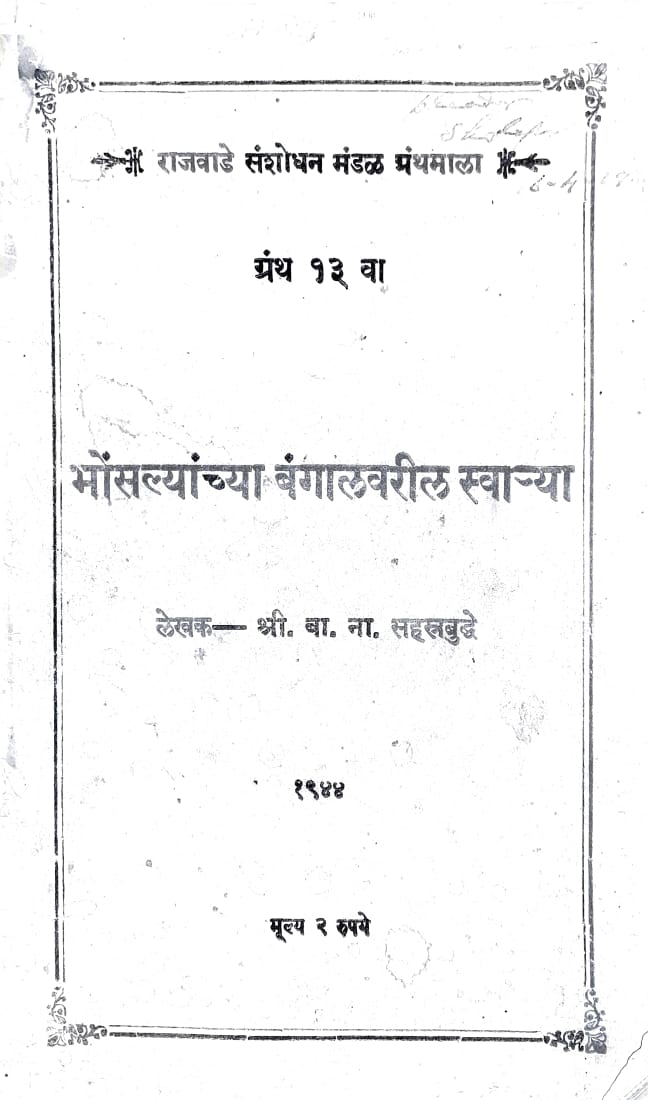
As history written by Jadunath Sarkar started getting mainstream, the allegations based on Gangaram Bhat’s poetry were being widely accepted and welcomed by the anti-Indic intelligentsia. The 4 volumes of “The Fall of the Mughal Empire” were published between 1932 to 1938. Finally, in 1944, the Rajwade Research Society published a book titled “Military Expeditions of Bhosales in Bengal” penned by VN Sahasrabuddhe.
This book is a compiled collection of articles published by Maratha historians in response to the poetic fiction of Gangaram Bhat and the subsequent systematic defamation of Maratha warriors. It gives a Maratha viewpoint to the historic chapter as opposed to the Muslim court chronicles Jadunath Sarkar relied upon while writing the history.
OpIndia has secured an original print copy dated 1944 of this book and the reasonings are based on the records given by these Maratha historians.
Military Expeditions of Marathas in Bengal – Objections, Allegations, and Rebuttal
Military Expeditions of Marathas in Bengal started in 1742. A decade-long fight with Alivardi Khan lasted till 1751 after which the Mughal governor finally made a treaty with Marathas and agreed to give a huge annual amount to Marathas as expenses of the army and administrations of the region. Though the word treaty suggests a pact of equal terms, the reality remains that Marathas gained more in the treaty than the Muslim governor. Allegations and objections by liberal Islamo-enthusiasts on this 10-year war between Marathas and Alivardi Khan are discussed below.
The prime allegation on Marathas is that they overstepped their ‘prescribed limit‘ by attacking Odisha, Bihar, and Bengal. This argument is supported by the fact that, in 1713 and in 1715, Peshwa Balaji Vishwanath had secured rights to collect quarter taxes from six regions of the Mughal Empire excluding these three areas which came under a single administrative division called Bengal. Even Peshwa Bajirao never took an excursion towards Bengal, then why did Raghuji Bhosale and his army march towards the eastern province?
In the quarter-charter obtained by the Marathas, six regions of the south were specified, but as the emperor, wazir or subheader (regional governor) asked for the help of the Marathas because of their own weakness or fought with the Marathas for some reason and lost the battles, the Marathas became dominant and spread their power to north Bharat, and therefore, the extent of the region to recover the quarter-tax increased.
Nanasaheb Peshwa used to collect the taxes till Bihar Patna, but when Raghuji Bhosale sent Bhaskarrao Kolhatkar to Bengal to collect the quarter taxes, Alivardi Khana rejected it. Neither Bengal nor Bihar did come under the quarter-charter agreement and when governor Alivardi Khan was the only chief officer in both regions, he obstructed Raghuji Bhosale’s commander-in-chief in Bengal and let Nanasaheb Peshwa recover the ransom and quarter-taxes from Patna, Mongir, Bhagalpur. This means that Nanasaheb Peshwa was superior to Governor Alivardi Khan who considered Raghuji Bhosale either unauthorized or unable to assert the Maratha power.
Well, who had given the charter or license of the Deccan to Aurangzeb, who had been camping in the Deccan and Maharashtra for 25 years? Had anyone invited or deployed him to Maharashtra with an army of 10-15 lakhs to loot the subjects? He had come with the aim of forcibly destroying the kingdoms of others in the Mughal Empire and for the purpose of spreading the Muslim religion and especially the Suni sect (Aurangzeb belonged to the Suni sect and the Sultans of Bijapur were Shias).
Aurangzeb too had no other license than coercion. Therefore, there is no question of how and why Raghuji Bhosale sent Bhaskarrao Kolhatkar to collect the taxes in Bengal when there was no mention of Bengal in the charter of taxes recovery. It was about Marathas expanding the boundaries of the Hindu empire.
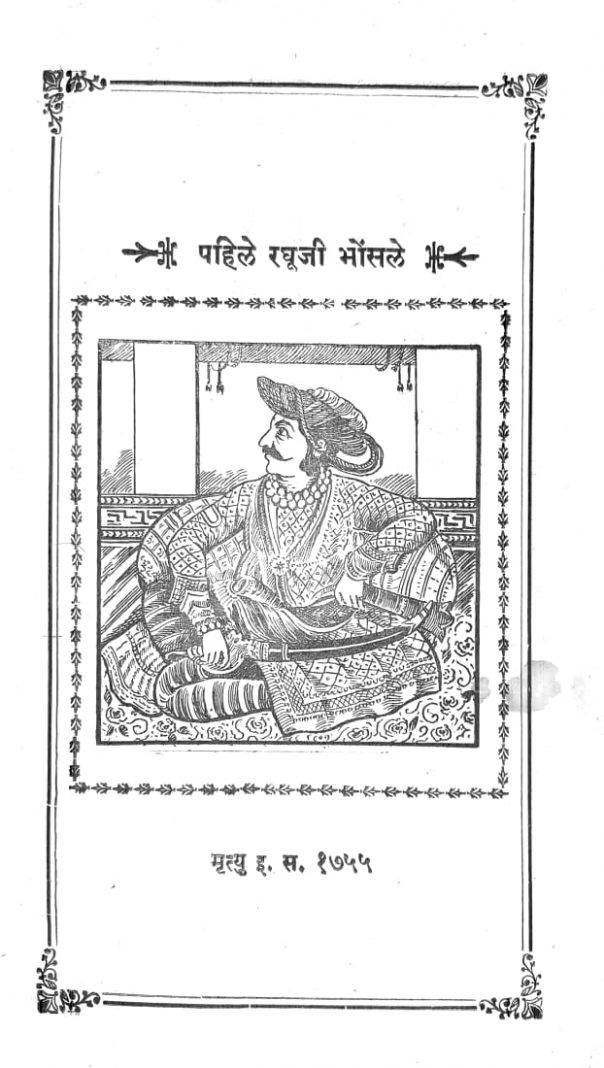
Raghuji Bhosale. Image Source: Military Expeditions of Bhosales in Bengal
It is notable that when Alivardi Khan was defeated in the first attack by Raghuji Bhosale’s army in 1742, he asked the Mughal Emporer for help. Marathas were bound to safeguard Delhi’s interests against the rights of collecting taxes in certain areas. Therefore, Nanasaheb Peshwa went to Bengal in 1742 and fought against Raghuji Bhosale, defeated him and forced him to move back.
In 1743, Raghuji Bhosale and Nanasaheb Peshwa both went to Satara and made an internal pact on 31st August 1743 and interestingly, Jadunath Sarkar mentioned this in his book. According to this, Chhatrapati Shahu Maharaj ordered Raghuji Bhosale – the governor of Nagpur, Gondwana, and Berar – to collect taxes and attach the region to the Hindu kingdom (despite Bengal is not mentioned in the 1713 charter).
Raghuji Bhosale was also allowed by Chhatrapati Shahu Maharaj to collect the expenses for the army from the same area. Nanasaheb Peshwa was supposed not to obstruct Raghuji Bhosale’s army according to this pact. Therefore, every Maratha excursion to Bengal after 1743 stands an execution of the order of the Hindu king.
One of the most obvious reasons for Chhatrapati ordering this to Raghuji Bhosale is that subjects in Bengal faced all sorts of tyranny Hindus would face under Islamic rule in medieval India. There is ample space to believe that the Chhatrapati must have been apprised by the Peshwa and Raghuji Bhosale who visited Bengal in 1742 for tax collection overstepping the charter of 1713.
In 1743, Raghuji Bhosale sent a grand army under the leadership of Bhaskarrao Kolhatkar to attack Alivardi Khan. It was during this excursion that Bhaskarrao Kolhatkar observed the Ashwin Navaratri in Bengal. The Durga puja celebrations by Marathas were attacked by the Mughal forces on the third day of the Navaratri that year. Islamists vandalizing the Hindu processions is therefore not a recent phenomenon in Bengal. Nevertheless, the war continued.
Another nonsensical section spread by Bangāli regionalists.
First sovereign-Hindu conducted Durga Puja in Bangāl after centuries of humiliating slavery was left unfinished as Alivardi attacked Marathas treacherously with 2 Lakh Qatūās.
Later in 1744, as Alivardi Khan sensed that he may lose the battle again, he called Maratha commanders to make a treaty by holding a diplomatic discussion. As Maratha commanders entered the Mughal camps, equipped with minimum resources as needed for any diplomatic discussions between any two ruling parties, Alivardi Khan ordered his men to kill Maratha frontline commanders.
Alivardi Khan killed 22 Maratha commanders over the pretext of a diplomacy meeting. This took place in 1744. It is because of this betrayal that Vaneshwar Vidyalankar has specifically described Maratha atrocities during the 1745 revenge attack by Marathas.
The names of the 22 Maratha commanders killed by Alivardi Khan on 3rd April 1744 at Mankara situated between Murshidabad and Katwa on the banks of Ganga are as follows – Senapati Bhaskarrao Kolhatkar, Alli Karwal, Yashvantrao Gujar, Neelkanthrao Mohite, Dadaji Bhosale, Bapuji Mahadik, Shah Mohammed Khan, Manaji Bhosale, Narayanrao Bhosale, Sambhaji Bhosale, Krushnarao Nimbalkar, Bapuji Kadam, Shripatrao Mehkar, Vyankatrao Bhau, Dajiba Patankar, Yashvantrao Shirke, Govindrao Shelkar, Satwaji Jadhav, Shivaji Jamdar, Subhanji Rao, Nana Bakshi, and Jotiba Karbhari.
The so-called rapes and atrocities by Maratha forces in Bengal often discussed by liberals to defame Marathas are mostly attributed to the wars after this incident. We have earlier discussed how the accounts of raping women and desecrating temples are exaggerations of a poetic chronicle that hardly holds any credibility.
Burning farms, destroying crops, and collecting ransom from Sahukars in the enemy land was a typical way of war in those times. This ensured the collection of huge money needed to meet the expenses of the army and it would also break the supply chain of the enemy which would ensure that enemy forces starve and surrender. Marathas looted every single “Jagat Seth” of Bengal because they supplied money to the Mughal governor.
The descriptions of atrocities on subjects in 1745 are so intense because Raghuji Bhosale’s forces took revenge for the heinous killing of the 22 commanders whom Alivardi Khan killed on the pretext of a diplomacy meeting. Accusing Marathas of atrocities in the Bengal War is thus either ignoring or whitewashing this heinous war crime.
What about Savarkar?
Let us announce at the very beginning that Islamists and Islamo-apologetic liberals have no moral ground to talk about any atrocities because Islamic scriptures support the idea of keeping women of enemies in their harems as sex slaves. These scriptures also support the idea of sex slavery imposed on these women. A simple Google search on Maal-e-Ganimat is enough to explain these concepts. Every Islamic invader has followed these orders. Even the dead bodies of the enemy women were not forbidden to these vultures. This is why the history of Rajasthan overflows with references to Hindu women committing Johar.
Amidst these realities, the tales about Marathas raping women in only a ruse to whitewash the atrocities suffered by Hindu women at the hands of Islamic invaders.
Sujata Anandan has also mentioned Veer Savarkar calling Chhatrapati Shivaji Maharaj a rank fool for not raping the daughter-in-law of the Muslim governor. Let us debunk this in the way it should be.
It should be noted that Jadunath Sarkar has relied upon a poetic chronicle to blame Marathas for the rapes and atrocities in Bengal. It is considered as some holy truth by the liberals because in this case, Marathas – read Hindus – are apparently at fault.
Veer Savarkar’s objection to Hindu kings not raping enemy women is mentioned in his book “Six Golden Epochs“. In this book, he has described six parts of Indian history in which Hindus successfully resisted invasions. He relied on the sources he could avail in those times. He also made an effort to connect the dots where court historians of enemies of India comfortably remained silent.
Now, firstly, taking a broad look at Savarkar’s whole literature, it is seen that he primarily started to write as a poet. So, when he turned towards prose writing, he did not lose any of his writing peculiarities, but he forged his sentences with an equally impactful composition which made him an excellent writer who would not write to please anyone but to enlighten those who sought the thoughts he gave.
What did Savarkar actually write?
In Chapter VIII of the book ‘Six Golden Epochs‘ Savarkar describes what he calls the ‘Perverted conception of virtues’. In three-four subsections of this chapter, he has described the effects of practising chivalry towards women of enemies and what Hindus received in its reciprocation. Savarkar does not call off Hindu Kings for not raping or forcibly converting the enemy women, but he presents an alternate “what-if” version of the history of woman-chivalry Hindus are proud of and explains what it would result in against prolonged Islamic rule in India.
When Savarkar calls any Hindu ruler to be wrong for not raping any enemy women, he is not necessarily blaming the Hindu kings and their values, but he is essentially underlining the fact that violence, disrespect to women, killing masses, desecrating shrines, and looting the masses was the only language the tyrants could better understand. Enlighting the Hindus about the kind of enemy they were facing for centuries, therefore, does not qualify to be an insult to the Hindu kings who saved our faith, spiritual centres, people, and even deities.
In Savarkar’s writing, he talks about Rani Padmini, the queen of the Mewar Kingdom, who committed Jauhar to escape the brutality of Khilji. Rani Padmini along with other women of the Kingdom had thrown themselves into the fire so that Khilji and the Islamic tyrants could not brutalise their bodies and rape them even after their death. Talking about Rani Padmini, Veer Savarkar in angst writes to Shivaji Maharaj saying that with the honour displayed by him, Rani Padmini would cry out to him asking him, “Oh King, don’t you remember how we died”. Essentially, Savarkar’s prose was about the angst of Hindus who were defiled, murdered and raped by Mughals, not necessarily belittling Shivaji’s valour.
What is interesting is elements like Sujata want to claim that Shivaji and the Maratha militaries raped Muslim women but at the same time, wish to quote Veer Savarkar whose prose proves that the Marathas treated the women of defeated Mughals with honour and respect, regardless of what Veer Savarkar thought about it.
Moreover, Savarkar – citing Pauranik and historic incidents – gives a model to rehabilitate the Muslim women had Hindu kings not allowed to set them free. Rather than endorsing sex slavery, Savarkar suggests that Hindu kings could take these women into the Dharmik fold and give them a respectable life – a method practised by Shaliwahans and Mauryas in the past with the women of invaders they defeated.
Also, the values of current times cannot always be imposed on or expected from the people who lived in the past. Therefore, despite employing 4-5 Muslims, Chhatrapati Shivaji Maharaj remains a Dharmik king and not a secular king. Similarly, despite someone from the Mughal clan scribbling some good lines about Hindu deities does not diminish the tyranny they unleashed on Hindus for centuries. Exceptions cannot be quoted as generalised examples. Veer Savarkar’s book can be accessed here.
And so what if Marathas committed atrocities?
There are allegations of terrible oppression by the Marathas who went to Bengal. If “holier than thou” is the only criterion for a sustainable and acceptable argument, it becomes imperative to be seen whether the Marathas were more oppressive or the Mughals were more oppressive. So let us now dive into that sea of the known-unknown authentic-unauthentic rapes and atrocities committed by either side and see what emerges.
Aurangzeb did never hide his intentions. He and his forces were pretty clear about their religious goal. When he entered the Deccan, he had huge troops. Wasn’t this army making a splash in Maharashtra for years? For this large army, leave alone months, but there was no salary year after year. At that time, did the people of these armies not destroy Maharashtra?
All these atrocities happening in front of his own eyes would be reported or written down by his own reporters or historians. Therefore, Aurangzeb stopped sending the news to the masses and at times even prohibited them from writing chronicles. As a result of this ban, the untold atrocities committed on the people of Maharashtra went unreported. Did none of it take place just because Aurangzeb’s handlers or court historians preferred to be silent on it?
On the contrary, Alivardi Khan did not give a quarter tax to Bhaskarrao Kolhatkar, so the battle between the two broke out. Bhaskarrao Kolhatkar captured him in the siege and made him miserable and while Alivardi Khan retreated from Burdwan to Katwa, as Gangaram Bhat described in the poetry book “Maharashtra Purana“, naming 50 villages on a 40-mile path in this retreat, and claimed that these villages were looted and burnt by the Marathas.
Even if it is believed to be true, one should not forget that Aurangzeb’s army had destroyed not 50, not 500, but thousands of villages and the entire region of Maharashtra and Deccan during his time. If an impartial person would have imagined a devastated Maharashtra at that time, he would not blame Bhaskarrao Kolhatkar for burning away just 50-100 villages.
Didn’t Afghans commit any atrocity that had a theological base?
If the atrocities committed by the Marathas in Bengal have indeed taken place, there is another big reason often ignored by liberals. That is, Raghuji Bhosale had got a clever and cunning Muslim chieftain named Mir Habib. Alivardi Khan became governor of Bengal by killing Governor Sarfaraz Khan. Mir Habib was a chieftain in Sarfaraz Khan’s army. He led a troop of Afghan soldiers who had earlier settled in Hindustan. With his help, Raghuji Bhosale sent Maratha warrior Bhaskarrao Kolhatkar to Bengal and Bihar, which is 1,000 miles away from Nagpur.
Mir Habib’s army was also fighting on the side of the Marathas, and he had to take revenge against Alivardi Khan. Though there can be no evidence to prove exactly who raped whom in or after the war times, the heinous atrocities Marathas are attributed to is not a Hindu phenomenon and it can match only with the gory acts committed by Islamists in the past, as described earlier in this article. So, one should not forget that these Afghans who earlier looted Bengal for Sarfaraz Khan were also looting Bengal while fighting against Alivardi Khan.
Later, Alivardi Khan, seeing that Bhaskarrao Kolhatkar can’t be defeated in the battle, lured him to the treaty, summoned him and his 21 chieftains to the governor’s own camp and killed him inhumanly in the village Mankara between Bhagalpur and Katwa. In the history of Bharat, however, there is no incident of betrayal matching this atrocity. Maratha historians have published the said book refuting Sarkar’s claim in 1944 as Maharashtra marked the 200th death anniversary of these military commanders.
Due to this cruel and vile act, Raghuji Bhosale got furious and made more attacks on Bengal from 1745 onwards. It is also pertinent to note that before the Marathas entered Bengal, the governor of Bengal and other Mughal authorities committed atrocities on Hindu subjects there for almost 4 decades after Aurangzeb’s death. The so-called wrath of Marathas was way softer and shorter than that.
Marathas hit where it hurts the most
Chhatrapati Shahu Maharaj went to the heavenly abode on 15th December 1749. Chhatrapati Rajaram Maharaj (also known as Ramraja) came to the throne. On 18th September 1751, Alivardi Khan signed a treaty with Raghuji Bhosale only after the former had suffered enough military and financial loss in the decade-long war. Chhatrapati Shahu Maharaj had given Raghuji Bhosale the right to collect taxes in Bengal. Raghuji Bhosale completed this task and brought confirmation from the defeated enemy during the tenure of Chhatrapati Rajaram Maharaj. Let us read the document of the treaty quoted by none other than Jadunath Sarkar.
Alivardi Khan signed this draft – “I swear by the Quran that I have accepted to give Chhatrapati Ramraja the quarter taxes of Bengal, Bihar and Orissa and established a friendly relationship with Raghuji. From September 18, 1751, I agreed to give twelve lakh rupees annually for holding Bengal, Bihar and Orissa. This quarter taxes will be sent to Banaras every six months in two instalments. But I will consider it appropriate only when neither Raghuji nor his descendants nor any other Maratha will live in these provinces and will never attack us any further.”
Raghuji Bhosale signed this draft – “According to the condition of this treaty, I am entitled to get twelve lakh rupees every year. It includes everything. I or my descendants or any powerful chieftain with whom I have a treaty will not make a residential stay in these three provinces – which are under Alivardi Khan – nor will in any way disturb the landlords there. Chhatrapati Ramraja has given me the right to collect the quarter taxes of the above provinces, so any other chieftain will not be sent to these provinces.“
No Islamo-apologetic liberal can digest what Alivardi Khan was made to sign. This is the way Marathas asserted power. They too were into the tiring decade-long war. But, they avenged everything and everyone they lost. Raghuji Bhosale too fulfilled the task of asserting administrative powers in the eastern province during the tenure of Chhatrapati Rajaram. He was assigned it by Chhatrapati Shahu Maharaj.
It is because of this decisive defeat and subsequent heavy ransom imposed on the Mughal governor that liberals often paint Marathas’ revenge for 22 commanders’ murders in Bengal as atrocities and try to insinuate that even Chhatrapati Shivaji Maharaj’s army committed rapes because he too hailed from the Bhosale clan. Sujata Anandan is the editor of the National Herald. To know more about the National Herald, click here.
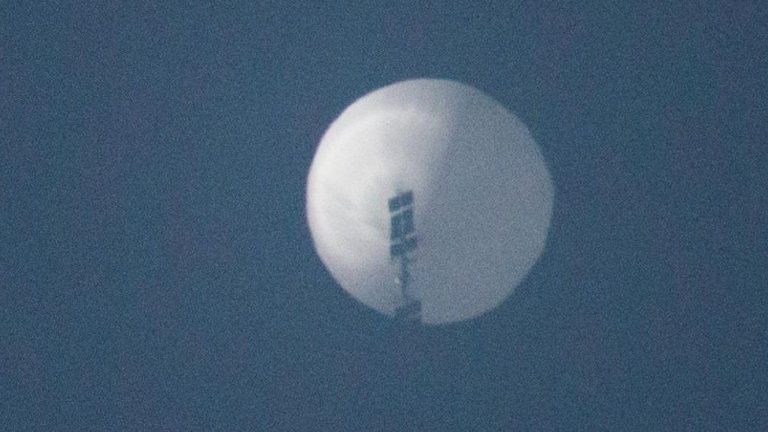
India and the US today held discussions over the Chinese spy balloons that were shot down by the American Air Force recently after being detected at a very high altitude there carrying out suspicious activities.
Asked whether the issue of the Chinese Spy balloon incident came up for discussions with Indian officials, Pacific Air Force Commander General Kenneth S. Wilsbach said, “He had very ‘brief’ conversations and dialogue with most of the air chiefs in the region, shortly after within few weeks after it was shot down by the United States down the Coast of South Carolina.”
Also, speaking about the incident, the Commander added that any country that would violate the sovereignty of another country should cause concern to us.
“Certainly, we had some dialogue on it. We have very briefly, I wouldn’t say it was extensive but had very brief conversations with most of the air chiefs in the region. It wasn’t public but rather private comments behind closed doors,” he said.
“I would like to discuss, something that should concern those of us who value a free and open Indo – Pacific..The sovereignty of your air space and the fact that we believe that your air space in India is your sovereign space and that you should decide who you get to fly into it. And when you have countries that don’t necessarily agree with that and they just decide to violate your sovereignty and fly in it, whether it’s your air space or ours or Canada’s as you are referring to the Balloon that eventually got shut down off the Coast of South Carolina”, said the Commander.
“Any country that would violate the sovereignty of another country’s airspace, who is not abiding by the international law or norms should cause concern for us and that is something that we as nations that believe in the rule of law should emphasize to the foundations that should abide by the rule of law and we should have discussions to encourage them to comply with that international law so that we don’t have areas that could turn into a very big miscalculation”, he added.
In February, the U.S. fighter jets shot down the suspected Chinese spy balloon that had drifted across the United States for several days bringing an end to the opening chapter of a tense public standoff with Beijing over the intrusion into U.S. airspace.
Speaking about Exercise Cope India 23, a bilateral Air Exercise between the Indian Air Force (IAF) and the United States Air Force (USAF), the Commander said that he is excited about that which will see air crafts and personnel training together. The Commander also highlighted that for the first time, B1 Bombers will be part of the exercises too along with a minimum of 4 F-15Es, C-17 and 2 C-130s.
“This is my fourth trip to India since I have been in the air force. It is an honour to be back. I really work on the overall objective towards the United States indo -pacific command and for free and open indo pacific and one of the methods by which we do that is to work with allies and partners which brings us here in India and we had a number of opportunities to have training opportunities and subject matter expert exchanges with Indian air force”, he said.
“This week we are very excited that Cope India will be going on and we will have several of our aircraft and many of our personnel here in India, training together. It is an opportunity to be able to prove our interoperability and to share tactics, techniques and procedures and what is very exciting about this particular Cope India is the induction of some of our Bombers that will be here later in the week”, he added.
Exercise Cope India 23 is being carried out at Air Force Stations Arjan Singh (Panagarh), Kalaikunda (West Bengal) and Agra in UP. The exercise aims to enhance mutual understanding between the two Air Forces and share their best practices.
The first phase of the exercise commenced on Monday. This phase of the exercise will focus on air mobility and will involve the transport of aircraft and Special Forces assets from both the Air Forces.
Both sides will field the C-130J and C-17 aircraft, with the USAF operating an MC-130J.
The exercise also includes the presence of Japanese Air Self Defence Force aircrew, who will participate in the capacity of observers.
(This news report is published from a syndicated feed. Except for the headline, the content has not been written or edited by OpIndia staff)
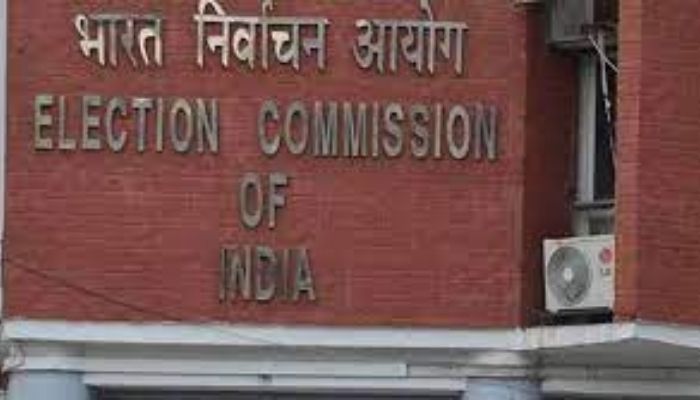
The Election Commission of India (ECI), on Monday, April 10, withdrew the national party status of Mamata Banerjee’s Trinamool Congress, Sharad Pawar’s Nationalist Congress Party, and the Communist Party of India (CPI). They have been reassigned the status of a regional party.
Arvind Kejriwal’s Aam Aadmi Party, meanwhile, has been granted the coveted tag. Aam Aadmi Party is currently in power in two states – Delhi and Punjab.
Election Commission of India withdraws the state party status of RLD in Uttar Pradesh.
Revolutionary Socialist Party derecognised as a state party in West Bengal.
In a statement, the poll panel announced that it was withdrawing the status of three recognized National Parties- AITC, CPI, and NCP. The Election Commission said they are doing it “following due process and providing the sufficient opportunity of two Parliamentary elections and 21 State Assembly Elections”.
Notably, while Mamata Banerjee’s TMC will now be acknowledged as a state party in West Bengal, Tripura, and Meghalaya, it will not be recognised as a state party in Arunachal Pradesh or Manipur, according to the EC’s order.
Further, the Lok Janshakti Party (Ram Vilas) has been accorded a state party status in Nagaland. Tipra Motha Party, meanwhile, has got recognised as a state party in Tripura, while K Chandrasekhar Rao’s Bharat Rashtra Samithi (BRS) has been derecognised as a state party in Andhra Pradesh.
Election Commission of India withdraws the national party status of NCP.
Lok Janshakti Party (Ram Vilas) gets recognition as a state party in Nagaland.
Tipra Motha Party gets recognition as a state party in Tripura.
Moreover, the Election Commission of India also withdrew the state party status of RLD in Uttar Pradesh, and the Revolutionary Socialist Party was derecognised as a state party in West Bengal. Meanwhile, the Voice of the People Party got recognition as a state party in Meghalaya.
Notably, the EC grants national party status to political parties based on certain criteria:
The party must secure at least 6 percent of the valid votes polled in any four or more states at a general election to the Lok Sabha or to the State Legislative Assembly.
The party must win at least 4 seats in the Lok Sabha from any state.
The party must win at least 2 percent of the seats in the Lok Sabha (i.e. a minimum of 11 seats) from at least three different states.
The party should be recognized as a state party in at least four states.
It may be recalled that after the 2019 Lok Sabha elections, the ‘National Party’ status of some of the parties was being reviewed by the Election Commission of India.
The ECI issued show-cause notices to the three parties in July 2019, asking them to explain why their national party status should not be revoked after their performance in the Lok Sabha elections that year.
Responding to ECI’s notice, the TMC has claimed that it was awarded the national party tag only in 2016 and urged the ECI to allow them to retain the status till the Lok Sabha elections in 2024. The CPI has also requested the ECI to review its status till after 2024 while citing the party’s history to defend its national character. On the other hand, the Nationalist Congress Party (NCP) has requested the Election Commission of India to wait till the Maharashtra Assembly elections result before taking a decision on the national status of the party.
A deadly blast targeted a police vehicle in the city of Quetta, Pakistan, resulting in the death of four people and injuring several others. The incident occurred today (10 April 2023) near a busy intersection in Quetta, the capital of Balochistan province.
According to eyewitnesses, a powerful explosion rocked the area, leaving the police vehicle completely destroyed and causing extensive damage to nearby buildings and shops. The victims included 2 police personnel who were on duty at the time of the blast and other civilians. The injured were rushed to a nearby hospital for medical treatment.
Quetta has been plagued by violence and attacks in recent years, with rebel militant groups often targeting security forces and law enforcement personnel. However, as of now, no group has claimed responsibility for the latest blast. Pakistani authorities are investigating the incident and trying to determine the nature and motive behind the attack.
#UPDATE Quetta: 4 killed, 6 injured in a blast at Shahra e Iqbal, as Police mobile targeted.
The incident has once again raised concerns about the security situation in Balochistan, which has witnessed violence and separatist movements for many years. Meanwhile, local residents are living in fear as such attacks have become a recurrent phenomenon in the region. They are hopeful that the authorities will take necessary measures to ensure the safety and security of civilians and security forces in Balochistan.
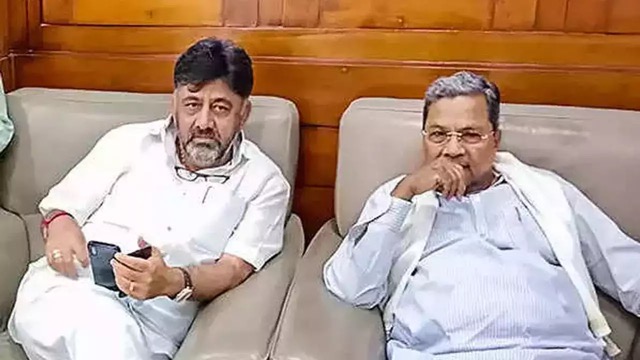
Ahead of Karnataka state polls, political machinations and stratagems seem to be on the anvil as senior Congress leader DK Shivakumar proposed making party president MK Kharge the CM face amid a fierce tussle over the post with former CM Siddaramiah.
To many, Shivakumar’s move to pitch AICC chief MK Kharge’s name as the Karnataka CM face for the Congress party is an attempt to undermine Siddaramiah’s bid and touch off the debate over ‘Dalit CM’ and ‘native vs outsider’ narrative within the party.
Shivakumar’s recent comments, expressing his willingness to work under Kharge as Chief Minister and acknowledging claims within the party that injustice has been done to the veteran leader in the past, have sparked conversations among many members of the Congress party in the state.
When asked about endorsing Kharge for the CM position, Shivakumar replied that Kharge, being a senior leader and the AICC President, has not made such a request and that his only wish is for Congress to come to power. Shivakumar also acknowledged that some voices within the party feel that Kharge has been treated unfairly in the past.
While Shivakumar has backed Kharge’s name for the Karnataka CM’s face, he has been careful not to go against the party line.
On Monday, while addressing reporters in Sringeri, he emphasized the importance of following the party’s decisions. He acknowledged that Kharge is currently leading the party and stated that he, along with Siddaramaiah and others, will also comply with the party’s directives, as the party holds significant importance.
Shivakumar and Siddaramaiah both have aspirations of becoming the chief minister in case the Congress party assumes power, and they frequently engage in political one-upmanship.
The chain of events was initiated by a question posed to Shivakumar regarding his potential withdrawal from the race if Kharge expressed interest in becoming the chief minister. Shivakumar responded by stating that Kharge is his leader and AICC president and that he would be delighted to work under him, as he is a valuable asset to both the state and the country. He also affirmed his commitment to Kharge’s wishes, as Kharge is 20 years senior than him, and expressed his willingness to comply with the party’s decision.
When asked about Shivakumar’s remarks, Siddaramaiah affirmed on Sunday that all individuals would adhere to the verdict of the high command.
Sources within the party suggest that Kharge was defeated thrice in his bid to become the Chief Minister. He lost the race in 1999 to S M Krishna, in 2004 to N Dharam Singh, and in 2013 to Siddaramaiah.
Certain members of the party hold the view that Kharge’s prospects of returning to state politics are minimal due to his current positions and duties.
A party official stated that as the AICC President, Kharge’s responsibilities encompass significant tasks such as guiding the party and organizing it for elections, as well as fostering opposition solidarity in preparation for the 2024 Lok Sabha elections.
Shivakumar’s remarks concerning Kharge, an 80-year-old Dalit leader, have reignited the discussion within the Congress Party regarding the appointment of a “Dalit CM.” Other notable members of the Dalit community, such as G Parameshwara and K H Muniyappa, are also participating in the electoral race, contributing to the debate.
The state of Karnataka has yet to have a chief minister from the Dalit community, resulting in a push from a faction within the Congress Party to address this matter. There are numerous competent leaders from the community within the party who are being considered for the role.
Parameshwara recently announced his candidacy for the position of chief minister in the event that the Congress Party obtains power.
Parameshwara, who served as the Deputy Chief Minister in the Congress-JD(S) coalition government under the leadership of H D Kumaraswamy, was also the Karnataka Pradesh Congress Committee (KPCC) chief for eight years, making him the longest-serving individual to hold the position. Meanwhile, Muniyappa is an experienced party leader and a seven-time Member of Parliament from Kolar.
Moreover, since Siddaramaiah previously served as Chief Minister between 2013-2018, some members of the Congress Party are advocating for the appointment of a “native” or “genuine” Congressman for the position this time.
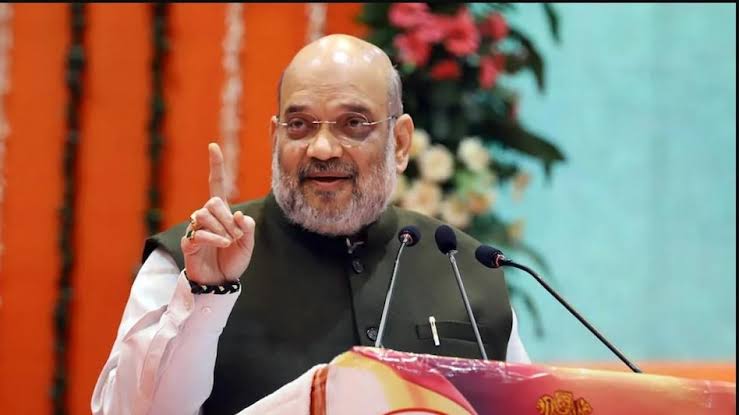
Highlighting the paradigm shift in the government’s approach towards the Northeast, Union Home Minister Amit Shah on Monday said that the Narendra Modi government has changed the image of the region in the last nine years from “disturbed region” to an area contributing to the nation’s progress.
The Home Minister said that the disputes and extremism in the region are at a diminishing stage and there is peace and development in the region.
“Before 2014, the entire Northeast region was known as a disturbed region but in the last 9 years, because of PM Modi’s ‘Look East’ policy, the Northeast is now considered an area which contributes to the progress of the country,” Shah said while launching ‘Vibrant Villages Programme’ in Arunachal’s Kibithoo.
“Due to the laziness of the leaders in Delhi at some point, this area was disputed. There was no peace, development and connectivity. Today, the disputes are coming to an end, extremism is coming to an end. There is a new dawn of development and peace,” he added.
The Home Minister laid down the statistics in comparison to 2014 and said that there has been a significant reduction in violent incidents in the northeast today.
“Over 8,000 extremists have surrendered in the nine years. In comparison to 2014, there is a fall of 67 per cent in violent incidents in 2022. There has been a decrease of 60 per cent in the injuries of the security forces and an 83 per cent fall in the deaths of the citizens,” Shah said.
“Under the ‘Vibrant Village Programme’, 2,967 villages in 46 blocks of 19 districts along the northern border in Arunachal Pradesh, Sikkim, Uttarakhand, Himachal Pradesh and the Union Territory of Ladakh have been identified for comprehensive development,” he added.
Shah said that there will be no village in the border areas of the country without electricity, internet and road facilities. “Along with this, employment facilities will also be made available in every village,” he said.
Stating that the security of the border is the security of the nation, Shah said that the Modi government is continuously working on increasing the infrastructure on the border.
Shah is on a two-day visit to the Northeastern states of Arunachal Pradesh and Assam.
(This news report is published from a syndicated feed. Except for the headline, the content has not been written or edited by OpIndia staff)
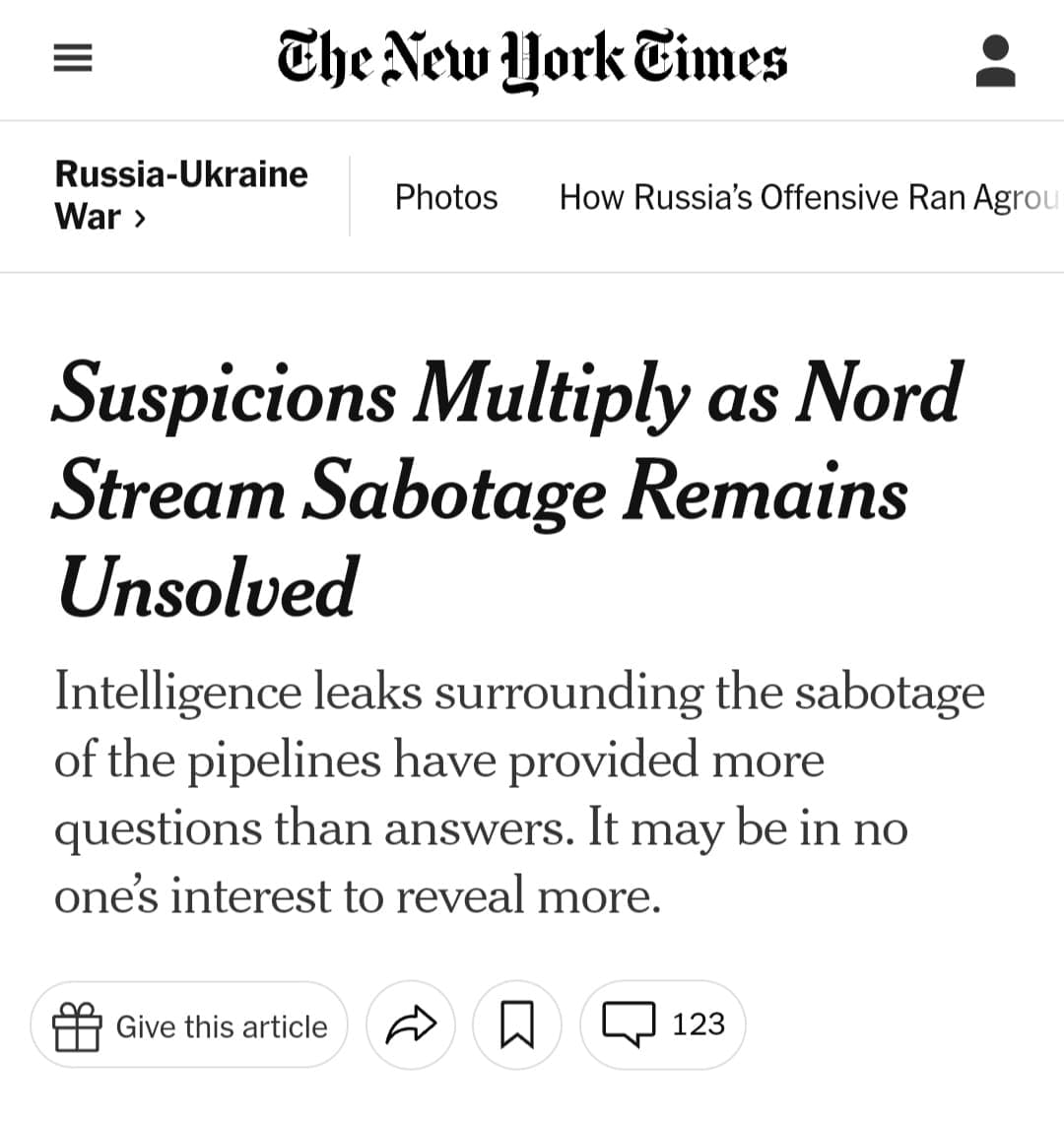
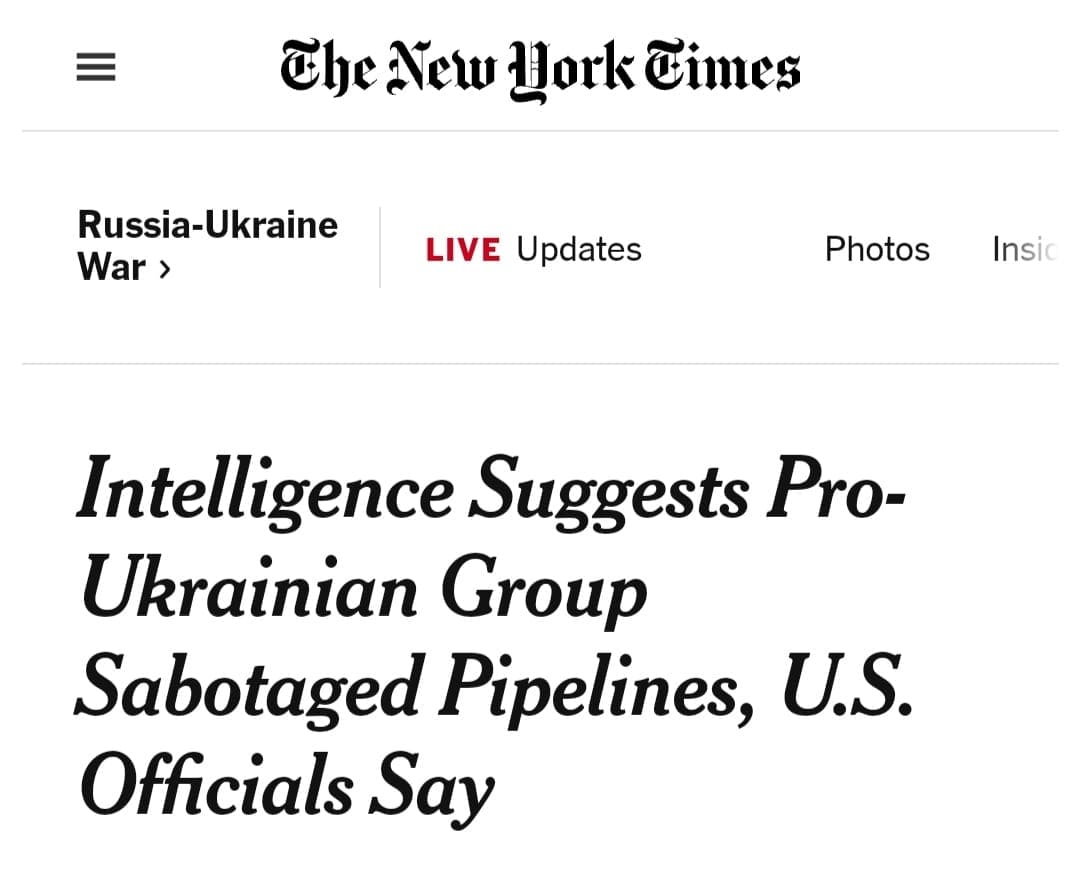
On Friday (April 7), the American newspaper The New York Times (NYT) published a contentious piece, arguing that it is in the best interests of everyone to not know the truth about the 2022 Nord Stream pipeline sabotage.
The article, authored by a journalist named Erika Solomon, claimed, “Naming a culprit could set off unintended consequences.” She went on to suggest that ‘naming’ Russia could lead to demands for a ‘response’ from the Western allies.
“Claiming Russia was behind the attack would mean it had successfully sabotaged major critical infrastructure in Western Europe’s backyard and could spark demands for a response,” Solomon wrote.
Screengrab of the article by The New York Times
“Blaming Ukrainian operatives could stoke internal debate in Europe about support for their eastern neighbour. And naming a Western nation or operatives could trigger deep mistrust when the West is struggling to maintain a united front,” she further added.
Erika Solomon managed to find a ‘military expert’ named Jens Wenzel Kristoffersen to back her contentious proposition. “There are strategic reasons for not revealing who did it. As long as they don’t come out with anything substantial, then we are left in the dark on all this — as it should be,” he suggested.
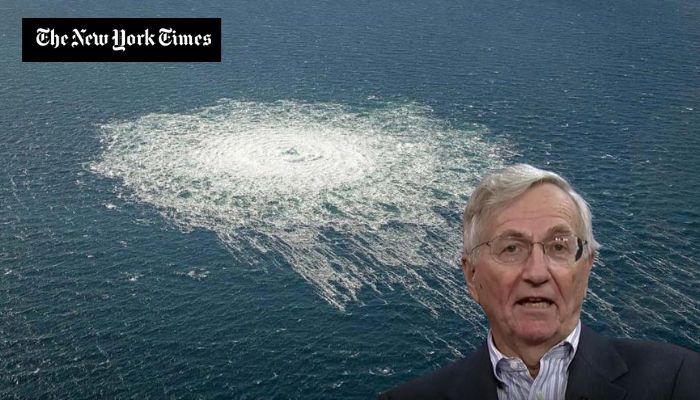
The sudden change in the stance of The New York Times comes two days after Pulitzer Prize-winning journalist Seymour Hersh called out the American daily for parroting the CIA (US intelligence agency)’s version of the underwater bombing of Nord Stream 1 and Nord Stream 2 gas pipelines.
Screengrab of the Substack newsletter of Seymour Hersh
It must be mentioned that the American journalist had earlier accused the US Navy of blowing up the Nord Stream pipelines in an explosive piece in February this year.
In a Substack newsletter published on Wednesday (April 5), Seymour Hersh stated, “Within weeks of my report that Joe Biden ordered the destruction of the Nord Stream pipelines, the agency produced a cover story and found willing takers in the New York Times and two major German publications.”
He lambasted the American newspaper for peddling the story, concocted by the Central Investigation Agency, to shield the role of the US government in the 2022 Nord Stream pipeline sabotage.
The Background of the Controversy
On March 7 this year, The New York Timespublished an article wherein it cited new Intelligence to claim the role of Russian/ Ukrainian nationals in the sabotage.
“Officials who have reviewed the intelligence said they believed the saboteurs were most likely Ukrainian or Russian nationals, or some combination of the two. US officials said no American or British nationals were involved,” it stated.
Citing officials, NYT further added, “The explosives were most likely planted with the help of experienced divers who did not appear to be working for military or intelligence services, U.S. officials who have reviewed the new intelligence said.”
Screengrab of the article by The New York Times
German law enforcement officials had initially claimed that a 6-member Ukranian group forged passports and chartered a 15-metre yacht named ‘Andromeda’ to carry out the destruction of Nord pipelines. However, they backtracked from this theory earlier this month.
Pulitzer Prize-winning journalist Seymour Hersh slammed the likes of The New York Times for failing to question the ‘dubious’ Andromeda story and blindly relying on Intelligence inputs. He said that the story was fed by the CIA to both the US and German media as well as the latter’s Intelligence service.
“By creating a story of deep sea divers and a crew who did not exist, the agency was following protocol, and the story would have been part of the first days of secret planning to destroy the pipelines…The cover story was shared with and supported by the BND, Germany’s federal intelligence service,” Hersh noted.
Under fire from the veteran American journalist, The New York Times was forced to make quick amends and come up with an intriguing piece that neither discredits their original CIA cover story nor encourages an in-depth investigation into the Nord Stream pipeline sabotage.
Journalist Erika Solomon found the solution to the fix – Don’t name the culprit!!!
The head of the freshly established Orthodox Church of Ukraine(OCU) declared on Sunday that prayers at Kyiv’s famed Pechersk Lavra should now be offered in Ukrainian. Up until recently, canonical Ukrainian Orthodox Church (UOC) monks lived in the mediaeval monastery and offered prayers primarily in the Russian language.
On the eve of Orthodox Easter the following Sunday, prayers would be held in the monastery, Metropolitan Epiphany, the head of the OCU, announced to the Ukrainian media. On December 2, 2022, President Vladimir Zelensky outlawed all religious groups “affiliated” with Russia from operating in Ukraine, Kyiv officially certified the Lavra as an OCU monastery.
Up until recently, the UOC monks kept residing in the monastery. Kyiv cancelled a lease agreement with the UOC in late March, which had let the monks to reside in the Lavra. The monks objected to being asked to leave and complained, appealing the ruling to a Kyiv court. Their case will now be heard later in April.
? Congratulations to the Ukrainian Orthodox Church on gaining control of the Kyiv-Pechersk Lavra (Kyiv Monastery of the Caves)
It’s Ukraine’s holiest site and was founded in 1051
The Ukrainian Orthodox Church (Moscow Patriarchate) that was evicted is controlled by the Russian… pic.twitter.com/FjOzlSOqTw
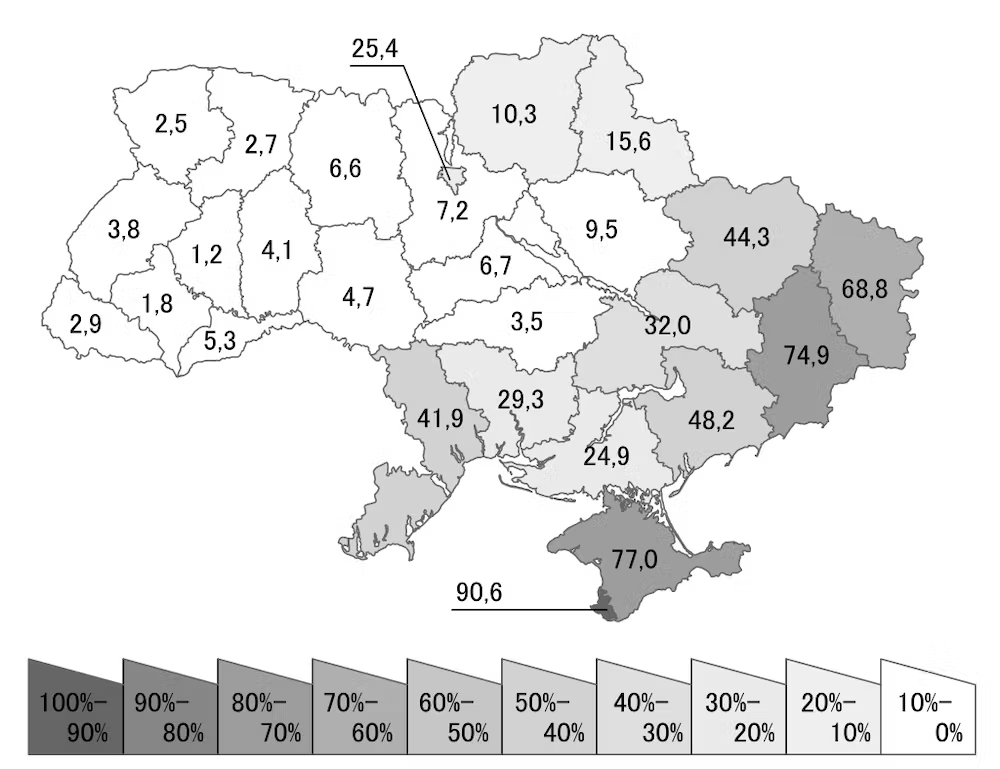
The ban is seen as a divisive move that could further deepen existing tensions and divisions within Ukrainian society. Ukraine has a sizable population of Russian speakers, particularly in the eastern regions, and the ban may be viewed as discriminatory towards this minority.
Percentage of Ukrainians who speak the Russian language.
Image Source: Wiki
The OCU does not want to “evict the monks,” Epiphany told the Ukrainian media. “We want the spirit of the ‘Russian world’ to no longer reign here,” he added while insisting that “the Lavra should be Ukrainian; prayers in Ukrainian and for Ukraine should always be held there.”
Back in November 2022, when the Ukrainian security service (SBU) started a criminal case over chants honouring Russia in the Lavra amid the conflict, tensions between the monastery and the Ukrainian authorities grew. Moscow and Kyiv are still at odds. The SBU has been raiding UOC churches, apparently looking for a weapon cache and proof of treason, the UOC has historical ties to the Russian Orthodox Church and was accused of being a security danger by the Ukrainian authorities during the wartime confrontation with Russia.
Metropolitan Pavel, a senior bishop of the UOC and the head of the monks in the Lavra, was taken into custody by Ukrainian law enforcement in late March. He was charged by SBU with promoting religious animosity as well as “defending and denying Russian military aggression.”
Russo-Ukraine war
The Russo-Ukrainian War is an ongoing international conflict between Russia, alongside Russian-backed separatists, and Ukraine, which began in February 2014. Following the violence at Euromaidan and the subsequent coup that ousted the elected government of Yanukovich, Russia annexed Crimea from Ukraine and supported pro-Russian separatists fighting the Ukrainian military in the Donbas War. The first eight years of conflict also included naval incidents, cyberwarfare, and heightened political tensions. In February 2022, Russia launched a full-scale invasion of Ukraine after declaring the Donbas region as Russian territory.
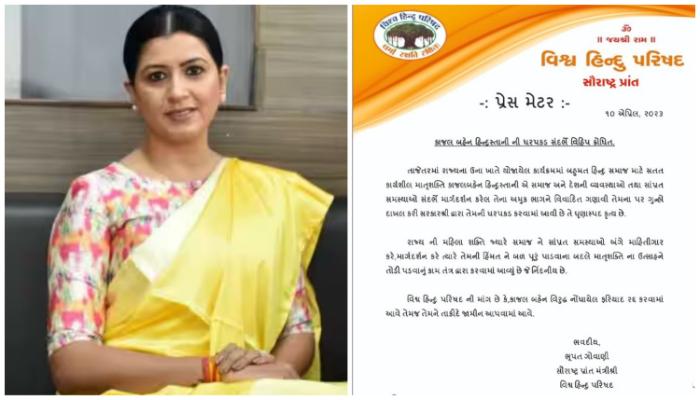
The Vishwa Hindu Parishad on Monday (April 10) condemned the arbitrary action taken by Gujarat police against Hindu activist Kajal Hindustani and demanded her immediate release. In a press release dated April 10, the Hindu organisation also demanded that the FIR filed against the Hindu activist be quashed with immediate effect.
— Vishva Hindu Parishad – Saurashtra (@vhpsaurashtra) April 10, 2023
The press release was made public a day after Gujarat’s Una police arrested the Hindu activist for an alleged ‘hate speech’.
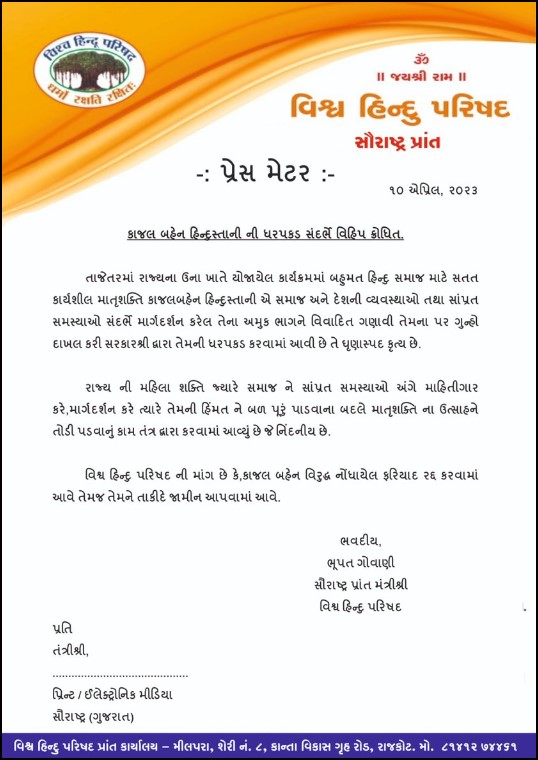
In the press release by VHP in Gujarati is translated as follows:
“Kajal Hindustani, the symbol of women empowerment, who has been continuously working for the majority Hindu society, was arrested recently in a programme held in Una by the government, who considered some of her advice regarding the system and related problems of the society and the country to be controversial.”
“Instead of strengthening women’s power in the state, as exemplified by women like Kajal Hindustani, who enlightened and counselled society on relevant issues, the system has fractured the spirit of woman power, which is terrible.”
Press note released by VHP demanding the release of Kajal Hindustani
“The Vishwa Hindu Parishad demands that the complaint against Kajal ben be dropped and that she be granted bail immediately,” the statement read.
Kajal Hindustani arrested for an alleged ‘hate’ speech
On Sunday, April 9, Hindu activist Kajal Hindustani was reportedly arrested by Gujarat’s Una police. This comes after a case was registered against her for an alleged ‘hate speech’. According to local media reports, Kajal Hindustani has been sent to Junagadh jail following an appearance in front of the Magistrate at his residence.
On March 30, the Ram Navami procession (Shobhayatra) was taken out in Una of district Gir Somnath, Gujarat. Following the procession, an event was organized where Hindu activist Kajal Hindustani was one of the speakers. The Dharmasabha took place at Raavanvadi near Trikon Bagh.
During her speech, Kajal raised several issues, including Love Jihad and Land Jihad. The local Muslims deemed her speech controversial and took out a protest march. There were reports of stone pelting at various places, and the city was on the edge for two days. In addition to this, the infamous Sar Tan Se Juda slogans were also raised against her.