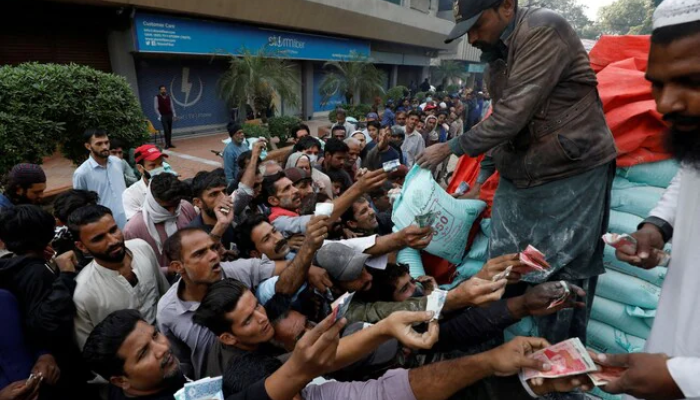
On Tuesday, protests and clashes over the distribution of free government wheat flour were witnessed in several parts of Peshawar. The city’s police revealed their inability to handle the situation and requested that the province administration enlist the support of the Frontier Constabulary (FC).
A number of locations throughout the city experienced unrest, including Ashraf Road, Khyber Colony, Yousufabad, Ittehad Colony, Zaryab Colony, Faqirabad, Ring Road, and Badhber. Due to protesters blocking Kohat Road over not obtaining the free flour, the area experienced severe traffic congestion.
A similar scenario caused demonstrators in Hayatabad to obstruct Masjid-e-Zarghoni Road. They also blocked a road in Zaryab Colony.
They lamented that despite spending the entire day in huge lines, they still had to go home empty-handed. They asserted that political connection and nepotism were both factors considered in the distribution of flour. The number of complaints about not receiving free government flour is growing every day.
Due to the sluggish flour distribution on Monday, a stampede resulted in numerous injuries in Peshawar. Police using batons to maintain order further exacerbated the situation. Nine people were trampled during the incident, with one person succumbing to their injuries at the hospital.
Five people have died in similar events across Khyber Pakhtunkhwa since the beginning of Ramazan. On the first day, one person was killed and eight others injured in a stampede for free flour in Charsadda. People were also injured in Swabi and Kohat. Another individual lost his life in Bannu after a flour mill’s perimeter wall fell just before distribution.
In Sahiwal, stampedes at free flour centres in the Sahiwal, Bahawalpur, Muzaffargarh, and Okara districts of the province on Tuesday resulted in the deaths of an elderly woman, a man and the injuries of 56 people, including 45 women, as the mismanagement in the distribution has persisted since the government started the exercise and the populace started scurrying to distribution points.
The app used to confirm the beneficiaries purportedly had a technical issue and ceased to function. There were apparently more than 1,500 women present in the stadium who had come to collect flour, and the app link remained down and did not restart for three to four hours.
As a result, there was a huge crowd at the free flour distribution centre, and many were impatient due to the lengthy wait for the system to resume functioning. In the stampede, one woman, Naseem Akhter, died and more than 45 women and two men were hurt.
A 73-year-old man, Muhammad Anwar, from tehsil Liaqatpur in Rahim Yar Khan who had come to get free flour at a distribution point at the Govt High School Taranda Muhammad Pannah died earlier in another incident. There was a rush of people at the centre, and he was reportedly shoved until he fell and suffered grave injuries. Some people claimed that the chaos had happened as a result of the deputy commissioner’s protocol upon his arrival at the facility.
Due to the massive influx of people, the wall of the banquet hall in Shehr Sultan, Muzaffargarh, where the flour centre was put up fell, injuring seven individuals. The rescue team admitted that a lot of people caused the banquet hall’s mud wall to collapse.
Four women suffered injuries and two fell unconscious at the free flour supply point at Depalpur, Okara. The intense crowding at the centre caused a stampede. Four women were hurt as they fell to the ground and were run over by others.
At least five ladies were hurt in a stampede at a location where free flour was distributed in the southern district of Hasilpur, Punjab.
A video shows a truck carrying flour being looted in Peshawar, Pakistan.
A truck carrying flour looted in Peshawar, Pakistan as the country faces it’s worst economic and political crisis since formation and is on the verge of debt default.
Catastrophic flooding, exploding inflation, energy shortages and food shortages …
More clips coming out of Pakistan exhibit police action on citizens waiting to get free flour as well as long queues at free flour distribution centres.
— Tarangini das ???♀️ (@Tarangini_das47) March 26, 2023
Meanwhile, on Tuesday, the employees of Pakistan Railways (PR) continued to demonstrate against the non-payment of their salaries for the second day running. A large number of protesters gathered at the PR diesel engine shed in Lahore. They demanded immediate payment of their salaries. The railways’ BC and class IV employees are yet to receive their pay.
Workers protested at the diesel engine shed, washing line, railways headquarters, and division offices across the country at the behest of the Pakistan Railways Employees (PREM) Union. The diesel engine shed employees organised a massive protest and halted the engines.
Pakistan is witnessing violent protests which often lead to fatalities due to its continuous economic turmoil and inflation reaching a nearly 50-year high. Political instability has further added to the festering woes of our hostile neighbour.
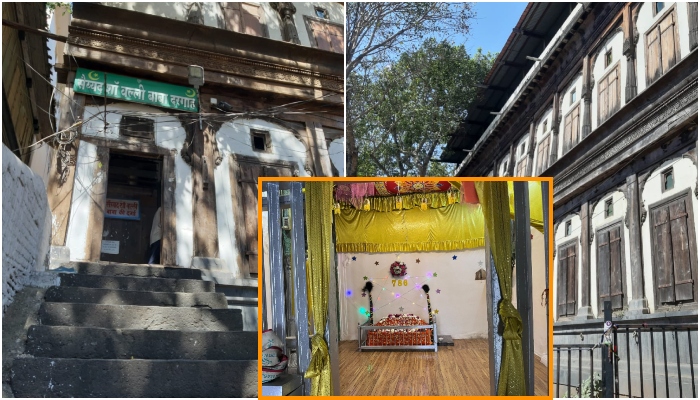
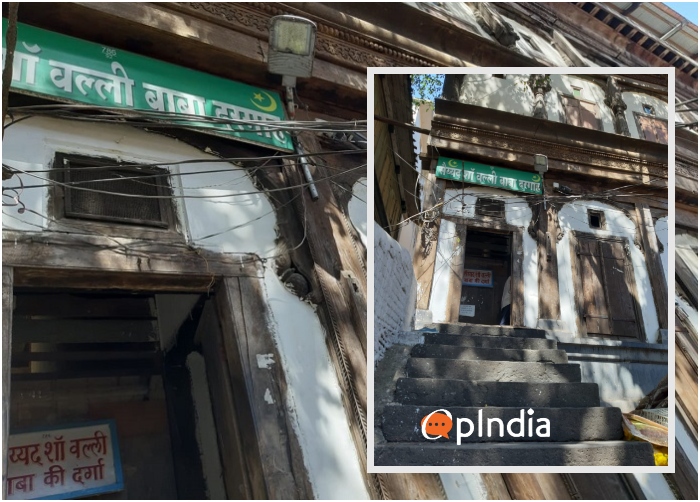
In the city of Nashik, known as ‘Mini Maharashtra’, which is famous for its rich cultural heritage, there is an 18th-century-old historical monument that once served as the administrative headquarters of the Peshwas. The monument ‘Sarkarwada’, located in the heart of the city in Saraf Bazaar, old Nashik area is drawing attention these days after a few members associated with a local Hindu group objected to the presence of ‘Sayyed Shah Vali Baba Dargah’ in the premises.
Rushikesh Dapse (Bapu), who says he is a common citizen of Nashik but is a social activist associated with a local Hindu organization, claims that the Dargah in the Sarkarwada, which was once home to Peshwas, is an ‘illegal encroachment’ and that it shall be removed as it represents the wrong history of the Peshwas. “There is no reference to the Sayyed Shah Vali Baba in the history of Sarkarwada or the Peshwas. He was in no way associated with Peshwas. Our Maratha leaders fought against the Mughals and how they must have allowed a Dargah to be built inside their home? This Dargah was never part of the Sarkarwada and was constructed later. It is illegal encroachment as the government also has no documents about the claimed religious place,” Bapu said putting up his point initially.
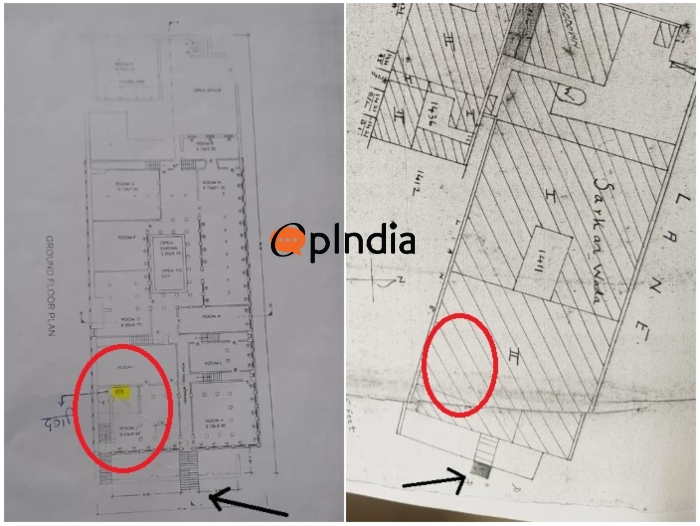
New City Survey map shows Dargah’s separate entrance
Team OpIndia travelled to Nashik to verify the incident and accessed the old blueprint and the current blueprint of the Sarkarwada. The documents clearly show that the Dargah was not a part of the Sarkarwada which was built in the 18th century. The ‘Sayyed Shah Vali Baba Dargah’ where even some Hindus come to pray, was built in the later years and has been given a separate entrance in recent years. However, the State Archaeology Department stated that the Dargah is old and was not shown in the city survey map earlier. “It has been shown now,” it said.
Current blueprint (L) and Old blueprint (R) of the Sarkarwada accessed by OpIndia
The Dargah is clean and is open for worship for specific official hours in the day. No Muslim trust or organization controls the Dargah. It is part of the Sarkarwada and is protected by the State Archaeology Department since the year 1995.
History of the 18-century-old Sarkarwada
As per the historical records, the Sarkarwada was built by a Peshwa Sardar named Ranganath Odhekar and was later taken over by Raghobadada Peshwa. It is also believed that Gopikabai Peshwe, the Peshwin of the Maratha Empire used to visit the Wada and control the Maratha administration from there. Later, after the defeat of Peshwas in the year 1818, the Sarkarwada was taken over by the Britishers who also used the palace to continue British administrative business from there. Hence, the name ‘Sarkarwada’.
Today, the Sarkarwada hosts a Regional Antiques Museum and the office of the Assistant Director of State Archaeology. However, the left side of the property is officially occupied by the ‘Sayyed Shah Vali Baba Dargah’, the inception of which is a big question.
Dargah located in the left portion of the Sarkarwada property
‘Dargah is illegal, people organize Sandals in Baba’s name,’ says Hindu activist Dapse
Bapu, while talking to OpIndia said that most of the worshippers who offer prayers at the Dargah are Hindus and that nobody knows who Sayyed Shah Vali Baba is and how was he connected to Peshwas. “We have been staying in this city, in the Saraf Bazaar area for generations now. Mine is the fourth generation. This Dargah is believed to be old. But in recent times, people have begun organizing Sandal processions (religious fairs) in the name of Baba. Nobody knows about the Baba or the Dargah, not even the archaeology department. Nobody knows when and why the Dargah was established. Amid this, isn’t organizing religious fairs and processions and allowing worship at the location reflecting the wrong history of Peshwas? Peshwas had nothing to do with this Sayyed Shah Vali Baba. In fact, Marathas fought against the Muslims. But the coming generations might think that Peshwas were the worshippers of the Sayyed Shah Vali Baba, which is untrue,” he said.
‘No documents,’ confirms State Archaeology Department in RTI response
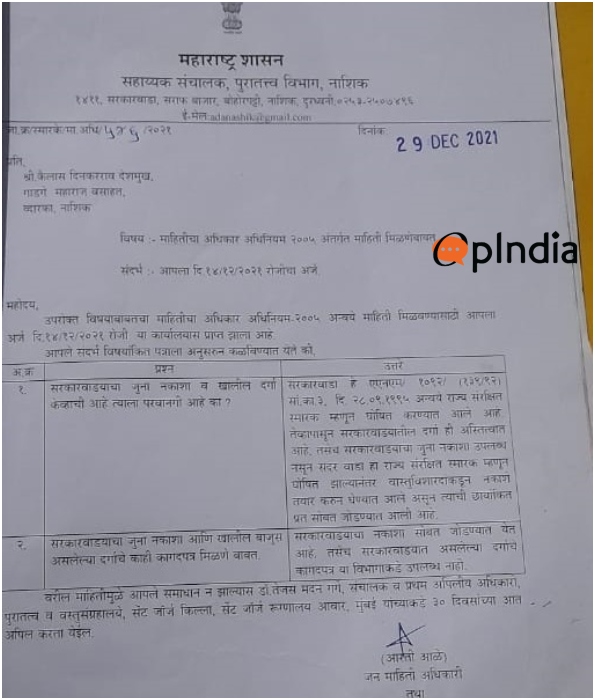
He also said that a few members of his organization filed an RTI to seek information about the Dargah from the State Archaeology Department but to no avail. The RTI filed in the name of one Kailash Deshmukh, was responded to by the Director of State Archaeology saying that there are no documents regarding the existence of the Dargah. “The entire property of the Sarkarwada was declared as the archaeological site in the year 1995. The Dargah also, being part of the property from before 1995, is protected under the law. As per the archaeological norms, any property attached to the archaeological site since its official declaration ought to be protected under the law. It cannot be separated, removed, or expanded. It has to be protected as it is. The department has no documents regarding the Dargah. Also, the department has no idea when the Dargah was established,” the RTI response read.
RTI response copy obtained by OpIndia
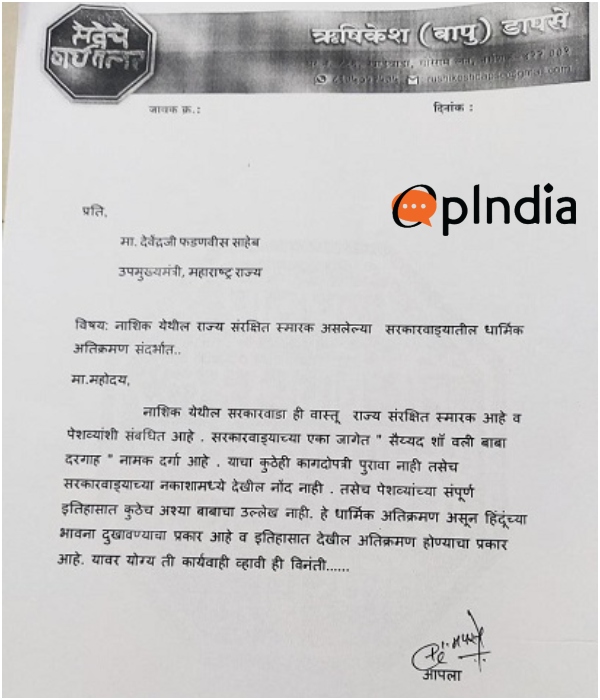
Bapu Dapse has also sent official letters to several political leaders including Dy CM Devendra Fadnavis, Cultural Affairs Minister Sudhir Mungantiwar, and Director Department of Archaeology and Museums Tejas Garge demanding strict action against the Dargah, but the letters have not yet been communicated. “The Dargah at the Sarkarwada in Nashik is an example of illegal encroachment. There are no documents about the Dargah. No historian and no govt officer have any official document which proves the inception of Dargah. Also, the Peshwa history reflects no connection with the Sayyed Shah Vali Baba. The Dargah shall be removed or strict action against it shall be taken,” the letter written by Dapse reads.
The letter also states that the encroachment in the Peshwekalin Sarkarwada has hurt the religious sentiments of the Hindus.
Letter copy sent by Bapu Dapse to several political leaders obtained by OpIndia
Local shopkeepers in Saraf Bazaar see no problem with Dargah, claim, ‘mostly Hindus worship it’
Team OpIndia meanwhile talked to several other shopkeepers who have their businesses set up in the busy market of the Saraf Bazaar area. Many of these shopkeepers who are Hindus and wear a tilak on their forehead, offer prayers at the Dargah daily before starting their businesses. This part of their routine was observed by the team and noted as well.
One of the gold jewellers provided information on the condition of anonymity. He said that the Dargah is believed to be around 150 years old and nobody in the bazaar area has a problem with its existence. “This dargah is worshipped by Hindus mostly. Earlier the entry to this Dargah was from within the Sarkarwada but after the renovation, it was given a separate entrance and since then it has been under controversy. Many Hindu organizations are demanding its removal claiming that Peshwas had no connection with Sayyed Shah Vali Baba and they never built the Dargah. They claim that wrong history is being represented and that their sentiments are hurt by this. But nobody in the bazaar feels alike. In fact, most Hindus in the Saraf Bazaar, daily visit the Dargah and seek blessings,” he said.
On asking about the establishment of the Dargah, he said that nobody knows when it has been in the Sarkarwada but people have faith in that place. Giving more historical reference, he said, “After Peshwas, a Hindu ruler named Raje Bahadar ruled over the Wada. He had many Muslim sepoys in his army. It is said that he built this Dargah for his sepoys to worship. But nobody is sure about this. People also say that Peshwas might have built it themselves for their Muslim sepoys.” Notably, the old blueprint of the Sarkarwada (attached above) shows no existence of a Dargah during the 18th century.
Another shopkeeper who deals in perfumes reiterated on the condition of anonymity that a few Hindu people recently objected to the Sandal procession (religious fair) at the Dargah and raised saffron flags. He stated that the Hindu organizations claimed that Dargah at Peshwa’s Sarkarwada is illegal and organization of Sandal had hurt their religious sentiments. “We believe in religious unity and nobody in the Saraf Bazaar has a problem with the Drgah. These Hindu people are trying to create a religious divide in the society by raising this issue,” he alleged.
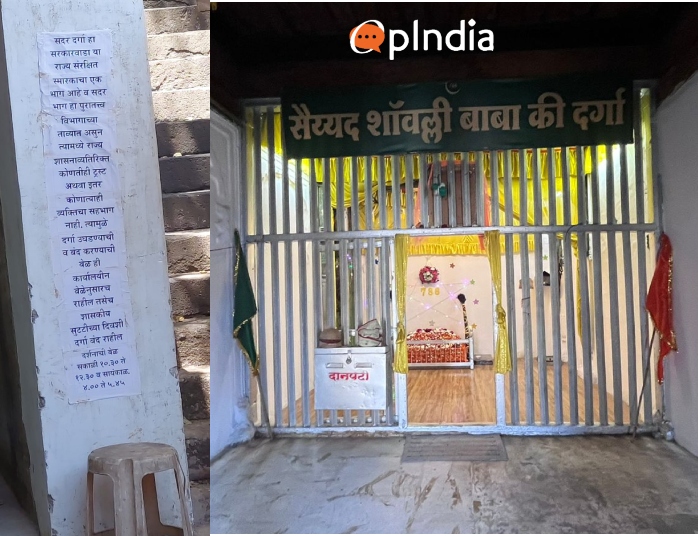
Notice displayed at the Sarkarwada reads that “Dargah is part of archaeological site and is protected by the State Archaeology department. No trust, no religious organization looks after the Dargah”
State Archaeology Department says Dargah cannot be removed as the site is protected
During the visit, team OpIndia also met the head of the State Archaeology Department, Nashik, Aarti Ale, who confirmed that the State Archaeology Department has no information about the Dargah. “The site is protected under the archaeological norms since the year 1995 and as per the norms the site has to be protected as it is. No removal, separation, or expansion can be allowed at the site,” she said.
She added that the department tried to search for the history of the Dargah but could not. “The Dargah is open to worship. Several people, mostly Hindus worship it. In recent years, some organizations have raised the issue of the Dargah’s history and its connection with the Peshwas, but we too have no clue about it. We have no documents and no papers regarding the Dargah,” Ale confirmed.
When asked about the demands put forth by the Hindu organizations, she said, “They want this Dargah to be removed. But it is in no way possible. It is part of the Sarkarwada and the entire property is protected under the Archelogy Department. We can’t do anything about it. In an extreme case, I can issue orders to close the Dargah for worshippers. But it can’t be removed,” she confirmed.
Bapu Dapse, who meanwhile reiterated that the Dargah is illegal encroachment of not only the Peshwa property but its history as well, demanded strict action against it. “There are no documents about the Dargah. Govt itself should take note of this and consider the matter at the earliest,” he stated.
Notably, a similar issue was reported from the Mahim coast area in Mumbai where an illegal Mazar has come up in recent years. The Brihanmumbai Municipal Corporation on March 23 employed bulldozers to demolish the illegal construction around the Mazar. This is after Maharashtra Navnirman Sena (MNS) chief Raj Thackeray played a clip in his Gudi Padwa address and exposed that an ‘illegal dargah’ has come up off the Mahim coast in Mumbai. He demanded the removal of the illegal dargah and said that if it is not demolished immediately, then his party would construct a huge Ganpati temple at the same place.
The Mahim Dargah Trust however took cognizance of the incident and said that the ‘illegal dargah’ as alleged by Thackeray is 600 years old. “This place is 600 years old. It is not built recently as claimed by Thackeray. Basically, Hazrat Makdoom Ali Shah used to sit at this place and take lessons from Hazrat Khwaja Khizr Ali Shah. This is a historical place,” Suhail Khandwani, Trustee of Mahim Dargah was quoted as saying.
Reportedly, the BMC authorities razed down only the illegal structure around the Mazar and not the Mazar itself.
Illegal structures had also been built inside the Pratapgarh Fort where Chhatrapati Shivaji Maharaj had killed Afzal Khan. The old grave has been over the years converted into a religious shrine by Islamic groups. Despite orders by the Bombay High Court, the Maharashtra government was hesitant to remove the illegal structures inside the important historical monument.
In November 2022, the Shinde government finally sent police and local administration to remove the illegal structures around the grave.
The Supreme Court on Wednesday was hearing a contempt plea regarding alleged hate speech made against Muslims in rallies across Maharashtra. While reporting on the proceedings, Bar and Bench stated that Solicitor General (SG) Tushar Mehta mentioned about problematic statements by prominent persons on Hindus which are also hate speeches. SG Mehta talked about DMK leader who said that if one wants equality, one should butcher all Brahmins.
Justice Nagarathna: Develop a mechanism so that it does not come to Supreme Court.
SG Mehta: absolutely we have also found some statements.. which should be added to this petition. Leader of DMK party says that if you want equality you should butcher all the Brahmins
To that, Bar and Bench reported that Justice Joseph smiled. When SG Mehta pointed out that this (idea of butchering Brahmins) is not a matter that should be laughed at, Justice Nagarathna asked what made him (DMK leader) says so. Justice Joseph then asked if he knows who Periyar is. SG Mehta said that just because it is a hate speech, it cannot be pardoned because it is said by someone famous, Bar and Bench reported.
In June 2022, DMK leader R Rajiv Gandhi said that Tamil Brahmins should have been killed as per the directions of Dravidian icon Periyar. In a contentious tweet, the DMK leader remarked, “If we Shudras had done what Periyar told us back then, we wouldn’t have had to struggle with Brahmins for justice, rights, education and equality. 3% of you (Brahmins) are still dominating some areas.”
R.Rajiv Gandhi, DMK Spokesperson’s tweet from June 2022
His tweet, endorsing the genocide of Tamil Brahmins, came after political commentator Sumanth Raman had shared a snippet of the Periyar’s 1973 speech in Karikudi in Tamil Nadu.
Periyar’s 1973 hate speech
In the said speech, the anti-Hindu activist was heard calling for the annihilation of Tamil Brahmins. Periyar had lamented how a Brahmin ‘Lord Murugan’ killed demon king ‘Soora Padman’, who supposedly said that there was no God.
“Tamil Brahmins killed him. So, now we can kill those buggers. That won’t be wrong. Maybe legally it will be wrong. That legal offence and all is humbug. We can’t be bothered that it is legally wrong. We have to come to this conclusion,” he had remarked.
Periyar had emphasised, “Wherever we see a temple, we must go inside and break all the idols inside. Wherever we find a Paapaan (slur for Tamil Brahmins), we must kill and destroy him. Brahmins have done this to us. We must avenge it.”
The Dravidian icon had suggested that a few non-Brahmins might have to die for the cause. “If one non-Brahmin Tamil dies while trying to kill one Tamil Brahmin, only 3 of us will die out of every hundred. 94% of us will still remain but Tamil Brahmins will be eliminated. We will definitely go to this level. We can take one step at a time,” Periyar had suggested.
Netizens shocked at Justice Joseph smiling at calls for genocide of Brahmins
Soon after it was published by Bar and Bench on its Twitter account that Justice Joseph smiled at DMK leader’s idea of wanting to butcher all Brahmins, netizens were shocked.
Supreme court it self is biased…If same thing would have been said against other religion…or with respect to the judges religion… would he be laughing…??@jsaideepak@PanickarS
Netizens felt this was a biased expression by Justice Joseph and wondered if he would have reacted similarly if the talk was about ‘butchering’ people of any other faith instead of Brahmins.
Some even pointed out how the Brahmin community gets hate in this country is beyond imagination.
This right here is intellectualization of calls to commit genocide of Brahmins. From the reaction it seems that call for genocide is acceptable if it's issued against Brahmins. What more reasons do Brahmins need to acknowledge that their enemy is not Abrahmics but BRAite hellhole https://t.co/DSDdWnQsrn
Some even pointed out that a sitting judge smiling at calls for genocide of Brahmins could be considered intellectualisation of calls to commit genocide of Brahmins. As if such hate speech is acceptable if it is issued against Brahmins.
The case is now listed for further hearing on April 28, 2023.
On 29th March 2023, Siyaya – a female cheetah translocated from Namibia to India last year gave birth to four cubs in Kuno National Park in Madhya Pradesh. This is the first time in the last 79 years that a cheetah cub has been born in India.
Union Minister for Environment, Forest & Climate Change Bhupender Yadav shared it in a tweet. He tweeted, “Congratulations India! A momentous event in our wildlife conservation history during Amrit Kaal! I am delighted to share that four cubs have been born to one of the cheetahs translocated to India on 17th September 2022, under the visionary leadership of PM Shri Narendra Modi Ji.”
Congratulations ??
A momentous event in our wildlife conservation history during Amrit Kaal!
I am delighted to share that four cubs have been born to one of the cheetahs translocated to India on 17th September 2022, under the visionary leadership of PM Shri @narendramodi ji. pic.twitter.com/a1YXqi7kTt
He wrote in a next tweet, “I congratulate the entire team of Project Cheetah for their relentless efforts in bringing back cheetahs to India and for their efforts in correcting an ecological wrong done in the past.”
I congratulate the entire team of Project Cheetah for their relentless efforts in bringing back cheetahs to India and for their efforts in correcting an ecological wrong done in the past.
The cubs were born to Siyaya, a female cheetah that was translocated to India from the Gobabis region of southern Namibia. Siyaya was two years old when she was brought to India. After decades, these are the first cheetah cubs to be born in India. In 1952, the cheetah was declared extinct in India. Its restoration into the wild is part of a larger attempt to reintroduce the species to its historical habitat.
Last year, eight cheetahs from Namibia were brought to the Kuno National Park in Madhya Pradesh. On September 17, 2022, PM Narendra Modi released eight cheetahs – five males and three females imported from Namibia – at the national park. On February 18, a second batch of 12 cheetahs from South Africa arrived in Kuno National Park.
On Monday, 27th March 2023, it was reported that Sasha, who was one of the eight cheetahs brought from Namibia and introduced in Kuno National Park last year, passed away due to a kidney ailment. It was noted that Sasha had been suffering from this ailment even before her arrival in India. The birth of the cubs comes only days after it was revealed that one of the cheetahs transported from Namibia had deceased.
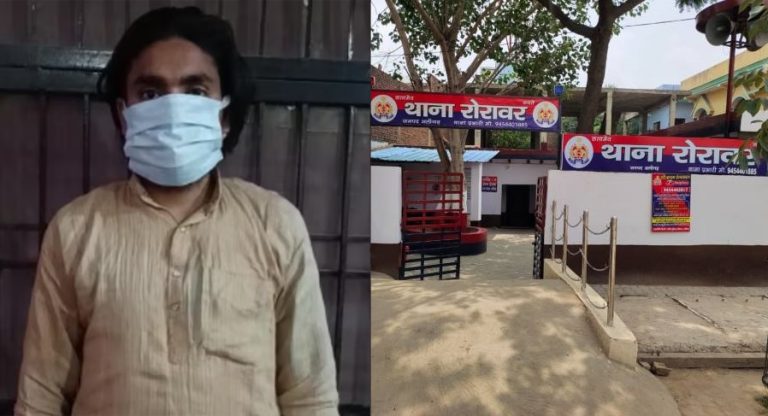
A senior Madrasa student in the Aligarh district of Uttar Pradesh has been accused of raping a junior student on March 27. According to some media reports the accused who has been identified as Altamas Noman is a Maulvi. A minor madrasa student has accused Altamas Noman of engaging in unnatural sex with him when he was sleeping. The accused threatened the 14-year-old victim after the crime not to tell anyone about it. The accused 19-year-old student at the said madrasa also teaches the junior students enrolled there. The accused has been arrested by the police.
The reported incident took place at Arabiya Mufaqta Uloom Madrasa in the Rorawar police precinct of the Aligarh district. Noman, who is a student at Aligarh at the Arabiya Mufaqta Uloom Madrasa, is originally from Muzaffarnagar. Along with a few other students, he resides in the same madrassa. Noman also teaches junior students when the madrassa director is absent.
The minor student enrolled in the same madrasa was sleeping on Monday night when the accused Noman approached the student and grabbed him. When the minor victim resisted and tried to scream, accused Noman choked his mouth.
Noman allegedly raped the victim after this. Following the crime, Noman threatened the child and warned him to remain quiet and refrain from telling anybody about it. The terrified boy finally made it home on Tuesday. When the family members saw that he seemed to be terrified, they asked what happened. The boy eventually told his family about the accused Noman’s deeds.
After learning of the incident, the victim’s family and relatives reached the madrasa and trashed the accused. After that, they went to Rorawar police station and lodged a complaint against Noman. Acting upon the complaint, the Rorawar Police registered a case and arrested the accused Maulvi.
प्रकरण कल का है, जिसमें तत्काल अभियोग पंजीकृत कर आरोपी युवक को गिरफ्तार किया गया ।
Talking about the matter, SP City Kuldeep Singh Gunawat said, “The police had received a complaint that an incident of misdeed with a child studying in Arabiya Mufaqta Uloom Madrassa has taken place. This allegation has been levelled against Maulana Nauman, who teaches in the madrassa. The police are getting a medical examination conducted on the victim student. On the basis of the complaint filed by the victim’s relatives, an immediate case has been registered against the accused Nouman and he has been taken into custody. The police are taking necessary action in the matter.”
A medical examination of the victim student has been done. According to the madrasa director, the incident took place after all the students went to the hall to sleep after the Taraweeh prayer at 10 p.m.
The accused was expelled from the madrasa following the event. The accused Noman was handed over to the victim’s family to “do whatever they want,” the madrasa director claimed.
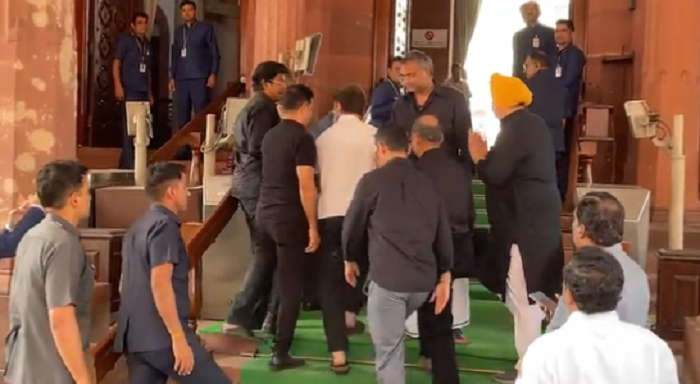
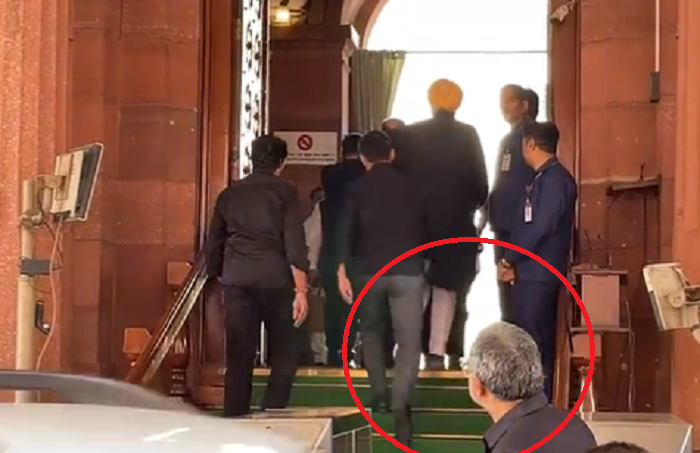
On Wednesday, former MP and Congress leader Rahul Gandhi happened to ignore his party colleagues while entering the Parliament building. Gandhi neglected Congress MP Karti Chidambaram as the latter greeted him at the entrance of the parliament building in Delhi. Chidambaram who was wearing a black shirt and Veshti was paid no attention when he extended his hand to greet Gandhi. Rahul Gandhi simply turned his face in the opposite direction and walked away into the parliament.
#WATCH | Congress leader Rahul Gandhi arrived at the Parliament to attend the meeting of Congress MPs from Lok Sabha and Rajya Sabha at the CPP office. pic.twitter.com/moSJUc6oXP
The incident happened when the Congress leader arrived at the Parliament to attend the meeting of Congress MPs from Lok Sabha and Rajya Sabha at the CPP office.
The video of the incident went viral over social media where netizens mocked Gandhi for holding to his arrogant attitude even after he was disqualified as an MP last week.
“Oh man what a tight slap for Karti Chidambaram. He was even wearing a Black shirt for Pappu. Sad Life!,” tweeted Arun Pudur. Meanwhile, another Twitter user said, “No grace or civility even when chips are down. Sonia must be proud of her upbringing.”
Oh man what a tight slap for @KartiPC . He was even wearing Black shirt for Pappu ?
However, Karti Chidambaram seemed confused as Gandhi ignored his extended hand and walked away inside the Parliament building. He walked a bit further and then looked back probably wondering why was he ignored by the Congress leader in that manner.
Some even shared memes of the awkward moment, adding music to the video.
Karti PC @KartiPC used his phone soon after Rahul Gandhi did not even smile at him.
— இந்தா வாயின்கோ – Take That (@indhavaainko) March 29, 2023
Karti Chidambaram looking behind at Rahul Gandhi after he was ignored
Rahul Gandhi was disqualified from the Lok Sabha last week after he was convicted by the Surat Court in a criminal defamation case. Gandhi had caused insult to the community with ‘Modi’ surname in a speech in 2019. In an election rally, he had asked why everyone with the Modi surname is a thief, mentioning Nirav Modi, Lalit Modi and Narendra Modi.
Following conviction, Gandhi was disqualified from Lok Sabha under section 8(3) of the Representation of Peoples Act, 1951, which states that any MP or MLA convicted of any offence and sentenced to imprisonment for not less than two years shall be disqualified from the date of conviction.
Notably, several Congress leaders including youth leaders objected to Gandhi’s disqualification and led protests in Delhi last week. Many of these leaders were detained by the Delhi Police. Later on Monday, prominent Congress leaders wore black clothes in protest against Rahul Gandhi’s disqualification from the Lok Sabha. Some other opposition leaders also chose to wear black in support of Gandhi.
Karti Chidambaram who is the Member of Parliament for Sivaganga also could be seen wearing black but for some reason was snubbed by Rahul Gandhi on Wednesday.
Shannon Fentiman, the Attorney-General and Minister for Justice, Minister for Women and Minister for the Prevention of Domestic and Family Violence, in the Queensland government, Australia, has moved legislation banning hate symbols and acknowledging the distinction between Hindu Swastika and the Nazi Hakenkreuz.
“The bill also makes it an offence to publicly display, distribute or publish a prohibited symbol in a way that could menace, harass or offend someone. The offence will carry a maximum penalty of 70 penalty units or six months imprisonment. Unlike other jurisdictions that have specified prohibited symbols in legislation, our framework will prescribe symbols by regulation. This will mean our laws will cover a broader range of hate symbols and we will be able to respond to new symbols or hate movements that may unfortunately emerge,” Fentiman said while talking about the bill that bans prohibited symbols.
However, the Attorney General laid down a procedure for determining which all symbols could be included in the list of hate symbols before the bill comes into force.
“The bill requires that before prescribing a symbol, the minister must consult with the CCC, the Queensland Human Rights Commission and the Police Service. The minister must also be satisfied that the symbol is widely known by the public or by members of a ‘relevant group’ as representing an ideology of extreme prejudice. In this case, a ‘relevant group’ is a group of people who identify with each other because of, or based on, their race, religion, sexuality, sex characteristics or gender identity. Of course, the government will also undertake extensive consultation with appropriate community and multicultural groups during the process of prescribing prohibited symbols,” she said.
The purpose of the offence is to encompass a wide range of situations. Additionally, there is a list of excuses for the offence, which is not exhaustive. These include situations where the display or distribution is for genuine artistic, religious, educational, historical, legal, or law enforcement purposes, for public interest purposes, or to oppose the ideology represented by the prohibited symbol. If a defendant is relying on an excuse, they must demonstrate that their conduct was reasonable in the given circumstances. The intention is for an excuse to be available for situations where the public display is made in books, satire, documentaries, museums, and during historical re-enactments.
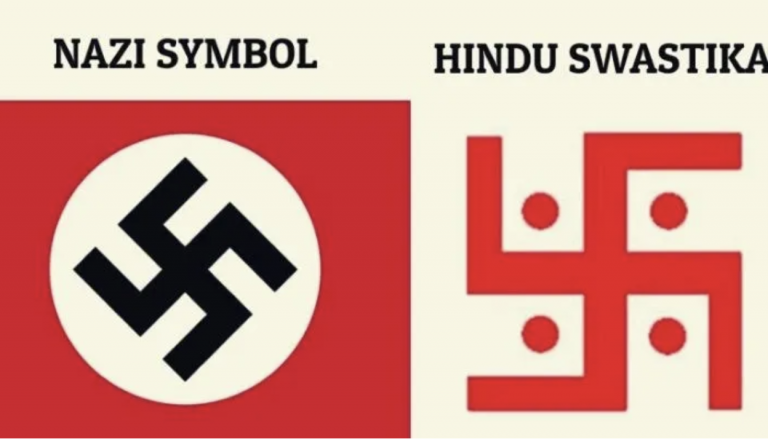
Fentiman also spoke about the misappropriation of the Hindu swastika and the need to differentiate it from a hooked cross or the Nazi Hakenkreuz, which unfortunately, are often interchangeably used by the Hindumisic elements to vilify Hinduism and accuse it of drawing inspiration from the Nazi ideology and symbols.
“While the bill does not prescribe a prohibited symbol, we have announced our intention to ban symbols related to Nazi and ISIS ideology. When referring to Nazi symbols, it is important to note that the Nazi hooked cross is the correct terminology for the most widely known symbol. The hooked cross closely resembles the swastika, which has peaceful and profound meaning in some religions, including Hinduism, Buddhism and Jainism. I want to especially thank Ms Akashika Mohla from the Hindu Community of Australia for her advocacy on this important distinction,” The Justice Minister said.
However, with the enactment of the bill, the religious and cultural significance of the swastika is upheld. The offence will guarantee that the swastika can still be employed for religious and cultural reasons, acknowledging its vital role for Buddhist, Hindu, and Jain communities.
Queensland introduces legislation to ban hate symbols, exempts swastika after protests from Hindu organisations
The caveats in the bill were introduced after Hindu organisations and activists in Australia, including the Hindu Council of Australia, Australian Hindu Association Inc. and others, raised objections over Queensland MP Annastacia Palaszczuk’s proposal to ban ‘the public display of hate symbols such as swastikas’. After MP Palaszczuk announced the proposal, the Hindus strongly objected to it and urged the MP to change the language of the proposal.
In a social media post, the MP had written, “BREAKING: Queensland will ban the public display of hate symbols such as swastikas. We do not do this lightly or without good reason. Late last year, police seized a Nazi flag flown near a Brisbane synagogue. Only a few months earlier, a train carriage in the suburbs was graffitied with swastikas and Nazi slogans. Today I’m announcing our intention to introduce legislation to Parliament that will make it a criminal offence to display symbols promoting hatred and causing fear. These crimes are not harmless. Nor are their ideologies. They are to be called out, confronted and condemned.”
Objecting to the proposal to include Swastika in hate symbols, the Hindu Council of Australia issued a press release dated May 26. They pointed out that while the Council stands with the authorities and communities to ban the hate symbols, it “strongly opposes the prohibition or criminalisation of our ancient, auspicious and holy symbol, the Swastika.”
They further added that it was disappointing that MP referred to the Nazi symbol as Swastika and not as “Hakenkreuz” or the Hooked Cross.
“Hindu Council of Australia stands united with the Queensland Government and the Jewish community to promote the important work of fighting anti-Semitism and other racist and exclusionary ideologies and wholeheartedly supports a prohibition on the Nazi hate symbols. However, the Hindu Council of Australia strongly opposes the prohibition or criminalisation of our ancient, auspicious and holy symbol, the Swastika,” the statement said.
The Council further urged the MP to publicly clarify that prohibition would be limited to the Nazi hate symbol ‘Hakenkreuz’ and NOT the holy Swastika. It also urged adding an exemption to the prohibition by the Queensland Parliament for the use of the Swastika as a cultural and religious symbol.
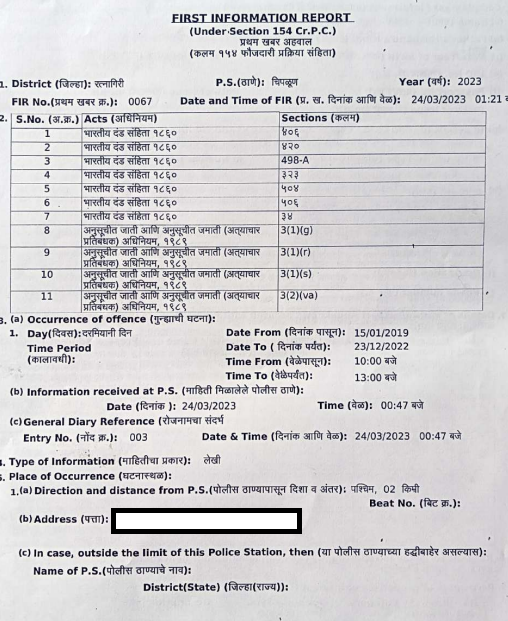
The Ratnagiri Police on March 25 arrested a person named Masood Rajjak Shah for forcing his Hindu wife to convert her religion to Islam. He along with his family members allegedly tortured the 25-year-old woman and took away around Rs 14,00,000 from the complainant and her maternal family. They also physically assaulted her and threatened her for life. The incident is said to have happened in Chiplun city of Ratnagiri district.
The FIR has been filed under sections 406, 420, 498 A, 323, 504, 506, 34 of the Indian Penal Code and under sections 3(1)(g), 3(1)(r), 3(1)(s), 3(2)(va) of the Scheduled Tribes (Prevention of Atrocities) Act, 1989.
FIR copy obtained by OpIndia
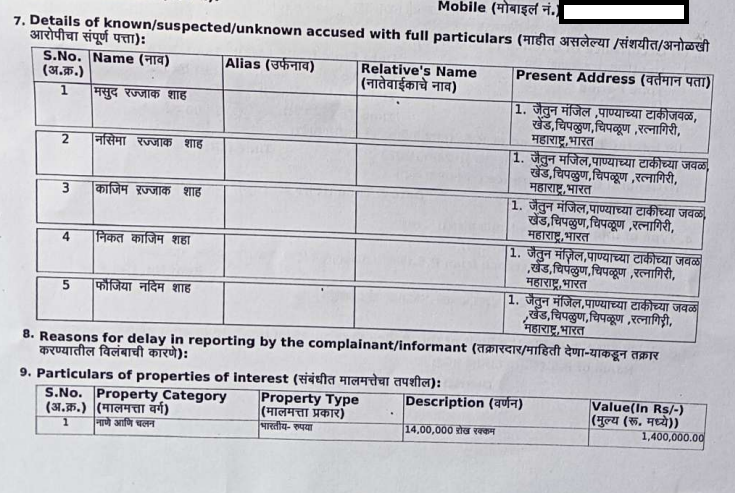
As per the FIR copy obtained by OpIndia, the complaint has been registered against the victim’s husband Masood Rajjak Shah, mother-in-law Naseema, sister-in-law Faiziya and Nikat, and brother-in-law Kazim. The victim in the complaint mentioned that her husband and her in-laws have been harassing her for the past three years and have been demanding money from her family. She also said that the accused persons hurled casteist abuses at her and tortured her to convert her religion to Islam.
As per the complaint, the victim woman met the accused Masood in the year 2017 and the duo soon fell in love. The latter then proposed marriage but the victim woman refused to marry. She said that she would not convert her religion to Islam and suggested they both stay in a live-in relationship instead. However, the accused then assured the victim that she would not need to convert her religion to Islam and she would be allowed to follow her religion post-marriage.
Accused booked in the case
The duo got married on December 31, 2018, as per the Islamic rituals and Masood soon began imposing restrictions on the woman. He and his family members barred her from taking higher education and forced her to raise kids. The victim woman is the mother of two children and both are in Masood’s house at present.
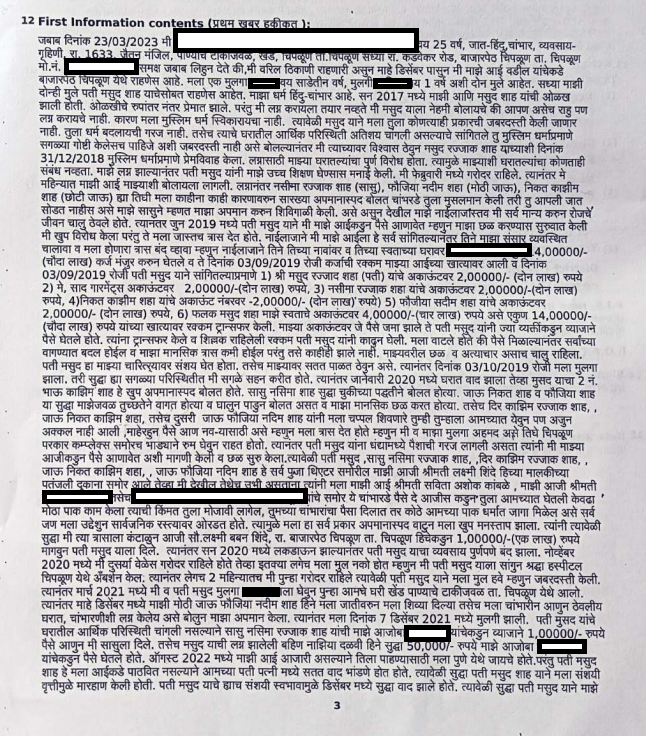
A year after the marriage, the victim woman was asked to get money from her maternal home. The family members of the accused hurled the castiest abuses at the victim and said that accepting a Hindu in their family was huge and that she should pay for it. They tortured her and even demanded money from her grandfather, as per the victim.
The mother of the victim then obtained a loan of Rs 14 lakhs from the bank and gave it to Masood and his family. The amount was divided and sent to the bank accounts of all the accused. Rs 2 lakhs each were sent to Masood, Naseema, Faiziya, Nikat, and Kazim’s account and Rs 4 lakhs were sent to the victim’s account. Masood later took over the money from the victim’s account and used it to pay the long pending debts.
Reportedly, accused Naseema in the year 2020 demanded an additional Rs 1.5 lakh from the victim’s grandfather. She continued to harass the victim over her caste and asked her to convert her religion to Islam. The victim was also physically abused by her husband and also threatened her for life.
Complaint filed by the victim woman.
OpIndia talked to the victim who confirmed that she was forced to convert her religion to Islam post-marriage. She also said that she was being harassed by her in-laws over her caste. “I was harassed and abused over my caste. They also looted my family members for money. My husband also asked me to convert my religion. I have left that home and I have come to my grandfather’s house in Chiplun. But both my children are in my in-law’s captivity and I am worried for them. I have written to the National Commission for Protection of Child Rights (NCPCR) seeking action in the case,” she said.
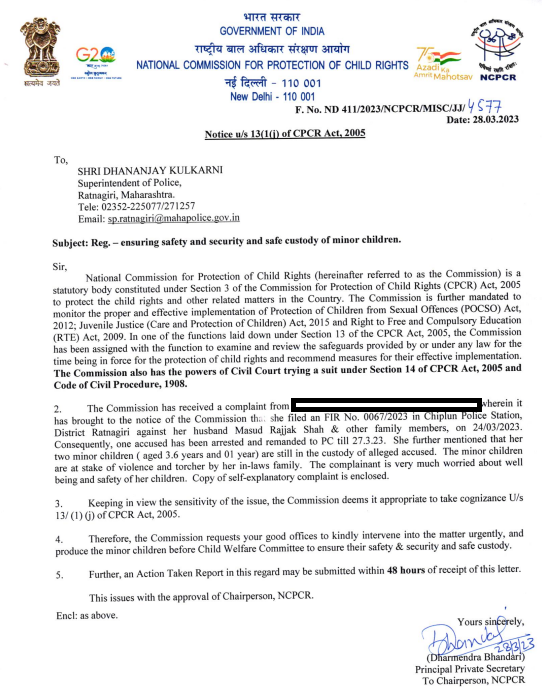
After the complaint, the NCPCR wrote to SP Ratnagiri, Dhananjay Kulkarni seeking safe custody of the two minor children of the victim. the letter by NCPCR stated that the two minor children are at risk of torture and violence by the victim’s in-law’s family. “Please intervene in the matter and produce minor children before Child Welfare Committee to ensure the safety and security of children and their safe custody,” the letter directed.
NCPCR’s direction in the case
Accordingly, the Ratnagiri Police has booked Masood Rajjak Shah, his mother Naseema, sister-in-laws Faiziya and Nikat, and brother Kazim in the case and has arrested Masood alone. While further investigations are underway, the victim has demanded strict action against all the accused and safe custody of her two minor children.
On March 26, former Supreme Court judge L Nageshwara Rao attended a conference in Jerusalem amid ongoing massive protests against the proposed judicial overhaul in the country. During his speech at the conference, former justice Rao endorsed the Indian model of appointing judges. Notably, Law Minister Kiren Rijiju has pointed out several times that the collegium system to appoint judges needs an overhaul.
Former Supreme Court justices from Canada, India and Ireland together with constitutional law professors from Israel, Poland and Hungary at the demonstration in Jerusalem today, and discussing the Israeli government’s judicial reform plan tomorrow. pic.twitter.com/DSgVMZmCn4
Speaking to the Indian Express after returning from the conference, former judge Rao said, “Even an ordinary citizen on the street was talking about the nuances of an ‘override clause’. This was democracy at work.”
In Israel, he was invited by the Israel Democracy Institute for a conference titled ‘No Other Democracy in the World – An Emergency Conference on Threats to Judicial Independence’. In his statement, he said, “I saw a march to the President’s residence of about 20,000 people. It was peaceful, with no violence at all. At the same time, I was told there was a crowd of over two lakh people marching in Tel Aviv.”
During the press statement at the conference, former Judge Rao said, “People should have confidence in the judges being efficient and not acting with fear or favour. The appointment of judges is an essential ingredient for upholding the independence of the judiciary. A robust mechanism for the appointment of judges is an imperative need for a civil society.”
Protests over Netanyahu’s proposed judicial overhaul, now taken back
Reportedly, Prime Minister Israel Benjamin Netanyahu proposed to overhaul the judiciary. However, following the protests, the plans have been postponed for now. Controversy and protests erupted over a Bill to change the composition of the nine-member committee that selects the judges for the Israeli Supreme Court. Currently, it comprises of minister of justice, another minister, two Supreme Court judges, the Supreme Court President, two representatives of the Bar and two Knesset members. On the contrary, the government in India has no say in the collegium to select judges for the High Courts and the Supreme court in the country.
Under the new proposal, PM Netanyahu proposed to have a 7-4 majority for the government-nominated members to select the judges. The Bill also proposed to expand the committee.
Former judge Rao noted the proposed reforms were in a very different context to what India has. He said, “Israel has an unwritten Constitution and a unicameral legislative body, the Knesset, but a deep history of separation of powers. Their Supreme Court is the arbiter of rights not written in a Constitution like ours. There are voices in Israel that look to the Indian model rather than to the West.”
Speaking on the status between the judiciary and the executive in India, he said he has a different view on the matter. “The judiciary is a counter-majoritarian force, and bonhomie between the court and the government is not a good thing for a citizen,” he added.
While Rahul Gandhi and Congress have been using Adani as a stick to beat the Modi government and project them as guilty of cronyism, the history of the Adani Group’s first infrastructure project in Mundra in Gujarat will leave both the grand old party and the Gandhi scion in shock and perhaps stupefaction.
Even though the Gandhi scion keeps alleging that Modi is working at the behest of a few businessmen, with Adani being among them, the facts of the matter, especially in the rise of the Adani Group and its Mundra Port business, do not jibe with the allegations levelled by the former Wayanad MP.
Nevertheless, the attack against the Centre concerning Adani had intensified in the last few weeks, especially in the wake of the Hindenburg Report on Adani, which alleged that the group had indulged in stock manipulation and fraud to inflate its valuation. The attack escalated following the disqualification of Rahul Gandhi from Lok Sabha after a Surat Court convicted and sentenced him to 2 years of imprisonment for his racist remarks against a particular community. Gandhi had alleged that he was disqualified from the parliament because he dared to speak up on the supposed ties between PM Modi and Adani.
However, it is worth noting that it was not PM Modi or the BJP government that bestowed on Adani his first piece of land for the Mundra Port project. It was under the Chimanbhai Patel-led Congress government in 1993 that granted land at 10 paise per sq meter to Adani for his Mundra Port project.
Gautam Adani, the head of the Adani Group, has denied receiving any special favours from Narendra Modi during his reign as Prime Minister and his earlier stint as Gujarat CM. According to him, the Adani Group, which is valued at $8.7 billion and operates in ports and energy, started purchasing land near the coastal town of Mundra in Gujarat as early as 1993. However, it is worth noting that only 5,315 acres of the total 15,946-acre land bank were acquired during Modi’s tenure as Chief Minister.
Congress government led by Chimanbhai Patel granted the first piece of land to Adani for 10 paise per sq meter
In his interview published in 2014, Adani asserted that no farmland was utilised for the construction of the Mundra port. Only barren and desert-like land, he said, was selected for the development of infrastructure projects in Kutch at a time no one thought of investing in the region.
Adani utilised the land to construct India’s largest port, which handled a record-breaking 100 million tons of cargo in FY 2013-14, and the nation’s largest privately-owned coal power station. He stated that his group did not acquire the land at lower prices to sell it for a profit.
However, what’s fascinating is the price at which Adani secured vast tracts of land for building the Mundra Port. Gautam Adani received the land for Mundra Port in 4 parts, starting with the Chimanbhai Patel-led Congress government in Gujarat in March 1993. The Congress government had then granted Adani the land at a throwaway price of just 10 paise per square meter. He subsequently received additional plots of land under Shankersinh Vaghela in 1997, BJP governments led by Keshubhai Patel in 1995 and Narendra Modi in 2005.
“When we began acquiring land at Mundra in 1993, (Chief Minister) Chimanbhai Patel charged us 10 paise per square meter. (BJP government led by) Keshubhai Patel (in 1995) charged us Re 1 per sq mt and Shankersinh Vaghela (led Rashtriya Janata Party) in 1996-07, charged Rs 1.5 per sq mt. Under Mr Modi, we got some 5,000 acres of land at an average of Rs 15 per sq mt rate,” he had said.
Modi assumed the position of Chief Minister of Gujarat in 2001, and in 2006, during the tenure of the UPA government’s SEZ policy, Adani acquired his first piece of land under his leadership to establish a special economic zone (SEZ). Although the initial request was for 10,000 acres, Adani was only granted 5,000 acres.
Rahul Gandhi has long claimed that the land allotted to Adani was equivalent to Vadodara’s size, but the reality is starkly different than what the Gandhi scion would have us believe. The Adani Group had acquired 7,350 hectares of land, whereas Vadodara city has an area of 15,900 hectares.