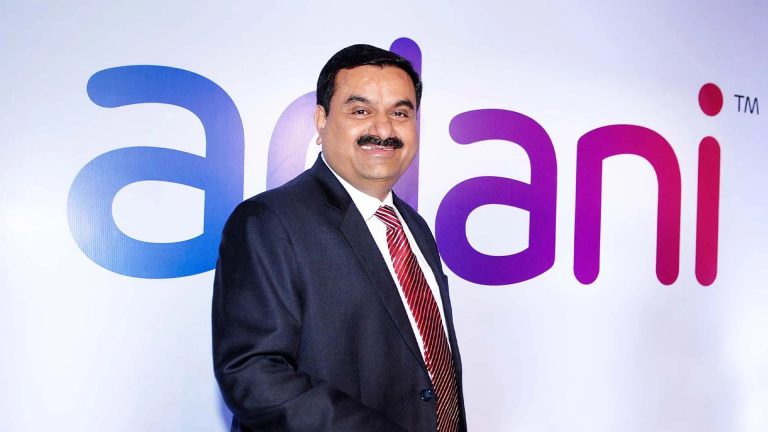
Adani Airports Chief Executive Officer Arun Bansal on Wednesday said the company’s ambition is to be the leading airport operator not only in India but in the world.
Addressing the media on the sidelines of the CAPA India Aviation Summit event in Delhi on Wednesday, Bansal said, “Our ambition is we want to be the leading airport operators not only in India but in the world.” Bansal said, “We will selectively be looking for financial sense right now. We are focusing on India. Our ambition is looking at opportunities where we can contribute and makes financial sense.”
Adani has seven airports in the country and the company has plans to develop more airports in the country as well as in other parts of the world.
CEO Arun Bansal lauded the growth of the Indian economy and aviation development.
“We have been discussing becoming the second-largest economy in the world. Aviation will play a very significant role by talk about GDP (gross domestic product) growth of any country,” he said.
However, Adani Airport Holdings talks about the future of Indian aviation and expectations, Bansal said.
“India to have 1 billion air passengers by 2040, with passenger traffic growing at a CAGR (compound annual growth rate) of 8.5 per cent over the next 20 years,” Bansal said, adding, “With a handsome growth in air passenger traffic this year to pre-pandemic levels, operationalising of new airports with stimulus from the UDAN scheme, and over 30 cities getting dual airports over the course of time, air passenger traffic will touch the 1-billion mark by 2040.”
When asked whether Adani is looking to acquire more airports in the country through bids, CEO Bansal clarified, “Once the tender documents come out, we will study and we will make a strategy. Our strategy is simple to create a scale… if bid condition is right for us, we will bid.”
“We don’t make categories about the strength and size of airports because…”Bansal said, adding, “India has a very ambitious plan with UDAN scheme. For the regional aircraft carriers, we will look at the merit of the airport and merit of the potential growth,” he added.
All seven Adani airports saw an increase of 92 per cent in domestic and 133 per cent in international travel as compared with the figures from last year. There has also been a rise in the number of domestic flights (58 per cent) and international flights (61 per cent), according to a statement from Mumbai International Airport Limited (MIAL).
Air traffic jumped by around 100 per cent compared to the previous year, taking the number to pre-pandemic levels with more than 14.25 million passengers using these airports over last year.
(This news report is published from a syndicated feed. Except for the headline, the content has not been written or edited by OpIndia staff)
Vishwa Hindu Parishad (VHP) has demanded the cancellation of membership of all those “fraudulent” MPs and MLAs who won reserved seats by submitting “fake caste certificates.”
Reacting over the recent Kerala High Court order, setting aside the election of CPI(M)’s A Raja from Devikulam Assembly seat in Idukki district, VHP spokesperson Vinod Bansal said here on Tuesday, “Hindu society will not tolerate such unfairness against the members of our SC brothers at any cost.”
“A Raja’s membership was cancelled from Kerala’s Devikulam constituency. It was found that he became an MLA by contesting for an SC seat using a fake caste certificate. When you scan the data, you will find that there are innumerable such MLAs in the country, who are sitting in Parliament, and hurting the pride of the SC community,” the VHP leader said at the Bharat Swagat Utsav programme here Tuesday.
He further added, “We demand that the membership of all such fraudulent Christian MPs and MLAs should be cancelled, who are sitting in the Houses using such fake caste certificates by cheating on the rights of Scheduled Castes”.
The Kerala High Court on Monday cancelled the result of the assembly election held at Devikulam constituency in Idukki district, noting that the MLA does not qualify to contest from the constituency.
The High Court set aside the election on a petition filed by Congress leader D Kumar, who was the runner-up in the 2021 Assembly polls, alleging that Raja was not qualified to contest the Devikulam seat reserved for the Scheduled Caste (SC) community.
Kumar had alleged that Raja belongs to the Christian community and does not qualify to contest for a seat reserved for the Schedule Caste (SC).
The elections on the constituency of Devikulam were held in 2021, and CPM leader A Raja won by a margin of over 7000 votes.
Devikulam happens to be a seat reserved for the candidates belonging to the Scheduled Caste community.
(This news report is published from a syndicated feed. Except for the headline, the content has not been written or edited by OpIndia staff)
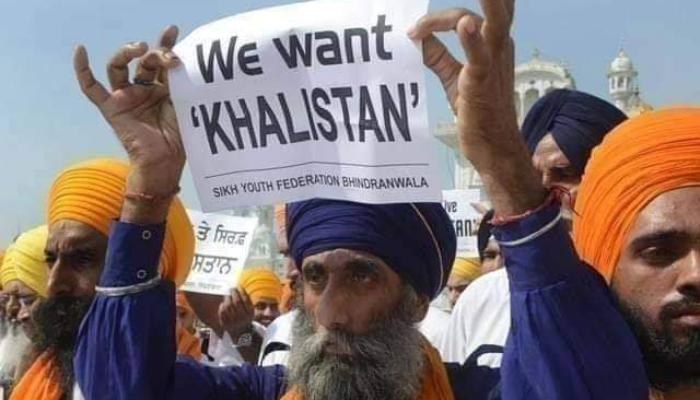
According to a report in the Economic Times, police and intelligence officials in Punjab have informed that nine organisations operating out of six different countries, including Pakistan, are to blame for the growth of terror and bloodshed in the province.
The three organisations linked to Pakistan are the Khalistan Zindabad Force (KZF) of Ranjeet Singh Neeta, the Babbar Khalsa International (BKI) of Wadhawa Singh Babbar, and the Khalistan Commando Force of Paramjit Singh Panjwar (KCF).
Hardeep Singer Nijjar of the Khalistan Tiger Force (KTF) is based in Surrey, South East London, while Gurjeet Singh Cheema of Khalistan Liberation Force (KLF) is based in Canada and Gurmeet Singh aka Bagga and Bhupinder Singh Bhind of KZF are based in Germany.
On the basis of an assessment made by the law enforcement agencies, another key ally, namely Gursharanvir Singh, is based in the UK, Gurjinder Singh in Italy and Purshottam Singh is stationed in France.
Gurpatwant Singh Pannun, the leader of one of the most infamous organisations called Sikhs For Justice (SFJ), hails from the US and masquerades as a political activist.
The most significant role is played by the Indo-Canadian narcotics syndicate, known as ‘Brothers Keepers’ gang, which is comprised of the Grewal and Dhaliwal clans. SFJ chief Pannu is being funded by them, as per a dossier created by government agencies, and they are actively working together to ship Colombian cocaine to Mexico cartels.
A senior Punjab official in charge of counter-insurgency operations informed, “The attempts to revive Khalistan sentiments in Punjab are being clandestinely aided by these groups, as was evident from a series of incidents of vandalism at the Indian High Commission.”
The Sikh population in Canada, which is largely concentrated in the provinces of Ontario and British Columbia, is observing a steady rise in the number of criminal gangs with Punjabi roots operating out of Toronto and Vancouver.
“The number of gangsters who migrated from Punjab to Canada for murder, attempt to murder and UAPA cases are rising with the likes of Lakhbir Singh Landa, Goldy Brar, Arshdeep Singh aka, Arsh Dalla among others,” stated another official.
Officials also mentioned that Khalistan has caused division among the community in the gurdwara. “Among the diaspora, the Khalistan issue has been a divisive issue in gurdwaras. The gurdwaras with Khalistani leadership funnel funds into activities supporting the movement.”
Donations are also being channelled through civil society organisations in India to strengthen and support such organisations.
The development came amidst intense drama surrounding Sikh Khalistan leader and chief of ‘Waris Punjab De’ organisation, Amritpal Singh. He has been designated a fugitive by law enforcements, and they are searching for him.
Many of his close associates, including his uncle and driver, have already been taken into custody by the authorities. Amritpal and his aides are also on the radar of the National Investigation Agency (NIA) over charges of possessing illegal arms after the recovery of illegal weapons from them.
A special POCSO (Protection of Children from Sexual Offences Act, 2012) court in Nadiad has sentenced one Mustafa Miyana who raped his -year-old stepdaughter to death. The case is from the Matar taluka of the Kheda district in Gujarat.
According to reports, a minor girl (aged 11 years and 10 months) became pregnant after she was raped by her stepfather. The incident took place in Mahalaj village of Matar taluka of Kheda district. The accused stepfather Mustafa Miyana was arrested after registering a complaint in this case.
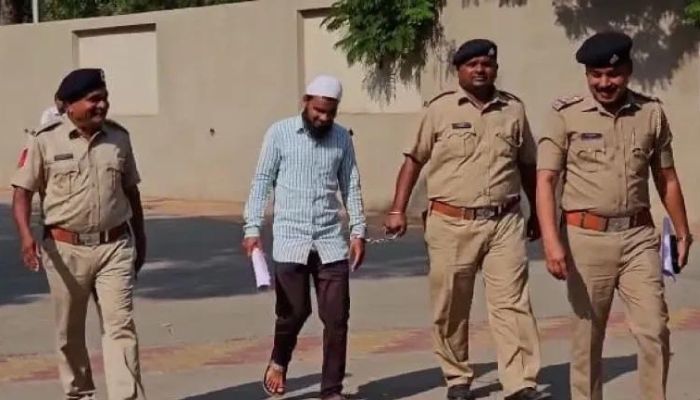
The accused was produced before a special POSCO court in Nadiad by the Matar police and sentenced to death by the court. The court has also ordered that the accused will have to pay Rs 2 lakh to the victim.
The accused raped his 11-year-old stepdaughter for six months
28-year-old Mustufa Hanibhai alias Babubhai Miyana, a resident of Mahelaj village in Matar taluka and originally from Godhra, was married to a widowed woman. The widow, who was married to Mustafa, had three daughters from her previous husband. One of the daughters got married in Ahmedabad. The other two daughters lived with their mother and stepfather.
After some time, the family started looking after a farmhouse in Ahmedabad. When there was no one in the farmhouse, Mustafa used to threaten and rape his stepdaughter aged 11 years and 10 months.
The accused stepfather Mustufa Miyana raped the 11-year-old minor girl for six consecutive months. During this time he also threatened the minor that if she informed anyone about this, he would kill her and her mother. So the frightened minor did not inform anyone about this.
The crime was exposed when the minor was taken to the hospital
After some time, the minor’s health started deteriorating. Her mother took her to the hospital and shocking things were revealed in the girl’s medical tests. The minor was 3 months pregnant. Her mother inquired her strictly about this and the minor told all the facts.
She immediately lodged a complaint against the girl’s stepfather Mustufa Miyana at the Matar police station. The police arrested Mustufa Miyana and put him in jail. Now, the POCSO court has sentenced him to death in this case.
The protest of private doctors against the Rajasthan government’s ‘Right to Health Bill’ continued even on Tuesday in Jaipur as the state failed to comment on the matter. The Police used water cannons to disperse the private doctors as they led the protest towards the state assembly.
Earlier in the day, the Police resorted to lathi-charge to disperse the crowd. The doctors said that the cops tore their clothing to pieces and mistreated the female doctors. More than 2,400 owners of private hospitals across the state began the protest on the streets on Monday.
#WATCH | Jaipur: Doctors protest against Rajasthan govt over the proposed ‘Right to Health Bill’ and Police use water cannons to disperse off protesters pic.twitter.com/Rpt0FOPT2V
At first, doctors, health professionals, and hospital administrators met at the Jaipur Medical Association auditorium at SMS Hospital to voice their objections to the Draft Bill. At about midday, the physicians departed the SMS Hospital and arrived at Statue Circle in front of Central Park on March 20.
However, at approximately 1:00 pm, the police stopped the protesters close to Statue Circle, causing a confrontation between the two sides. Reportedly, the doctors alleged that the police engaged in a physical altercation with them, but the police claimed that the protesters had become violent owing to which they had to resort to the lathi charge.
The Right to Health Bill, which seeks to guarantee citizens’ legal rights and entitlements to the finest healthcare, was one of the poll pledges made by Congress for the 2018 state elections. From the bill’s introduction in the assembly in September 2022, it has encountered opposition, among other things because it mandates free emergency care. The present budget session has not yet resulted in its passage.
The protesting doctors stated that the bill fails to define ’emergency’ while it promises free emergency treatment. They also have raised concerns over the payment or reimbursement model as per the bill. The doctors have to pay the staff, and nurses and also have to look after the maintenance of the medical tools and equipment. “If we go on treating patients free of cost, who is going to reimburse the amount?” one of the doctors was quoted as saying.
The Bill nowhere specifies if the state will reimburse private clinical establishments for providing such free services. This may violate Article 19(1)(g) of the Constitution, which guarantees the right to practice any profession or carry on any occupation, trade, or business.
Meanwhile, the Police action was criticized by the People’s Union for Civil Liberties (PUCL) which said that the police bandobast was not enough to match the crowds of doctors at the rally. The PUCL also urged the doctors to withdraw the protest claiming that the group of leaders from the joint action committee had met with the administration and government representatives and almost every disagreement was resolved.
As reported earlier, almost 300 private hospitals, clinics, and nursing homes in Kota remained closed for outdoor patients, emergency services, and new admissions as a result of the closure of private institutions, causing a 40% increase in patient volume at the government-run MBS Hospital in Kota.
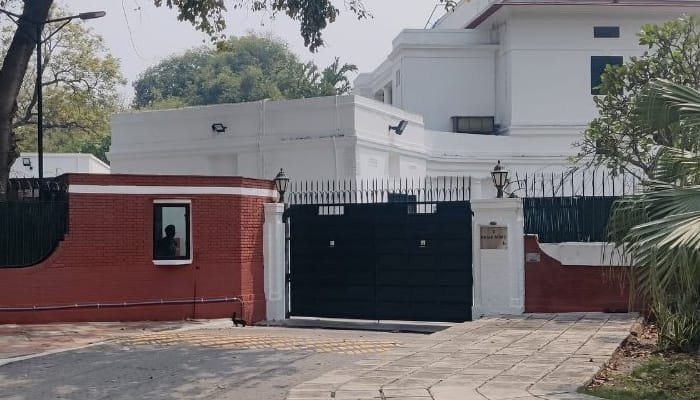
In a dramatic move, the Indian authorities have removed security from in front of the British High Commission and the residence of the British High Commissioner in Delhi. The decision, which came as a surprise, is being seen as a reaction to the recent attack on the Indian High Commission in London by Khalistani extremists. Indian authorities have removed barricades from in front of the British High Commission and the British High Commissioner’s residence and removed all external security that was provided to the British mission in India.
Breaking: India removes all external security infront of the British High commission & high commissioner’s residence. Move come after Indian commission in London was vandalized by Khalistani extremists. pic.twitter.com/GloYp1e8a9
Apart from removing barricades and bunkers installed in front of the gate of the British High Commission on Shantipath at Chanakyapuri diplomatic enclave, the team of Delhi police along with PCR vans stationed there has also been removed. Similarly, the barricades installed in front of the residence of British High Commissioner Alex Ellis at Rajaji Marg at Meena Bagh in the Lutyens Delhi area also have been removed by Delhi police.
Special security measures such as road diverter, speed breaker, bunkers made of sand bags, PCR vans and local police stationed outside the premises have been removed, visuals posted on social media show. Reportedly, the Indian govt is of the opinion that the British High Commission in India is already in the safe zone, and there is no requirement for such additional security measures.
This comes as a reciprocal move by India after the UK govt failed to provide security to the Indian High Commission office in London on Sunday when the office was attacked by Khalistani elements. The development comes after an assessment at the highest level of the government on the issue.
The British High Commission refused to issue any comment on the matter, saying that they do not comment on security matters.
On Sunday (March 19) evening, pro-Khalistani elements had barged into the Indian High Commission in London and removed the tricolour from the premises.
In a video that came to light, a mob of Khalistanis could be seen staging a protest outside the Indian High Commission. Amidst chants of ‘Khalistan Zindabad’, a man sporting an orange turban was seen scaling the walls of the building and pulling down the Indian flag.
#WATCH | United Kingdom: Khalistani elements attempt to pull down the Indian flag but the flag was rescued by Indian security personnel at the High Commission of India, London.
The Indian government had strongly condemned the attack and had summoned the British High Commissioner to register its strong protest. India is particularly furious because Indian authorities had informed their British counterparts about possible violent protests by pro-Khalistan groups, but the British govt ignored that input.
The attack on the Indian High Commission in London caused a significant uproar in India.
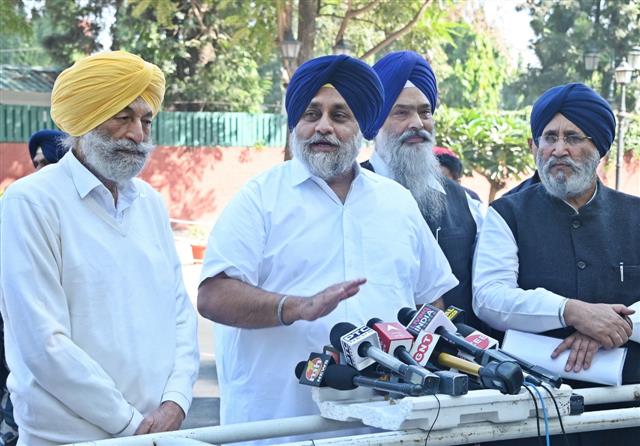
On Tuesday, Sukhbir Singh Badal, the President of the Shiromani Akali Dal, announced that the party is prepared to offer legal support to any Sikh youths who may have been arrested by the Punjab Police during their pursuit of fugitive Khalistani leader Amritpal Singh.
In a tweet, Sukhbir Singh Badal, a leader of the Akali Dal, announced that the Shiromani Akali Dal has resolved to furnish full legal aid to any Sikh youngsters who are detained in the current unconstitutional crackdown in Punjab and guarantee that their rights are not infringed by AAP Punjab.
Shiromani Akali Dal has decided to provide complete legal assistance to all Sikh youth arrested in the ongoing extra-constitutional crackdown in Punjab and ensure their rights are not trampled upon by @AAPPunjab govt.
The Shiromani Akali Dal has issued a list of legal team helpline numbers, including Arshdeep S Kler at 8054200007, Harish Rai Dhanda at 9814220300, Gurmeet S Maan at 9815533999, Bhagwant S Siyalaka at 9815250589, Amardeep S Dharni at 9815000026, Jaspreet S Brar at 8054800034, Parampreet S Bajwa at 7814400060, Parambir S Sunny at 9872360026, Zubin at 9855572302, and Ravinder S Sampla at 9814474445. The Shiromani Akali Dal office can also be contacted at 0172-2639256.
Badal expressed his outrage in a separate tweet, denouncing the arbitrary detention of Sikh youths, particularly those who follow the Amritdhari faith, based solely on suspicion using unconstitutional tactics. The Shiromani Akali Dal vehemently condemns such actions and demands the prompt release of all those who have been unjustly arrested in the ongoing crackdown.
He further tweeted, “Shiromani Akali Dal stands for Justice and the protection of the rights of the Punjabis in general and the Sikhs in particular within the federal framework, with more powers to the states, a demand echoed now by other political parties too”.
Sukhbir Singh Badal went on to assert that the ruling AAP government is attempting to smear the Sikh community for the sake of communal polarization and electoral advantage by carrying out these arrests.
“SAD strongly condemns the puppet AAP regime in Punjab for the undeclared emergency and reign of repression & terror let loose in the state. We warn the govt against dangerous conspiracies to defame the most patriotic Sikh community for communal polarization & electoral gains.” Badal tweeted.
Inspector General of Police (IGP) Headquarters Sukhchain Gill revealed on Tuesday that the Punjab Police have apprehended 154 individuals for causing a disruption to the “peace and harmony” of the state.
“A total of 154 persons have been arrested for disturbing peace and harmony in the state,” IGP Gill revealed at a press conference.
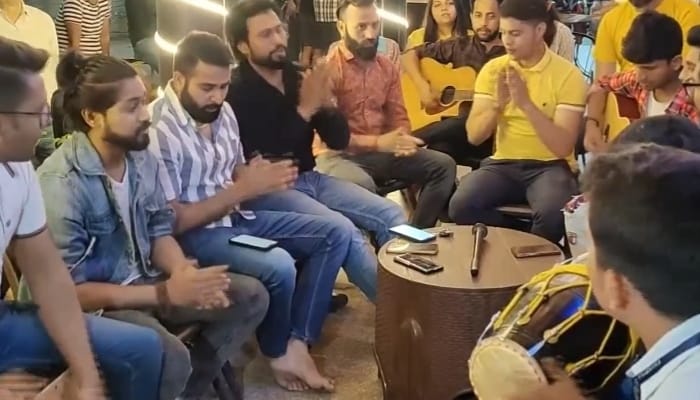
In a heartwarming display of faith and tradition, a group of young individuals have been gathering outside a café in Gurugram every Tuesday to recite the Hanuman Chalisa. The group comprising teenagers and young adults have been performing this ritual for the past few months.
The Hanuman Chalisa is a Hindu devotional hymn dedicated to Lord Hanuman, a revered deity in Hinduism who is considered to be an embodiment of strength, courage, and devotion. Reciting the Hanuman Chalisa is believed to bring good luck and ward off negative energy.
#WATCH | Haryana: Spiritual jamming by youths outside a cafe in Gurugram.
The group, consisting of both boys and girls, gather outside the café in Gurugram every Tuesday evening and recites the Hanuman Chalisa in unison. The group also brings musical instruments like Dholak, Guilter etc, and the atmosphere is filled with devotion and reverence.
Passersby have taken notice of this group and have been moved by their dedication and commitment to their faith. Many have stopped to listen and join the recitation, creating a sense of community and harmony.
The group of youths has been organising this spiritual jamming by reciting the Hanuman Chalisa outside Desire Bakery and Café located at sector 22 in Gurugram in Haryana.
Taking a dig at those who hate everything associated with Hinduism, a Twitter user said “Amazing energy! After listening to Hanuman Chalisa all evil forces go away, but after listening to this amazing display of Hindu faith, many evil forces will gather around here on Twitter. They will be offended in huge numbers. Jai Hanuman.”
Amazing energy! Hanuman Chalisa sun kar aam zindagi me bhoot-pisaach bhaag jaate hain, lekin social media par prakat ho jaate hain. Badi sankhya me offend honge aaj to. Anyway, sabhi ho Vikram Samvat 2080 ki Mangal kamnayein. Jai Hanuman.
The group has received widespread appreciation and admiration from the local community as well as Twitteratis for their efforts. They have become a source of inspiration and hope for many, especially during difficult times.
The recitation of the Hanuman Chalisa outside the café has now become a regular feature in Gurugram, with many people eagerly awaiting Tuesday evenings to join in the singing and experience the power of faith and devotion.
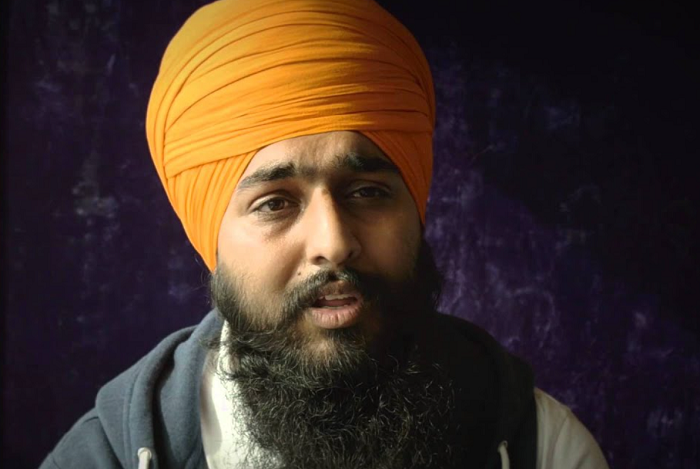
In a significant step, Avtar Singh Khanda, an asylum seeker in the UK, was arrested for pulling down the Indian flag at the embassy on March 19. Investigations in the Amritpal Singh case revealed that Khanda is the same person who groomed Waris Punjab De leader. He is the one who has been “godfather” to Amritpal Singh before the latter reached Punjab.
According to the reports, his father, Kulwant Singh Khukrana, was a terrorist and was associated with the ‘Khalistan Liberation Force’ and ‘Khalitan Commando Force’. The KLF (Khalistan Liberation Force) was established in 1986. It was founded with the intention of creating Khalistan through the violent separation of Punjab from India.
The video of the incident at the Indian High Commission on March 19 went viral over social media in which a person with an orange turban could be seen ascending the walls of the building and pulling down the Indian National Flag while raising the slogans of ‘Khalistan Zindabad’.
Khanda had also been in contact with Deep Sidhu, who was killed in a road accident on February 15, 2022. In one of the videos making rounds on social media, Khanda could be seen elaborating on how Amritpal Singh was chosen as the chief of Waris Punjab De after Deep Sidhu. “We had formed a religious community for naming the chief and names of five members were given. Amritpal Singh was selected from those five. He was not suddenly made the chief of Waris Panjab De,” he said.
???????? ?????: ??? ???? ????????? 1/n For the first time, in a clubhouse audio room, Deep Sidhu & Avtar Singh Khanda got into a discourse on #Khalistan
Note: Khanda didn’t meet Deep Sidhu ever. You may hear the truth from the horse’s mouth. pic.twitter.com/a8XGDOmHK4
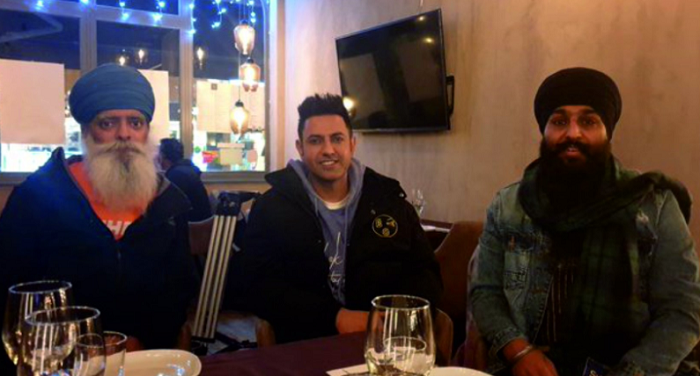
Avtar Singh Khanda is a 151-linked terrorist who has previously been charged with Indian intelligence authorities for conducting IED training inside UK-based Gurudwaras. Amritpal Singh is also said to be a close friend of the Khalistani terrorist Khanda, who resides in the UK. Khanda further is the aide of banned Babbar Khalsa International leader Paramjit Singh Pamma. Khanda also appears alongside Punjabi musician, actor, and producer Gippy Grewal in a photo that has gone across the internet.
Khanda with Gippy Grewal
Khanda tutored Amritpal Singh for ‘Mission Khalistan’
There are reports that Amritpal Singh was tutored for ‘Mission Khalistan’ by the Khalistani terrorist Avtar Singh Khanda who has direct connections with banned Babbar Khalsa International leader Pamma. It is believed that these three worked together to steer Punjab further into terrorism.
The entire conspiracy was exposed after the authorities recovered weapons from the hideouts of Amritpal Singh. Amritpal’s gang was putting together the Anandpur Khalsa Force (AKF) with the aid of ISI and Babbar Khalsa. According to the reports, both the jackets and the firearms have AKF written on them. His home in the village of Jallukheda has been searched for several pieces of ammunition and weapons.
Khanda and his connections with several terrorist organizations
Khanda who was arrested by the authorities on March 20, was associated with a pro-Khalistani organization named Dal Khalsa. He had been a part of a rally organized by Dal Khalsa in 2012. He had also been promoting Khalistani activities on social media and instigating the youth.
According to a Twitter thread shared by one Navdeep Singh, Khanda has also served as a news anchor for Ktv Global (Khalsa Television Global), a prominent Khalistani channel that has been off the air since March 31, 2022. The license of Khalsa Television Limited was then suspended due to a serious breach of the broadcasting rules. Later, he worked as a journalist for USMI News, a channel run by ‘Sikh For Justice’.
4/n Khanda has also served as a news anchor for Ktv Global, a prominent #Khalistani channel who has been off air since 31st March 2022 when Ofcom suspended Khalsa Television Limited’s license due to a serious breach of their broadcasting rules. pic.twitter.com/I5zJcistDD
Khanda further is believed to have shared close ties with Mahboob Ali, leader of the outlawed Jammu Kashmir Liberation Front (JKLF).
The Babbar Khalsa International (BKI) was founded in 1980 and it has been quite active in Canada and England since then. Following Operation Blue Star, this terrorist group detonated the bomb aboard an Air India flight. The majority of its members today are hiding in Pakistan. Pamma is also believed to be in Pakistan. According to agencies, the Anandpur Khalsa Force created by Amritpal was misappropriating funds in the name of Khalistan, and his uncle, Harjit Singh, was helping in the misappropriation.
The report further states that Pamma frequently enrolls young Sikhs in training sessions to radicalise them. Notably, the trio has been attempting to destabilise Punjab by exposing young Sikhs to extremist ideologies. Khanda provides online tutorials from Glasgow and Birmingham on how to create improvised explosive devices (IEDs) with readily accessible chemicals. Supporters of Khalistan in the West meanwhile have actively lobbied their radical agenda against India on American, Canadian, and British land while raising money for Khalistan terror organizations, frequently utilizing illegal hawala networks for wire transfers.
Amritpal Singh, who publicly advocates for Khalistan as a separate country, is complicit in Pakistan’s plot to resurrect insurgency in the border state. Amritpal Singh was given money during his stay in Dubai, which serves as a center for 151 agents, to resurrect the Khalistan cause in Punjab. Before his travel to India, ISI had sent him to Georgia for training.
Singh also has good connections with ‘Sikh For Justice’ chief Gurpatwant Singh Pannun who has been designated as a terrorist by the Indian government under the Unlawful Activities Prevention Act (UAPA). Singh has led several social media campaigns for Pannun.
Moreover, authorities have discovered that Amritpal Singh was forming a “private militia” in Punjab drug rehabilitation facilities where weapons imported from Pakistan were being stored, while simultaneously running a narcotics smuggling network in India with the help of the ISI.
The agencies elaborated on Amritpal’s drug and weapon-related operations, saying that he was bringing narcotics into India via Jaswant Singh Rode, brother of Pakistan-based Lakhbir Singh Rode, as well as Pamma.
It should be emphasized that Amritpal is still on the run, while a massive search effort is underway throughout the state, several soldiers have been stationed in Amritpal’s home village of Lallukheda. More than 120 people have been taken into custody so far including his driver and his uncle. Reportedly, Harjit Singh Amritpal’s uncle has been transported by the Punjab Police to the Dibrugarh prison in Assam.
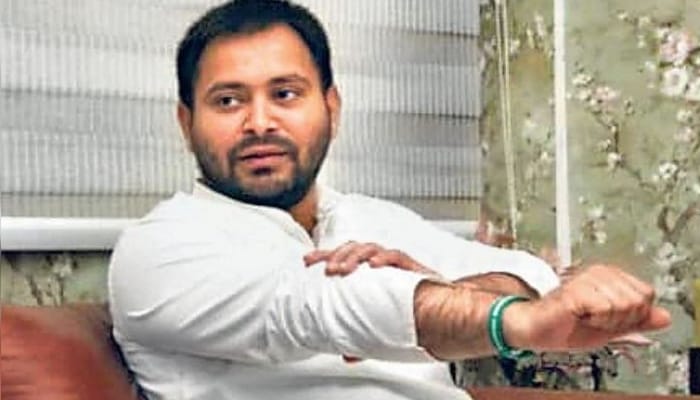
In yet another controversial statement made by Bihar Deputy Chief Minister Tejashwi Yadav, he has insulted the Gujarati community by suggesting that only Gujaratis could be fraudsters in the current scenario, as they would be forgiven for their actions due to the fact that both the Prime Minister and the Home Minister are Gujaratis.
Tejaswi said, “In the country’s present scenario, only a Gujarati can be a thug as their thuggee would be forgiven”. Attacking the BJP, he said, who would be responsible if someone runs away with the money of LIC or banks.
The statement is not only a factually incorrect one but is also highly demeaning of the hard-working Gujarati community. And his statement becomes laughable when seen in the light of the scams that took place in Bihar during his father, Lalu Prasad Yadav’s rule. When Tejaswi Yadav, who is himself an accused in the Land-for-job scam says something like this, it doesn’t go down very well.
Land-for-job scam by Lalu Prasad Yadav
In the Land for job scam case, the principal allegation is that bribes in the form of land were received by Lalu Prasad Yadav, his family members, companies handled by them, and other close aides in exchange for recruitment for the posts of Group D in the Indian Railways in the tenure when Lalu Prasad Yadav was the Union Railway Minister.
Tejaswi Yadav’s house was recently raided by the ED in connection with the Land-for-jobs scam.
The case dates back to the era when Lalu Prasad Yadav used to be the Union Railway Minister in the Congress-led UPA-1 (United Progressive Alliance) government. It was in this government from 2004 to 2009 that Lalu Prasad Yadav worked as the Railway Minister. The Rashtriya Janata Dal supremo and former chief minister of Bihar Lalu Prasad Yadav and his family members including his wife Rabri Devi, daughter Misa Bharti and Hema Yadav, and son Tejashwi Yadav are among the prime accused in this case.
The incident has once again highlighted the issue of divisive politics and the need for political leaders to choose their words carefully to avoid causing offence or hurting the sentiments of any community. Besides, it is also worth noting that Lalu Prasad Yadav is already convicted in a fodder scam.