Home Blog Page 2459

Burning of Quran, Ramcharitmanas, vilification of Baba Bageshwar and silence on pastor Bajinder: How it’s Abrahamic supremacy at play

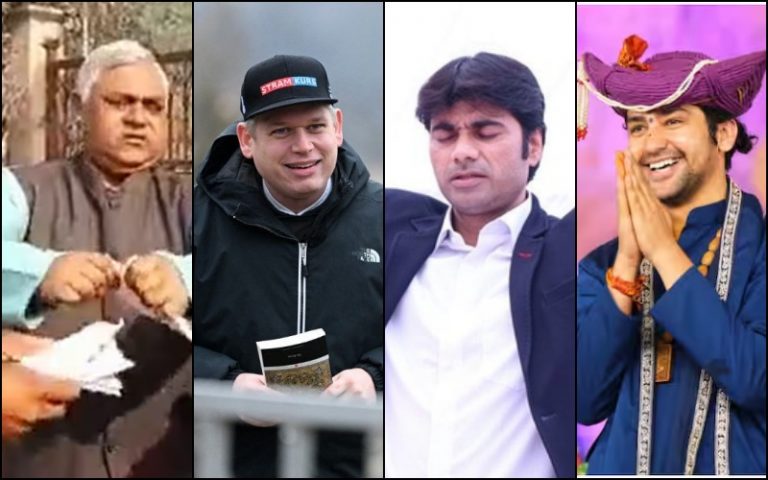
On 21st January, a Danish-born politician named Rasmus Paludan burned a copy of the Quran in front of the Turkish Embassy in Stockholm. The politician chose this method of protest against what he perceives as the ills of allowing immigration in general and Muslim immigration in particular that is threatening the fundamental nature of European countries. This caused every liberal in the world to recoil in horror. Even UN-linked organisations & Human Rights Groups condemned this burning of a few pieces of paper. Islamophobia, we were reminded repeatedly, was not good and disliking the doctrine of Islam, was no more part of religious freedom. I suspect some atheist feminists I know on social media cried in private.

At the same time in India, a young Hindu religious preacher known as Baba Dhirendra Shastri of Bagheshwar Dham was at the centre of a media storm. It largely began with a Congress-linked “rationalist” Shyam Manav targeting Dhirendra Shastri for spreading superstitions. He was specifically referring to events held by the Baba in which spiritual healing of physical ailments is carried out. Mainstream media in India jumped on the bandwagon and made multiple programs on the issue. The Nehruvian scientific temper of India seemed to be losing temper at these transgressions by the Baba. His clips were making rounds with people making fun of his claims that admittedly would not measure up to the narrow and exact standards of scientific proof. India was being reformed.

What is the link between these two events? 

It is in the way the mainstream narrative treated these two events. The public burning of a Quran in Sweden was met with considerable criticism from a number of Muslim countries, including Turkey, which referred to the act as vile. Bangladesh, where Hindu temple desecration is daily news, called it an “act of insulting the sacred values of Muslims all over the world in the guise of freedom of expression”. The US called it disrespectful and a UN Body called it a “vile act”. When we look at this, it seems pretty reasonable. A rational man would condemn the burning of a sacred religious book. However, if you look at the larger picture, it reeks of hypocrisy.

Recently a Samajwadi Party leader Swami Prasad Maurya passed objectionable comments about the Ramcharitmanas. Shortly after, his supporters burned pages of the sacred book publicly. The people who were pained by the Quran burning showed not the slightest discomfort at this discrimination, intolerance, and bigotry directed towards Hindus. Such overt bigotry against Hindus is not just ignored, it is encouraged by ‘reformists’ who project it as an attempt to ‘reform’ and ‘liberalise’ the Hindu community. However, the same yardstick is not used to question the text in the Quran which critics say carries anti-women, anti-semitic, anti-Kafir and anti-LGBTQ verses too. This leads us to question whether or not these “intellectuals” are opposed to the burning of any and all sacred religious books based on “problematic text” or specifically against the act of burning only the Quran.

Similar is the case with Baba Bageshwar Dham. An entire machinery is devoted to revealing the “Reality of Bageshwar Dham baba and his magic”. His claims are called into doubt and mocked. An indication of the type of scrutiny that the Hindu religion is forced to endure. As expected, BBC wrote about it. On the other hand, there are hundreds if not thousands of videos from all over India depicting the likes of pastor Bajinder Singh ‘curing‘ people suffering from various diseases or ‘possessed by evil spirits’.

These videos often include rather comical scenes of the display of the supernatural powers of these Christian missionaries. In one famous video, a mute child starts talking after receiving blessings from Jesus through the pastor. But why go so fringe? Nobel laureate, Bharatratna, Saint Mother Teresa was anointed a saint by Pope Francis based on miracles performed by her. IIT-educated Arvind Kejriwal flew to the Vatican to attend the event. And these Christian miracles are being performed all over India every week. Have you seen even one-tenth of public/media scrutiny? Are rationalists losing their sleep because poor tribals are told holy water from the Church will protect them against all ailments? How many prime-time programs by Indian media, let alone colonial relic BBC?

The link is “Abrahamic Supremacy”

This is nothing but a naked show of power by Abrahamic religions who acquired that power over millennia using force. They have deployed their cultural and real capital to create narratives that support claims of their superiority over heathens/kafirs. This is not limited to superstitions/miracles alone. Everything that we were told is “progressive” is basically Abrahamic. Patriarchy exists only amongst Hindus, heck it even has a caste to further divide them. Animals only get hurt on Hindu festivals. The environment gets damaged only on Holi and Diwali. The list is endless.

Unfortunately, even after 75 years of independence, India has squarely failed to get rid of such narratives. Even today criticizing the doctrine of Islam makes you an Islamophobe but do the same to Hinduism and you are an intellectual. I am not here to justify the claims of Baba Bageshwar Dham, let people make up their own minds. But the best ideas can only win in a fair market. This is only possible on a level playing field. Selective rationalism is just superstition by other means. Essentially, all I desire is true equality, and in this Abrahamic world, it seems, there is no bigger crime.

As some people whine about absence of Pakistani players in Women’s IPL, here’s examining the country’s cricketers’ hateful rhetoric on India and Hindus

The Board of Control for Cricket in India (BCCI) is getting ready to host the first-ever women’s IPL in 2023 following the success of the men’s IPL. Furthermore, a total of 5 teams will compete in the Women’s IPL 2023, which will begin in March this year.

Except, the fact that Pakistani women cricketers, much like their male counterparts, are not invited to participate in the IPL has not gone down too well with Pakistani sympathisers. They have also invoked the spirit of the game and equality in a tournament which is essentially by an Indian body.

Many have also tried to guilt trip BCCI by claiming how India is unnecessarily mixing politics with the game of cricket which should be played in spirit. However, Pakistani players, current and former, have time and again issued anti-India and anti-Hindu statements including but not limited to Kashmir, which is an integral part of India.

Imran Khan, Pakistan’s ex prime minister, former captain of his country’s cricket team, wanted to wage Jihad against India through cricket.

Here, Pakistan bowler, Sohail Tanveer, can be heard denigrating Hindus, by stating that they are of low mindset.

In an interview, world renowned Pakistani fast bowler Shoaib Akhtar, revealed his desire for the fulfilment of the Islamic prophecy, known as Ghazwa-e-Hind, which states an Islamic invasion and conquer of the entire Indian subcontinent.

Last year, he advocated the two nation doctrine which resulted in India’s horrific partition, and declared that he believed in it while speaking on a cricket show hosted by Aaj Tak.

In addition to playing the game, Pakistani cricketers were primarily interested in converting other cricketers who were non-Muslims to Islam. Inzamam-ul-Haq, who had captained Pakistani cricket team and also served as chief selector, can be seen narrating one such incident involving legendary West Indies batsman, Brian Lara.

Inzamam-ul-Haq once revealed specifics on how the Pakistani dressing room serves as a fertile ground for spreading Islam, including the fact that Indian Muslim players were invited to listen to clerics there. He further claimed, that Harbhajan Singh had almost converted to Islam.

Shahid Afridi, another of their contemporaries who is well-known for his continued support of terrorism, especially the Taliban, had expressed glee at the horrors his grand father had committed in Kashmir. His ancestors, Pakistan’s North-West Frontier Province (NWFP) Afridis, at the instance of Pakistan, invaded J&K and were responsible for the rape, murder, and looting that occurred there.

In a bid to entice, non-Muslim to convert to Islam, Saqlain Mushtaq, a former Pakistani bowler, once opined that a batsman’s batting average increases by two points after converting to Islam.

Mohammad Rizwan offering Namaz at India vs Pakistan T20 World Cup 2021 match “in front of Hindus was special,” according to former Pakistani pacer Waqar Younis. He later issued an apology after receiving widespread criticism for his statement.

Former Pakistani captain Javed Miandad, a close relative of Dawood Ibrahim, attacked BCCI for their firm stance on not touring Pakistan for the 2023 Asia Cup and said, “India can go to hell if they don’t want to come to Pakistan to play cricket.”

Owing to Pakistan’s export of terror to India, which also has an negative impact on cricketing relations, the situation between the two warring countries has continued to deteriorate over many years. If Pakistan wants its players to part of tournaments organised by India, earn from it, maybe it is time the country figures out a way to stop cross border terrorism and stop inflicting terror on Indian soil.

Why do insinuations of favouritism against Justice Abdul Nazeer have no basis: His dissenting note in an Ayodhya-related case and Triple Talaq

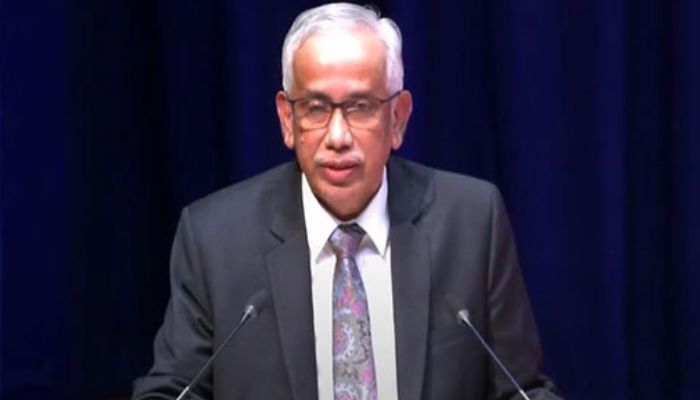
Ever since the President of India announced the appointment of retired Supreme Court Judge S Abdul Nazeer as the Governor of Andhra Pradesh, the left-liberal ecosystem has left no stone unturned to conjecture an imaginary tale of ‘quid pro quo.’

Initially, they tried to pass off Justice Nazeer’s appointment as an unprecedented move by the Modi government. In reality, India has a long history of judges taking up post-retirement jobs and Justice Nazeer’s case is not a departure from usual practice.

As such, the rattled left liberals sought refuge in the landmark Ayodhya verdict of 2019. While they do not agree with the unanimous Supreme Court decision, they sought to exploit the fact that Justice Nazeer was part of the 5-Judge Bench that decided the very case. Essentially, the ecosystem insinuated that the Ram Janmabhoomi verdict was sans merit and that Judges like Abdul Nazeer had delivered it in the hopes of a quid pro quo.

The vicious ecosystem that tends to shed crocodile tears, over the supposed ‘underrepresentation of Muslims’ in positions of power, was not impressed by his appointment at all. They are now suggesting that he decided the Ayodhya case in favour of the Hindu community, in the hope of being rewarded with a lucrative job by the present-day government, post his retirement.

As such, it comes as no surprise why left-liberal accounts on social media are sharing a picture of 5 judges who delivered the Ayodhya verdict. The motive behind such misleading messaging is to convince the masses that the Ayodha judgment was ‘fixed’ in some way.

The sinister propaganda even forced Union Law Minister, Kiren Rijiju, to issue a statement. “The Whole Eco-system is once again in full swing on the appointment of a Governor. They should better understand that they can no more treat India as their personal fiefdom,” he wrote on Sunday (February 12).

“Now, India will be guided by the people of India as per the provisions of the Constitution of India,” he further added. In their desperate bid to create hysteria about a supposed compromise in the independence of the Judiciary, left-liberals forgot to follow up on Justice Nazeer’s judgment in Ayodhya and Triple Talaq case.

Justice Nazeer and his dissent in the 2018 Ayodhya case

So far, the basis of their ‘quid pro quo’ insinuation had been the unanimous Ayodhya verdict of 2019. But, a year earlier, Justice Nazeer had contested the observation made by the apex court in a 1994 judgment (Ismail Fauqui case).

In that 1994 case, the Supreme Court had observed, “A mosque is not an essential part of the practice of the religion of Islam and namaz (prayer) by Muslims can be offered anywhere, even in the open.”

On September 27, 2018, Justice Nazeer noted that the said observation in the Ismail Faruqui case influenced the verdict of the Allahabad High Court in the Ayodhya land dispute case in 2010.

It must be mentioned that the Allahabad High Court had split the 2.77 acres of Ram Janmabhoomi (also called disputed land by some) into equal 3 parts, between Sunni Waqf Board, the Nirmohi Akhara and Ram Lalla.

Justice Nazeer had thus sought the re-interpretation of the 1994 observation to a 5-Judge Constitution Bench. However, then Chief Justice Dipak Misra and Justice Ashok Bhushan passed the majority verdict by 2-1.

They noted that the ‘mosque’ observation in the Ismail Fauqui case was made only in the context of the case and had no bearing on the 2010 Allahabad High Court verdict.

Justice Nazeer had even posed four key questions in his dissenting verdict (but in vain):

  1. Whether in the light of Shirur Mutt and other aforementioned cases, an essential practice can be decided without a detailed examination of the beliefs,
    tenets and practice of the faith in question?
  2. Whether the test for determining the essential practice is both essentiality and integrality?
  3. Does Article 25, only protect beliefs and practices othe f particular significance of a faith or all practices regarded by the faith as essential?
  4. Do Articles 15, 25 and 26 (read with Article 14) allow the comparative significance of faiths to be undertaken?

It thus becomes clear that Justice S Abdul Nazeer did not toe the line favoured by the BJP government in 2018, as alleged by the left-liberals since his appointment for the post of Governor of Andhra Pradesh.

Dissenting Judgment in the 2017 Triple Talaq case

While the BJP government had thrown its weight behind the criminalisation of instant Triple Talaq, the same Judge, who is now accused of ‘quid pro quo’ had given a verdict against the criminalisation of the act.

Justice S Abdul Nazeer was one of the two Judges, along with Chief Justice Khehar, who dissented in the infamous Shayara Bano Vs Union of India. The summary of the dissenting judgment is stated below:

  • Triple Talaq is integral to Islam in India and part of personal law
  • It is a practice which had prevailed for a long time.
  • Triple Talaq does not violate Articles 14, 15 (Prohibition of discrimination on grounds of religion, race, caste, sex or place of birth) and 21 (Protection of life and personal liberty) which are sanctions against state action.

The duo injuncted Muslims from handing out instant Triple Talaq for a period of 6 months. They also noted that courts cannot interfere in personal laws and instead asked the Union government to formulate a law in this regard.

While the left-liberals have remained fixated on one case, it is evident that Justice Nazeer had interpreted the law using his discretionary wisdom. In at least two cases, his judgments differed with the stance of the ruling BJP, enough to puncture the claims of quid pro quo.

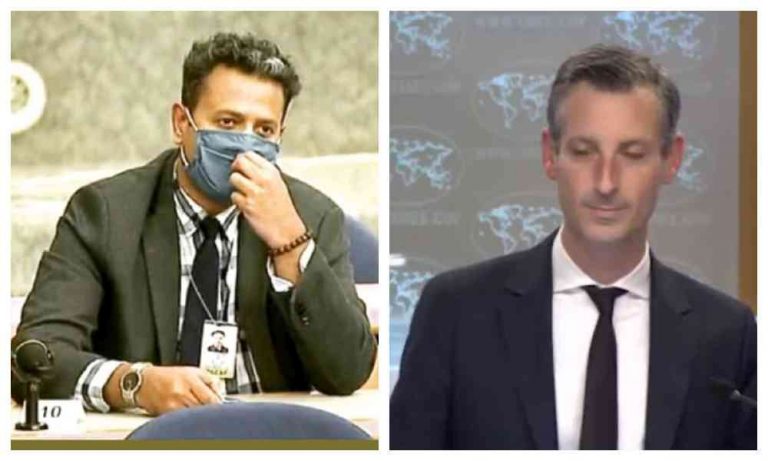
US State Department ignores Pakistani journalist’s question on Income Tax survey on BBC

The US State Department on Tuesday (local time) overlooked a Pakistani journalist’s question on the survey at BBC offices in Delhi and Mumbai by Indian tax authorities. 

When ARY’s reporter in Washington Jahanzaib Ali asked about “any thoughts and concern” over the survey, US State Department spokesperson Ned Price said, “We are aware of the search of BBC offices in Delhi by Indian tax authorities.” The reporter further questioned to get the US State Department’s reaction but Ned Price refused to wade into the controversy or comment on the matter. 

Notably, Pakistani journalist Ali, cited the BBC documentary on the 2002 Gujarat riots and said he “regretted” that no US official had criticized it, while the US State Department highlighted the close relationship between the two countries, especially over shared values. 

“What I will say broadly is that there are a number of elements that undergird the global strategic partnership that we have with our Indian partners. There are close political ties, there are economic ties, and there are exceptionally deep people-to-people ties between the United States and India. But one of those additional elements are the values that we share, the values that are common to American democracy and to Indian democracy,” Price said during regular press briefing. 

“I am very familiar with the shared values that connect the United States and India as two thriving, vibrant democracies. When we have concerns about actions that are taken in India, we have voiced those. We have had an occasion to do that. But we want first and foremost to reinforce those values that are at the heart of our relationship,” he added. 

Price stated that India is the world’s largest democracy, and also a vibrant one. “We look to everything that ties us together, and we look to reinforce all of those elements that tie us together.” 

However, Price laid stress on the importance of a free press around the world and asked the reporter to refer to Indian authorities for the details of this search. 

“Beyond this discrete action, what I’ll say more broadly is the general point that I’ve consistently made in this context, but in the universal context text as well. We support the importance of a free press around the world. We continue to highlight the importance of freedom of expression and freedom of religion or belief as human rights that contribute to strengthening democracies around the world. It has strengthened this democracy here in this country. It has strengthened India’s democracy. These universal rights are the bedrock of democracies around the world,” said Price. 

Earlier, Income tax officials arrived at BBC offices located at the national capital’s KG Marg for the survey. The British broadcaster’s office at Kalina Santacruz in Mumbai was also surveyed, sources said adding that the survey was limited to the business premises of BBC only. 

According to reports, a team of IT officials arrived at the BBC Studios office in Kalina Santacruz around 11.30 am today and a survey has been going on since then. There is no IT activity at the BBC News office at Linking road Bandra West. 
It is learned that the tax officials are conducting verification of certain account documents in the finance department of the BBC offices. 

During the investigation, the mobile phones of all the employees present in the BBC office have been taken away by the Income Tax team. The data of the computer kept in the accounts and finance department was also scanned. According to sources, officials said the devices will be returned to their owners after taking a backup. 

The searches come weeks after the BBC released a documentary on Prime Minister Narendra Modi – ‘India: The Modi Question,” which caused controversy on January 21, the Centre had issued directions for blocking multiple YouTube videos and Twitter posts sharing links to the controversial BBC documentary on PM Modi. The Supreme Court had on February 3 directed the central government to produce original records relating to its decision to block the BBC documentary.

(This news report is published from a syndicated feed. Except for the headline, the content has not been written or edited by OpIndia staff)

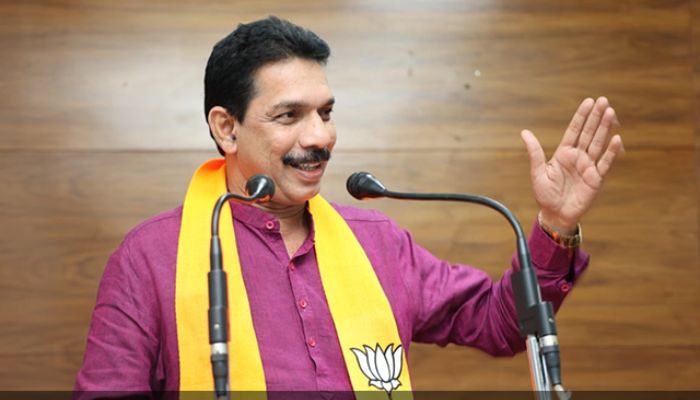
‘Ardent followers of Tipu sultan should not live’: Karnataka BJP president Nalin Kumar Kateel

Karnataka BJP president Nalin Kumar Kateel has made a controversial statement about 18th-century Mysore ruler Tipu Sultan. He said that the staunch followers of Tipu Sultan should not live, and he said that the descendants of Tipu Sultan should be sent to the forests. Kateel said this while addressing BJP supporters at Yelaburga in Koppal district on Wednesday, February 15.

Nalin Kumar Kateel said, “We are devotees of Lord Ram and Lord Hanuman. We pray and bow to Lord Hanuman and we are not descendants of Tipu. Let’s send Tipu’s descendants back home.”

He said, “I ask people here whether you worship Lord Hanuman or Tipu. Then will you send those who are staunch followers of Tipu to the jungle? I am issuing a challenge – those who are staunch followers of Tipu should not survive on this fertile land.”

Medieval Islamist tyrant Tipu sultan forcefully converted thousands of Hindus to Islam. The previous Siddaramaiah government had celebrated Tipu Sultan’s birth anniversary for two consecutive years. The BJP has been constantly raising questions about this.

Nalin Kumar Kateel also criticized former Karnataka Chief Minister Siddaramaiah, referring to him as a “broker” who had earlier struck arrangements with the JDS and now with the Congress to become the CM face in the next assembly elections. He said that if Congress returns to power in the state, it will convert Karnataka into a Congress ATM.

About Siddaramaiah, Nalin Kumar Kateel said, “He calls me a joker, I call him a broker. In this country, it’s okay if someone becomes a joker but it’s difficult if one becomes a villain, they’ll abduct anyone they want. All their stories are about abduction. He brokered and stayed in the Congress, he brokered and stayed in the JDS and once again brokered and became a chief minister.”

The Tipu Sultan versus Hanuman debate gained momentum when Uttar Pradesh Chief Minister Yogi Adityanath made a statement on the matter ahead of the 2018 assembly elections in the state. Yogi Adityanath had said that “Karnataka is the land of Hanuman, which was once ruled by the Vijayanagara Empire. It is unfortunate that congress is worshipping Tipu Sultan instead of worshipping Hanuman and Vijayanagar, if Congress loses then no one will come to worship Tipu.”

Earlier, in a statement, Kateel had said that this time the assembly elections will be fought on the issue of Tipu vs Savarkar. He had said that the Congress celebrated Tipu’s birth anniversary, which was not needed, and insulted Savarkar. The Karnataka assembly elections are likely to be held in April-May this year.

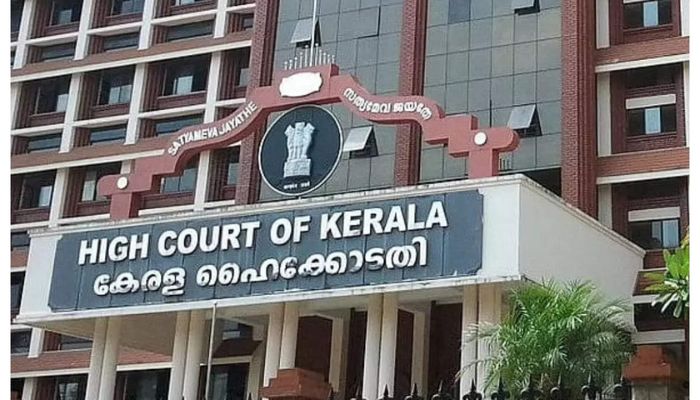
Administration can’t meddle with customs and rituals of temples: Kerala HC on ban on saffron decorations at Hindu temple by Kerala govt

On 15th February 2023, the Kerala High Court said that the administration can’t meddle with the customs, rituals and practices of the temples. Responding to writ petitions filed against a ban imposed on saffron decoration for the Kaliyoottu festival at Vellayani Bhadrakali Devi Temple by the police, the High Court said that the Travancore Devaswom Board has the right to decide on conducting the festival and that the festival has to be conducted in accordance with the custom, rituals and practices of that temple.

The court stated that no district administration or the police can insist that only ‘politically neutral’ coloured decorative materials should be used by a temple. The court also observed that similarly, no devotee has a legal right to insist that saffron-coloured decorative materials alone should be used for festivals, and it is the decision of the organisers.

Two writ petitions were filed in the court challenging the orders of the district magistrate and police directing the Vellayani Bhadrakali Devi Temple temple management to not use only saffron-coloured decorations for the Kaliyoottu festival. One petition was filed by the temple advisory committee, and the other was filed by a devotee.

The writ petitions were considered and disposed of by a division bench composed of Anil K. Narendran, and PG Ajithkumar. The court said, “Politics has no role to play in the conduct of daily worship and ceremonies and festivals in temples. A worshipper or a devotee has no legal right to insist that saffron/orange coloured decorative materials alone are used for festivals in a temple under the management of the Travancore Devaswom Board.”

The bench further said, “Similarly, the district administration or the police cannot insist that only ‘politically neutral’ coloured decorative materials be used for temple festivals. The district administration or the police cannot meddle with the power of the Travancore Devaswom Board in conducting the Kaliyoottu festival in accordance with the customs, rituals, and practices of that temple.”

The court also stated in its order that if there is any suspicion of an untoward incident on the temple grounds or in the vicinity of the temple that may jeopardize the law and order situation and the smooth conduct of the festival, it will be up to the Travancore Devaswom Board to take the matter up with the police authorities. The court said, “In such a case where the board approaches police, appropriate steps shall be taken by the police authorities.”

In an incident targeting Hindu temples in Communist-ruled Kerala, the Vellayani Bhadrakali temple was asked by the police to not use saffron decoration during the Kaliyoottu festival. Recently, police visited the Vellayani Bhadrakali temple located on the southern outskirts of Thiruvananthapuram in Kerala and instructed the temple authorities to avoid saffron-coloured buntings, flags and other fabric on the premises for the upcoming Kaliyoottu Mahotsavam.

According to the police, the temple should use fabrics, flags, and buntings of all colours, not just saffron, even though traditionally the temple is decorated with saffron during the festival. The police took the action after receiving a complaint against the use of saffron decoration and said that saffron should be avoided as it can lead to law and order problems. However, the temple management refused to took down the saffron buntings. As a mark of protest, several Hindu women wore traditional saree coupled with saffron blouses and suits with saffron dupattas, and the devotees set up a police post in front of the temple using saffron fabric.

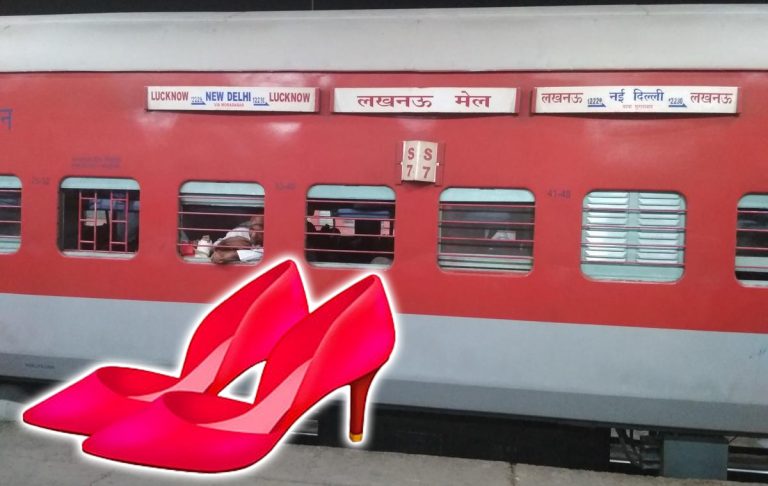
Uttar Pradesh: Month-long investigation by GRP, RPF and IRTC recovers ‘stolen’ shoes worth ₹10,000 of a railway official’s daughter

0

To track down the stolen shoes of a 20-year-old girl, the daughter of a senior railway official, the Government Railway Police (GRP), Railway Protection Force (RPF), and Indian Railway Catering and Tourism Corporation (IRCTC) reportedly joined forces. An investigation that lasted more than a month eventually found the woman who had got down from the Lucknow Mail at Bareilly wearing the girl’s shoes.

“We checked the January 4 CCTV footage of the entry and exit gates of Bareilly station but did not find any trace of the woman. We then sought help from the IRCTC officials to provide us with reservation details of the passengers of the AC first-class coach. It worked, and we zeroed in on the suspect,” Deputy SP (Bareilly GRP) Devi Dayal said.

The shoes valued at Rs. 10,000, which were allegedly taken from the train’s first-class AC compartment, were successfully located by the investigation team. The authorities also determined that they were not stolen but were accidentally taken by a fellow traveller in a haste to deboard the train.

“The woman told us she mistakenly wore the shoes when she got down at Bareilly station at around 3.45 am on January 4. She was in the same AC coach compartment in which the daughter of Vineet Singh, the Divisional Railway Manager at Odisha, was travelling along with her mother. She has accepted her mistake,” the GRP official stated, adding that the action will be taken as per the law.

The GRP (Bareilly) informed that on January 5, Divisional Railway Manager (East Coast Railway Zone) Vineet Singh reported a theft at Sambhalpur, Odisha, on behalf of her daughter, alleging that on January 4, her shoes, valued at Rs. 10,000, were taken from the AC first-class coach of the Lucknow Mail.

The complainant expressed suspicion about a female passenger who disembarked at Bareilly. The complaint claimed that the woman left her worn-out, pink-coloured shoes behind.

“Since the daughter of the senior railway official suspected that the woman who got down from the train at Bareilly junction could have taken her shoes, the complaint was transferred to us by the third week of January,” said Ajit Pratap Singh, in-charge of the GRP at Bareilly railway station.”

The train arrived at UP’s Bareilly station at 3 in the morning on the day of the incident, January 4, Wednesday. The investigators made an effort to find the female passenger who had descended at Bareilly.

They located the woman by looking through the train’s reservation chart. According to the reports, they discovered that the woman works as a doctor in Delhi.

It was unequivocally established that it was a true case of an accident after the officers called and spoke with the doctor. As the train approached her destination, the woman was dozing off. However, she woke up as the train halted in Bareilly. The doctor stepped off the train wearing the wrong shoes because of the dimmed lights. The officers started the process to send the shoes back to their senior’s daughter as soon as the doctor returned them.

Hindu group intervenes in plea against ‘hate speech’ by Hindu leaders, cites drives to convert Hindus and beheading calls

0

On 15th February 2023, a registered trust called Hindu Front for Justice intervened in a case in Supreme Court where a petitioner named Qurban Ali is asking the court to get involved regarding “hate speeches” by Hindu groups. The petition by Ali cited speeches made on December 17, 2021, in Haridwar at a gathering organized by Yati Narsinghanand, and on December 19, 2021, in Delhi at a gathering organized by an organization named “Hindu Yuva Vahini,” including others.

According to the appeal filed by attorneys Hari Shankar Jain and Vishnu Shankar Jain for Hindu Front, Muslim crowds marched in processions while shouting “Sar Tan se Juda” several times. Subsequently, several beheading cases have occurred around the nation. The petition also mentions that “a movement to convert to convert Hindus is going on in the whole of India by Muslims and Christian missionaries”.

Additionally, the application listed a few occasions in which stand-up comedians had openly made vulgar and derogatory remarks against Hindu deities and faith. It made reference to Munawar Faruqui’s most recent offensive video of Lord Ram and Mata Sita in which he uses obscene words. Instances when “hate statements” have led to “real crimes” were also mentioned in the plea. It listed particular incidents of Muslim hate crimes committed against Hindus.

The petition read, “The hate crimes being committed by Muslims against Hindus are rapidly growing but the police are very slow in taking action against the culprits due to political reasons and/or fear of Muslim ‘mobocracy’. However, in some very compelling circumstances, the Police registered FIR. Still, no effective action was taken to curb the ongoing hatred against Hindus prevalent in a section of Muslims.”

Furthermore, the application asserted that Christian missionaries are active throughout India, preying mostly on SC/ST Hindus and unethically converting people to Christianity due to poverty and allurement.

It said, “It is not out of place to mention that in Meghalaya, Chhattisgarh, Jharkhand, state of Odisha, and other places in India the Christian missionaries are trying to convert the innocent Hindus taking advantage of the situation.”

It is notable that a bench led by Chief Justice of India NV Ramana issued a notice in the Public Interest Litigation requesting the Supreme Court to intervene in allegedly hateful speeches made in Haridwar and Delhi, expressing its concern over other related matters and intervention applications being filed with regard to the same issue.

Supreme Court agrees to hear Congress leader Jaya Thakur’s plea seeking prosecution of Adani group, clubs it with other petitions

0

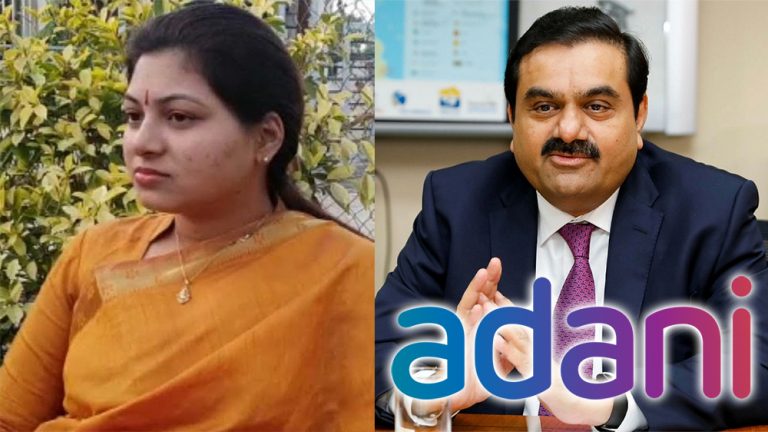
Congress Leader Jaya Thakur has petitioned the Supreme Court, requesting that the Adani Group be prosecuted and put into question the decision of the State Bank of India (SBI) and the Life Insurance Corporation (LIC) to invest in Adani shares at allegedly inflated prices. On 15th February 2023, the Supreme Court today granted Thakur’s request for an inquiry against Adani Group based on charges made by the US-based Hindenburg Research.

Jaya Thakur, who is the General Secretary of Madhya Pradesh Mahila Congress, moved the plea through advocate Varinder Kumar Sharma on Tuesday, and it was mentioned before the CJI on Wednesday.

The petitioner has urged the Supreme Court seeking to set up an investigation against the Adani Group and its associates alleging that they have swindled lakhs of crores of public money and money of the government exchequer. The petition sought the investigation by various investigating agencies CBI, ED, DRI, CBDT, EIB, NCB, SEBI, RBI, SFIO under the supervision and monitoring of a sitting judge of the top Court.

The petition further said that the Hindenburg Research report has put serious question marks on Adani. Further, the finding of the Hindenburg report indicates that the Adani group of companies has inflated the share price of their various companies, and by using the inflated price they have obtained loans worth Rs.82,000 crores from various public and private sector banks. The plea also alleged the company and their associates have set up various offshore shell companies at various tax havens such as Mauritius, Sypris, UAE, Singapore and the Caribbean Islands to transfer money through hawala routes, and did money laundering.

Jaya Thakur further alleged in the petition that “despite glaring and serious violations of the SEBI Act, 1992, neither the Securities and Exchange Board of India (SEBI) nor the Reserve Bank of India (RBI) has taken any action or initiated any investigation against the Adani Group.”

A bench headed by Chief Justice of India DY Chandrachud accepted to hear the plea, and grouped it with other similar petitions demanding a probe into the Hindenburg Research report on the Adani group and scheduled a hearing on February 17. The two other petitions in the matter are filed by advocates Manohar Lal Sharma and Vishal Tiwari.

Solicitor General Tushar Mehta has expressed his reservations to the Supreme Court about forming an expert committee to investigate the Hindenburg Report. He argued in his submission before the Supreme Court, “Existing agencies are fully equipped. However, in responding to your lordship’s suggestions, we have no objection to constituting a committee. The only thing is, we don’t want to send a message that a government agency needs to be overseen by a committee.”

On Friday, 10th February 2023, the Supreme Court ordered the Securities and Exchange Board of India (SEBI) to give a comprehensive report on the issue. The bench, which also included Justices Narasimha and Pardiwala, thus directed that the report include information such as the existing regulatory framework, important causative variables, the need for effective market regulation systems, and so on.

The bench led by CJI Chandrachud recently decided to hear a petition that also requested that a committee overseen by a retired top court judge analyze the Hindenburg Research study. The Supreme Court also heard Advocate ML Sharma’s case, which seeks to make short-selling’ a criminal offence. The claimed petition requests an inquiry into Nathan Anderson, the inventor of Hindenburg, “for exploiting innocent Investors by short selling under the pretence of a fake crash”.

On January 24, a US-based investment research firm called Hindenburg Research released a report titled ‘Adani Group: How The World’s Third Richest Man Is Pulling The Largest Con In Corporate History,’ accusing the enterprise of engaging in a ‘brazen stock manipulation and accounting fraud scheme over the course of decades.’

The disclosure triggered a stock market crash, wiping off over $100 billion from Adani’s business and driving him down the global billionaire list. Furthermore, the revelation came two days before Adani Enterprises’ $2.5 billion follow-up public offering.

Surat: Man installs GPS tracking device in a girl’s scooter to stalk her after she rejected his advances, arrested

0

On Monday, February 13, a 19-year-old girl from Gujarat’s Surat district filed a police complaint against a 30-year-old businessman after it was found that he was stalking her using GPS. The man had installed a GPS tracking device on the college student’s scooter and was following her whenever goes with the help of the tracker. In her complaint lodged at Katargam police station, the teen accused identified as Nikunj Patel of harassing her.

On the basis of the girl’s complaint, the accused who is a sand businessman, has been booked by the police. The girl has claimed that accused Nikunj was harassing her since July last year.

The complainant who is a student of Bachelor of Commerce at a city college informed the police that she had met the accused on Instagram, where they had interacted and grown close. The accused, on the other hand, desired to advance their friendship and start a relationship. But the girl turned down his proposal as she was not looking for a relationship as they both belonged to different castes. The spurned lover then decided to stalk the girl, and to do so, he installed a GPS tracking device in her scooter and started keeping tabs on her whereabouts.

The accused used to call her multiple times a day and would reach wherever she went. After finding all this suspicious, the girl informed her family members who then reported the matter to the police. Reportedly, the accused also used to visit her home to threaten and manhandle her family members including the victim’s grandparents.

Following the complaint, the police initiated an investigation and found out that a GPS tracking device was installed in the two-wheeler’s battery, and a SIM card was also recovered. However, a TOI report states that the GPS device was noticed accidentally when the complainant sent her scooter for servicing at an automobile servicing centre.

Speaking on the matter, SP LB Jhala, the police have arrested the accused who harassed the girl by installing a GPS system in her scooter and have filed a case of harassment against him. The police said that the accused wanted to know if the girl was in a relationship with any other person or not. 

The girl’s father passed a few years ago and her mother is a diamond artisan.