Home Blog Page 2624

Eye movement holds clues to how humans make decisions, new research finds

0

Eyes may really be the window to the soul–or, at least, how humans dart their eyes may reveal valuable information about how they make decisions, suggests new research led by scientists at the University of Colorado Boulder.

The new findings, published in the journal Current Biology, offer researchers a rare opportunity in neuroscience: the chance to observe the inner workings of the human brain from the outside. Doctors could also potentially use the results to, one day; screen their patients for illnesses like depression or Parkinson’s Disease.

“Eye movements are incredibly interesting to study,” said Colin Korbisch, a doctoral student in the Paul M. Rady Department of Mechanical Engineering at CU Boulder and lead author of the study. “Unlike your arms or legs, the speed of eye movements is almost totally involuntary. It’s a much more direct measurement of these unconscious processes happening in your brain.”

He and his colleagues, including researchers at Johns Hopkins University in Baltimore, published their findings in November in the journal Current Biology.

In the study, the team asked 22 human subjects to walk on a treadmill and then choose between different settings displayed on a computer screen: a brief walk up a steep grade or a longer walk on flat ground.

Researchers discovered that the subjects’ eyes gave them away: Even before they made their choices, the treadmill users tended to move their eyes faster when they looked toward the options they ended up choosing. The more vigorously their eyes moved, the more they seemed to prefer their choice.

“We discovered an accessible measurement that will tell you, in only a few seconds, not just what you prefer but how much you prefer it,” said Alaa Ahmed, senior author of the study and associate professor of mechanical engineering at CU Boulder.

Shifty eyes

Ahmed explained that how or why humans make choices (Tea or coffee? Dogs or cats?) is notoriously difficult to study. Researchers don’t have many tools that will easily allow them to peer inside the brain. Ahmed, however, believes that our eyes could provide a glimpse into some of our thought processes. She’s particularly interested in a type of movement known as a “saccade.”

“The primary way our eyes move is through saccades,” Ahmed said. “That’s when your eyes quickly jump from one fixation point to another.”

Quickly is the key word: Saccades usually take just a few dozen milliseconds to complete, making them faster than an average blink.

To find out if these darting motions give clues about how humans come to decisions, Ahmed and her colleagues decided to hit the gym.

In the new study, the team set up a treadmill on the CU Boulder campus. Study subjects exercised on various inclines for a period of time and then sat down in front of a monitor and a high-speed, camera-based device that tracked their eye movements.

While at the screen, they pondered a series of options, getting 4 seconds to pick between two choices represented by icons: Did they want to walk for 2 minutes at a 10% grade or for 6 minutes at a 4 per cent grade? Once done, they returned to the treadmill to feel the burn based on what they chose.

The team found that subjects’ eyes underwent a marathon of activity in just a short span of time. As they considered their options, the individuals flitted their eyes between the icons, first slowly and then faster.

“Initially, the saccades to either option were similarly vigorous,” Ahmed said. “Then, as time passed, that vigor increased and it increased even faster for the option they eventually chose.”

The researchers also discovered that people who made the hastiest decisions–the most impulsive members of the group, perhaps–also tended to move their eyes more vigorously. Once the subjects decided on their pick, their eyes slowed again.

“Real-time read-outs of this decision-making process typically require invasive electrodes placed into the brain. Having this more easily measured variable opens a lot of possibilities,” Korbisch said.

Diagnosing illness

Flicks of the eye could matter for a lot more than understanding how humans make decisions. Studies in monkeys, for example, have suggested that some of the same pathways in the brain that help primates pick between this or that may also break down in people with Parkinson’s–a neurological illness in which individuals experience tremors, difficulty moving and other issues.

“Slowed movements aren’t just a symptom of Parkinson’s but also appear in a lot of mental health disorders, such as depression and schizophrenia,” Ahmed said. “We think these eye movements could be something that medical professionals track as a diagnostic tool, a way to identify the progress of certain illnesses.”

Eyes, in other words, could be windows to a lot more than just the soul.

(This news report is published from a syndicated feed. Except for the headline, the content has not been written or edited by OpIndia staff)

Uttar Pradesh: Haseen Saifi uses fake documents as ‘Ashish Thakur’ to exploit a Hindu woman, arrested

0

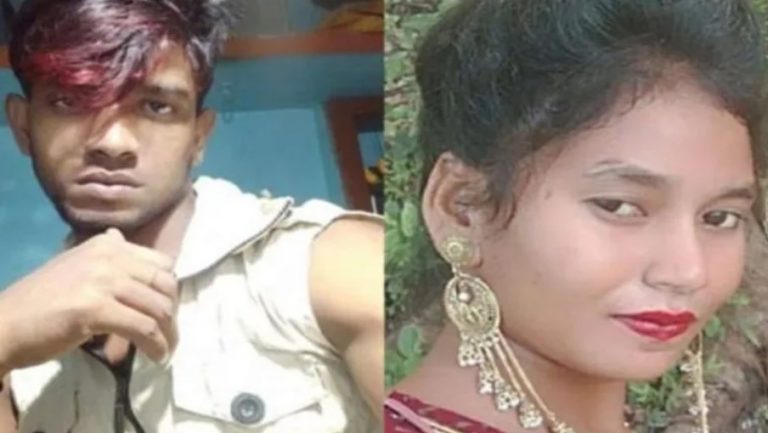
Aman named Haseen Saifi has been accused of sexual assault and blackmail by a Hindu woman. As per the complainant, Saifi had deceitfully trapped her in an affair under a false Hindu name. Saifi had told the woman that he was Ashish Thakur to start a relationship and eventually sexually assaulted her.

According to the reports, the victim woman, a resident of Uttarakhand arrived at Gautambuddha Nagar in Uttar Pradesh in search of job a few years ago. Later she shifted to Surajpur and attained a job in a company. She met accused Haseen Saifi, who is a resident of Dadri, Uttar Pradesh at the company.

The accused introduced himself as a Hindu person named Ashish Thakur and developed a friendship with her. He had also made fake documents under the false name. Due to some health issues, the victim had to lose her job. The woman in the complaint mentioned that Saifi had assured her that he would help her get another job and started exploiting her physically.

He also rented a house in the Dadri area of Uttar Pradesh and began living with her. According to the complaint, the accused kept telling the woman that he would marry her and will help her find a job. Soon, he developed sexual relations with her.

The victim woman came to know about the real identity of the accused only after his father arrived at the locality in Dadri where the duo stayed and began inquiring about the accused. The neighbours were also unaware of the man’s real name. The duo then had a big fight following which the residents living in the locality informed the Police about the incident.

The accused was presented in Court on Monday and was later sent to jail.

Sukesh Chandrashekhar also tried to con a trial judge by impersonating an SC judge: Delhi Police in SC after conman’s plea to shift him from Mandoli jail

0

The Delhi Police Monday told the Supreme Court that conman Sukesh Chandrashekhar had tried to influence a trial judge in Delhi by impersonating a Supreme Court judge in 2017. This event took place when Sukesh was in the custody of the Delhi Police from April 17 to April 28, 2017. He made the call on the day when his bail application was coming up for hearing before the trial judge, the Delhi Police informed the apex court.

The Delhi Police were responding to a notice issued by the apex court asking them to submit a reply to conman Sukesh Chandrasekhar’s petition seeking a transfer from Mandoli jail, where he is currently lodged with his wife Leena Paulose. The duo, in their plea, sought transfer to any jail outside Delhi owing to the alleged threat to their lives.

In opposition to Chandrashekhar’s plea, the Delhi Police informed the Supreme Court in a written affidavit that Chandrashekhar made the first attempt to deceive the trial judge soon after his initial detention by the city police from a five-star hotel in April 2017 on suspicion of brokering a Rs 50 crore deal to secure AIADMK (Amma) faction leader TTV Dhinakaran’s preferred election symbol by bribing his contacts in the election commission.

“A call was made on the landline phone of the special judge (Prevention of Corruption) Poonam Chaudhary on April 28, 2017, wherein a person posing as Justice Kurian Joseph of the Supreme Court of India told the special judge to grant bail to the accused,” the police affidavit said. Justice Kurian Joseph was then a judge of the top court and retired in November 2018.

The Delhi Police also mentioned how the conman even pretended to be an IAS officer, working as the private secretary to the Union Minister for Law and Justice, and requesting a favour from the Tamil Nadu special police commandant.

Delhi Police says Sukesh Chandrashekhar has been making baseless accusations against Delhi Police and the central government

Calling him a “desperate and cunning criminal” who has no respect for the law, the Delhi Police further stated that Sukesh operated his extortion business using mobile phones on multiple occasions, even while incarcerated at Tihar Jail. He also allegedly used a spoofing app to impersonate top bureaucrats.

“The present petition seeking his transfer to another prison is yet another ploy to repeat the same misdemeanours in another jail facility and exploit the loopholes where the jail authorities are not familiar with his innovative methods of con-manship,” it said.

‘No threat to the life’: Delhi Police to SC

The Delhi Police added that Chandrashekhar is making unfounded accusations against the Delhi Police and the central government while misusing the legal system to advance his crime syndicate.

“It is submitted that there is absolutely no threat to the life of the petitioners inside the Tihar/Mandoli jail and the petitioner is only making up an excuse to repeat his modus operandi in some other prison where the prison officials would not be familiar with his antics,” it said.

The Delhi Police added, “It is also pertinent to mention here that accused Sukesh Chandrashekhar is not sitting silently even in judicial custody. A total of three separate criminal cases have been registered against him while he was running in judicial custody period and in each case, he tried to manage the whole system and disobey the law…”.

According to the affidavit, all necessary actions have been undertaken to eliminate the flaws in the Mandoli Jail and severe action has been taken against the colluding officials.

It is in the interest of justice that Sukesh Chandrashekhar stays in Mandoli jail, the affidavit added.

Chandrasekhar and his wife are currently being held in custody for allegedly defrauding numerous individuals and laundering money.

Conman Sukesh Chandrashekhar alleges threats by CRPF personnel in Mandoli Jail, seeks transfer

On November 9, conman Sukesh Chandrashekhar’s counsel K Singh wrote to Delhi LG and urged him to transfer Sukesh and his wife to any other jail out of Delhi. In his letter, he alleged that Sukesh was assaulted by CRPF personnel inside the jail, resulting in severe injury to the genital area. He further added Sukesh was getting constant threats and pressure to withdraw complaints filed against AAP, Arvind Kejriwal, Satyendra Jail and Kailash Gehlot.

Sukesh’s allegations against AAP

Sukesh Chandrashekhar has filed a complaint to the LG complaining against Kejriwal and his party, alleging they extorted money from him. In his complaint, he alleged to have paid Rs 10 crore for protection inside the jail and Rs 50 crore for party funds. He also alleged he was asked to raise funds for Punjab and Goa elections.

Pet dog brutally killed with sharp weapon, hind legs cut off in Ambala, police initiates investigation

0

A pet dog was brutally killed in the Laxmi Nagar of Ambala. After the forensic investigation, the doctor confirmed that the dog was assaulted with some sharp weapon and it died due to excessive bleeding. 

The owner of the dog went to the market when the incident happened. He said to ANI, “my pet is called ‘shadow’. My neighbours informed me that some people killed it.” Initially, the case was not registered by the police. But some social organisations, which work for the protection of street dogs and animals, wanted legal action in the case. Late at night in sector nine, people from different organisations gathered and started demonstrations. They shouted slogans, and sat on a ‘dharna’. A member of such an organisation told ANI, “the dog was killed brutally. This act can’t go unpunished. We have made it a point that the police needed to take stern actions against the offenders.” 

The doctor, who performed the forensics, told the reporter “the pet’s post-mortem was done. He informed me that the back legs of the dog had been cut with a sharp weapon and the head had also been hit with a stick. It had multiple injuries in internal organs. It died due to excessive bleeding.” 

The owner of the dog alleged that the accused was bitten by the dog once. To avenge that, he inflicted such cruelty upon the dog. 

SHO Rajesh Kumar said, “the case is already registered against two people. The investigation is underway.” 

(This news report is published from a syndicated feed. Except for the headline, the content has not been written or edited by OpIndia staff)

Rajiv Gandhi Foundation’s FCRA licence suspended as it took money from China and Zakir Naik – Home Minister Amit Shah

On December 13, the opposition forced the adjournment of the question hour during the Lok Sabha winter session. Displeased by the way the opposition leaders, especially the members of the Congress Party, Home Minister Amit Shah lashed out at them in the press brief.

While speaking to Media, Home Minister Amit Shah said, “Today, the opposition interrupted the question hour. I strongly object to the disruption caused by the opposition, especially the Congress Party. While mentioning the incidents that took place at Arunachal Border on the intervening night of December 8 and December 9, the opposition got the important question session adjourned. It was unnecessary as the Parliamentary Affairs Minister had already stated clearly that at 12 PM, Defence Minister Rajnath Singh would address the house on the matter. When it was already announced that the statement [by the Defence Minister] was scheduled, there was no need to disturb the house.”

He added, “When I checked the list of questions for the question session and saw question number 5, I realised why they were so irked. The question was related to the suspension of the FCRA licence of the Rajiv Gandhi Foundation. A Congress party member raised the question. The answer was clear, and I would have said it in the house, that Rajiv Gandhi Foundation received Rs 1.35 crore from the Chinese Embassy in the 2005-06 and 2006-07 financial years. It was not in accordance with the FCRA regulations. A notice was issued, and the Home Ministry cancelled the FCRA licence.”

Questioning the motive behind funding from the Chinese Embassy, HM Shah said, “The Foundation was registered for social work. However, the funds received from the Chinese Embassy were allegedly used to research India-China relationships. Were the thousands of hectares of land grabbed by China in the 1962 war included in their research? What did the report say? Did they research how Nehru’s love [for China] led to India’s inability to be part of the UN’s Security Council? If they did, what was the outcome of the research? When our soldiers were fighting with Chinese soldiers in Galwan, who was hosting dinner for Chinese Embassy officials? Was it part of their research? If yes, what was the outcome of the research?”

He said, “When they were in power in 2006, the Chinese Embassy claimed Arunachal Pradesh and Nephi. Was it part of their research? If yes, what was the outcome? On May 25, 2007, China refused to give visas to Congress CM Dorji Khandu. They claimed Visa was not needed as Arunachal Pradesh was China’s part. On October 13, 2009, during Manmohan Singh’s Arunachal visit, China objected. Were these incidents part of their research?”

HM Shah added, “In 2010, China started issuing stapled visas to the people of Jammu and Kashmir. Was it part of your research? In 2011, after China’s warning, the Congress government stopped working on construction of roads, and vital modern infrastructure was stopped. Why was it stopped? Did they research it? I want to inform the Congress party that such a dual face does not work in front of the public. They are watching you.”

Speaking about another reason behind the cancellation of the license, HM Shah said, “Rajiv Gandhi Foundation lost its FCRA licence for one more reason. Islamic Research Foundation of Zakir Naik also gave Rs 50 lakhs to the foundation on July 7, 2011. I want to ask the members of the Rajiv Gandhi Foundation, who are the members of the Congress Party, why Zakir Naik gave you the funds. The public deserves an explanation.”

HM Shah further added that till the time, BJP remains in power, no one will be able to grab even an inch of the land. Praising the soldiers for their valour on December 8 and December 9, he said, “On December 8 and December 9, our soldiers showed great valour and they pushed all the intruders within a few hours and saved our land.”

Question in the parliament on cancellation of FCRA licence of Rajiv Gandhi Foundation

It is notable that the Ministry of Home Affairs cancelled the FCRA licence of the Rajiv Gandhi Foundation on October 23, 2022. It was reported that the decision was made based on investigations conducted by an inter-ministerial committee constituted by the ministry of home affairs (MHA) in July 2020. A notice regarding the termination of the licence was sent to the office-bearers of the foundation. In July 2020, the MHA formed an inter-ministerial committee led by an Enforcement Directorate (ED) officer to investigate Rajiv Gandhi Foundation (RGF), Rajiv Gandhi Charitable Trust (RGCT), and Indira Gandhi Memorial Trust, for alleged violations of the Money Laundering Act, Income Tax Act, and FCRA. The committee, which included officers from the union home and finance ministries in addition to the Central Bureau of Investigation (CBI), was tasked with investigating whether the trusts run by the Gandhi family and other Congress leaders tampered with documents when filing income taxes or misused and laundered money received from foreign countries.

On December 7, the question on the cancellation of the license was raised in Rajya Sabha by Digvijay Singh and Amee Yajnik. In the reply, Nityanand Rai, Minister of State, Ministry of Home Affairs said that under section 14 of the Foreign Contribution (Regulation) Act, 2010 (FCRA, 2010) due to violation of provisions under section 11 and conditions of registration under section 12(4)(a)(vi) of the FCRA, 2010. The FCRA licence of the Rajiv Gandhi Charitable Trust (RGCT) was cancelled under section 14 of the FCRA, 2010 due to violation of provisions under sections 8(1)(a), 11, 17, 18, 19 and conditions of registration under section 12(4)(a)(vi) of the FCRA, 2010.

On December 13, the question was raised in Lok Sabha by VK Shreekandan and Benny Behanan. Rai submitted the same answer in the house. In both cases, the reasons mentioned by HM Shah during the media brief were not mentioned. As per the reply submitted by Home Ministry, the foundation will not be eligible for the license for another three years.

Uttar Pradesh: Maulvi Lallu arrested for attempting the forced conversion of a Hindu girl, 9 others booked

0

The Uttar Pradesh Police booked a Maulvi and nine others for attempting to convert an 18-year-old Hindu girl to Islam and perform her nikah with a man named Ahmad Ansari. The incident took place on December 9 in the Fatehpur district of the state. The Police meanwhile have arrested Maulvi and the man Ansari, and are conducting further investigations into the case.

According to the reports, the girl had mysteriously disappeared from the Fatehpur Sadar Kotwali area around 8 months ago. After that, the mother of the girl filed a missing person report at the Police station. The girl, on the other hand, somehow managed to tell her mother that she would be converted and wedded to Ansari on Thursday evening in Satonpeet village.

The mother then rushed there and tried to rescue her daughter. Ansari and his family abused, groped, and assaulted the mother when she reached the spot to save her daughter. The police were informed about the brawl by the locals, after which the authorities booked 10 people on the charges of kidnapping, assault, and molestation of a woman.

The booked persons include Maulvi Lallu, Ahmed Ansari, Ansari’s mother Sahroon Nisha, his brothers Naushad Ali and Dilshad Ali, sisters-in-law Soni Bano and Yasmeen, sister Badki, Tahkan Nisha, and Bhola Masood. They have been booked under UP Prohibition of Unlawful Conversion of Religion Act. The accused were also booked on charges of abusing and rioting.

The Police meanwhile have arrested Maulvi and Ahmad Ansari based on the complaint filed by the girl’s mother. The duo is being interrogated by police. Deputy Superintendent of Police (CO) Dineshchandra Mishra confirmed the incident and said that about eight months ago (when the girl was possibly a minor), Ahmed Ansari, a resident of Asothar police station, had lured the woman from the Hariharganj area of Fatehpur Sadar Kotwali and had taken her away with him. Her mother had filed a missing report in this connection, he said.

Over 200 Chinese PLA troops came armed with spiked clubs, taser guns and monkey fists during a face-off along LAC in Tawang: Reports

0

Clashes broke out between the Indian and Chinese troops on December 9, 2022, in the border area of the Tawang sector in Arunachal Pradesh. Now, a report by India Today has confirmed around 200 Chinese soldiers were involved in the attack. As per the report, the Chinese PLA came heavily prepared with spiked clubs with nails on them, monkey fists (a crude weapon made of iron that is worn on the wrist), and taser guns and sticks.

The PLA troop was challenged by a group of roughly 50 Indian soldiers who confronted them and stopped their advances in a location. According to a report by The Print’s Snehesh Alex Philip, a backup Indian squad arrived at the location within a half-hour, following which a clash ensued. According to sources cited by the media outlet, this conflict began with stone-pelting before troops from both sides engaged in hand-to-hand combat.

The source was quoted as saying that while the Indian troops were not armed with taser guns, they had “everything and more than what the Chinese had” to be able to retaliate.

According to sources, the PLA troops sustained more injuries as a result of the Indian troops’ ability to quickly outnumber the Chinese troops. According to sources who spoke to The Print, at least 15 Indian soldiers were hurt in the clash, including those who sustained fractures. The source added that the Chinese were attempting to gain “morale superiority” because there was a change in the Army unit that was deployed along the front lines on the Indian side at the time.

Def Min Rajnath Singh addresses LS over Arunachal clash

Defence Minister Rajnath Singh on Tuesday addressed the lower house of the Indian Parliament over the scuffle that broke out between Indian and Chinese troops along the LAC in Arunachal Pradesh’s Tawang sector on December 9. Singh said that the attempt of PLA troops was contested by the Indian army in a firm and resolute manner. He added that the contestation led to a face-off between the two forces, resulting in a minor scuffle which prevented the PLA from transgressing into the Indian territory and compelled them to return to their posts.

Singh confirmed that none of the Indian soldiers was seriously injured or killed during the clashes with the Chinese PLA troopers.

Indian and Chinese PLA soldiers face off at Arunachal LAC

Clashes broke out between the Indian and Chinese troops on December 9 in the border area of the Tawang sector in Arunachal Pradesh, an official statement by the Indian Army said.

There have been reports of multiple injuries on both sides. There have been no reports of deaths. Chinese had come heavily prepared with around 300 soldiers but didn’t expect the Indian side also to be well prepared, ANI quoted sources as saying.

Galwan Valley clashes

The scuffle assumes significance given that it is the first such incident since the Galwan Valley clashes between India and China more than two years ago, heightening tensions between the two countries. On June 15, 2020, the Chinese troops attacked the Indian troops along the LAC near the Ladakh border. The clashes resulted in India losing 20 of its soldiers. Estimates suggest China had lost 43 of its men. However, after months of denial, China officially acknowledged the loss of at least 5 of its soldiers.

Jalandhar: Amritpal Singh supporters create a ruckus at Gurudwara, break the chairs and sofa inside, and burn them

0

On December 13, Sikh supporters of preacher Amritpal Singh Khalsa of ‘Waris Punjab De’ created a ruckus at the Gurudwara Singh Sabha, Model Town, Jalandhar. They broke the chairs and sofas, took them outside, and set them on fire. The incident took place late evening on Monday during Amritpal Singh’s visit to the Gurudwara. Notably, he has been on a state-wide march, ‘Khalsa Wahir’ march.

A similar incident took place on December 9 at a Gurudwara in Biharipura village of district Kapurthala. At that time, Amritpal had issued a warning against using chairs inside Gurudwaras. He claimed that putting up chairs inside holy shrines is against “Maryada”, or the dignity of Sikhism. As per Dainik Bhaskar’s report, when Amritpal Singh reached the Gurudwara, he paid respect to the Takht and then passed a remark that the management has turned the Gurudwara into a palace by placing chairs inside the hall. He questioned, “Can we sit at the same level as Guru Sahib?”

Following the remarks, his followers started creating a ruckus. They tore the cushions of the sofas and took the furniture outside. They poured fuel on the pile of broken furniture and set it on fire. 

At that time, Amritpal was addressing the congregation inside the Gurudwara Hall. He was informed about the incident that was taking place after he reportedly asked his followers not to destroy the furniture. However, by the time he ‘urged’ them to stop, the furniture was already burnt. As per reports, he said he would have questioned the Gurudwara management committee in front of the Sangat why there were chairs inside Gurudwara Hall since it was against ‘Sikh Maryada’.

The Police were also informed about the incident. Gurudwara management committees officials and Police reached the spot, and a probe was initiated into the matter. SHO Sukhdev Singh said in a statement that the matter would be thoroughly investigated and appropriate legal action would be taken. As per Jagbani’s report, the committee did not file a complaint till late at night.

Amritpal’s statement against chairs

In a statement during his address to the congregation, Amritpal Singh spoke against the use of chairs inside Gurudwaras. He said, “The poor who are hungry do not think about chairs. All these are just excuses. Everyone is responsible for the revival of the Code of Conduct inside Gurudwaras and not me alone. If someone tells me something is happening somewhere, I tell them, ‘are you wearing bangles?’ If I go to any Gurudwara, I will either not pay my respects or pay respects only after removing chairs.”

Akal Takht’s stand on the use of chairs

It is notable that on several occasions, the issue has been raised by the Akal Takht and Sikh leaders not to allow chairs and sofas inside Gurudwaras. In November 2013, Akal Takht issued regulations against the use of chairs, sofas, and other similar sitting arrangements inside Gurudwaras. As per a report in The Tribune, Akal Takht banned the use of sofas, chairs, or benches installed for elderly people and differently-abled persons in the main hall of the Gurudwaras. It was termed as disrespect to the holy book.

Jathedar Giani Gurbachan Singh of Akal Takht urged the Gurudwara Management Committees to make arrangements outside the main hall for those who cannot sit on the floor. Jathedar spoke to the media on the matter and said that in 2009, it was decided to have two sitting arrangements inside Gurudwaras, but details about which sitting arrangement would be placed inside the hall and which would be allowed outside the hall were not discussed.

Notably, on April 20, 1998, Jathedar Ranjit Singh of Akal Takht issued a Hukumnama prohibiting Sikhs from using chairs and tables while partaking of ‘langar’, which was a common practice in foreign countries. The Hukumnama stirred controversy, and later, in October 1998, Five High Priests relaxed the regulations and allowed handicapped or sick devotees to use chairs and tables while partaking of ‘langar’.

‘No Indian soldier seriously injured or killed, they foiled Chinese bid to unilaterally change the status quo’: Def Min Rajnath Singh in LS

Defence Minister Rajnath Singh on Tuesday addressed the lower house of the Indian Parliament over the scuffle that broke out between Indian and Chinese troops along the LAC in Arunachal Pradesh’s Tawang sector on December 9. Singh said none of the Indian soldiers was seriously injured or killed during the clashes with the Chinese PLA troopers.

“Our army valiantly fought back & forced Chinese troops to go back to their post. They foiled China’s bid to unilaterally alter the status quo along the LAC in the Tawang sector. Both sides have suffered some injury, none of our soldiers is seriously injured or dead,” Singh said in Lok Sabha.

Singh said PLA troops tried to transgress the LAC in the Yangtse area of the Tawang Sector on December 9 and unilaterally change the status quo. However, their attempt was contested by the Indian army in a firm and resolute manner. He further added that the contestation led to a face-off between the two forces, resulting in a minor scuffle which prevented the PLA from transgressing into the Indian territory and compelled them to return to their posts.

“Due to the timely intervention of Indian military commanders, PLA soldiers went back to their locations. As a follow-up of the incident, the local Commander in the area held a Flag Meeting with his counterpart on 11 December 2022 to discuss the issue in accordance with established mechanisms. The Chinese side was asked to refrain from such actions and maintain peace and tranquillity along the border. The issue has also been taken up with the Chinese side through diplomatic channels,” Defence Minister further added.

Copy of statement made by Rajnath Singh in Lok Sabha

Indian, Chinese troops face off in Arunachal Pradesh’s Tawang Sector

Clashes broke out between the Indian and Chinese troops on December 9 in the border area of the Tawang sector in Arunachal Pradesh, an official statement by the Defence Ministry said on Monday. 

There have been reports of multiple injuries on both sides. According to reports, the Chinese had come heavily prepared with around 300 soldiers carrying clubs wrapped with spikes and other weapons, but they had not expected the Indian side to mobilise quickly for their surreptitious attack, ANI quoted sources as saying.

The Defence Ministry issued a statement over the media reports on clashes between Indian, and Chinese forces along the Line of Actual Control in the Tawang sector of Arunachal Pradesh. “In certain areas along the LAC in the Tawang Sector in Arunachal Pradesh there are areas of differing perception, wherein both sides patrol the area up to their claim lines. This has been the trend since 2006, the statement said.

The Defence Ministry said both sides immediately disengaged from the area. “As a follow up of the incident, own Commander in the area held a Flag Meeting with his counterpart to discuss the issue in accordance with structured mechanisms to restore peace and tranquility,” it added.

India hits out on OIC for PoK visit, calls it mouthpiece of Pakistan and says it has no locus standi in matters relating to Kashmir

0

India on Tuesday condemned the Organisation of Islamic Cooperation’s (OIC) Secretary-General Hissein Brahim Taha’s visit to Pakistan-Occupied Jammu and Kashmir and his comment during the visit to Pakistan, Ministry of External Affairs said in a statement. 

“We strongly condemn the visit of the OIC Secretary General to Pakistan Occupied Kashmir (POK) and his comments on Jammu and Kashmir during his visit to Pakistan,” Ministry of External Affairs Spokesperson Arindam Bagchi replied to the media queries regarding Taha’s visit. He further said, “Let me reiterate that OIC has no locus standing in matters related to Jammu and Kashmir, which is an integral and inalienable part of India. Any attempt of interference and meddling in India’s internal affairs by OIC and its Secretary General is entirely unacceptable.” 

Regarding OIC, Bagchi said that the organisation had lost its credibility by taking a blatantly communal, partisan and factually incorrect approach to issues. He also said that OIC’s Secretary-General has become a mouthpiece of Pakistan, according to the statement. 

India hoped that Taha would refrain from becoming a partner in carrying out the ‘nefarious’ agenda of Pakistan of promoting cross-border terrorism in India, especially in Jammu and Kashmir, Bagchi said. 

Earlier, on Monday, OIC General-Secretary met Pakistan’s Prime Minister during his three-day visit starting from December 10 to 12, OIC said in a statement. 

Both sides exchanged views on the question of Palestine, humanitarian challenges faced by the people of Afghanistan, and efforts towards countering rising anti-Muslim hatred and Islamophobia across the globe. 

The meeting also reviewed aspects of cooperation between OIC and Pakistan, in particular, on the implementation of the resolutions of the Council of Foreign Ministers during ongoing Pakistan’s chairmanship of the Council, according to the statement. 

Earlier, on Saturday, Taha held a working session with Pakistan’s Foreign Minister Bilawal Bhutto Zardari. Both sides discussed relations between the OIC and Pakistan as well as issues related to Jammu and Kashmir dispute, Islamophobia and the humanitarian situation in Afghanistan.

(This news report is published from a syndicated feed. Except for the headline, the content has not been written or edited by OpIndia staff)