Four Days after the century-old suspension bridge collapsed in Gujarat’s Morbi district killing more than 135 people, the Chief officer (CO) of Morbi municipality Sandeepsinh Zala, who had admitted that the bridge was reopened without a fitness certificate, has been suspended for dereliction in the Morbi mishap.
The development comes merely three days after Prime Minister Narendra Modi along with Gujarat Chief Minister Bhupendra Patel visited the bridge collapse site.
“The state Urban Development Department has suspended Chief Officer of Morbi Municipality Sandipsinh Zala,” said District Collector GT Pandya on Friday (November 4).
Notably, in the aftermath of the tragedy, the Chief officer (CO) of Morbi municipality Sandeepsinh Zala confirmed that the bridge was thrown open to the public without getting a fitness certificate. “However, the private firm threw the bridge open to visitors without notifying us and therefore, we couldn’t get a safety audit of the bridge conducted…It was opened to the public after the completion of the renovation work. But the local municipality had not yet issued any fitness certificate,” he said.
Meanwhile, the Resident Additional Collector of Morbi has been given the additional charge of the Chief Officer until further orders, he said. Morbi Municipality had given the contract of the bridge repair and maintenance to Oreva group for 15 years, officials said.
Poor bridge maintenance, rusted cables
It may be recalled that on Tuesday, Morbi Deputy Superintendent of Police PA Zala who is investigating the case of the tragic incident of the bridge collapse alleged that the suspension bridge crumbled due to its poor maintenance. Zala said to the local court that the cables of the bridge were rusted and that had the cables been repaired, the incident would not have happened.
Morbi tragedy
The bridge over the Machchhu River in Morbi, Gujarat, collapsed on October 30, claiming at least 135 lives and injuring several other persons. The bridge, which was over a century old, had just been reopened following its repair and renovation work. Notably, around 400 people were on the bridge when the incident happened, as the ancient bridge could not bear the weight.
The Kerala High Court last week dismissed a review petition filed by a man challenging the divorce granted to his wife under the Dissolution of Muslim Marriages Act,1939, holding that a Muslim woman has the absolute right to dissolve her marriage at will and does not need her husband’s consent for it.
“We declared that the right of a Muslim wife to terminate the marriage at her request is an absolute right conferred on her by the Quran and is not subject to the acceptance or will of her husband,” said the Kerala High Court division bench of Justices A Muhamed Mustaque and CD Dias.
In a recent order, the court stated that Muslim women have the extra-judicial choice of ending their marriage “unilaterally,” and that the husband’s petition against the divorce was not “innocuous” and appeared to have been filed at the request of “Muslim clerics and hegemonic masculinity.”
The court stated that a Khula is valid if certain conditions are met. The wife’s declaration of repudiation or termination of the marriage, an offer to return her dower or any other material gain received during her marriage, and that before the declaration of the Khula, an effective attempt at reconciliation was made.
According to the review petition, if a Muslim wife wants to end her marriage with her husband, she must first demand talaq from him, and if he refuses, then she can go to court or the Qazi.
According to the ruling, the petitioner had argued that no Muslim wife is “allowed to unilaterally terminate the marriage” anywhere in the world, and the court is also “not competent to decide on religious beliefs and practices and should follow the opinion of Islamic scholars.”
However, the division bench of Mustaque and Dias ruled that it cannot rely on Islamic clergy who have no legal training or knowledge of legal sciences to decide a point of law.
“The courts are manned by trained legal minds. “The court shall not submit to the opinions of Islamic clergy who have no legal training on the subject of law,” the ruling stated.
It went on to say that the Kerala High Court had relied on Chapter II, verse 229 of the Quran, where the right of a Muslim wife is explicitly mentioned, and that this “legal conundrum” is not unique, but has evolved over time.
To no surprise, the Kerala High Court judgment did not go well with the All India Muslim Personal Law Board (AIMPLB). On Thursday AIMPLB asserted that a Muslim woman does not have the unilateral right to end her marriage through Khula. According to the Board, the husband has the right of accepting or rejecting her demand for Khula.
The Board stated in a statement that “Khula is reliant on both husband and wife agreeing to end the marriage after a woman initiates the proposal. If the husband does not agree to Khula, the wife has the right to seek faskh or judicial divorce,” AIMPLB general secretary Khalid Saifullah Rehmani stated.
The Board accused the court of going beyond its brief. “The court was supposed to make a decision based on the Shariah Application Act of 1937.” Unfortunately, the court appeared to go beyond its brief on legal interpretation. The court does not have the authority to add to or alter the law.”
According to Rehmani, a Muslim marriage can be ended in three ways: Talaq, which is pronounced by a man, Khula, which is initiated by a woman, and Faskh, which is judicial divorce.
In the ongoing Talaq-e-Hassan case, the Supreme Court rendered an oral observation juxtaposing Khula and Talaq-e-Hassan, stating that just as a woman has a unilateral right to Khula, so does a man have a unilateral right to Talaq-e-Hassan.
The AIMPLB, on the other hand, insists that in the case of Khula, which is an option of divorce available at the behest a Muslim woman, the man has the final say.
On 3rd November 2022, Delhi’s Lieutenant Governor Vinai Kumar Saxena wrote a letter to Punjab’s chief minister Bhagwant Mann asking him to take urgent and substantive measures to control stubble burning in Punjab that is causing massive air pollution in the national capital. It is notable that thousands of acres of farmland in Punjab are set on fire to burn the stubble and the smoke directly contributes to the air pollution in Delhi. The air quality index in Delhi is already degraded from ‘very poor’ to ‘severe’, with an average AQI exceeding 500. People in Delhi are facing various health hazards because of this pollution.
Delhi LG VK Saxena writes to Punjab CM Bhagwant Mann on stubble burning and pollution
“Request you to undertake urgent and substantive measures to control Parali (stubble) burning in Punjab, that has converted the national capital once again into a gas chamber,” writes Delhi LG pic.twitter.com/apb8wP7cYl
LG Vinai Kumar Saxena also said that he has talked with Delhi’s chief minister Arvind Kejriwal in this regard and that he had called Punjab’s chief minister Bhagwant Mann also discuss the matter, but he could not attend the call because of some meetings scheduled. As the Punjab CM didn’t call back the LG the whole day, he was forced to write the letter, Saxena said.
LG Vinai Kumar Saxena said in his letter that stubble burning has converted the national capital into a gas chamber. He said in his letter, “It is with a sense of deep anguish that, I wish to draw your attention towards the pain and suffering that the people of Delhi are experiencing for no fault of theirs, and request you to undertake urgent and substantive measures to control Parali burning in Punjab, that has converted the National Capital once again into a gas chamber. It is public knowledge that Air Pollution in Delhi has reached extremely dangerous levels, hovering consistently in the ‘severe pls category due to smoke, 95% of which is originating from Parali burning in Punjab.”
LG Vinay Kumar Saxena further said in this letter, “I am constrained to draw your express attention towards the fact that contrary to expectations, incidents of Parali burning have increased by a whopping 19% in the period between October 24th, 2022 to November 02, 2022, as compared to the corresponding period in 2021. Authentic data on Parali burning presents an alarming picture. The figures for 2021 and 2022, for the same period, stand at 18066 and 21480 respectively. As on 02 November 2022, alone, out of the total 3825 cases of Parali burning in 06 States, i.e. Punjab, Haryana, UP, MP, and Rajasthan, Punjab singularly reported 3634 cases, while Delhi reported zero.”
LG VK Saxena also briefed the Punjab chief minister Bhagwant Mann about the respiratory diseases and skin problems faced by the people in Delhi as a result of this air pollution. He said, “OPD visits and hospitalizations related to pulmonary discomfort/disorders has reportedly witnessed a manifold increase, children and the elderly are disproportionately affected, and every common citizen is facing incessant burning of eyes, cough, nasal congestion, sore throat, and labored breathing amongst other respiratory discomforts. Renowned Doctors and Hospitals of Delhi are consistently flagging the situation as hazardous and dangerous, and are asking for schools to be closed, apart from advising people to remain indoors, not to go for morning walks, and refrain from outdoor physical activities. Due to severe air pollution and consequent restrictions, even the socio-economic activities are badly impacted.”
LG Saxena said that this is a violation of the citizen’s fundamental right to health and the right to life. He also drew Bhagwant Mann’s attention to the fact that this annual phenomenon has been a cause of deep concern, at all levels in the government and judiciary, and over the years, several measures have been put in place for mitigating the same. Delhi’s LG also reminded Bhagwant Mann that the Government of NCTD has also gone out of the way to promote and publicize a bio-decomposer for use by farmers, vide extensive and large-scale advertisements in newspapers and television by spending crores of rupees. It is notable that in Delhi and Punjab there is an Aam Aadmi Party government while in Haryana, chief minister Manohar Lal Khattar is leading a BJP-led coalition government.
LG Vinai Kumar Saxena mentioned that Haryana’s contribution to air pollution by stubble burning is negligible. He said, “I, on behalf of Delhi and its residents, once again sincerely and earnestly urge you to galvanize all available resources and machinery to make the farmers become willing partners in defeating this repetitive menace and help the Capital – indeed the entire NCR, breathe.”
The AAP government takes responsibility
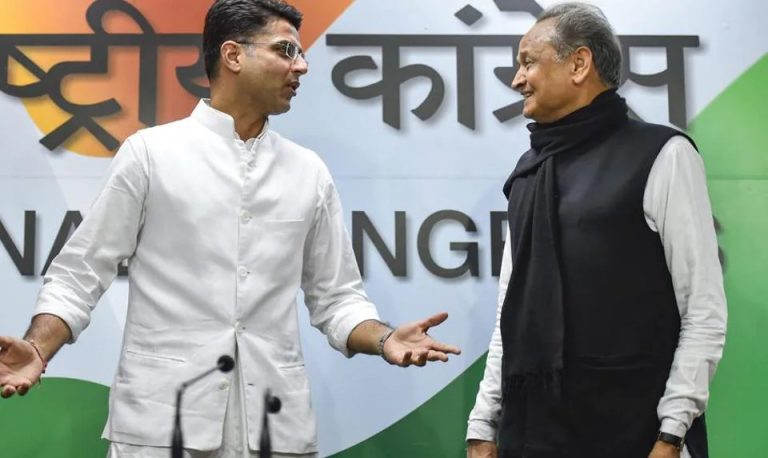
Meanwhile, on 4th November 2022, Aam Aadmi Party chief and Delhi’s CM Arvind Kejriwal held a joint press conference along with Punjab’s chief minister Bhagwant Mann. In this press conference, he said that the AAP government takes responsibility for the pollution caused in Delhi by the stubble burning in Punjab. He said, “Farmers could not be blamed for the pollution-causing agricultural practice. By next year, we will reduce the farm fires in Punjab.”
#WATCH | “We will try for crop diversification… we will try to move our farmers from rice to other crops in Punjab,” say AAP Chief & Delhi CM Arvind Kejriwal & Punjab CM Bhagwant Mann in a joint press conference over rising pollution in Delhi pic.twitter.com/MQcWbHwLuN
He added, “Hopefully, by next year, we will take many harsh steps. We will align with farmers to reduce farm fires. We will try for crop diversification. We will try to move our farmers from rice to other crops in Punjab.”
Arvind Kejriwal read out a list of places in Punjab, Haryana, and Rajasthan where the air quality index is ‘very poor’ or ‘severe’. He said, “This is a problem of the whole of north India and not just Delhi. We all have to together solve this problem because air is not static, it moves from one place to other and takes along pollutants. This is not the time of blame game or finger-pointing. Playing politics around such a sensitive topic will not give us any solution. There is stubble burning in Punjab but farmers are not responsible for that. They also need a solution. The day they get a solution, they will stop stubble burning. Because before reaching Delhi, the smoke first enters his own house and affects the children of the farmers. We have formed a government in Punjab and if stubble burning takes place in Punjab, we are responsible for it. Our government is responsible for it.”
Arvind Kejriwal said that it has been just six months since his party came to power in the border state and that six months is a small period to address several issues faced by the state. Bhagwant Mann informed about various steps taken by the state government to contain the problem which hardly contained anything except awareness and encouragement campaigns. Besides, he talked about bioenergy plants that are planning to take away the stubble from thousands of acres in Punjab and convert it to energy. One such plant is functional while other measures told by Bhagwant Mann include making CNG and electricity from stubble and they are not realized yet. Punjab CM assured that by November 2023, there will be a substantial reduction in the problem. Both Kejriwal and Mann said that the AAP government takes responsibility but other state governments and the union government should also take responsibility to address the problem as farmers cannot move to other crops unless they get assured minimum support price.
Every year, the smoke produced by stubble burning by farmers in North India has been a major subject of concern due to the considerable health risks it poses. However, data shows that Haryana is working extensively to reduce stubble-burning incidents.
According to available data, Haryana has not only seen a considerable decline in the number of occurrences of stubble burning this year but has also seen a large drop in similar incidents over the previous six years.
As per a report by The Indian Express, Haryana has, till November 3, 2022, reported 2,377 incidences of stubble burning, compared to 3,438 recorded on November 3 in 2021, a remarkable 30% decline.
Notably, this downward trend has been consistent in the past six years. Haryana has reduced stubble-burning instances by more than 55% during the last six years. The total number of such accidents decreased from 15,686 in 2016 to 6,987 in 2021.
Farmers in Haryana’s Karnal district said the reduction in stubble-burning incidents this year was largely due to private contractors providing free balers to farmers and selling crop residue bales to cardboard factories, biomass plants, boilers, and ethanol plants at a small markup. Balers are machines used to compress crop residue into compact bales.
“It is a win-win for farmers and contractors (zamindars). The baler costs over Rs 15 lakh and requires three machines tied to a tractor to process paddy into compact bales. With additional input costs of diesel and employing labour, it’s quite expensive for a farmer to purchase it, despite the subsidy given by the government for these implements. So, baler owners are using a farmer’s land to clear paddy and taking bales from crop residue to sell them for around Rs 170 a quintal. The cost is borne by baler owners; a baler can clear a 20-acre area fairly quickly. As compared to last year, more machines are available for use and there is more awareness among farmers regarding pollution. So, farm fires have considerably reduced,” said farmer Kuldeep Waraich from Ramba village.
Waraich also asserted that in some cases, farmers were paying these contractors a fraction of the subsidy given to them by the government for not burning stubble.
Decline in stubble burning incidents attributed to the incentives provided to farmers by Haryana Govt
Officials from the Haryana Agriculture and Farmers Welfare Department attributed the decrease in stubble burning across the state to a variety of incentives, including cash rewards and subsidies, provided to farmers in exchange for not burning stubble and practising in-situ and ex-situ crop management. According to government officials, numerous farmers are also using super seeders and happy seeder equipment to sow wheat directly into paddy residues.
As per the report, the state government has provided a provision for a Rs 1,000 per acre incentive for those who do not burn stubble. In addition, farmers are provided Rs 50 per quintal incentive cash and subsidy on straw management equipment for creating stubble bales. Farmers will receive a 50% subsidy on agricultural residue management equipment and an 80% subsidy on custom hiring centres. If a farmer brings stubble bales to the ethanol facilities in Karnal and Panipat, he receives Rs 2,000 per acre, and if he takes stubble to gaushalas, he receives Rs 1,500.
Dr Hardeep Singh, the Director General of the Agriculture and Farmers Welfare Department, said, “Over 72,770 crop residue management machines were given to farmers till last year and 7,146 machines will be provided this year. The government is also providing operational charges for machinery. In villages located in red zones (where 6 or more stubble burning cases are reported), cash rewards are being given to the panchayat as an incentive if they bring the cases to zero. Several lakh tonnes of paddy husks are being used in biomass power projects in the state and more such plants will be commissioned. Over 2.5 lakh kits of PUSA decomposer capsules are being provided for 2.5 lakh acre area for being sprayed to destroy stubble.”
Waste-to-energy plants helping Haryana control stubble burning
Haryana now has ten power plants that create around 84MW of electricity from paddy straw. In addition, the Haryana Renewable Energy Development Agency (HAREDA) owns two paddy straw-based biomass power facilities in Kurukshetra and Kaithal that consume 3.5 lakh MT of agricultural waste and generate 15 MW of electricity each.
Haryana has also established a 2G ethanol plant at IOCL’s Panipat refinery, the country’s first such commercial project, which will directly manufacture 100 kilogrammes of ethanol per day from 425.5 metric tonnes of dry corn stover. According to its current capacity, this factory will consume around 4,250 quintals of paddy straw from approximately 212 acres each day and empty approximately 77,562 acres each year.
According to officials, roughly 8 lakh MT of crop residue was used in industries in 2021-22, with the government aiming to increase that figure to around 13 lakh MT this year.
Even private companies have shown interest in establishing waste-to-energy facilities in the state, with 65 project developers submitting Letters of Intent (LOI) under the SATAT initiative to establish paddy straw-based compressed biogas projects.
Farmers fined for stubble burning
To dissuade farmers from burning stubble or parali, the Haryana government has issued 1,041 challans and fined farmers in various paddy sowing districts approximately 26 lakh so far for burning crop residue.
According to reports published on October 28, 2022, Kurukshetra, Kaithal, Jind and Karnal were among the districts where a maximum number of farmers had been issued challans for burning the paddy stubble after harvesting.
Image source: Business Standard
While, Haryana and Uttar Pradesh are adopting preventive steps like information, education and communication activities, besides promoting ex-situ and in-situ management of stubble to reduce stubble burning, OpIndia highlighted how Aam Aadmi Party (AAP) leaders have been giving presser after presser blaming the central government and bordering states for the hazardous air quality in the national capital. The AAP govt in Punjab has done little to control stubble burning in the state, the smoke emitted from which travels to the national capital, thanks to the wind patterns, and chokes Delhi.
Interestingly, the Centre’s panels on air pollution also said in its assessment that the AAP-led Punjab Government took negligible steps to control stubble burning. The Centre pointed out the bio-decomposers’ field experiments were successful in UP, Haryana and Delhi. No efforts were made in Punjab by the state government to employ the technique for stubble management.
As per the Times of India referring to preliminary findings of an inquiry into suspected inconsistencies in the operations of the Delhi Building and Other Construction Workers Welfare Board, over two lakh construction labourers registered with it are fraudulent. According to reports, the actual number of imposters may be substantially greater.
According to government statistics, 13,13,309 workers involved in building and other construction activities registered with the board, with 9,07,739 enrolling between 2018 and 2021.
The investigation into the records of over nine lakh labourers registered between 2018 and 2021, provided by the Delhi government’s labour department, revealed that there were 1,11,516 duplicate entries, 65,000 workers shared a common mobile number, 15,747 workers shared the same local residential address but were not related, and 4,370 workers shared the same permanent address.
In response to a complaint of corruption made by labour-related organisations such as Nirman Majdooron ki Rashtriya Abhiyan Samiti, Delhi Nirman Majdoor Sangathan, and Sewa Delhi Union, lieutenant governor VK Saxena directed the investigation on September 26. Among the complainants were two members of the board. Chief Secretary Naresh Kumar was given a week to provide the investigative report; however, he has not yet done so.
It’s interesting to note that an FIR filed in May 2018 by the Delhi government’s Directorate of Vigilance and Anti-Corruption Branch alleges “bogus, false, and ghost registrations” of non-construction employees and the fraudulent disbursement of funds of Rs 900 crore to them. The Delhi government stated that if it was discovered that anyone had used falsified tactics to obtain disproportionate advantages from social initiatives, it would take stern action.
BJP slams Delhi CM Arvind Kejriwal
Arvind Kejriwal, the chief minister of Delhi, was the target of the Bharatiya Janata Party’s criticism on Friday, which focused on irregularities in “worker registration” in the nation’s capital. BJP leader Sambit Patra said that between 2018 and 2021, the Delhi government registered roughly 9 lakh labourers as construction workers, with about 2 lakh of those registrations being false, yet the government did nothing about it.
“The registries made under the AAP have been severely mischievous. There has been existing the scam to the tune of crores of rupees. The candidates are not real entities, but the proxies with the ghost registries,” BJP spokesperson Sambit Patra said.
The registries made under the AAP have been severely mischievous. There has been existing the scam to the tune of crores of rupees. The candidates are not real entities, but the proxies with the ghost registries.
He further said, “The board formed under Manish Sisodia has 3,000 crore rupees as the corpus fund for this year. This hefty amount will sadly be disbursed amongst the bogus entities immersed in the scam.”
The board formed under Manish Sisodia has 3,000 crore rupees as the corpus fund for this year. This hefty amount will sadly be disbursed amongst the bogus entities immersed in the scam.
Since January 2006, the board has generated a corpus of about Rs 3,000 crore, which has been collected as a labour cess charged in Delhi. This money is basically used for a variety of charitable reasons, including monthly scholarships for children of building and other construction employees, medical help, compensation for accidents and fatalities, and pensions. Arvind Kejriwal stated on Wednesday that over 10 lakh employees registered with the board will receive Rs 5,000 apiece as a result of the building activity restriction imposed owing to poor air quality.
According to Subhash Bhatnagar, coordinator of Nirman Majdooron ki Rashtriya Abhiyan Samiti, the board allowed construction workers to self-certify, which resulted in a huge number of ineligible persons registering. Bhatnagar claimed to have worked with construction employees since 1996.
He said, “Earlier, registered people used to get identity cards by the board after cross-verification from employers, which has been stopped now. We carried out a survey and found that many eligible workers were not registered despite their applications pending for a long time. Also, a large amount of financial assistance was released to unknown people, which forced us to lodge a complaint.”
The LG directed the chief secretary to ensure that the Board released the complete list of registered beneficiaries and members who received benefits under various programmes, as well as to compile the yearly budget. According to estimates, the board received over 17 lakh applications online between 2018 and 2021, with over 10 lakh receiving identity documents.
On Wednesday (November 2), hooligans associated with the Student Federation of India (SFI) locked the Principal of a college inside his room for 6 hours. The incident took place at the Kattappana Government College in the Idukki district of Kerala.
As per reports, the warden of the women’s hostel had reprimanded two students for arriving late to the hostel on October 28, 2022. The warden, who also happens to be a teacher at the college, had sought an explanation from the duo for flouting the hostel’s rules.
Following the incident, two SFI goons, namely, Jishnu K.B. and Ranjith barged into the women’s hostel and verbally abused the warden. On Tuesday (November 1), the Principal of the Kattappana Government College, V Kannan, was forced to take disciplinary action against the two.
. @TheKeralaPolice begging, pleading, praying to a bunch of students of @SFI_CEC ( 18-20 yr old) to let him check if the principal whom they locked inside his room is safe.
Jishnu and Ranjith were suspended by the college administration till November 10, 2022, for threatening the warden and illegally entering the women’s hostel.
In a bid to avenge the disciplinary action against their fellow comrades, SFI (the student wing of the Communist Party of India (Marxist)) goons locked V Kannan inside his office for 6 hours. He was also denied food during the illegal confinement.
Although the staff council were against the idea of revocation or suspension of the SFI leaders, they were forced to relent after the police refused to remove the goons. The suspension for Jishnu K.B. and Ranjith was reduced to 5 days from the initial 8 days.
In a tweet, journalist Aswin Nandakumar wrote, “. The Kerala Police begging, pleading, praying to a bunch of students of SFI ( 18-20 yr old) to let him check if the principal whom they locked inside his room is safe. Yes, principal was locked by students.”
He further added, “Girls come late to the hostel. Warden cited rules, and said flouted safety norms.The action was to be taken, college chairman, and SFI leaders threaten the principal. The duo gets 8 days suspension. Sfi protest. Locks principal for 3 hours. Police too pleads. Suspension reduced to 5 days. Strike withdrawn.”
SFI activists and their hooliganism in colleges of Kerala
On October 25, goons associated with the left-wing Student Federation of India (SFI) issued threats to a college principal in the presence of police officials. The incident took place at the Maharajas Technological Institute in the Thrissur district of Kerala.
As per reports, five SFI goons led by their Thrissur district secretary Hassan Mubarak barged into the Principal’s room and threatened the acting Principal, Dr P Dileep, with physical harm.
A video of the incident has now gone viral on social media. “We will tell you one thing. If you continue to show hooliganism against the students here, I will break your legs,” Hasaan was heard saying in the video.
അധ്യാപകരുടെ കൈയ്യും കാലും വെട്ടാൻ എത്തുന്ന SFl തൃശുർ ജില്ലാ ഘടകം. അതും തൊപ്പി വച്ച് നിൽക്കുന്ന പോലീസ് ഏമാൻ്റെ കൺമുന്നിൽ. നല്ല അടിപൊളി സംസ്കാരം. കേരളത്തിൻ്റെ ഭാവി എങ്ങോട്ടെന്ന് പ്രത്യേകം പറയേണ്ടല്ലോ pic.twitter.com/Pvo7nQ5jD4
“I’m warning you. It won’t be like what you have been doing against the students so far. It will be completely a new game that you are going to witness tomorrow. I will show you what I can do when you step out of the campus,” he continued his threats against the Principal.
Hassan Mubarak further warned, “Don’t show hooliganism to students. If you dare to touch the students again…you should beg pardon in writing…I will break your legs. Dare to show hooliganism? will set you ablaze.”
In August this year, SFI goons locked up the principal of the Karyavattom Government college in Thiruvananthapuram in Kerala. The Principal’s only mistake was that he refused re-admission to an SFI leader in the same course, after the completion of his degree the previous year.
Reportedly, the SFI goons demanded that their leader be enrolled in the same course as he had some papers to clear. However, the principal of the Karyavattom Government college refused to entertain their request.
Miffed by the decision, the SFI activists locked the Principal in his cabin for over an hour. They also raised slogans demanding the re-admission of their leader.
#Breaking#SFI students lock up principal in office, create ruckus: #CPIM student-wing students also tried to prevent police officials from entering college campus, demanded readmission of their leader to a course he had completed.
The student activists also accused the Principal of acting out of political interests. On being informed about the matter, the police rushed to the college, but the student activists tried to forcibly stop them from entering the college campus, thereby leading to a scuffle.
The police had to resort to a lathi charge to pacify the situation. Reportedly, 4 cops including Kazhakootam Assistant Commissioner were injured during the chaos that broke out in the college. Nonetheless, the police were able to rescue the Principal and escort him to safety.
They also arrested the student activists, who were responsible for the illegal confinement of the college Principal. A large contingent of police personnel was deployed at the Karyavattom Government college to keep the situation under control.
The Delhi High Court fined a woman named Dimple Kaul Rs 25,000 on Friday after she submitted a request to include Twitter’s new owner and billionaire Elon Musk as a party in a case involving the suspension of her Twitter account.
At the start of the hearing, single-judge Justice Yashwant Varma asked the petitioner’s lawyer if he is serious about proceeding with the application. As the counsel stated that he has received instructions to proceed, the judge denied the application by calling it ‘highly misconceived’ and noted that Twitter was already represented in the matter.
#DelhiHighCourt dismisses with 25K cost an application seeking impleadment of #ElonMusk in a plea concerning suspension of #twitter account. “The application is thoroughly misconceived. The same is dismissed with 25K cost,” Justice Yashwant Varma said. pic.twitter.com/lCAKJtDdYl
“This application is thoroughly misconceived. The authority is represented and therefore, there was no need to move this application. The application is dismissed with a cost of Rs 25,000”, the order by Court read. The court said that the corporate entity Twitter is already represented in the case, and there is no need to add its new owner to the same.
Senior Advocate Sajan Poovayya who represented Twitter in the case argued against Elon Musk’s impleading. Kaul had applied to include Musk as a respondent in an already pending petition. According to the application, filed through advocate Mukesh Sharma and argued by Raghav Awasthi, Twitter nowadays has moved into Musk’s hands and its shares are no longer traded on the New York Stock Exchange (NYSE). The advocate said that now Musk is the sole director of the company and he holds all shares of it.
It further stated that Musk takes a very different stance on free speech, and he has stated several times that free speech should not be restricted by Twitter as long as it does not breach the laws of the nation in question. Kaul filed the original petition, claiming that she used her account to post educational content on literature, women’s rights, Indian culture, nonviolence, equality, politics, and history.
However, her account was suspended without notice, in violation of the rules and Articles 14, 19, and 21 of the Indian Constitution, as it affects her right to free expression. On January 31, 2022, the High Court issued notices on her plea.
As the air quality of Delhi plunges to record-low levels, the blame game over the responsibility has begun as chief minister Arvind Kejriwal, along with the Aam Aadmi Party leaders, have passed the buck on the Centre for pollution that is caused by stubble burning in Punjab.
Punjab CM Bhagwant Mann had earlier this week accused the Centre of using stubble burning to tarnish farmers’ reputation even as air quality in the Delhi NCR region continued to worsen, thanks to the pollution caused by parali burning.
Arvind Kejriwal, too, joined in to back his leader and blame the Centre for the stubble-burning instances in Punjab, even though his party, Aam Aadmi Party, governs it.
Netizens, however, were not pleased with the shameful dereliction of duty by the Aam Aadmi Party and Arvind Kejriwal after making lofty claims of eliminating stubble burning if elected to power in Punjab.
A raft of social media users took to Twitter to dredge up the old promises and tweets posted by AAP supremo Arvind Kejriwal wherein he had claimed to have discovered the solution for tackling the scourge of stubble burning that worsens air quality in and around Delhi. They have questioned the Delhi CM that if he had solutions to stubble burning, why were they not implemented in Punjab, a state governed by AAP and one that has contributed considerably to the instances of parali burning this year, causing air quality of Delhi NCR to plunge to severe levels.
Old tweets and statements by Arvind Kejriwal on parali burning go viral as Delhi air quality continues to worsen
Social media is awash with an old video of Arvind Kejriwal’s interview with Navika Kumar, where he lists down the benefits of parali and how he, with the help of research institutes in Delhi, created a chemical solution to turn parali into manures for farmers. He goes on to explain how parali could be turned into coal and gold and used in generating electricity.
Listen to Delhi CM solving Stubble problem of Punjab for free. He also has solutiong to turn Stubble into Gold. Listen pic.twitter.com/90FjT2KSbU
Netizens are also sharing a two-year-old tweet posted by Arvind Kejriwal wherein he says he had found a solution to the chronic issue of stubble burning. “Must watch this video. We did free spraying all over Delhi’s fields. The experiment was very successful. Congratulations to our farmers,” tweeted Kejriwal, adding that they have found a solution to deal with the problem of parali burning.
ये विडीओ ज़रूर देखें
सारी दिल्ली के खेतों में हमने फ़्री छिड़काव किया था।प्रयोग बेहद सफल रहा। हमारे किसानों को बधाई
किसान पराली जलाना नहीं चाहते। मजबूरी में जलाते हैं। मैं उम्मीद करता हूँ अब अन्य सरकारें भी इस प्रयोग को अपनायेंगी और किसानों को पराली जलाने से मुक्ति दिलायेंगी https://t.co/QpbyzEBlNx
In the same year, i.e 2020, Kejriwal posted another tweet saying that Bio-decomposer technology to treat stubble was successful in Delhi’s fields. He further added that stubble had been transformed into manure, helping farmers to do away with the stubble burning.
दिल्ली के खेतों में बायो-डिकम्पोज़र तकनीक कामयाब रही। पराली खाद में बदल गई है जिससे दिल्ली का किसान संतुष्ट भी है और खुश भी।
हमारे किसान पराली जलाना नहीं चाहते। हमने उनको समाधान भी दिया है और सुविधा भी, अब दूसरे राज्यों को भी बहाने छोड़ अपने किसानों को ये सुविधा देनी चाहिए। pic.twitter.com/4mB7XK7gKK
In 2019, however, Kejriwal tweeted claiming that parali could be repurposed to produce CNG. “This will provide jobs, and additional income to farmers and solve our annual pollution problem. However, it requires all govts to come together n work on this,” Kejriwal tweeted.
I had several meetings today wid experts. It is technologically and commercially possible to convert stubble into CNG. This will provide jobs, additional income to farmers and solve our annual problem of pollution. However, it requires all govts to come together n work on this
Even as Arvind Kejriwal blamed the Centre for stubble burning, some netizens drew his attention to his old tweet where he spoke about the correlation between the instances of stubble burning with the deteriorating pollution levels in north India.
A very strong correlation can be seen between stubble burning and the spike in air pollution in North India. As soon as stubble burning began in the first week of Oct, the AQI started rising. Now that burning is coming to an end, air quality is also improving.. https://t.co/0RopC2Al5x
It is worth noting that the blame game on pollution started after the Centre rejected the AAP-led Punjab government’s demand to fund the cash incentives for farmers (for not burning stubble). As a result, the AAP government blamed the Centre for turning Delhi into a gas chamber, with several of its leaders, including Arvind Kejriwal, holding the central government in Delhi responsible for the toxic smog that engulfs the Delhi NCR region.
Arvind Kejriwal says the AAP govt in Punjab takes responsibility for stubble burning but blames the Centre for pollution caused by it in Delhi
However, netizens were quick to call out the Aam Aadmi Party for abdicating its duty after announcing “solutions” to deal with the issue of stubble burning. After fierce online backlash, Arvind Kejriwal on Friday said that the Aam Aadmi Party-led Punjab government took complete responsibility for stubble burning and the pollution caused by it.
In a press conference along with Punjab Chief Minister Bhagwant Mann, the AAP chief made another promise, insisting that the AAP government would be able to control the crisis within a span of a year.
“By next year, we will reduce the farm fires in Punjab,” Kejriwal said. “Hopefully, by next year, we will take many harsh steps. We will align with farmers to reduce farm fires,” he said. But he continued blaming the Centre for the poor quality in Delhi. The Delhi CM said that the Centre should intervene and take responsibility for the bad air quality in Delhi.
The Supreme Court on Friday ordered to transfer all FIRs filed against former BJP leader Naveen Kumar Jindal to Delhi. Several FIRs were filed against the Delhi politician in the month of June for alleged blasphemy of Prophet Mohammad after he made certain controversial remarks. He was subsequently expelled by the BJP, along with the suspension of Nupur Sharma for similar charges.
Hearing a plea by Jindal to consolidate all FIRs and shift them to Delhi, a Supreme Court bench of Justices MR Shah and MM Sundresh ordered all FIRs against Naveen Kumar Jindal to be transferred to the Intelligence Fusion Strategic Operations (IFSO) Unit of Delhi Police. The court also ordered that no precipitative action should be taken or no new FIR should be filed against Jindal for the same offences for 8 weeks, so that he can pursue his appropriate remedy before the Delhi High Court.
#SupremeCourt hearing plea by expelled BJP spokesperson Naveen Kumar Jindal seeking transfer of FIRs in connect with his remarks against Prophet Mohd
“All FIRs to be transferred to Delhi Police IFSO Unit. No precipitative action or further FIRs against the accused for eight weeks so he can pursue his appropriate remedy before the Delhi High Court,” the bench said. The court also extended interim protection granted to Jindal till the probe is concluded by cyber cell unit of the Delhi police.
Multiple FIRs have been filed against Jindal for his remarks on Prophet Mohammad in Pune, Bhiwandi, Kolkata and other places across the country.
Earlier in August, the apex court had issued a similar order to merge all FIRs against former BJP spokesperson Nupur Sharma and transfer them to Delhi. In that order, the Supreme Court bench had cited the earlier order of the apex court directing the merger of all FIRs against Alt News cofounder Md Zubair and the transfer of cases against him to Delhi, saying the bench will follow the steps taken by the bench in the Zubair case. Nupur Sharma’s comments on a TV debate had sparked riots in several places in the country, and several persons were murdered by Islamists for extending support to her on social media.
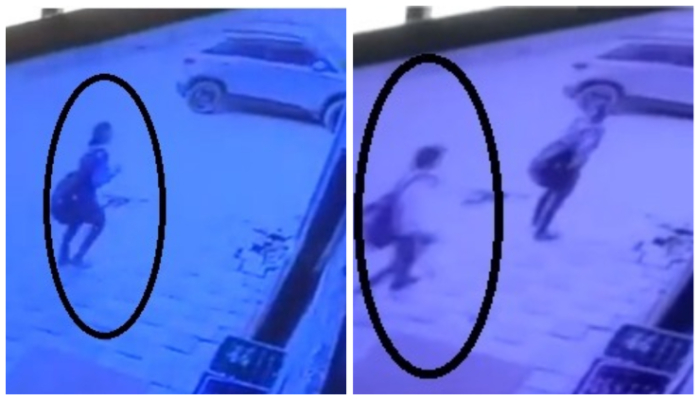
On Thursday, the Kerala Police arrested a youth identified as Shihshad for behaving brutally towards a 6-year-old child in the Thalassery area of the state. The accused kicked the poor child who is the son of a migrant laborer as he leaned on the white car of the accused.
According to the reports, the incident got recorded on a CCTV camera based on which the Police took immediate action and arrested the accused. Shihshad is a native of Ponnyampalam and was with a woman when the incident happened. Another video that surfaced meanwhile showed the woman getting into the car without consoling the boy.
The 6-year-old boy who was kicked has been identified as Ganesh and is a member of a migrant Rajasthani family. The family had migrated to the city in search of a job. The boy on the eve of November 3 was playing in the area and happened to lean against the white car of the accused while it stood at the roadside.
The accused Shihshad is seen brutally kicking the child away from his car. The boy who went into shock after the incident reportedly suffered a severe back injury. A few people in the Thalassery area of the state who witnessed the incident gathered at the spot after the accused kicked the boy. They questioned the accused but the latter left the spot after he justified the act.
The Police investigating the case have arrested the accused and have slapped him with non-bailable charges including an attempt to murder. The Commission for Protection of Child Rights also took cognizance of the incident and assured action against the accused. Its chairman KV Manoj Kumar also said that the commission would make arrangements to provide medical care to the boy.