Home Blog Page 2772

Tata Group moves ahead with consolidating 4 airlines under it, finalises deal with SIA to merge Vistara with Air India

In another step towards consolidating airline businesses, the Tata group has finalised the merger of Air India and Vistara. Reportedly, Tata group and Singapore Airlines (SIA), the joint owners of Vistara, have agreed to the merger. Tatas may own around 75% of the amalgamated company, with SIA holding the remaining 25% share. Currently, Tatas and SIA hold 51% and 49% stakes in Vistara, respectively. The proposed merger is expected to be announced soon and is intended to be completed within a year after receiving all necessary clearances.

The Tata Group hopes to develop Air India as an umbrella carrier through the merger. The Tata Group desires AI to serve as the umbrella provider, with a full-service arm formed by combining Vistara and the Maharaja and a low-cost arm formed by combining AirAsia India (AAIPL) and AI Express. This is part of the Tata group’s plan to bring all four airlines under it under a single entity, Air India.

Tata group currently operates four airlines, Air India, it’s subsidiary Air India Express, Vistara, and Air Asia India. Among them, Air India and Vistara are full-service operators, while AirAsia India and AI Express as low-cost carriers. The group has already started the merger of Air Asia India with Air India Express after the group purchased the 16.3% share of AirAsia Aviation Group in AirAsia India. After the Rs 155.6 crore deal was finalised earlier this month, Tata Sons became the 100% owner of AirAsia India, and now the company is in the process of merging it with AI Express, which is expected to be completed in 12 months.

The company has started working on the integration of information technology and passenger booking systems, with the systems of AI Express being moved to AirAsia India’s system. The Competition Commission of India has already approved the proposed acquisition of the entire shareholding of AirAsia India by Air India.

This move will make Air India the second-largest airline in India in terms of fleet and market share. Eventually, the merged entity of Air India-Vistara will be a full-service airline, and the merged entity of AirAsia India-Air India Express will become the low-cost arm of the group. According to people who know about the matter, Air India will be the only airline brand under the group, with Air India Express as its low-cost arm. Which will mean the Vistara and AirAsia India brands will be dropped.

As three related companies (AI, SIA, and Vistara) now have a significant presence on “overlapping passenger routes” (Delhi-Singapore and Mumbai-Singapore) in addition to “overlapping cargo routes” between India and town state, the Competition and Consumer Commission of Singapore (CCCS) expressed concern over Tata’s acquisition of AI in June.

According to reports, in early November, one of the executives stated that SIA has decided to become a part of the integrated firm since India is a major market for the airline. He said, “SIA has reaped benefits from Vistara and realizes that the cost of scaling up Vistara will be significantly higher as compared to Air India, which already has a significant size.”

Tata Group reclaimed control of Air India in January of this year after placing the highest bid for the airline, which was operating at a loss. It had submitted a proposal of Rs 18,000 crore, which included a Rs 2,700 crore cash payment and the assumption of Rs 15,300 crore of the carrier’s debt.

Gurugram: Cow smugglers Salim, Saad, and Mehboob throw live cows from speeding vehicle to avoid arrest, caught after a 25 km chase

0

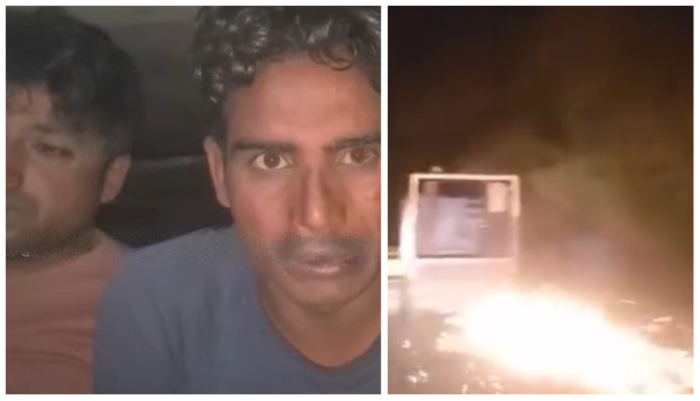
In the early hours of November 16, Wednesday, three cow smugglers were arrested from the Palwal area in Gurugram, Haryana after a 25km-long chase that began from Sector 37 in Gurugram. The accused were identified as Mohammad Salim, Mohammad Saad and Mohammad Mahboob, all residents of Nuh.

As per reports, the accused persons kept pushing cows off the moving vehicle to obstruct the vehicle of the cow vigilantes that were chasing them. They also opened fire and threw stones and glass pieces at the vehicles of the Gau Rakshaks, leaving two of them injured.

However, the cow vigilantes and police kept chasing the smugglers for almost 25 km until they finally intercepted the vehicle and nabbed the smugglers in Palwal. While three were arrested, three more accused managed to escape in the dark, the Gurugram police were quoted by media reports as saying.

The video of the chase has gone viral on social media.

According to reports, the cow smugglers had picked up four stray cows from Sector 37 and Sector 56 in Gurugram. They fled towards Mewat when a team of Gau Rakshaks in two SUVs and police officers started chasing them on Sohna Road. The cow vigilantes informed other members of their group who erected a barricade near Bhondsi on Sohna Road. However, the smugglers’ speeding vehicle slammed, broke the barricade and continued to accelerate.

The accused opened fire on the vehicles of the cow vigilantes. They had stones and glass balls in their van, which they threw at the Gau Rakshaks.

While the accused kept accelerating, one of their vehicle’s tyres got punctured. Seeing themselves cornered, three accused fled while the other three namely, Mohammad Salim, Mohammad Saad and Mohammad Mahboob were caught.

One of the Gau Rakshaks Monu Manesar said two of his colleagues, Ranveer Thakran (35) and Paramjeet Thakran (34), suffered head injuries from stones hurled by the accused.

Deadly Chhattisgarhiya Olympics: Kabaddi player Samaru Kerketta succumbs to injuries, third athlete to die during the event

On Wednesday, a Kabaddi player named Samaru Kerketta died after he was injured during a Kabaddi match a month back in the ongoing Chhattisgarhiya Olympics. The athlete was admitted to a hospital and was undergoing medical treatment after he suffered the injury on October 17. Kerketta is the third Kabaddi player who has lost his life to injuries suffered during the Chhattisgarhiya Olympics.

According to the reports, the player left behind his wife and a young child who waited for weeks hoping that Kerketta may gain consciousness. However, after over 4 weeks of struggle, the player lost the battle on November 16. Chhattisgarh CM Bhupesh Baghel expressed grief over the incident and declared monetary compensation of Rs 4 lakh to the family members of the deceased.

Chhattisgarhiya Olympics is being conducted in the state to revive 14 traditional sports. The games are being conducted between different age groups at Panchayat, block, district, and state levels. The event which is slated to continue till January 6, 2023, was inaugurated by CM Baghel on October 6 this year.

Kerketta, 28, was from Ghumra village in the Farsabahar area, some 60 kilometers from Jashpur district headquarters and 400 kilometers from Raipur. On October 17, he was injured while playing in a tournament in nearby Sundru village. With the assistance of the district administration, he was transferred to a local community health center and subsequently admitted to a private hospital in Raigarh (170 kilometers from Sundru).

Kerketta’s health was assessed as critical upon admission by hospital officials. He was being treated through the Ayushman scheme. The family waited for him to regain consciousness, but his condition deteriorated and he died on Wednesday. Jashpur collector Ravi Mittal expressed condolences to the family members of the deceased and assured all the required support.

Multiple deaths during the Chhattisgarhiya Olympics

This is the third death at the ongoing Chhattisgarhiya Olympics, all of them being kabaddi players. Thandaram Malakar, 35, was injured on October 12 during a match in Raigarh after being pulled and thrown onto the ground. He died on the way to the hospital since terrible roads made the 40-kilometer journey a four-hour struggle. Shanti Mandavi, 30, of Kondagaon district, died three days later from an injury inflicted during a match.

The fatalities in kabaddi have sparked a political uproar in the state. Following the first two fatalities, BJP leader O P Choudhary said there are no medical facilities at the venues where sporting events are being held. Faced with criticism over athletes’ deaths, the state government started asking participants to sign a consent form before participating. While BJP criticized the action, Congress spokesperson Sushil Anand Shukla stated that signing the consent form was normal procedure for any sporting tournament and that there was nothing wrong with it.

Sunni Muslim group in Rajasthan files petition against Waqf, says Waqf Boards holding properties is against constitution and secularism

0

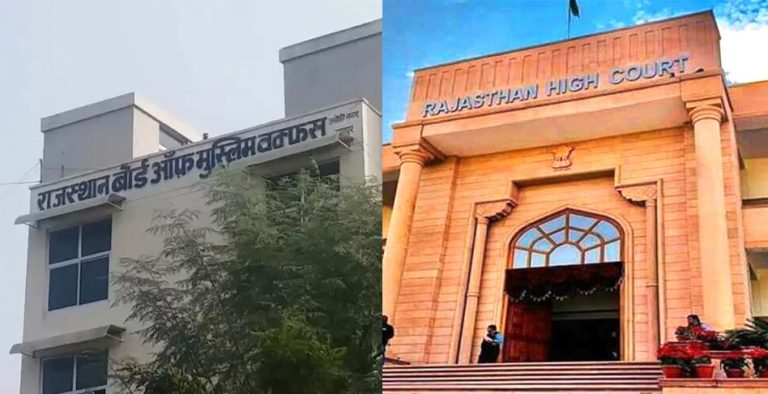
On Wednesday, a Sunni Musalman Community named Mafidaran Madaria Aalmeen (Fukran) Sansthan and others filed a petition in Rajasthan High Court against Waqf Board for holding property under the garb of managing Waqf properties. The petition sought the High Court to issue an order declaring that the Centre can only enact uniform laws for Trusts and Trustees, Charities and Charitable Institutions, and Religious Endowments and Institutions as defined in the Indian Constitution, and that they cannot enact separate laws for Waqf and Waqf properties.

According to a report by LawBeat, the petitioners in the plea contended that the property held by the Waqf Board in the name of safeguarding properties is in total violation of the Indian Constitution. It went on to explain that the act is opposed to secularism since no similar legislation exists in other religions. ‘It is against secularism, unity and integrity of the nation as there are no similar laws for followers of Hinduism, Buddhism, Jains, Sikhism, Judaism, Baha’ism and Zoroastrianism & Christianity,’ the petition by Mafidaran Madaria Aalmeen (Fukran) Sansthansaid.

The petition further added that there are over 6.6 lakh registered Waqf assets in India, accounting for approximately 8 lakh acres of land across the nation, making Waqfs the third largest landholder after the Railways and the Ministry of Defense.

“In last 10 years, Waqf Boards have rapidly captured the lands of others and declared those properties as Waqf Property. Resulted at present there are 6,59,877 properties according to data released by Waqf Management System of India (WAMSI) working under Ministry of Minority Affairs, up to July, 2020 have been registered as Waqf Property for far covered around 8 lakh acres,” the plea read.

It further stated that the Religious Endowment Act of 1863, the Indian Trustees Act of 1882, and the Charitable and Religious Act of 1990 are all designed to govern trusts and religious endowments for all groups. Instead of unifying them and creating a ‘Uniform Code for Trust and Trustees, Charities and Charitable Institutions, Charitable and Religious Endowments, and Religious Institutions,’ the Centre and State have arbitrarily enacted the contested religion-biased act, which violates the fundamental tenets of Articles 14 and 15.

It also said that the Waqf Board fails to conform to its ability to settle intricate Civil Disputes pertaining to Title and Possession of Property and that the power of the Civil Court to consider title-related problems had been taken away by forming the Waqf Tribunal under Section 83 of the Act. The petition also maintained that the act violated article 27 of the Indian Constitution as the Waqf Board, wherein Muslim political figures, Offers, Town Planners, Mutawallies, and other accessible individuals are paid from the state treasury, does not receive a single rupee from any Mosque, Mazar, or Dargah. The states, on the other hand, collect around 1 lakh crore rupees from the 4 lakh Temples, but there are no corresponding arrangements for Hindus.

“The provision for including a property as Waqf property is inconsistent with the principles of natural justice stipulated by Article 14 of the Indian Constitution,” the plea added. The enraged petitioners also asserted that the parliament cannot pass separate legislation granting Waqf properties unique status that is not accessible to other groups covered by the Religious Endowment Act of 1853. The Waqf Act was enacted in addition to and in derogation of the several laws that apply to trusts and religious endowments in all communities.

“They are not entitled to any further rights beyond those granted to Trusts, Charitable and Religious Institutions established by the Hindu Community or a non-Islamic religious body,” the plea added seeking the High Court to issue an order declaring that the Centre can only enact uniform laws for Trusts and Trustees, Charities and Charitable Institutions, and Religious Endowments and Institutions as defined in the Indian Constitution, and that they cannot enact separate laws for Waqf and Waqf properties.

Therefore, the petitioner pleaded with the court to order that the government can’t make separate laws for Waqf and Waqf properties, and that government can make only uniform laws equally applicable to all religions.

Madhya Pradesh: Veteran Congress leader Kamal Nath cuts a temple-shaped cake with Lord Hanuman’s image, BJP calls it an ‘insult of Hindu dharma’

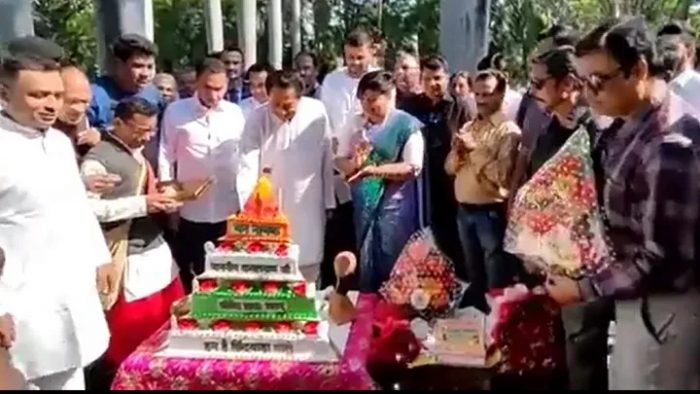
On Wednesday, November 16, 2022, former chief minister of Madhya Pradesh and senior Congress leader Kamal Nath sparked controversy after he cut a ‘temple-shaped’ cake during his birthday celebrations. 

The video of Kamal Nath cutting a four-tier cake with an image of Lord Hanuman and a saffron flag on top went viral on social media drawing strong reactions online as well as from several political leaders. 

When asked about the controversy, Madhya Pradesh CM Shivraj Singh Chouhan said, “These people have nothing to do with God’s Bhakti, this (Congress) is the same party that opposed the construction of Ram Mandir. Now when they saw that due to this they lose votes, they started remembering Hanuman Ji. Who draws Hanuman Ji on a cake, and then cuts it? Isn’t this an insult to the Sanatan traditions? This is an insult of Hindu Dharma and it is unacceptable.”

CM Chouhan also took to Twitter to slam the Congress party over the issue and wrote, “Congressis have nothing to do with devotion to God. His party used to oppose the Shri Ram temple. There is Hanuman Ji’s image on a cake and still, you are cutting the cake. This is an insult to Sanatan tradition and Hindu religion, which our society will not accept.” 

BJP leader Amit Malviya also chastised Kamal Nath saying that during elections Kamal Nath claimed to be a Hanuman bhakt (devotee of Lord Hanuman) and is now insulting Hindus and their deity. 

“Former MP CM and senior Congress leader Kamalnath, runs a knife through a four-tiered, temple-shaped cake, with a saffron flag and image of lord Hanuman on top. During elections he had claimed to be Hanuman bhakt and is now insulting crores of Hindus by denigrating their deity…,” Malviya tweeted.

BJP national spokesperson Shehzad Poonawala also lambasted Congress and Kamal Nath and tweeted, “Congress is essentially anti-Hindu hence from Hindu terror to Hindutva is ISIS to equating Gita To Jihad or Jarkiholi insulting Hindus to now Kamalnath ji cutting a cake with Mandir & Hanuman ji on it! They are Chunavi Hindus & leave no opportunity to insult Hindus!.”

Not just BJP leaders, several netizens also called out Kamal Nath and the Congress party over the controversial video. A Twitter user named Kavita shared the video and wrote, “Kamal Nath cuts a cake in the shape of a Mandir with Hanuman ji on top of the cake. This party never leaves an opportunity to insult Hinduism. Never.”

Another Twitter user, Amit wrote, “Cut cake, not temple. I don’t understand why is this deliberately done.”

Notably, supporters of Kamal Nath decided to celebrate his birthday, which falls on November 18, in advance during his three-day visit to his hometown Chhindwara. On Tuesday evening, a celebration was held at the former chief minister’s residence where the cake-cutting took place.

‘Everything we discussed was leaked’: Xi Jinping caught on camera fuming at Justin Trudeau during G-20 summit

0

In an unusual public display of anger, Chinese President Xi Jinping scolded Canadian Prime Minister Justin Trudeau during the G-20 summit in Indonesia on Wednesday. Jinping expressed unhappiness over the fact that their earlier conversation was ‘leaked’ to the press by Trudeau’s office.

The incident happened during an informal talk between Trudeau and Jinping after the conclusion of the G-20 mete in Bali, which was caught on camera. In the conversation that took place with the help of a translator, the Chinese Premier said, “Everything we discussed has been leaked to the paper, that’s not appropriate”. It was a rare display of anger by a world leader to another in full public view.

Xi Jinping also alleged that the conversation was wrongly reported in media, as he said, “and that’s not how the way the conversion was conducted.” He further added, “If there was sincerity on your part, then we shall conduct our discussion with an attitude of mutual respect, otherwise there might be unpredictable consequences.” 

Trudeau shot back by saying that he believes in free frank dialogue. He said, “In Canada, we believe in free and open and frank dialogue, and that is what we will continue to have. We will continue to look to work constructively together, but there will be things we will disagree on.”

To this, Jinping said, “that’s great, let’s create the conditions first.” After that, he shook Trudeau’s hand and walked away.

Reportedly, Xi Jinping was unhappy over the fact that the details of his earlier conversion with the Canadian PM were published in the media. In a brief talk between the two leaders during the G-20 summit on Tuesday, Justin Trudeau expressed concern over the alleged interference of the Chinese government in Canadian domestic politics.

A press release issued by the Canadian PM’s office said that Trudeau “also raised our serious concerns around interference activities in Canada”. The statement added that they also discussed North Korea and the ongoing Russia-Ukraine war.

It is notable that after the conclusion of the G-20 meeting in Indonesia, the presidency of the 2023 summit was handed over to India.

Himank Bansal assault: How the Courts have legitimised such violence by packaging ‘Islamic blasphemy’ as ‘hate speech’

On Saturday, 12 November 2022, a video went viral on social media where a student of the ICFAI Foundation for Higher Education (IFHE) in Hyderabad, Himank Bansal, was being beaten up by the other students of the institute and forced to chant ‘Allahu Akbar’. Post the assault, Himank had filed a police complaint and the perpetrators were booked under stringent sections of 307, 342, 450, 323, 506, R/W 149, IPC, and Sec 4(I),(II), and (III) of the Prohibition of Ragging Act of 2011.

In the complaint, Himank had detailed the circumstances of the assault where he revealed that one Umar was the first to initiate the assault. In his complaint, Bansal mentioned that one of his friends from 1st year BA-LLB course, Dipasha Sharma, called him a paedophile for being friends with a girl 3 and a half years younger than him. When Bansal tried to defend himself by saying he doesn’t want any sexual relations with her and cited references from Islamic scriptures to explain how he is not wrong, the girl shared his messages with everyone else in college.

As per the complaint by Bansal, subsequently, 15 to 20 guys burst into his hostel room and beat him up while accusing him of hurting religious sentiments. The assaulters further asked him to chant Allah-hu-Akbar while beating him up. He was also threatened during the course of the assault, as were his family members.

The group of students also asked him to remove his trousers, and upon refusal further physically assaulted him. Himank Bansal has named several of these people in his complaint with details of their respective actions during the assault.

Let us simplify this – Himank Bansal was assaulted because the Muslim students believed that he had insulted their Prophet and therefore, deserved to be brutalised.

After the case of Nupur Sharma, where her innocuous quoting of the Hadiths ended up in her getting death threats from thousands of Islamists and Islamic countries en masse demanding an apology from her, there was a thunderous conversation about how such mindless blasphemy violence, in action and words, can be stopped. If lessons are to be drawn, the first and foremost thing that we must realise is that with the Islamists, threats are never “just” threats. Soon after the Nupur Sharma incident, Salman Rushdie was shot in consonance with a Fatwa that was issued against him over 3 decades ago. Therefore, it is safe to assume that once the Islamic community believes that an individual has committed blasphemy, they are doomed for life – sooner or later, some fanatic with a knife (or a gun) is going to get to them to avenge the perceived insult to their religion.

Armed with this knowledge, one would imagine that the establishment in India would be far more circumspect when it comes to allegations of “blasphemy” – it is a choice that has to be made, essentially – does one want to endorse the perpetual threat to life for spoken words or recognise the fanaticism and danger of endorsing such action by the Islamists.

There have been several cases where the spoken word led to violence because of the fanaticism of one community. Recent ones that come to mind include Kishan Bharwad, Harsha, Priyantha Kumara Diyawadana from Pakistan, Samuel Paty from France and so many more. In India, two cases that perhaps garnered the most attention were that of Kamlesh Tiwari and Kanhaiya Lal (A result of the hate that was showered upon Nupur Sharma post her remarks). In the case of Kamlesh Tiwari, before he was murdered by Islamists, he was jailed by the authorities for alleged hate speech – of course – the thousands and lakhs of Muslims who had taken to the streets calling for his death with slogans of “Sar Tan Se Juda” were not touched. In fact, even Owaisi, who had so much as called for his murder, was not booked for his speech. Kamlesh Tiwari was not only thrown in jail for his alleged speech, but his murder also garnered little sympathy from the usual suspects, including the Judiciary, because the establishment held him responsible for his own murder. The trope that we heard often back then was, “we condemn violence and murder, however, his speech was hate speech – we must condemn such sowing of hate as well”.

In the case of Kanhaiya Lal too, his brutal murder, the video of which was splashed all over social media, was met with a wall of silence or whataboutery, that essentially blamed him for his own fate – “Nupur Sharma committed blasphemy and indulged in hate speech against the Muslim community, therefore, when one supports such hate, hate is going to come to them, even though violence in condemnable”.

While the establishment has always been rather thoughtless when it comes to Jihadi violence, in the case of Kanhaiya Lal, one would imagine that being blind to the Jihadi hate would be rather difficult, considering the killers videographed the brutal murder and then gloated about their “service to Islam”, also on video. With the visuals of the pavement being turned red with Kanhaiya Lal’s blood being viral, one would think that no matter how strong the urge to whitewash the crimes of the Islamic community was, at least this murder would shake their conscience.

So what emboldened the entire Left-Liberal ecosystem to either maintain stoic silence or whitewash the gruesome murder of Kanhaiya Lal? When Nupur Sharma approached the Supreme Court for a mundane plea, hoping to get the investigation clubbed so she does not have to travel to remote parts of the country with death looming over her head, she was chastised for “hate speech”, the death threats against her were justified and instead of the Jihadis, it was Nupur Sharma who was held responsible for the murder of Kanhaiya Lal.

The court said:

  1. “She has a security threat or she has become a threat to the security of the nation?”.
  2. “The way she has ignited the whole country and she has the cheek and courage to come to the court to ask for discretionary relief?”, “This lady is singlehandedly responsible for the burnings in the country”.
  3. “This lady [has a] completely loose tongue that she keeps on making all irresponsible statements and she claims that she is a lawyer with 10 years standing? This is shameful”.
  4. “This is the outcome of what happened unfortunately at Udaipur”.
  5. “Even if we have laid down that law, this is a fit case that we refuse to apply that law”.
  6. “These are the people who are not religious at all. They have no respect for any religion. A religious person will have respect for other religions also. It is all to gain cheap popularity and just to achieve some political or nefarious agenda that all these statements are made”.
  7. “This petition also shows her obstinate character and her arrogance that she thinks that the Courts of the Magistrate are too small for her”
  8. “Yes everyone has a right to speak, in a democracy, the grass has the right to grow and a donkey has the right to eat”.
  9. The case of a journalist is at a different pedestal as compared to a citizen or spokesperson who goes on the channel and starts lambasting others making irresponsible statements without even an inkling of the ramifications and serious consequences that how seriously it will disturb the fabric of the society”.  
  10. “When the conscience of the Court is not satisfied. We must mould the law accordingly”. 

The court had said, at that time, that it was Nupur Sharma’s speech quoting the Hadith which ended up in the country burning and led to the murder of Kanhaiya Lal by Islamists. Essentially, if Nupur Sharma had just not exercised her freedom of speech when a Muslim panellist was insulting her faith, the fanatical Muslims would not have been angry enough to pick up the knife and murder Kanhaiya Lal. In the process, the court had at that time refused to give her the relief sought (which they had given to several people before that) because they believed she needed to pay for her speech – even if that meant risking her life.

Without saying as much, the court insinuated that the Muslim community could legitimately chant “Sar Tan Se Juda” and act on their threat because they had been offended by someone talking about their religion – the act of aggression was “understandable” because of the initial spoken word. If one looks at the comments objectively, there was really no substantial difference between the pronouncement by a Sharia Court and the pronouncement by our Supreme Court in this case – or perhaps – the difference was that the Sharia Court would have been merciful and killed the “accused” immediately while the Supreme Court refused to get their hands dirty and threw Nupur Sharma to the wolves instead.

With the court’s conduct in cases of serious death threats and murder when it comes to “blasphemy” allegations against Islam, one has to imagine that those who brutalised Himank Bansal truly believe that they can get away with their assault – or at least – suffer no serious consequences for it.

If one truly removes their glasses, chequered with prejudice, bias and an undying urge to protect the Islamists from any criticism, the cause for the death threats given to Nupur Sharma, the murder of Kanhaiya Lal and Kamlesh Tiwari and the assault against Himank Bansal have a common thread – Islamic fanaticism – a beast difficult to tame when the establishment is enslaved by debilitating spinelessness.

In the case of Nupur Sharma, the court refused to call out Islamic terrorism and violence, as a result, the observations of the court are, till today, cited to justify the branding of any speech about Islam as “hate speech” with a caveat that “hate begets hate” and therefore, any death threats that accrue to the person who dares to comment on religion are justified. The court in this case, and in most cases, justifies rampant and often fatal violence in the name of “blasphemy” by giving the preceding speech the colour of “hate speech”. First and foremost, there is no law that truly defines what “hate speech” is in the Indian Constitution. We mostly have IPC section 295 (A) which prescribes punishment for deliberate and malicious acts, intended to outrage the religious feelings of any class by insulting its religion or religious beliefs.

Such branding of “hate speech” hinges on the fact that all religions must be respected and co-existence comes from mutual toleration and admiration for different religions. When we say that all religions need to coexist without taking offence to each other, we are essentially saying that one of the most important tenets of survival in a multicultural nation like India is religious pluralism and stemming from that argument, the court came down heavily against Nupur Sharma expecting even Hindus to be offended at her criticism of Islam.

Religious Pluralism essentially says that firstly, all religions must acknowledge that certain truths exist in other religions as well, thereby declaring that it is not only their own religion that is the ‘only truth’. Further, it says that all religions must acknowledge that every religion teaches basic universal truths that have been taught since before the advent of religion itself. 

When one delves into the principles of religious pluralism as a construct that can enable religions to co-exist without sectarian violence, it becomes important to ensure that all religions are brought down to the same surface level and hence, the claim that all religions are the same takes a beastly proportion where cultural context is often lost. When one tries to do that, it becomes remarkably clear that Islam and Hinduism are not the same. While Islam wants to annihilate Hinduism, Hinduism prescribes no such thing. Islam wants to convert or murder the Kafir, subjugate heathens and establish their Dar-ul-Islam because the Dar-ul-Harb is haraam. When dealing with a traditionally hostile faith, one cannot say that the faith that they are hostile and violent towards is the same as the said faith. Islam, if allowed, sanctions taking offence to the very existence of Kafirs and submits to no law of the land other than that of the God they believe in. It is true that Islam has a strict legal and political foundation to it. Hence, to essentially say that all religions are equal and aspire toward the same universal truths is a fallacious statement that is made by people who either harbour malice, or ignorance. 

It is also pertinent to mention here that the higher the intolerance of a community, the more important it is for that community to be mocked, so the intolerance threshold is breached and that offence is normalised. Islamists have to be desensitised to criticism of their faith to a large extent because no other community is today taking to the streets demanding ‘Sar Tan Se Juda’ at the slightest ‘provocation’. Hindus, on the other hand, would have traditionally been more than happy to not utter a word about Islam had they not been beaten, mocked, insulted and humiliated by the very Islamists who are crying victims today. 

When the two religions are not the same (one being hostile and the other being the victim of that hostility), they don’t aspire towards the same universal truths, and when one religion is theologically opposed to the other’s very existence, to say that Hindus must be equally offended when Islam is mocked is an expectation that far divorced from reality. One has to acknowledge that Hindus are powerless globally. While Islam has the support of the Ummah, Hindus are usually the recipient of hostility.

The court by branding criticism of Islam as “hate speech” is essentially telling the Hindu community that they either suffer through humiliation, death, rape and brutality or they become as intolerant as the Islamists, because every time a Hindu is threatened and brutalised in the name of Blasphemy, he, the victim, will be branded as the aggressor because he dared to offend an intolerant minority. The court thus emboldens the Islamists who don’t particularly need egregious provocation to go on a murderous rampage.

The court, by placating an intolerant minority and justifying the violence and branding their victims as purveyors of hate, is setting a precedent where the truth is hidden with the crimson colour of the blood that is shed by the Islamists. The truth about Islamic terrorism will need to be acknowledged by the Court sooner or later – the only question is how many dead bodies would have piled up by then.


TMC leader Saket Gokhale compares Shraddha Walkar’s murder to the Bilkis Bano case to win political brownie points

On Thursday morning Trinamool Congress (TMC) leader Saket Gokhale who is also under scanner for his involvement in an alleged crowdfunding scam made a bizarre comparison between the horrific Shraddha Walkar murder case that sent shockwaves across the country with the 2002 Bilkis Bano case. 

“Think of the brutality that monster Aftab Poonawalla committed. Now, remember: the convicts in the Bilkis Bano case committed the SAME brutality when they raped her & killed her family (including a 2-year-old baby). These monsters were released by Modi govt. on “leniency”. WHY?” Gokhale tweeted. 

Notably, Aftab Amin Poonawala killed his live-in partner Shraddha Walkar on May 18, chopped her body into 35 pieces, and disposed of them in 18 different locations. Aftab told police that he and Shraddha got into an argument, and he strangulated her. Later, he chopped her dead body into 35 pieces. He brought a new fridge to store the pieces. Aftab left his apartment with one piece of the dead body wrapped in plastic daily and disposed of it off in a forest area. Reportedly, the accused stayed in the same room where he had murdered Shraddha and used to look at her that he had chopped off and kept in the refrigerator. 

In the Bilkis Bano gangrape case, Bilkis Bano who was 21 years old and five months pregnant when she was gang-raped while fleeing the Godhra train burning incident. Her three-year-old daughter was one of the seven people killed. The case was handed over to the CBI, and the trial was moved to a Maharashtra court by the Supreme Court.

On January 21, 2008, a special CBI court in Mumbai sentenced the 11 to life imprisonment on charges of gang-raping Bilkis Bano and murdering seven members of her family. The Bombay High Court and the Supreme Court later upheld their convictions. On August 15, the 11 men convicted in the case were released from the Godhra jail under the Gujarat government’s remission policy.

While Bilkis Bano rape case is horrifying, comparing it to Shraddha Walkar murder case is an insult to both the women. To say how both women underwent same atrocity undermines what both women went through individually. Walkar was strangled and her body then chopped off and parts preserved in refrigerator and disposed of over days in jungle in Delhi. As of now there is no report of sexual assault committed on her. Bano, on the other hand, has been a victim of rape, has witnessed murder of her own child in front of her eyes. Bano has also lived her trauma for past 20 years as a survivor. To compare both the brutalities and draw parallels is horrifying and an injustice to both the women. This pitting one atrocity against another is an unfortunate comparison and a disservice for the women who deserve justice.

Karnataka: 108 members of Bajrang Dal submit PIL in HC, seek Jamia Masjid erected on the site of a Hanuman temple be vacated

On Wednesday, November 17, members of the Bajrang Dal in Karnataka filed a petition with the High Court, requesting that the Jamia Masjid in Srirangapatna, Mandya district, be vacated. The members of the Hindu outfit have alleged that there are proofs that the mosque was once a Hindu temple.

The PIL stated, “There are traces of Hindu gods and temple structure in the Jamia Mosque of historical Srirangapatna town in Mandya district. Hence, the mosque should be vacated immediately and also, Hindu devotees should be allowed to take bath in the Kalyani (sacred water body) located in the premises of the mosque.”

Bajrang Dal activists have also asked that the mosque be resurveyed along the lines of the disputed structure of Gyanvapi mosque, which stands on top of the original Kashi Vishwanath temple.

According to reports, the PIL was filed by 108 Hanuman devotees including the State president of Bajrang Sene, B Manjunath. Speaking about the decision, B Manjunath said, “108 is an auspicious number for Hindus, which is why we are filing that many petitions.”

He added that the Bajrang Dal activists have also provided evidence of the Mysore Gazetteer, the presence of Hindu architecture in the mosque and inscriptions on Hindu idols, the sacred water body located in the premises of the mosque, and references of British officers to the court to substantiate claims that the Jamia Masjid in Srirangapatna was erected on the site of a Hanuman temple during Tipu Sultan’s reign.

Activists claim Jamia Masjid built on Hanuman Temple, seek permission to worship inside the mosque

Notably, in May this year, some activists petitioned the Deputy Commissioner of Mandya for permission to worship the Anjaneya idol in the Jamia Masjid in Srirangapatna, Karnataka. According to the proponents, the structure was previously a temple that had been converted into a mosque. They asked that they be allowed to do pooja in the mosque.

The Narendra Modi Vichar Manch had claimed the Jamia Masjid in Srirangapatna was erected on the site of a Hanuman temple during Tipu Sultan’s reign. CT Manjunath, Manch state secretary, was part of the group that met with the deputy commissioner of Mandya district on Saturday and presented a memorandum allowing Hindus to perform pooja inside the Jamia Masjid, popularly known as Masjid-i-Ala.

The mosque is located within the Srirangapatna Fort, which was erected under the Vijayanagar Empire and afterwards taken over by Tipu Sultan. He constructed the mosque near his palace. The mosque was constructed in the early 1780s and is now a historic monument managed by the Archaeological Survey of India (ASI). It also operates a madrassa.

The Hindu outfit’s demands related to the Jamia Masjid in Srirangapatna gained traction and momentum after a Shivling was reportedly unearthed inside the wuzukhana of the Gyanvapi mosque during the court-ordered survey of the disputed structure adjacent to the Kashi Vishwanath temple in Varanasi. After the Shivling was found during the survey, Civil Judge (Senior Division) Ravi Kumar Diwakar ordered the disputed Gyanvapi building to be sealed.

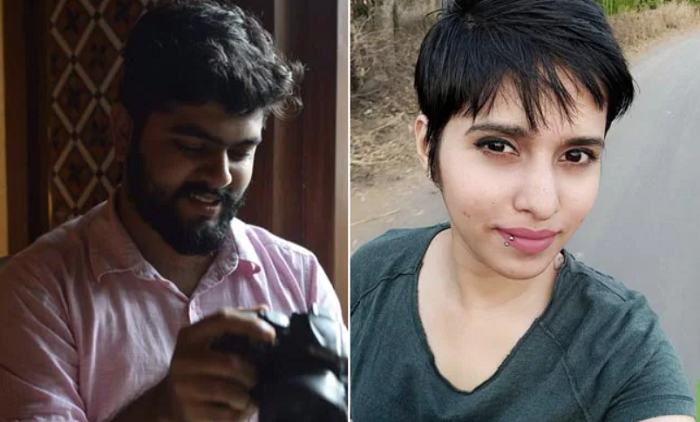
On the day Aftab murdered Shraddha, they were fighting over household expenses: How Aftab was caught in his own lies during interrogation

0

On Thursday, the Delhi Police investigating the Shraddha Walkar murder case revealed that accused Aftab who murdered his live-in partner and then chopped her into 35 pieces had fought with her over household expenses. Aftab and Shraddha from Maharashtra had been living in a rented apartment in Delhi.

The duo shifted to Delhi on May 15, three days before Aftab strangled the woman to death. The Police indicated that the duo was not in a healthy relationship and used to fight a lot. On May 18 also, the duo engaged in a fight over who’d pay for household expenses that led to Aftab murdering Shraddha in a very brutal manner.

Aftab confessed to the Delhi Police during interrogation that they had shifted from Mumbai to Delhi and had stayed in a hotel initially. Then the duo rented an apartment and soon engaged in a quarrel over shifting the household material from Mumbai to Delhi and also over maintaining the household expenses in Delhi. Aftab said that this was not the first time that they had engaged in a fight and that they had been fighting frequently over several other issues.

The Police also confirmed that the accused murdered the woman between 8 pm to 10 pm and chopped her body into 35 pieces. He later stored the severed body parts in a refrigerator and disposed of the pieces in Delhi’s Mehrauli forest over the next 18 days. As reported earlier, the accused had kept Shraddha’s dead body in the same apartment after the murder until the next day when he especially bought a knife and refrigerator to chop and cold store her body parts.

Delhi Police caught Aftab lying during interrogation

Aftab made all possible attempts to make Shraddha’s friends and relatives believe that she was fine, active, and alive after he murdered the woman. He paid all her credit card dues and also engaged in fake conversations with her friends through Instagram for a month or two. Later, Shraddha’s father and her friends began searching for her after they failed to get social media updates from her account.

Shraddha’s father also lodged a missing report after which the Delhi Police began an investigation in the case. Initially, accused Aftab tried to mislead the police investigation as he said that Shraddha had left the apartment on May 22 after they had a massive fight. He also said that she had just taken her cell phone with her and that all her other belongings were still at the apartment.

According to the Police, the accused Aftab was speaking lies and that itself helped the Delhi Police to crack down on the six-month-old murder case. Aftab was called for interrogation on October 26 during which he reiterated that Shraddha had left the apartment on May 22. It was later discovered that she had been murdered 4 days ago.

Based on Aftab’s interrogation, the Delhi Police tracked Shraddha’s phone location and found out that her phone was in the Mehrauli area of Delhi where the duo had rented an apartment to stay together. The Police also discovered that Rs 54,000 had been transferred from Shraddha Walkar’s account to Aftab Poonawala’s bank account using the banking app on her phone between May 22 and 26. This raised concerns because the accused had told the cops that he hadn’t spoken to her since she departed on May 22.

He was detained again earlier this month after he informed the authorities that he had made the bank transactions because he knew her passwords. He also said that he’d been paying her credit card bills, so bank authorities wouldn’t go to her Mumbai house. The Police detained him and asked one crucial question which exposed the accused- “If she had left him on May 22, how was her phone location still in Mehrauli?” Aftab Poonawala then broke down and narrated the entire story.

Shraddha Walkar murder case

On November 14, the Delhi Police solved the six-month-old murder case of Shraddha Walkar and arrested Aftab Poonawala for murdering her, and then chopping her into 35 pieces to dispose of her body. Aftab executed the murder on May 18 and stored her body parts in the refrigerator. He then disposed of the body pieces in Delhi’s Mehrauli forest during the next 18 days.

The accused was arrested based on the complaint filed by Shraddha’s father on November 10. He stated in the complaint that the accused and the deceased had rented an apartment in Delhi and were staying in an unhealthy live-in relationship, which was also abusive. He said that he had always opposed their relationship as Aftab is a Muslim.

The girl, a resident of Palghar was adamant about continuing her relationship with accused Aftab and shifted to Delhi with him. Three days after they shifted to Delhi, they engaged in a quarrel and Aftab happened to kill Shraddha. He confessed his crime on November 14 and stated that they used to fight a lot. He said that he murdered Shraddha on May 18 as she was forcing him to get married to her.

The accused has been arrested and a case under IPC section 302 (murder) and 201 (causing disappearance of evidence of an offense committed) have been registered. Further investigations into the case are underway.