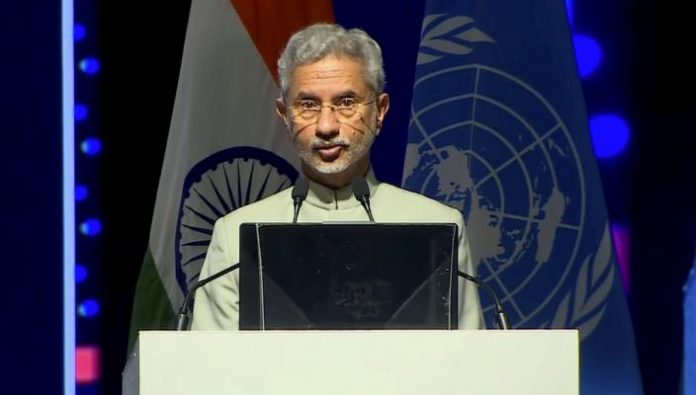
On Saturday, External Affairs Minister (EAM) S Jaishankar at the Special Meeting of the Counter-Terrorism Committee (CTC) highlighted that the internet and social media platforms have turned in potential instruments in the toolkit of terrorists for radicalization and spreading propaganda in order to destabilize societies.
In his speech, Jaishankar revealed that in recent years, terrorist groups, ideological allies, particularly in liberal societies, and “lone wolf” attackers have substantially increased their capabilities by gaining access to these technologies.
According to EAM Jaishankar, terrorists frequently use “technology, money, and the ethos of open societies to attack freedom, tolerance, and progress.”
“The internet and social media platforms have evolved into potent tools in the toolkit of militant groups,” he said.
He also stated that the unregulated use of unmanned aerial systems poses a risk. “Because these unmanned aerial platforms are a relatively low-cost option with increasing ease of access, misuse of these unmanned aerial platforms for malicious purposes such as weapon and explosives delivery and targeted attacks has become an immediate threat,” he said.
Jaishankar announced that India will make a voluntary contribution of $500,000 to the UN Trust Fund for Counter-Terrorism this year to assist counter-terrorism projects in member countries.
Minister of External Affairs also highlighted the flip sides of technology saying that it has posed new challenges to the government, particularly given the country’s “nascent regulatory environment.”
Delivered the keynote address at the plenary session of UNSC special meeting of counter-terrorism committee on ‘Countering the use of new and emerging technologies for terrorist purposes’ in New Delhi today. pic.twitter.com/1rIVnAvSwe
— Dr. S. Jaishankar (@DrSJaishankar) October 29, 2022
The minister described terrorism as one of the gravest threats to humanity, saying, “The UN Security Council has evolved an important architecture, built largely around the counter-terrorism sanctions regime, to combat this menace over the last two decades.” And it has been very effective in putting those countries on notice who have turned terrorism into a state-sponsored enterprise.”
As successive reports of the 1267 Sanctions Committee Monitoring Reports have highlighted, the threat of terrorism is only growing and expanding, particularly in Asia and Africa.
The United Nations Security Council’s two-day anti-terrorism meeting is being held in India (UNSC). The current meeting in Delhi is being held under the auspices of India’s chairmanship of the Counter-Terrorism Committee (CTC).
Jaishankar notified CTC members that their attendance at the special meeting in Delhi underlines the prominence that UN Security Council member states and a diverse range of stakeholders place on this crucial and emerging aspect of terrorism.