Home Blog Page 285

Cloudbursts, landslides, and rising death toll: Himachal Pradesh faces nature’s fury as the state battles massive floods caused by the monsoon

The Himalayan state of Himachal Pradesh has been struck with recurring cloudbursts and flash floods following torrential rainfall during the monsoon season. Horrifying visuals are emerging from different parts of the state showing the extent of infrastructural damage. 23 flash floods, followed by 19 cloud burst incidents, and 16 landslides occurred in different parts of the state as of July 6. Districts of Solan, Shimla, and Mandi have been the worst affected by the excessive rainfall and cloudbursts.

Image via X/ Infoindata

With houses being washed away, roads cut off, and the electricity supply snapped, Himachal Pradesh has come to a standstill. Towns and villages in the affected areas have been filled with debris from demolished buildings. Landslides have further worsened the situation, as people are not able to access public utilities. There is also a growing scarcity of food and water due to disrupted connectivity.

According to the State Disaster Management Authority (SDMA), the death toll has risen to 78, with 50 people dying due to rain-related incidents and 28 losing their lives in road accidents. Among the rain-related incidents, 14 people died due to flash floods, 8 people drowned, 8 people died of electrocution and accidental falls, and the remaining were killed in landslides, lightning strikes and snake bites. In addition to that, 37 people have been reported missing and 115 have been injured.

Image via X

Several deaths have also been reported in Bilaspur, Hamirpur, Kinnaur, Kullu, Lahaul Spiti, Sirmauar, Solan, and Una districts.

The India Meteorological Department (IMD) has forecast “very heavy rain, thunderstorm and lightning, squall” for 9th July. The districts of Sirmaur, Kangra, and Mandi have been put on red alert, and an orange alert has been issued in the districts of Shimla, Solan, Hamirpur, Bilaspur, Una, Kullu and Chamba.

Mandi District has been worst hit

The State Emergency Operation Centre (SEOC), which has been monitoring the situation in Himachal Pradesh, said that, so far, around 269 roads have been blocked, 285 electricity transformers have been damaged, and 278 water supply schemes have become dysfunctional across the state.

The SEOC said that the situation in the Mandi district is the worst among the affected districts. As on 6th July, 200 roads were blocked across the district due to heavy rains. The district also reported the highest number of damaged electricity transformers and disrupted water supply schemes.

Image via x

The building of Himachal Cooperative Bank, which is the only bank in Mandi, has been filled with water and debris. The first floor of the building is completely submerged, and the valuables of the people kept in the bank, including documents, cash, and jewellery, have been swept away. Locals are guarding the bank building against theft.

After Mandi, Kullu has faced the worst consequences of the heavy rainfall. Some areas of the district, such as Banjar, Nirmand, have witnessed major landslides. Chamba district has also been battered by the incessant rainfall, severely disrupting the road connectivity and electricity supply in areas like Salooni, Dalhousie and Bharmour.

Rescue Operations are underway

According to reports, emergency response teams from the National and State Disaster Response Forces, the Army, Indo-Tibetan Border Police and Home Guards have been activated across the state as search and rescue operations are underway. Around 250 personnel from the various teams are carrying out rescue operations with the help of drones and sniffer dogs.

Image via X

Additionally, 20 teams are engaged in collecting information and distributing ration and medical kits. About 1538 ration kits have been distributed in the affected areas, with the entire relief operations amounting to Rs 12.44 lakh so far.

Union Home Minister Amit Shah took stock of the situation

Apart from Himachal Pradesh, torrential rains have also severely affected the states of Uttarakhand, Gujarat, Chhattisgarh and Rajasthan. Union Home Minister Amit Shah spoke with the Chief Ministers of these states and took stock of the situation. He assured all possible help from the central government and sent the NDRF teams to the affected areas.

“In the wake of heavy rainfall in different parts of the nation, spoke with the chief ministers of Gujarat, Himachal Pradesh, Rajasthan, Uttarakhand, and Chhattisgarh. Adequate numbers of NDRF teams have been deployed in the states for the people in need, and more reinforcements can be sent as and when required. Assured them of all possible assistance from the central government,” Amit Shah wrote on X on 4th July.

Pakistan’s Intersys Limited sues OpIndia for defamation in Karachi Court over fentanyl exposé, ignoring jurisdiction rules while sitting on allegations of drug and visa fraud

0

Pakistan, a country that cannot feed its people without IMF loans. A country where tomatoes are luxury items. Still, its district court has the audacity to file defamation suits over drug exposés, that too on a news portal that does not even fall under its jurisdiction.

Welcome to Karachi’s new theatre – Civil Court edition

On 12th June, a tragicomedy of international proportions occurred. A district court in Karachi heard the petition of Intersys Limited, a Pakistani firm linked with names like eWorldTrade and associated networks reportedly indulging in everything from ghostwriting scams to smuggling opioids into the US. The case was filed against a bunch of foreign journalists, including investigative blogger Danny de Hek and wait for it, OpIndia!

Source: de Hek

Yes, you read that right. A company from the country whose dollar reserves fluctuate like teenage moods, and whose own agencies cannot get a grip on Rawalpindi, thinks it has the legal muscle to drag foreign platforms into its domestic courtroom drama.

The charges against OpIndia include hurting the reputation of a company allegedly involved in fentanyl trafficking. The district court in Karachi wholeheartedly believed that such a company has a reputation so sacred, even a sneeze in its direction must be punished.

Before suing, maybe check the map

Let’s talk about a tiny legal hiccup, which, actually, is a big one, that might have slipped the minds of our Pakistani plaintiff friends. The hiccup is what we call jurisdiction. For a civil court to entertain a defamation suit against individuals and organisations in Delhi, and the internet in general, it kind of needs the jurisdiction.

Karachi court thinks it can lecture and dictate to international media on libel law. However, it fails to stop clerics from issuing fatwas on television or stop mobs from going on rampant violence over dubious blasphemy charges. Forget New Delhi, these lower courts in Pakistan cannot even get an arrest warrant served without an army column.

Tomato prices through the roof, but filing fees no problem

The inflation in Pakistan is so high that a tomato is a status symbol. Wheat flour, electricity, clean water and basic amenities are no less than gold biscuits. However, Intersys apparently had no problem shelling out money to file a suit and hire two lawyers to claim that OpIndia and de Hek ruined their image. While electricity is missing from the courts, Pakistan wants to sue the internet!

Maybe it is high time someone reminded them that alleged criminal activities cannot be washed away by a civil suit in Karachi South Civil Court.

Defamation? That ship sailed with the DOJ

The company also forgot the fact that the US Department of Justice had already filed indictments against eWorldTrade over fentanyl trafficking. De Hek merely reported it and OpIndia did a follow-up based on his findings and other open sources available. If that is defamation, then every US court must be held guilty in the Karachi district court. What next? A defamation notice to the FBI?

‘Please do not hurt our feelings’

2nd Senior Civil Judge, Kaleemullah Kalwar of Karachi district court, in a poetic act of misplaced legal activism, issued an interim gag order asking all the defendants not to “publish, disseminate or distribute defamatory statements” until the next hearing. Basically, the court wanted to say, “Do not hurt our feelings by saying mean things about the fentanyl, please!” Thankfully, they did not add “maan jao na mele babu shona” in the end.

We would have laughed if it were not so painfully absurd. The only people disseminating damage here are the companies themselves, whose digital footprints lead to allegations of fraud, fake job listings, drug links and tax evasion.

Dear Pakistan, please stay in your limits

Let’s make one thing clear. Pakistan did not cry when companies registered in the country were busy exporting drugs, flooding the internet with scam websites, and abusing the US visa system with fake payroll schemes.

Before filing the defamation case against OpIndia and others, maybe Pakistan needs to start fixing its own backyard. Regulating IT exports should be the first thing to do. Maybe dismantle the scam factories in Karachi? In the end, the country needs to find a solution to bring the prices down of agricultural products, especially when India has put the Indus Waters Treaty in abeyance. Only then should it talk about international laws and filing defamation suits against journalists from other countries.

Oh yes, dear brother Kaleemullah Kalwar, maybe you can use your stronghold on the “legal” side of Pakistan and get the potholes fixed. Meanwhile, please do not expect OpIndia to appear in your court on 14th July.

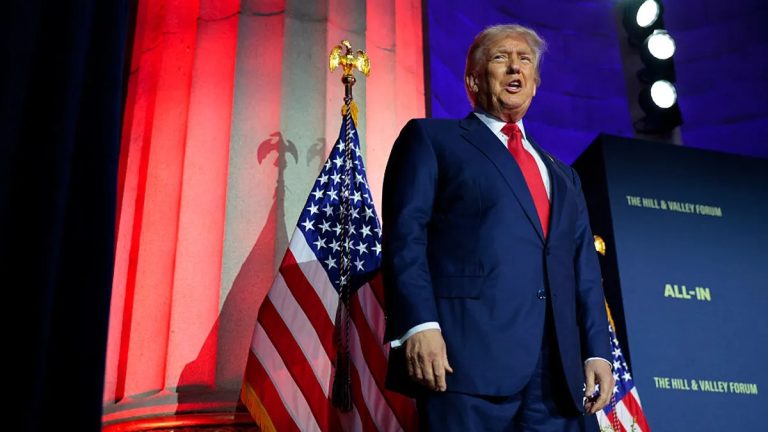
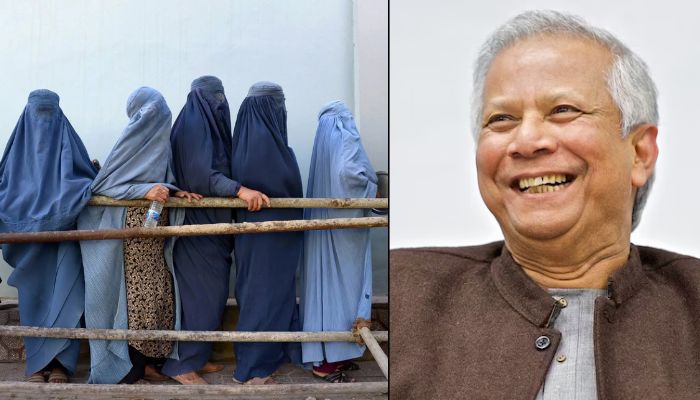
US President Donald Trump imposes a 35% tariff on Muhammad Yunus’s Bangladesh, keeps the option of “No Tariff” if the country decides to set up companies in America

In a decisive move aimed at recalibrating its global trade balance and sending a strong signal to unfriendly regimes, the United States has announced a 35% tariff on all Bangladeshi imports, citing long-standing trade imbalances and non-cooperative economic policies.

The tariff, set to take effect from August 1, 2025, was formally announced in a letter addressed to Mohammad Yunus, the Chief Advisor to the Pgovernment of Bangladesh. In a letter shared by US President Donald Trump on Truth Social platform, he emphasized America’s intent to pursue a “balanced, fair, and trade-oriented” approach, while indirectly calling out regimes seen as adversarial.

United States, which calls itself the “number one market in the world,” has stated that it will continue trade with Bangladesh only under new terms—ones that eliminate what it calls “decades of unfair trade practices.” Letter specifically blames Bangladesh’s tariff and non-tariff barriers for America’s unsustainable trade deficits. The letter highlights that 35% is still significantly lower than what would be required to eliminate the trade deficit disparity with Bangladesh.

The letter offers an alternative path: Bangladeshi companies can avoid the 35% tariff altogether by setting up manufacturing operations within the United States. If they agree, Washington promises to act “quickly, swiftly, professionally, and routinely”—in other words, to fast-track approvals within weeks. However, if Bangladesh retaliates by increasing its own tariffs or erecting new trade barriers, those actions will be met with additional levies on top of the existing 35% duty.

President Trump, speaking about the decision, said, “These tariffs are necessary to correct the many years of Bangladesh’s tariff and non-tariff policies, which have caused unsustainable trade deficits. This is a threat not only to our economy—but to our national security!”

Bangladesh isn’t the only country to feel the wrath of Trump. Within hours, tariffs were also imposed on 12 other countries, including South Korea, Japan (25%), and others such as Myanmar, Indonesia, Malaysia, Serbia, Cambodia, Thailand, and more. The move is part of a larger U.S. strategy to clamp down on trade deficits and punish nations seen as economic free-riders or geopolitical fence-sitters. US message to Bangladesh is blunt warning to realign its policies or risk deeper isolation in the global trade network.

Former Rajasthan CM Ashok Gehlot’s son-in-law appointed as an Additional Judge in the Bombay High Court on the recommendation of the Supreme Court Collegium

Gautam Ashwin Ankhad, son-in-law of the former Chief Minister of Rajasthan, Ashok Gehlot, has been appointed as an Additional Judge in the Bombay High Court. A notification of the Ministry of Law & Justice, dated July 4, 2025, confirmed the appointment of Ankhad and Mahendra Madhavrao Nerlikar by the President of India as Additional Judges in the Bombay High Court for a period of two years.

Image via Patrika.com


Gautam Ashwin Ankhad has been practising as an advocate for a long time in the Bombay High Court and specialises in commercial, contract, and arbitration matters. His name was initially forwarded by the Bombay High Court Collegium in consultation with the two seniormost judges of the High Court. Thereafter, the Supreme Court Collegium recommended Ankhad’s name to the central government in September 2024. The President, finally, issued the order for his appointment on the recommendation of the central government. Ankhad’s appointment as an Additional Judge in the Bombay High Court has raised several eyebrows as the selection process is recommendation-based and is not much transparent.

The appointment of an additional judge in a High Court is governed by Article 224 (1) of the Constitution of India. The provision allows the appointment of an additional judge in the High Court by the President after consulting the Supreme Court Collegium in case there is a temporary increase in the workload of the High Court. The appointment is made for a period of a maximum of 2 years.

Beyond Mastani: The unmatched military genius of Peshwa Bajirao, know why Amit Shah brought the legendary warrior to NDA campus in Pune

Union Home Minister Amit Shah on Friday (July 4, 2025) unveiled a statue of Peshwa Bajirao I at the National Defence Academy (NDA) campus in Pune, Maharashtra. As has become common nowadays, this too has sparked political controversy. In Maharashtra, historical figures like Chhatrapati Shivaji Maharaj, Peshwa Bajirao, Jyotiba Phule, Savitribai Phule, Bal Gangadhar Tilak, Veer Vinayak Damodar Savarkar, and Dr. B.R. Ambedkar are revered icons. Politics thrives on their legacies, with each having their own sets of supporters and critics.

Even before the statue unveiling, demands were growing to rename Pune Railway Station after Peshwa Bajirao. BJP Rajya Sabha MP Medha Kulkarni echoed this demand. However, some organizations staged protests outside the railway station opposing it. NCP (SP) chief Sharad Pawar remarked that Kulkarni was merely following instructions from her seniors. Others suggested the station be renamed after Chhatrapati Shivaji Maharaj’s mother Jijabai or social reformer Savitribai Phule. In essence, a controversy is now being stirred around the image of Peshwa Bajirao.

We have also witnessed how the film Bajirao Mastani (2015) presented a successful warrior as a passionate lover in the minds of the younger generation. This is why, when Bajirao is mentioned today, people instinctively recall his romantic saga with Mastani. His politics, diplomacy, and military strategies were neither portrayed in films nor included in our school curricula. Unfortunately, a similar distortion has occurred with many great Indian personalities.

Inherited strategic brilliance from his father

Bajirao’s father, Balaji Vishwanath Bhatt, was appointed as the Peshwa (Prime Minister) of the Maratha Empire in November 1713 and held the position until his death in April 1720. His rise wasn’t sudden. After Chhatrapati Shivaji Maharaj’s death, the empire faced great turbulence. Revenue had to be collected from war-torn regions, requiring someone wise enough to coordinate with local farmers and traders while also challenging the Mughals. In this situation, Balaji Vishwanath emerged as a capable leader.

He began as Pune’s Sabhasad (councilor), became Sar-Subedar, defended Sinhagad alongside Dhanaji Jadhav, and then served as Sar-Subedar of Daulatabad. He later became the Diwan (minister) of the commander-in-chief, was promoted to Senakarte (military planner), and assisted Chhatrapati Shahuji Maharaj during times of crisis, earning the king’s trust. After his death, his son Bajirao I was appointed as the Peshwa. Trained in diplomacy and warfare by his father, Bajirao compelled the rulers of Mysore and Arcot to pay chauth and sardeshmukhi taxes to the Marathas.

Humbled the Nizam, crushed the power of the Siddis

It was due to Bajirao’s strategies that even the Nizam of Hyderabad was forced to submit to the Marathas. In the March 1728 Treaty of Mungi Shevgaon with the Nizam, the Marathas gained the right to collect chauth and sardeshmukhi from six provinces of the Deccan. The Nizam recognized Shahuji as the Maratha king. How this was achieved is worth studying, especially for students in military academies. Bajirao allowed the Nizam to penetrate Maratha territory and then cut off his supply lines. Trapped, the Nizam was compelled to negotiate.

In April 1731, Bajirao secured control over Gujarat through the Battle of Dabhoi. He forced the Siddis, who had arrived in India from the eastern coast of Africa, to become subordinate to the Marathas and weakened their naval power. The mighty Aurangzeb, who failed to conquer the Deccan even after spending his last 25 years there, couldn’t have imagined that after his death, under Bajirao’s leadership, Maratha power would reach North India. In Bundelkhand, the aging King Chhatrasal was being harassed by the Mughal commander Bangash Khan. When he had no other option left, he sent for Bajirao. Bajirao surrounded Bangash’s camp in Jaitpur, forcing him to seek mercy.

Waved the banner of ‘Swaraj’ all the way to Delhi

To Chhatrasal, Bajirao became like a son. The king gifted him several territories. Mughal control over Bundelkhand ended, and Bajirao gained a stronghold to keep Delhi in check. In 1737, Peshwa Bajirao reached Delhi. Panic spread in the Mughal court. Cleverly, he sent his supplies back to create the illusion of retreat. The Mughals celebrated, believing he had fled. But before the celebrations ended, Bajirao struck Delhi via the Jat and Mewat regions.

He had no intention to destroy Delhi, only to showcase the power of Swarajya (self-rule). Before the Mughals could respond, Bajirao had already moved to Rewari. He was a master of winning wars without full-fledged fighting. After Delhi, he camped in Bhopal. There, he faced four major powers: the Nizam, the Mughals, and the rulers of Kota and Awadh. The Nizam was trapped in a fort. Enemy soldiers suffered from hunger, and even their animals lacked fodder. Such was Bajirao’s military genius. Eventually, a treaty was signed giving the Marathas all of Malwa. The region between the Narmada and Chambal rivers came under their control. The Mughals had to pay 5 million rupees as war expenses. Bajirao also taught a lesson to the rulers of Kurwai and Kota who had sided with the Mughals and the Nizam. Both fled the battlefield.

Peshwa Bajirao Is more relevant today than ever

If anyone deserves credit for building a grand edifice on the foundation of Swarajya, it is Peshwa Bajirao. Hence, his statue at the NDA campus should not be controversial. Soldiers trained here join India’s three armed forces. Learning about Bajirao I’s military campaigns will not only benefit their careers but also help the nation.

Winning great battles without exhausting one’s army, Bajirao’s hallmark, is especially relevant in today’s era of hybrid warfare. Had Bajirao Mastani focused on his courage and strategic brilliance instead of portraying him merely as a romantic lover, perhaps we wouldn’t need to explain so much today. Just as Chhatrapati Shivaji Maharaj is revered, Peshwa Bajirao too deserves immense respect. To defeat the forces trying to divide society in the name of such great leaders, today’s generation must read more about them. The arrows of propaganda can only be deflected by the shield of knowledge.

Karnataka: While Hindus honour Muharram in Muslim-less village, a Muslim man desecrates Ganesha idol in Shivamogga

In the first week of July, Karnataka witnessed two stark sides of India. While in Yadgir district, Hindus honoured Muharram in a Muslim-less village, a Muslim man desecrated a Bhagwan Ganesha idol in Shivamogga.

In a display of communal harmony, Hindu villagers of Talawargere in Yadgir district celebrated Muharram with devotion. Notably, there is not even a single Muslim family in Talawargere. The six-day festival saw hundreds of Hindus organising processions, singing devotional songs, and carrying the traditional Alai effigies of Hasan, Hussain, and Maulali.

Reportedly, the tradition of celebrating Muharram in the region dates back to 1925, when a vision of a Sufi saint promised relief from plague and drought if he was enshrined in the village. Even today, villagers make offerings, repaint the Ashurkhanas, and distribute sweet prasad in honour of the Alai Pirs. Neighbouring villages also seek blessings from the saint.

Contrast in Shivamogga – idols desecrated, community outraged

While Hindus embrace what is traditionally a Muslim festival in Yadgir, an incident in Shivamogga cast a dark shadow on communal harmony in the state. In the Bangarappa Layout of Ragigudda, a man identified as Syed reportedly stomped on a Bhagwan Ganesha idol and threw a Naagara idol into a drain on 3rd July. The idols were recently installed by local residents in a government-designated park area.

A video of him admitting to the desecration of the idols surfaced on social media, where he said, “Why should we wake up to a temple outside our house?” He reportedly apologised later, but the damage was already done.

Police detained two suspects, Syed and his accomplice Rehmatullah, in the matter. Local MLA S. N. Channabasappa and former Deputy CM K. S. Eshwarappa visited the site and demanded strict legal action. Superintendent of Police (SP) Mithun Kumar confirmed that the investigation in the matter was underway and promised legal action against the accused.

While the villagers in Yadgir uphold an age-old tradition of a shared belief system, Shivamogga reminded that when hate is unchecked, it can shatter the fragile fabric of communal harmony.

West Bengal: Muslim mob brutally thrashes Hindu man for not paying chanda for Muharram, hits him severely on the head, Hindus block roads in protest

On Friday (4th July), a Muslim mob brutally thrashed a Hindu e-rickshaw driver for not paying chanda (donation) ahead of Muharram. The incident occurred in Sainthia town in Birbhum district of West Bengal.

A Hindu man named Bedan Ghosh informed that the victim was beaten by 8-10 youths for not paying chanda for Muharram. The victim had made a donation of ₹50 once on Thursday (3rd July) and refused to pay twice.

“While others beat him, one of the youths hit his head with a boulder. I do not know the status of the patient. He was admitted to a hospital,” Ghosh added.

“It has been 1 hour since that incident, but the police have not arrested the perpetrators. We have now blocked this road in protest. The culprits need to be punished,” he added.

The victim’s father Tamal Ghosh stated, “My son had gone there to drop off passengers. He had paid chanda the previous day. Once he reached there today, they demanded chanda from him again. He tried to tell them that his business for the day had just started but they did not listen. I can’t explain how brutally they thrashed my son. He was rescued by some locals.”

“What is the administration doing? They (Muslims) are committing atrocities against us repeatedly,” he asked.

Bedan Ghosh narrated how Muslim youths in Sainthia had been harassing Hindus for Muharram donations. “A group of 8-10 youths caught hold of me on Thursday (3rd July) when I went to drop my son at the school. They demanded chanda from them. They insisted that I pay the money to them then and there.”

Ghosh was threatened with physical harm. He assured them that he would return to pay chanda after dropping his son to school. He later chose a different route to his home so as to avoid confrontation with the Muslim youths.

Following the attack on the Hindu victim, local Hindus staged a protest and set up a blockade in the middle of the road, demanding strict action against the Muslim perpetrators.

No Nidhi Razdan, Indians are not obsessed with the ‘Muslim identity’ of Zohran Mamdani, but rather angry at his anti-Hindu and anti-India rhetoric

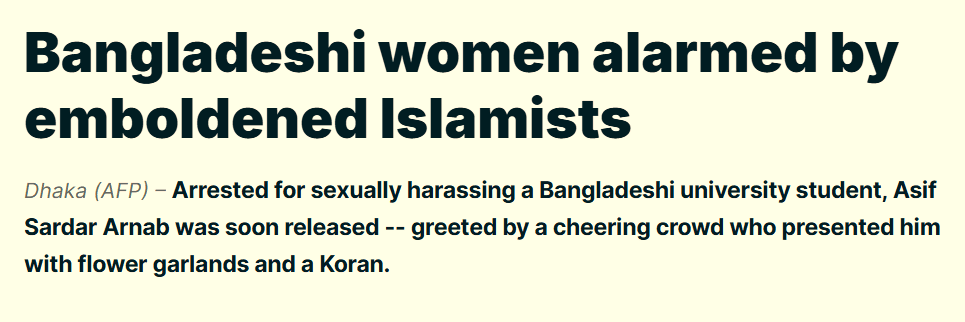
Former NDTV ‘news anchor’ Nidhi Razdan, who was once tricked by scamsters into believing that she was being appointed Professor at Harvard University, has claimed that NYC mayoral candidate Zohran Mamdani is being criticised in India for virtue of his ‘Muslim Faith.’

Razdan has written a piece to this effect for Gulf News titled ‘The Mamdani moment: Why New York’s new political star is sparking debates in India’, which was published on Monday (7th July).

She claimed that Zohran Mamdani became a ‘prime target’ of the Indian right wing ecosystem only because he is a Muslim.

Nidhi Razdan lamented that the Indian right wing celebrated the likes of Rishi Sunak, an Indian origin British politician who went on to become the Prime Minister of the United Kingdom, but not Zohran Mamdani. She suggested that it was because Sunak ‘wore his Hinduism on his sleeve’ while Mamdani is a Muslim.

“The same right wing also celebrates the Vivek Ramaswamys and Nikki Haleys of the world, even though their politics is rooted against immigrants. But Zohran Mamdani really irks them. It was amusing to see pro-BJP social media handles that have expressed joy about a Sunak or a Ramaswamy sneer at those who are happy with Mamdani’s victory. And there is only one main reason for that – his faith,” she brazened out.

The former NDTV ‘news anchor’ even hit out at Congress leader Abhishek Singhvi for highlighting that the NYC mayoral candidate Zohran Mamdani was repeating Pakistani talking points on India.

“”Even Senior Congress leader and MP Abhishek Singhvi made a rather undignified dig at Mamdani for doing “Pakistani PR”. “If he’s a Muslim, of course he is pro-Pakistan” is how the Indian right wing generally thinks. To see a Congress leader speak similarly is even sadder,” Nidhi Razdan lamented in her piece in Gulf News.

She will, of course, have to look past Zohran Mamdani’s association with US-based Pakistani lobbying groups to peddle the universal and rather perpetual trump card of ‘Muslim victimhood.’

The former NDTV ‘news anchor’, nonetheless, continued her misleading narrative that the debate in India surrounding the NYC mayoral candidate was about religion and not his ‘ideas.’

Like almost everything else in our political discourse today, Zohran Mamdani has polarised opinions both in America and India. But the reasons are different. In New York during his campaign, it was his ideas that were being debated. In India it is his religion,” she continued her dubious rhetoric.

Debunking the lies of Nidhi Razdan

The reality is far from the misleading claims made by Nidhi Razdan in her article in Gulf News. Indians or ‘Indian right wing’, as the former ‘new anchor’ puts it, are not fixated at all on the religion of Zohran Mamdani.

As a matter of fact, Zohran Mamdani is under fire for his blatant display of Hinduphobia. In August 2020, the famed son of ‘filmmaker’ Mira Nair was found leading a hate mob, demonising Hindus as ‘Harami (bastards),’ at Times Square.

“Who are the Hindus? Harami (Bastards),” the mob was heard yelling. Mamdani remained unflinched despite the dehumanisation of the Hindu community by his supporters. He instead began spewing vitriol against Ram Mandir.

“I am here today to protest against the BJP government in India and the demolition of the Babri Masjid that attempted to build a temple on the ruins of it,” claimed Zohran Mamdani.

He made it clear that the hate mob that he was leading at Times Square in August 2020 belonged to Khalistani extremists. The video coincided with the Bhoomi Pujan ceremony of the Ram Mandir at Ayodhya, which was performed by none other than Prime Minister Narendra Modi.

Around the same time, Zohran Mamdani peddled vicious disinformation on X (formerly Twitter) about the re-constrcution of Ram Mandir. For context, a Ram Mandir always existed at the very site in Ayodhya since time immemorial.

Screengrab of the August 2020 tweet of Zohran Mamdani

Mughal tyrant Aurangzeb destroyed part of the temple and built a disputed structure on top of the temple foundation. The historical wrongdoing was corrected on 6th December 1992 by karsevaks.

Through years of litigation, the Hindu site finally got the green light to begin the reconstruction of the temple at the same site where it existed before.

Besides his anti-Hindu rhetoric, Zohran Mamdani had peddled vicious lies about India. The NYC mayoral candidate has defamed India by falsely claiming that Muslims have been eradicated from Gujarat.

He is being funded by the anti-India, anti-Hindu lobby of the Council on American-Islamic Relations. This explains why he falsely dubbed Indian Prime Minister Narendra Modi as a ‘war criminal.’

Faith is a personal choice. The religious affiliation of Zohran Mamdani is immaterial to Indians or the ‘Indian right wing.’ The harsh criticism he faces in India is due to his anti-Hindu rhetoric and lies that he peddled about the country in the US.

Other Indian-origin politicians such as Rishi Sunak (Hindu), Vivek Ramaswamy (Hindu) or Nikki Haley (Sikh turned Christian) did not spew vitirol against Hindus or their religious places of worship.

They also did not make false claims about ‘Muslims being eradicated from Gujarat’ for political vendetta.This is precisely why Sunak, Ramaswamy or Haley are acceptable and a Mamdani is not.

Only Americans fixated on Faith of Zohran Mamdani

The sweeping assertions of Nidhi Razdan that only the ‘ideas’ of Zohran Mamdani are being debated in the US, the claim are false.

The Republican, Make America Great Again (MAGA) supporters are, in fact, obsessed with his ‘Muslim identity.’

The possibility of a Muslim ‘mayor’ in a predominantly white Christian NYC is still an unfathomable concept to many Americans, which is why they are fixated on his Faith.

According to The New York Times, anti-Muslim rhetoric dominated political discourse after Zohran Mamdani won the Democratic primaries.

It is Indians who are challenging the divisive ideas of Zohran Mamdani and debunking his lies on social media without being obsessed about his religion.

Indian media and intellectuals eulogised Zohran Mamdani

The Indian media has been writing eulogies for Zohran Mamdani since 2020 when he became a member of the New York State Assembly.

At that time, Zohran Mamdani was glorified for being the son of ‘filmmaker’ Mira Nair and winning election to the New York State Assembly. Indian media publications like The New Indian Express, News18, Times Now and India Today went all out to tell its readers about his biography.

Screengrab of the news reports

The Times of India also did not lose the opportunity to act as Mamdani’s PR machinery. Scroll and Moneycontrol, in particular, became fixated with his gimmicky election slogan of ‘Roti and Roses.’ Leftist propaganda outlet NDTV even conducted an online interview with Zohran Mamdani.

Screengrab of the news reports

The media ecosystem doubled down on heaping praises on Zohran Mamdani after he emerged as a strong candidate in NYC mayoral race.

India Today had suggested that Mamdani was ‘shaping NYC mayoral election’ while the Times of India published a speculative report about the earnings of the 33-year-old politician. DNA news was fixated on highlighting his ‘India connection.’

Screengrab of the news reports by The Times of India and India Today
Screengrab of the news reports by DNA India

Leftists and their obsession to make everything about ‘India’

Like a true representative of the left-liberal ecosystem, which has a habit of singling out India, Nidhi Razdan also used the Zohran Mamdani controversy to paint the country in a poor light.

India has nothing to do with Zohran Mamdani. If he kept his anti-India and anti-Hindu rhetoric to himself, none would bother challenging his outrageous claims on social media. Mamdani drew the ire only when he chose to showcase his ignorance to the world.

Indians or Indian right wing (as Nidhi Razdan puts it) cannot care less whether a Muslim man became the mayor of New York City. He is irrelevant to Indian politics.

But the former NDTV ‘news anchor’ could not resist putting Indians under the bus to write a piece on Zohran Mamdani in a foreign publication such as Gulf News.

China used its embassies to spread misinformation against Rafale jets: Read how Leftist media in India kept doing same lobbying for years

In a sensational expose of China’s disinformation offensive, French intelligence agencies have uncovered a coordinated Chinese campaign, using its embassies and diplomatic channels, to undermine the global reputation and sales of Dassault Aviation’s Rafale fighter jets following India’s high-profile Operation Sindoor in May 2025.

French intelligence reports say that Chinese defence attachés stationed in embassies worldwide spearheaded a targeted effort to dissuade countries especially those in Asia and Africa from purchasing or expanding orders of the Rafale. Countries like Indonesia, which had already signed contracts for the French jet, were specifically lobbied to reconsider their procurement plans in favour of Chinese-made aircraft.

Pakistan’s rapid push to publicise unverified claims of Rafale losses was to cover up its own failures against the Indian attack and China’s bid to erode confidence in the French jet and promote Chinese military exports while deflecting global attention from the failure of the Chinese defence system against India’s attacks deep inside Pakistan. While China used its embassies in foreign nations to peddle disinformation about Indian Rafales, the political opposition and the leftist media cabal have long been engaged in similar lobbying for years.

Opposition and leftist media cabal’s anti-Rafale campaign

As China’s sinister propaganda tactics to peddle falsehoods about Rafale jets to position Chinese fighter aircraft as a better and more potent alternative while also tarnishing India’s image, it must be recalled how the Indian opposition parties led by Congress and leftist media ecosystem tried to sabotage the Indo-French Rafale deal.

In a government-to-government agreement, India bought 36 Rafale fighter jets from France in 2020. This has greatly improved India’s aviation capabilities and afforded it a competitive advantage over Pakistan in the US-made F-16 fighter jet market. According to reports, India targeted Bahawalpur, which is located about 100 kilometres deep into Pakistani territory, using Rafale fighters equipped with Scalp missiles. Moreover, owing to its long-range attack potential, Rafale didn’t even need to cross the border to accomplish this.

However, former French President Francois Hollande’s statement caused a political controversy in India when he claimed that Dassault Aviation had been allegedly forced by the Modi government to collaborate with Reliance Defence of India to comply with its “offset policy.” Foreign companies must contribute at least 30% of a deal’s value back to India, according to the clause in Delhi’s defence procurement regulations.

The Congress party then accused Prime Minister Modi of prioritising an Indian company and even engaging in crony capitalism by supporting Anil Ambani’s company. On the other hand, the BJP consistently refuted these claims, asserting that the government entered into the agreement to fulfil the combat needs of the Indian Air Force and played no part in selecting the local partner of the French manufacturer.

Rahul Gandhi even called the Rafale deal a scam during the 2019 general elections, as part of the Congress party’s massive electoral attack against the Modi government for proceeding with the deal. He was even reprimanded by the Supreme Court for misusing its name and disseminating falsehoods purely for political smear tactics aimed at Prime Minister Narendra Modi.

The Rae Bareli Lok Sabha MP coined “chowkidar chor hai”, after which former union minister Minister Meenakshi Lekhi initiated a contempt case against him for misattributing the slogan to the initial ruling of the apex court in the Rafale case. He had issued an apology at the prior hearing for misquoting the Supreme Court. However, the latter was not persuaded by his prior affidavit and had asked for a written apology.

Notably, the matter was even dragged to the top court by Aam Aadmi Party Rajya Sabha MP Sanjay Singh, All India Trinamool Congress (AITC/TMC) leader Yashwant Sinha and others, alleging that the Rafale Fighter Jet Deal had significant procedural flaws. The bench, however, rejected the appeal for a court-monitored investigation on 14th December 2018 and noted that there were no anomalies in the price, decision-making procedure or choice of off-set partner.

While Congress, other opposition parties and the anti-Modi lobby left no stone unturned to project Narendra Modi as ‘corrupt’, not only the Supreme Court but also the people of India outrightly rejected Rahul Gandhi’s apocryphal narrative and gave a historic victory to the BJP-led alliance in the 2019 general elections.

The opposition parties were joined by leftist propaganda outlets like The Wire and The Hindu in mounting a sustained campaign alleging corruption, cronyism, inflated costs of the deal and whatnot.

OpIndia reported earlier how N. Ram, the Chairman of the Kasturi & Sons Limited and publisher of The Hindu, desperately tried to create an anti-Modi wave by manufacturing a ‘defence scam’ in the Rafale deal.

On February 8, 2019, The Hindu published a note from a defence ministry official who had objected to the Prime Minister’s office inquiring about the progress of the deal. This was even though the officer was not involved in the negotiations of the deal. The Hindu wanted to project that there was opposition to the Rafale deal in the defence ministry and only the Prime Minister was pushing for it. In doing so, the newspaper had cropped a vital part in the same document, a note by Defence Minister Manohar Parrikar. The then defence minister had written that the officer was overreacting, and the offices of the Indian PM and French President were just monitoring the progress of the deal.

Immediately after the Hindu report, ANI published the full document, which proved that N Ram had used a cropped version of the document in his article. About 10 days after the incident, The Hindu came up with a clarification, saying that it did not doctor the document. In its column Readers Editor, it has claimed that the document published by it was an earlier version, which didn’t include the Defence Minister’s note. As proof of the same, The Hindu noted that the document published by ANI had serial numbers on each note, while there were no serial numbers on the document published by Hindu.

To hide the evidence of Parrikar’s note, the Hindu cropped the document in two places, and even digitally erased part of a stamp that should have been visible even after cropping the same. And its claim that it did not doctor the document turned out to be false, because a date stamp before the defence secretary’s note was clearly removed from the document. As such, the petition in the Supreme Court over the alleged snooping scandal looks like another desperate attempt at anti-Modi propaganda. The Hindu and its Frontline magazine had published several articles insinuating foul play in the Rafale deal.

Mediapart, a media portal in France, has published what it calls ‘fake invoices’ that are alleged to have helped Dassault secure the deal for the 36 Rafale jets with the Indian Government. Mediapart claimed that Indian agencies did not pursue the case despite the existence of the fake invoices. This report was widely cited by Indian leftist propaganda outlets like Newslaundry, The Wire, and The Hindu among others and opposition leaders, however, the ‘fake invoices’ cited by Mediapart occurred when the UPA Government was in power. According to the invoices, payments totalling around 11 million Euros were made to a firm in Singapore. The invoices are related to a deal that the UPA Government was trying to make. After the NDA Government came to power, the UPA era deal was scrapped and the Indian Government secured a government-to-government deal.

The opposition used the warp and weft of lies and propaganda concocted by the leftist and pro-China media for its political gains. Not to forget, the opposition created a ruckus demanding a Joint Parliamentary Committee probe against the Rafale deal signed by the Modi government. The opposition hampered the functioning of the Parliamentary sessions in 2021 with the dubious media organisation fanning falsehoods within a fortnight gap with that year’s Parliamentary sessions.

Interestingly, the NGO that filed a complaint against Rafale Deal was partners with anti-Modi regime change specialist and philanthropist George Soros’ Open Society, Misereor, and Oxfam among others.

Even recently, The Wire’s website was blocked in India, for twisting an Indian Armed Forces official’s statement to peddle a false narrative and attack the Modi government for alleged aircraft loss during Operation Sindoor. At a time when Pakistan is using all tactics at hand to peddle anti-India lies, The Wire decided to bat from China-backed Pakistan’s side, however, after the Indian government blocked its website, the leftist propaganda portal reluctantly removed the misleading report.

It, however, is not shocking that the narrative pushed by Congress and leftist media portals almost always aligns with the Chinese narrative. It must be recalled that leftist propaganda outlet NewsClick was exposed in 2023 for receiving Chinese funding to push pro-China narratives. NewsClick was also among the media outlets which amplified anti-Rafale sentiment. The way the Rafale Deal faced a concerted attack from leftist media and the political opposition, it is evident that a coordinated effort was made to undermine India’s defence acquisitions.

Congress and Rahul Gandhi’s undying limerence for China

Congress and its prince Rahul Gandhi share an outrageously deep and persistent relationship with the Chinese Communist Party (CCP). Congress leader Rahul Gandhi has expressed his admiration for China on several occasions.

In his controversial speech at Cambridge Judge Business School in March 2023, Rahul Gandhi hailed China as an ‘aspiring superpower’ and ‘force of nature’. He further alleged that China harbours ‘social harmony’.

The Gandhi scion had also lauded China’s controversial and predatory Belt and Road Initiative (BRI) as well as the destructive debt-trap diplomacy calling it ‘prosperity’.

During a conversation with The Print columnist Shruti Kapila in 2022, Rahul Gandhi praised the Belt and Road Initiative and claimed that China wanted the countries around it to prosper.

During his tour to Ladakh in 2023, Rahul Gandhi claimed that China had grabbed India’s grazing land in Ladakh. However, Gandhi during his UK visit in May 2022 had asserted that “Ladakh is to China what Ukraine is to Russia.”

The Congress leader back then had even urged foreign powers to intervene in India’s internal matters. Back in 2020, details about the Rajiv Gandhi Foundation’s (RGF) monetary operations emerged.

OpIndia had previously published detailed pieces about the Chinese government’s financial contributions of more than Rs 1 crore to RGF between 2006 and afterwards.

In 2008, during UPA1, the Communist Party of China (CPC) and the Congress party signed an agreement for the sharing of high-level information and collaboration.

The memorandum of understanding (MoU) also provided the two parties with the “opportunity to consult each other on important bilateral, regional and international developments”.

Notably, Rahul Gandhi and Priyanka Gandhi Vadra have served as trustees of the Rajiv Gandhi Foundation since 2005, while Sonia Gandhi serves as the foundation’s chairperson.

It’s amusing to see how times change and even ‘partners’ turn hostile, even if just to score political brownie points.

The Congress party had signed an MoU with the Chinese government, and Rahul Gandhi had secretly met the Chinese Ambassador to India Luo Zhaohui in 2017 during the Doklam standoff.

He even secretly met Chinese ministers in September 2018 during his Kailash Mansarovar visit. Before this, Rahul Gandhi and Luo Zhaohui, the Chinese ambassador to India, met on July 8th, 2017, but their conversation was private. The Congress party referred to several media reports of the meeting as fake news. Yet, the Chinese embassy afterwards posted a statement on its website confirming the meeting. Eventually, Rahul Gandhi came to his own rescue as he confirmed his meeting with the Chinese Ambassador.

In February 2025, Sam Pitroda, the Chairman of the Indian Overseas Congress and a close aide of Rahul Gandhi, downplayed threats from China and claimed that the Communist-run country is not ‘our enemy’.

While speaking to news agency IANS, he claimed, “I don’t know what is the threat from China. I think there is always this thing blown out of (at times) proportion.”

Sam Pitroda blamed the US for creating a hostile perception of China. He went on to blame India for harbouring an attitude of confrontation towards the Communist regime.

“To assume that China is the enemy from day one is just not fair, not just to China but to anybody. I think it is time for us to learn to increase communication, collaborate, cooperate and co-create and not have this command and control mindset. China is around, China is growing,” the Chairman of the Indian Overseas Congress brazened out.

Interestingly, the Congress party’s love for China is not confined to lobbying against Rafale deal, signing MoUs with China, and receiving funds from the CCP for Rajiv Gandhi Foundation. The party prince Rahul Gandhi has been obsessing over Chinese military technology even in the Indian parliament.

Back in 2021, Rahul Gandhi questioned in the Lok Sabha, why Indian security forces were not using Chinese-style surveillance drones, lauding the Chinese PLA’s tactics during the Ladakh standoff.

In 2023, during his UK visit, Rahul Gandhi claimed China is winning the “technology race”. Gandhi suggested India learn from Chinese military innovation, including drone warfare.

During his 45-minute speech in the parliament in February 2025, Rahul Gandhi mentioned China around 34 times and highlighted the country’s dominance in the manufacturing sector and technological advancement.

In February this year, Rahul Gandhi showcased a banned Chinese drone in a social media post. In what came across as nothing less than a China-sponsored defence advertisement, Rahul Gandhi used the banned Chinese drone to assert that India needed a “strong production base” to manufacture drones and “not empty words”. In his attempt to promote Chinese defence tech as ‘superior’, Rahul Gandhi resorted to belittling the Indian drone industry. Perhaps, Gandhi must have been very upset with the success of indigenously manufactured drones during Operation Sindoor.

“Drones are not just one technology, they are bottom-up innovations produced by a strong industrial system. Unfortunately, PM Modi has failed to grasp this. While he delivers ‘teleprompter’ speeches on AI, our competitors are mastering new technologies. India needs a strong production base, not empty words,“ Gandhi posted.

In June this year, Rahul Gandhi defied facts and data to claim that the Modi government’s ‘Make in India’ initiative is merely ‘Assemble in India’ and that China is far ahead of India in manufacturing sector. However, OpIndia published a data-based rebuttal to Gandhi’s pro-China claims.

Conclusion

Clearly, the political agenda and ideological imperative to oppose the BJP-led government drove the opposition parties and the leftist media cabal to amplify Chinese propaganda, weaken national security discourse, and even try to sabotage the Rafale deal. The opposition and leftist media’s persistent pro-China lobbying, echoing Chinese propaganda to attack the Indian government is nothing but a stark betrayal of Indian national interests at the cost of partisan gains.

Allahabad High Court allows Uttar Pradesh Govt’s decision to merge schools that have less than 50 students with nearby institutions

The Allahabad High Court’s Lucknow bench has given the go-ahead to the Uttar Pradesh government’s decision to merge primary schools with fewer than 50 students with nearby institutions. While the court said the move was in the interest of better education, the decision has drawn sharp reactions from the Opposition.

On Monday, 7th July, Justice Pankaj Bhatia dismissed a petition filed by a guardian representing 51 students from Sitapur district. The plea had sought a stay on the merger order, claiming that it violated Article 21A of the Constitution, which guarantees free and compulsory education for children between the ages of 6 and 14.

“This Article also mandates that the government will have to set up a primary school within one km for a population of every 300 people so that small children do not have to travel far to reach school”.

The petitioner said the merger would force children to travel longer distances to attend school, putting additional stress on young students, especially those from poor and rural backgrounds.

The state government defends the policy

Representing the state, Additional Advocate General Anuj Kudesia and Chief Standing Counsel Shailendra Kumar Singh told the court that many schools in Uttar Pradesh are either empty or have very few students enrolled. They argued that running such schools is not practical or beneficial for students.

The government said the decision to merge schools was based on improving access to better educational facilities, teachers, and peer learning. By shifting students from small, under-enrolled schools to bigger institutions, the state hopes to provide a better academic environment.

According to official data, UP has around 1.40 lakh government-run primary and upper primary schools. Out of these, nearly 29,000 schools have fewer than 50 students, and around 89,000 teachers are posted in these institutions. The government says the policy aims to use these resources more effectively.

Opposition slams the decision as “Anti-Education”

Samajwadi Party President Akhilesh Yadav strongly criticised the move, calling it a deliberate conspiracy to weaken public education in rural areas. In a post on X (formerly Twitter), he accused the BJP-led government of trying to deprive future generations, especially children from backwards, Dalit, and minority communities, of their right to education.

“Education is the biggest threat to authoritarian politics. The BJP doesn’t want children to become aware and self-confident because educated people question injustice and stand up against wrong policies,” Yadav wrote.

“No schools, No opposition”: Akhilesh Yadav

The former chief minister expressed fears that closing government schools in villages could pave the way for BJP-affiliated organisations to open their institutions “under the garb of service,” where they could allegedly propagate “divisive ideologies.”

Yadav further accused the ruling party of fostering a crowd of “uneducated, superstitious, and unscientific minds” that could be easily manipulated.

He also pointed out that if a polling booth can be set up for one voter, a school for 30 students should be just as important.

He further alleged that closing down government schools would pave the way for private schools run by BJP-affiliated organisations to enter rural areas, where they could promote divisive ideologies under the guise of service.

Kannauj schools also face closure

Yadav also shared a news report from Kannauj, which claimed that 38 schools in the district are facing the threat of closure due to the new policy. He warned that this is not an isolated incident and that similar actions may follow in other districts too.

Government says it’s about better education

Sources from the UP government say the policy is not about closing schools but about rationalising resources, improving the student-teacher ratio, and enhancing overall academic outcomes. They argue that merging small schools will help deliver quality education, particularly in rural areas.

Officials have said that students who have to move will be relocated to nearby schools within accessible distances, and logistical support will be provided where necessary.

Verdict triggers political heat

With the court backing the state’s decision, the school merger policy is set to go forward. However, the strong political reactions show that this will remain a contentious issue in the coming months, especially with the Opposition accusing the government of hurting the education rights of marginalised communities.