Home Blog Page 4057

Journalist asks people to not circulate photo of dead reporter, after sharing photos of funeral pyres he clicked, netizens call her hypocrite

Reuters photojournalist Danish Siddiqui was killed by the Taliban during clashes at Spin Boldak district in Kandahar, Afghanistan. Danish Siddiqui was a journalist of international acclaim, and was part of the Reuters team that won the Pulitzer in 2018.

After the news of his death broke out, a photo started doing the rounds of social media, which was said to be the dead body of Siddiqui. And appeals were made that the photograph ought not to be circulated on social media.

In one such case, Stuti Mishra of The Independent shared some of the photographs Danish Siddiqui had captured in order to mourn his demise. Someone replied in the comments with the photograph of Siddiqui’s dead body. To which Mishra responded, “Please dont circulate this picture. I can’t confirm if its actually his but sharing the photo of a deceased person’s body can be triggering for many. And it’s disrespectful to the dead.”

Source: Twitter

Mujib Mashal of the New York Times, too, pleaded with people to not circulate the image.

Source: Twitter

Netizens, however, consider such appeals to be a demonstration of unparalleled hypocrisy.

What netizens are saying

People say that Danish Siddiqui sold numerous photographs of funeral pyres of people who had succumbed to Covid-19. Therefore, they argue it is hypocritical for the journalists who were applauding Siddiqui for the same to complain about the picture of his dead body being circulated.

People argued that Danish Siddiqui himself had shared photographs of funeral pyres without the consent of the family of the deceased.

One user demonstrated the hypocrisy that was alleged perfectly. Stuti Mishra, who had urged people to not circulate the photograph of the deceased as it would be disrespectful to the dead, had in the first tweet of the thread shared photographs of funeral pyres captured by Danish Siddiqui.

Journalist defends herself

Stuti Mishra, instead of acknowledging that she might have been hypocritical, chose to defend herself accusing others of being “monstrous creatures” and idiots. She said, “Idiots on my timeline don’t know the difference between a photojournalist’s duty to report & their vile tweets circulating unverified photos. I don’t expect them to know. But the fact that with every death these monstrous creatures never wait to add their toxicity still shocks me”.

Source: Twitter

But people on the internet are not buying her argument. They insist that Danish Siddiqui himself opportunistically minted the misery of people for his own benefit and therefore, there is nothing wrong with sharing the image of his corpse.

‘Is it in public interest’: Supreme Court asks Kerala why it withdrew cases against Left MLAs who vandalized assembly

Two weeks after the Pinarayi Vijayan government in Kerala had moved the apex court seeking permission to withdraw cases against prominent CPM leaders for vandalism of state assembly in 2015, the Supreme Court sought to know what kind of ‘public interest’ is behind such a move. The Kerala govt had said that they are withdrawing the cases in the public interest.

The case was heard by a 2-Judge Division Bench of Justices D Y Chandrachud and M R Shah. While referring to a landmark 2016 case (Sheo Nandan Paswan vs State of Bihar and others), the apex court inquired, “Is it (move to withdraw prosecution against the Left MLAs) for public interest…where members have thrown things, broken things?” The Supreme Court had ruled in the 2016 case that withdrawals must be in the interest of the general public.

Justice DY Chandrachud further noted, “Is it in the interest of justice to throw things and damage material at the sanctum sanctorum of democracy?… The fact of the matter is that it is public property and the government is the custodian of the public property”. Citing the example of Judiciary, he said that ‘vituperative’ arguments’ also take place in courtrooms but that would not justify the destruction of property. He added, “There is freedom of speech in the House. No doubt about it. Suppose an MLA empties a revolver in the Assembly, can we say that the House is supreme on this?” While discussing the matter, Justice MR Shah asked the LDF government whether withdrawing such cases against the Communist leaders is in the larger public interest.

Advocate Ranjith Kumar, who represented the Kerala government in the apex Court, claimed that the act of violence and vandalism by the LDF MLAs was a ‘protest’ against the then Finance Minister. He alleged, “A protest is also a speech. It is a manner of freedom of speech. The breach of code of conduct of the House provides for that. Maybe there was breaking of furniture. But it was still a form of speech and a form of protest.”On hearing the bizarre justification, Justice Chandrachud was quick to point out that the property destroyed by the LDF MLAs wasn’t private but public property.

Vandalism in Kerala state legislative assembly in 2015

On March 13, 2015, the legislative assembly Kerala witnessed unprecedented vandalism as members of the opposition, in their attempt to prevent scam-tainted Finance Minister K M Mani from presenting the Budget, trashed the Speaker’s dais and even flung out his official chair. However, despite the imbroglio, Mani managed to wrap up the presentation of his 13th Budget in six minutes after the Speaker permitted him to do so. The Opposition alleged that the Budget presentation was invalid as House procedures were not followed. The Opposition MLAs also blocked the path of Speaker N Sakthan to prevent his entry into the dais. Around 20 Opposition MLAs, including senior leaders Thomas Isaac and C Divakaran, and 12 watch-and-ward staff were injured in the scuffle.

The protest demonstrations and the Secretariat blockade by the LDF took a violent turn when the protesters took to the streets and torched two government vehicles, including a police bus. One LDF supporter had died. Police had to resort to firing teargas shells to control the LDF and Yuva Morcha activists. The Opposition had blocked all entry points to the House in the morning itself. Opposition leader V S Achuthanandan and his LDF colleagues were present well before the start of the session at 9 am.

‘Zulus will deal with your curry relatives’: What I learned from speaking out against racist attacks on Indians in South Africa

As a kid, I remember being so excited when Nelson Mandela visited India. This was the first time I had heard the expression “world leader.” In my innocence, I thought Nelson Mandela was literally the president of the world.

As most Indians do, I always felt a connection to the people of South Africa while growing up. We learned that the Mahatma had spent his formative years over there. Our history books mentioned places like Durban, Natal and Pretoria. In essays in school, we wrote about the experience of Gandhi being thrown out of a first-class railway carriage in Pietermaritzburg. We learned about apartheid and India’s role in ending it. I used to think it was all warm and fuzzy between us; Indians and the people of South Africa.

Until now. Yesterday, I chose to tweet about disturbing stories of Indians and their businesses being targeted in South Africa. I demanded to know why the world was being so silent about it. Where is the global elite of CNN, the New York Times, the Washington Post and BBC? Where is the conscience of Justin Trudeau? And where is the army of woke activists, from Trevor Noah to “first niece” Meena Harris and John Oliver? They were all so quick to seize upon the use of water cannon during “farmer” protests in India. Dear Rihanna, why aren’t we talking about the hatred that Indians are facing in South Africa?

Then, the attacks began. As South African Twitter discovered my tweet, my timeline was flooded with racist poison. Many said the Indians should go “home” so Africa could belong to Africans. I was told to go eat curry or smoke spices. I was hit with every possible racist stereotype and many users insisted on calling me “Rajesh.” This surprised me initially until I realized it was a reference to the character of Rajesh Koothrapalli on The Big Bang Theory. And yes, I was asked if I drink cow piss for fun. And then there was the one who told me that Zulus would deal with my “curry relatives.”

Unlike global opinion writers at the Washington Post, I don’t make a living bashing anonymous handles on Twitter. I want to ask deeper questions. I want to know where this anti-Indian hatred comes from. This may seem like a localized incident in South Africa, but anti-Indian hatred has been rising worldwide. The other day, I watched in horror as this Vice News video explained that Indians in London were “incubating the virus.” I watched a video of British police torment a homeless Indian man, find a screw on the ground beside him and accuse him of keeping it as a weapon. All this, under the approving eye of Vice News, covering “crime and covid in London’s Little India.” This is cutting edge liberalism in times of great upheaval against police overreach in the West.

It appears as if they apply the rules of humanity to everyone except Indians. In 2020, Tulsi Gabbard made history as the only Democratic Presidential candidate ever not to be invited to her party convention despite winning delegates. In a year when racial and gender justice was the number one plank of the Democrats, they consciously decided to exclude a woman of colour. She was a Hindu after all.

How was this hate atmosphere against Indians created?

Over the last three years, India’s reputation has been stormed like never before, on the front pages of global publications such as the New York Times and the Washington Post. They were joined by allies such as Al Jazeera and the newly formed TRT world (funded by Turkey). Our internal matters were projected onto the world stage with the harshest possible anti-Hindu commentary. Even channels in faraway South America began using the F-word for Sardar Patel, describing him as a Hindu fundamentalist who took over Muslim kingdoms.

Old smears were dug up, connecting Hindus to Nazism. This was mixed in with racist colonial stereotypes and “cow piss drinker” became a global rallying cry of the Hinduphobes, from Pulwama’s suicide bomber to alleged journalists, academics and thinkers. Every possible thing about India, from sarees to rasam to earthen lamps and even the word “Bharat” was stuck with labels such as supremacist and Nazi.

In the US, it was all hands on deck. While think tanks rallied the intellectual class against us, late-night comedians were firing up American audiences against the evil of Indians. On US campuses, where liberals run everything, they began protest marches, taught seminars and research courses on how bad Indian society is. US Consulates in India now speak of “Bengali Americans.” Or they take a wider view and speak of the “South Asian” community. In polite company, it is now considered unacceptable to utter the word “India.”

In fact, in recent times, the only thing that was described as “Indian” was the so-called “Indian variant” of the Coronavirus. The colonial BBC came up with an absolute gem of a headline on this: “The Indian variant explained in five South Asian languages.” The languages are South Asian. The virus is Indian.

But why? Why do they hate India?

Indeed, what did we ever do to them? The answer is distressingly simple. Anti-India hatred is part of the age-old prejudice against pagan cultures. Across the world, there are three hegemonic forces. One is Christianity, another is Communism and the third one is so peaceful that it is too risky to name them directly. These three forces appear to be at odds with each other, but they are really not. The elephants are fighting. We, pagans, are the grass. We are the ones who really suffer.

But why now? First, because India got big enough to the point that we began demanding an actual place at the global power table. Nobody likes that, even those who share the same culture and values. Even the British were outraged when Americans began to claim their rightful place in the world towards the beginning of the last century. So you can imagine the heartburn when India became the fifth largest economy in the world in 2019. As long as India was playing in the little leagues, it was kind of cute. We heard some nice things about being a democracy and all that. But then, India became the world’s fifth-largest economy. That’s when George Soros declared a $1 billion initiative to destabilize India. The big guys are coming for us. Don’t worry, the big guys just want the best for us…

Second, while India got big, China got bigger and much faster. It was only in 2010 that China became the second-largest economy in the world. A decade since then, China has learned to truly leverage its diplomatic and economic power. That is why a day after the Galwan clash in Jun 2020, “experts” told the New York Times that the reason for the clash was Amit Shah’s aggressive posturing during his speech on Article 370 in Parliament in Aug 2019. In fact, there was a year-long campaign in Western media to portray India as a dictatorship and an occupier in Jammu & Kashmir. After bashing up India’s democratic image, the Chinese came knocking.

Why is India such a convenient enemy for the global elite?

Every movement needs an enemy. For the global elite to truly control the world, they have to give the masses an enemy. And there are several reasons Indians are uniquely suited to be that enemy.

First, India is a country that everyone has heard of, but hardly anyone knows about. You can’t make an enemy out of say Germany or Brazil. Everyone has heard of them and everyone knows about them. Their culture is far too similar to the dominant culture in Europe and America. On the other hand, you cannot make an enemy out of say Swaziland or Mozambique. A lot of people haven’t even heard of them.

We Indians are unique. Everyone has heard of us, but our culture is strange and different. Our reverence for cows, for instance, can easily be mocked. We have our elephant gods and monkey gods and so on. Now, you could say, all religious beliefs and symbols could be mocked. Sure, but their beliefs are the “norm.” That’s why cat and dog meat is banned by federal law in the United States, but beef bans in India are undemocratic. That’s why the British Embassy can pressure the government of South Korea to ban dog meat. Would you confront the British with dog piss jokes? Of course not, because whatever the Christian West believes is the “norm” and must always be the norm.

Second, in order to incite mass hysteria, you need an enemy with a large and distinctive cultural footprint. Like the Jews in Europe in the 1930s, Indians are everywhere. And what is more, Indians are disproportionately well off in all the countries where they live. The conditions are ideal to smear Indians the way the Nazis smeared the Jews. Not just today, India and its cultural footprint have always been there. India is older than history itself. Like the Nazis, the global elite is tapping into the prejudice that is thousands of years old.

Finally, the designated enemy needs to be just strong enough to be hated, but just weak enough that it cannot hit back with sufficient force. India is a big power, but it’s not a superpower. People don’t want to feel like bullies, hating on some country far too weak, like say Colombia or Indonesia. Conversely, they don’t want to hate on someone too strong, such as China, or there might be severe consequences.

The masses are intellectually lazy. The global elite is giving them an enemy that they can hate at the end of a long hard day, with a beer and their feet up. Ultimately, hatred is a drug, that the global elite serves for entertainment. Which American would want to hear that China has captured the American elite? That’s why late-night comedians in America go after India. Yes, the Indians are evil, but America could crush them if they really wanted. The average American can go to sleep after hearing this.

What role have Indian liberals played in creating the current situation?

Even at its peak, the British Empire never had more than 30,000 officers in India. Usually, it was more like ten thousand British officers “against” thirty crore Indians. And the former remained in charge for 200 years. Let that sink in.

The other day I watched BBC toss a (rhetorical?) question to a journalist based in India. Do you think the Western media is biased against India, they asked. The journalist dismissed the possibility outright. Of course, the Western media isn’t biased, she said. The BBC used her as a prop to deny white privilege. Whatever the BBC paid her, if any, I am sure they got their money’s worth.

In the last few years, there has been a great convergence of interests between the global liberal looking to buy and the Indian liberal looking to sell. Something fundamental has changed among the Indian masses. With the political establishment changed, the Indian liberal is forced to sell overseas as the domestic market dries up. You can reel off the names easily. Journalists, academics, think tanks and the like. Everyone seems to be in the market for some international prize or honour.

The second wave of Covid was a stark example of this phenomenon. Remember how they flew drones over crematoriums? The Hindu practice of burning the dead is an international curiosity. Always a hit.

What do Indians need to realize here?

That we have no real friends. We have to understand that the liberal world has no place for us. And being an Indian
“liberal” will not offer you any protection nor advantages. If you are among the handful of Indian liberals actually getting paychecks from global publications, that’s different. But if you are among common people in the audience who sustain and sympathize with the Indian liberal ecosystem, they are taking you for a ride.

In the eyes of the global elite, you are just an Indian and they hate you for it. Whether you make cow urine jokes or say “Hindutva ki kabr khudegi” matters little. Did you see how the Indian liberals were so animated about Gaza a few days back? Did you see any of these people worry about the fate of Indians in Durban? What’s the general political affiliation of Indians in Durban? Does anyone know? Does anyone care?

So better join up with the only group that will have you. There is security in numbers. You may not like everyone on this side. You may loathe most of them. Suck it up, because life isn’t easy, fair nor perfect. The struggle for survival isn’t over. Just ask yourself why the liberals care more about Gaza than they do about Durban.

Liberal values are for the liberal elite. They make these values sound universal, but they are not. If these values were universal, they wouldn’t accuse a homeless Indian man in London of “incubating the virus,” would they?

Jammu and Kashmir administration bans illegal slaughtering of cows, camels on Eid-ul-Adha

The Government of Union Territory of Jammu and Kashmir has enforced a ban on the illegal slaughter of cows, calves and camels ahead of the Eid-ul-Adha festival in Jammu and Kashmir.

The ban on the slaughters of cows, calves and camels has been communicated by the director of Planning, J&K Animal, Sheep Husbandry and Fisheries Department, to Divisional Commissioner, Jammu and Kashmir, and IGP, Jammu and Kashmir.

In a directive, the Director of Jammu and Kashmir Animal, Sheep Husbandry and Fisheries Department has asked the officials to stop the illegal killing of cows, camels and other animals on the occasion of Bakra-Eid and asked them to take strict action against offenders who violate the order.

The communique reads, “In this regard, large numbers of sacrificial animals are likely to be slaughtered in the UT of J&K during Bakra Eid festival scheduled from 21-23 July 2021 & the Animal Welfare Board of India, in view of animal welfare, has requested for implementation of all precautionary measures to strictly implement the Animal Welfare Laws viz. Prevention of Cruelty to Animals Act, 1960; Transport of Animal Welfare Rules, 1978; Transport of Animals (Amendment) Rules, 2001; Slaughter House Rules, 2001; Municipal Laws & Food Safety & Standards Authority of India directions for slaughtering of animals (under which camels cannot be slaughtered) during the festival.”

Image Source: Samrasta

Further, the J&K government has also directed the police officials to take all preventive measures as per the provisions of acts and rules to effectively implement the animal welfare laws and stop the illegal killing of animals.

Eid-ul-Adha will be celebrated across the country on July 21. Sacrificing sheep, goats and camels are considered an important ritual for Muslims on Eid-ul-Adha. In Jammu and Kashmiri, Muslims largely sacrifice sheep on the occasion of Eid-ul-Adha. However, cows, calves and camels are also slaughtered sometimes.

Reuters photojournalist Danish Siddiqui, who received international praise for Covid funeral pyre pics, killed by Taliban in Afghanistan

Indian journalist Danish Siddiqui, who has been reporting from Afghanistan the past few days, was killed in Spin Boldak district, Kandahar, reports say. Danish Siddiqui was working with Reuters as a photo journalist.

Only on the 13th of July, Siddiqui had tweeted how he had narrowly escaped disaster after the Humvee he was traveling in was attacked by Taliban forces. He was traveling with Afghan forces, with whom he was attached to the past few days.

Siddiqui was at the centre of the controversy during the peak of the second wave of Covid-19 in India when insensitive photographs of funeral pyres were splashed across the media.

Photograph captured by Danish Siddiqui for Reuters on April 23

The photographs were widely criticized for being insensitive.

Photograph captured by Danish Siddiqui for Reuters on April 22

However, he had also received international praise for the photographs.

Photograph captured by Danish Siddiqui for Reuters on April 28

Siddiqui was also awarded the Pulitzer as part of the Reuters team for the coverage of the Rohingya crisis. The Vice-President of Afghanistan, Amrullah Saleh, had stated on Thursday that they had been warned by Pakistan that any attempt to repel Taliban from the Spin Boldak area, where Siddiqui was killed, would incur action by the Pakistani Air Force.

With US withdrawal from the country, the Taliban has been capturing more and more area and is on the verge of taking complete control of Afghanistan.

Typing the word ‘semen’ as ‘semman’ had resulted in the acquittal of a POCSO accused, Madras HC reverses order, slams prosecution. Details

An accused in a case of child sexual abuse under the POCSO Act was able to exploit a typo of the word ‘semen’ to secure acquittal in a trial court in Tamil Nadu, reported Bar and Bench.

The case pertains to the sexual abuse of a 2-year-old child in 2017 by her neighbour. The child’s mother had left the child with the accused to buy food from outside. On returning home, she found that the child was missing from the courtyard. The child was found by the mother weeping. She had later informed the mother that the neighbour had ‘kissed’ her in her private parts. The victim’s mother had also found white coloured semen on the underwear of the child’s vaginal area. She then called her husband, who was out of the station at that time.

He asked her to alarm other neighbours about the action of the accused. The victim was taken to the hospital two days after being subjected to sexual assault. It was only then that the doctor recorded the complaint of sexual assault and the police registered a case under Section 10 of the POCSO Act.

The accused was acquitted by the trial court on technical grounds

During the hearing in the trial Court in 2018, the judge held that the ‘medical evidence’ did not support the allegations of the sexual assault. While acquitting the accused on all charges, the trial court questioned the lack of a satisfactory explanation for the delay in registering the police complaint.

Surprisingly, the trial court misinterpreted an error made by a typist during the trial. The word ‘ semen’ was mistakingly written as ‘semman’ (red soil colour in Tamil). The accused exploited the technical error to suggest that no semen was found in the undergarments worn by the girl.

Observations made by the Madras High Court

When the victim’s parents filed an appeal against the trial Court’s decision at the Madras High Court, the latter noted that the onus to rebut the presumption of guilt lies with the accused and not the prosecution. The Court held that under Section 29 of the POCSO Act 2012, it is for the accused to defend himself once the prosecution proved the offence and the Court had drawn its presumption. This act stands in contrast to the general principle of criminal law, which says that a person is innocent until proven guilty.

Dismissing the objections raised by the trial court, the Madras High Court contended that people in rural areas often don’t have knowledge on how to proceed with such child sexual abuse cases. The Court stated, “The trial Courts also, sometimes not applying their minds and exercising their inherent or discretionary power either to direct for reinvestigation or summon relevant records and only they are searching for proof beyond reasonable doubt and taking advantage of the flaw in the investigation, giving the benefit of doubt to the accused. But cases like this, we cannot give much importance to the technical ground of proof.”

There is danger in writing English word in Tamil : Madras HC

The Court further added that no mother of a victim, especially an illiterate woman in rural areas, would immediately go to the police in such cases and the prosecution and court failed in their duties when they stressed on technicalities like delay in the complaint.

Justice Velmuragan opined that a delay on the part of the victim’s family in filing the case would be fatal to the case of the prosecution. He pointed out that the trial court misinterpreted the typographical error of ‘semman’ and attributed a wrong meaning to it. “Hence, there is (danger) in writing an English word in Tamil, which [can] totally turn the case of the prosecution and admittedly, the defence side has taken flimsy defence that P.W.1 has stated as “semman colour,” the Court observed.

Trial Court judge failed to understand the scope of POCSO Act, says Madras High Court

The High Court further contended that the trial court judge failed to understand the scope and objective of the POCSO Act. “In this case, the victim is an infant, aged below 3 years, she is not in a position to speak out the charges of crimes or atrocities, under such circumstances, the mother has spoken and no corroboration can be expected, since because the innocence of the mother and the inability of the victim child, the culprit cannot be escaped from the clutches of law,” the Court ruled. The Madras High Court emphasised that the lack of neighbour’s testimony or the lack of medical evidence was probable in a village setup or the delay caused in getting the victim examined.

Madras HC overturns culrpit’s acquittal

While overturning the Judgement of the trial court, the Madras High Court directed the accused to appear before it for sentencing. “Though the prosecution (has) not examined the Doctor, one who made an entry in the Accident Register and medical examination was not conducted on the victim child on the date of admission, the mere defect in the investigation is not fatal to the case of the prosecution and the second respondent / accused cannot be acquitted on the sole ground of defective investigation,” it concluded.

British MPs approve parliamentary motion to boycott the ‘Genocide Games’, the Winter Olympics to be hosted by China next year

Fanning the calls to boycott Winter Olympics to be hosted by China in Beijing next year, the British Parliament voted unanimously to boycott what is being called the “Genocide Games.” The MPs, in an early Friday morning session, called on the British government to not send any representatives to the Olympics, members of the royal family, diplomats or any other VIPs.

While the move is not binding nor does it stop athletes from participating or competing, a diplomatic boycott of the games has been called for. The pressure on Prime Minister Boris Johnson has intensified to formally snub the Chinese government.

Highlighting China’s atrocities on Uyghurs- a Muslim minority in China, the proposal argued that an event should not be held in a “country whose government is credibly accused of mass atrocity crimes”.

It also recommended that the UK should decline invitations for its representatives to attend the Winter Olympics unless the Chinese government “ends the atrocities” on the ethnic population in the Xinjiang region. 

Despite the motion being non-binding on the government, it did receive support from across the House.

Conservative MPs call for a boycott

The motion was brought by Conservative MP Tim Loughton who is also a member of the global Inter-Parliamentary Alliance on China. IPAC was formed by MPs around the world as a result of Beijing’s economic bullying of Australia.

Comparing China’s rule to Hitler’s regime, Conservative former leader Sir Iain Duncan Smith remarked that allowing China to go ahead with the Winter Olympics next year is akin to “appeasing Hitler”.

Smith in his speech said, “We have forgotten what happened when we appeased another ghastly dictatorship. Sixty million people died as a result of our failure when we appeased them and we are on the same course today. And this debate today about boycotting these Olympics is not just a token.”

“We know that China is sensitive when it gets global criticism, when people shine the torch on what goes on behind it. We know they react. Why do we know that? Because they sanction people like myself and many of my colleagues in this chamber and the European Parliament.” he added. 

‘Gap between rhetoric and action’

Labour MP Afzal Khan (Manchester Gorton) said, “Despite condemnation from all sides of the house, including the Government, there is still a gaping chasm between rhetoric and action.

“We cannot on the one hand recognise genocide and on the other send dignitaries and diplomats to the Beijing Olympics,” he said further. 

“Is it right to put the Queen in an uncomfortable position?”

Labour also asked if the government wanted the Queen to be in the “uncomfortable position” of “appearing to endorse a regime responsible for genocide”.

“Does he think it is right that the Prime Minister is set to put members of the royal family, and by association Her Majesty the Queen, in the uncomfortable position of appearing to endorse a regime that is responsible for genocide?” asked Shadow Foreign Office minister Stephen Kinnock.

Complete boycott of games

A coalition representing Uyghurs, Tibetans, residents of Hong Kong and others has been persuading participating nations to completely boycott the Winter Olympics. 

“This cannot be games as usual or business as usual; not for the IOC and not for the international community,” said Lhadon Tethong of the Tibet Action Institute in an exclusive interview to AP.

Discontent with the International Olympic Committee, Tethong had said, “People have worked to engage with the IOC in good faith to have them understand the issues directly from the mouths of those most impacted — the Uyghurs at the top of that list and the Tibetans and others.”

“It’s clear the IOC is completely uninterested in what the real impacts on the ground for people are,” he added.

On the other hand, China while denying the allegations of genocide also criticized “the politicization of sports”. China’s foreign ministry said any boycott is “doomed to failure.”

Jharkhand CM Hemant Soren pays tribute to Urban Naxal Stan Lourduswamy, compares him with Birsa Munda

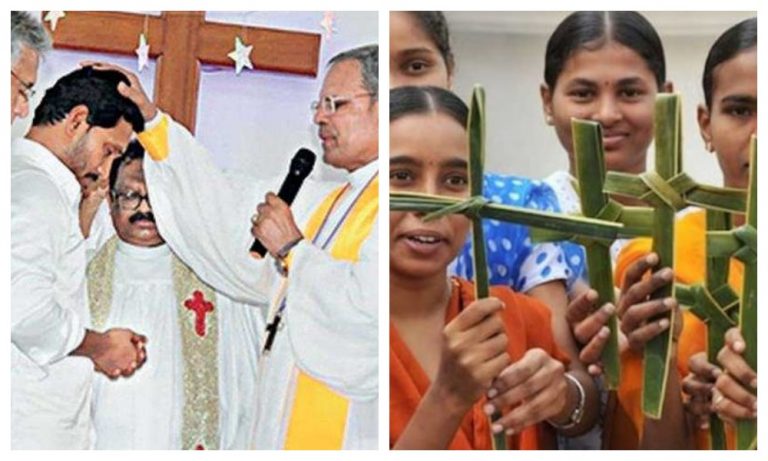
Jharkhand Chief Minister Hemant Soren paid his tributes to Naxal sympathiser, and Elgar Parishad-Bhima Koregaon violence accused Stanislaus Lourduswamy, popularly known as Stan Swamy, saying his alleged sacrifices and “invaluable contribution” to society will always be remembered.

According to the reports, Jharkhand CM Hemant Soren on Thursday attended a memorial service that was held to honour Stan Swamy, who was accused of conspiring with left-wing terrorists to create unrest in the entire country and to overpower the democratically elected government.

Paying his tributes, Hemant Soren compared the deceased Naxal sympathiser to tribal legend Birsa Munda to claim that Jharkhand never lagged behind when it comes to making sacrifices, whether it was Birsa Munda or Father Stan Swamy. The Jharkhand Chief Minister Hemant Soren said people like Stan Swamy would be remembered for their “invaluable contribution to society”.

The Jharkhand CM even shared the images from the memorial service from his Twitter handle, praising the deceased Naxal sympathiser and violence accused Lourduswamy with the famous poem of Ravindranath Tagore.

Stan Lourduswamy, commonly known as Stan Swamy, was an undertrial prisoner in the Elgar-Parishad Bhima Koregaon violence case and died last week at a Mumbai private hospital due to age-related illness. He was 84.

Stan Swamy, an Indian Roman Catholic Jesuit priest, had been involved in anarchic activities for quite some time. However, his anti-India activities came to the fore after his role in the Elgar Parishad in 2018 surfaced during the investigation.

According to the NIA, Stan Swamy was a key conspirator in the Bhima Koregaon Elgar Parishad case of 2018, which witnessed violence, stone-pelting, and arson at Shaniwar Wada in Pune.

Hemant Soren wants people to draw inspiration from Naxal sympathiser Lourduswamy

Hemant Soren also said that the next generation “will draw inspiration from” the life of Stan Swamy, who, according to him, always remained sensitive to the cause of the Dalits, the deprived and the tribal society.

“Had a personal meeting with Father Stan Swamy. It was not known then that he has been drawing an indelible mark in his lifetime… His life was not easy. And he was not an ordinary person either. During his lifespan, he showed a way to the people and impressions of work done by people of such stature never fades,” Hemant Soren claimed while addressing a memorial meeting at Namkum to pay respect to Swamy.

Arch Bishop of Ranchi Theodore Mascarenhas, Auxiliary Bishop Telosfer Billung and several others had attended the event to pay respects to the deceased far-left ‘activist’, accused of plotting against his own country. Strangely, Jharkhand Chief Minister Hemant Soren has chosen to honour a Maoist sympathiser despite the fact that the state has been one of the worst affected regions due to Left-wing extremism.

This is not the first time that Hemant Soren has been extremely vocal about his open support from Naxal sympathiser Stan Swamy.

Earlier, following the death of Stan Swamy, Hemant Soren had tweeted in support of Stan Swamy by claiming that the central government should be held accountable for the “absolute apathy” towards him.

“Shocked to learn about the demise of Father Stan Swamy. He dedicated his life to working for tribal rights. I had strongly opposed his arrest & incarceration. The Union government should be answerable for absolute apathy and non-provision of timely medical services, leading to his death,” Soren had tweeted, inviting a massive uproar on the social media platform.

2 million Indian users banned, 25% total accounts banned from India: Details of disclosures by Whatsapp in first compliance report under new IT rules

Popular social media app Whatsapp says it has banned 2 million accounts citing the unauthorised use of automated or bulk messaging and spamming users.

In its first transparency report, the messaging platform, published under the new Information Technology (Intermediary Guidelines and Digital Media Ethics Code) Rules, 2021, said it had banned 20,11,000 accounts in this one-month period to try and prevent harmful behaviour.

The Facebook-owned messaging platform identified Indian accounts with a +91 country code of the mobile number used to register. In its report, WhatsApp shared that the global average is about 8 million accounts banned per month, adding that India alone accounts for 25 per cent of all the accounts banned in the world.

The first edition of Whatsapp’s intermediary guidelines report published on Thursday highlighted the company’s focus on preventing accounts from sending harmful or unwanted messages at scale. More than 95% of the accounts are banned because of unauthorized use of automated or bulk messaging, the company said on Thursday. The compliance report will be published every 30-45 days from now on.

The company also revealed the mechanism it has put in place to improve users’ experience while preventing its platform from being used for abuse and harassment.

“The abuse detection operates at three stages of an account’s lifestyle, at registration, during messaging, and in response to negative feedback, which we receive in the form of user reports and blocks. A team of analysts augments these systems to evaluate edge cases and help improve our effectiveness over time,” Whatsapp said in its report.

“In addition to the behavioural signals from accounts, we rely on available unencrypted information including user reports, profile photos, and group photos and descriptions, besides deploying advanced AI tools and resources to detect and prevent abuse on our platform,” it further added.

As per Whatsapp, it received a total of 345 requests during the period, which includes 70 accounts for queries, 204 appeals for the ban, out of which it took action on 63, 20 for other support, 43 for product support, and 8 for “safety issues”.

The messaging platform also added that the number of banned accounts has increased remarkably since 2019, stating that their system is sophisticated in catching accounts that attempt to send bulk or automated messages.

However, the platform did not disclose how many information requests it received from the government. It is worth noting that Whatsapp is fighting a case against the Indian government over the traceability clause in the new IT rules, which requires the platform to trace the first originator of a message within the country.

The report by Whatsapp came after the Indian government enforced new IT rules that mandated significant social media intermediaries, defined as any intermediary with more than 5 million users in India, to publish monthly compliance reports in compliance with the laws.

Assam govt cracks down on criminals, 15 killed in encounters so far: CM says ‘full operational liberty’ to police as long as they are within the law

The Assam government has intensified the crackdown on hardened criminals and terrorists in the state soon after the new government took charge and Himanta Biswa Saram assumed power.

As per reports, about 23 such criminals have been shot in various encounters and conflicts since May 10. They were accused of rape, murder, dacoity, drug peddling, and cattle smuggling. The Assam police had so far neutralised 5 criminals, besides killing 10 terrorists during encounters. Although the Opposition and Assam Human Rights Commission (AHRC) has cried foul over these encounters, the Assam government has provided the police force with ‘full operational liberty’ as long as their actions are within the law.

Himanta Biswa Sarma minces no words

On Thursday (July 15), Himanta Biswa Sarma clarified, “As a leader of the House, I thank and congratulate the Assam police for its work as whole and especially in my tenure. I want to tell the DGP that do not torture innocent people. You have full operational liberty as long as you fight against the criminals as per the law. As the chief minister of the state and with full sense of responsibility, I want to say that we have zero tolerance towards cow smuggling, drug trade, human trafficking, crime against women and children, and all crimes will be dealt with heavily and firmly irrespective of religion and caste.”

He informed the State Assembly that 504 people had been arrested for cattle smuggling in the past 2 months and only four people sustained injuries during police encounters. Himanta Biswa Sarma further told that while sympathy was important, misplaced sympathies for criminals could be dangerous. The Assam government had also launched a ‘War on Drugs’ and arrested 1897 people in this regard in the past 2 months. About 15 people had been arrested under provisions meant for habitual drug offenders that allow for detention without trial.

Earlier on July 5, Himanta Biswa Sarma directed the police chiefs of all stations in Assam to register a charge sheet within 6 months of lodging an FIR in cases of rape, murder, smuggling, and assault. He added, “Today, some people told me that multiple police shooting incidents have taken place in the last few days and if it is becoming a pattern to deal with criminals. I told them, yes. This should be the policing pattern from now on. If a rapist runs away, tries to snatch arms from the cops, they will have to fire, but not on the chest. The law says you can shoot at the legs. We want to transform the Assam Police into one of the best policing organisations in the country.”

Change in stance of Assam govt under Himanta Biswa Sarma

As per a report in India Today, Assam has witnessed one police encounter on every alternate day, ever since Himanta Biswa Sarma became the CM of the State. During these encounters, about 1300 people were arrested while several others were injured/killed. The change in the stance of the Assam government is reflected in the data under the administration of Sarbananda Sonowal. In just 2 months since May 2021, about 15 criminals have been neutralised so far. However, under the Sonowal administration in 2016, only 16 people were killed in the entire year.

India today has even quoted an anonymous police officer who informed that encounters were commonplace even during the Sonowal administration. “If you look at the year 2016 or 2017, some police firing, encounter incidents did occur. However, the operations were mostly conducted by the Assam Police against extremists. Back then, dealing with extremists was our top priority. Many extremists were killed and many injured in police operations. Some police firings also took place against criminals, but such instances were few,” he added.

Opposition, AHCR criticise govt move

The Opposition parties in Assam have criticised the Himanta-Biswa Sarma government for following the Yogi Adityanath model in UP and trying to merge the executive and judicial systems. AIUDF MLA Rafiqul Islam claimed that it was wrong for the cops to exercise ‘judicial power’ and kill people without determining their guilt in the case. He warned Himanta Biswa Sharma to ‘not follow Yogi ji’ or run the risk of sinking his own boat. “If illegal encounters are happening in Assam and some police personnel are acting under the chief minister’s instructions, then the Indian law will take action against them today or tomorrow, ” he claimed.

The Opposition has accused the BJP dispensation of high-handedness while Assam Human Rights Commission (AHRC) has asked the state government to initiate an inquiry into the police encounters.

Uttar Pradesh Govt’s ‘zero-tolerance policy’ showing positive results in the last 4 years

CM Yogi Adityanath of Uttar Pradesh has been the pioneer in a zero-tolerance policy towards crime and criminals. And it has given positive results to the state in the past four years. In March 2021, while hitting back at opposition parties over charges of a “deteriorating” law and order situation in Uttar Pradesh, Yogi Adityanath had revealed: “The result of the zero-tolerance policy has been that when compared to the figures of 2016-2017, there has been a fall of 65.72 % in cases of dacoity; 66.15 % in loot; 19.80 % in murder and 45.43 % in rape in UP,” he said at a press conference on the completion of four years of his government.

“While earlier no one wanted to come to the state because of a sense of insecurity, there is no fear now. Our government has also taken strict action against professional criminals, mafia elements, and others harming peace, and this has also set a norm in the country,” he said, adding: “To the government, a criminal is a criminal and it is also said that he does not belong to any caste or community.