Home Blog Page 4941

Saharanpur Riots: Former Social Welfare Principal Secretary and District Magistrate booked under sedition charges for violating provisions of SC/ST Act

0

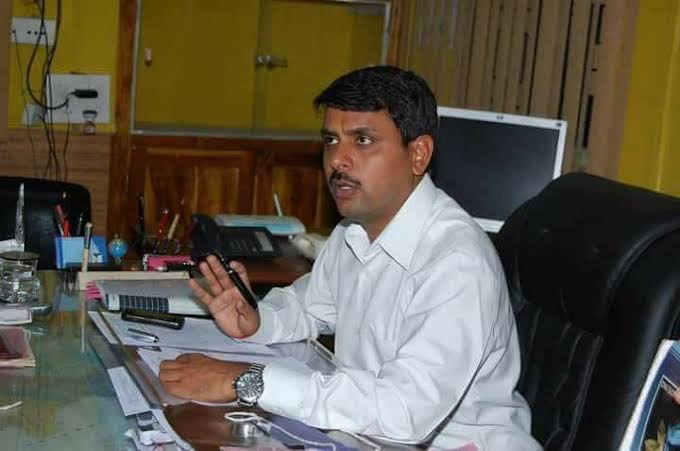
In a case pertaining to caste violence that had erupted in Saharanpur town of Uttar Pradesh in 2017, an SC-ST special court has booked the then District Magistrate Alok Pandey and Principal Secretary in the Social Welfare department Manoj Kumar under sedition charges for not granting the benefits to the SC victims in accordance with the provisions of the SC-ST Act, says a report published in Jagran.

Advocate Rajkumar argued that Dal Singh, a resident of Shabbirpur, had filed an application in the SC-ST Special Court that he was the victim of the caste riots. A case had been registered in this regard at the Budgaon police station.

Sedition charges framed against former DM and Principal Secretary of Social Welfare Department

Special Judge SC-ST Act VK Lal observed a clear contempt of Section-4 of the SC/ST Act and he framed sedition charges against the accused.

As per the court, three then District Magistrate Alok Kumar Pandey and Principal Secretary Social Welfare Manoj Kumar violated the legislation passed by the Parliament and issued by the President. It noted that a crime was perpetrated with a deliberate intent to harm the scheduled castes. The court has registered a case against both of them and has fixed the next date for hearing as November 19.

Benefits granted to victims not in accordance with the provisions of the SC/ST Act

A compensation of Rs 3 lakh was granted to the victim by the District Social Welfare Department but under the sections in which the case was filed, the provisions of the SC-ST Act mandated a compensation of Rs 8.25 lakh, along with dearness allowance and a monthly pension of Rs 5000. 

Besides, the provision under the SC-ST Act also guaranteed free education in government funded institutions and resident schools to the victim’s children until graduation. The current DM had written a letter to Principal Secretary Social Welfare on 17 June 2020 regarding pension and other facilities and sought guidance in this regard. But till date no reply has been received to this letter.

Marathi channel Loksatta censured by Press Council of India for publishing a fake story about the Statue of Unity

Two years after a leading Marathi daily of the Indian Express group, Loksatta, published fake news about the Statue of Unity, the Press Council of India (PCI), the self-regulatory watchdog of the press, has found the newspaper guilty of malice. In an order dated on September 30, the PCI accepted the report of the Inquiry Committee, which was constituted to examine the complaint, and has decided to censure the paper.

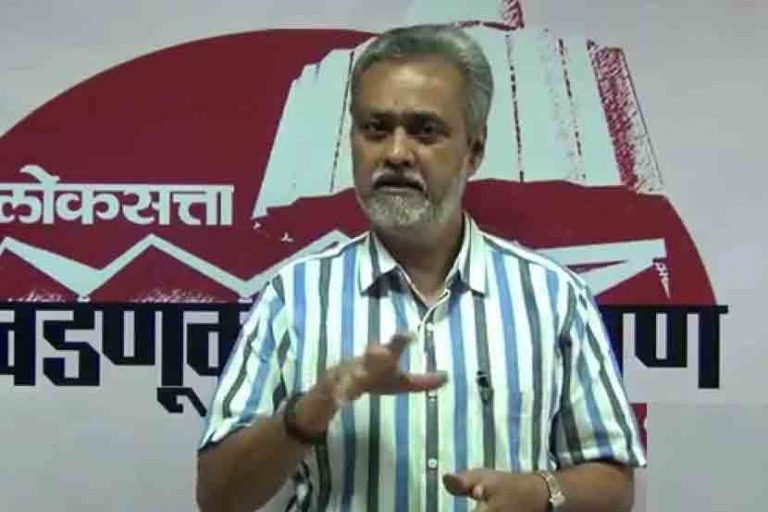
Activist Sadanand Ghodgerikar had filed a complaint against Loksatta and its Editor-in-Chief Girish Kuber for publishing a fake editorial dated November 3, 2018, about the Statue of Unity. The matter eventually came up before the Inquiry Committee of the Press Council of India on February 25 this year. While complainant Ghodgerikar appeared in person, the respondent Loksatta was represented by Abhijeet Negi and Mahesh.

Loksatta claimed massive contribution by PSUs for Statue of Unity

In the contentious editorial on November 3, 2018 in Loksatta by Editor-in-Chief Girish Kuber, he alleged that several Public Sector Undertakings (PSUs) had contributed ‘immensely’ for the construction of the Statue of Unity. The basis of his claims was supposedly a Comptroller and Auditor General (CAG) report from August 2018.

The editorial claimed, “Indian Oil, Oil & Natural Gas Commission, Bharat Petroleum, Hindustan Petroleum, Oil India, Gas Authority of India, Power Grid, Gujarat Mineral Development Corporation, Engineer India, Petronet India and Balmer Lawrie has contributed a sum of Rs. 900 crore, Rs. 450 crore, Rs. 450 Crore, Rs. 250 Crore, Rs. 250 Crore, Rs. 250 Crore, Rs. 125 Crore, Rs. 100 Crore, Rs. 50 Crore, Rs. 50 Crore and Rs. 6 Crore respectively for the construction of Statue of Unity of Sardar Patel.”

No money should have been spent by PSUs, Loksatta alleged

Later, in a rejoinder to the Inquiry Committee, Loksatta presented a purported extract of the same CAG report and alleged that not a ‘single rupee’ ought to have been provided by the PSUs for the construction of the Sardar Patel statue. “Contribution towards this project (Sardar Patel Statue) did not qualify as CSR (Corporate Social Responsibility) activity as per Schedule VII of the Companies Act, 2013, as it was not a heritage asset,” Loksatta claimed, citing the CAG report.

In its defence, the Marathi daily stated that the figures presented in the editorial were ‘not disputed’ by any of the PSUs and that no objections were raised even by the Government of India. It further claimed that the complainant Sadanand Ghodgerikar had ‘no personal knowledge’ about the funds contributed by the PSUs and that he has no locus standi in the matter. Loksatta also reiterated that the editorial was published in ‘good faith’ and ‘public interest’ without ‘malice.’

Complainant rubbishes exaggerated claims of Loksatta

The complainant had rubbished the claims of the Marathi daily as ‘false’ and ‘concocted’. He disputed the figures published in the editorial and pointed out that the said CAG report was also presented in the Parliament. Sadanand Ghodgerikar emphasised that the contribution of the PSUs were far lesser than what was alleged by Loksatta in its editorial. “Indian oil, Oil & Natural Gas Commission, Bharat Petroleum Hindustan Petroleum had contributed only Rs. 21.83 crore, Rs. 50 crore, Rs.25 crore and Rs.25 Crore respectively, ” the complainant reiterated.

Findings of the Inquiry Committee reveal factual incorrectness of the editorial

The Inquiry Committee of the Press Council of India noted that despite several requests to Loksatta to produce material, other than the CAG report, which they took into consideration before publishing the editorial, the Marathi daily had turned down the request citing confidentiality of sources.

While the Committee upheld the decision to not reveal the name of its sources, it emphasised, “The respondent cannot refuse to place the material, which has formed the basis of the story, particularly when the respondent newspaper in the story itself has disclosed the source and that is the report of the CAG.” The Inquiry Committee found that the claims made in the Loksatta editorial are ‘absolutely incorrect’ and ‘figment of imagination by the newspaper’. It emphasised, “The conduct of the respondent newspaper in publishing such a story and referring to the report of the Comptroller and Auditor General of India to give the story credence aggravates the misconduct.”

When Loksatta claimed that the editorial was based on external sources, the Inquiry Committee dismissed it by saying, “This submission of the counsel has only been noted to be rejected. The story itself had disclosed the source and hence this submission of the learned counsel that the newspaper relied on some other source is really beyond the comprehension of the Inquiry Committee.” It further reprimanded the newspaper and forwarded a copy of the report to the Mumbai Police Commissioner and the Director of Information and Public Relation of the Maharashtra government for legal action.

“The Press Council on consideration of records of the case and report of the Inquiry Committee accepts reasons findings and adopts the report of the Committee and decides to censure the respondent newspaper (Loksatta) with above-recommended directions”, the order read.

Press Council scolds Loksatta over fake claims about RSS Chief

This is not the first time when Loksatta drew the ire of the Press Council of India. Last year, the PCI had slammed the media group for spreading fake news after it had published a hit job article written by journalist Karan Thapar, one of the oldest members of the Congress-backed Lutyens media, against RSS chief Mohan Bhagwat by attributing fake quotes to him. Along with Karan Thapar, the editor of the Loksatta Girish Kuber wrote an editorial containing a fake quote of the RSS chief.

In the article, Girish Kuber had written that Mohan Bhagwat had said that, “The Vedas order the killing of the sinner who kills a cow,” in reaction to the death of Mohammad Akhlaq, who was allegedly killed on suspicion of consumption and storing beef. Loksatta later issued an apology, albeit in small fonts. In another article titled “Has the RSS ground shifted?” in Indian Express, Karan Thapar wrote, “In fact, Bhagwat himself is not averse to making inflammatory statements. In 2015, when Mohammad Akhlaq was lynched on suspicion of consumption and storing beef, he’s reported to have said: “the Vedas order the killing of the sinner who kills a cow.”

However, In reality, there is no reference of any such statements made by RSS chief Bhagwat. In fact, RSS chief had strongly condemned the violence and mob lynching.

Loksatta editor Girish Kuber found guilty of plagiarism

Earlier in May, netizens promptly called out Loksatta editor Girish Kuber for a highly plagiarised article. Several social media users pointed out how Mr Kuber blatantly lifted the entire article from a blog run by one Andrew Lilico, a PhD expert in economic modelling and policy impact simulations, and reproduced it in the Marathi language for vernacular consumption, without providing any credits to the source from where he shamelessly copied the article.

The blog titled as “A sense of proportion“, shares a perspective on how the approach embraced by the UK government in bringing down the mortality rate of the country in 2019 by instituting strict and exacting restrictions involved an apathetic indifference towards the relative importance of human happiness and flourishing that is being sacrificed in the country’s battle against the coronavirus.

This pithy observation about how human thinking is shaped by a pandemic was brazenly duplicated by Loksatta editor in his Op-ed titled ‘Covidscope‘, thinking his treachery of replicating a blogpost in the Marathi language will not be called out. Mr Kuber provided no provenance of the article in his Op-ed, misleading readers to believe that it was his wisdom and insight and not that of a foreign PhD expert.


Ex-wife of actor Nawazuddin Siddiqui repeats allegations against actor and his family in molestation case against brother to POCSO court

0

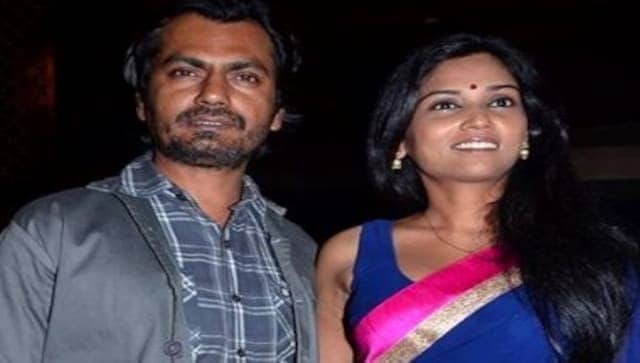
The estranged wife of actor Nawazuddin Siddiqui, Aliya (formerly known as Anjana Kishore Pandey) has appeared before the Protection of Children from Sexual Offences (POCSO) court and recorded her statement under section 164 of the CrPC on her complaint against her former husband and his four family members in relation to a 2012 molestation case involving his brother. A circle officer Girija Shankar Tripathi privy to the case informed the media that while recording her statement in front of the magistrate, Aliya reiterated the molestation charges against her former husband’s brother.

According to the NewIndianExpress report, though the actor was unavailable for comments, Nawazuddin’s brother said that Aliya was blackmailing them to extort money from the actor.

Ex-wife of Nawazuddin Siddiqui files a complaint against the actor and his family

Prior to this, on September 15, the actor’s wife had recorded her statement under section 161 of the CrPC with SHO Kushalpal Singh in Budhana police station in Muzaffarnagar, Uttar Pradesh and then too she had stuck to the same allegations against her ex-husband and his family.

Aaliya had filed a complaint with the Mumbai police on July 27 on the basis of which an FIR was registered by the Mumbai police. The FIR was later forwarded to the Budhana police station in Uttar Pradesh because the jurisdiction of the alleged offence was there.

Aaliya, in her statement, alleged that she had informed her in-laws about the incident of molestation but she was asked to keep quiet. In the month of May, she had sent a legal notice to Siddiqui through WhatsApp seeking divorce and maintenance. She has two children with the actor. Aaliya had said that there are several serious issues between them. She had also said that some of the issues related to Nawazuddin Siddiqui’s brother Shamas.

Earlier in an interview, Aliya had accused Siddiqui of infidelity. She had stated that the actor had relationships with multiple women and had brought women over when she was in the hospital for delivery.

Controversy over Soyeb Aftab ranking first in NEET even though Akanksha Singh scored same marks: Here are the tie-breaking rules of NEET

0

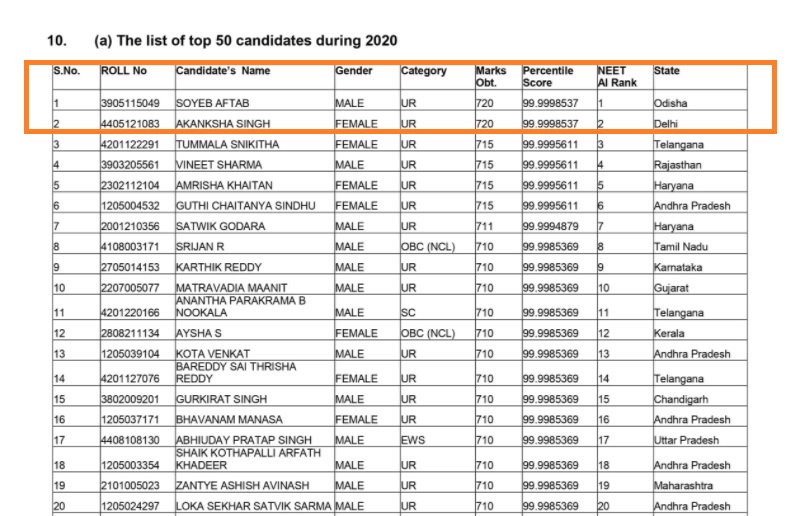
A controversy has erupted over the issue of National Testing Agency (NTA), the premier agency that conducts entrance examinations for higher educational institutions, awarding higher rank to a candidate from Odisha and downranking another girl from Delhi to the second position despite both of them securing a perfect score in the result of 2020 NEET examination.

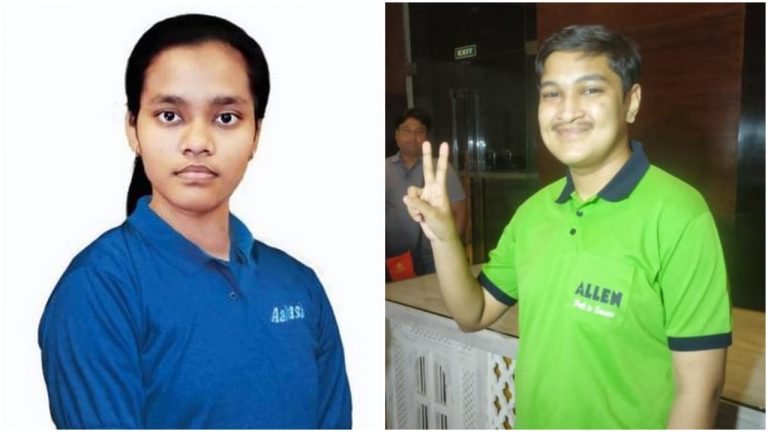
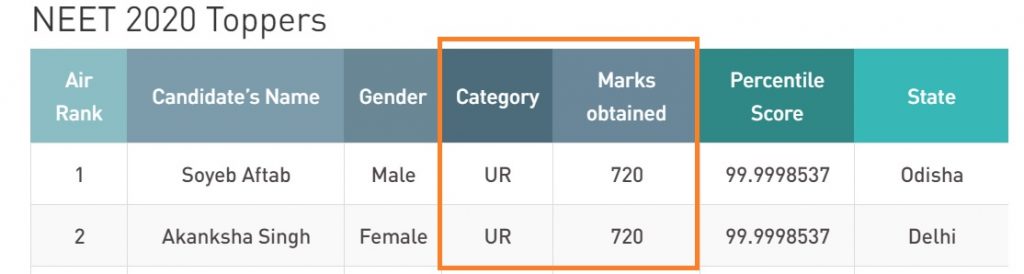
In a first, two candidates have scored full marks in medical entrance exam NEET. In the results which were declared on Friday night, Odisha’s Soyeb Aftab and Akanksha Singh from Delhi have secured 720 out of 720 marks.

NEET-2020 rank list

However, the NTA awarded the first rank to Aftab while Akanksha Singh was given the second rank, which has now led to a massive debate on the social media platforms questioning the rationale behind such decision. Interestingly, both the candidates are from the unreserved category and have scored identical marks in all the four subjects.

Image Source: Collegedunia

NTA has a tie-breaking policy

The National Testing Agency has developed a tie-breaker policy which will be applicable during such a tie-breaking situation. This policy has been designed to shortlist and rank applicants based on their performance and basic eligibility.

Clarifying on the issue, a senior official of the NTA explained, as per NTA’s tie-breaking rules, when two candidates secure the same marks, their ranks are determined based on their scores obtained in Biology and Chemistry.

In cases where the rankings for the candidates cannot be assigned using the relative scores obtained in the examination, the candidates are further shortlisted taking into consideration the number of answers that are incorrect.

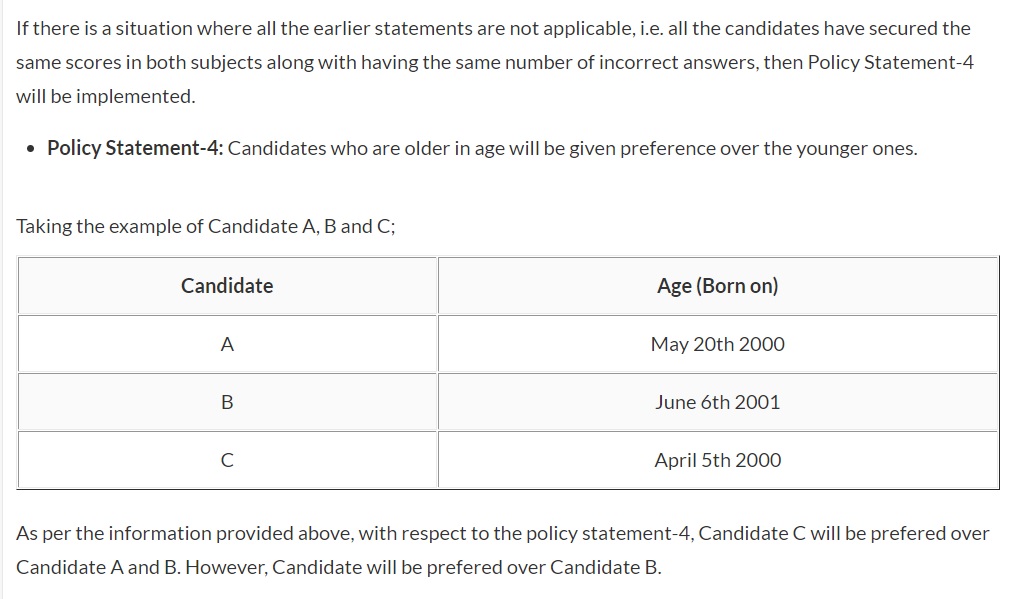
As Aftab and Akanksha have scored a perfect score in the NEET exam, the question of comparison of their marks does not arise. In such cases, the NTA chooses the criteria of difference in the age between candidates to assign ranks to them. Candidates who are older in age will be given preference over the younger ones.

Here is a NTa rule that explains how age criteria is considered to allot ranks for the candidates in the NEET exam.

Age-category under NEET’s tie-breaker rules in case marks category fails to assign ranks/ Image Source: Collegedekho

Hence, in this case, reportedly it is because of the age criterion that 18-year-old Soyeb Aftab has been ranked at first position as he is slightly older than Akanksha Singh after the NEET 2020 result was declared.

This year NEET exam was conducted on September 13 amidst strict precautions in view of the coronavirus pandemic. More than 15.97 lakh students had registered for the entrance test. A total of 7,71,500 students had qualified for the test.

Over 15.9 lakh candidates had registered for the highly competitive entrance exam, to secure admissions to medical colleges, and over 13.6 lakh had appeared for the exam. A majority of the candidates, over 8.8 lakh, was women.

Among the candidates who qualified, 3.59 lakh belonged to the Other Backward Classes (OBCs), 98,809 to Scheduled Castes (SCs), 33,848 to Scheduled Tribes (STs), and 2.21 lakh to the unreserved category. From the Economically Weaker Sections (EWS), 57,444 cleared the NEET, as did 2,137 persons with disabilities (PwD).

The entrance exam was conducted in 11 Indian languages including English. Of the total number of students, 79.08 per cent had taken up the entrance test in English, while 12.80 per cent took in Hindi.

Global Hunger Index Rank 2020: India improves from rank 102 in 2019 to 94 in 2020: Read details

The Global Hunger Index report for the year 2020 has been released and India has shown remarkable improvement in the Index. While in 2019, India ranked 102nd out of the 117 nations analysed, in 2020, India has ranked 94th out of the 107 nations that were analysed in the report.

The Global Hunger Index is a peer-reviewed annual report, jointly published by Concern Worldwide and Welthungerhilfe, designed to comprehensively measure and track hunger at the global, regional, and country levels.

The level of hunger in India is still considered ‘serious’ according to the report published, however, India seems to have made sufficient strides in the past year.

India has also made strides and improved its GHI score (Global Hunger Index Score).

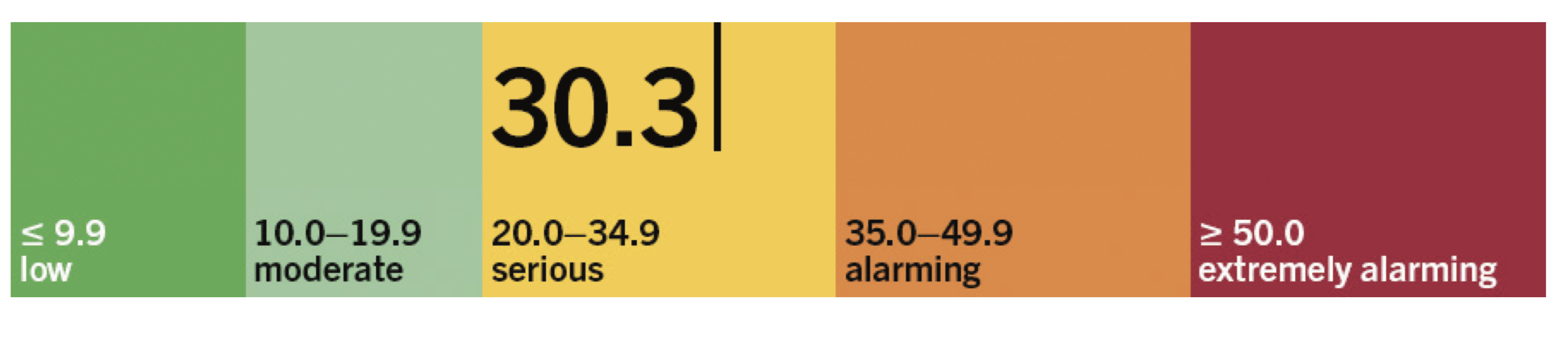
While in 2019, India’s GHI score was 30.3, in 2020, India has improved its score to 27.2.

GHI score in 2019

In the year 2020, however, the GHI score has improved to 27.2.

GHI score in 2020

It is pertinent to note here that the scale that signifies what score would be considered ‘serious’ is the same in both the years. Both scales say that a score between 20.0 to 34.9 would put the country under the ‘serious’ category and hence, the improvement in the score is comparable.

While India has shown improvement over the years, according to the report, 14 per cent of India’s population is still undernourished. It also says that the country recorded a child stunting rate of 37.4 per cent. Stunted children are those who have a “low height for their age, reflecting chronic undernutrition”.

The GHI scores are calculated each year to assess progress and setbacks in combating hunger. It is calculated on the basis of four indicators — undernourishment, child wasting, the share of children under the age of five who are wasted (that is, who have low weight for their height, reflecting acute undernutrition); child stunting, children under the age of five who have low height for their age, reflecting chronic undernutrition; and child mortality, the mortality rate of children under the age of five.

The Global Hunger Index has been an affair that sparks much outrage in India every year, fuelled by motivated media headlines and political shenanigans. In the year 2019, Congress had claimed that Prime Minister Modi had led India to ruins since when the Congress party was in power, India was in the ‘moderate’ category in Global Hunger Index while it is only after 2014 that India has featured in the ‘serious’ category.

This assertion, however, was completely baseless. The Global Hunger Index clearly states that the GHI scores can be compared with other countries in a year, but they can’t be compared with other years. The GHI website says that “the current and historical data on which the GHI scores are based are continually being revised and improved by the United Nations agencies that compile them, and each year’s GHI report reflects these changes. Comparing scores between reports may create the impression that hunger has changed positively or negatively in a specific country from year to year, whereas in some cases the change may be partly or fully a reflection of a data revision.”

In 2014, the scale of the Hunger Index was completely different and in 2020, the scale is different. For example, in 2014, the scale 10.0 to 19.9 was considered ‘serious’ and in 2020, the scale 20.0 to 34.9 is considered serious. In 2014, India got a score of 17.8 while in 2020, India has got a score of 27.2. For the motivated media and politicians, this would imply that India has slipped in its score, however, that would be far from the truth since the scale itself has changed over the years. Both years, 2014 and 2020, India was in the ‘serious’ category and thus, even Global Hunger Index says that year on year comparison of the index does not provide an accurate picture.

However, while comparing the scores of GHI from 2019 to 2020, one realises that the scale is exactly the same and hence, one can safely say that India has indeed improved from a score of 30.3 to a score of 27.2 in one year.

West Bengal: Protests erupt demanding CBI inquiry as BJP leader dies in custody, family says he was picked up by police ‘without any explanation’

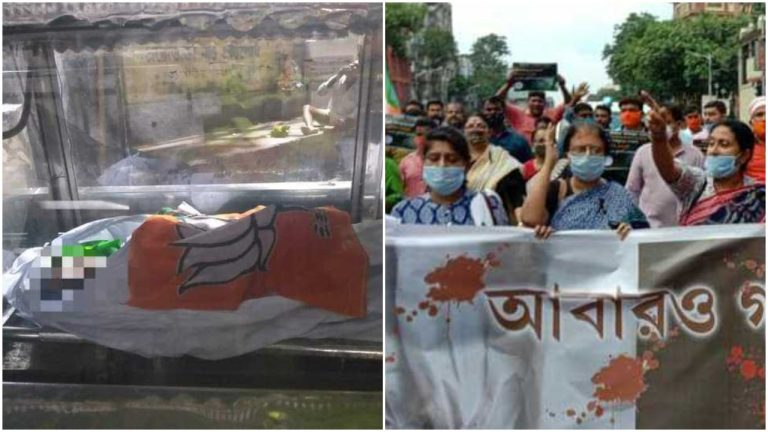
A BJP leader from West Bengal’s East Medinipur district has been suspiciously found dead during his police custody on Thursday. According to the reports, the 52-year-old Madan Ghorai, who was the vice-president of Pataspur BJP unit, has allegedly died during his police custody in East Midnapore district, West Bengal. The West Bengal police had picked up Ghorai on September 26 in connection with an alleged kidnapping case.

The death of the BJP leader has now stoked massive protests in the state with the party demanding a CBI probe into the suspicious death of their party worker. Meanwhile, the family of the deceased has demanded a fresh autopsy to ascertain the nature of the death of Madan Ghorai.

West Bengal police picked up BJP leader Ghorai without any explaination, family alleges

The family of the BJP leader has alleged that Madan Ghorai was picked up by the Pataspur police a few days back without any explanation. The family said that they had no information about his whereabouts. Later, they were informed that Madan Ghorai died in police custody.

Swapan, the brother of the deceased alleged that police killed his brother in the custody. Demanding stern action against the accused policemen, the brother accused the police of killing Madan Ghorai on the instructions of TMC leaders. “We want justice from the Calcutta High Court,” said Swapan as he broke down.

Alpana, the wife of the deceased said that Patashpur police picked her husband and “beat him mercilessly” in custody before producing him in court the day after.

Meanwhile, the West Bengal police said that the the BJP leader was not in the police custody, but was in judicial custody.

“Madan Ghorai was arrested on September 26. He was produced before the court the next day and was sent to judicial custody at the Contai Correctional Home. On October 9, the Patashpur police station had said that Ghorai was not keeping well and is being transferred to a prison in Kolkata for better treatment,” said a senior police officer.

Calcutta HC orders fresh autopsy of BJP leader’s body

A day after his death, the Calcutta High Court on Friday ordered a fresh post mortem of the body. The High Court order came after the BJP had filed a plea suspecting a foul play behind Madan Ghorai’s death in ‘police custody’.

The division bench of Justice Rajasekhar Mantha at the Calcutta High Court issued directives to carry out fresh autopsy at RG Kar Medical College and Hospital and instructed that it should be video-graphed.

BJP leaders stage-in protest, demands CBI enquiry

However, the BJP leaders in the state have refused to believe the theory put out by West Bengal police and have demanded a CBI probe into the death. Ghorai’s body was also brought to the BJP state headquarters in Kolkata, where party leaders paid their tributes.

The BJP, led by MP and the party’s state general secretary Locket Chatterjee, also staged a protested against the Mamata Banerjee-led government on Friday at the Central Avenue in Kolkata after its members were stopped by the police from conducting a protest march with Ghorai’s body.

Demanding a CBI inquiry, BJP MP Locket Chatterjee said, “Every day the West Bengal police is killing our workers by slapping false cases. We lost another worker and we demand a CBI inquiry into the matter. To save themselves and to suppress the facts, the police are now claiming that he was having some health issues and died due to ailments. This is not true.”

Political violence against BJP continue to rise in West Bengal

The political violence against the BJP workers in the Mamata Banerjee-led West Bengal continues to rise as this the fifth incident of death of a BJP member in Bengal in the last few months.

On July 13, 2020, BJP MLA Debendra Nath Roy from Bengal’s North Dinajpur district was found hanging near his house in a closed tea shop in the village of Rajiganj. State BJP president Dilip Ghosh had claimed that he was murdered for political reasons and demanded a high-level inquiry into the matter.

In another incident in June, a BJP worker was found hanging from a tree near his house in Bengal’s East Midnapore district. The BJP leaders had alleged that he was killed by the TMC workers after he had refused to join them. The BJP leader Purnachandra Das was a booth president of BJP in the Ramnagar area of the south Bengal district.

Recently, a BJP worker named Rabin Paul was lynched to death in the Pathar Ghata village in Kalna in West Bengal. During the incident, he was first beaten mercilessly by the TMC supporters and then taken to another place in the village where Paul was thrashed by the TMC Deputy Chief. 

On September 13, the body of a BJP worker named Ganesh Roy was found hanging on a tree in Goghat in Hoogly district of the State. Roy was well-known in the area as an active BJP worker. His son has alleged that Roy was murdered by the party workers of the Trinamool Congress. He claimed that they hung his body on the tree after killing him.

Later on October 5, BJP’s former councillor Manish Shukla was gunned down in Titagarh in North 24-Parganas. Manish Shukla was hit by several bullets fired by the attackers who were wearing helmets. A few days later, the West Bengal police had arrested a ‘TMC activist’ for harbouring killers of BJP leader Manish Shukla and had recovered bikes, carbines and pistols.

Rahul Gandhi denied permission to virtually inaugurate school in Wayanad by Kerala administration

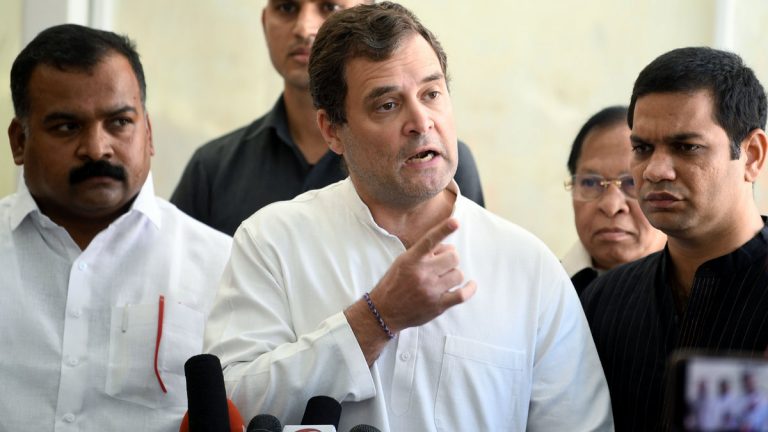
The Left-ruled Kerala government has denied permission to Congress scion Rahul Gandhi to attend the online inauguration of a school building in his constituency in Wayanad. Reportedly, Rahul Gandhi was scheduled to take part virtually in the inauguration ceremony of Wayanad school building on Wednesday (October 15) at 10:15 am.

Congress cries foul over ‘event cancellation’

The ceremony, hosted by the school Parents Teachers Association of the State government-run Munderi School in Wayanad, had to be called off for not seeking prior permission from the State Education Minister and the district administration. As per reports, the school building was built at a cost of ₹1.2 crores, with 70% Central allocated funds.

While speaking on the development, Congress Committee President (Wayanad) IC Balakrishnan dubbed the move by the Left-run district administration as ‘politically motivated’. He added that the local Congress unit had no option but to cancel the event.

District collector issues stop memo, asks Rahul Gandhi to reschedule programme

However, CPI (M) leader and Kalpetta MLA CK Saseendran claimed that the school building was a joint initiative of the Central and State government, with the latter holding 40% of the stake. He emphasised that approval of the State government was necessary before inviting Congress scion for the virtual inauguration.

Denying charges of cancellation, he added, “This programme has not been called off but has been asked to be rescheduled. My name was mentioned in the programme by the organisers. “The district collector has issued a stop memo for the programme since it has no prior approval as per the direction of the state government. ”

Teacher beheaded amidst chants of ‘Allahu Akbar’ in Paris, gunned down terrorist had posted pictures of severed head on SM: Here are full details

In a barbaric attack, a high-school teacher was beheaded by an Islamic terrorist in the French capital Paris for allegedly shown caricatures of the Prophet of Islam to his students. The Paris beheading comes as a grim reminder of the Charlie Hebdo massacre where Islamic terrorists had gunned down 12 people in their officers for publishing the caricature.

According to the reports, a Muslim youth stabbed a 47-year-old teacher in his throat while shouting “Allahu Akbar”. The attacks occurred at the suburb of Conflans-Saint-Honorine, northwest of Paris on Friday. The terrorist is identified as an 18-year-old Muslim youth, allegedly belonging to Chechnya, Russia.

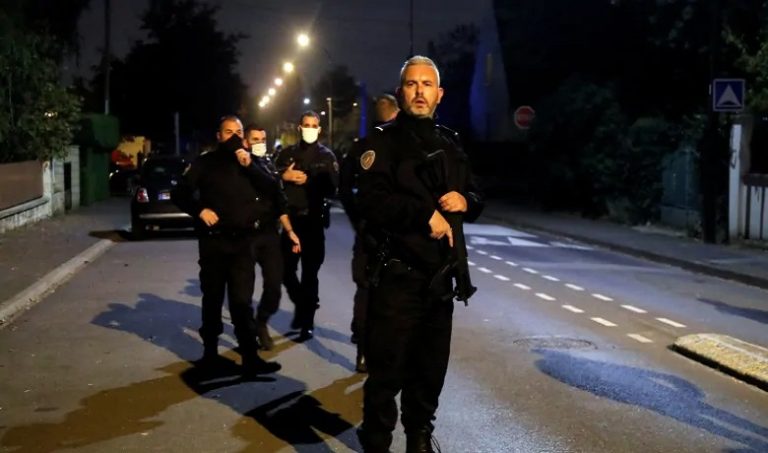
The French police arrived near the school after the Muslim youth was suspiciously found loitering near the victim’s school. The police found the dead body of the victim near the school. They chased the terrorist and shot him dead after he threatened the officers with a weapon. The officer sealed the area on the suspicion that the attacker had carried a suicide vest.

Shockingly, the attacker had also taken to social media to post the images of the victim’s severed head. The images which were uploaded on Twitter were soon removed by the authorities.

Meanwhile, the anti-terror prosecutors in France said they were treating the act as an “assassination in connection with a terrorist organisation”.

The victim was a history-geography professor, who had shown his students cartoons of the Prophet of Islam from Charlie Hebdo during a class debate on freedom of expression. This had sparked complaints from a number of parents and one of them had lodged a complaint against the teacher.

Teacher was a victim of Islamic terror attack, says President Macron

French President Emmanuel Macron called the incident as an “Islamist terror attack” and urged the nation to unite. He said the victim was murdered because he was a teacher and taught freedom of expression.

French President Emmanuel Macron visited the school said, “One of our compatriots was assassinated today because he taught. He taught his students about freedom of expression, freedom to believe or not believe. It was a cowardly attack. He was the victim of a terrorist Islamist attack,” Macron said.

Education Minister Jean-Michel Blanquer that Friday’s attack was against the Republic as it was one despicable assassination of one of its servants. “I think tonight of him, of his family. Our unity and steadfastness are the only answers to the monstrosity of Islamist terrorism,” he added.

Paris beheading a grim reminder of Charlie Hebdo massacre

The Friday’s attack comes amidst the ongoing trial against the terrorists responsible for the January 2015 attack on Charlie Hebdo. In January 2015, Islamist terrorists had gunned down 12 people in and around the Charlie Hebdo offices for publishing caricatures of Prophet Muhammad.

Charlie Hebdo, a satirical newspaper, had published cartoons that depicted Muhammad, which is strictly prohibited in Islam. Offended by Charlie Hebdo’s actions, two Islamic terrorists had attacked the office of Hebdo in 2015 and had killed 12 people. The terrorists had stated that the attack was an act of revenge for depicting the Prophet Muhammad.

Just last month, Charlie Hebdo had commemorated the beginning of the trial by publishing new cartoons of Muhammad.

However, weeks later, four people were stabbed outside the former offices of Charlie Hebdo in Paris. The officers had said that the assault was another attempt to attack the newspaper’s journalists.

Union govt announces level playing field for digital media including PIB accreditation and other benefits, issues clarification on FDI policy in the sector

Signifying the growing importance of digital media, the union govt has made certain changes to the govt media policy, extending some of the facilities to digital media which are currently limited to only print and electronic media.

The govt on Friday announced that the Ministry of Information and Broadcasting is considering PIB accreditation for reporters, cameramen, videographers of digital media outlets. This will enable such media-persons to obtain first-hand information and access, including participation in official press conferences and such other interactions with the govt.

After obtaining PIB accreditation, digital media personnel will also be able to avail the benefits of Central Govt Health Scheme and concessional rail fare according to existing procedures.

Digital media houses will also be eligible for digital advertisements through Bureau of Outreach and Communication, opening a new avenue for revenue, which are currently dependent on private sector advertising and subscription revenue.

The statement issued by Ministry of Information and Broadcasting also said that similar to self-regulating bodies in print in electronic media, entities in digital media can form self-regulating bodies for furthering their interests and interaction with the Government.

The PIB statement added that these decisions have been taken in pursuant to the decision of the Central Government allowing 26% FDI under Government approval route on ‘Uploading/Streaming of Current Affairs and News through Digital Media’.

In August last year, the central govt had announced 26% foreign direct investment (FDI) in digital media sector through the government approval route. 26% FDI in print media and 49% FDI in broadcasting media was already allowed.

In this context, today the Department for Promotion of Industry and Internal Trade (DPIIT) also released a clarification on the issue of foreign direct investment (FDI) in the sector. DPIIT said that the digital media entities will have to align FDI to 26 percent within one year of clarification. The statement said that majority of the board of directors and chief executive officer (CEO) of digital media companies with FDI will have to be Indian citizens and the firms will have to get security nod for all foreign personnel working with them.

“Security nod must for foreign personnel deployed for more than 60 days in India if security nod for any foreign personal gets denied, the employee has to resign/employment terminated,” the statement issued by DPIIT said.

The FDI norms for digital media will be applicable to Indian entities uploading/streaming news and current affairs content on websites, apps or other online platforms, news agencies which supply news to digital media entities and/or news aggregators, and to news aggregators which aggregate content from various sources in one location, using software / web applications.

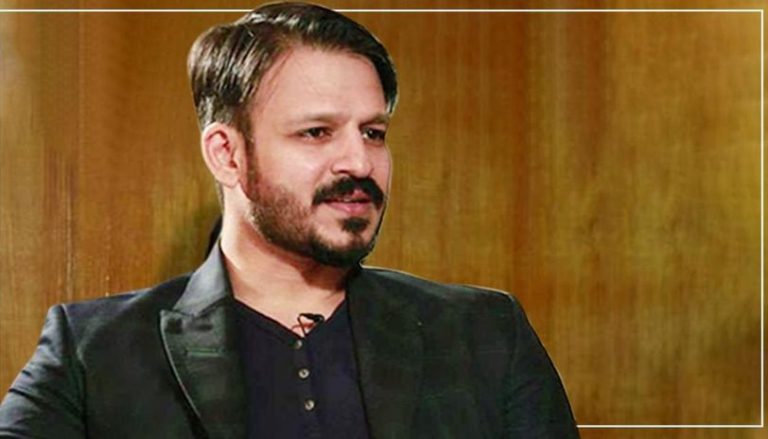
Shiv Sena, Congress allege actor Vivek Oberoi and filmmaker Sandeep Ssingh links in drug scandal, demand NCB probe

Actor Vivek Oberoi, who had last year faced the wrath of opposition leaders and a section of media for making a biopic inspired by the life and the struggle of PM Modi, has once again come under the fire from opposition parties after the Central Crime Branch of the Bengaluru Police searched his Mumbai home looking for his brother-in-law Aditya Alva in connection with the drugs scandal involving the Kannada film industry.

Using the incident to attack actor Vivek Oberoi, a vocal supporter of the BJP, Shiv Sena senior leader and Maharashtra Home Minister Anil Deshmukh said that the actor must be investigated for his possible links to the drug nexus in Bollywood. He said that NCB should take over the case from the Bengaluru police and probe Vivek Oberoi in the Bollywood drug abuse case, which the department has been investigating following actor Sushant Singh Rajput’s death. The Shiv Sena leader furthered that if NCB fails to probe Vivek Oberoi, then the Mumbai police will do the needful.

Along with the actor, the Maharashtra HM also named filmmaker Sandeep Ssingh who had produced PM Modi biopic that featured Vivek Oberoi. He said that the filmmaker too should be probed for his alleged role in the Bollywood drug nexus.

Anil Deshmukh’s statement came after some Congress leaders met him with the demand following a raid at the actor’s residence by the Bengaluru Police on Thursday.

The Bengaluru police were looking for Vivek Oberoi’s wife Priyanka Alva’s brother Aditya who has been evading arrest after being named as in the drugs probe by the Central Crime Branch of the Bengaluru Police.

Congress ups its ante against Vivek Oberoi, Sandeep Ssingh

Congress leader Sachin Sawant had also joined the Shiv Sena minister to cast aspersions at Vivek Oberoi and producer Sandeep Ssingh. In a series of tweets, Maharashtra Congress General Secretary Sachin Sawant said that he had earlier asked the authorities to investigate the Bharatiya Janata Party’s connection in the case and had also named Alva. “But NCB didn’t pay heed,” Sawant tweeted. He also alleged that the BJP government in Gujarat favoured a company run by Oberoi and Ssingh for signing a memorandum of understanding.

Congress tries to link producer Sandeep Ssingh with BJP

It is pertinent to note here that earlier too, Congress leader Sachin Sawant had maliciously attempted to link the BJP with the alleged suicide case of actor Sushant Singh Rajput. Sharing a picture of Sandeep Ssingh, one of the first ones to reach Sushant’s residence after hearing the news of his death, with former Maharashtra chief minister and BJP leader Devendra Fadnavis, the Congress leader had then demanded that Maharashtra CM Uddhav Thackeray and Home Minister Anil Deshmukh look into BJP’s hand in Sushant Singh Rajput’s death.

However, much to the disappointment of the Congress leader, it was soon revealed that Sandeep Ssingh has not just been photographed with Devendra Fadnavis alone. Several prominent personalities, from different political parties, have been clicked with the producer. Ssingh was seen with Smita Thackeray, the former wife of Jaidev Thackeray, Uddhav Thackeray’s elder brother. Smita was supposed to produce a movie on Balasaheb Thackeray along with Sandeep Ssingh.

Similarly, Ssingh has also been seen with the Samajwadi Party chief Akhilesh Yadav, who periodically allies with the Congress party to take on the might of the BJP.