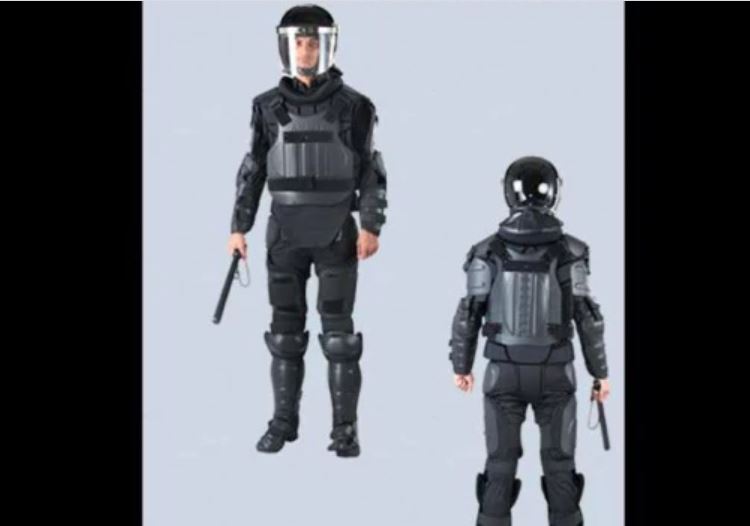
In view of the treacherous and deceptive attacks by the Chinese troops on the Indian soldiers on Monday night, the Northern Command has begun equipping its soldiers with lightweight riot gear.
According to a report on India Today by defence journalist Sandeep Unnithan, the first consignment of 500 sets of full-body protectors was airlifted from the Mumbai-based supplier to Leh where it is to be distributed among troops deployed along the LAC.
Indian soldiers along LAC to be provided full-body lightweight riot gear and spiked clubs
The report says that the new bodysuit which would be provided to our soldiers along the LAC would comprise of padded polycarbonate inserts and would protect wearers from, significantly, sharp objects and stones. It is being said that the army also plans to equip its troops along the LAC with spiked clubs.
One senior military analyst who did not want to be named worried over the optics of gearing the army with riot control protectors said: “It means changing an army man’s mindset into a policeman’s.”
Chinese troops ruthlessly attacked unarmed Indian soldiers with rods studded with spikes and nails
This decision has come in the aftermath of the June 15 ambush, in which, the Chinese People’s Liberation Army (PLA) had ruthlessly attacked our soldiers with rods studded with spikes and nails.
PLA had, on Monday night, launched savage and deceptive attacks, many to a ‘point of mutilation’ against the Indian troops. The Chinese troops reportedly trapped and encircled around 120 Indian unarmed soldiers and attacked them with iron-studded and fence wire wrapped rods type objects.
The Chinese PLA reportedly held firearms to faces of Indian soldiers, brutally tortured some Indian soldiers to death. The sources to IANS added that the Indian soldiers did not retaliate with guns and followed government directions not to use firearms. The hand-to-hand fight between the two forces erupted. However, PLA troopers used all kinds of weapons against the Indian soldiers, who bravely fought and tried to control the situation.
The Indian Army troopers, who confronted the Chinese troops near the patrolling point number 14 at the Galwan valley were also outnumbered by 1:5 ratio when they came under attack from the Chinese People’s Liberation Army soldiers.
Reportedly, China is also said to have used thermal imaging drones to trace the Indian Army soldiers scattered on the treacherous terrain before brutally attacking them.
Indian soldiers were attacked to the “point of mutilation”
Colonel Santosh Babu, who martyred during the Monday night clashes at PP-14, along with a small team was patrolling at the spot to check whether Chinese troops had withdrawn from the standoff position, as promised by them. However, the Chinese had trapped the Indian soldiers and brutally attacked them to the “point of mutilation”.
The Indian Army added that the Indian troops had reached the spot where the clashes happened without any animosity and were displaying friendly gestures to the Chinese side that they were there to check if the de-escalation agreement was being followed as promised. “But they trapped and carried out the attacks, a purely savage act,” the Indian Army official said to IANS.
India lost 20 of its brave soldiers in the skirmish, while the Chinese troops also suffered severe casualties as at least 43 Chinese troops are either injured or dead during the attacks that took place on Monday night.
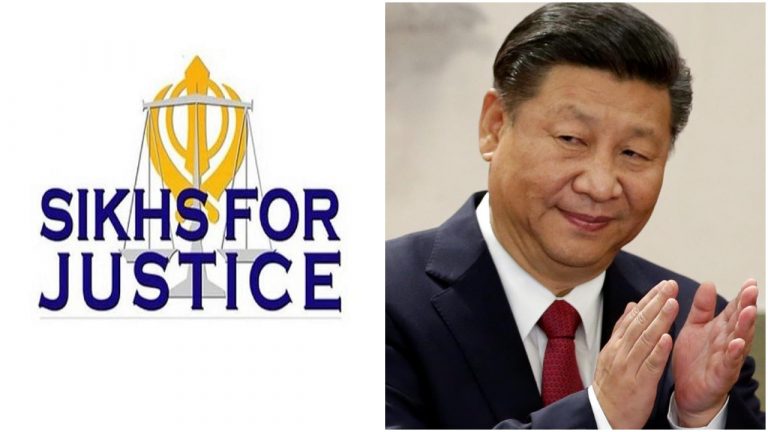
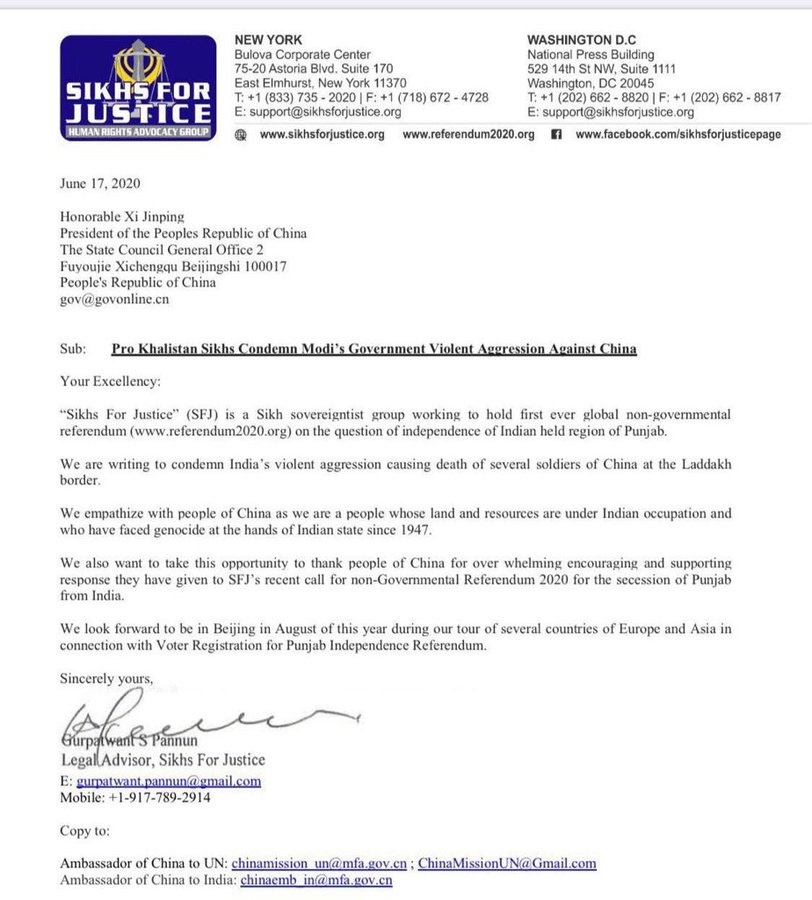
The UK-based Khalistani separatist group ‘Sikhs for Justice’, backed by Pakistan’s ISI, has written a letter against India to the Chinese President Xi Jinping condemning ‘Modi government’s violent aggression against China’ causing death to several soldiers of China at Ladakh along the Line of Actual Control (LAC).
In a letter written to Chinese President, the Sikh separatist group ‘Sikh for Justice’ (SFJ) said that they emphasised with the people of China and claimed as they themselves are a group of people who land and resources are under Indian occupation and who have faced “genocide at the hands of Indian state since 1947”.
It is pertinent to note the ‘Sikh for Justice’ is a pro-Khalistan separatist group, sponsored by Pakistan to create instability in India, especially in Punjab by pushing for the secession of Sikh-majority state by organising ‘Sikh Referendum in 2020’. Last year, the Modi government had finally banned the pro-Khalistan outfit for its separatist agenda.
Image Source: Amaan(@amaanbali)
Further, in the letter, the separatist group said that they thanked the people of China for the overwhelming encouragement and support they have given to SJF’s call to hold a non-governmental referendum 2020 for the secession of Punjab from India.
The ‘Sikh for Justice’, which proclaims itself to be a Sikh sovereignist group, said they were looking forward to visiting Beijing in August in connection with Voters Registration for Punjab Independence Referendum.
Savagery heaped by China on India, Indian soldiers were tortured to a point of mutilation
The Indian Army on Tuesday released a statement saying that at least 20 Indian soldiers had martyred, including the Commanding Officer of a battalion at Galwan valley in a violent faceoff on Monday night. The Indian soldiers were killed in action in an unprecedented violent clash with PLA troopers in the Galwan Valley on Monday night. Reportedly, over 50 soldiers of the Chinese Army were deemed casualties in the clash while India defended its land, however, China has refused to confirm the number of casualties on their side.
The official statement said that it took place during the de-escalation process underway in the Galwan valley. It reported that no bullets were fired but the Chinese troops pelted stones and clubs.
The Chinese PLA reportedly held firearms to faces of Indian soldiers, brutally tortured some Indian soldiers to death. The sources to IANS added that the Indian soldiers did not retaliate with guns and followed government directions not to use firearms. The hand-to-hand fight between the two forces erupted. However, PLA troopers used all kinds of weapons against the Indian soldiers, who bravely fought and tried to control the situation.
Colonel Santosh Babu, who martyred during the Monday night clashes at PP-14, along with a small team was patrolling at the spot to check whether Chinese troops had withdrawn from the standoff position, as promised by them. However, the Chinese had trapped the Indian soldiers and brutally attacked them to the “point of mutilation”.
The Indian Army added that the Indian troops had reached the spot where the clashes happened without any animosity and were displaying friendly gestures to the Chinese side that they were there to check if the de-escalation agreement was being followed as promised.
“But they trapped and carried out the attacks, a purely savage act,” the Indian Army official said to IANS.
Amid the calls for boycott of Chinese products in wake of the violent standoff at Ladakh owing to aggression by Chinese forces, the Chinese mobile company Oppo on Wednesday cancelled its live telecast on the launch of its new 5G smartphone. Oppo had said it would live telecast the launch of its X2 smartphone on Wednesday through YouTube.
However, the livestreaming of the launch was cancelled and a prerecorded clip was uploaded instead. As per reports while Oppo did not make any official statement regarding the same, some reports suggest it was done in view of the online protests where netizens gave a call to boycott the Chinese mobile phone brand.
On Wednesday, netizens took to Twitter to urge Indians to boycott Chinese products, especially the mobile phones.
India smartphone market Share (Q1 2020):
Xiaomi (China): 30% Vivo (China): 17% Samsung (S Korea): 16% Oppo (China): 12% Realme (China): 14% Others: 11%
# China's BBK Electronics sells under different brands including Vivo, Oppo, OnePlus & Realme.#HindiCheeniByeBye
#HindiCheeniByeBye I am requesting to all boycott all Chinese product but government of india will be also ban all contract and company who belongs to china like vivo, oppo, xiomi, STEC, Lenovo etc .
On Thursday it was reported that nail-studded rods were used by the Chinese PLA soldiers on Indian soldiers at the violent standoff in Ladakh. The treacherous attack by the Chinese troops on the Indian soldiers along the Line of Actual Control (LAC) near Indian territories of Galwan valley at Ladakh seems to be premeditated as new reports emerging out has indicated that the Chinese troops had well prepared to unleash deliberate savage attacks on the Indian troops at the LAC.
The Indian Army on Tuesday released a statement saying that at least 20 Indian soldiers had martyred, including the Commanding Officer of a battalion at Galwan valley in a violent faceoff on Monday night. The Indian soldiers were killed in an unprecedented violent clash with PLA troopers in the Galwan Valley on Monday night.
During the clashes, the Chinese troops have also suffered severe casualties as at least 43 Chinese troops are either injured or dead during the attacks that took place on Monday night.
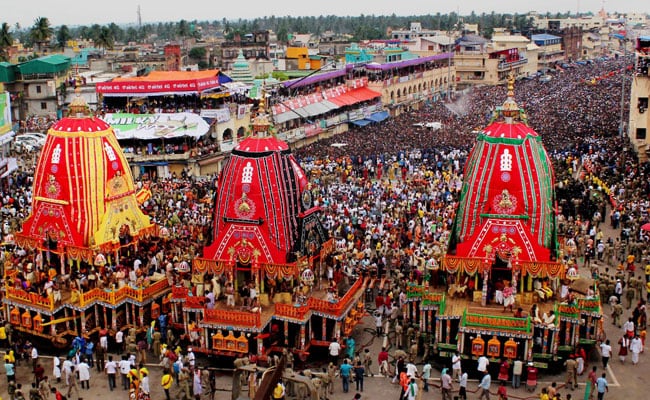
The annual Jagannath Rath Yatra which was slated to take place in Odisha on June 23 has been stalled by the Supreme Court this year citing the Covid-19 pandemic situation.
Supreme Court stays the annual Rath Yatra at Puri’s Jagannath Temple in Odisha on June 23 pic.twitter.com/lEoWjBYipn
The bench headed by CJI SA Bobde ordered: “We consider it appropriate that in the interest of public health and safety of citizens to restrain the respondents from holding the Rath Yatra this year. We direct that no Rath Yatra will be held in the temple area of Odisha”.
The bench was hearing pleas seeking to cancel or postponement of the historic ‘Rath Yatra’ at Puri in Odisha.
Bhubaneswar-based NGO filed PIL against holding of annual Rath Yatra
The PIL filed on June 15 by Bhubaneswar-based NGO ‘Odisha Vikas Parishad’ through advocate Ranjeeta Rohatgi argued that holding the annual chariot festival, which attracts almost 10 lakh people from across the country and abroad would be an open invitation to infect lakhs of devotees given the spiralling number of Covid-19 patients in India, including Odisha.
Hearing the plea, the CJI observed: “We are not allowing this. Lord Jagannath will not forgive us if we allow this to continue. Activities related to the Rath Yatra is injuncted, ordered CJI SA Bobde.
The non-profit said allowing the rath yatra would violate the state government’s order. “This is a serious matter,” the Chief Justice of India has remarked.
It is pertinent to note here, that despite the central government guideline of opening places of worship since June 8. Odisha government had issued a blanket ban on places of worship and religious congregations till June 30 in view of the rising coronavirus cases in the state.
Temple administration had decided to take out the Yatra under Section 144 imposition
Meanwhile, in Odisha, the construction of Raths for the Yatra are underway in full swing after the temple administration had decided to take out the Yatra under Section 144 imposition, without the presence of devotees.
Rath Yatra in Puri, Odisha
Jagannath Rath Yatra is a Hindu festival associated with Lord Jagannath held at Puri in the state of Odisha. During the annual event, devotees from all over the world throng to Puri with an earnest desire to help to pull the Lords’ chariots. It is a colourful festival which is celebrated every year in Puri. Lord Jagannath, with his siblings Lord Balabhadra and Devi Subhadra, comes out of his sanctum sanctorum in the 12th-century temple to give darshan to all Devotees belonging to all sects and communities.
Believed to be the oldest chariot procession in the world, this festival marks the annual ceremonial procession of Lord Jagannath, his elder brother Balabhadra and younger sister Subhadra, from their home temple to the Gundicha Temple in Puri, believed to be their aunt’s home.
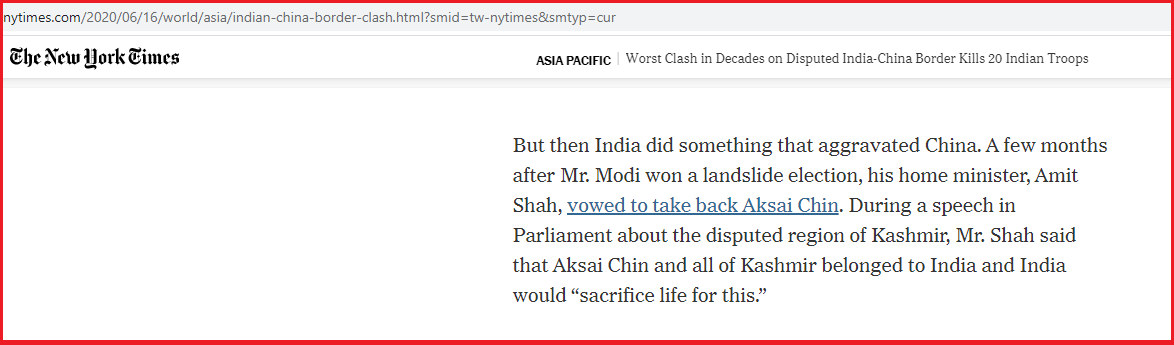
This is the report from the New York Times, the spokesperson of the global establishment. They are clearly putting the blame on India for aggravating China! And what is the basis for their claim? Amit Shah’s speech on Art 370 in Parliament, where he asserted India’s position that PoK and Aksai Chin belong to India.
NYTimes reporting on Amit Shah vowing to take back Aksai Chin
And just like that, you can now see the straight line that connects Chinese aggression and liberal anger over CAA and abrogation of Article 370.
Did the connection drawn by the New York Times surprise you?
And with this, the real fangs of the anti-CAA campaign and the liberal anger over Art 370 have emerged. They made it look like an internal political tussle. It was a propaganda trick. Did you fall for it?
Think about it. As China gets more aggressive, India is pushed closer to Western powers. Every editorial in China’s state run Global Times warns India not to get close to America. It’s China’s biggest fear.
The West may have no particular love for India, but they do understand one simple thing. A democratic India is better than authoritarian China. They may not be thrilled about India’s rise, but they do not fear it.
So what does China need here? They need the world to start believing that India is also an authoritarian state. They want the world to think that India is ruled by a tyrannical Prime Minister, inspired by Nazism.
And who was serving this poison to Western audiences? Now you can make sense of the vicious anti-India campaign that swept across global newspapers, think tanks and campuses in the last 6-9 months. Now you see who was *really* pulling the strings. Now you see why they morphed the “Om” symbol into a Nazi hooked cross.
Maybe you got caught up in this rhetoric. After all, the liberal celebrities talked about all things nice: sensitivity, inclusion, human rights. They sang revolutionary poems and offered flowers to uniformed policemen. As and when the violent elements pelted stones at policemen or doctors, the stories were quickly buried by media.
Maybe you thought these people were fighting for justice after all. If they weren’t, why would big-name newspapers and college campuses across the world be so sympathetic to them? Why would photos of the protesters receive big-name international prizes?
Sadly, the world is a bad place. Big media and big prizes can be bought and sold for a handful of $$$. There are billionaires who pledged special funds to take down Modi. These billionaires made their fortune taking down economies from the UK to South America. India was just another target for them. And as for big-name US universities, sometimes they ‘forget’ to disclose billions of $$$ in ‘gifts’ from Saudi Arabia and China. Sometimes, their top-ranked academics have secret agreements with the Chinese military, receiving thousands of dollars a month to run secret labs in China. Sometimes in the same city where the Coronavirus emerged.
People can be much more evil than you think. Dear woke people, it is time to wake up.
This is not to talk down to you. Many generations of young people have been taken in by this rhetoric. In the early 70s, young students across Bengal were fired up with dreams of a Communist revolution. When the Communists came to power, there were 28000 political murders in the next 20 years. This is the official figure given by the Communist Home Minister on the floor of Bengal Assembly. Imagine what the real number was.
Let me break down that number of 28,000 for you. Spread over 20 years, that works out to four murders a day. Still, think this rhetoric is about offering roses to armed policemen or singing Faiz’s poetry?
It sounds romantic but is always soaked in blood of innocents. That’s the truth.
On April 13, 1975, the New York Times reported from Phnom Penh as Pol Pot and his Khmer Rouge took over Cambodia. The headline read: “For most, a better life.” At Harvard University campus, students were overjoyed. An editorial in the Harvard Crimson put it thus:
“The capture of Phnom Penh last week by the Khmer Rouge is a victory for the Cambodian people over the corrupt Lon Nol regime and the imperialist American policies that supported it.“
How much of these sentiments were due to foolishness and how much was due to corruption? We will never know. What we do know is that the Khmer Rouge went on to slaughter 20 lakh people.
So don’t feel bad if you were swept up by the anti-CAA rhetoric or the cries against the abrogation of Article 370. Instead, go back and carefully analyze the incentives of the media, intellectual and Instagram celebrities who led you there. Ask yourself: is there one among them who wouldn’t sell out their country for a million dollars?
Did you notice: leaving behind their foot soldiers in the freezing cold of Shaheen Bagh, their media champions went to vacation in Europe, America and Australia in December of last year? Do you think they were sincere in their commitment to the supposed cause of the protests? Didn’t they say the Indian nation was in mortal danger? Do you think Chandrasekhar Azad ever said to people: you hold the line against the British Raj while I go on a five-star tour of Paris? No, because real patriots like Azad sacrificed everything, including their lives.
Now look at the media, intellectual and Instagram celebrities who are asking you to join in the movement against CAA or abrogation of Article 370. While babies die in the cold of Shaheen Bagh, these people are making a fortune.
Who is paying for it?
Think about it. If they did care about human rights, would they be so against the persecuted Hindus of Pakistan? They talk about caste all the time and how committed they are to addressing caste injustices. Good. But how many backward caste faces do you see in the ranks of media intellectuals? Not that India is unjust to its religious minorities, but if these people cared about religious minorities, wouldn’t they speak out against real injustices in Pakistan? How many articles have you read in foreign media on the problem of Hinduphobia in Pakistan or Bangladesh?
The anger over CAA and abrogation of Art 370 was a setup. The strings were being pulled from somewhere else. The aim was to turn the world … and the Indian youth against India. So that India looks just as bad as the authoritarian aggressor.
If they care so much about India, why did they not shed one tear for our jawans in Pulwama? Instead, do you remember how they tinkled champagne glasses, made jokes about “56 inch” and raised slogans of “Hows the Jaish?” On the odd occasion, their cup of wine flowed over and spilt on to Facebook, where everyone could see it. Then, their employers saved face by sending them on a few weeks leave. Ha!
They are doing the same right now even as we face aggression on the LAC. The same jokes about 56 inch, the same barely concealed glee. People of India rejected them. Pakistan could not help them. Now they look to China to humiliate Modi.
Woke people need to wake up and smell the anti-India cauldron. Because it stinks so bad.
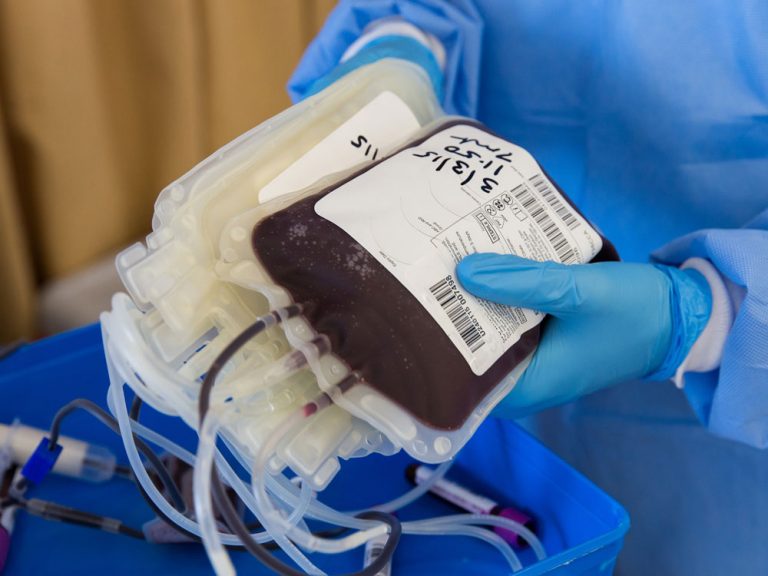
Ideally, everyone should forget about the conflicts based on caste, religion, color, ethnicity, or location and come together to help each other in the time of a pandemic. However, bigotry is deep-rooted in some sections of the society that they can never see a person in misery from other communities as a human being. In a recent incident reported by Naya Daur, a Sunni person refused to donate his blood plasma to a critical Covid patient because the recipient was from the Shia community.
Critical patient denied plasma for being a Shia
According to the reports, a middle-aged man was admitted at the Pakistan Institute of Medical Sciences (PIMS), Islamabad, after showing symptoms of Covid-19 infection. When his condition turned critical, his family reached out to recovered patients for plasma. Many concerned citizens, including medical students, are trying to connect patients’ families with plasma donors. They approached a recovered patient for plasma donation, But when he learnt the patient requiring plasma is a Shia Muslim, he refused to donate stating that he won’t donate it for a Shia.
Now plasma has a religion too? In Islamabad a donor refuses to give plasma after finding out that the recipient is Shia. https://t.co/wytXbwtZHT
— Naila Inayat नायला इनायत (@nailainayat) June 17, 2020
Anzala Zahra Kazim, a member of a group trying to connect plasma donors with patients, posted on her Facebook account about the incident. She said, ”I’ve come across many absurdities with respect to donors’ approach towards donation, but neither me nor my team had expected a refusal based on faith of the recipient. The reason why I don’t want to name the donor is that my intention wasn’t to bash an individual, but to highlight the intolerant mindset sadly prevalent in our society.”
Her team managed to find another donor for the patient who is now recovering from the infection.
Not an isolated incident of bigotry in Pakistan
This is not the first time Pakistan has shown it’s true colors amid coronavirus pandemic. In March, residents of Karachi’s Delhi colony did not accept ration from an NGO that had members of the Ahmadiyya community. They were forced out of the colony.
An NGO distributing free food in Karachi’s Delhi Colony neighbourhood are driven away by extremists who refuse to accept charity by #Ahmadis even though the NGO was not affiliated with #Ahmadiyya community. Mullahs have poisoned minds in our society. Video via Amir Mahmood pic.twitter.com/TnGvcNkmar
Haryana’s Mewat region has recently come under the spotlight after myriad cases of subjugation of Dalits by the Muslim residents of the district have come to fore. The atrocities committed against Hindus, especially Dalits, were highlighted in the investigation report by 4-member team headed by former Justice Pawan Kumar which said that Mewat is gradually turning into a graveyard for Hindus, especially Dalits.
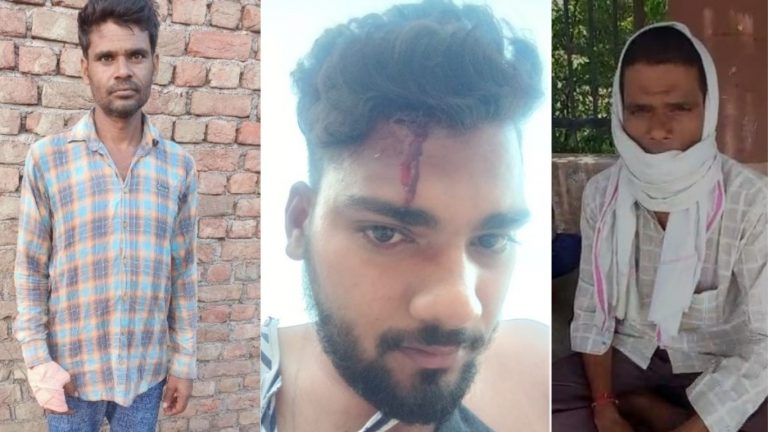
In line with the findings of the report which revealed systematic oppression of Dalits at the hands of the Muslim population, an incident occurred in Mewat where a 24-year-old Rahul was assaulted by members of the Muslim community in his village Uleta. When Rahul’s family went to save their son, even they were subjected to assault by the assailants.
OpIndia contacted Jaswant, victim Rahul’s uncle who talked about the hardships faced by members of his community in the village and refusal by the police to lodge their complaints. Narrating about the incident that led to the attack by Muslims, Jaswant said, “My nephew Rahul sold a mobile phone to a man named Momin Aneesh for Rs 6,000. Since the man had only Rs 4,000 at that point in time, my nephew gave him the mobile phone but withheld the bill, saying he would give it to Momin Aneesh when he makes the balance payment of Rs 2,000.”
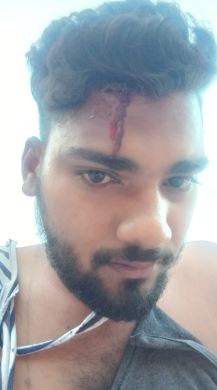
Victim Rahul
Rahul’s uncle alleges that on April 21, when Rahul left the house, Momin intercepted him on his way and demanded the bill of the mobile phone. When Rahul reminded him of the balance amount to be paid by him, he lost his temper and started attacking Rahul. After a while, he brought with him members of the Muslim community who violently attacked Rahul. Jaswant claims that even the senior members of the village made casteist slurs against Rahul and egged on the assailants to continue thrashing Rahul.
“When our family members rushed to save Rahul, even we all were beaten. A total of 4 men and three women were assaulted in the attack by Aneesh and his men. My brother’s wife was caught by two men and they were taking her inside a room but fortunately, some villagers came and rescued us all. Otherwise, I can’t imagine what could have happened to us all,” Jaswant said.
Jaswant states that thrashing of Hindus is a common occurrence in Uleta, a village with 30-35 Hindu families among at least 350 Muslim homes. There is a constant fear of retribution from the Muslim majority in the village that victims are hesitant to muster the courage of filing a complaint against Muslim assailants. Jaswant further added even the sarpanch of the village did not bother to ask after them following the incident. This time, even other villagers stayed away from inquiring about their well being. Instead, Jaswant was intimidated by a well-known person in the village who warned him that if he wants to stay in the village, he will have to live under their yoke.
OpIndia contacted police over removal of SC/ST act
OpIndia contacted the Nagina police station to confirm the allegations that sections of the SC/ST act have been removed from the case. SHO Ramesh Chandra said that Rahul’s case was being investigated by DSP Virendra of Ferozepur Jhirka. However, now the Punhana DSP Vivek Chaudhary is handling the case.
When OpIndia contacted Ferozepur Jhirka DSP to find out why the sections of the SC/ST act have been removed from the case, the police hung up on us. We tried to contact the police again but to no avail.
After this, we got in touch with DSP Punhana Vivek Chaudhary who claimed that the SC/ST act has been reimposed in Rahul’s case. Apart from this, a letter has also been written to the Welfare Officer and charge-sheet has also been filed in the case. When we asked Jaswant if he was notified of the development, he said in affirmative that the DSP had informed him that the SC/ST act has been again added to the case.
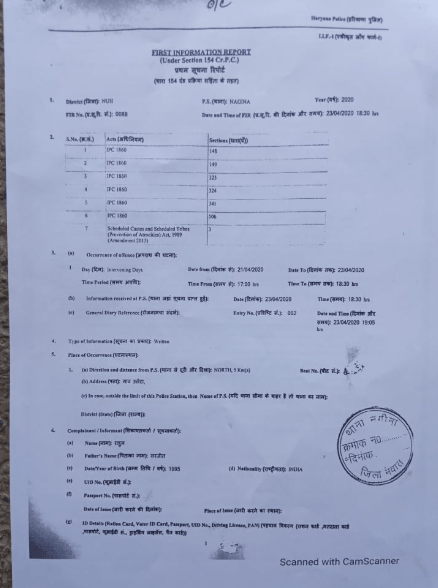
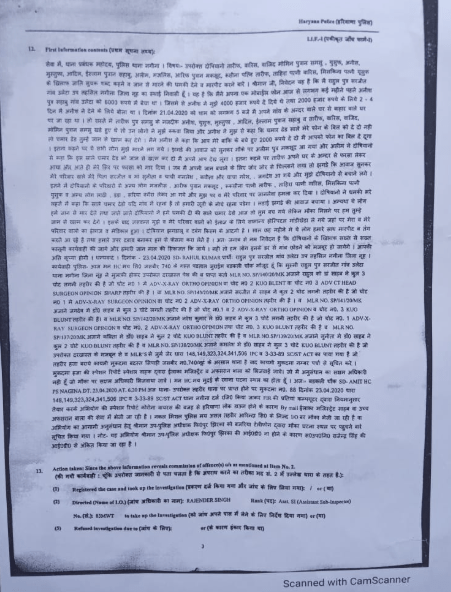
FIR filed in the case
Jaswant has also shared a copy of FIR filed in the case which chronicles the details of the events that led to the assault by Momin Aneesh and other members of the Muslim community against Rahul and his family members. The FIR clearly states that in the incident that took place on 21 April 2020—Tarif, Heir, Wajid, Momin Aneesh, Yusuf, Mustufa, Adil, Islam, Aleem, Majlis, Arif, Rukasina, Tahira, Mimkina together launched an assault against Rahul and his family members and reportedly passed pejorative remarks against their caste.
FIR copyFIR copy
In the FIR lodged on April 23 at 7:05, Rahul has alleged that he was attacked by a battleaxe by Tarif and Alim said, “Kill this low caste man. I will see it all”. Rahul also alleged that the accused threatened to kill him and his family one day. “If you want to live in the village, you will have to live under our yoke,” they had told Rahul.
History of such fights in the village
Rahul’s uncle, Jaswant said that this is not the first time that Dalits have been subjected to atrocities by the dominant community in the village. He claimed that such acts of cruelty have continued unabated since 1992 and revealed that his family had been the victim of such savagery at least 20 times. Jaswant remembers that his family had a fight with the same Muslim family 10-12 years ago as well.
A decade back, an argument touched off between the two families when filthy water was poured over the women of the Dalit family. When the men in the family opposed this misconduct, the aggressors refused to accept their mistakes and an altercation between the two sides ensued. Later, the Muslim family accused Jaswant’s family of being responsible for the miscarriage of a five-month pregnant woman and tried to file a case of feticide against the family. After much efforts, Jaswant’s family extricated themselves from the case. The family had reportedly spent Rs 50,000 on their extraction from the case.
Victim’s family approaches CM Khattar to file a complaint, but could not meet him
Significantly, in view of the atrocities on Hindus in Mewat, Chief Minister Khattar held a meeting at the Mini Secretariat a couple of days ago with two groups of people. Jaswant and his family also reached the Mini Secretariat to raise their grievances with the chief minister but they could not meet him since he was inside having a meeting another set of people. Jaswant and all the people accompanying him returned home around 9 PM in the evening after waiting for hours outside the secretariat.
After VHP highlighted the plight of Hindus in Haryana’s Mewat region, CM Khattar held meetings to assuage the concerns of the Hindu organisations and later announced that his government will bring legislation to outlaw forced conversions and set up a Dharmada Board to protect Hindu common properties.
After announcing a slew of measures under the Atmanirbhar Bharat Abhiyan to revive the economy following the Coronavirus lockdown and slowdown in the economy, the Narendra Modi govt is bringing a mega rural works schemes to generate employment in rural India. The ‘Garib Kalyan Rojgar Abhiyaan’ aimed at providing jobs to migrant workers who have returned to their home states will be launched by prime minister Narendra Modi on 20 June through Video-Conference.
The scheme will be implemented in 116 districts in six states, Bihar, Uttar Pradesh, Madhya Pradesh, Rajasthan, Jharkhand and Odish. According to a statement issued by the govt of India, the campaign will run for 125 days on a mission mode. The scheme will involve intensified and focused implementation of 25 different types of works to provide employment to the migrant workers on one hand and create infrastructure in the rural regions of the country on the other hand, with a resource of Rs. 50,000 crore.
116 districts in the 6 states, which have more than 25,000 migrant workers returned from other states, have been selected for the compaign. The campaign will be implemented in a coordinated manner among 12 different ministries and departments, which include Rural Development, Panchayati Raj, Road Transport & Highways, Mines, Drinking Water & Sanitation, Environment, Railways, Petroleum & Natural Gas, New & Renewable Energy, Border Roads, Telecom and Agriculture.
The Garib Kalyan Rojgar Abhiyaan will create durable infrastructure in the areas where it will be implemented, apart from creating employment opportunities for workers. This is expected to boost the livelihood opportunities in rural India.
The treacherous attack by the Chinese troops on the Indian soldiers along the Line of Actual Control (LAC) near Indian territories of Galwan valley at Ladakh seems to be premeditated as new reports emerging out has indicated that the Chinese troops had well prepared to unleash deliberate savage attacks on the Indian troops at the LAC.
According to IANS report, the Chinese People’s Liberation Army (PLA) had launched savage and deceptive attacks, many to a ‘point of mutilation’ against the Indian troops on Monday night. The Chinese troops reportedly trapped and encircled around 120 Indian soldiers on Monday night.
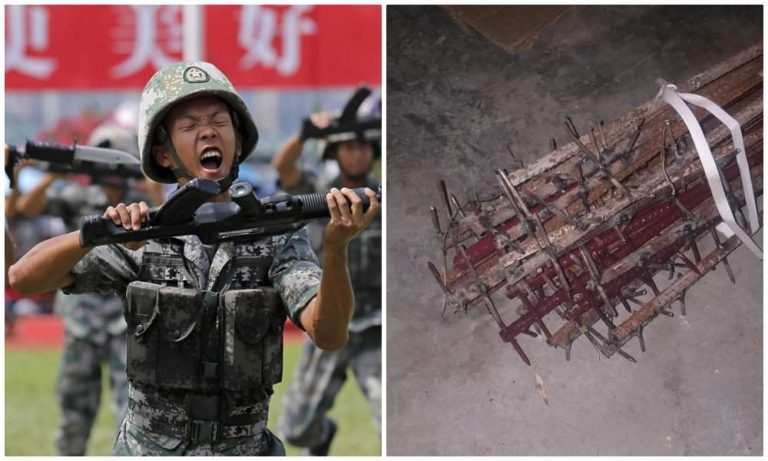
Journalist Neeraj Rajput shared an image of rods with sharp nail attached to them used to attack Indian soldiers.
Army has clarified this is not the weapon (in pic) used during attack (but such types) https://t.co/wvWkkJC9C7
Reportedly, this kind of weapons were used to attack Indian soldiers.
The Chinese PLA reportedly held firearms to faces of Indian soldiers, brutally tortured some Indian soldiers to death. The sources to IANS added that the Indian soldiers did not retaliate with guns and followed government directions not to use firearms. The hand-to-hand fight between the two forces erupted. However, PLA troopers used all kinds of weapons against the Indian soldiers, who bravely fought and tried to control the situation.
Indian soldiers were outnumbered by Chinese troops
The Indian Army troopers, who confronted the Chinese troops near the patrolling point number 14 at the Galwan valley were also outnumbered by 1:5 ratio when they came under attack from the Chinese People’s Liberation Army soldiers. The PLA troopers “savagely attacked” Indian Army personnel, according to sources in the government who has details of the Monday night clashes between the two army soldiers.
“The numbers were stacked up against the Indian Army troopers. Yet, the Indian side decided to fight the PLA troopers. The Indian soldiers were outnumbered 1:5 by the Chinese troopers,” the sources said on Wednesday.
Reportedly, China is also said to have used thermal imaging drones to trace the Indian Army soldiers scattered on the treacherous terrain before brutally attacking them.
“It was the deadliest attack carried on the Indian Army personnel by the Chinese military personnel to our memory,” the sources added.
“We were outnumbered,” admitted an Indian Army officer, talking about the clash that went on for six to seven hours.
Soldiers were attacked to the “point of mutilation”
Colonel Santosh Babu, who martyred during the Monday night clashes at PP-14, along with a small team was patrolling at the spot to check whether Chinese troops had withdrawn from the standoff position, as promised by them. However, the Chinese had trapped the Indian soldiers and brutally attacked them to the “point of mutilation”.
The Indian Army added that the Indian troops had reached the spot where the clashes happened without any animosity and were displaying friendly gestures to the Chinese side that they were there to check if the de-escalation agreement was being followed as promised.
“But they trapped and carried out the attacks, a purely savage act,” the Indian Army official said to IANS.
The officer added that causality numbers could increase, however, refused to comment on the numbers, but just said that “several are injured”.
On Tuesday, Indian helicopters flew around 16 times to bring bodies and injured Indian Army personnel from the site of the attack in the Galwan Valley in Ladakh region. The Indian Army also flew bodies of four Indian Army personnel from Galwan Valley to Leh on Wednesday morning.
Indian troops killed after Chinese launches aggressive attacks
The Indian Army on Tuesday released a statement saying that at least 20 Indian soldiers had martyred, including the Commanding Officer of a battalion at Galwan valley in a violent faceoff on Monday night. The Indian soldiers were killed in an unprecedented violent clash with PLA troopers in the Galwan Valley on Monday night.
The official statement said that it took place during the de-escalation process underway in the Galwan valley. It reported that no bullets were fired but the Chinese troops pelted stones and clubs.
During the clashes, the Chinese troops have also suffered severe casualties as at least 43 Chinese troops are either injured or dead during the attacks that took place on Monday night.
These are the first casualties suffered by either army since 1975 when an Indian patrol was ambushed by the Chinese troops in Arunachal Pradesh.
The latest attack took place after the Brigade and Company commander-level talks happened in eastern Ladakh between the two militaries. Security establishment officials have maintained that the Chinese PLA provoked the skirmishes by establishing posts in the Indian territory.
On Wednesday, the Trump administration in the USA signed a legislation that allows the American Government to hold Chinese officials responsible for China’s persecution of Uighur and other Muslim minority groups. The bill, formally named the “Uighur Human Rights Policy Act of 2020,” was approved by the House and Senate in May.
Trump issued a statement that said, “the signed legislation holds accountable perpetrators of human rights violations and abuses such as the systematic use of indoctrination camps, forced labour, and intrusive surveillance to eradicate the ethnic identity and religious beliefs of Uighur and other minorities in China.”
Legislation asks for the closure of camps in Xinjiang
The Hill reported that the legislation objects to the treatment of Uighur Muslims and other Muslim minorities by the Chinese Communist Party. It calls for closure of such camps in the Xinjiang region of China. The legislation gives the American government the power to identify and sanction individuals responsible for the abuse of minority groups.
USA can block assets and deny visas to identified officials
Within 180 days of signing the bill, as per a report in ANI, the Trump government will submit a report to Congress that will identify each foreign individual, including officials from the Chinese government responsible for human rights abuse of Uighur Muslims in the Xinjiang region. The abuses listed in the legislation include torture, degrading treatment or punishment, prolonged detention without charges and a trial, abduction and denial of the right to life, liberty, or the security of a person.
The administration is required to sanction the responsible individual by blocking their assets and declare them ineligible for admission or visas to the United States. The White House has the power to waive sanctions but only after notifying Congress and that too if it is in the national interest.
Senator Marco Rubio authored the legislation. It passed the Senate by unanimous consent, and the House approved it with a bipartisan vote in May.
China condemns legislation
Chinese government’s mouthpiece Global Times posted two tweets condemning the legislation. They wrote that the legislation defames the human rights situation in China. It added that America is trying to attack China’s policy and interfering in China’s internal matters.
In the second tweet, they said that China had urged the Trump administration to correct its mistake, otherwise, China has to take countermeasures and the US will face the consequences.
#China urges #US to immediately correct its mistake and stop using the #Xinjiang-related act to interfere in China’s internal affairs. Otherwise, China will take countermeasures, and the US must bear all consequences, Chinese FM said after Trump signed “Uygur bill.” https://t.co/ykUR1pDkfO
Trump agreed to Xi Jinping’s reasoning behind camps, says John Bolton
The day on which the legislation was signed, The Wall Street Journal published an excerpt from a book published by former national security adviser John Bolton that alleged that during the G20 meeting of 2019 in Osaka, Trump might have agreed with the reason given by Chinese President Xi Jinping for building the camps in the Xinjiang province.
Bolton wrote, “According to our interpreter, Trump said that Xi should go ahead with building the camps, which Trump thought was exactly the right thing to do,”
He added, “The National Security Council’s top Asia staffer, Matthew Pottinger, told me that Trump said something very similar during his November 2017 trip to China.” The Department of Justice has already filed a suit against the release of the book that is set to be published next week, stating it contains classified information.
China’s treatment of the Uighur Muslims
The Chinese administration has been under fire for its treatment of Uighur Muslims and other Muslim minorities in China. In 2019, Muslims had called for a boycott of Chinese products against Chinese policies and ban on Ramzan in China. However, China has used its power to suppress the voice of leaders on the international platform. The ties between China and Pakistan are well known, and Prime Minister of Pakistan Imran Khan has refused to comment on Uighur Muslims on several occasions. Chinese video app TikTok also banned user(s) on several occasions for highlighting the plight of Muslims in the Xinjiang region.