Home Blog Page 5298

Haryana: Muslim mob attacks Dalit boy with a battle axe in Mewat, threatens to kill him and his family

Haryana’s Mewat region has recently come under the spotlight after myriad cases of subjugation of Dalits by the Muslim residents of the district have come to fore. The atrocities committed against Hindus, especially Dalits, were highlighted in the investigation report by 4-member team headed by former Justice Pawan Kumar which said that Mewat is gradually turning into a graveyard for Hindus, especially Dalits.

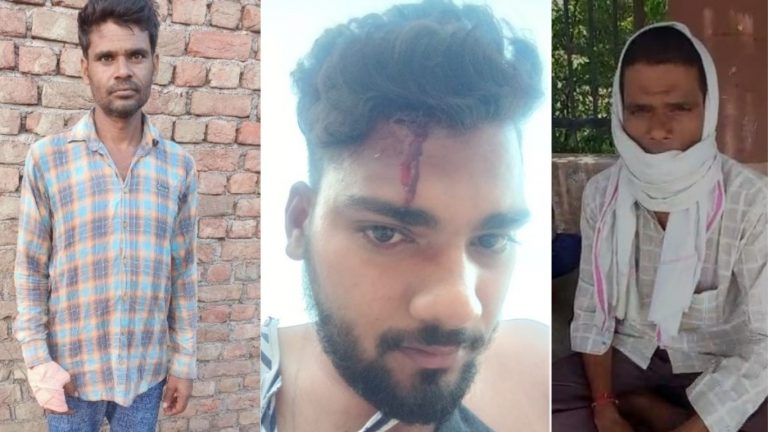
In line with the findings of the report which revealed systematic oppression of Dalits at the hands of the Muslim population, an incident occurred in Mewat where a 24-year-old Rahul was assaulted by members of the Muslim community in his village Uleta. When Rahul’s family went to save their son, even they were subjected to assault by the assailants.

OpIndia contacted Jaswant, victim Rahul’s uncle who talked about the hardships faced by members of his community in the village and refusal by the police to lodge their complaints. Narrating about the incident that led to the attack by Muslims, Jaswant said, “My nephew Rahul sold a mobile phone to a man named Momin Aneesh for Rs 6,000. Since the man had only Rs 4,000 at that point in time, my nephew gave him the mobile phone but withheld the bill, saying he would give it to Momin Aneesh when he makes the balance payment of Rs 2,000.”
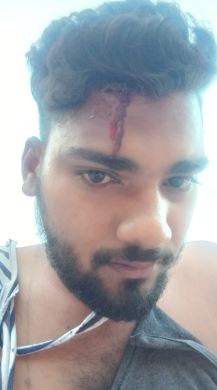
Victim Rahul

Rahul’s uncle alleges that on April 21, when Rahul left the house, Momin intercepted him on his way and demanded the bill of the mobile phone. When Rahul reminded him of the balance amount to be paid by him, he lost his temper and started attacking Rahul. After a while, he brought with him members of the Muslim community who violently attacked Rahul. Jaswant claims that even the senior members of the village made casteist slurs against Rahul and egged on the assailants to continue thrashing Rahul.

“When our family members rushed to save Rahul, even we all were beaten. A total of 4 men and three women were assaulted in the attack by Aneesh and his men. My brother’s wife was caught by two men and they were taking her inside a room but fortunately, some villagers came and rescued us all. Otherwise, I can’t imagine what could have happened to us all,” Jaswant said.

Jaswant states that thrashing of Hindus is a common occurrence in Uleta, a village with 30-35 Hindu families among at least 350 Muslim homes. There is a constant fear of retribution from the Muslim majority in the village that victims are hesitant to muster the courage of filing a complaint against Muslim assailants. Jaswant further added even the sarpanch of the village did not bother to ask after them following the incident. This time, even other villagers stayed away from inquiring about their well being. Instead, Jaswant was intimidated by a well-known person in the village who warned him that if he wants to stay in the village, he will have to live under their yoke.

OpIndia contacted police over removal of SC/ST act

OpIndia contacted the Nagina police station to confirm the allegations that sections of the SC/ST act have been removed from the case. SHO Ramesh Chandra said that Rahul’s case was being investigated by DSP Virendra of Ferozepur Jhirka. However, now the Punhana DSP Vivek Chaudhary is handling the case.

When OpIndia contacted Ferozepur Jhirka DSP to find out why the sections of the SC/ST act have been removed from the case, the police hung up on us. We tried to contact the police again but to no avail.

After this, we got in touch with DSP Punhana Vivek Chaudhary who claimed that the SC/ST act has been reimposed in Rahul’s case. Apart from this, a letter has also been written to the Welfare Officer and charge-sheet has also been filed in the case. When we asked Jaswant if he was notified of the development, he said in affirmative that the DSP had informed him that the SC/ST act has been again added to the case.

FIR filed in the case

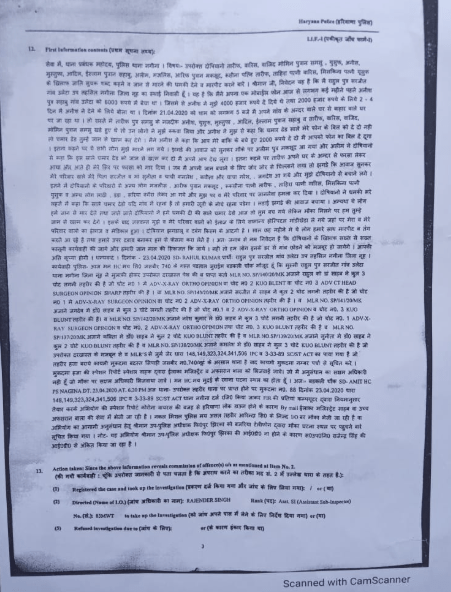
Jaswant has also shared a copy of FIR filed in the case which chronicles the details of the events that led to the assault by Momin Aneesh and other members of the Muslim community against Rahul and his family members. The FIR clearly states that in the incident that took place on 21 April 2020—Tarif, Heir, Wajid, Momin Aneesh, Yusuf, Mustufa, Adil, Islam, Aleem, Majlis, Arif, Rukasina, Tahira, Mimkina together launched an assault against Rahul and his family members and reportedly passed pejorative remarks against their caste.
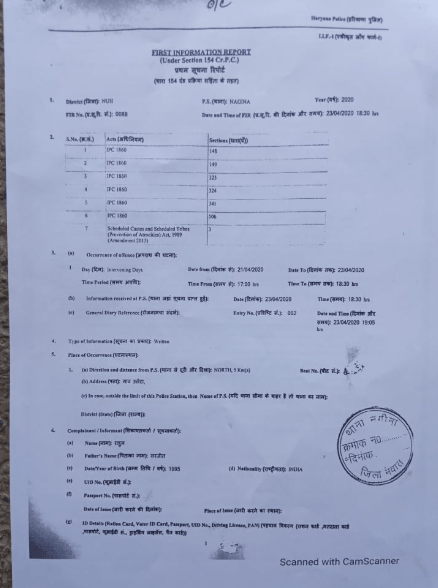
FIR copy
FIR copy

In the FIR lodged on April 23 at 7:05, Rahul has alleged that he was attacked by a battleaxe by Tarif and Alim said, “Kill this low caste man. I will see it all”. Rahul also alleged that the accused threatened to kill him and his family one day. “If you want to live in the village, you will have to live under our yoke,” they had told Rahul.

History of such fights in the village

Rahul’s uncle, Jaswant said that this is not the first time that Dalits have been subjected to atrocities by the dominant community in the village. He claimed that such acts of cruelty have continued unabated since 1992 and revealed that his family had been the victim of such savagery at least 20 times. Jaswant remembers that his family had a fight with the same Muslim family 10-12 years ago as well.

A decade back, an argument touched off between the two families when filthy water was poured over the women of the Dalit family. When the men in the family opposed this misconduct, the aggressors refused to accept their mistakes and an altercation between the two sides ensued. Later, the Muslim family accused Jaswant’s family of being responsible for the miscarriage of a five-month pregnant woman and tried to file a case of feticide against the family. After much efforts, Jaswant’s family extricated themselves from the case. The family had reportedly spent Rs 50,000 on their extraction from the case.

Victim’s family approaches CM Khattar to file a complaint, but could not meet him

Significantly, in view of the atrocities on Hindus in Mewat, Chief Minister Khattar held a meeting at the Mini Secretariat a couple of days ago with two groups of people. Jaswant and his family also reached the Mini Secretariat to raise their grievances with the chief minister but they could not meet him since he was inside having a meeting another set of people. Jaswant and all the people accompanying him returned home around 9 PM in the evening after waiting for hours outside the secretariat.

After VHP highlighted the plight of Hindus in Haryana’s Mewat region, CM Khattar held meetings to assuage the concerns of the Hindu organisations and later announced that his government will bring legislation to outlaw forced conversions and set up a Dharmada Board to protect Hindu common properties.
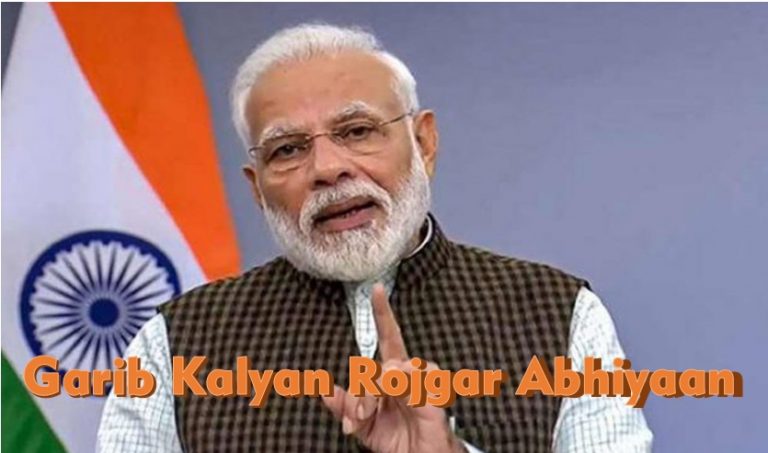
PM Modi to launch Garib Kalyan Rojgar Abhiyaan to create rural infrastructure and provide employment to returned migrant workers

0

After announcing a slew of measures under the Atmanirbhar Bharat Abhiyan to revive the economy following the Coronavirus lockdown and slowdown in the economy, the Narendra Modi govt is bringing a mega rural works schemes to generate employment in rural India. The ‘Garib Kalyan Rojgar Abhiyaan’ aimed at providing jobs to migrant workers who have returned to their home states will be launched by prime minister Narendra Modi on 20 June through Video-Conference.

The scheme will be implemented in 116 districts in six states, Bihar, Uttar Pradesh, Madhya Pradesh, Rajasthan, Jharkhand and Odish. According to a statement issued by the govt of India, the campaign will run for 125 days on a mission mode. The scheme will involve intensified and focused implementation of 25 different types of works to provide employment to the migrant workers on one hand and create infrastructure in the rural regions of the country on the other hand, with a resource of Rs. 50,000 crore.

116 districts in the 6 states, which have more than 25,000 migrant workers returned from other states, have been selected for the compaign. The campaign will be implemented in a coordinated manner among 12 different ministries and departments, which include Rural Development, Panchayati Raj, Road Transport & Highways, Mines, Drinking Water & Sanitation, Environment, Railways, Petroleum & Natural Gas, New & Renewable Energy, Border Roads, Telecom and Agriculture.

The Garib Kalyan Rojgar Abhiyaan will create durable infrastructure in the areas where it will be implemented, apart from creating employment opportunities for workers.  This is expected to boost the livelihood opportunities in rural India.

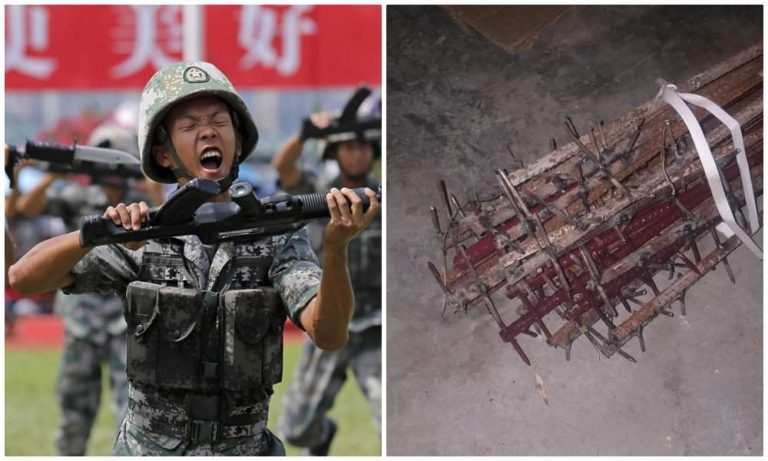
Nail studded rods used to attack Indian soldiers, read how Chinese troops unleashed deceptive, savage attacks to the point of mutilation on our soldiers

The treacherous attack by the Chinese troops on the Indian soldiers along the Line of Actual Control (LAC) near Indian territories of Galwan valley at Ladakh seems to be premeditated as new reports emerging out has indicated that the Chinese troops had well prepared to unleash deliberate savage attacks on the Indian troops at the LAC.

According to IANS report, the Chinese People’s Liberation Army (PLA) had launched savage and deceptive attacks, many to a ‘point of mutilation’ against the Indian troops on Monday night. The Chinese troops reportedly trapped and encircled around 120 Indian soldiers on Monday night.

Journalist Neeraj Rajput shared an image of rods with sharp nail attached to them used to attack Indian soldiers.

Reportedly, this kind of weapons were used to attack Indian soldiers.

The Chinese PLA reportedly held firearms to faces of Indian soldiers, brutally tortured some Indian soldiers to death. The sources to IANS added that the Indian soldiers did not retaliate with guns and followed government directions not to use firearms. The hand-to-hand fight between the two forces erupted. However, PLA troopers used all kinds of weapons against the Indian soldiers, who bravely fought and tried to control the situation.

Indian soldiers were outnumbered by Chinese troops

The Indian Army troopers, who confronted the Chinese troops near the patrolling point number 14 at the Galwan valley were also outnumbered by 1:5 ratio when they came under attack from the Chinese People’s Liberation Army soldiers. The PLA troopers “savagely attacked” Indian Army personnel, according to sources in the government who has details of the Monday night clashes between the two army soldiers.

“The numbers were stacked up against the Indian Army troopers. Yet, the Indian side decided to fight the PLA troopers. The Indian soldiers were outnumbered 1:5 by the Chinese troopers,” the sources said on Wednesday.

Reportedly, China is also said to have used thermal imaging drones to trace the Indian Army soldiers scattered on the treacherous terrain before brutally attacking them.

“It was the deadliest attack carried on the Indian Army personnel by the Chinese military personnel to our memory,” the sources added.

“We were outnumbered,” admitted an Indian Army officer, talking about the clash that went on for six to seven hours.

Soldiers were attacked to the “point of mutilation”

Colonel Santosh Babu, who martyred during the Monday night clashes at PP-14, along with a small team was patrolling at the spot to check whether Chinese troops had withdrawn from the standoff position, as promised by them. However, the Chinese had trapped the Indian soldiers and brutally attacked them to the “point of mutilation”.

The Indian Army added that the Indian troops had reached the spot where the clashes happened without any animosity and were displaying friendly gestures to the Chinese side that they were there to check if the de-escalation agreement was being followed as promised.

“But they trapped and carried out the attacks, a purely savage act,” the Indian Army official said to IANS.

The officer added that causality numbers could increase, however, refused to comment on the numbers, but just said that “several are injured”.

On Tuesday, Indian helicopters flew around 16 times to bring bodies and injured Indian Army personnel from the site of the attack in the Galwan Valley in Ladakh region. The Indian Army also flew bodies of four Indian Army personnel from Galwan Valley to Leh on Wednesday morning.

Indian troops killed after Chinese launches aggressive attacks

The Indian Army on Tuesday released a statement saying that at least 20 Indian soldiers had martyred, including the Commanding Officer of a battalion at Galwan valley in a violent faceoff on Monday night. The Indian soldiers were killed in an unprecedented violent clash with PLA troopers in the Galwan Valley on Monday night.

The official statement said that it took place during the de-escalation process underway in the Galwan valley. It reported that no bullets were fired but the Chinese troops pelted stones and clubs.

During the clashes, the Chinese troops have also suffered severe casualties as at least 43 Chinese troops are either injured or dead during the attacks that took place on Monday night.

These are the first casualties suffered by either army since 1975 when an Indian patrol was ambushed by the Chinese troops in Arunachal Pradesh.

The latest attack took place after the Brigade and Company commander-level talks happened in eastern Ladakh between the two militaries. Security establishment officials have maintained that the Chinese PLA provoked the skirmishes by establishing posts in the Indian territory.

Trump signs Uighur bill, USA can now identify and sanction Chinese officials responsible for human rights violations in Xinjiang camps

On Wednesday, the Trump administration in the USA signed a legislation that allows the American Government to hold Chinese officials responsible for China’s persecution of Uighur and other Muslim minority groups. The bill, formally named the “Uighur Human Rights Policy Act of 2020,” was approved by the House and Senate in May.

Trump issued a statement that said, “the signed legislation holds accountable perpetrators of human rights violations and abuses such as the systematic use of indoctrination camps, forced labour, and intrusive surveillance to eradicate the ethnic identity and religious beliefs of Uighur and other minorities in China.”

Legislation asks for the closure of camps in Xinjiang

The Hill reported that the legislation objects to the treatment of Uighur Muslims and other Muslim minorities by the Chinese Communist Party. It calls for closure of such camps in the Xinjiang region of China. The legislation gives the American government the power to identify and sanction individuals responsible for the abuse of minority groups.

USA can block assets and deny visas to identified officials

Within 180 days of signing the bill, as per a report in ANI, the Trump government will submit a report to Congress that will identify each foreign individual, including officials from the Chinese government responsible for human rights abuse of Uighur Muslims in the Xinjiang region. The abuses listed in the legislation include torture, degrading treatment or punishment, prolonged detention without charges and a trial, abduction and denial of the right to life, liberty, or the security of a person.

The administration is required to sanction the responsible individual by blocking their assets and declare them ineligible for admission or visas to the United States. The White House has the power to waive sanctions but only after notifying Congress and that too if it is in the national interest.

Senator Marco Rubio authored the legislation. It passed the Senate by unanimous consent, and the House approved it with a bipartisan vote in May.

China condemns legislation

Chinese government’s mouthpiece Global Times posted two tweets condemning the legislation. They wrote that the legislation defames the human rights situation in China. It added that America is trying to attack China’s policy and interfering in China’s internal matters.

In the second tweet, they said that China had urged the Trump administration to correct its mistake, otherwise, China has to take countermeasures and the US will face the consequences.

Trump agreed to Xi Jinping’s reasoning behind camps, says John Bolton

The day on which the legislation was signed, The Wall Street Journal published an excerpt from a book published by former national security adviser John Bolton that alleged that during the G20 meeting of 2019 in Osaka, Trump might have agreed with the reason given by Chinese President Xi Jinping for building the camps in the Xinjiang province.

Bolton wrote, “According to our interpreter, Trump said that Xi should go ahead with building the camps, which Trump thought was exactly the right thing to do,”

He added, “The National Security Council’s top Asia staffer, Matthew Pottinger, told me that Trump said something very similar during his November 2017 trip to China.” The Department of Justice has already filed a suit against the release of the book that is set to be published next week, stating it contains classified information.

China’s treatment of the Uighur Muslims

The Chinese administration has been under fire for its treatment of Uighur Muslims and other Muslim minorities in China. In 2019, Muslims had called for a boycott of Chinese products against Chinese policies and ban on Ramzan in China. However, China has used its power to suppress the voice of leaders on the international platform. The ties between China and Pakistan are well known, and Prime Minister of Pakistan Imran Khan has refused to comment on Uighur Muslims on several occasions. Chinese video app TikTok also banned user(s) on several occasions for highlighting the plight of Muslims in the Xinjiang region.

Did you know Congress party had signed a deal with Chinese Communist Party to consult each other on ‘important issues’: Read details

As tensions are mounting between India and China amidst the ongoing aggression from Chinese troops along the Line of Actual Control near Galwan Valley at Ladakh resulting in the death of 20 Indian soldiers and over 40 casualties on the Chinese side, there seems to be no-coherence between the opposition parties in the country as they have yet again resorted to cheap politicking of issues critical to national security.

At a time when the opposition parties, especially the Congress party has been castigating the Modi government over the ongoing standoff and subsequent Chinese aggression along the LAC on Monday resulting in the unfortunate death of Indian soldiers, more details are emerging regarding the intimate connection between the Congress party and the Communist Party of China (CPC) – the ruling and only political party in China.

The Congress party’s kid-glove treatment to China and the soft-condemnation against the Communist nation has now raised eyebrows as to know why the principal opposition party has been soft towards the hostile neighbour of the country. It is being said that the close connections between the Congress party and the CPC may be one of the reasons why the principal opposition party has now chosen to remain mute in attacking the Chinese and instead has been unleashing all its attacks against its own government.

Congress had signed a deal with the CCP to consult on ‘important issues’

One of the main reasons for the silence of the Congress party, perhaps, stems from the 7 August, 2008 agreement between the Sonia Gandhi-led Congress party and the Communist Party of China (CPC).

During UPA1 in 2008, the Congress party and the Communist Party of China (CPC) had signed a deal in Beijing for exchanging high-level information and co-operation between them. The memorandum of understanding (MoU) also provided the two parties with the “opportunity to consult each other on important bilateral, regional and international developments”.

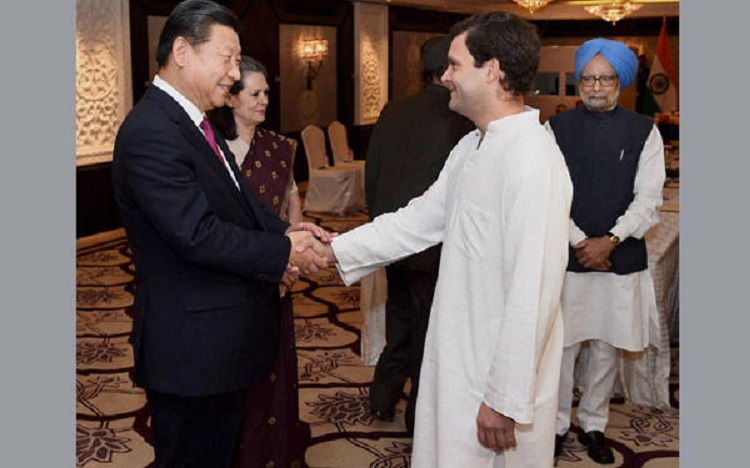
Interestingly, the MoU was signed by the then Congress general secretary Rahul Gandhi and on the Chinese side, it was signed by none other than Xi Jinping himself, who was then the Chinese vice-president and standing committee member of the CPC’s politburo. The MoU was signed in the presence of his mother and party president Sonia Gandhi.

Before the signing of the MoU, the then Congress president Sonia Gandhi and her son Rahul Gandhi had held a long meeting with Xi and other senior leaders of the Communist Party of China to discuss issues of mutual interest.

In 2008, Sonia Gandhi had visited Beijing along with Rahul, daughter Priyanka, son-in-law Robert Vadra and their two children to attend the opening of the Olympic Games. A year before, Sonia Gandhi and Rahul Gandhi had also led a delegation of the Congress party to China.

The 2008 MoU between CCP and Congress came at a time when the Left parties in India had expressed lack of trust in UPA-1 government led by Congress. The India Today report suggests that even as China was aware of the political landscape in India, Xi Jinping went ahead and signed the pact with Congress as CCP wanted deeper ties with Congress, especially the Gandhi family.

Rahul Gandhi’s mysterious relationship with China

Not just the MoUs, but the close relationship between the Chinese leadership and the Congress party, especially Rahul Gandhi had also got highlighted just few years ago during the Doklam stand-off when Rahul Gandhi was caught secretly meeting Chinese officials.

The Gandhi-scion, not once but twice, was caught meeting Chinese officials, raising suspicion among the policymakers regarding the intent of his secretive meeting with the Chinese.

The first meeting had taken place in 2017, when Rahul Gandhi had a meeting with Chinese Ambassador to India Luo Zhaohui, especially at a time when India and China were in the middle of a stand-off at Doklam. At first, the Congress party had denied such meetings and had termed news reports suggesting that the Gandhi-scion had indeed met Chinese officials as ‘fake news’.

However, Congress party had to face massive embarrassment after the Chinese embassy had themselves confirmed about the meeting between the then Congress vice president and the Chinese envoy.

This meeting was especially suspicious, because the Congress party and Rahul Gandhi, at that time were vehemently attacking the Indian government over their stand in the ongoing military standoff with China.

In 2018, Rahul Gandhi had himself revealed regarding the secret meeting with a couple of Chinese ministers during his trip to Kailash Mansarovar in September 2018. The meeting was kept secret initially but later Rahul Gandhi had revealed the details of the meeting accidentally leading to people to speculate even more as to why both the Congress party and China were trying to hide the meeting.

Rahul Gandhi, the then president of India’s main opposition party secretly meeting the government officials of China and taking steps to keep the meetings secret had raised quite a few eyebrows back then.

Congress party’s disapproval over Adhir Ranjan Chowdhury’s backlash against China

In another interesting turn of events, Congress leader and Leader of Congress party in Lok Sabha – Adhir Ranjan Chowdhury, in May, had tweeted against China for its aggression along the LAC and had issued some warnings to China while praising the Indian forces.

The Congress leader, slamming China, warned the communist nation about how Indian forces can ‘defang the venomous snakes’ like China and stated that the entire world was watching the sinister designs of China while calling them “Yellow expansionist”. Chowdhury also urged the Modi government to accord to diplomatic recognition to Taiwan “without much delay”.

However, Adhir Ranjan Chowdhury’s bluster against China did not last long. Congress Leader of Opposition in the Lok Sabha Adhir Ranjan Chowdhury was forced to delete his tweet against China as it had reportedly did not please the Congress leadership.

After Chowdhury’s aggressive tweet against China, Rajya Sabha MP and senior Congress leader Anand Sharma had soon issued a clarification for the anti-China tweet made by the Congress leader Chowdhury.

Anand Sharma had tweeted, “The Indian National Congress recognises and values the special strategic partnership between India and China. As two ancient civilisations and large economies of the world, both countries are destined to make a significant contribution in the 21st Century.”

“The views of Congress Lok Sabha leader Adhir Ranjan Chowdhury in China are his own and do not reflect the party position,” the Rajya Sabha MP had added.

Coronavirus in Delhi: Four AAP MLAs tested positive so far, 2414 more cases on a single day

The coronavirus situation in Delhi is getting more dangerous every day. Till now, four Aam Aadmi Party MLAs have tested positive for Wuhan pathogen. Karol Bagh MLA Vishesh Ravi was the first lawmaker from Delhi to test positive for Covid-19 in May, followed by Patel Nagar MLA Rajkumar Anand.

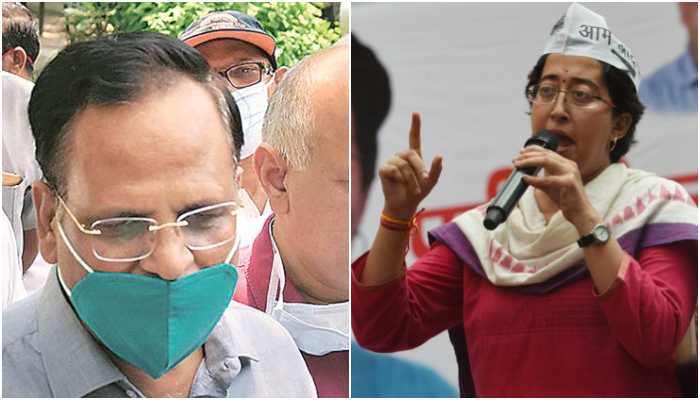
Health Minister Satyendar Jain and spokesperson Atishi Marlena tested positive

On Monday night, Shakur Basti MLA and state Health Minister Satyendar Jain was admitted to the hospital after showing Covid-19 symptoms. In the first test, his results were negative, but the second test results came out positive on Wednesday. Kalkaji MLA Atishi Marlena was also tested positive for Covid-19 infection on Wednesday evening. She became the fourth MLA of AAP to be tested positive. She is currently under home quarantine. A few days back, Chief Minister Arvind Kejriwal was also tested after complaining of fever and sore throat, but he was tested negative.

Jain had recently attended a high-level meeting organized by Union Home Minister Amit Shah. Union Health Minister Dr Harsh Vardhan and CM Arvind Kejriwal were also present during that meeting, among others. He had been admitted in Delhi’s Rajiv Gandhi super speciality hospital.

Grim situation of Covid-19 in Delhi

Delhi is amongst the worst-hit states, and the Delhi government’s mismanagement was highlighted multiple times by doctors and patients. Currently, there are 27,741 active cases, and 1,904 persons have already lost their lives in the national capital. On Wednesday alone, Delhi saw a spike of 2414 cases and 67 deaths due to the Wuhan Coronavirus, a record hike in caseload on a single day.

To help boost its crumbling health infrastructure amid rising cases and overwhelmed hospitals, the Delhi government had recently ordered several hotels in the city to place their resources at the disposals of selected Covid-19 dedicated hospitals. All rooms of the Taj Man Singh and the banquet halls of Hotel Surya and Hotel Crown Plaza were to be used as Covid-19 care facilities.

Fact-check: Is Govt of India buying Rs 2.5 lakh ventilator for Rs 4 lakh using PM CARES Fund. Read how Congress ecosystem is spreading misinformation

On Tuesday, after the first batch of ventilators procured using the PM CARES fund were made available to hospitals, Congress supporters on Twitter huddled up to spread wild conspiracy theories casting aspersions that there is a ‘ventilator scam’ underway even as India fights Chinese coronavirus as well as soldiers at the border.

One Saket Gokhale was one of the first to float the conspiracy theory. In a seven part thread, Gokhale tweeted how Rs 750+ crore have gone ‘missing’ from the funds allotted for procuring ventilators under the PM CARES fund.

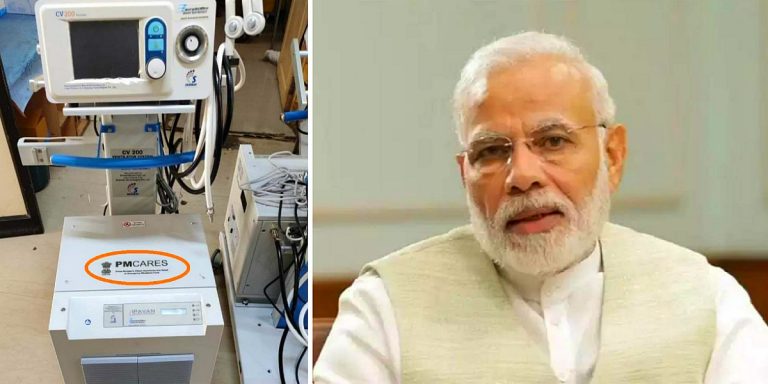
The ventilator model Skanray CV200 procured from Mysuru based Skanray Technologies. Gokhale cast aspersions that since Skanray Technologies is licensed partner for manufacturing Philips ventilators, Skanray is passing off the same ‘Philips CV200’ model as made in India model. He then fished out a ‘price list’ from IndiaMart, an e-commerce portal, for ‘Philips CV200’ model which claimed how it is sold on IndiaMart at Rs 2.5 lakh per unit.

So now, Gokhale does some basic high school math and says how out of the Rs 2,000 crore out of Rs 3,100 crore PM CARES fund allotted for procurement of 50,000 ventilators, government is paying Rs 4,00,000 instead of Rs 2.5 lakh.

Soon, other Congress minions spread the same as gospel truth and claimed how there’s a ‘ventilator scam’ underway.

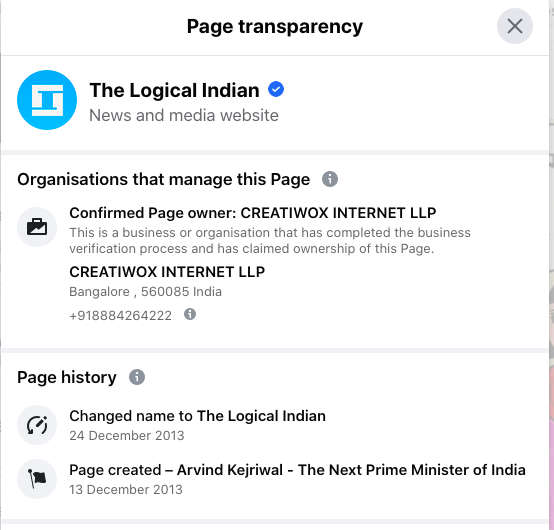
Pro Aam Aadmi Party writers also thought this is a critical thread. Kothari is the ‘Managing Editor of ‘The Logical Indian’ which started as an Arvind Kejriwal fan page on Facebook.
The Logical Indian Facebook page history.
Soon, many lapped up Gokhale’s fantasy peddled as fact.

Now, before we get into the facts, here’s some little trivia for Gokhale.

IndiaMart price for ventilator

“Philips CV200” which Gokhale claims is the one passed off as Skanray ventilator is actually selling for Rs 11 lakh a piece.

Gokhale’s twitter thread was refuted by the CMD of BEL (Bharat Electronic Limited), a Professional Defence electronics company in India which is a Navaratna defence Public sector under Ministry of Defence, Government of India.

The BEL CMD said how the information peddled in the series of tweets is fabricated as as per their knowledge Philips does not manufacture any such model. “It appears as though a fictitious product under the brand name of Philips is being promoted on virtual marketplace,” he said. At a time when the CMD of the PSU has more crucial things to do than respond to social media warriors, he explained how the CV200 is a high-end ventilator with 2-hour built-in battery backup and has several other safety features.

“The components used for manufacture are from reputed global medical grade components supply-chain partners. CV200 ventilator is priced competitively considering its configuration, features and performance,” he said. The CMD further added that the ventilators bear the PM CARES Fund logo as they are being procured under the fund allocated for the same and the logo ensures its traceability and accountability.

The CMD explained how the DRDO has supported in the development and indigenization of few critical components required for manufacturing large number of ventilators under global lockdown situation amid coronavirus outbreak.

And after all the facts were put before him, Gokhale’s only reason to not believe them is that he was not sure if the Twitter account is indeed of the CMD of BEL and throw around fancy-sounding jargons to let his followers feel how he is smartest thing in the world after Rahul Gandhi.

To sum up, no, government of India did not buy ventilators retailing at Rs 2.5 lakh for Rs 4 lakh. And Rahul Gandhi is smarter than Saket Gokhale.

India elected unopposed to non-permanent seat in the United Nations Security Council

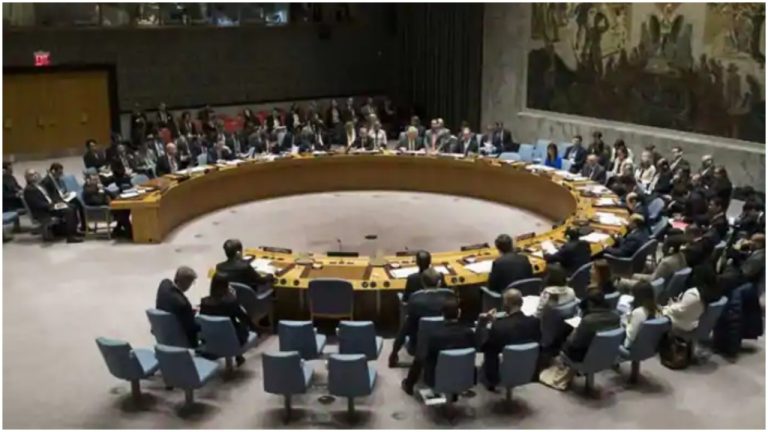
In a significant development, India was elected to the United Nations Security Council (UNSC) as a non-permanent member from the Asia-Pacific category for a two-year term on Wednesday night.

According to the reports, India received overwhelming support as it was elected unopposed as one of the non-permanent members of the UNSC after winning 184 votes in the 193-member General Assembly. The minimum requirement to get elected was 128 votes.

“”I am truly delighted that India has been elected as a non-permanent member of the United Nations Security Council for 2021-22. We have received overwhelming support and we deeply humbled by the tremendous confidence that the member states of the United Nations have reposed in India,” TS Tirumurti, the Indian permanent representative to the UN said in a video-recorded message.

He further added, “India will become a member of the United Nations Security Council at a critical juncture and we are confident than in the COVID- and the post-COVID world India will continue to provide leadership and a new orientation for a reformed multilateral system.”

India wins its eighth term, to begin its term from 2021

India will begin its two-year term on January 1, 2021. This is the eighth time that India will sit at the UN high-table, which comprises five permanent members and 10 non-permanent members.

Earlier, India had served seven times earlier as a non-permanent member of the UNSC in 1950-1951, 1967-1968, 1972-1973, 1977-1978, 1984-1985, 1991-1992 and 2011-2012.

Along with India, Ireland, Mexico and Norway also won the UNSC elections held on Wednesday.

India was endorsed by Asia-Pacific group

Last year, all the countries in the Asia-Pacific Group at the United Nations had unanimously supported India for a non-permanent seat at the UN Security Council (UNSC) for a two-year term in 2021-22.

The Asia-Pacific Group consists of 55 members states, who was to nominate one of its members for the June 2020 elections to a non-permanent seat on the UNSC. The endorsed members need the vote of two-thirds of the 193 UN General Assembly members to win a non-permanent seat on the UNSC.

The Council is composed of 15 Members, with five nations, USA, Russia, China, France and the United Kingdom being permanent members and ten non-permanent members elected for two-year terms by the General Assembly.

BJP led govt in Manipur on the verge of collapse as 9 MLAs withdraw support, including 3 BJP MLAs switching to Congress

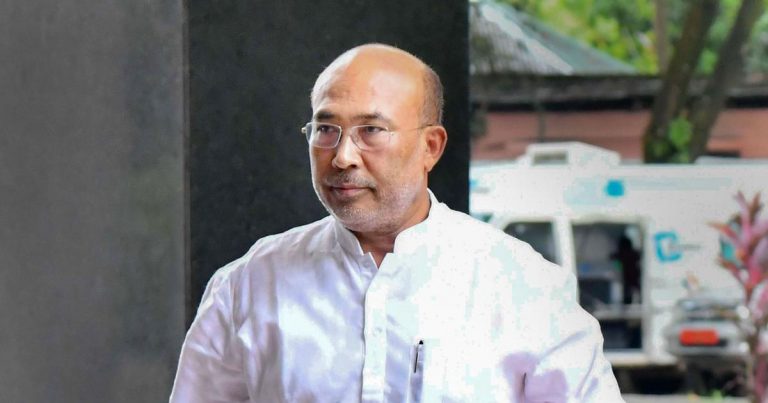
As the country continues its battle against Coronavirus and the defence forces are involved in a highly charged situation with China at the LAC a Ladakh, a new political drama has started in the North Eastern state Manipur. The BJP led government is now looking towards after they lost the support of 9 MLAs.

The N. Biren Singh government faced the crisis after the National People’s Party (NPP) with 4 MLAs withdrew their support to the government. The ministers of the NPP also resigned from the cabinet, including Deputy CM Joykumar Singh. Along with this, three MLAs from BJP also resigned from the party and joined Congress. The lone Trinamool Congress MLA Tongbram Robindro Singh from Thanga, and independent MLA from Jiriban, Ashab Uddin, who were supporting the BJP led government, also withdrew the support, thereby the govt lost the support of 9 MLAs. The BJP MLAs to switch to Congress are Soibam Subhaschandra Singh, TT Haokip and Samuel Jendai.

With this, the strength of the government has reduced to 30 in the house. In the assembly elections in 2017, BJP had won 21 seats, while Congress had emerged as largest party with 28 MLAs but fell short of the majority mark. BJP was able to form the government led by Biren Singh with the support of 4 NPP MLAs, 4 NPF MLAs and one LJP MLA. Later, eight MLAs from Congress had left the party and joined BJP, reducing the Congress total to 20. Subsequently the TMC member and one independent MLA also decided to extend support to the NDA government, and the total strength of the BJP led government was 40 in the state.

In March this year, BJP MLA Thounaojam Shyamkumar was disqualified as a member of the Assembly, who had won the elections on a Congress ticket but joined BJP even before being he was sworn in as a member of the house. The assembly speaker had disqualified him after the Supreme Court had ordered his removal based on a disqualification petition filed by Congress leaders. At present the Andro constituency that he had represented is vacant, and hence the total strength of the house is 59.

After the exit of 3 BJP MLAs, the party has now 25 MLAs, although the CM said that party strength is still 27. The government still has the support of NPF with 4 MLAs and LJP with one MLA. Therefore, the strength of the government remains 30 in the 59-member house.

But earlier in this month, the Manipur High Court had ruled that the remaining 7 former Congress MLAs who had joined BJP, can’t enter the assembly until the petitions for their disqualification are decided by the speaker’s tribunal. Therefore, these seven MLAs can’t vote in the house. This means if a trust vote takes place, BJP will not get their votes, and the party will be reduced to only 22 votes, excluding the speaker. On the other hand, Congress now has 23 MLAs including 3 who defected from BJP, and will get the support of 6 others who left the govt today, giving them 29. This means Congress will more numbers in the house where the total strength will be effectively reduced to 52, as BJP and allies have 27 MLAs now.

But it remains to be seen if the 3 BJP MLAs who joined Congress today are allowed to vote as they are also bound to face disqualification charges. If they are barred, Congress numbers will drop to 26.

‘These actions will have a serious impact on bilateral ties’: S Jaishankar conveys strong message to Chinese foreign minister

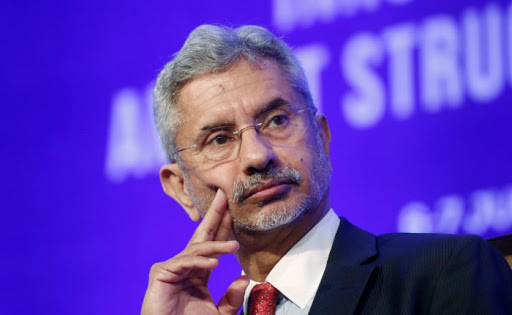
External Affairs Minister Dr. S Jaishankar in a telephonic conversation with Chinese Foreign minister Wang Yi on Wednesday conveyed strong protests from the Indian government over the recent aggression by the Chinese military along the LAC in eastern Ladakh. The minister reminded the Chinese counterpart about the Commander level meet at Moldo on June 6 and stated that the Chinese penetration into the Indian borders is the source of the dispute.

In the strongest terms, Dr. S Jaishankar stated that the Chinese side is responsible for the whole dispute due to its premeditated and planned activities that led to violence and casualties on both sides. He asserted that these actions will have a serious effect on India-China bilateral relations.

Dr. S Jaishankar told Wang that it is time for China to reassess its actions and take corrective steps. The two sides should scrupulously and sincerely implement the understanding that was reached by the Senior Commanders on 6th June. Troops of both sides should also abide by the bilateral agreements and protocols. They should strictly respect and observe the Line of Actual Control and should not take any unilateral action to alter it.

the conversation concluded with an agreement that the overall situation will be handled in a responsible manner, and both sides would implement the disengagement understanding of 6 June sincerely. Both sides will ensure peace and tranquillity as per bilateral agreements and protocols.

Prime Minister warns China, said the sacrifice of our soldiers won’t go in vain

While addressing the nation, the Prime minister condoled the death of soldiers who were martyred in the Ladakh standoff with Chinese troops and said that the sacrifice of our soldiers will not go in vain. India wants peace but if instigated, India is capable of giving a befitting reply.

PM Modi said, “I want to assure the country that the sacrifice of our soldiers will not go in vain. For us, the unity and integrity of India are of utmost importance and no one can stop us from protecting it. No one should have any doubt that India wants peace. But, if instigated, India is ready and capable of giving a befitting reply in any manner.”

Ladakh standoff at Galwan Valley

violent face-off took place between Indian and Chinese troops on the intervening night of 15th and 16th June which led to casualties on both sides. While India has confirmed 20 casualties, the Chinese authorities have not given official figures. However, it is believed that the casualties of Chinese troops would be above 40.