Home Blog Page 5713

Is the anti-CAA protests a test case for Muslims to find their true political worth in India?

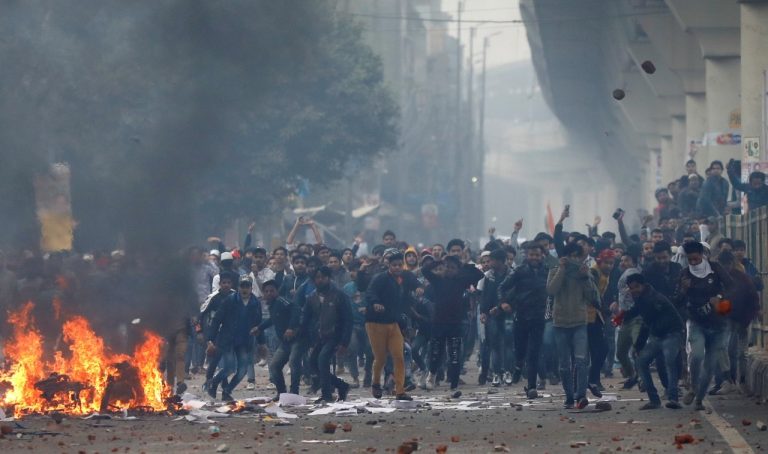
Since over the past month, a series of protests have erupted across the length and breadth of the country that saw an unprecedented turnout of one community on the roads – Muslims. The ubiquity and scale of participation of the community, especially of the women, in these protests directed against the newly enacted Citizenship Amendment Act (CAA) and the proposed NRC, has been quite striking. Muslims, wearing their religious identities on sleeves and chanting communal slogans, like ‘la-ilaha-ill-allah’, have hit the streets throughout the country daring the governments with an amorphous call to azadi – more specifically, a ‘Jinnah wali azadi’, intending to seek ‘freedom from the Hindus’ in the Jinnah style.

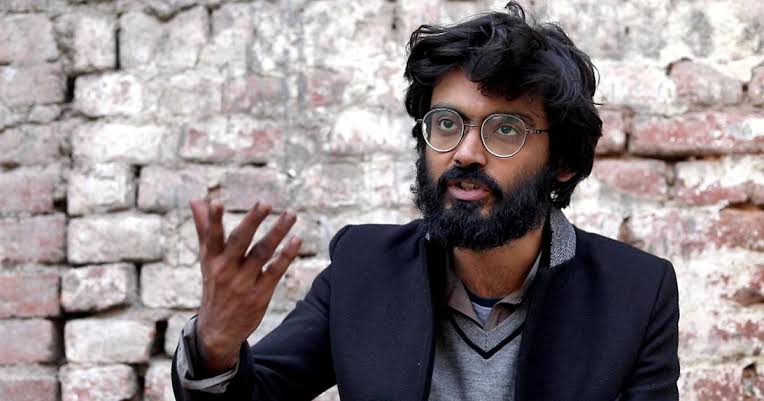
At times, the call intended to break India by wriggling out its chicken’s neck, as explained by a JNU student, Sharjeel Imam in a recently surfaced video. At first glance, it looks quite surprising. The Muslims have been protesting across the country against a cause that amusingly doesn’t exist. Given the level of illiteracy and awareness among the Muslim masses, one can admit that the rank and file of the community may not understand the nitty-gritty of complex legislation, yet many among the community are certainly capable of reading the law and making the truth out of it.

Many of their leaders must be knowing the truth, yet it looks surprising why they want the ignorance to persist and the lie to stay put forever. It appears that, through building a muscular mass movement, the Muslim thought-leaders are aiming at things beyond the CAA. In reality, the CAA is just the face, but the real objective of Muslims behind the unrest is something else.

Read: The Battle from CAA to JNU: Khilafat 2.0, Communist Fantasies, Petty Politics and the conspiracy of Hong Kong style protests

Is the CAA and NRC protests a test case for Indian Muslims to find their true political worth in India under Narendra Modi? Let’s examine. The Godhra incident and the riots of 2002 that followed it in Gujarat can be seen as the watershed events in the political evolution of Muslims in Indian democracy. Simultaneously, it was also a watershed period in the evolution of a new brand of activist-journalism where few media houses and journalists worked more like activists to ‘preserve’, what they called, the secular fabric of society from the emerging threats of a rightwing ‘onslaught’. These media activists dubbed Gujarat under Narendra Modi as a ‘Hindutva laboratory’ where the right-wing nationalists were set to experiment with their cherished ideals of cultural nationalism.

A new trend of activism had started emerging from Gujarat as all those opposed to Narendra Modi closed ranks in their fight against him, and they took immense pride in calling themselves ‘liberals’. These opponents, coming from different walks of life – art, cinema, literature and the civil society, apart from the media and the politics – appeared to stand in isolation but worked in close co-ordination to defeat ‘Modism’. To these neo-liberals of the post-Godhra India, Gujarat became the counter-laboratory to neutralize the surge of the Hindutva ideology.

Read: Muslim radicals set Delhi ablaze: What explains the behaviour of these Indian Muslims

The liberal cohorts chalked out a 3D model – demonize, defame and defeat – and worked tirelessly at it to sully the image of Modi and his government in Gujarat. Muslims became the eternal ‘victims’ in the BJP state and ‘justice’ for Muslims became the primary goal for all these liberals. In their competitive overzealousness to execute this 3D model, they turned blind eye to the ethos of liberalism as they took to cherrypicking of facts and displaying selective outrage on issues that divided the society in a regular way.

This reactionary model led to a strong counter-consolidation of opinions in favour of Modi, who on the strength of good governance, tough talkings and uncompromising stand on issues, became a rallying point for the majority of the people looking out for a strong leader. Thus began a cult of Modi in Gujarat that spread slowly to other parts of the country, melting the boundaries of state, languages and ethnicity. As the cult grew stronger, the defeat of the liberals grew bigger.

However, in the fight between Modi and the liberals, the Muslims became the sufferers as their real issues were pushed under the carpet. Although, while unable to stop the political growth of Modi on the national level, the liberal cabal had managed to evoke a perilous spectre around Modi that put permanent fear in the minds of Muslims about him. Stopping Modi, thus, became an existential question for the common Muslims. In such a scenario, the victory of Modi in 2014 and his ascendence to the throne of Delhi was a stunning event for the Muslim community. The fact that not a single member out of the 282 winnings BJP MPs in the 2014 election was from the Muslim community, was even scarier. It was for the first time in the history of India that a political party forming a government at the centre did not have a single Muslim MP. Further, 22 states and 6 Union Territories, comprising of 54% Muslim population that returns 364 MPs, had absolutely no representation in the 16th Loksabha (2014-19).

Read: Here are 20 heinous incidents of violence, arson, rioting by Muslims mobs during anti-CAA protests

The trend was already set, as Prof Christopher Jaffrelot (King’s India Institute, London) and Gilles Vernier (The Ashoka University) had, in a joint article published in the Indian Express (July 30, 2018), showed that over the span of 34 years since 1980 to 2014, just 20 Muslim candidates were put up the BJP out of who only 3 could win!

Even on the state level, the story was no different – out of total 1,418 BJP MLAs from all the states put together in January 2018, only 4 were Muslims. IN the 28 assembly elections across India till May 2019, the BJP had fielded only 22 Muslim candidates.

With zero representation in the ruling dispensation in 2014, the worst fears of the community had come true. Yet the community held its patience. The repetition of the BJP win in 2019 was even more stunning as the liberals, in tandem with a vociferous Congress and the other opposition parties, had convinced the community of a sure defeat for Modi.

But, despite all the shrill liberal noises around issues like intolerance, cow vigilantism and growing majoritarianism, the Modi win, to their dismay, came even bigger in 2019. Disenchanted with the liberals, the patience of the community had thinned out. Further, a more serious cause of the Muslim desperation is the declining political clout of the community in the post-Modi India since 2014. Representation of the Muslims in the Indian parliaments has historically remained very low. Studies say that protection of the interests of a community or a group is dependent on the physical representation of their members in the legislatures.

Read: CAA, NRC and Lessons for the Government of India from the Rohingya crisis

Political researcher Saloni Bhogale, after analysing 2,76,000 questions asked in the Indian parliament between 1999 to 2017, had concluded that Muslim parliamentarians were more inclined to ask questions that directly pertained to specific concerns of their community. Thus, with the Muslim population standing at 14.2% now, it is believed that, in order to safeguard the interest of the community in a better manner, the Muslim representation in Loksabha should ideally be in the range of 14-15%. The Muslims had won just 11 out of 489 seats (nearly 4%) in the first parliamentary elections in 1952, which peaked to a high of 49 seats (around 9%) in 1980 elections, in which as many as 30 Muslim MPs had won from the Congress party alone that formed the government.

However, the trend was again reversed in later years, as over a period of 34 years between 1980-2014, the Muslim representation in the parliament was reduced by two-third, as just 22 Muslims got elected in 2014. With a marginal increase to 26 MPs in the 17th Loksabha in 2019, the Muslim representation is hardly encouraging.

The worse part of this underrepresentation is that along with a regular decline in the share of Muslim representation in the parliament, their population went on increasing – from 9% in 1952, the Muslim population had grown to 14.2% in 2011. The population of Muslims, because of a higher growth rate, had almost doubled in just 30 years in absolute numbers between 1991-2011, and their share in the total population rose by 3% over this period, from 11.1% to 14.2%. However, over the same period, their share in parliament declined from around 7% to 4.5% (2014) – a phenomenon that is termed as ‘Missing Muslims’.

Though, under-representation of Muslims in the central legislatures is a long term phenomenon preceding the rise of BJP, the situation before 2014 was entirely different. Even though the Muslims had a minuscule presence in the parliament, they always had a strong say in the political decisions of the government. By their propensity to vote for a single party or candidate en block, the community created a sort of ‘vote bank’ within the democratic system that returned immense political rewards for them. Through a clever exercise of their vote bank, the Muslims managed to get the major political parties to dance to their tunes. As a result of it, all the successive governments since 1952 took up only those issues that the community liked, and dropped those that they didn’t like. Thus, although, the Muslims never had a considerable presence in the parliament, they always ruled in the Indian political system through proxies.

As a result of the proxy power of the Muslims in the successive governments, none of the political formations since 1952 had dared to touch contentious issues like the Common Civil Code, removal of Article 370, Triple Talaq, National Register of Citizens, 2-child policy or awarding citizenship to persecuted Hindu refugees, etc. Through a wily use of their vote bank and proxy rule, the Muslims had acquired an undeclared veto power in Indian political system since 1952. in other words, the ‘Missing Muslims’ used to express themselves through a political veto that they had appropriated for themselves through their vote bank. However, it all changed after 2014, when Narendra Modi stormed to power in Delhi making first BJP government in the centre with an absolute majority on its own.

Suddenly, the proxy rule of the Muslims and the resultant veto power was taken away because Narendra Modi was in no way dependent on the Muslim vote bank, while those making their political career on it were rendered ineffective. The vote bank had lost its clout and say in-Indian democracy.

Read: Infant’s death was ‘qurbani’ in the ‘jihad’: Shocking video emerges where anti-CAA protestor justifies using children for protests

The state of UP was a classic indicator to this phenomenon; a state with 80 seats in the Loksabha, and nearly 20% Muslim population- that goes up to 50% in pockets like, Rampur and Moradabad – couldn’t return a single Muslim member to the 16th Loksabha, whereas BJP had garnered 71 seats out of 80. Before 2014, Muslims decided the fate of candidates in as many as 20 seats in UP where Muslim populations exceeded 20% of the electorate.

Although 2019 general elections returned 6 Muslim MPs from UP to the Loksabha, a bigger victory to Modi in the parliament had made the gains virtually ineffective. Therefore, the inability of the Muslim community to stop the political growth of Narendra Modi beyond Gujarat and the tragic loss of their proxy rule and the political veto in Indian democracy were the two failures that threw the thought-leaders of the community in utter despair.

As Modi government began violating all those ‘no go’ areas of Indian politics and trampling every single forbidden zone against which the Muslims had been exercising their community veto till yesterday, the thought-leaders of the community were driven to a do-or-die situation. The anger, hatred and wrath visible among the Muslims today is precisely because of this despair that has been diligently explained to them by their leaders. Now, the Muslims feel that they’ve lost their existential battle and, in the case, they are left with no choice than what Jinnah had adopted in a similar situation in 1946 – direct action. And, Jinnah was greeted with thumping success. This explains why the Muslim leaders want the ignorance to persist in the community and the lie to stay put for ever.

Read: Into the Islamist’s mind: The role of educated Muslims in Sharjeel Imam’s ‘Plan of Action’

The ‘ignorance bomb’ happens to be a great weapon in a mass movement and the Muslim thought leaders are diligently making good use of it.

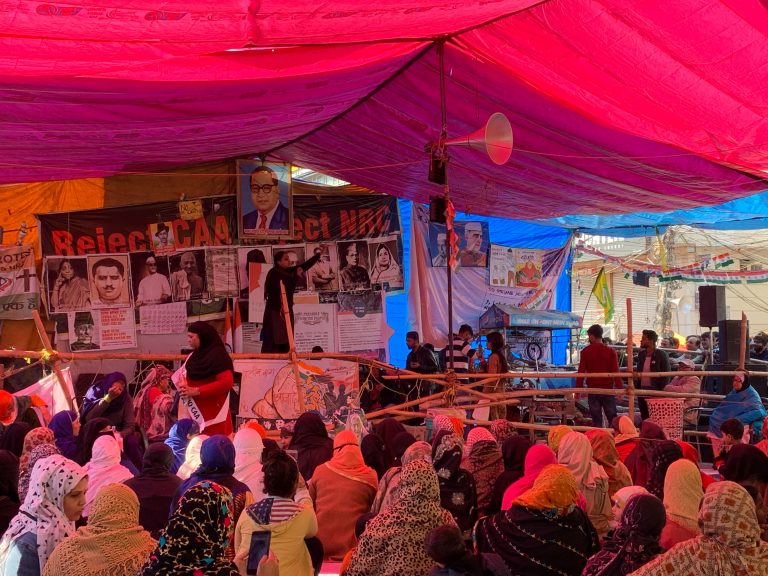
Therefore, these protest movements in universities and in those many Shaheenbaghs across the country is never about the CAA and the NRC, as admitted by Afreen Fatima, a JNU student, in a recently surfaced video; it’s also not about saving the democracy and the constitution or preserving the spirits of secularism in India – putting up Indian flags and reading the preambles of the constitution are just some of the devious facades meant to fool no one but themselves. The Muslim protest movements is all about testing their true political worth in the post-Modi India through the display of their collective might on roads.

By forcing a violent mass movement on the government, the Muslim leaders hope to pressurize the Modi-Shah duo to come to the negotiation table and force their hands into returning the Muslim community some of their privileges that they enjoyed in the Indian political order until 2014. They hope that a long and violent mass movement would deter the duo from annoying the community with further irritants, like the Common Civil Code and the Population Regulation Act.

But, given the aura of a tough customer that the duo carry around themselves, are the Muslim thought-leaders hoping for far too much?
Arvind Kejriwal goes from “women should consult men before voting” to “women have decided entire family’s vote” after being confronted by Smriti Irani

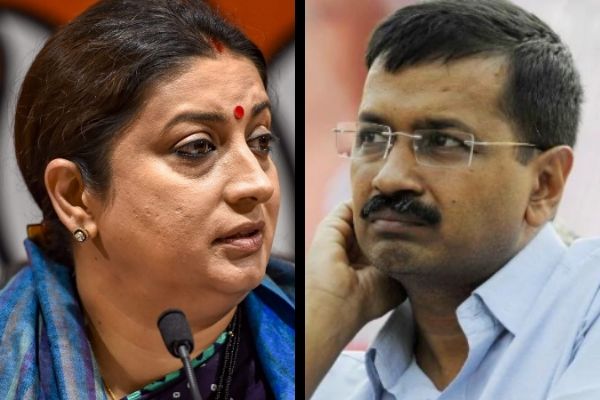
Delhi CM and AAP Convenor Arvind Kejriwal took a U-turn on Saturday after his misogynistic tweet backfired on him. He was called out by Union Minister for Women and Child Development, Smriti Irani, after he asked women to ‘discuss with men’ before casting vote in Delhi elections.


Kejriwal’s tweet read, “Special appeal to all women – Just as you take the responsibility of your homes, so is the responsibility of the country and Delhi on your shoulders. All you ladies must go to vote and also take the men of your house. Make sure to discuss with men who will be the right candidate to vote for.” The Delhi CM was widely criticised on Twitter for his comment suggesting that women are not able to take decisions independently.

Smriti Irani asked Kejriwal whether he believed that women were incapable to make their own decisions. After being slammed, the AAP Supremo attempted to undo the damage.


In a stark contradiction to his previous tweet, he claimed “Women have already decided whom to vote in Delhi and also have decided for their whole family. This is because they are the ones who run the family.”

Read- From ‘where is BJP’ to Kejriwal panicking – How Amit Shah changed Delhi assembly elections in a week

Kejriwal went from “women should consult men” to “women have decided the votes for the family” in a matter of couple of hours. Pointing out his doublespeak, Smriti Irani accused him of patronising women through his tweets.


This is not the first time that Arvind Kejriwal has made vile, sexist remarks. In 2017, he asked the opposition “mard ke bachhe ho to saamne aa ke rajneeti karo” as if “mard” ka bachha is what makes a person brave or weak.

Public Safety Act dossier suggests PDP chief Mehbooba Mufti was working with separatists: Reports

0

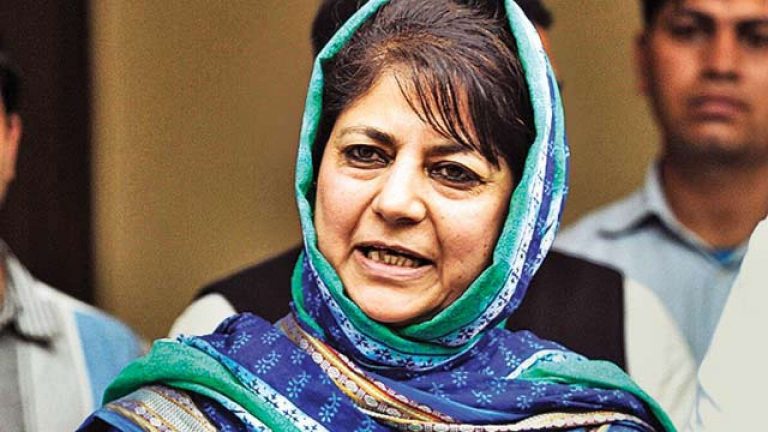
The Public Safety Act dossier against the former Chief Minister of Jammu and Kashmir Mehbooba mufti has suggested that she was collaborating with separatists underlining her provoking tweets and remarks made against the army and pro-terrorist in public rallies, reports The Hindu.

People’s Democratic Party leader Mehbooba Mufti and National Conference leader Omar Abdullah were booked under Public Safety Act on Thursday night. They are both kept in detention right after the abrogation of Article 370 in the State of Jammu and Kashmir.

The dossier is including Mehbooba Mufti’s provocating speeches and the tweets in which she’s calling for violence like the one, “no one will remain alive to unfurl tricolor in Jammu and Kashmir if 370 goes”. Also threatening the central government, she had said ” if you won’t understand, you will be finished. Even your story will not be in history”.

Mehbooba Mufti is known as staunch vocalist against the Modi government and its policies despite once she made a coalition government with BJP a year before the president rule was imposed in the valley leading to a final decision of abrogation Article 370 and 35 A.

She’s was found saying, “Article 35A kay saath cheed chaad karna barood ko haath laganay kay barabar hoga. Jo haath 35A ke saath chhedd chaadd karne ke liye uthenge wo haath hi nahi wo saara jism jal ke raakh ho jaega.” Which means the one who will be tampering with article 35A will be equal to a lightening powder keg, the one who will tamper with 35 A will be burned into ashes.

NC leader Hasnain Masoodi alleged that These PSAs belie the claims of normalcy. The PSA is being used to stifle dissent and disagreements with the ruling government, he alleged.

PDP spokesman Firdous Tak said, “Will they now book all those who have filed petitions and challenged the Centre’s move to revoke Article 370 and Article 35A?” Stating that the people of the country and the world should take note of these undemocratic actions taken against his leader.

Recently, Sajjad Lone along with Mehbooba Mufti’s close aid Waheed Parra was released from detention after completion of 6 months of abrogation of 370 in the valley. About 11 political leaders including Ms Mufti, her close confidant Naeem Akhtar, and J&K Peoples Movement chief Shah Faesal is still lodged in Srinagar’s MLA Hostel. Many of them will complete their six months of preventive detention under Sections 107 and 151 of the CrPC.

Sharjeel Imam’s brother attempts to exculpate his brother by painting him as a ‘revolutionary’

0

A few days ago, a disturbing video of one Sharjeel Imam, mastermind of Shaheen Bagh and The Wire columnist, surfaced in which he was seen exhorting Muslims living in India’s Chicken Neck to take control of the area and cut off Assam and the North-east from the rest of India. Soon the video went viral, inviting police action against Imam for his patently seditious and inflammatory assertions. After evading police for a few days, Imam was arrested from his hometown Jehanabad in Bihar on January 28 on charges of sedition.

Even as the Delhi Court sent him on a 6-day police remand yesterday, a conscious attempt is being made by his brother to garner public sympathy by recasting Sharjeel as a prodigy with exceptional academic credentials and high moral values.

Muzzammil Imam, Sharjeel’s brother, penned an open letter about his brother, portraying him as a revolutionary and extenuating him from his tendentious remarks that landed him in the jail. It is evident in the first sentence where Muzzammil says, “I am writing this piece to let you understand the man instead of his writings and speeches”. Even Sharjeel’s brother tacitly admitted that his brother’s speeches and writings were odious and controversial.

Read: Delhi Police suspects foreign funding links in Shaheen Bagh mastermind Sharjeel Imam’s bank accounts

Muzzammil goes on to extol his brother by citing his academic excellence. He states that Sharjeel graduated from top universities and colleges like JNU and IIT-B. Once his educational prowess is established, Muzzammil then goes into raptures about his brother’s innate magnanimity and ascetic way of leading his life.

He narrates past incidents when Sharjeel had been generous enough to share his pocket-money with poor people while he himself remained famished. Muzzammil also stated how his brother apparently used to pay excess to the vegetable vendor because he sympathised with him for standing long hours under the sun for selling their vegetables.

In addition, Muzzammil also asserts that despite drawing a handsome salary, Sharjeel has never bought a piece of clothing by himself. “For his whole life, our father would purchase clothes for him, and after his demise, I, his younger brother, would purchase them for him,” Muzzammil said.

Read: “More than enough grounds for strong reaction from Muslims across India”: Police unravels shocking details from Sharjeel Imam’s phone

Muzzammil also claimed that despite having an offer of a job paying Rs 40 lakhs per annum, Sharjeel chose to join a job paying Rs 12 lakhs per year in southern metropolis of Bengaluru and used to bicycle his way to his company and wore kurta and slippers. The reason Sharjeel quit this job, Muzzammil contends is because he wanted to “better understand Indian society” and therefore he called it quits to a dream job and joined the JNU.

All these incidents pertaining to Sharjeel’s life, as narrated by his younger sibling, are used by Muzzammil to redeem his brother’s battered persona. He attempts to exculpate Sharjeel from his venom spewing, seditious exhortations and communal assertions while characterising him as an intellectual, virtuous and generous person who placed society and nation above himself.

Arvind Kejriwal had planned to become Punjab CM after 2017 elections by making his own Sikh leaders fight each other: Kumar Vishwas

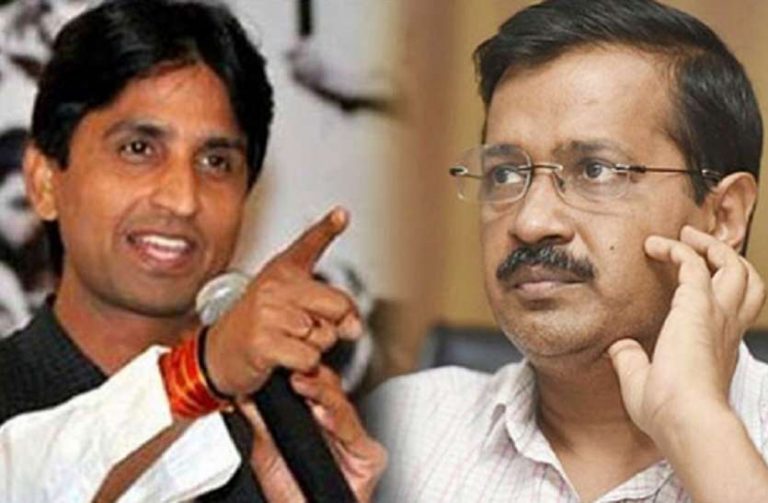
Today, when Delhi goes to poll, BJP shared a video wherein AAP co-founder and former leader Kumar Vishwas makes an explosive new revelation about Delhi CM Arvind Kejriwal.

In a video clip going viral on Twitter, Kumar Vishwas is heard claiming that Delhi CM and AAP supremo Arvind Kejriwal wished to become the chief minister of Punjab. And to fulfil his dream he conspired to create fighting amongst the Sikh leaders of his own party so that he could use the infighting to his advantage. He planned to leave Delhi and go to Punjab, said Vishwas in a shocking expose.

The former AAP leader speaks about a discussion between him and Arvind Kejriwal back in 2017, in which the party supremo expressed his desire to switch over to becoming Punjab Chief Minister, post winning 2017 Punjab Assembly election. Vishwas divulges that Kejriwal was confident of winning 90 seats in the Punjab Assembly election.


“I am 200 per cent sure that Kejriwal wanted to become Punjab CM”, said Vishwas. Adding that when he questioned him regarding his plans, Kejriwal had disclosed that when Aam Aadmi Party wins 90 seats in the Assembly elections, then he would get the Bhagwant Mann group and the HS Poolka group to fight with each other.

Read- As AAP disintegrates, senior leader says AAP ready to dissolve and merge with Congress

“If we could create a discord between the two factions, member of each faction would want their respective representative to become the Chief Minister. The Bhagwant Mann group will insist on Mann becoming the CM, while the Poolka group would want their head Pookla to become Punjab’s CM. This fight would continue for four to five days”, Vishwas said quoting Kejriwal. In that situation “you and Ashutosh go to Delhi as AAP’s representatives and give them an option of me becoming the CM. No one would object if my name comes up. Then I (Kejriwal), with a heavy heart would entrust Delhi’s responsibility on Manish (Sisodia) and leave for Punjab”, Vishwas quoted Arvind Kejriwal as saying.

Vishwas said that he had tried to convince Kejriwal that the Sikhs would not accept a non-turban as their CM and also that all the Hindu’s there are happy to work under the current leadership and nobody is yearning to take the CM position but Kejriwal was convinced to move ahead with his plan to become the next CM of Punjab post-2017 Assembly elections.

Much to Arvind Kejriwal’s disappointment, in the 2017 Punjab Legislative Assembly election, the Lok Insaaf Party and Aam Aadmi Party alliance, represented as AAP+, won only 22 seats out of the total 117 seats, 2 of which were won by the Lok Insaaf Party and the other 20 by the Aam Aadmi Party. Congress won the elections after bagging 77 seats and Captain Amarinder Singh went on to become the Chief Minister of Punjab.

Delhi elections: PTI peddles fake news, reduces AAP candidates’ percentage with serious criminal cases from 51% to 25%, MSM blindly carries report

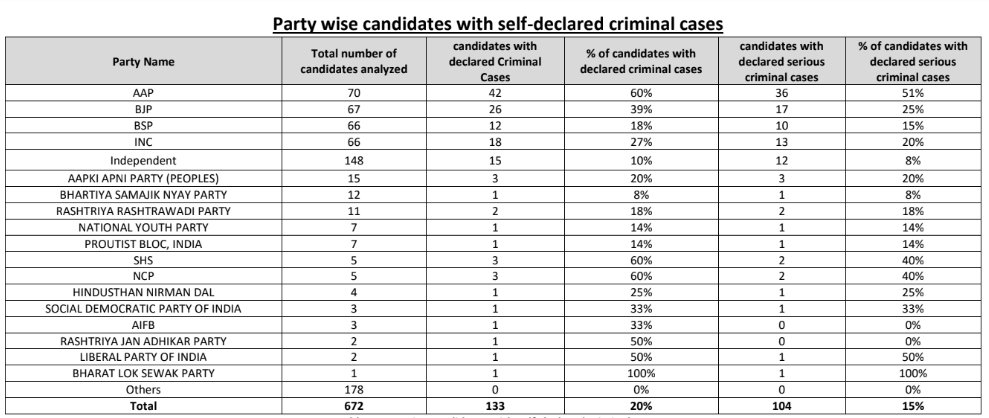
On February 2, several media houses had published a report by PTI on criminal cases declared by candidates of various parties in the Delhi elections which are taking place today. Quoting a report by Association of Democratic Reforms (ADR), the report had said that 25% of AAP candidates, 20% of BJP candidates and 15% and Congress candidates have declared serious criminal cases against them in their affidavits filed with their nomination papers for the assembly elections.

The report by PTI was published by various newspapers and online portals including The Hindu, Firstpost, Business Standard, Financial Express etc.

But the numbers reported by PTI are completely wrong, as the percentage of candidates with criminal cases against them is much higher as per the ADR report published on 1st February. The news agency has reduced the numbers to a great extent in particularly for AAP, while it reduced the numbers slightly for BJP and Congress also.

As per the ADR report, 60% of AAP candidates have declared criminal cases, and 51% have serious criminal cases against them. AAP tops the list of candidates with criminal cases with 42 out of 70 candidates, while 36 (51%) among them are facing serious charges. Bharatiya Janta Party has fielded 67 candidates, and 26 (39%) among them have declared criminal cases against them, with 17 (25%) facing serious criminal cases. Among the 66 candidates of Indian National Congress, 18 (27%) have criminal cases with 13 (20%) facing serious criminal cases.

Therefore, while AAP has 51% candidates facing serious criminal cases, PTI reported it as only 25%. BJP’s 25% was reduced to 20% and Congress’s 20% was reduced to 15% by the report.

Read- News agency PTI caught attributing false statement to Finance Minister Nirmala Sitharaman

Curiously, the report correctly quotes the overall number of candidates facing criminal charges, as it says that total 133 (20%) candidates among total 672 candidates contesting the elections have declared criminal cases against them, which matches with the ADR report.

It is not unusual for media houses to distort report based on their political ideology, but to completely misquote numbers from a publicly available report is going too far in that aspect.  Moreover, the media houses also must be blamed equally for publishing a wire service report without verification of the facts, when the source report was already available online.

He was talking about Shaheen Bagh, he said ‘this country is going to burn’: Cab driver who drove ‘Lal Salaam’ communist to police

The Mumbai cab driver, Rohit Gour, who drove a “lal-salam” activist, Bappaditya Sarkar, to the police station instead of the latter’s destination on Wednesday, finally shared his side of the story exclusively to India Today.

Rohit narrated, “As he sat in my cab, he was talking to someone over the phone. He kept discussing the protest and doing something big for which he had also travelled to Nagpur, Jaipur, etc. He was saying how the female audience here in Mumbai is giving a good response, and something big can be done here also. He was talking a lot about Shaheen Bagh. Everyone knows that what is happening at Shaheen Bagh. I cannot let such chaos in my city.”

The protestors at Shaheen Bagh, have been on a sit-in protest for the past 55 days against the Citizenship Amendment Act (CAA). Fuelled by the same spirit of Radical Islamism and inspired by its success in the mecca of Anti- CAA protests, the women have also now sat on a dharna in South Mumbai’s Nagapada.

Rohit was petrified when he overheard Sarkar saying, “Iss country mein aag lagne wali hai (The country is going to burn).” The Uber driver was scared that his passenger might do something “big” in Mumbai. So, he drove his cab near the police station and excused himself under the pretext of going to the ATM. Rohit instead went into the police station and narrated his story to the police.

Read: While Clown Kamra got banned after heckling Arnab mid-flight, Uber Driver in Mumbai takes a communist straight to police station

The Communist poet alleged that Rohit drove him to the Santa Cruz police station instead of his destination in Kurla, post which the cops interrogated him for 3 hours. He also claimed that several “irrelevant questions” were asked by the police. The activist pointed out that the driver allegedly commented on his dress and wanted to become famous through his actions.

The 35-year-old Mumbai cab driver who picked up Sarkar from Juhu dismissed his claims. Rohit said that he had been living in Mumbai for the past 14 years and cannot let anything happen to the city for some extra money. He has now been felicitated by the Mumbai BJP President, MP Lodha, for being an “alert citizen.”


The Santacruz police also dismissed the allegations levelled against them by Sarkar and contended that no irrelevant questions were asked to him. DCP Pranay Ashok stated, “Sarkar had taken the cab. The cab driver, after hearing his conversation, took him to the police station. The cab driver alleged that he was suspicious. The police did routine inquiry, and he was let off.”

The story came to light after Kavita Krishnan, a well- known Naxal sympathiser, took to Twitter to vent her outrage. She alleged, “a glimpse of scary India under NPR NRC CAA, where every person will be incentivised to suspect & turn in others & police can harass everyone.” However, she and the cabal of left-liberal activists were quick to justify the heckling of journalist Mahesh Vikram Hegde and Republic TV media baron, Arnab Goswami.

Delhi elections: Only 19.37 percent voting recorded till 1 PM, Muslim dominated Okhla sees lowest voting at only 5%

0

The people of Delhi seems to have chosen to sit at home instead of casting their vote in the ongoing Delhi assembly elections. The voting has been extremely slow as only 19.37 per cent of the registered voters made it to voting booths till 1 PM to exercise their right.

Reportedly, polling for Delhi assembly polls has now slowly picked up as at 12 noon, only 15.57 per cent voter turnout was recorded, according to Election Commission.


Sultanpur Majra has recorded the highest polling with 25% while Muslim-dominated Okhla has registered only at 5%, the lowest in Delhi. Earlier, we had reported on how voters of Jamia Nagar of Okhla constituency, who had once shouted ‘Hum Khagaz Nahi Dhikayenge’,  thronged to the voting booth after Muslim clerics had issued diktats to voters to cast their vote.

President Ram Nath Kovind also cast his vote at the polling station at the Dr Rajendra Prasad Kendriya Vidyalaya, within the Rashtrapati Bhavan complex earlier this morning. Senior Bharatiya Janata Party leader LK Advani and his daughter Pratibha Advani cast their votes at a polling booth on Aurangzeb road.

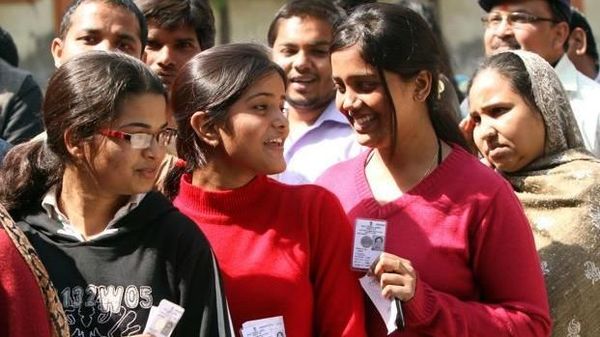
Read: After chanting ‘Kagaz Nahi Dikhayenge’, Jamia Nagar and Shaheen Bagh queue up with voter IDs to vote in Delhi elections

Earlier in the day, Congress candidate and former AAP MLA Alka Lamba slapped an AAP worker at a polling booth in Majnu Ka Tila after he allegedly misbehaved and allegedly made some lewd comments on her son.

The elections to 70-member Delhi legislative assembly finally began on Saturday as the voting started at 8 am and voters were seen arriving at polling stations. To ensure safe polling, the Delhi Police has deployed at least 40,000 personnel, 19,000 home guards, and 190 companies of paramilitary forces across Delhi. Apart from this, the Delhi Police have also set up checking drives and flying squads, along with patrolling on boats in the Yamuna.

The ruling Aam Aadmi Party will look to win another five-year term in the office, while the BJP which has emerged as the principal opposition will look to wrest power and form its own government. The results of these elections will be declared on February 11.

Two couples fall in love at Shaheen Bagh during hate-filled anti-CAA protests, get married

0

The anti-CAA protest which has been raging on for weeks in Delhi’s Shaheen Bagh area has exposed itself to be deeply Islamic and anti-India and anti-Hindu in nature with posters like F*ck Hindutva that distorted the Om symbol to several slogans like ‘Pakistan Zindabad’ and ‘Jinnah wali Azaadi’, that exposed the Islamist mobs’ deep-seated hatred for Hindus.

Amidst all this, two couples who have been a part of this anti-Hindu and anti-India protest have somehow taken out the time to fall in love with each other and are planning to get married.

According to reports, one of the couples named Junaid and Samar, both medical students, introduced themselves to each other in Shaheen Bagh during the ongoing protest and subsequently fell in love with each other. They reportedly tied the not on February 7 after the consent of their family members.

Read- “Allah ki bachchi thi, Allah ne bula liya”: How the anti-CAA protests in Delhi killed a 2 month old baby

Similarly, another couple, Zeeshan-Ayesha, who also met each other while protesting in Shaheen Bagh against the newly introduced Citizenship Amendment Law, are getting married today. Zeeshan and Ayesha’s family already knew each other, but the young couple never thought about marriage. During the Shaheen Bagh protest, the two reportedly got close and decided to marry each other.

It is heart-rending that these students who have been busy for all this while spreading hate against India and Hindus and the government by raising anti-India, anti-Hindu slogans like ‘Jinnah wali Azadi’ and displaying posters like F*ck Hindutva, and resorting to all sorts of violent means like mugging and heckling, assaulting those who even try and step into their marked territory, have at least got the time to find love for themselves.

George Soros: Manipulator of the Global order, the Indian nexus and the concerns for India

George Soros, who has now declared war against India and is a Hungarian-American businessman, is not just one of the richest men in the world but also the US’ most politically influential philanthropist. He was born in a Jewish family and survived the holocaust by impersonating himself as a Christian. He later moved to England and became protégé of a radical positivist, Mr Karl Popper, who had a significant influence on his ideology which eventually resulted in the formation of the Open Society Foundation.

Initially, in London, he worked as an investment banker and in the year 1956, he moved to the US where after a few years he established a hedge fund under the name of the Quantum fund. The fund was famous for its aggressive investment policies accompanied by high returns for investors. In the year 2000 Soros renounced from the active management of the fund due to a series of huge losses.

In 1984 Soros used some of his profits to propagate global outreach of his so-called philanthropic work and created the Open Society Foundations, an organization that included a network of foundations. Open Society Foundation’s (OSF) professed object is “to work to build vibrant and tolerant democracies whose governments are accountable and open to the participation of all people.” This object serves as the foundation for OSF’s often indiscreet activities in both closed and democratic societies that includes hefty funding of political NGOs.

Read: “You are a liar Mr George Soros”: Savio Rodrigues hits out on billionaire who committed USD 1 billion to ‘fight nationalism’ in India

Soros has been a prominent donor to the US Democratic Party along with sponsoring of the presidential campaigns of Barack Obama and Hillary Clinton. He even tried to block the Brexit by donating a large amount of money in support of the Anti- Brexit campaign.

Manipulator Of The Global Order

It was in September 1992, during the Black Wednesday crisis, when Soros earned the reputation of a ruthless and mythical trader. By waging that the pound was priced too high against the Deutschmark he made Britain suffer a loss of approximately 5.5 billion dollars forcing pound to exit from the European exchange rate mechanism. This earned him international acclaim and a nickname ‘ the man who broke the bank of England’.

In the year 1997-1998, just before the Asian financial crisis, the quantum fund sponsored much graver and controversial trades against a basket of Asian currencies, currencies of Thailand and Malaysia in particular. The consequence was a surge of currency devaluations and the stock market falls, first affecting Southeast Asia, and then impacting the rest of the region. Thailand, which had to be bailed out by the IMF to the tune of $16.7 billion, branded Soros as ‘economic war criminal’. Though Soros denied his involvement he came under severe criticism by Malaysian Prime Minister Mahathir Mohammad who held him responsible for the financial turmoil.

Read: NGO that filed complaint against Rafale Deal is partners with George Soros’ Open Society, Misereor and Oxfam among others

The Open Society Foundation (OSF) is well known for funding highly biased political NGOs worldwide. For instance, the list of grantees of the OSF includes a number of Israeli NGOs that also includes some beneficiaries that deny the legitimacy of Israel.OSF has also funded Palestinian NGOs Al-Haq and the Palestinian Centre for Human Rights, both of which have ties with the Popular Front for the Liberation of Palestine which has been designated as a terrorist organization by the US, EU, Canada, and Israel.

The OSF has been banned in Russia on the grounds of ‘threat to national security’. Soros birth country, Hungary, also passed legislation titled as ‘Stop Soros’ to put a halt on Soros notorious objective of filling the country with illegal migrants.

The Indian Nexus

Recently, speaking at the world economic forum, Soros has said he will commit $1 billion to start a global university to ‘fight nationalists’, whom he referred to as ‘authoritarian governments’. He accused the Indian Prime Minister of ‘creating a Hindu nationalist state’.

Soros debut as a businessman in India took a swing in the year 2013 via Aspada Investment Company which is primarily an Indian investment initiative that aims to build an investment platform for businesses aimed at providing better livelihood to the people.  Aspada is directly funded by Soros’s Economic Development Fund. Aspada has a Pan-India presence and has invested in a plethora of sectors including food(Scheduler Logistics,), agriculture (Waycool Food Products) and education (Shiksha Financial Services).

Read: George Soros vows to fight PM Modi and Nationalists: Here are some Indian ‘intellectuals’ and NGOs connected to him

As regards his philanthropy work, Soros’s OSF grasped stronghold in India during the Obama regime. Ever since its entry in India, it has tried to interlope in the internal affairs of the nation through the vast and interconnected network of organisations funded by him. These organisations play a vital role in manipulating the original narrative and take the help of the judiciary and media to hinder the national interest.

The Human Rights Law Network has been a chief campaigner against the Indian sedition laws and has even been providing legal aid to the Rohingya Muslims. The French NGO, Sherpa, that filed the complaint against the Rafael deal is also funded by the OSF. Another such organisation facilitating the agenda of George Soros is Amnesty International which is also funded by the OSF. The organisation has recently told the US lawmakers that the Citizenship Amendment Act stands in violation of not just the Indian Constitution but also international human rights law. Amnesty India has been criticising the government for the removal of Article 370 from the state of Jammu and Kashmir.

George Soros is not just connected with the NGOs functioning in India but also has links with a cultivated class of intellectuals who have constantly criticised the current government. For instance, Amartya Sen, along with George Soros, is part of the advisory council of NGO Namati (funded by OSF) that works for ‘environmental justice’ in India. Amartya Sen is not just a regular speaker at the OSF but George Soros has made a documentary with Sen Titled, ‘Amartya Sen:

The Content of Democracy’. Sen was recently in the news when he claimed that chanting ‘Jai Shree Ram’ is not part of the Bengali culture. He has constantly been criticising the governmental policies and has been complaining about the rising ‘intolerance’ in India. Pratap Bhanu Mehta, the member of the board of directors of Namati, has extensively written newspaper articles against the CAA. It is pertinent to note that the NGO run by the famous Supreme Court senior advocate, Ms Indira Jaising, also receives money from the OSF. Harsh Mander is another such example, who is the chairman of the OSF’s human rights initiative board. He has been accused of publishing false reports in relation to the CAA that has incited violence in college campuses across the country. His NGO has openly supported religious conversions.

Concerns for India

George Soros is an elitist who pushes his propaganda by investing his money where he thinks he can meddle with the internal affairs of a country by creating a situation of turmoil and instability and head towards his ultimate goal of establishing a ‘new world order’ sans nationalism.

The OSF was placed under the ‘watch list’ by the government in the year 2016. It has recently, after the remark made by Soros against Narendra Modi at Davos, moved the Delhi High Court against the centre’s decision.

It is very natural for India to be concerned and alarmed as George Soros has openly declared a war against nationalism. Narendra Modi has risen to the present position by defeating such elements but the number of Indian organisations and people under the influence of the OSF is very high. Thus, there remains scope of such elements to create an environment of unrest and chaos in the nation.