Home Blog Page 589

Maharashtra: Muslim mob pelt stones at Hindu man’s house and police over alleged blasphemy in Hingoli, raise ‘Sar Tan Se Juda’ slogans — exclusive details from FIR

0

On Monday, around 16 people were arrested by the Maharashtra Police in Hingoli district for pelting stones at a Hindu businessman. As per the initial reports, a mob of around 40-50 Islamists attacked a businessman identified as Kailash Kabra and pelted stones at his residence and commercial premise alleging him of conducting an alleged ‘blasphemous’ act against Islam.

The attackers claimed that Kabra forwarded an ‘objectionable’ message on WhatsApp against Islam. The incident is believed to have happened on Sunday, 15th December after which a huge mob gathered around Kabra’s shop in the Mondha region and pelted stones at his premises.

OpIndia obtained the FIR copy in the incident in which it has been mentioned that Kabra allegedly insulted Islam by sharing a video on WhatsApp with a caption that read, “Jihad ends in Netherlands. Mohammed should be presented as a cartoon throughout the country. Those who want Shariah law in India should run away from here. This is the most important message for everybody.”

Message that was forwarded by Kabra (Image exclusively obtained by OpIndia)

Following this Kabra was booked under sections 196, 299, 351(4), 356(2), and 356(3) of the Bharatiya Nyay Samhita, 2023 based on a complaint filed by one of the Islamists identified as Mohammed Hasham Khan Afzal. In the complaint, Afzal mentioned that Kabra had allegedly insulted the community by making derogatory remarks against the Prophet.

As per information obtained by OpIndia, Islamists in the locality got enraged over the forwarded message and conducted massive protests in the region calling for a ‘Basmat bandh’. Meanwhile, protesters could also be heard raising the slogans of ‘Allah-hu-Akhbar’ and ‘Gustakh-e-Nabi ki ek hi Saja, Sar Tan Se Juda’.

The police were eventually informed about the stone-pelting, following which the force reached the spot to control the situation. Amid this, several people got injured in the incident including Vasmat Sub-Divisional Police Police Officer (SDPO) Rajkumar Kendre.

“A mob of 50 persons hurled stones at a shop and were moving towards the residence of businessman Kailash Kabra to vandalize it. Kabra allegedly forwarded an objectionable WhatsApp message about Islam. Kendre sustained injuries when he and his team tried to stop the stone pelting. The additional force was sent to the site and police carried out a cane charge,” one of the officials said.

An FIR in the case has been filed under the relevant sections of the Bharatiya Nyaya Sanhita for an attempt to murder, riot, and voluntarily cause hurt to deter a public servant from his duty. FIR was filed after Kendre filed a complaint, a copy of which has been obtained by OpIndia.

Based on the complaint filed by Kendre, around 12 Islamists identified as Sheikh Mohsin Sheikh Hasan, Khalid Akhtar Jameer Ahmed, Sheikh Arbaz Sheikh Mehmood, Sheikh Nadeem Sheikh Moin, Mohammed Shoaib Mohammed Maksood, Musharaf Kajoloddin Faruqi, Mohammed Sohail Mohammed Maksood, Sheikh Ajeem Sheikh Moin, Arbaaz Sheikh, Junaid, Aarfaat Sheikh and Sayyed Javed Sayyed Khanja have been booked. The sections imposed against these are 109, 121(1), 132, 189(2), 190, 191(2), 191(3) of the Bharatiya Nyay Samhita, 2023; 135 of Maharashtra Police Act, 1951, and also section 7 of the Criminal Law Amendment Act, 1932.

As per the FIR, the Islamists also threatened the police as the latter reached the spot to control the situation. The Islamists gathered around Kabra’s home and began pelting stones at the closed shutter of his shop at around 1:30 pm on Sunday. After an hour or so, the police reached the spot after being informed about the chaos.

“We reached with a huge force as we were told that around 50 or more Islamists were pelting stones at Kabra’s residence. On arrival, we asked them the reason for the attack. But instead of responding to the authorities, they threatened the Police asking the force to return,” SDPO Kendre said in the complaint.

The Islamists threatened the police saying they would kill the officers and burn their vehicles if they failed to return. “We suffered severe injuries on our head, back, and arms, as they continued to pelt stones even on the officers,” Kendre added.

Reports suggest that eight persons were detained by the police from the spot and the other eight were arrested following the search operation.

While investigations are underway, all the efforts are being made to nab other 20 persons involved in stone pelting. Probe underway.

Ghaziabad: Hindu woman commits suicide after Faraz traps her for property, repeatedly rapes and forces her to convert, extracts lakhs of rupees

A young woman had taken her life on 11th December in Ghaziabad and now the reason behind the extreme step has come to light, reported Hindustan. Her father has filed a report and complained that Faraz Attar, from Shahdara in Delhi had trapped the deceased in a relationship, raped her and then cheated her after converting her to Islam. She was deeply hurt by the harassment and this led to set herself on fire, the father’s complaint says.

The police have registered a case against the man Faraz Attar and his family. As per reports, a 70-year-old resident of Kavinagar police station area informed that he used to be a businessman. The accused seduced his 30-year-old daughter many years ago to seize the property, which was worth about Rs 20 crore and in her name. He pretended to be unmarried before her after which he exploited her physically, mentally and financially.

Faraz reportedly took lakhs of rupees from her citing his own debt. According to the victim’s father, her behaviour had changed in a few months. On 14th November, the father went to her room and was shocked to see her observing the practices of a different religion. Under extreme stress due to the problems in his daughter’s life, the father reportedly suffered a brain stroke and had to be admitted to a private hospital in Delhi. According to him, when he was admitted to the ICU (intensive care unit), Faraz had taken his daughter along with for a ‘visit’ to the hospital and asked him to allow them to get married.

The eldery man mentioned that since he was close to death Faraz took advantage of the situation and made him agree to the proposal. He also compelled the old man to sign a paper stating that he had no objection to his daughter’s marriage to a youth from another community, on his brother Kasif’s direction. The culprit had described his brother as a lawyer of the Supreme Court. He even made him swear on his daughter not to tell any family member about the relationship.

Deputy Commissioner of Police (DCP) City Rajesh Kumar stated, “A case has been registered against Shahdara resident Faraz Attar, his brother Kasif, mother Mahe Talat and sister Sana under sections including conversion, rape, abetment to suicide and others. Efforts are underway to arrest the accused.” The complainant unveiled that his daughter had revealed that Faraz had used her only for the sake of her property and continued to sexually exploit her. the property and sexual affair. The woman also had undergone several abortions, as per the complaint.

Faraz even arranged for a tutor for her to learn Islamic practices and religious books. According to her father, Faraz may have even used drugs to control his daughter. The complainant informed that on 24th November, Faraz called him and his daughter to a hotel in Kaushambi and introduced him to his brother, mother and sister. The victim had covered all the expenses there too.

On 5th December, she had prepared the marriage documents, but Faraz insisted on extending the date. On 10th December, she stated that Faraz had put forward a condition for the wedding and would only agree if the woman’s father recognises him (Faraz) as his heir and inheritor of properties. This devastated his daughter, who on the fateful day burned herself alive at the Chandrapuri home.

Thousands mourn death of convicted terrorist SA Basha: All you need to know about Jihadi who orchestrated 1998 Coimbatore blast, killing 58, and the terror org Al Ummah

On 17th December, the founder of the banned terrorist outfit Al-Umma, SA Basha, died at a private hospital while undergoing treatment. The 84-year-old Basha had been serving life imprisonment in the Coimbatore serial blasts case since February 1998. He was released on parole a few months ago by the Madras High Court due to ill health, so he could spend some time with his family.

He had also threatened to kill Prime Minister Narendra Modi. In July 2003, then-Chief Minister of Gujarat, Narendra Modi, was scheduled to visit Coimbatore. Basha and others were convicted in murder of a Hindu Munnani leader. When journalists were talking to the convicts at the Coimbatore court premises, Basha stated if Gujarat CM Modi visited Coimbatore, he would be killed.

Basha’s funeral procession was taken from South Ukkadam to the Hyder Ali Tippu Sultan Sunnath Jamaath Masjid at Flower Market in North Coimbatore for the last rites. Shockingly, despite it being public knowledge that he was a terrorist and the mastermind of the Coimbatore serial blasts that killed 58 people and injured 231, thousands of Muslims joined his funeral procession on 17th December in Coimbatore.

The BJP criticised the Tamil Nadu government for allowing such a massive procession to take place for a terrorist. Tamil Nadu BJP Vice President Narayanan Thirupathy condemned the reports of the procession in a post on X, stating, “I am surprised to see that some politicians in Tamil Nadu have hailed the terrorist Basha as a martyr, as if he has served society. He is a life convict sentenced for murdering around 60 Tamil people and leaving hundreds injured. He is a hard-core criminal and convict.”

BJP functionary from Tamil Nadu, Amar Prasad Reddy, wrote, “A shocking incident from Tamil Nadu. SA Basha, mastermind of the 1998 Coimbatore blasts that claimed 58 lives and injured 231, received a hero’s farewell. Thousands openly eulogised the Al-Umma terrorist as state security stood by as mute spectators. Why was this allowed? What precedent is being set? How can anyone glorify a terrorist akin to ‘Afzal Guru’? The so-called defenders of constitutional values and secularism remain silent as their principles are mocked.”

SA Basha, Coimbatore serial bomb blasts and Al-Ummah

SA Basha, the founder of Al-Ummah, was the mastermind behind the Coimbatore bombings. Supported by ISI agents like Azam Ghauri, Saleem Junaid, and Farooq Ahmed, Basha used his organisation’s network to execute the attacks. His extremist agenda was fuelled by a desire to avenge communal violence against Muslims. In addition to his role in the Coimbatore blasts, Basha was implicated in the 1993 RSS office bombing in Chennai and had been arrested for inciting communal riots the same year.

Basha, who used to be a timber marchent, established Al-Ummah in the aftermath of the demolition of the disputed structure in Ayodhya in 1992, with the goal of uniting terrorist Muslim groups in southern India. Based in Kottaimedu, a predominantly Muslim area in Coimbatore, the organisation quickly became a front for ISI operations in Tamil Nadu. It maintained secret arms factories, producing explosives like PETN and RDX, and trained its members in assembling improvised explosive devices.

In 1998, the murder of a police constable, Selvaraj, resulted in Hindu-Muslim clashes in Coimbatore, Tamil Nadu. During that time, election campaigning was also ongoing. On 14th February 1998, Bharatiya Janata Party leader LK Advani was scheduled to address a rally at RS Puram in Coimbatore. Before he could reach the venue, bombs went off in several parts of the city. The bombs were concealed in cars, motorcycles, bicycles, side boxes of two-wheelers, denim and rexine bags, and fruit carts. Reports mention that the bombings were apparently in retaliation to the 1997 Coimbatore riots that happened during November and December in the year 1997.

53 people were killed, and 231 were injured in the serial bomb blasts. In later days, the death toll climbed to 58. One of the bombs went off at RS Puram as well, minutes before Advani could reach the venue. The blasts were timed between 3:50 PM and 4:20 PM. Apart from deaths and injuries, the blasts resulted in a property loss worth Rs 4.37 crores. The violence, planned as retaliation for the deaths of 18 Muslims in the 1997 Coimbatore communal riots, continued over the next three days.

Investigations revealed that SA Basha was the mastermind behind the serial bomb blasts. Initially, the investigation was carried out by the city police. However, it was later transferred to a special investigation team of the CB-CID. Basha was found guilty of the crime and sent to jail. He had been in prison since then.

A chargesheet in the bomb blast case was filed in 1999, where Basha was named as the mastermind of the crime. He was accused of plotting to kill Advani using a suicide squad. They planned to use 650 kg of gelignite to carry out the deadly task. According to the chargesheet filed in the case, Basha managed to procure gelignite and other explosives from Mysore to make IEDs and bombs.

A total of 166 suspects were listed in the chargesheet. Of these, 158 were convicted by the special court. Out of those, 43, including Basha, were sentenced to life imprisonment. Later, the conviction of 17, including Basha, was upheld by the Madras High Court, while the other 22 were acquitted.

While 17 convicts filed an appeal in the Supreme Court, Basha did not appeal. One of the convicts died.

Despite being banned after the Coimbatore blasts and the arrest of over 100 members, Al-Ummah continued to pose a threat. In April 2013, a former member of the group, Panna Ismail, was linked to a bombing near the BJP office in Bangalore, which injured 16 people, including 11 policemen. Investigations revealed ongoing connections between Al-Ummah’s ex-members and other terror outfits, underlining the persistent danger of dormant extremist networks.

In February 2024, Tamil Nadu government led by DMK sparked controversy after they released three terrorists involved in the 1998 Coimbatore blast case. While speaking about the matter, BJP (Tamil Nadu) President K Annamalai said, “It’s very unfortunate the DMK government is trying its best to release 16 convicts in the infamous Coimbatore bomb blast and they’re doing everything within their power to get this done before the Lok Sabha election just to get a brownie point.”

“Only in October 2023, the Supreme Court has squarely rejected the bail for all the 16 convicts saying it’s a grave crime of the very high order. Now, DMK government in 2021, after they came to power, they got the Justice Adinathan Commission, more like an eye wash commission. They got a report from the commission which said they should be released,” the BJP leader was heard saying.

Some of the information about SA Basha and Al Ummah has been extracted from Madras High Court judgment dated 18th December 2009.

Most Indian victims in Georgia restaurant tragedy from Punjab, Embassy working on repatriation of bodies

0

The 11 Indian nationals who died in an Indian restaurant in Gudauri, Georgia due to carbon monoxide poisoning are mostly from the state of Punjab, the sources said the embassy is working to repatriate the mortal remains at the earliest.

“The Indian embassy in Georgia is in touch with the families and is working with local authorities to repatriate the mortal remains at the earliest,” according to sources.

On Monday the embassy confirmed the deaths of 11 Indian nationals in Gudauri, Georgia, and expressed deep condolences to the bereaved families.

In a press release posted on X, the Indian Embassy in Georgia wrote, “The Embassy of India in Tbilisi is saddened to learn of the unfortunate passing of eleven Indian nationals in Gudauri, Georgia, and extends its deepest condolences to their families.”

“The Embassy is working closely with local authorities to facilitate the prompt repatriation of the mortal remains to India. We are also in contact with the bereaved families and are committed to providing all possible support,” the press release added.

Earlier, Georgia’s Ministry of Internal Affairs said that the bodies were found on the second floor of the Indian restaurant, adding that during the inspection, no signs of body injuries or signs of violence were detected.

Georgia’s Internal Affairs Ministry said in a statement, “The employees of Mtskheta-Mtianeti Police Department of the Ministry of Internal Affairs, in connection with the accident that took place in Gudauri, as a result of which 12 people died, started an investigation under Article 116 of the Criminal Code of Georgia, which implies negligent manslaughter.”

“In the resting area on the second floor of the Indian restaurant located in Gudauri, the bodies of 12 people employed in the same facility were found. At the initial inspection, no signs of body injuries or signs of violence were detected. According to the preliminary information of the investigation, a power generator was placed in an indoor area, closed space near the bedrooms, which was turned on yesterday, probably after the power supply was turned off,” the statement added.

The statement further said that out of 12 deceased individuals, 11 are citizens of foreign countries, and one is a citizen of Georgia.

“In connection with this fact, investigative actions are actively being carried out, forensic-criminalistics are working on the spot, and interviews of persons related to the case are being conducted. Appropriate examinations are appointed. A forensic medical examination has also been appointed to determine the exact cause of death,” Georgia’s Ministry of Internal Affairs said.

Notably, the incident, which occurred in an Indian restaurant in Gudauri, is under investigation. 

(This news report is published from a syndicated feed. Except for the headline, the content has not been written or edited by OpIndia staff)

Sambhal 1976: When Hindus were attacked after rumours following a Muslim cleric’s killing by his co-religionist; temples vandalised, 5 Hindus killed

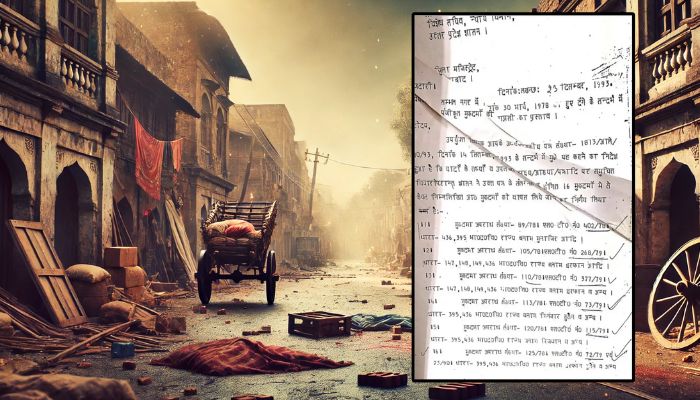
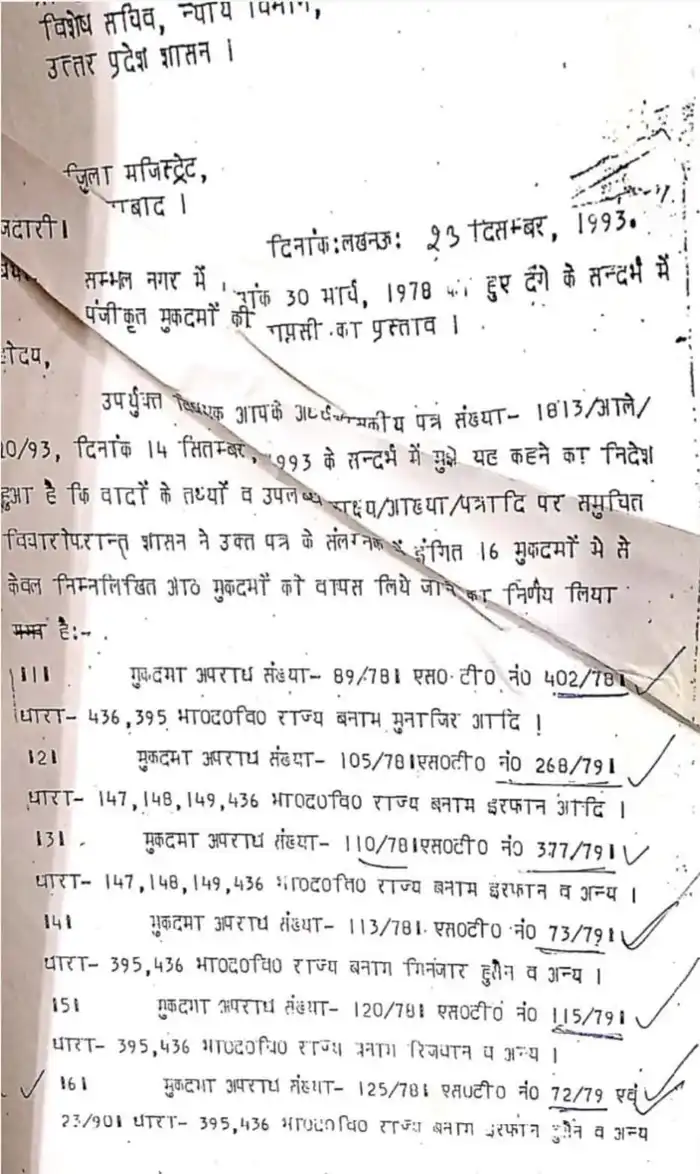
On 16th December, Chief Minister Yogi Adityanath in the Uttar Pradesh assembly recounted the history of riots in Sambhal and stated that 209 Hindus were killed in them. The internal report of the Sambhal district administration also confirmed the figure of deaths of Hindus in riots. OpIndia accessed a report that details one of the violent episodes when 5 Hindus were killed in the riots that broke out in 1976.

Curfew had to be imposed for seven days to control the situation at the time. The rumor that a Hindu man had killed a Muslim cleric triggered the unrest. According to the report, on 29th February 1976, Muslims spread a rumor that a half-mad man named Rajkumar Saini of Pethia village had murdered a cleric when in reality his life was ended by his co-religionist during a fight in the mosque committee. Afterwards, a Muslim mob led by Manjar Shafi and Attaullah Tatari demolished Surajkund and Manas temple.

They then tried to burn a man named Kishanlal’s house at Sarthal Chowki. However, Hindus stood up to them and they ran away while pelting stones. Meanwhile, Hari Singh of Sotipura and Rakesh Vaishya of Kotpurvi Mohalla (locality) were killed. On 24th April of the same year, an explosion took place at another person named Kallu’s house in Kotpurvi Mohalla. His son Salam died during the treatment. The report disclosed that the administration arrested 20 to 22 guilty Muslims and then also detained equal number of innocent Hindus to showcase a balanced narrative in the matter.

Shafiqur Rahman Barq was also emerging as a leader at the time. He was a key player in Sambhal’s deadliest riot in 1978. The leader of the Muslim rioters in the 1976 riots, Manzar Shafi, was also involved in the 1978 riots. He had even abducted the wife and daughter of a Hindu teacher. He set the young girl free after her rape but her mother was rescued by the Hindus. Shafiqur Rahman Barq had stopped the entry of Hindus in the Harihar temple after 1978 violence.

It is significant that the administration prepared the report on the riots in Sambhal which illustrated that the population of Hindus in the area has been gradually decreasing due to the violence. At the time of the country’s independence, the population of Hindus in the Sambhal municipal area was 45% which has reduced to 15 to 20% today. On the other hand, Muslims were 55% and their numbers have unprecedentedly grown to 80 to 85%.

One Nation, One Election – A step towards electoral and governance reform

On 17th December, the Constitution (One Hundred and Twenty-Ninth Amendment) Bill, 2024, proposing One Nation, One Election (ONOE), was introduced in Lok Sabha by Law Minister Arjun Ram Meghwal. It was subsequently referred to a Joint Parliamentary Committee for detailed deliberation following a vote of 269 in favour and 196 against it.

The bill will introduce key amendments to Articles 82, 83, 172, and 327 of the Constitution of India to enable simultaneous elections to Lok Sabha and State Legislative Assemblies. It mandates that the term of State Assemblies will align with the five-year term of the Lok Sabha even if a mid-term dissolution takes place.

The bill was introduced in the Lok Sabha after a proposal for the same was passed by the Union Cabinet on 12th December. This bill, when passed, will mark a major step towards synchronising Lok Sabha, state assembly, and local body elections in the country. The proposal was based on the recommendations of a high-powered committee led by the former President of India, Ram Nath Kovind. The aim of this bill is to streamline the electoral process in the country.

Former President Kovind described ONOE as a transformative step for the all-round progress of the Indian population. While speaking at an event in Kolkata, he emphasised that ONOE has the potential to automatically boost the GDP growth of the country by 1-1.5%. He remarked, “For the all-round progress of the Indian population, this model is competent… The day our economy rises to 10%-11%, our country will be in line with the top 3rd-4th economies of the world.”

The committee led by former President Kovind was constituted on 2nd September 2023. The report was submitted to President Droupadi Murmu. ?The submitted report spans 18,626 pages. The committee’s report was an outcome of extensive consultations with stakeholders, experts, and research conducted over 191 days.

Benefits of One Nation, One Election

Promotes consistency in governance

Frequent elections disrupt governance at every level. Political parties often shift their focus from policy-making to campaigning. Under the current system, political leaders and legislators spend a lot of their time preparing for elections. As a result, their attention gets diverted from governance to political strategies. ONOE will help in refocusing efforts on developmental activities and the implementation of policies that are welfare-oriented. It will allow uninterrupted governance for both the Centre and the states.

Prevents policy paralysis

When elections are announced at the state or central level, the Model Code of Conduct (MCC) comes into force automatically. It leads to routine administrative delays and hampers the roll out of critical welfare programs. According to data from the Election Commission of India, MCC enforcement during elections causes months of policy paralysis. ONOE will reduce repeated and prolonged enforcement of MCC, which will ensure that there is continuity in governance and developmental activities.

Take the example of Maharashtra. MCC was in place during the Lok Sabha elections, and in less than six months, MCC was again in place for the state assembly elections. Such repeated MCC enforcement paralyses the government from moving ahead with development and welfare projects.

In 2017, NITI Aayog published a report that noted that elections at various levels result in the loss of 3-4 months of effective governance every year. With the help of ONOE, such downtime can be eliminated in the future, which will ensure that governments focus consistently on governance and not on planning for the next elections.

Mitigates resource diversion

At the time of elections, significant human and financial resources are deployed, which include polling officials, security personnel, and administrative staff. According to the High-Level Committee’s report, ONOE would reduce the frequency of such diversions, which will enable public institutions to focus on their core responsibilities.

Reduced financial burden

Conducting elections in India is among the most expensive across the world. The 2019 Lok Sabha elections alone cost over ₹60,000 crore. When elections take place repeatedly, the cost adds up exponentially, draining essential resources. These resources, if not spent on elections, could be allocated to infrastructure and welfare programs. One Nation One Election could significantly reduce the expenditure and would create fiscal space for development projects.

In his statement, former President Kovind said that the implementation of One Nation One Election would enhance investor confidence and economic efficiency, which will eventually position India for sustained growth.

Preserves regional party relevance

Those who oppose ONOE often argue that such initiatives will undermine the role of regional parties. However, the committee’s report says otherwise. It highlighted that synchronised elections would, in fact, preserve and amplify the relevance of regional issues. When state and national elections take place simultaneously, regional parties will get a broader platform to raise local concerns without getting overshadowed by national campaigns.

Enhances political opportunities

The ONOE model will provide better representation to regional and new players in the political landscape as it will reduce the dominance of a few leaders within political parties. When elections happen during different times at national and state levels, it allows only a limited number of individuals to contest multiple elections. It monopolises leadership roles.

Take the example of Akhilesh Yadav. He has contested both state and national elections. Currently, he is an MP from UP, but there is no guarantee that he will not contest the state elections scheduled for 2027. Simultaneous elections will help in diversifying political opportunities and encouraging new leaders to emerge. It will help in enhancing democratic inclusiveness, which is essential for sustaining a democracy like India.

Focus on governance

The ongoing election cycle has resulted in parties prioritising short-term political gains over long-term development goals. Governments announce projects just before MCC imposition to gain votes. However, if elections take place simultaneously, political parties and governments will dedicate their efforts to good governance. They will address the needs of the voters rather than concentrating on electoral gain.

Boosts economic growth

In his remarks, former President Kovind said that implementing One Nation One Election could directly contribute to the economic growth of the country. It will minimise governance disruptions and financial wastage. It will help in creating a conducive environment for growth and development. He noted that such a system will help in increasing India’s GDP, which will enable India to compete with the largest economies of the world.

The way forward

The ONOE represents a bold and transformative reform in the democratic framework of India. Its implementation will require constitutional amendments, political consensus, and significant investment in electoral infrastructure. However, the cost of implementing this system will be recovered over the years as repeated elections will no longer occur.

As affirmed by former President Kovind, ONOE will not only drive all-round progress but will also enhance the economic trajectory of the country. Careful planning, broad-based consensus, and a commitment to democratic principles will reshape the electoral process of the country, ensuring stability, efficiency, and development.

Bangladeshi migrant Sheikh Ataul, who threatened to behead UP CM Yogi Adityanath, arrested

After a video of a Bangladeshi Muslim migrant Sheikh Ataul openly threatening to behead the Chief Minister of Uttar Pradesh Yogi Adityanath, Noida Police arrested the accused and seized some weapons.

The police recovered a pistol of .315 bore, live cartridges, a knife objectionable documents (photos), mobile phone from the 40-year-old accused.

While the police are investigating whether Sheikh Ataul was involved in any criminal activities, he has reportedly told the police that he kept the weapons for his safety and to scare people. During the initial interrogation, Sheikh said that someone had told him that the government was getting all the mosques demolished, which is why he made this inflammatory comment. Regarding a photo found with him, he said that he kept it to show it to his co-religionists.

A case has been registered against Sheikh in Noida Sector 39 police station under several sections of the BNS and IT Act. Noida Police said that a case was registered against an unknown person in Sector 39 police station by the Social Media Cell Gautam Buddh Nagar.

“The accused was arrested for making objectionable, false and provocative comments about a public leader holding a constitutional post in the country by making a video viral on the social media platform X. Illegal weapons, objectionable documents (photos) and a mobile phone were recovered from his possession,” Additional DCP Noida said.

As reported earlier, on 13th December, Khabar India, a YouTube-based news channel, published a video on the sidelines of the upcoming Delhi Assembly elections scheduled for early 2025. In the video, the reporter asked questions to Muslim migrant workers from West Bengal who have been working in Delhi for years. During the interview, one of the migrant workers openly threatened to behead the Chief Minister of Uttar Pradesh, Yogi Adityanath. The Muslim workers said they prefer Congress over the Bharatiya Janata Party (BJP) and Aam Aadmi Party (AAP), as “Rahul Gandhi” is a good leader. They further hoped that West Bengal CM Mamata Banerjee would become Prime Minister in 2029, replacing PM Narendra Modi.

The interview took a disturbing turn when one of the Muslim migrant workers expressed anger towards UP CM Yogi Adityanath, specifically targeting him for the construction of the Bhavya Ram Mandir in Ayodhya, the demolition of illegal mosques and mazars, and actions against loudspeakers and illegal slaughterhouses. He went ahead and threatened to behead CM Yogi, saying, “Bismillah bolunga aur Qurbani de dunga Yogi ki”, which literally translates to “I will invoke Bismillah and sacrifice Yogi.” While making the threat, he symbolically gestured as though performing “qurbani” with his hands.

Gujarat: 6 arrested for issuing PMJAY cards fraudulently to ineligible candidates in lieu of money, probe underway

0

On Tuesday, 17th December, the Ahmedabad police detained 6 persons for their involvement in the scheme related to the national health insurance scheme, Pradhan Mantri Jan Arogya Yojana (PMJAY). As per the police, the accused persons issued fraudulent cards under the scheme to loot the government for money.

As per the reports, Deputy Commissioner of Police (Crime Branch) Ajit Rajian is looking into the case and is interrogating the six individuals whom the department has arrested.

The police confirmed the incident and stated that the accused persons had been fraudulently issuing PMJAY cards to even those who were not eligible to obtain the benefits of the government scheme. The accused persons took huge amounts of bribes, defrauding both, the Gujarat government and the Government of India.

Further, an investigation into the case revealed that the racket stemmed from a large-scale probe into Khyati Multispeciality Hospital in Ahmedabad. It is believed that the owners and employees of the hospital might also be involved in the scam.

The police further stated that this scam does not seem limited to Ahmedabad, but might have spread across the nation.

The accused held free medical camps in villages and carried out unnecessary angioplasty surgeries on the residents. They performed surgeries without informed consent, to dupe the system through forged medical records and bogus claims.

Over 3000 fraudulent cards were issued, and further investigations are underway to identify all involved parties. Six have been detained. A necessary complaint has been filed.

Kuki terrorists in Manipur using SpaceX Starlink? PLA Equipment recovered by Army raises major security concern

Indian Army, and Assam Rifles, in cooperation with police and other security forces, recovered massive stocks of weapons in a series of successful operations in the violence affected state of Manipur.

29 weapons including snipers, automatic weapons, rifles, pistols, country made mortars, single barrel rifles, grenades, ammunition and war like stores (WLS) were found in the districts of Churachandpur, Chandel, Kangpokpi, and Imphal East regions of the state. Spear Corps of the Indian Army was also informed about the crucial development on social media. Moreover, Starlink equipment was also discovered during the operation.

The seized arms comprised of an AK-47 rifle, a sniper rifle, a Burmese-made 0.22 pistol, five Burmese-made 9mm pistols, a Burmese-made 7.65mm pistol, a .303 bolt-action rifle, two .303 single-bolt sniper rifles, a 9mm Carbine Machine Gun (CMG), five factory-made 12mm single-barrel rifles, a .22 rifle, a 12mm shotgun, three locally made mortars, a single-barrel gun, a 5.56mm MA 4 assault rifle, an MA-1 (MK-I) assault rifle, an air gun, grenades, and a large cache of ammunition.

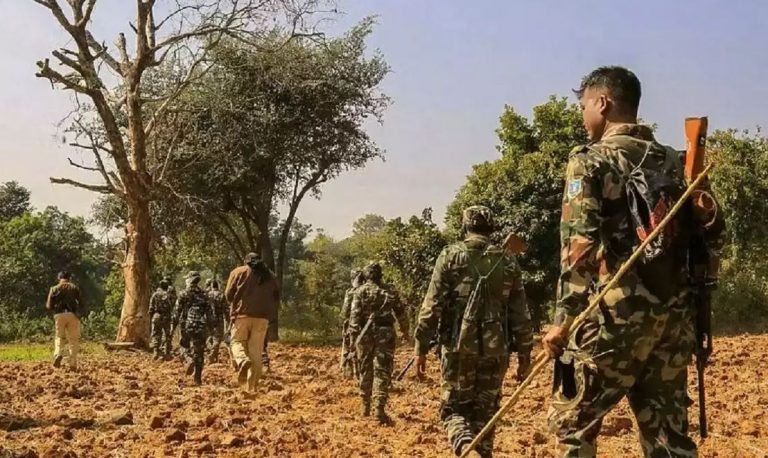
The seizure of weapons transpired when the security forces were searching for 56-year-old Meitei man Laishram Kamalbabu Singh, who has been missing since 25th November from Kangpokpi district. At least 2,000 members of the Army and Assam Rifles have stepped up their search for him. The Army used tracker dogs, drones, and other equipment as part of their search efforts, under the direction of senior officers.

A sniper rifle, a 0.22 pistol, two 9mm pistols, a 7.65mm pistol, a.303 bolt action rifle, grenades, ammunition, and warlike stores were found during a joint operation on 7th December by Assam Rifles and Manipur Police in response to specific intelligence regarding the presence of arms and ammunition in general area L. Jangnomphai in Kangpokpi district. One 9mm CMG, one .303 Single Bolt Sniper Rifle, one 9mm pistol, grenades, ammunition, and warlike supplies were recovered on 10th December in the same district during an intelligence-based operation in the general region of Tingkhai Khullen, 10.5 km southwest of Kotlen village.

An AK-47 rifle, a 9mm handgun, three locally manufactured mortars, a single-barrel cannon, ammo, and warlike supplies were found during a combined search operation conducted by the Manipur Police and Assam Rifles in the Chandel area on 11th December.

On 11th and 12th December, intelligence-based operations were initiated over two days in the general areas of Telsing and Laijang villages in Churachandpur district. A .303 rifle, a 9mm handgun, four factory-made 12mm single-barrel rifles, a .22 rifle, a 12mm shotgun, ammunition and warlike supplies were retrieved during the mission in Telsing village. Likewise, four cadres were apprehended during the operation in Laijang village, and one MA-1 (MK-I) assault rifle, an air gun, ammunition, and warlike supplies were located.

One 5.56mm MA 4 Assault Rifle, one single barrel rifle, two pistols, grenades, ammunition, and warlike supplies were found during a joint search operation conducted by the Indian Army and Assam Rifles in the Imphal East district on 13th December near the outskirts of the Irilbung Police Station (PS). The recovered items have been handed over to Manipur Police. A defence spokesperson also informed, “Army and other security forces in their operations during the past few days recovered the arms, ammunition, and warlike stores from Churachandpur, Chandel, Kangpokpi, and Imphal East districts.”

Relationship between Myanmar and separatist Kuki groups

Authorities in Manipur issued an urgent security alert following an intelligence report indicating that more than 900 Kuki militants entered the state from Myanmar in September of this year. According to the intelligence alert, these terrorists received training in the use of projectiles, rockets, drone-based bombs, and jungle warfare.

“They are reportedly grouped in units of 30 members each and currently scattered in the periphery and expected to launch multiple coordinated attacks on Meitei villages around 28th September 2024,” the report read.

Security Adviser to Manipur government Kuldiep Singh asserted, “Unless and until it is proved wrong, we believe that it is 100% correct.”

The information was met with severe criticism from Kuki groups. The Manipur Chief Minister’s Office and the Manipur Police DG (Director General) then claimed that there is now no need to be concerned about the alleged significant cross-border infiltration and that the likelihood of it occurring is “remote” after the Indian Army’s request for details to support the assertion.

Last year in July, an exchange of gunfire took place in the border town of Moreh between heavily armed terrorists including Kuki National Army (KNA) and People’s Defence Force (PDF) of Myanmar and security forces including Paramilitary forces, Assam Rifles and Border Security Force (BSF). Furthermore, other private residences, including one of a journalist’s, were set on fire, and widespread loot and arson also happened. At least thirty homes were reportedly destroyed by fire. The area had the homes of members of the Meitei community who had left the area due to earlier violence.

Security officials had began an investigation to find out if the assailants who used sniper rifles and other advanced weaponry to attack security officers in Moreh were terrorists from other countries. However, according to sources, some of them might be from neighbouring Myanmar. Notably, the town is located near the India-Myanmar border.

People who live on either side of the India-Myanmar border are permitted to travel 16 kilometers into each other’s territory without a visa under the Free Movement Regime (FMR). However, Indian Government decided to start bidding for a sophisticated smart fencing system for the entire India-Myanmar border in January 2024 in response to the enormous challenge created by cross-border terrorism.

“We are going to end the FMR along the Indo-Myanmar border soon. We are going to put fencing along the entire border. The fencing will be completed in the next four and a half years. Anyone coming through will have to get a visa. The idea is to not only to stop the misuse of the FMR, which is used by insurgent groups to carry out attacks on the Indian side and flee towards Myanmar, but also put a brake on the influx of illegal immigrants, drugs and gold smuggling,” the reports stated.

Manipur Chief Minister N Biren Singh had earlier asked the center to permanently close the FMR along the Indo-Myanmar border in September 2023 in an effort to curb “illegal immigration.” He added that the state was strengthening its border with Myanmar and creating a National Register of Citizens (NRC).

Notably, following the ethnic clash between the Kuki and Meitei populations in Manipur in May of last year, a number of illegal immigrants entered India. According to reports, armed terrorists from the Kuki National Army (KNA), People’s Defence Force (PDF) of Mynamar, and security forces entered India in July 2023, setting the stage for a significant conflict between the two communities in the border town of Moreh in the Tengnoupal district of Manipur.

When the Manipur police started looking into the matter, they discovered that a significant number of the attackers had come from Myanmar. Later, it was revealed that over 700 illegal immigrants had crossed into India from Myanmar, and they were ordered to be deported. Wasbir Hussain, a senior journalist disclosed, “718 fresh illegal migrants from Myanmar have come. The Manipur government has asked the Assam Rifles to deport them.”

Starlink device found in East Imphal

Meanwhile, during a combing operation in Keirao Khunou, Imphal East district, Manipur security authorities discovered a sophisticated communication gear connected to international satellite internet services. According to reports, the forces confiscated a Starlink router and antenna, which are part of Elon Musk’s SpaceX enterprise and offer uninterrupted global internet and communication services, in addition to a cache of weapons and ammunition, including grenades.

The security forces uncovered the existence of electronic devices being utilized by Revolutionary People’s Front (RPF)/People’s Liberation Army (PLA) for satellite internet connections in Keirao Khunao during one of several successful combined operations. A 20-meter FTP cable, a satellite router, and a satellite internet antenna came to light.

This is the second time in two months that hostile elements have been discovered using Starlink devices and the first time it has been found in the area, indicating that terrorist cells are using cutting-edge communication tools. Users can avoid typical internet shutdowns with Starlink, which is renowned for its ability to operate from remote terrains, guaranteeing continuous connectivity.

Political analysts have noted that the development indicated that the ongoing ethnic violence in Manipur was being influenced by a multinational conspiracy. Security professionals are also advocating for more stringent regulations and increased monitoring of these technologies to stop their abuse in regions like Manipur that are prone to conflict.

According to a source, the existence of Starlink equipment in particular highlights the potential for outside assistance for armed groups, boosting their operational capabilities in the face of state-imposed limitations. Notably, Myanmar already uses these kinds of devices. Compounds in Myanmar employ the Starlink satellite systems to enable international crimes, such as scamming people worldwide, according to signals intelligence.

It should be noted that while billionaire Elon Musk’s satellite-based internet service, Starlink, is accessible in many nations across the world, including some in South and Southeast Asia like Indonesia, the Philippines, and Sri Lanka, it is not completely functional in India. Starlink is awaiting regulatory permissions and is now in the beta testing stage in the country. Pre-orders are available to users, but the service is not deployed yet.

Importantly, the remarkable discovery demonstrates the intricacy of the communication systems of the terrorists despite the state government’s internet ban, which was enforced during the long conflict and the grave challenge it presents to the peace and national security of the country. Since Starlink equipment is currently not widely available in India, reports of its presence in regions like Manipur indicate unlawful and unauthorized use of the technology.

Netizens react to use of Starlink by terrorist forces

Social media users quickly took notice of the significant discovery of weapons and ammunition, particularly Starlink, and voiced concerns about national security. A person termed the finding as just “tip of the iceberg” and added, “Where is it all coming from? Who’s behind the funding? And how many of these are swirling around out there? It’s hard to say.” The user then pointed out that the internet facility is not available in India and further asked, “So why can’t we intercept them before they reach us?”

Another person simply remarked that Elon Musk’s Starlink is being utilised by terrorists in India.

An individual urged the army to look into the issue and asked “how the valley insurgents could illegally possessed something which is not even launched in India?” The user than labelled it as a “clear evidence of foreign hand behind the terrorists.”

A netizen even hoped that Elon Musk would put an end to the “misuse of Starlink” as the technology is being employed by the terrorists.

Starlink device found on smugglers from Myanmar in Andaman Nicobar

A Myanmarese vessel was apprehended with what authorities described as the largest-ever drug haul in the region and roughly 5,500 kilogram of meth (methamphetamine) valued at over Rs 36,000 crore was confiscated. Last month, the Andaman and Nicobar Police recovered advanced satellite communication equipment and saved navigation coordinates from the vessel. Starlink equipment and GPS (Global Positioning System) waypoints for Rangat and Neil island were saved on the boat when it was intercepted by the Indian Coast Guard (ICG) and the Crime and Economic Offence Police Station (C&EO) in a joint operation.

Police located the primary suspect, Zay Yar Soe, in Tachileik, which is close to the borders of Laos, Myanmar, and Thailand, a place known as the “golden triangle of drugs,” according to Director General of Police Hargobinder S. Dhaliwal. Six Myanmarese crew members were also detained for questionning. However, the official added that the incident has raised serious concerns because it is the first time that Starlink’s technology has been used to navigate and enter Indian waters.

“This (case) is different because it is bypassing all the legal channels. They directly operated (phones) with satellite, creating a Wi-Fi hotspot,” he unveiled and further stated that he intended to ask Starlink for information on the device’s purchase history, including who obtained it, when, and how it was used. “They (smugglers) were using Starlink since their journey started from Myanmar,” he mentioned. The smugglers, according to him, relied on the Starlink Mini device, which is characterized as “a compact, portable kit that can easily fit in a backpack” on its website.

Notably, Elon Musk has been very keen to launch Starlink in India. However, the latest developments highlight the network’s threat in a nation like India where every hostile entity both inside and outside is eager to take advantage of the faultlines and create new divisions. The problem would only be exacerbated if unregulated access to the internet is supplied to the hands that want to exploit India’s vulnerabilities. The network is already being utilised by hostile and anti-India elements to inflict terror upon the nation.

After Sambhal, centuries-old Shiva Temple uncovered in Varanasi, Municipal Commissioner assures appropriate action to follow

After centuries-old Shiva temple was uncovered in Varanasi, the concerned department is taking swift action. This comes a week after three idols were recovered from a well near the ancient Shiva-Hanuman Temple in Sambhal following the temple’s reopening.

“Whatever action has to be taken, has to be done by the Police. I can’t make a comment in this regard…Concerned department is taking action…,” said Municipal Commissioner of Varanasi, Akshat Verma.

Earlier today locked structure, appearing to be a temple, found in a residential area of Varanasi. Police personnel deployed around the temple.

Meanwhile, in Sambhal district, the reopened Shiv-Hanuman Temple hosted prayers and rites on Monday. The temple closed since 1978, was reopened on December 14 during an encroachment clearance operation conducted by the local administration and police. During the process, three idols were discovered in a well near the old shrine.

Additional Superintendent of Police (ASP) Shrish Chandra told ANI, “These are broken idols that were found during the digging of the well. There is an idol of Lord Ganesh. The other one seems to be of Lord Kartikeya, more details are being sought. There was debris and soil in the well. The idols were discovered when it was dug. The area has been secured so that excavation can be done smoothly.”

On Monday, devotees painted ‘Om Namah Shivaya’ and ‘Har Har Mahadeva’ slogans on the walls of the newly discovered temple, he added.

Vishnu Sharan Rastogi, patron of the Nagar Hindu Sabha, noted that the temple had been reopened after 46 years. He explained that it had remained closed due to the absence of a resident priest.

Sambhal Sub-Divisional Magistrate Vandana Mishra announced plans to restore the original structure of the temple. She stated, “The temple premises have been cleaned, and electricity arrangements have been made. CCTVs are being installed for security. The anti-encroachment drive targeted only structures built on public property. We will restore the temple to its original structure.”

She added, “We have written to the Archaeological Survey of India (ASI)… Police will be deployed near the temple.”

(This news report is published from a syndicated feed. Except for the headline, the content has not been written or edited by OpIndia staff)