Home Blog Page 5953

Defence Minister Rajnath Singh leaves for France to receive first Rafale jet on the occasion of Dussehra and Vijaya Dashami

0

Union Defence Minister Rajnath Singh left New Delhi for a three-day visit to France on Monday, where he will meet French President Emmanuel Macron and receive the first Rafale aircraft on October 8 (Tuesday), which is the foundation day of the Indian Air Force and also Dussehra and Vijaya Dashami.

The ceremony to hand over the Rafale jet will take place at a facility of Dassault Aviation, the makers of the aircraft, in Merignac of Bordeaux, which is at a distance of around 590 km from Paris.

While a press release by the Government of India’s Ministry of Defence, dated October 7 (Monday), confirmed the news, Rajnath Singh also took to Twitter to let know of his Paris tour.

“Leaving New Delhi for Paris on a three-day visit to France. Shall attend the Annual Defence Dialogue and the Induction Ceremony of Rafale. India-France bilateral relations have made tremendous progress in recent years. Looking forward to further and deepen these ties,” Singh wrote on Twitter.


According to the Press Information Bureau (PIB) release, the Raksha Mantri will participate in the Rafale fighter aircraft handing over ceremony at Merignac along with French Minister of Armed Forces Ms Florence Parly on October 8. He will also perform the Shastra Puja (worship of weapons) on the auspicious occasion of Vijaya Dashami and fly a sortie in the Rafale fighter aircraft, officials confirmed.

Earlier an IAF official was quoted as saying that a French pilot will fly in the front cockpit, while Rajnath Singh will sit in the rear cockpit. The first Indian Rafale aircraft with tail no RB-01 will be used for the sortie, which is one of the 8 twin-seater Rafale jets India has ordered. The remaining 28 planes are of the single-seater variant.

Shastra Puja, meanwhile, is an old Hindu tradition where warriors perform puja of their arms and weapons. Prime Minister Narendra Modi during his days as chief minister also used to perform Shastra Puja on every Dussehra of both ancient and modern arms.

On October 9, Rajnath Singh will address the CEOs of the French Defence industry during which he is likely to urge them to participate in the indigenous “Make in India” campaign and the defence expo ‘DefExpo’ to be held in Lucknow from February 5-8 in 2020.

Earlier it was reported that Defence Minister and Indian Air Force (IAF) chief Air Chief Marshal BS Dhanoa would lead a large contingent of the Indian government to receive Rafale jets on September 20. However, there had been a change of plan and it was reported on September 10 that an IAF team will be travelling to France to receive the first batch of the Rafale aircraft from France on October 8 on the occasion of Dussehra.

It’s been three years since India signed a deal with the French government for 36 Rafale jets. Rafael is manufactured by Dassault Aviation SA, French aircraft manufacturer of military, regional, and business jets, and is a subsidiary of Dassault Group.

India inked a 36-fighter jet deal with the French manufacturer for over Euro 7.8 billion in September 2016 to arrest the fall of combat squadrons and meet urgent requirements on eastern and western fronts.

According to reports, though the induction of Rafale into the IAF will officially take place on October 8, the jets will start arriving in India from May 2020. The jets will arrive after accommodating the modifications as per the Indian specifications, and training of IAF pilots and personnel in France.

Although small batches of Indian pilots have been trained on French Air Force Rafale planes already, IAF would train 24 more pilots in various batches to be able to fly the much-awaited Rafales from May next year.

Ambala in Haryana and Hashimara in West Bengal will be the airbases where the IAF will deploy one squadron each of the Rafale.

Rajasthan: Two prisoners, Kesaram Naik and Ayub Khan, held under POCSO charges fled the Nagaur Jail

0

Rajasthan police said that two undertrial prisoners who were charged under POCSO (Protection of Children from Sexual Offences) Act for raping minors escaped the Merta sub-jail in Nagaur district by making a rope of towels and climbing the 15-foot prison wall on Sunday evening.

The jail administration had no idea about the escape of the two prisoners until the evening head count of the prisoners on Sunday turned out 2 less than the expected count. The jail authorities then informed the police authorities about the missing 2 jail prisoners.

According to the City Station House Officer (SHO) Gangaram Vishnoi, the two prisoners who escaped the jail- Kesaram Naik and Ayub Khan, were incarcerated under the POCSO Act on charges of raping minors. It was almost 4 hours since the prisoners fled, did the jail authorities realised that the two inmates have broken out of the prison. Reportedly, the prisoners escaped at around 4 pm but the jail administration came to know about it only after 7:30 PM. They informed the police at 7.50 pm. According to the jail administration, the prisoners used five towels to make a rope and then used it to climb the prison wall. Later, the jail staff recovered the towels from the spot where they had scaled the wall.

The police immediately launched search operation to identify and locate the absconding prisoners. Major roads were barricaded but the prisoners are yet to be caught. The police has also started its investigation by questioning the families of two prisoners. Kesaram Naik hails from Mundasar village of Nagaur while the other prisoner Ayub Khan is from Nimbi Kalan village.

Muslim cleric attacks TMC MP Nusrat Jahan for attending Durga Puja festivities, says it haram in Islam

The TMC MP Nusrat Jahan, who has been under fire from Islamists for embracing Hindu customs ever since she got married to Nikhil Jain in June this year, has yet again been targetted by a Muslim cleric for participating in Durga Puja festivities in West Bengal’s Kolkata.

A cleric from the Darul Uloom Deoband in Uttar Pradesh, named Mufti Azad Wasmi, has slammed the Trinamool Congress leader saying that a Muslim should not offer prayers to any God other than Allah. “She has been participating in such prayers, there is nothing new in this. However, under Islam, a follower is not allowed to offer prayers to any God other than Allah, this is ‘haram’. She should change her name and religion,” the cleric says on camera.


The MP had on Sunday (October 6) offered Ashtami prayers and also played the traditional Dhaak at Kolkata’s prominent Suruchi Sangha Durga Puja in New Alipore, Kolkata.

Nusrat Jahan who is a Member of Parliament from Basirhat was seen offering prayers along with her husband Nikhil Jain draped in a Saree flaunting her Bindi and Sindoor.


She was also recorded playing the traditional Dhaak after offering prayers to Maa Durga.


Nusrat Jahan has found herself at the receiving end of the Islamists’ fury ever since she got married to a Hindu Jain man. She was first targeted when Nusrat walked into the Parliament to take oath as an MP while wearing sindoor and bangles, traditionally worn by Hindu married women. Chauvinistic Muslims resorted to insulting her with bigoted comments online for apparently marrying outside her community. They also seemed unhappy about her embracing her husband’s culture in the Indian Parliament.

Soon after, the same Deoband cleric, Mufti Asad Wasmi, issued a fatwa against newly elected TMC MP Nusrat Jahan for marrying outside her religion and wearing the Hindu adornments of a married woman like Sindoor and Mangalsutra.

However, undeterred by the controversies, Nusrat had then stressed religious inclusivity while stating that all religions give the message of peace and unity. She is also on record to say that she believes in celebrating all festivals together. She had said that she still remains a Muslim and no one should be commenting on what she chooses to wear.

Azaan played in a ‘secular’ Durga Puja pandal in Kolkata sparks outrage, TMC leader Paresh Pal amongst key organisers

0

A video of azaan (the Muslim call to prayer) being played at a Durga Puja pandal in Kolkata’s Beliaghata 33 Pally area, sparked outrage on social media with the users lashing out at the organisers calling it “appeasement” and slamming their “desperation to show secularism”.


Following this, a local lawyer filed a complaint and named ten people, including the club secretary of the puja pandal and local TMC leader Paresh Paul. He is the primary organiser of this community Puja, who is also the local MLA.

On Friday evening, Santanu Singha, a Calcutta High Court lawyer, filed a police complaint at the local Phoolbagan police station alleging that “religious sentiments had been hurt”.

The community Durga Puja at Beleghata’s 33 Pally (in south-central Kolkata) had been playing a recording of azaan since the festivities commenced on Maha Panchami (Thursday).

The complaint alleges that 10 people, including local Trinamool Congress leader Paresh Paul, intentionally tried to “disturb the peace and tranquillity in the state” by playing a video of the azaan during the puja. “Playing azaan from the venue of the puja is ridiculous and is a deliberate and mischievous act to hurt the religious sentiments of Hindus,” said Santanu Singha.

The entire pandal is decorated with religious symbols of Hinduism, Christianity and Islam — the Aum, crucifix and the star and crescent. Huge banners at the entrance of the pandal also display the three religious symbols with the declaration in Bengali: ‘we are one, not alone’.

The entire pandal is decorated with religious symbols of Hinduism, Christianity and Islam

But what has caused a lot of angst amongst Hindus is the playing of a recording of the azaan from the Puja pandal. Usually, Hindu religious songs in praise of Devi or recordings of the ‘Chandi Path’ are played from Durga Puja pandals.

However, the organisers defended their action saying that controversy is being created unnecessarily. “We all know that in Kolkata, Durga Puja pandals are created in a way as to give a social message. Our theme is amra ek, eka noye (we are together, not alone). To demonstrate the theme, we have used models of church, temple and mosque and have used their symbols. Our purpose is to show that humanity is above all religion,” said the club secretary of Beliaghata 33 pally, Parimal Dey.

Dev said to highlight the theme, a video with audio messages depicting three religions- Hinduism, Christianity and Islam- was played, as per the report.

Meanwhile, police have said the cyber cell is monitoring posts related to the Beliaghata pandal being shared on social media.

Asaduddin Owaisi takes a jibe at Congress, says not even the best calcium injection can strengthen the party

A day after several reports claimed that the former Congress President Rahul Gandhi went on a vacation to Bangkok just few weeks ahead of Maharashtra and Haryana elections, AIMIM chief Asaduddin Owaisi took a swipe at the crippled Congress party saying that not even the best Calcium injection can strengthen the party.


While addressing a public meeting for the October 21 Maharashtra assembly elections on Sunday, Owaisi said, “The Congress party has been wiped out from the political landscape of the country and its revival is impossible even if it was administered with a calcium injection.”

Defying expectations, the AIMIM, which had been a city-based party with its influence limited to Old Hyderabad, had in 2014 managed to make inroads in the Maharashtra Vidhan Sabha by winning 2 seats. The All India Majlis-e-Ittehad-ul-Muslimeen (AIMIM) had fought the 2019 Lok Sabha elections in Maharashtra in-coalition with Prakash Ambedkar’s Bharipa Bahujan Mahasangh (BBM) under the coalition of Vanchit Bahujan Aghadi (VBA). The VBA had won Aurangabad Lok Sabha seat.

The BJP alone is not the only threat Congress and its alliance partners are facing in Maharashtra. AIMIM too poses a considerable threat to the Congress as it was instrumental in the 2019 Lok Sabha elections in splitting the votes of Dalits and Muslims, gravely affecting the prospects of Congress candidates in the elections on many seats.

From planning attacks in the Valley to execute killings, Pakistan and ISI designate specific tasks to top three terrorist organisations

Pakistan Army and the Inter-Services Intelligence (ISI) of Pakistan distribute various terror-related tasks amongst the three top terrorist organisations, namely, Lashkar-e-Taiba (LeT), Hizbul Mujahideen (HM) and Jaish-e-Mohammad (JeM) operating in the country. A document exclusively accessed by ANI reveals that a meeting was held at a location in Pulwama last week where the three terror groups were briefed about the responsibilities assigned to them by their masters.

“There is a credible input that terrorists have recently held a joint meeting at an unspecified location in Pulwama in which different operational responsibilities were assigned to different terrorist groups as a future strategy,” the document says.

As per the document, these terrorist organisations are guided by Pakistan and its agencies to carry out the nefarious activities in Jammu and Kashmir and other parts of India.

“JeM has been assigned the responsibility of carrying out the attack along the national highway. LeT has been given responsibility to carrying the attack on interior security installations while as HM has been assigned the task to ensure shutdown and Police/Political killings,” the alert says.

Hizbul Mujahideen has been also asked to create unrest and target local people. These terrorist organisations have been tasked to ensure shutdown in the valley and carry out attacks in case of any positive development, sources said.

In the past weeks, security agencies have received several inputs about possible terror attacks by Pakistan-based groups in retaliation to Centre’s move on Article 370.

“Pakistan-sponsored terrorist outfits, especially Lashkar-e-Taiba (LeT), Jaish-e-Mohammed (JeM) and Hizbul Mujahideen have been pressuring people not to carry out their daily chores. They forced people to close shops and petrol pumps, but pumps are open and we have ensured that shops are open wherever people want to open them,” DGP Dilbagh Singh told in September.

Recently, India was on high alert after intel inputs warning of a terror plan to target Prime Minister Narendra Modi, Home Minister Amit Shah and National Security Adviser Ajit Doval, home ministry sources said on September 26. The ministry had put out an alert to all states following a threat naming 30 major cities. Indian Air Force (IAF) sources had also confirmed a serious security threat to frontline bases following multi-agency inputs.

In fact, the FAFT, in its report released today expressed dissatisfaction with the way Pakistan has been dealing with terrorism. The report had concluded that Islamabad has not taken sufficient measures to fully implement UNSCR 1267 obligations against 26/11 mastermind Hafiz Saeed and other terrorists associated with LeT, JuD among other terror groups.

This observation might come as a major blow to the terror state which faces the threat of being placed on the FATF’s ‘black-list’.

Maharashtra manifesto: Promise Vs. Performance

In 2014, before the Maharashtra Vidhan Sabha elections, Mumbai Voices, an NGO, conducted a study on what were the governance issues that most animated the voting public, and which party’s manifesto specifically addressed them.

The study established these major areas – education, public health, infrastructure and crime, and found that the Congress and BJP manifestos had more specific solutions to these issues. The other parties had only vague words for budgets, deadlines and way forward.

The elections were fought from the NDA’s side on prime minister Modi’s phenomenal popularity, and the belief that he, or his chosen person to lead the state, would keep the promises made to the electorate. Soon enough, the NDA won and the young fresh-faced politician from Vidarbha, Devendra Fadnavis, was hand-picked to lead Maharashtra and manage the prickly NDA partner, the Shiv Sena.

It’s 2019 now, and the Dev Fadnavis-led NDA government is up for re-election. The popular, affable Mr. Fadnavis is credited with being an unstoppable election machine. He is equally relentless in chasing investment for his state. “In the past five years, the Indian economy has expanded at an average annual rate of 7.5%, while Maharashtra’s has grown at 7.6%” said a recent Times of India article. Maharashtra ranked fifth on a 2018 index measuring states’ investment potential, according to the NCAER, and had a per capita income of ₹191,827 in 2018-19, which is 51% higher than the national average. The state is at 14% of India’s GDP, and its 89.6 million voters have to now decide if the past five years have been worth a re-election.

His public meetings invite record crowds, and the election is his to lose, since Fadnavis seems to have fulfilled most of his manifesto promises with gusto.

Maharashtra has allocated 18.9% of its expenditure on education in 2019-20. This is higher than the average expenditure allocated to education by other states. Maharashtra has allocated 4.2% of its expenditure on health, 6.4% of its expenditure on rural development, and 4.6% of its total expenditure on police. 5% of its total expenditure is for the welfare of SC, ST and OBC.

Education

Fadnavis fought for, and successfully won, a 16% SEBC quota and 10% EWS quota and defused the thick tension with the Maratha community demanding reservation in education and jobs.

Aside of the 3160 UG seats and 2030 PG seats in the state, he lobbied for 813 additional PG seats and 1740 additional UG seats for the state, to ensure that the number of seats left in the open category should be almost the same as before.

Fadnavis had aimed to establish 25 to 30 universities in different parts of Maharashtra, streamline administration, exams, research & development. The Maharashtra Assembly house passed the Maharashtra Public Universities Act 2016, which proposed wide ranging administrative and student body reforms. His team pushed for a private sports university and a full-fledged university of arts and culture, all of which are in various stages of planning and execution. Over 35,000 schools in villages have been digitised, 50,000 skilled teachers have been trained in English.

Public health

The Mahatma Jyotiba Phule Jan Arogya Yojana, allows families with a joint income of less than Rs 1 lakh per annum to avail of health insurance of up to Rs 1.5 lakh annually. When surprise raids on empanelled hospitals saw that poor beneficiaries were being asked to pay out of pocket expenses, show cause notices were issued. These hospitals can be fined penalties twice the amount overcharged. Beneficiaries of the insurance scheme now receive a clip of the CM explaining the scheme to them so they can’t be cheated by an empanelled hospital.

Fadnavis also established the country’s first oral health policy, Swashtha Mukh Abhiyan, which made it mandatory for all government and private dental hospitals and clinics to screen poor patients for oral cancer for free. He and his team have also flagged off several vaccine drives for measles and rubella, covering 10 lakh school kids every day. These schemes, combined with the Centre’s, fulfill a large chunk of his manifesto promises to make Healthcare accessible to all.

He has also unveiled the nation’s “first, integrated and technology-driven healthcare programme ‘Atal Arogya Vahini – Adiwasi Jeevanadayani’ for students in 301 state-run ashram schools and Eklavya model residence schools in 14 remote towns across Maharashtra”, which was the cornerstone of his manifesto promises on Healthcare.

Infrastructure

Fadnavis announced his vision of building the infrastructure for a ‘Drought and Flood Free Maharashtra’ during his ‘Mahajanadesh Yatra’ with the help of the World Bank and the Asian Development Bank. He said he was going to create flood-proof infrastructure to safeguard basic public services, and divert excess water to drought stricken areas.

In October 2015, the BJP-led government in Maharashtra started implementation of the Maharashtra Right to Service Act, and put down all of it under their portal ‘Aaple Sarkar’. This best in class portal with its various dashboards, is a citizen’s biggest empowerment tool. As of 4th October 2019, over 7.5 crore applications have been processed (about 60,000 per day), with 55% on time delivery; 38 state government departments are online, though the Revenue department gets a disproportionate share of attention,

Being a canny politician, Fadnavis knows the one area where the government has not lived up to its manifesto promise – a pot-hole free Mumbai in five years. He has now made it clear that, as he said in his BMC manifesto, citizens would not be charged road tax till Mumbai’s roads are made pot-hole free, and no sewage tax for areas which do not have appropriate sewage discharge.

Crime

Mr. Fadnavis’s manifesto had promised to bring civic contractors, officials and elected representatives under the Maharashtra Control of Organised Crime Act (MCOCA). Welcome to the MCOCA – Meter!

Nagpur held the dubious distinction of being the “crime capital” of Maharashtra in 2014 when Dev Fadnavis took charge. In Q3 2019, police figures indicate that total offences are down by 318 versus last year and average registered monthly crimes are down by 42. The detection rate has gone up by almost 15 %.

This is thanks to the synergy of energetic political will, solid backing given to the police force, as well as tremendous advances made in the way crimes are tracked, tackled and prevented. Gang wars were cracked down on, and goons jailed, under the MCOCA, which led to the state-wide phenomenon called MCOCA-Metre which tracks criminals suffering state hospitality. While a digital database of criminals, called Crime and criminal tracking network and system (CCTNS), and online complaint system, and a specialised ‘Bharosa cell’ for women have all made tracking and tackling crime easier, transparent processes like e-challans for traffic and expedited passport verification etc have cracked down on corruption. CCTV cameras under the Safe and Smart City Project, which has a unified command and control centre, as well as a swiftly rising conviction rate, have both empowered law enforcement.

In America, the perennial question before voters is – will you have beer with this candidate. That is, do they view the candidate as likeable, trustworthy, and approachable as a leader. Indians don’t wish to have tea with their leader, or biscuits for that matter. But they do look on the paternal state for that one glimpse of humanity and leadership. Dr. Singh couldn’t provide it during Nirbhaya, nor could Mr. Gandhi during the floods this and last year.

Fadnavis was confronted with a tough call on the rape and murder of a 15-year-old girl in Maharashtra’s Kopardi village in 2016. It had so angered the predominant Maratha community that they took out more than 50 massive, silent marches across the state, called Maratha Kranti Morchas.

Fadnavis, who has a daughter himself, had appointed the most skillful special public prosecutor he could, Ujjwal Nikam, to reassure the victim’s family. Nikam’s mandate was to complete the trial in record time, get sentences for the rapist and his Co-conspirators, and to go for the death penalty. It was awarded to Jitendra Shinde, Nitin Bhailume and Santosh Bhaval in 2017.

Fadnavis wanted to warn “all those elements in the society who think up such heinous crimes against women”, and when he faced the press to give his statement, he had shown that humanity combined with power works for justice and upliftment.

Note: The above article has been co-authored by Lavanya (@thesignoffive) and Abhishek (@a_muglikar)

Zee MD Punit Goenka assures investors that the company aims to repay their outstanding debt in 3 months

In an interview with ET Now, Zee MD Punit Goenka allayed investor fears surrounding debt mounting on the Zee Entertainment, saying that his company aims to pay back the outstanding amount in the next three months through asset divestment, ahead of the six-month extension given to them by lenders.


The Zee Entertainment is in the throes of debt repayment with its promoters’ debt still at Rs 6,300 crore against Rs 13,400 crore at the start of 2019.

The Essel Group which is the promoter of Zee Entertainment Enterprises Ltd (ZEEL) has informed its investors that none of ZEEL’s shares were pledged to Russia’s VTB Capital Plc, in the structured loan arrangement inked between the firms in September 2017. The development comes after both, VTB Capital Plc and Essel Group, disclosed to stock exchanges on Friday that ZEEL’s promoters have created an encumbrance on 10.2 crore shares, translating to a 10.7% stake held by promoter entity Essel Media Ventures Ltd, in favour of VTB Capital.

Clarifying his organisation’s stance, MD Punit Goenka said, “VTB transaction was always considered as a part of total loan that was payable by the promoters even back in January when the total outstanding loan was Rs 13,000 crores. Today that number stands at around Rs 7,000 crores. VTB was part of that 13,000 and is a part of 7,000 as well. The VTB loan stands at Rs 2,000 crores and Rs 5,000 crores is in the domestic markets. We are working with VTB and paying them some part of the loan in the next tranche of the sale after which they will actively consider restructuring the loan.”

Goenka further added that to address the domestic loan of Rs 5,000 crores, the organisation is intending to sell two of its assets-205 MW Solar power to realise Rs 1,300 crores of EV value and are in talks to sell another 80 MW plant and some other road assets are also there. In between these two, the company aims to pay off a significant amount of the domestic loan and for the residual amount, Zee MD plans to divest at max another 10 per cent of Zee to take care of the entire debt.

Tejas Express is the REAL reform: Indian Railways on road to privatisation

You have to give it to the media management genius of this government. They know exactly when to do a soft launch.

Untitled.png
Tejas Express launched.

And just like that, with a bare minimum of fanfare, India’s first private train is on its way.

Of course it is not exactly a private. Rather the train is run by IRCTC, a corporation that is owned by the state. Or is it?

Untitled.png
IRCTC IPO oversubscribed by 112 times.

As the Lucknow  – Delhi Tejas Express rolled off, the Initial Public Offering (IPO) for IRCTC was launched into the market. Now you can buy a piece of the Railway in India.

Yeah, that does make Tejas India’s first privately run train. The sheer scale of this reform is too big for words. We have always been familiar with the old steam engine logo of the Indian Railways. And its attitude, which was exactly like that steam engine: hopelessly out of date.

At some point, we needed to realize that if we want clean stations, clean compartments and trains that run smoothly and on time, we cannot have a socialist big government monopoly. We will need the private sector. For some basic accountability. If Tejas Express is delayed by an hour, each passenger gets Rs. 100.

It is not about one hundred rupees, nor one train going from Lucknow to Delhi. You have to understand what this represents. Imagine the heads of the government babus that would have exploded at the idea that railway passengers are actually paying customers and deserve the dignity of being treated as such.

One must also understand the necessity for a soft launch, perhaps even a launch by stealth. Our national character is still in the deep red, poisoned by decades of socialist rhetoric and indoctrination everywhere, from media to our education system. We just don’t have the consensus yet for such a big lunge towards free market capitalism. Cutting through the red tape of hidebound socialist babus and the blob of vicious unions to achieve India’s first private train would have been a Herculean task. The last thing the government needed was for the shrill media to come in and create more trouble.

Funnily enough, there are already other Tejas trains in operation, all fully owned and operated by Indian Railways and not IRCTC. It is likely that the confusion about names has been created for a reason, further adding to the “softness” of the launch.

Think about the political bottleneck that the Railway had become. For populist reasons, decades pass without regular passenger fares being raised, even to meet the bare minimum requirement of inflation. Of course, like all kinds of socialism, you have to pay somewhere. The government has to keep raising the fares for cargo. The average person pays for “cheap” rail travel by paying more for goods that have to be brought by train. And of course, by undertaking a potentially unsafe and unpleasant journey on a perennially underfunded railway.

At the same time, AC and first class fares were raised to absurd levels, to the point where it became cheaper to just fly.

One of the things that Modi government did early on was get rid of the Railway Budget and merge it with the Union Budget. A simple, no cost change that made a big difference. By reducing the glamour quotient of the Railway Budget, we could do away with the annual ritual of a socialist boondoggle where fares never rise and the Railway Minister showers new train connections on whichever happens to be their home state.

And now, a private train. One can only hope that the IRCTC Tejas network will expand, the government will cut its stake further and further in IRCTC. And finally we will have multiple private corporations running trains. Either their own trains or by leasing existing trains from the Indian Railways.

This is real reform. And it will pay off just like the lifting of government monopoly on air travel did. The new Tejas train has no concessional fares for anybody and dynamic pricing for all. So, will it leave out those at the bottom of the ladder?

No! How could it? What did we get when we opened up the airline market? We had more people taking flights than ever before (And believe you me, the elites are still not over it).

This kind of reform will only lead to a better railway for all.

This kind of reform also signifies Modi sarkar finally becoming comfortable embracing its fundamental free market instincts. In the first term, it had to be all about welfare. Or the Indian people, addicted to socialism, would simply relapse to the Congress era by 2019. You had to take the enabler out of the equation first. This is why the second term for Modi was so important. Finally free to remake India. Low taxes. Labor reforms. Disinvestment. Privatization. This is what it has to be all about. From now on. We’ve already lost too many decades to wait any longer.

Kerala: Woman confesses of killing six members of her family, police probing the role of 7 including local politicians

The Kerala police have finally cracked the case of the death of six persons belonging to the same Catholic family, who died under mysterious circumstances, in Kozhikode district between 2002 and 2016.

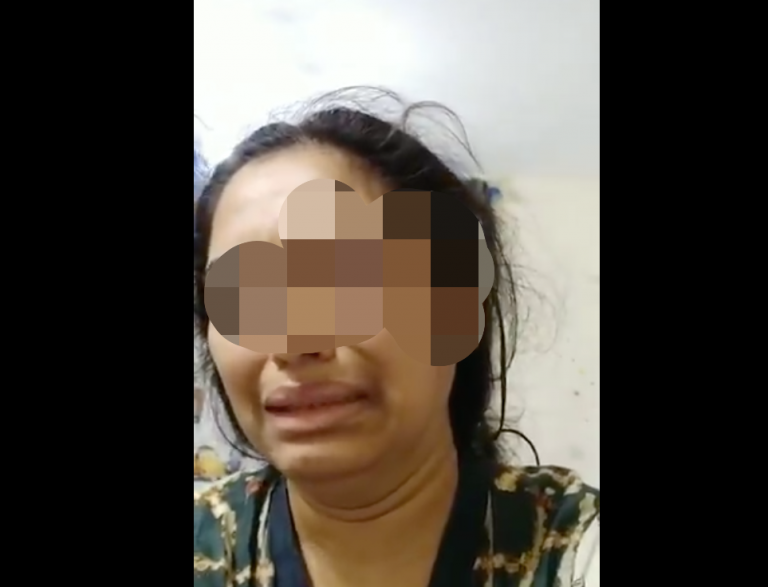
The prime suspect, Joly Joseph (47), in the Kerala serial killings case, who was arrested on Saturday, has confessed to her crime, police said on Sunday. Joly who was the family’s daughter-in-law was arrested eight years after her husband’s death following consumption of cyanide-laced food. Along with her, the Kerala Police also detained her second husband Shaju and another relative who supplied cyanide to execute the murders.

KG Simon, Superintendent of Police Kozhikode Rural who is heading the investigation team in the case, said Joly Joseph confessed her role in the killing of six members of her family over a period of 14 years.

Speaking to India Today, Simon said: “We have arrested her and two associates in the murder of her husband Roy Thomas in 2011. The autopsy report of the deceased revealed the presence of Pottasium cyanide. The second accused, MS Mathew also confessed that he provided cyanide sourced from third accused and a local goldsmith, Prajith Kumar,” he said, adding that “Based on confessions and scientific evidence, the accused were arrested.”

Meanwhile, police are also probing the roles of seven persons including local political leaders who were close associates of the prime suspect, Joly Joseph. Police suspect that Joly sought the help of her friends to cover up the murders and also consulted a criminal lawyer before her arrests. Joly also made an unsuccessful attempt to transfer the investigation officer by seeking the help of political leaders.

“The accused did meticulous planning and charted the safe mode to conceal the murders. It was a challenging case, a police official told India Today.

The chain of deaths:

The first target in the serial killing was a retired teacher Annamma Thomas (57), mother-in-law of Joly Joseph, whose death in the year 2002 did not raise any suspicion as the family treated it as a natural death. After six years, her husband Tom Thomas (66) died of heart failure.

In 2011, their elder son and husband of the prime accused in the case, Roy Thomas (40), died under similar circumstances. The family still could not smell anything fishy though the autopsy report revealed poisoning before death.

In 2014, Annamma’s brother, Mathew Manjadiyil (67), died similarly. Two years later in 2016, their relative’s daughter, Alphonsa (2), died of a heart attack and within months her mother, Sili (27), also died.

Soon after that Roy’s widow, Jolly, married Sili’s widower Shaju and claimed ownership of the family property with the support of the last will prepared by her father-in-law Tom Thomas who had died in 2008.

Meanwhile, Roy’s younger brother Mojo, an NRI based in the US, perceiving the ploy by now, challenged the transfer of ownership of family property and lodged complaints with the Crime Branch regarding the serial deaths in his family.

Based on his complaints, Kerala police opened family tombs on October 4 to examine the reasons behind the deaths of six persons from a family who died under mysterious circumstances.

The police interrogated Jolly and Shaju eight times and found discrepancies in their statements. They found that Jolly was present in the locations when all six persons died. When the police asked Jolly to undergo polygraph tests, she refused on health grounds.

Police said Jolly, who was a commerce graduate, had claimed she was an engineering graduate and was working as a lecturer at the National Institute of Technology (NIT).

While verifying call details, police found that Jolly and Shaju were in constant touch during odd hours. When the dead bodies were exhumed, forensic experts found the presence of cyanide.

In all the cases the Modus Operandi has been the same. In each case, traces of cyanide had been found and it had been a case of slow poisoning, police said. “We found that Roy’s death had occurred due to cyanide, while the wife had claimed he had died of cardiac arrest,” police officers added.

Police revealed that Annamma Thomas, who was at the helm of family affairs, was killed to claim her money, while it is suspected that Tom Thomas, a retired government employee, was killed to get more share of the property. Roy was killed as the accused was not getting along well with her husband.

Annamma’s brother Mathew was killed as he had insisted on postmortem of Roy, police said adding Sili and her one-year-old daughter were also killed in similar circumstances.