Home Blog Page 6013

Benjamin Netanyahu started like Prime Minister Narendra Modi but ended up like President Donald Trump

Last spring, the political map in Israel and India seemed crystal clear. Benjamin Netanyahu and Modi won the elections in Israel and India. It was a painful reminder to all those who hoped that right-wing global wave will ebb away soon.

There were no special surprises in India after the election results were released last May. For some commentators, the only surprise was that the Modi’s 2.0 government did intend to keep its campaign promises. The Indian government did not waste even one moment in its first 100 days. Amending the anti-terror law, triple talaq, abrogation of Article 370 and other tough decisions that have received less international attention. During this time, India saw decision making at an unprecedented pace.

In Israel, however, the political system has been paralysed for six months. Modi congratulated Netanyahu on his re-election and tweeted in both English and Hebrew, but Netanyahu failed to form a government and passed a law that forced new elections in September. The outcome of this week’s election is a clear disappointment to Netanyahu. Modi’s success and Netanyahu’s failure invite a fresh look at the Modi-Bibi comparisons that have been made in recent years.

The comparison between the two is not new. Modi-Bibi bonhomie was on full display during Modi’s Israel visit, and Modi reciprocated the reception he received when Netanyahu visited India.

Israel was admired by Indian leaders as a global success story even when political relations were remote, and of-course it is admired by the Indian Hindu Right. On the other hand, the comparison between the two prime ministers is also a battering tool used by the Indian left.

Former Indian minister and diplomat Mani Shankar Aiyar attacked both leaders with his usual vituperation, “Both are rigid, doctrinaire, right-wing extremists, drawing their breath from two major proponents of violence as the road to liberation and the realization of faith-based nationhood” (Aiyar meant Savarkar and Jabotinsky).

Those who compare the two leaders do so mostly out of admiration or loathing, In this article, I will try to draw points of similarity and difference between the two leaders, points that may evade the admiring/loathing eye that views both as static rather than dynamic leaders.

Both are seasoned politicians. Netanyahu won the 1996 election and became prime minister. He is the longest-serving Israeli prime minister. Netanyahu started his political career as one of a few “Likud’s princes”, but very quickly he became the most admired politician among right-wing grassroots. Modi became the Chief Minister of Gujarat in 2001 and has never lost a single Election. Modi’s success as a Chief Minister became a talking point not only within India but across the world.

When talking about prominent leaders in democratic countries around the world, the names of Netanyahu, Modi and Trump often appear together. Netanyahu and Modi – unlike the US president – are first and foremost politicians, they have been operating successfully for decades within complex political frameworks.

Both prime ministers master their craft, they remain indifferent when accused of petty politics, racism or horse-trading. They believe that their voters forgive them – sometimes even proud of them – for their deep knowledge of the little tricks of politics.

In the summer of 2017, the Indian intellectual Ramachandra Guha found himself caught on the horns of a dilemma. Modi’s popularity and his messages frightened Guha, while the Congress Party was a weak and corrupt opposition to Modi’s rule. Guha’s choice to lead the Congress Party was Nitish Kumar, a popular Chief Minister from Bihar, known for his honesty and simplicity. Two weeks later Kumar joined Modi’s camp, and in the 2019 elections, they were part of a successful coalition designed to secure Modi’s victory. Two years before their defeat in the general election the Congress Party paid a price for its inability to play smart politics in the Modi era. Congress won 17 out of 40 assembly seats in Goa in 2017, Modi’s BJP won only 13, but in few years BJP had a coalition and the Congress celebration turned into an ugly blame game.

Netanyahu’s deal with the Radical Right, resulting in its ad-hoc merge into a mainstream religious party in April 2019 Israeli legislative election manifested simultaneously his determination to remain in power, and his familiarity with every existing trick in Israeli politics. Including tricks that have never been tried before.

But the two leaders did not choose a political career for the pleasure of the game. Along with impressive political skills, Netanyahu and Modi have a master plan on how to correct the mistakes of their predecessors. Left and right. In the September 2019 elections, right-wing voters in Israel felt that Netanyahu had lost the way and was engaged in personal survival.

Modi did not begin the process of delegitimisation of the secular Nehruvian Indian project, but in his tenure, the secular ethos reached an unprecedented low. If we asked the main opposition leader Rahul Gandhi a decade ago what his religion was, his answer would be: the Indian flag and his Congress party.

But a decade late Rahul was stressing his Brahmin caste credentials and he was visiting temples. He rebranded the secular Congress party as a party of Hinduism, whatever it means. All these attempts have failed, but they reflect the change that has taken place in Indian politics. Rahul was not alone, even the DMK was fighting the anti-Hindu tag in 2019.

The targeted killing of Nehruvian secularism in India occurred at a time when the Israeli public stopped believing that the Palestinians could be partners in a peace process. In the last three Israeli elections, there was relatively little or no attention to Israel’s conflict with the Palestinian. Netanyahu succeeded in convincing the Israeli public on two issues simultaneously. [1] The Palestinians do not want peace; [2] any Israeli attempt to jump-start a peace process will lead to violence. He also succeeded in convincing the Jewish majority in Israel that Israel could thrive and succeed even without a political solution to the Palestinian problem. This is a huge success that changed Israeli politics.

Netanyahu returned to the premiership ten years ago. In those elections, he received fewer votes than his main rival, Tzipi Livni. Livni was the symbol of advancing negotiations with the Palestinians. 2019 elections transformed her into an almost pariah politician. Labour party leader Avi Gabbay fired Tzipi Livni live without even warning her in advance. There was no party in Israel that wanted to cooperate with her. Livni’s main sin was her belief that the State of Israel has a Palestinian partner for peace negotiations.

The attack on Indian secularism began before Modi, and the “no partner” approach was first voiced before Netanyahu’s return to power in 2009, but they were the ones who most effectively promoted and popularised non-apologetic narratives of India and Israel.

We Israelis went to the ballot boxes for the second time in a year and this time Bibi and his allies failed to garner a majority of seats in Israel’s Knesset. India, on the other hand, enjoys political stability that allows the government to govern. In both countries, a majority of the public identifies with the prime minister’s policy conceptions, but Netanyahu has failed to translate this majority into an election victory.

Right parties are on the rise from North America to Europe to Asia, but the difference between Modi’s model and Trump’s model must not be ignored. Whimsical, unpredictable and uninformed Trump represents the attempt to break and destroy everything built before him, there is no strategy to his chaos.

“If I can help, I would love to be a mediator”, President Trump declared at the end of July  in his summit meeting with Pakistan’s President, and it’s clear that he didn’t know well the Simla agreement and that ever since then, any attempt of international mediation on Kashmir is seen in both Pakistan and India as a Pakistani victory. The case of Kashmir is not unusual in Trump’s turbulent tenure.

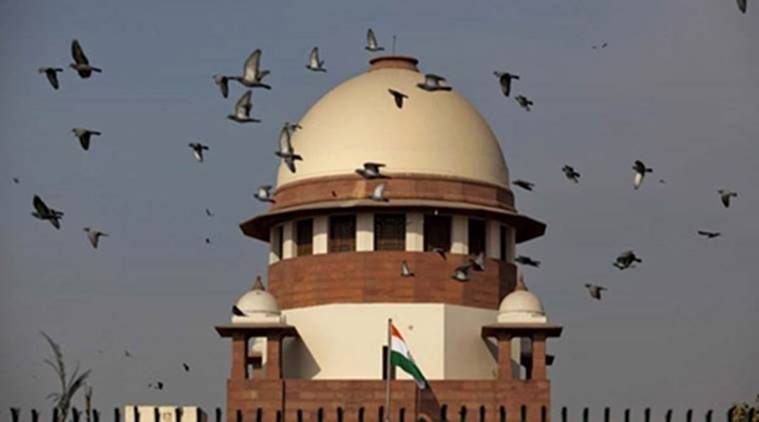
Modi, on the other hand, is a workaholic perfectionist conservative politician. Despite the “tyranny of the unelected” statement, the BJP government has been able to work well with the Supreme Court. In both Sahara-Birla papers case and Rafale case, the Supreme Court accepted the Government’s policy. Rahul Gandhi had to tender an unconditional apology to SC at a critical stage of his election campaign. When the Central Bureau of Investigation (CBI), the Enforcement Directorate (ED) and the Election Commission are all blamed for being biased towards PM Modi, it is understandable that Modi knows that he is working well with the Indian bureaucracy.

In Israel, the situation is the opposite. Public officials that Netanyahu has chosen himself are accused of being part of the anti-Bibi “Deep State”, let alone his political rivals.

A majority of 61 out of 120 Knesset seats is required for a party leader to form a Government. The right-wing parties won 44 seats the April 2019 elections. Seven more pro-Bibi seats were lost because the electoral threshold is currently set at 3.25%, and two right-wing parties failed to pass it. If we add another 16 seats belonging to the pro-Bibi ultra-Orthodox parties, we can see that the Israeli voter gave Netanyahu a stable 63-65 coalition seats in April. In the September 2019 elections, the ultra-Orthodox retained their electoral power, but the right-wing parties won less than 40 seats. The right-wing parties lost about a fifth of their power in six months and suffered a stinging defeat that requires explanation.

The strengthening of right-wing parties in the world is sometimes described as an alliance between conservatism and populism. For a decade Bibi was the best driver of the anti-establishment sentiments, and at the same time, he was the experienced and talented leader who avoids military adventures and needless complex diplomatic entanglements.

In February 2012, Supreme Court 9th president Dorit Beinisch had retired. At the farewell ceremony, PM Netanyahu stated that: “A strong and independent judicial system safeguards the existence of the other institutions in a democratic government. I will, therefore, continue to act firmly and shelve any proposed bill that threatens the independence of the courts.” Some saw it as hypocrisy and dishonesty, but in my opinion, they were wrong. In the balance between populism and conservatism, Netanyahu favoured conservatism. There are other examples to prove that Netanyahu as prime minister was a conservative leader most of the time, but that has changed in the past year.

No doubt that the corruption indictment just around the corner, narrowed Netanyahu’s political manoeuvrability and he chose populism and a “Bibi cult of personality”. Netanyahu was and still is bigger than his party, and his legal rescue became the only important political task. Most Israelis have forgiven Netanyahu for some level of personal corruption and did not really think his character was more venal than other Israeli prime ministers in the past. But the Israeli voter was less forgiving this time towards Netanyahu’s unnecessarily divisive and partisan campaign. Netanyahu’s closest allies in the past year were the ultra-Orthodox parties. Netanyahu – to put it mildly –  is not a very religious person and the only reason he chose them was their loyalty to him. Not towards his party, but only to him personally.

Unlike India, Israel did not define itself as a secular state. Israel is the nation-state of the Jewish people. Israel’s flag, anthem, calendar, language reflect the Jewish character of the country. Since the Jewish character of the State of Israel is guaranteed, the revolt of the middle class in Israel is against religionisation in Jewish secular schools, and the ultra-Orthodox are accused of promoting laws of religious coercion, and of not serving in the army or integrating into Israeli modern society. Netanyahu tried to portray the opposition parties as non-patriotic parties, even though the opposition had four former chiefs of staff and two former defence ministers. The Israeli public can forgive and even like a populist election campaign, as long as it knows that after the election, populism will give way to conservatism. In the last election, the Israeli public feared that even after the election, it would get Trump’s chaotic model rather than Modi’s conservative model. Netanyahu started like Modi and finished like Trump, losing the almost automatic majority he had enjoyed for a decade.

Christian community the ‘soft target’ of Islamist radicals: NCM VC writes to Amit Shah over Christian girls being victims of Love Jihad

0

The National Commission for Minorities (NCM) vice-chairman George Kurian has written a letter to Union Home Minister Amit Shah stating that Christian girls in Kerala are increasingly becoming the target of “Love Jihad”, reports Times of India.

According to the report, George Kurian, the vice-chairman of the NCM in his letter on Monday drew the attention of Home Minister Amit Shah by informing him about the complaint of a father from Kozhikode in Kerala who has alleged that attempts were being made to convert his daughter to Islam by blackmailing her.

He issued a statement saying “the spate in organised religious conversion and using the victims for terror activities by trapping them through ‘love jihad’ has shown that the Christian community is a soft target for Islamic radicals.”

In the letter, he reportedly urged the Home Ministry to “take note of this alarming trend and order a probe by the National Investigative Agency” and bring in an effective law to curb such fraudulent activities of radicalised elements.

Reportedly, the letter comes after NCM received complaints from two Christian families. In one such incident that occurred in Kerala’s Kozhikode, a Christian college student was allegedly raped and the act was filmed by the accused to force the victim to convert to Islam. As she refused to convert, there were attempts made to abduct her from the hostel she was staying in.

“The fears expressed by the parents are not misplaced, given the experiences in similar cases in the past. Reports suggest that out of 21 persons who joined the ISIS from Kerala, five were converted from Christianity,” said Kurian.

Kurian cited the data published by Kerala Catholic Bishops Conference’s Commission for Social Harmony and Vigilance, which states, “around 4,000 girls have been subjected to conversion since 2005 (till 2012) after they fell in love.” It is notable here that for several years now, Christian priests and leaders have been claiming that an increasing number of Christian girls are becoming the target for ‘Love jihad’.

Such incidents which may hamper the religious harmony of the state should be taken seriously, said George Kurian while seeking NIA probe to the incident.

US President Donald Trump deletes tweet where he ‘hoped’ India and Pakistan will resolve the Kashmir issue ‘quickly’

United State of America President Donald Trump quoting a news agency ANI tweet had said that he ‘hoped’ that India and Pakistan will resolve the Kashmir issue ‘quickly’.

Donald Trump’s tweet hoping that India and Pakistan resolve the Kashmir issue ‘quickly’, now deleted

Trump had quoted ANI tweet which carried his quote from the bilateral meeting he held with Pakistan Prime Minister Imran Khan in New York. He was asked if he will offer to mediate between India and Pakistan on Kashmir issue. Trump had said, “I am ready, willing and able. It’s a complex issue. It’s being going on for a long time. But if both want it, I will be ready to do it.”

The US President who is very enthusiastic to meddle in India’s affairs had previously spoken of his willingness to mediate. In July this year, US President Trump had stirred up a storm when he claimed that PM Modi had requested him to mediate on the Kashmir issue. However, India had clarified that no such request was made. Later, India had again categorically rejected the offer of mediation saying Kashmir remains a bilateral issue between India and Pakistan. In August, too, he had offered to mediate saying it is a “very complicated place”. However, Kashmir continues to remain a bilateral issue between India and Pakistan.

Kerala: Madarsa ‘teacher’ arrested for sexually assaulting a minor student, was running the facility without licence

0

The Kerala police on Monday have arrested a teacher in a Madarsa in Kolathur, Malappuram district for sexually assaulting a 17-year-old girl in the institution. After an initial investigation found that the institution was illegal and was running without a licence, 12 more girls have been rescued from there and have been shifted elsewhere.

According to reports, some of the girls had used the state child helpline number to complain to the authorities about the alleged assault. Malappuram childline chief co-ordinator Anwar Karakkad has been quoted by Hindustan Times saying, “We got a tip-off. One of the 3 children admitted that she was sexually exploited by teacher A Rafeeq and we alerted the police immediately.”

Anwar has also stated that the Madarsa was running without permission and the girls were all from poor families. It was a Madarsa where the girls used to live too. The girls were rescued and were sent to a state shelter home.

Medical examination of the underage victim has confirmed sexual assault. The accused teacher Mohammad Rafeeq has been arrested and under POCSO Act. Kolathur SHO K Madhu has informed that the investigation is undergoing and the police are trying to ascertain whether any other children were assaulted by Rafeeq.

As per reports, the accused teacher A Rfeeq is 35. He used to teach Arabic in the institution which was being run as a religious and Arabic learning centre with boarding facilities. Taking advantage of the caretaker being absent, he had assaulted the girl.

Terror group Jaish-e-Mohammed changes its name to Majlis Wurasa-e-Shuhuda Jammu wa Kashmir, calls for renewed jihad against India

The Pakistan-based terror organisation Jaish-e-Mohammed (JeM) has changed its name to evade the international pressure and evade the agencies as it continues its terror activities against India and world at large. According to a report by Hindustan Times, JeM has changed its name to Majlis Wurasa-Shuhuda Jammu wa Kashmir (gathering of the descendants of martyrs of J&K).

The report cites counter terrorism agencies in India and states that while the name of the terror organisation has changed, the cadre and the leadership remains the same. Earlier it was known as Khudam-ul-Islam and Al Rehmat Trust. JeM’s new flag is the same as previous one where ‘Al Jihad’ is replaced with ‘Al Islam’.

The move comes to evade international scrutiny and pressure so that they can continue their jihadi training activities in Pakistan. Mufti Abdul Rauf Asghar, JeM chief and globally designated terrorist Masood Azhar, is now heading the newly named terror outfit, the report states. Masood Azhar, is reportedly ‘terminally ill’ at Markaz Usman-o-Ali in Bahawalpur, Pakistan. It is believed that JeM shifted its operations here after Indian Air Force targeted the Balakot terror camps following the Pulwama terror attack earlier this year.

As per the report, Maulana Abid Mukhtar has called for a jihad against India already. He has also held rallies calling for jihad against Israel and the United States as well. 30 suicide attackers are already ready to attack India, especially the military installations, convoys of Indian security forces and cantonments.

Earlier this week, Indian Army chief General Bipin Rawat had informed that Pakistan has also reactivated the Balakot terror camp, which was destroyed by Indian Air Force. Now the new reports suggest that Masood Azhar’s brother Rauf Asghar has not only reactivated the Balakot training camps but also motivating the new recruits at new training facilities in Bahawalpur and Sialkot to attack Indian security establishments.

Madarsas which specialise in training and radicalising youth to carry out terror activities have also been operational since Indian government abrogated Article 370 making Jammu & Kashmir an integral part of India without any riders. The main training centres have also been given instructions to prepare for an ‘all out confrontation’ between India and Pakistan and jihadi in Kashmir. Intelligence reports suggest that Pakistan will try to infiltrate as many terrorists as possible before the snowfall starts in October in the valley.

In Houston at the ‘Howdy, Modi!’ event on 22nd September, Sunday, PM Modi had talked about a ‘decisive war’ against terror. He had said that the time had come for a decisive war against terror. Addressing the same event, US President Donald Trump has also raised the issue of ‘radical Islamic terrorism’, the brand of terrorism that Pakistan specialises in.

Shashi Tharoor presents photograph of Nehru in Soviet Russia as image from USA to downplay success of Howdy Modi

After Prime Minister received a massive welcome from not just Indian Americans, but also several US lawmakers including President Donald Trump, at the Howdy Modi event at Houston yesterday, Congress leaders and supporters are trying to downplay it. They are trying to say that the reception received by Modi was nothing new, and previous Congress Prime Ministers also received similar receptions. Congress leader Shashi Tharoor also tried to say the same, but while doing so he resorted to using fake news.

Today the Thiruvananthapuram MP posted a photograph on Twitter showing former prime ministers Jawaharlal Nehru and Indira Gandhi on an open-top vehicle being cheered by a crowd on some foreign location. Shashi Tharoor tweeted that the image is from the US in 2014. He wrote, “Nehru & India Gandhi in the US in 1954. Look at the hugely enthusiastic spontaneous turnout of the American public, without any special PR campaign, NRI crowd management or hyped-up media publicity”.

The Congress leader also mistyped Indira Gandhi’s name as India Gandhi in his tweet, which instantly reminds us of famous Indira is India, India is Indira quote by former Congress president Debakanta Baruah.

But the photograph tweeted by Shashi Tharoor to belittle the ‘Howdy Modi’ event is not from the USA, neither this is from the year 1954. A simple Google image search shows that the image is from Magnitogorsk in Soviet Russia, and it is from 1955. This image is available on several websites which mention that it is from Magnitogorsk in 1955.

Source: OldIndianPhotos.in

Magnitogorsk is an industrial city in Chelyabinsk Oblast, in curent Russia. jawaharlal Nehru and his daughter Indira Gandhi had visited the city on 17 June 1955, during their USSR visit. This was the first official visit of USSR of Jawaharlal Nehru as prime minister, and during the almost three-week visit, he had visited several places like Stalingrad, Simferopol, Alushta, Yalta, Tbilisi, Rustavi, Tashkent, Ashkhabad, Alma-Ata, Magnitogorsk , Sverdlovsk and Leningrad etc, apart from capital Moscow. Kremlin had organised a huge reception in honour of the India’s first PM.

USSR had an extremely authoritarian regime at that period. USSR (Union of Soviet Socialist Republics) was a one-party state ruled by the Communist party. The foundation of USSR itself was the October Revolution where Leninf had overthrown the provisional government.

For Shashi Tharoor to insinuate that the ‘Howdy Modi’ event in Houston was stage-managed and people coming out to greet Jawaharlal Nehru and Indira Gandhi in USSR was not is laughable, to say the least. The ‘Howdy Modi’ event was attended by Indians who live in the USA of their own free will as opposed to a state like USSR back in 1956 where the average population had no right to oppose the diktat of the Communist state. Essentially, in 1956, had the state asked people to be present at a place to greet dignitaries, they would have to be there whether they wanted to be there or not. The chance of a crowd being stage-managed by the Communist regime in 1955 in Soviet Russia is almost a given.

Shashi Tharoor, after tweeting fake news went on the tweet again only to offer and ‘explanation’ and make matters worse.

After insulting Prime Minister Narendra Modi and belittling his massive popularity, Shashi Tharoor, to mask his own incompetence went on to tweet platitudes.


He said that even though the picture is not from the USA but from USSR, it shows the popularity of then PM Nehru. He also said that when PM Modi is honoured, PMO is honoured and the respect is for India. One wonders where this logic went when the tweet where he tweeted fake news, he spoke about the ‘Howdy Modi’ event being a PR campaign, being stage-managed etc.

Shashi Tharoor was not the only one who shared this fake news and brazened it out. Jawhar Sircar who is the former CEO of Prasar Bharati and used to be India’s Cultural Secretary when the Congress government was in power also tweeted the same fake news.


He also tweeted a picture of Rajiv Gandhi with then President of the USA, Ronald Reagan. However, the fact that the respect that Rajiv Gandhi got by President Reagan could have very well been connected to the Bhopal Gas Tragedy where it is often said that Rajiv Gandhi let the main accused escape in exchange of his best friend Adil Shahryar who was convicted in the USA, escapes Sircar.

The ‘Howdy Modi’ event saw unprecedented reception where President Donald Trump also delivered a 30-minute speech followed by Prime Minister Narendra Modi addressing the diaspora in Houston. Ever since the event, the ‘liberals’ have been foaming at the mouth finding reasons to discredit the massive reception that Prime Ministre Modi got.


Editor’s Note: This report had earlier asserted that the picture was taken in Moscow, USSR, in 1956. This was the result of wrong information provided in several websites which were returned as first page result in Google Image Search. The article has been updated with correct information.

“The time for talking is over, the world needs to act now”: PM Modi at the UN climate summit

0

Addressing the UN summit on climate in New York today, Prime Minister Narendra Modi said that there is no time left for talks on the subject, and the world needs to start working on protecting the environment.

Noting that this is his first address at the UN after receiving the Champion of the Earth award last year, Modi expressed happiness that his first meeting during his New York visit is on climate. He said that lots of efforts are being undertaken on the subject climate, but the world has to acknowledge that enough is not being done to tackle this serious issue. “Today a comprehensive approach is required, which includes education, values, lifestyle and development philosophy. A worldwide public movement on behavioural change is the need of the day today”, PM Modi said.

He said, “Respect of nature, and conservation of the natural resource is the part of our tradition and our current efforts. Need, not greed, has been our guiding principle. Because of that, today India has come here not only to talk, but with a practical thought and roadmap”. PM Modi added, “We believe that, an ounce of practice is worth more than a ton of preaching”.

[youtube https://www.youtube.com/watch?v=nwwtgovzu18]

He said that India is increasing the share of non-fossil fuel in the fuel mix. He also informed that by 2022, India will increase the capacity of renewable energy to 175 Gigawatt, and is committed to further enhance it to 450 Gigawatt. He also talked about encouraging e-mobility in the transportation sector, and mixing biofuel in petrol and diesel.

Further talking about India’s efforts to reduce pollution, PM Modi said that clean cooking gas connections have been provided to 150 million families. “We have started ‘Jal Jeevan’ mission for water resource development, water conservation, and rainwater harvesting,” he added.

Prime Minister Modi said that almost 80 countries have joined India’s initiative of International Solar Alliance. He informed that India and Sweden, along with other partners, is going to launch the Leadership Group of the Industry Transition Track. This initiative will play a vital role in creating low-carbon pathways for the industries in collaboration of governments and the private sector, he said.

Modi also informed the UN summit India is launching a Coalition for Disaster Resilient Infrastructure, in order to make infrastructure disaster resilient. He invited the member states to join this initiative.

The coalition aims to work towards a common goal of having infrastructure that is resilient to climate and disaster. For the coalition, India is working with countries like the UK and small island states like Fiji and Maldives who face problems of climatic nature.

“On this year’s India’s Independence Day, we called for a mass movement to have freedom from single-use plastic. I hope that this will raise awareness against the usage of single-use plastic, at a global level,” PM Modi said.

The prime minister also informed that the solar panels installed by India on the conference hall of the UN headquarters will be inaugurated tomorrow.

“The Time for talking is over, the world needs to act now” he said while concluding his speech.

PM Narendra Modi is visiting the USA to attend the 74th session of the United Nations General Assembly, and he will address the UNGA on 27th September. Yesterday he attended the ‘Howdy Modi’ event at Houston in Texas, where he was joined by US President Donald Trump.

‘I am a respected member of the Parliament’, P Chidambaram tells court while opposing CBI’s objection to his bail

The Congress-era finance minister P Chidambaram currently lodged in Tihar jail in the INX Media corruption case defended himself in an affidavit in the Delhi High Court opposing CBI’s stand on his bail plea by saying that he did not use the office of the finance minister for personal gain.

In the affidavit, the Congress leader stated that he’s a sitting member of Parliament and no financial loss to the exchequer has been shown in the INX media case. “I am a respected member of Parliament and a responsible citizen of this country”, says the former Finance Minister as he opposed CBI’s stand that he is at “flight risk”.

The CBI had on Friday filed its counter affidavit opposing the bail application sought by former Union Minister P Chidambaram in the INX Media corruption case and stated that the gravity of the offence committed by Chidambaram does not entitle him to bail.

The agency has claimed that it has overwhelming evidence against Chidambaram and that grant of relief to him would set the wrong precedent in corruption matters as it was allegedly a clear case of betrayal of trust.

It furthered that Chidambaram is a “flight risk” as evidence from his conduct of evading the summons.

Chidambaram’s bail plea was heard today in the Delhi High Court. Chidambaram, currently lodged in Tihar jail, in his petition has alleged that the criminal proceedings against him were “mala fide” and borne out of “political vendetta”.

In his bail plea, Chidambaram told Delhi High Court that there are no allegations or evidence against him suggesting that he was involved in the INX Media case. “This is an offence of 2007. The FIR was filed in 2017. I am not named as an accused in the FIR. No allegations have been made against me. I moved anticipatory bail in the High Court and was granted interim relief,” Chidambaram told the court.

Meanwhile, Chidambaram’s lawyer Kapil Sibal also told the court that the former finance minister is “a law-abiding citizen”.

In a rejoinder to CBI’s reply on his bail plea, Chidambaram said that a lookout circular (LOC) has already been issued against him and it is preposterous to allege that he is a flight risk and can evade the process of law.

The UPA-era finance minister P Chidambaram whose judicial custody was expiring on 19th September 2019, was produced before the court and the court granted an extension of Chidambaram’s judicial remand till October 3. The senior Congress politician is accused of misusing his position while he was the finance minister of India and granting illegal clearances to the INX Media.

The lawyer duo-Kapil Sibal and Dr AM Singhvi who are representing Chidambaram have been trying to seek bail for the Congress leader one pretext or the other but have failed in doing so.

Chidambaram was arrested by the CBI in connection with the INX Media case on August 21, a day after the Delhi High Court denied his anticipatory bail petition and observed that Chidambaram might be the ‘kingpin’ of the INX Media scam. Both the CBI and the Enforcement Directorate (ED) had sought his arrest in the case. He was sent to on August 22 and subsequently.

The Delhi High Court will continue to hear the arguments in former Finance Minister and Senior Advocate P Chidambaram bail plea in the INX Media case on Tuesday, September 24.

Demolition of mosques, ban on Arabic language, Islamic schools : China’s new war to confront Radical Islam

0

Realising the threat that emanates from radical Islam, the People Republic of China seems to have decided to strictly regulate the menace of it in the country and defend from the harm it may bring upon on the Chinese societies. The Chinese government has now begun to strip off all the Islamic symbols, expressions, especially in the North-west of the country where most residents are ardent Muslims. The Chinese authorities have destroyed domes and minarets on mosques, including one in a small village near Linxia, a city known as “Little Mecca”, reports New York Times.

Similarly, mosques have been destroyed in other parts of China including Inner Mongolia, Henan and Ningxia, the homeland of China’s largest Muslim ethnic minority ‘Hui’. In the southern province of Yunnan, three mosques were closed. Interestingly, from Beijing to Ningxia, officials have banned the public use of Arabic script.

The Chinese government’s precautionary measure represents the newest front in the Chinese Communist Party’s rollback of religious freedoms, after decades of relative openness that allowed more moderate forms of Islam to exist. The crackdown on Muslims that began with the Uighurs in Xinjiang is spreading to more regions and more groups.

The Communist Party of China believes that the adherence to the Muslim faith could turn into religious extremism and open defiance of its rule. Across China, the party is now imposing new restrictions on Islamic customs and practices, in line with a confidential party directive. The measures also reflect the hard-line policies of China’s leader, Xi Jinping, who has sought to reassert the primacy of the Communist Party and its ideology in all walks of life.

Last year, a top party official from Ningxia praised Xinjiang’s government during a visit there and pledged to increase cooperation between the two regions on security matters.

However, according to Haiyun Ma, a Hui Muslim professor at Frostburg State University in Maryland, the crackdown was continuing a long history of animosity towards Islam in China that has alienated believers.

“The People’s Republic of China has become the world’s foremost purveyor of anti-Islamic ideology and hate,” he wrote in a recent essay for the Hudson Institute. “This, in turn, has translated into broad public support for the Beijing government’s intensifying oppression of Muslims in the Xinjiang region and elsewhere in the country,” wrote Ma.

The Chinese government actions in some of the North-West regions have not yet approached the magnitude of Xinjiang’s mass detentions and the intense surveillance of Uighurs. However, they have created panic among the Hui community, who number more than 10 million.

“We are now backtracking again,” Cui Haoxin, a Hui Muslim poet who publishes under the name An Ran, said in an interview in Jinan, south of Beijing, where he lives.

According to the report, the influence of Islam in China exists for centuries. There are now 22 million to 23 million Muslims, a tiny minority in a country of 1.4 billion. Among them, the Hui and the Uighurs make up the largest ethnic groups. The Uighurs primarily live in Xinjiang, but the Hui live in enclaves scattered around the nation.

The restrictions they now face can be traced to 2015 when Xi first raised the issue of what he referred to as “Sinicisation of Islam,” which meant that all faiths should be subordinate to Chinese culture and the Communist Party. Last year, reportedly, Xi’s government issued a confidential directive that ordered local officials to prevent Islam from interfering with secular life and the state’s functions.

The directive alleged warned against the “Arabisation” of Islamic places, fashions and rituals in China, singling out the influence of Saudi Arabia, the home of Islam’s holiest sites, as a cause for concern.

The directive intends to ban the use of the Islamic financial system, bars mosques or other private Islamic organisations from organising kindergartens or after-school programmes, and it forbids Arabic-language schools to teach religion or send students abroad to study.

The most noticeable aspect of the crackdown has been the targeting of mosques built with domes, minarets and other architectural details characteristic of Central Asia or the Arabic world.

Cui, a poet, calls it as the harshest campaign against faith since the end of the Cultural Revolution, when so-called Red Guards unleashed by Mao Zedong destroyed mosques across the country.

According to the Chinese state, the spread of Islamic customs dangerously subverts social and political conformity. In Ningxia, the provincial government has banned any public displays of Arabic script, even removing the word “halal” from the official seal it distributes to restaurants that follow Islamic customs for preparing food. The seals now use Chinese characters.

The authorities in several provinces have stopped distributing halal certificates for food, dairy and wheat producers and restaurants. The Chinese state media have described this as an effort to curb a “pan-halal tendency” in which Islamic standards are being applied, in the government’s view, to too many types of foods or restaurants.

Reportedly, Ningxia and Gansu have also banned their traditional call to prayer. Around historical mosques in these provinces,  prayer times are now announced with a grating claxon. An imam in Yinchuan, the capital of Ningxia said that authorities had recently visited and warned him to make no public statements on religious matters.

The Chinese authorities have also targeted the mosques themselves. In Gansu, construction workers in Linxia demolished the dome on a mosque in April. The mosque is yet to be reopened. The NYT claimed that the policemen did not allow two of their journalists to enter the mosque. In the southern province of Yunnan, a home for Hui communities, authorities in the last December closed mosques in three small villages which were built without any official permission.

Defending the decision of the Chinese government, Xiong Kunxin, a professor of ethnic studies at Minzu University in Beijing, said that China’s far-reaching economic changes over the last 40 years had been accompanied by a loosening of restrictions on religious practice, but that the laxity had gone too far.

“Now China’s economic development has reached a certain height and suddenly problems related to religious and other affairs are being discovered,” said Kunxin.

He further added that the proliferation of mosques and the spread of “halal” practices into public life, conflicted with the cultural values of the majority Han Chinese population.

In a further worry for Chinese officials, the statistics indicate that there are now more mosques in China than Buddhist temples. The country had 35,000 in the current year compared with 33,500 in the last year. In the last year, scores of mosques have been altered, closed or destroyed entirely, many of them in Xinjiang, according to officials and news reports.

The CPC asserts that it has the right to control all organised religion. However, critics say that the Chinese government fears that religious organisations could challenge their political power. In the past, the party’s repression has triggered violent responses.

The current pressure has also met with unrest. In August 2018 in Weizhou, a village in Ningxia, protests erupted when the authorities sent demolition workers to a newly built mosque. After a tense showdown that lasted several days, the local government promised to suspend the destruction and review the plans. Nearly a year later, police officers still block the roads into the village, turning away foreigners, including diplomats.

Nevertheless, China asserts that it allows freedom of religion, but emphasises that the state must always come first. The Ningxia government when asked about its recent restrictions on Islam, said that China had rules on religious practice just like any other country. It stated that mosques which violate laws such as building codes will be closed, it said, and schools and universities will not permit religious activities.

“Arabic is a foreign language,” said the Ningxia government responding to the allegations on restrictions on public signage. The government added that they have been imposed to make things convenient for the general public.

In an NYT interview, Ma, the Frostburg State scholar, said the current leadership viewed religion as the major enemy the state faces. He said senior officials had studied the role played by faith, particularly the Catholic Church in Poland in the collapse of the Soviet Union and its dominion in Eastern Europe.

Not Shashi Tharoor, Indian Muslims and Islam need an Ambedkar first

Editor’s note: The Print published an article today that argued that Indian Muslims don’t need an Owaisi or a Salman Khurshid, but a leader like Shashi Tharoor. The argument presented was that In India, either a Muslim leader is popular only among Muslims and is unable to build credible support in a Hindu-majority country, or he is completely disconnected with the community and can’t be seen as a credible Muslim leader. While The Print builds up own imaginations trying to solve non-existent problems, the real issue is not whether Indian Muslims need a Tharoor, but where is that Ambedkar that Islam needs desperately?


Every time there is some news report on caste atrocity by the so-called upper castes, our “liberals” never fail to remind us of the ‘ugly reality’ of our society and the Hindu religion. Hinduism is reduced just to caste. And due to the evils of caste-system, Hinduism is declared the most violent society in the history of human civilization.

Now contrast the reactions to those when every time there is some news report about an act of terror carried out by a Muslim group or an individual. The same set of people never fails to remind us that all religions are the same. Islam is reduced to ‘peace’ (even though its literal meaning is ‘submission’, not peace). And due to the merits of peace, Islam is declared just as peaceful or violent a religion as any other in the history of human civilization.

The reactions might appear totally diverse but there is one commonality – the response (attack on Hinduism in the former case and defence of Islam in the latter case) is carried out ostensibly to protect a set of people (the lower castes in the former case and the Muslims in the latter case).

The victim in a case of caste-atrocity is generally the person from a lower caste, while the victim in a case of terrorism becomes the Muslim who might have to face persecutions due to ensuing Islamophobia (umm…). Essentially the liberals end up fighting the crime yet to be committed when it comes to Islamic terrorism.

And this is why the problems within and around Islam are never discussed. Those who raise the issues with Islam after a terror attack are painted as perpetrators of Islamophobia – a crime the liberals were already geared up to fight. It works like a self-fulfilling prophecy.

Casteism of Hinduism vs Violence of Islam:

I’ll go back to the caste atrocity and Hinduism analogy that I had referred to at the beginning of this article. That reference was not just to show the double standards of the “liberals” while responding to cases that are fundamentally a violation of human rights and dignity, but because I believe that the problem of caste-system vis a vis Hinduism can be used an analogy to the problem of violence vis a vis Islam, although the latter is a much greater threat. I don’t mean it in any academic or theological way but in a pragmatic and practical way.

One can cite numerous examples to show that birth based discriminations are not exclusive to the Hindu culture and similarly one can argue that violence is not exclusive to the Islamic ideology, but for practical purposes, both these groups are dealing with the respective problems in an almost exclusive manner. Now there comes another double standard of the Indian liberals.

To deal with the issues of caste-system and Hinduism, they can never praise someone like Babasaheb Ambedkar enough (and I won’t bother to vehemently disagree with them there), but to deal with the issues of violence and Islam, they draw a blank and resort to political correctness and kid gloves. Who is the role model of Indian liberals when it comes to reforming Islam? Or rather let me put it this way – where is the Ambedkar that Islam needs?

All the reformist or moderate Muslim names that the liberals may put forward in response to the above question will hopelessly pale in front of Ambedkar, who took on caste discrimination by denouncing Hinduism itself. Some of the liberals might even put forward examples of Sir Syed Ahmed or Allama Iqbal as reformers, while both of whom actually believed in the concept of ummah and formation of an Islamic state. Sorry dudes, that’s like an Ambedkar who believes in Manusmriti.

The truth is – the Indian liberal is either hopelessly coward or viciously anti-Hindu (due to double standards) who doesn’t yearn for an Ambedkar that Islam desperately needs in today’s times. He just wants to use Ambedkar to attack Hinduism. The utility of someone like Ambedkar ends there. He doesn’t believe in the idea, the attitude, called Ambedkar.

Ambedkar that Islam needs

Someone might ask me what exactly do I mean by an Ambedkar that Islam needs? And I won’t mince words here as I’m not as cowardly as the Indian liberal. Yes, I don’t want to get beheaded, but that might happen anyway unless an Ambedkar comes to reform Islam. By Ambedkar of Islam, I mean a reformer who can attack the traditional Islam just like Ambedkar attacked traditional Hinduism – almost to the point of destroying it in existing form. This attack is needed because the kid gloves are not working.

One has to be blind not to see the radicalization that is happening at a really quick rate among Muslims. Various surveys among Muslim societies show that the proportion of people believing in concepts like death for apostasy or blasphemy is rising.

Let’s forget the number of terror attacks, but just focus on changing beliefs. More and more normal Muslims are taking pride in Islam being a “perfect” religion. The literal and the most obscurantist interpretation of the religion and the Quran are becoming increasingly popular, even among the educated lot.

One can cop-out by blaming this radicalization as being transient and reactionary (by pinning the blame on the RSS when it comes to India, and on Israel and the USA when it comes to incidents abroad), or by inventing new words like “self-radicalization”, but those will be just that – cop-out.

The time is to junk political correctness just like it has been junked when the problem of casteism is discussed. And junking this political correctness, I will repeat that the problem of violence and intolerance in Islam is similar to the problem of caste discrimination in Hinduism – it is almost inherent. It doesn’t require a trigger to insult a lower caste or to punish a kaafir – it is assumed to be sanctioned by the respective perpetrators.

The nice talks by social reformers before Ambedkar didn’t help Hinduism get rid of the caste-system (we are still struggling) and the nice talks by whoever is not helping Islam either. Babasaheb Ambedkar gave a shock-therapy to Hinduism, which some would argue was badly needed.

Why Ambedkar was needed to reform Hinduism

In “Annihilation of Caste”, Babasaheb Ambedkar virtually calls for the annihilation of Hinduism to get rid of the caste system. That’s the only thing the “liberals” like about Ambedkar – the apparent call for the annihilation of Hinduism.

Do I support that? Broadly, yes! In fact, I would argue that the Hinduism that Ambedkar called on to annihilate is virtually annihilated today. The Hinduism that I practice or many other “right-wingers” practice is not based on the texts that Ambedkar held responsible for the inhuman caste-system. I don’t know a single person in my social circle who has even seen those texts.

The Hindu religion that Babasaheb wanted dead is already dead, however, the social structure he despised lives on. And unfortunately, that’s still largely a feudal structure. But it no longer needs that form of Hinduism (or as some call it – Brahminism) to sustain itself; which is why people have left the religion but they haven’t left the caste-system. I know deeply casteist people who are not at all religious. New tools are needed today for the annihilation of caste. However, I’d not go into those as the scope of this article is something else.

Coming back to the attacks that Babasaheb launched on Hinduism, I’d say that it could be very much cogently argued that those were needed at that time. Hinduism needed that shock. Ambedkar’s agenda was not to reduce Hinduism to caste-system but to create a new Hinduism where caste discrimination had no place. When he failed to do that in his lifetime, he chose a new religion.

The liberal love for Ambedkar is selfish

The Indian “liberal” has deviously hijacked Ambedkar. His single-point agenda is to reduce Hinduism to the caste system. Remember how Yoga is secularized and it’s declared that it has got nothing to do with religion – same is done with philosophy, festivals, music, food, medicine, and other aspects of the Hindu culture.

Ambedkar is clubbed with others like Periyar and his agenda is distorted and put out of context. The aim is to reduce Hinduism just to the caste-system. And after that successful reduction, the liberal argument is to destroy the evil caste system, which is proxy for destroying Hinduism.

This ingenious line of reductionist argument puts the Hindus – those who’d assert to identify and call themselves as one – on the defensive, and some of them even rush to defend the caste-system, giving an opportunity to the “liberals” to paint all assertive Hindus as casteist bigots. This is another self-fulfilling prophecy they have created.

I don’t wish to comment on the origins or “merits” of caste-system here in this article; at best those can be topics of academic discussion. I am more of a pragmatist and thus I support the destruction of caste-system – prevalent in the current form, especially in rural India – and which is why I earlier wrote that I broadly support what Babasaheb argued in “Annihilation of Caste”.

And as I said earlier, it was a shock therapy that was badly needed. Even Ambedkar himself conceded that the kinds of rational and logical tests and standards he was putting those Hindu texts through, were intense and most religions would fail similar tests, but he argued that the Hindu society needed to pass this test if it wanted to progress and prosper.

To be honest, the Hindu society is still struggling, but it has not discarded Ambedkar and his views. In fact, he has become relevant again. The “liberals” mock “right-wingers” for appropriating Ambedkar (and this article will be mocked too) but that only shows that Hindus have accepted Ambedkar as a reformer. It is acceptance, not appropriation.

Waiting for the Islamic Ambedkar

And that’s where I will ask the liberals again – fine, mock us for appropriating Ambedkar, but can you tell us who your idea of Ambedkar is when it comes to Islam? Or do you think Islam needs no Ambedkar? If you think Islam doesn’t need any Ambedkar, you’re not helping anyone, not even Islam.

Just like Hinduism can’t be reduced just to caste-system thanks to “appropriation” of Ambedkar by “right-wing” Hindus, Islam too needs to save itself from being reduced to barbarism and violence. An absence of Ambedkar will actually hurt it.

One can argue that this problem of Islamic terrorism is just a recent phenomenon (perhaps 9/11 will be put as the start date) and that Islam had been doing rather well since its inception, but that will be just a reassuring lie. Bitter truth is that Islamic history is full of strife and violent clash between ideologies.

It’s not that Islam is all about violence. That will be as unfair as saying Hinduism is all about caste. However, currently, the political and mythological aspects of Islam are prevailing over the philosophical and mystic ones. The former aspects will annihilate the latter ones if they are not annihilated first.

And that’s why Islam needs an Ambedkar.

(This article was originally published on the author’s blog and can be accessed here)