Home Blog Page 6630

Small businesses with turnover up to ₹1.5 crore can become income tax free due to full rebate

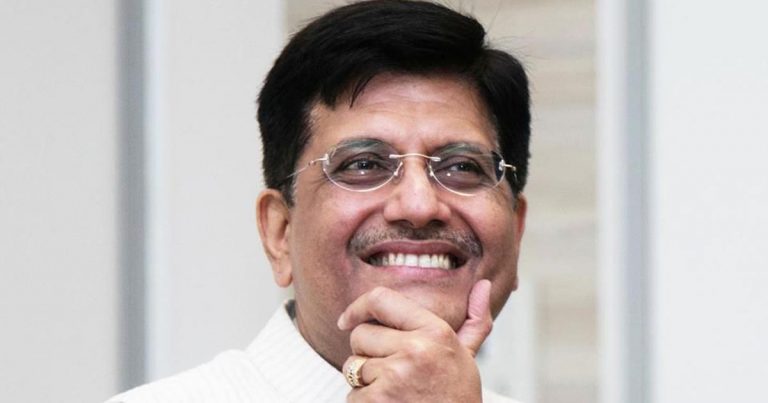
In the interim budget presented by caretaker finance minister Piyush Goyal on February 1, a major relief has been provided to the income taxpayers, with the increase in the threshold for the rebate. Now, full tax rebate has been provided for taxable income up to ₹5 lakhs under section 87A of the Income Tax Act. This means, if the net taxable income after all eligible deductions and exemptions come down to ₹5 lakh or lower, one will need not to pay any income tax.

This rebate will benefit an estimated 3 crore middle-class taxpayers comprising self-employed, small business, small traders, salary earners, pensioners and senior citizens, and the total tax benefit is estimated to be ₹18,500 crore.

Thus, even if a salaried person earns ₹75,000 per months, that person may not need to pay income tax, provided he/she is able to take the benefits of various exemptions available under the Income Tax Act. In fact, if a person earns a salary income of ₹9.75 lakhs and earns ₹10,000 as interest income, such taxpayers can take the benefit of the full income tax rebate.

But it is not only salaried people who benefit from this, other than the standard deduction which is available only for salaried income, other exemptions and the rebate is applicable for all categories of taxpayers. Due to this, small businesses and traders having an annual turnover up to ₹1.5 crore may not need to pay any income tax.

The section 44AD of the Income Tax Act provides the small businesses with the option to use a presumptive profit to calculate tax liabilities instead of maintaining accounts for the same. Businesses and trades having annual turnover up to ₹2 crore can use the presumptive taxation scheme. For such businesses, 6% of the annual turnover is taken as income of the taxpayer, and income tax will be calculated on this amount. For this, all the transactions in the business must have taken place via digital mode, including cheques, demand drafts, debit and credit cards, and any other cashless mode. For businesses doing business in cash, the rate of presumptive income is 8%.

Now, let’s take the case of income tax a small business with cashless transaction having an annual turnover of ₹1.5 crore in cashless transactions in both pre-budget and post-budget scenario.

Particulars Before Interim Budget After Interim Budget
Total Turnover of Business ₹1,50,00,000 ₹1,50,00,000
Presumptive profit rate (@6%)1 6% 6%
Profit as calculated u/s 44AD ₹9,00,000 ₹9,00,000
Income from other sources (Interest on Savings Bank Account) ₹10,000 ₹10,000
Gross Taxable Income ₹9,10,000 ₹9,10,000
Deduction under Section 80C (Investments) (₹1,50,000) (₹1,50,000)
Deduction under Section 80CCD (1B) (Contribution to NPS) (₹50,000) (₹50,000)
Deduction under Section 80D (Medical Insurance) (₹25,000) (₹25,000)
Deduction under Section 80TTA (Interest on Savings Bank Account) (₹10,000) (₹10,000)
Deduction under Section 24 (Home Loan Interest) (₹2,00,000) (₹2,00,000)
Net Taxable Income ₹4,75,000 ₹4,75,000
Income Tax ₹11,250 ₹11,250
Less: Rebate under section 87A (Full rebate upto Rs. 12,500) Nil (11,250)
Total tax payable after Rebate ₹11,250 Nil
Health & Education Cess @4% ₹450 Nil
Total Income Tax Payable 11,700 Nil


Therefore, while earlier the taxpayer would have to pay ₹11,700 as income tax including cess, now full rebate of tax can be obtained, if various exemptions are claimed.

A business using presumptive income need not keep detailed accounts for taxation, also there is no requirement of an audit of books.

Professionals also can file income tax returns using presumptive income under section 44ADA of Income Tax act. But in the case of professionals, the income is taken at 50% of turnover, up to ₹ 50 lakhs in a year.

Robert Vadra reaches ED office, smiles as he poses for photograph

Sending a strong message of solidarity, UPA chairperson Sonia Gandhi’s son in law and Congress President Rahul Gandhi’s brother in law Robert Vadra, today reached the Enforcement Directorate’s office accompanied by his wife, Congress General Secretary Priyanka Gandhi. However, Priyanka soon left after dropping him at the ED office.

Soon, pictures of a smiling Vadra emerged from inside the ED office. Twitter users used this opportunity to take a dig at Vadra.


Some even pointed out that he is smiling because of the entitlement that he has because of his family connection.

Vadra has been summoned by the Enforcement Directorate today in connection to the money laundering case and dubious land deal cases. He had applied for anticipatory bail in the court earlier this month after a fresh money laundering case was filed by the Enforcement Directorate (ED). The case filed under the Prevention of Money Laundering Act (PMLA) against Skylight Hospitality firm owned by Vadra. The case is in relation to alleged financial irregularities in land deals in Gurgaon, Haryana in 2008.

We had reported earlier that posters featuring Robert Vadra have appeared outside Congress headquarters welcoming his wife and Rahul Gandhi’s sister Priyanka Gandhi Vadra formally in the party. Later, the posters were later removed from AICC headquarters by the NDMC.

While the temple board does a U-turn, Supreme Court reserves its judgement on the Sabarimala review petitions

0

Almost four months since the SC allowed women of menstrual age into the Sabarimala temple, the court today began hearing the review petitions challenging its September verdict.

The five-judge bench of Supreme court, comprising of CJI Ranjan Gogoi, Justice Rohinton Nariman, AM Khanwikar, DY Chandrachud and Indu Malhotra are hearing 65 petitions that urge a review of the previous verdict.

The total 65 petitions include 56 review petitions and 4 fresh writ petitions.

The Sabarimala case was earlier scheduled for January 22 but had to be postponed as Justice Indu Malhotra, one of the judges on the panel, was on medical leave. Justice Malhotra, the only woman judge on the bench, had dissented with the verdict in September, saying courts must not interfere with issues concerning “deep religious sentiments”.

As reported by Bar And Bench, Senior advocate K Prasaran, appearing for Nair Service Society, opened the arguments before a five-judge bench and sought setting aside of the verdict:

He argued that the case primarily involves enforcement of fundamental rights under Article 25 which both the petitioner and the respondents, in this case, are relying on.

Prasaran, citing the Jehovah witnesses case to buttress his point, argued that unless the practice in very abhorrent, the court normally does not interfere in activities like these.

“Sabarimala custom cannot be equated to untouchability, It is only a religious custom,” K. Parasaran argued making submissions to Article 17. He furthered that this is not a bilateral dispute and said while concluding that the exclusionary practice of Sabarimala is based on the character of the deity, which is that of the ‘Naishtika Brahmachari’.

The key points covered by Senior Counsel V Giri, appearing for Chief Priest (Thanthri) as he began his argument, were as follows:

  • Lord Ayyappa has a special character – permanent Celibacy
  • The character of the Deity has to be protected
  • Devotees who go to Sabarimala can’t question the customs and have to accept it
  • The Thanthri is regarded as the father of the deity and has special rights to preserve the essential character of the deity
  • None of the petitioners who moved Supreme Court did say they are devotees
  • Exclusionary practice is in consonance with the character of the Deity
  • Untouchability has nothing to do with custom

Abhishek Manu Singhvi arguing for EX Chairman Of the Devaswom Board stated:

  • The practice is based on the character of the deity
  • In Hinduism, gods are worshipped in various forms. In Sabarimala, the deity is worshipped in this form
  • Exclusions not based on caste, so Article 17 has no application
  • Civil Rights Act has to be read along with Article 25 and 26
  • Justice Indu Malhotra was the only one who took into consideration the ‘Naisthika Brahmachari’ character of the deity, others merely made a passing reference to it
  • In a diverse religion like Hinduism, one cannot look for universality

Sekhar Naphade, Senior Advocate began his argument saying:

  • The effort of the judgement is a direction given to a religious community that they should not hold a belief
  • Unless there is a criminal law that forbids a practice, a court cannot interfere.
  • As long as the community decides not to change the practice SC can’t intervene
  • Only a community can decide the custom and not the court

While Senior Advocate Venkatramani argued that “faith is a faith, it cannot be split into permissible and impermissible faith.” Gopal Sankaranarayanan said that similar rules apply in all temple in Kerela and the all would be affected by the judgement.

Lastly, J Sai Deepak made his submissions saying that when it comes to essential religious practice, the court should accept the word of community.

With review petitioners concluding their arguments, the CJI asked the respondents to conclude within 90 minutes. The Kerala state, while arguing in court, said there is no need to review the verdict.

Jaideep Gupta concluded for the State of Kerala, saying that, “we are opposing the review as no grounds have been made out for review”, asserting that the earlier judgement had majority consensus on three key points:

  • Ayyappa devotees is not a religious denomination
  • When a person’s right to worship gets violated, Article 25 gets violated
  • Rule 3(b) is violative of the parent act itself

He argued that the essential practice of religion and that of the temple cannot be confused, saying that the court had found that the essential practice of the temple was not the essential practice of Hinduism.

Non Discrimination and non-exclusions are two values which are found throughout the Constitution and he furthered that the Constitutional invalidity cannot be permitted to go on.

In a shocking turn of events, as the bench reassembled post lunch, Justice Indu Malhotra observed that the Travancore Devaswom Board who had argued against the entry of woman in the original case had now taken a reverse stance. Senior Counsel Rakesh Dwivedi, appearing for TDB said that the board has taken a decision to respect the judgment and not seek review.


Senior Counsel Rakesh Dwivedi began arguments for Travancore Devaswom Board saying that any practice which denies an equal right to practice or propagate the religion falls foul of Article 25. He furthered that, if “we have to transform society and include women in all walks of life, we should not point out biological attributes to exclude women from any walk of life.”

As Dwivedi concluded, Indira JaiSing, argued that all the petitioners were violators as they had taken the streets to revolt against the original SC order. She furthered that the purification ceremony being held by the temple affirmed that menstruating women are considered polluted.

Adding that “Social boycott going on against the women who entered the temple,” advocate Indira Jaising told Supreme Court, “The next date of Sabarimala Temple opening is February 12. We should be allowed to enter the temple.”

The Supreme Court, after hearing arguments of both petitioners and respondents, reserved its judgment in all the 65 petitions including 56 review petitions and 4 fresh writ petitions.


In September, the court had opened the temple doors to women between the ages of 10 and 50, ending the traditional ban saying that the ban amounted to gender discrimination.

But only two women have managed to enter the temple since. The rest had been forced to turn back following huge protests.

The Kerala police under orders from the communist government had sneaked two CPIM activists named Bindu and Kanakadurga inside the shrine through the VIP and staff entry gate in the early hours of January 2. A massive protest had followed in the state against the government’s attempts to desecrate the traditions of the shrine.

As per the latest reports, Kanakadurga, one of the two women who had entered the Sabarimala shrine on 2nd January obtained a court order to enter her in-law’s house after she was not allowed for desecrating Sabarimala temple.

The Sabarimala row had also triggered a political slugfest between Kerala’s CPM and the opposition parties. The Kerala government, with the help of state police force, had turned the area near Sabarimala into a war zone.

Congress General Secretary Priyanka Gandhi reaches ED Office with her husband in connection with money laundering case

Congress General Secretary and Congress President Rahul Gandhi’s sister, Priyanka Gandhi reached the Enforcement Directorate (ED) office with her husband, Robert Vadra. Priyanka dropped off her husband at the ED office and then left. Priyanka Gandhi’s office’s ‘exclusive pictures’ of her door and name-plate had gone viral on the social media yesterday after various media channels ran the ‘exclusive’ report.

Vadra has been summoned by the Enforcement Directorate today in connection to the money laundering case and dubious land deal cases. He had applied for anticipatory bail in the court earlier this month after a fresh money laundering case was filed by the Enforcement Directorate (ED). The case filed under the Prevention of Money Laundering Act (PMLA) against Skylight Hospitality firm owned by Vadra. The case is in relation to alleged financial irregularities in land deals in Gurgaon, Haryana in 2008.

We had reported earlier that posters featuring Robert Vadra have appeared outside Congress headquarters welcoming his wife and Rahul Gandhi’s sister Priyanka Gandhi Vadra formally in the party. Later, the posters were later removed from AICC headquarters by the NDMC.

Two top UPA leaders planted the 2012 Indian Army ‘coup’ story, claim media reports

According to a report on The Sunday Guardian, top leaders in UPA-2 wanted the Intelligence Bureau to prove the ‘coup attempt’ by the Army and eventually planted a news report in the media.

The report states, “The top leadership of the UPA 2 government, in the last few months of 2011 and early 2012, had informally indicated to the Intelligence Bureau (IB) to try and establish that the Army, under its then chief, General V.K. Singh, was attempting a coup to topple the government.” When the IB reported that there was no way V.K. Singh would carry out any coup, “this fiction was “leaked” to the media, which carried the story as was narrated to it by the political leadership, which also included a leader who occupied a top Constitutional post later in his career”, the media outlet reported.

An IB officer involved in the “thick of the matter” was quoted as saying “A worried Manmohan Singh took this fictitious threat seriously and asked the IB to look into it. The IB, after doing the inquiry, got back stating that there was no chance of a coup as no Army chief, anywhere, could think of staging a coup if he did not have the support of his top officers. The report was shared with the PM and there was no ambiguity regarding the IB’s report that there was zero chance of a coup”.

“No coup attempt was undertaken. The incidents and military movements that were termed as a part of a coup attempt were normal military exercises. We had categorically told the Prime Minister, after carrying out our probe, that nothing of this sort (Army backed coup) was going to happen. But it is true that the PM had come under pressure and had started believing that he might be toppled, considering the anger of the people and the corruption taint that had come to be associated with the UPA. Later, we came to know that four senior ministers from his Cabinet briefed the media about this attempted coup that never was attempted in the first place,” another officer was quoted as saying.

The BJP attacked the Congress over the report on social media and tweeted, “Plotting a coup is 1st order treason. But the Congress had no qualms taking this route to gratify its perpetual hunger for power!” It was also insinuated that then Congress Vice President Rahul Gandhi orchestrated the entire series of events.


In a press conference, BJP spokesperson GVL Narasimha Rao launched a scathing attack on the Congress party. He called it a “manufactured coup” and a ‘plot” to defame the Indian Army’. He also called it a “serious attempt” at trying to subvert the Indian Army.

Rao claimed it was a conspiracy to equate the Indian army with the “coup-happy Pakistan Army” and asked if ISI had anything to do with it.


He also demanded from Rahul Gandhi and the Congress party. He said, “We demand answers from the Congress. They claim to have respect for the Indian Army but they abuse the Army and the Army chief now and then. This needs an answer from Rahul Gandhi.”

Coverage of Priyanka Gandhi’s closed office door is one of the lowest points of Indian journalism

After Indira Gandhi’s government was uprooted in the elections of 1977, Lal Krishna Advani taunted in these famous words the pathetic capitulation of the Indian media at the time of Emergency.

You were asked only to bend, but you chose to crawl.

But what do you do when nobody asks for anything and yet for some “journalists”, crawling becomes a habit? A reflex? A way of life? A compulsory part of the job description, perhaps? Maybe media indulges even in “competitive crawling”?

It could not have gotten worse than this.

Pallavi Ghosh on Priyanka Gandhi
CNN’s Pallavi Ghosh in a 90-second video showing Priyanka Gandhi’s office door and name plate

Prominent Indian journalists, household names, all standing outside the door of a nondescript room, presumably in the Congress Headquarters, bombarding us with breathless coverage of the name plate.

Or maybe I should call it a “surname plate” because that is all they came to see. They saw the magic surname written in magical letters, drank the psychological nectar and then went home, much fulfilled.

The Congress, for its part, played aloof to the hilt, firmly showing these minions their real place. That “sneak peek” video above… it does not contain even one second of coverage of the room inside, let alone that of the exalted Nehru-Gandhi princess who is supposed to occupy it. At one point in the video, we get a sense that half of the door has been left open. That’s it.

That’s all they came for. Images and/or video of Priyanka Gandhi Vadra as she occupies that office? Forget it. The reporters who provided “coverage” were reduced to using file photographs of Rahul and Priyanka Gandhi in order to give their viewers a sense of what was happening.

This was not a ‘sneak peek’ into Priyanka Gandhi’s new office. This was a ‘sneak peek’ into the pathetic grovelling that goes by the name of journalism.

If I see one more time that video of the guy getting up on a ladder or something to nail the “surname plate” outside the door…

The amazing thing is that it does not even feel choreographed. Everyone in this drama seems to know their natural place already. The Nehru-Gandhis know their place as deities. The alleged journalists know their place as devotees, crawling to make their pilgrimage from the studios to the Congress office on Akbar Road.

Not for an interview, not even for a 5-second soundbite or even a still photo. Just a glimpse of the “surname plate”.

That one surname appears to bring out in them a kind of primal, feudal loyalty.

Well, they are free to worship their deities in any way they choose. India does have freedom of religion.

But for common people, this show of servility should be another pointer to what the self proclaimed “fourth estate” of journalists, academics and intellectuals has done to our historical narrative. If they crawl like this when the Congress is in the opposition with less than 50 Lok Sabha seats, can you imagine what the cult must have been like back in the days of Nehru, Indira and Rajiv? Can you trust a single thing they wrote down and/or recorded in praise of their Bharat Ratna Prime Ministers?

You can also see where the Nehru-Gandhis get their sense of entitlement. It is the devotees that make the deity.

Meanwhile, I hear from other media reports that Priyanka Gandhi Vadra undertook a visit to some slum areas in Delhi yesterday. She stopped around, posed for photographs. One channel even reported that she “inspected” the living conditions there. Once again, it is hard to decide whether Priyanka Gandhi Vadra is entering Indian politics or starring in a parody of Indian politics.

I quote from memory here and loosely paraphrase some words of PM Modi during the 2014 campaign: Modern descendants of ruling families often like to visit the palaces and forts their ancestors built. They want to show off to their friends the “parakram” of their ancestors. What can the Nehru-Gandhi dynasty do? The Nehru-Gandhi Dynasty likes to show off the monumental poverty of India that was built by their ancestors over decades.

Another activist turns politician, Hardik Patel may contest upcoming elections from Amreli

The Patidar leader from Gujarat, Hardik Patel on Wednesday has declared that he will contest the upcoming Lok Sabha elections. The announcement came at a rally he was addressing in Lucknow. Hardik Patel is on a two-day rally in Rajasthan after touring Uttar Pradesh.

Though it is not clear if Hardik is going to contest the elections from a political party or as an independent candidate. Hardik might contest the Lok Sabha polls from Amreli in Gujarat. Hardik has also exhorted people to unite to fight against the BJP. Congress may support him by not fielding any candidate against him. Earlier too, Congress had expressed its support for the Patidar leader if he wished to contest Lok Sabha polls.

The opposition Congress has reportedly offered two seats, Mehsana and Amreli, to Hardik. But as there is a ban on his entry in Mehsana because of the criminal case against him, he will choose Amreli to fight the elections.

Hardik was convicted for riots and arson in Mehsana during the violent Patidar protests in 2015. He is currently out on bail and one of his bail conditions prohibits him from entering into the Mehsana district limits.

Hardik Patel had in 2017 said that he would contemplate about contesting the elections in the next two or three years. In 2014, he wasn’t technically eligible to contest the elections.

The Gujarat Congress president Bharatsinh Solanki had declared in October 2017 that Congress would offer Hardik a ticket if he chooses to fight elections.

Robert Vadra’s aide Manoj Arora’s interim protection extended till February 16

Robert Vadra’s executive assistant, Manoj Arora, who was questioned by the Enforcement Directorate in January in connection with the money laundering case, has been given some relief as Delhi’s Patiala High Court extending his interim protection till February 16.


Earlier this month, Robert Vadra, Congress President’s brother in law, applied for anticipatory bail in money laundering case. He was given interim protection till February 16 but he was directed to appear before the ED today.

Manoj Arora, the executive assistant and alleged close-aid of Robert Vadra, has earlier appeared before the Enforcement Directorate, in relation to a money laundering case. As per reports, Arora is being grilled by the ED for his alleged involvement in Robert Vadra’s benami properties in the UK.

On December 8, The ED had raided several premises related to Vadra and had questioned multiple persons connected to the case, which included Congress worker and another close aide of Robert Vadra, Jagdish Sharma. ED had stated that the raids were conducted on suspected individuals believed to have received money from arms dealers.

In December last year, ED had issued a Look Out Circular against Manoj Arora. Later, after Arora failed to answer several summons by the probing agency, ED had moved to the court to issue an open-ended non-bailable warrant (NBW), so as to ask Interpol to issue a Red Corner Notice against Arora, who they feared has escaped the country.

The money laundering case against Manoj Arora was initiated after investigative agencies began probing arms dealer Sanjay Bhandari and confidential defence ministry documents were found in his possession. Following which, one email thread was found from Sanjay Bhandari’s computer, between Monoj Arora, Sanjay Bhandari and Robert Vadra. The email, according to ED, was regarding a London property worth Rs 1.9 million pounds.

The agency claimed that the property was purchased by Sanjay Bhandari and sold in 2010 at the same price despite incurring additional expenses for renovation. It remarked, “This gives credence to the fact that Bhandari was not the actual owner of the property but it was beneficially owned by Vadra who was incurring expenditure on the renovation of this property.”

Agencies are also probing Vadra’s alleged involvement in various land deal scams. With questioning going on Majoj Arora, troubles for Gandhi family’s son-in-law doesn’t seem to be ending.

After AICC headquarters, Robert Vadra posters to be put up everywhere, claims Congress leader

Robert Vadra’s aide Jagdish Sharma has claimed that posters featuring Robert Vadra along with Congress President Rahul Gandhi and his sister Priyanka Gandhi, will be put up everywhere. “They’ll be put up by all the party workers – lakhs and crores of them – everywhere,” he said.


Sharma also claimed that the Modi government was playing ‘dirty politics’.


We had reported earlier that posters of Robert Vadra have appeared outside Congress headquarters welcoming his wife and Rahul Gandhi’s sister Priyanka Gandhi Vadra formally in the party. As per reports, the posters were later removed from AICC headquarters by the NDMC.

Reacting to the posters, another Congress leader Sanjay Singh took a jibe on PM Modi and said that it is unfortunate for PM Modi and his estranged wife that they do not put posters up together.


Giving a clean chit to Vadra, Singh added that Vadra’s name is dragged by BJP without any proof and the way Vadra is facing the ED today, Modi will face the same tomorrow.

Meanwhile, Vadra has been summoned by the Enforcement Directorate today in connection to the money laundering case and dubious land deal cases. He had applied for anticipatory bail in the court earlier this month after a fresh money laundering case was filed by the Enforcement Directorate (ED). The case filed under the Prevention of Money Laundering Act (PMLA) against Skylight Hospitality firm owned by Vadra. The case is in relation to alleged financial irregularities in land deals in Gurgaon, Haryana in 2008.

Supreme Court issues notice to Prashant Bhushan on contempt plea filed by Centre and Attorney General

0

On 5 February the union government had filed a contempt petition against advocate Prashant Bhushan in Supreme Court, a day after Attorney general KK Venugopal had lodged a similar petition, accusing Bhsuan of exercising vindictiveness and recklessness while tweeting about the appointment of interim CBI director M Nageshwar Rao.


Now following which, the Apex court today issued a notice to Prashant Bhushan regarding the contempt plea.

A bench headed by justice Arun Mishra was supposed to hear the petition filed by NGO Common Cause against the appointment of interim CBI director Rao. The next hearing is slated to be held next month on March 7. The bench said that it would deal with the large issue of whether it should be allowed to lawyers or others to criticise the court on a matter which still sub-judice, and whether it will lead to influencing of public opinions.

On February 1, Bhushan had tweeted that the appointment of Rao had happened without the consent of the high-powered committee comprising of the PM Modi, Chief Justice of India and the Leader of the Opposition. But, when the case was heard last week, AG Venugopal had furnished the minutes of the meeting of the committee proving that the appointment of Rao was indeed approved and signed by the high-powered committee.

Prashant Bhushan defended his tweet, claiming that the opposition leader Mallikarjun Kharge told him that no discussion regarding the appointment of interim CBI director had taken place in the HPC meeting. However, the defence was by rubbished by the Attorney General who said that the minutes of the meeting proves that the high powered committee had authorised the central government to appoint an interim director till a new director of CBI is selected by CBI, and all three members of the committee including Kharge had signed below it.

In the petition, KK Venugopal had also contended that without applying to the court for the minutes of the meeting, Bhushan went ahead and chose to level serious allegations against the Attorney General for India and the Government of India and questioned the integrity of the AG.

In October last year, the appointment of an interim CBI director was necessitated after the Union Government had decided to send CBI director Alok Verma and Rakesh Asthana on leave after both had levelled serious allegations on each other.