Home Blog Page 6993

Konark War Memorial: PM inaugurates Parakram Parv in Jodhpur to mark 2nd anniversary of surgical strike

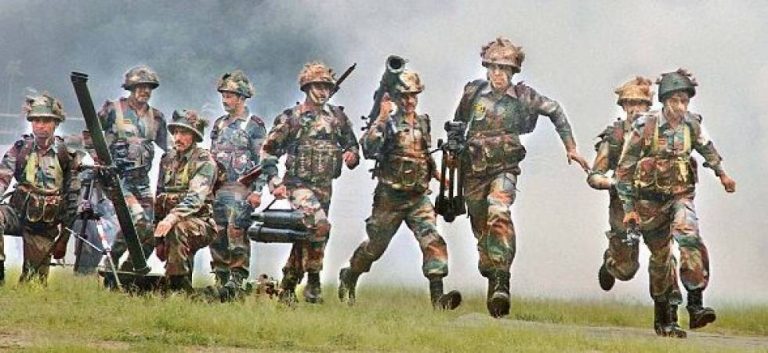
Prime Minister Modi today inaugurated Parakram Parv in Jodhpur to mark 2nd anniversary of surgical strikes carried out across the LOC on 29 September 2016.


The Parakram Parv is being celebrated to highlight the valour and accomplishments of the Indian Army.


Defence Minister Nirmala Sitharaman and Rajasthan chief minister Vasundhara Raje paid their tributes to the martyrs at the Konark War Memorial. Parakram Parv will be celebrated till 30th September.

On 29th September 2016, in response to Pakistan sponsored terrorist attack in Uri on the Indian Army which left 19 soldiers martyred, the Indian Army carried out a surgical strike on Pakistan where at least 38 terrorists were eliminated. Ahead of 2nd anniversary of the surgical strike, Indian government released fresh video clip of 2016 surgical strike.

Sanjay Bhandari’s shady history and his connections to Robert Vadra and Aam Aadmi Party. All you need to know

We have reported earlier on the links between shady arms dealer Sanjay Bhandari and brother-in-law of Rahul Gandhi, Robert Vadra. We had mentioned that Dassault had refused to partner with Bhandari’s Offset India Solutions (OIS) due to his proximity to Robert Vadra and that classified documents were found in his possession and was charged under the Official Secrets Act.

As per reports, Bhandari was often sighted with Vadra at arms expos in Dubai and elsewhere. They were often seen together at a luxury hotel in Delhi as well. We may never know the extent to which his proximity to the Congress party helped shape his fortune but there is a certain other political party, that definitely had a profound impact on Bhandari’s fate.

For a long time, Bhandari was not under the radar of Indian authorities. But his luck ran out when Deepak Agarwal, a hawala operator, was being scrutinized in an entirely separate case involving funding to the Aam Aadmi Party. It was discovered that Rs. 69 crore to seven of Bhandari’s companies came from the same hawala operator. It was only then that his phones were tapped and the raids conducted. The raids, as people are well aware, opened the pandora’s box.

The hawala connection runs much deeper. Republic TV had reported in June 2017 that Deepak Agarwal was working very closely with another hawala operator, Mukesh Kumar, to provide accommodation entries to numerous entities, including the Congress party and the AAP. It is reported that Delhi Chief Minister had even tweeted about receiving Rs. 2 crores from Mukesh Kumar. Mentioned in the same report, a notice was sent by the I-T Department to the Congress on May 24, 2017, regarding the dubious transactions.

Kapil Mishra, the rebel AAP leader, levelled serious allegations against Kejriwal and his party. “A man who cannot repay a loan contributed Rs 2 crore to the AAP. Mukesh was compelled to talk in favour of the AAP, otherwise his firm would have been shut down by the government, which had issued him a notice in 2013 for non-payment of value-added tax,” Mishra had said after Mukesh Kumar reportedly told NDTV that he had made a contribution of Rs. 2 crores to the party.

Coming back to Bhandari, the source of funds for a plush property in London which was bought in 2009 is currently under investigation. It was allegedly bought by Vadra and it was Bhandari who funded it. Bhandari was also red flagged by the Directorate of Revenue Intelligence and a probe was initiated against him by the CBI for allegedly being the kingpin of a scandal where he was importing cars by avoiding customs duty. It is also interesting to note that he had set up the OIS with a paid-up capital of just Rs. 1 lakh.

Investigators are believed to be perplexed at how brazenly Bhandari received the documents from the defence ministry. An MHA report states, “According to another input, one Nafe Singh levelled serious allegations against S. Bhandari, in which he blamed Sanjay for stealing the file in respect of the purchase of 126 fighter planes and the file went missing from the ministry and was later recovered on the road. S. Bhandari had been blamed to have his links with F-16 and F-18 contenders and was made responsible for the leak of photocopies of the file to the above mentioned American contenders.”

In another shocker, OIS is reported to have received payments of 2,50,000 Swiss francs and 7,50,000 Swiss francs from Pilatus Flugzeugwerke AG merely two years before the IAF bought 75 Pilatus basic trainer aircraft from the Swiss. The Pilatus deal is itself mired in controversy. The Finance Wing of the Ministry of Defense said in 2015 that the costs of certain components were not calculated before declaring Pilatus the lowest bidder. It was an issue that was raised by the Koreans who had emerged as the closest competitor to Pilatus. The Defense Minister of South Korea personally contacted A.K. Antony, his Indian counterpart in 2011 asserting that Pilatus had submitted an incomplete bid and therefore must be rejected. Bhandari himself is under investigation for alleged malpractices in the selection of the Swiss aircraft.

It appears bewildering now but Bhandari may never have faced the heat and his links with Vadra may never have turned into a political slugfest if Deepak Agarwal wasn’t investigated by Indian authorities in a case related to the Aam Aadmi Party. Luck often runs out at the most unexpected of times.

Ahead of second year anniversary, government releases fresh video clip of 2016 Surgical Strikes

The Union government on Thursday has released a fresh video clip of the 2016 surgical strike operations conducted on terror launch pads in Pakistan-occupied Kashmir. The video is being released two days ahead of the operation’s second anniversary.

According to the reports, the surgical strikes video has been recorded using an unmanned aerial vehicle or UAVs and thermal imaging. A one and half minute video clearly show that various terror launch pads which were operating inside Pakistan-occupied Kashmir (PoK) has been destroyed.


Recently, another video was doing rounds in the media claiming to be the proof of surgical strikes. The government’s decision to put the proof of surgical strikes in the public domain has cleared suspicion of many claims by political leaders including the likes of Arvind Kejriwal. This video comes amidst of the government’s plans to celebrate the second anniversary of the strikes in a big way.

Indian Army’s Special Forces had conducted a surgical strike along Line of Control on September 29, 2016, was the first of its kind operation on Pakistani terror launch pads. While the figures of casualty vary between 35 to 50, Pakistan continues to reject the claims of the surgical strike.

Nirmala Sitharama, Minister of Defence, had announced earlier that government has planned various events to commemorate the valour of soldiers from September 28 to 30. This will also include a three-day exhibition at India Gate, she said.

Recently, we had reported about the recent circular of University Grants Commission (UGC) to universities and higher education institutions across the country to observe September 29 as “surgical strike day”. Some opposition parties had rejected the idea of celebrating ‘Surgical Strikes Day’.

However, the Centre stepped in and clarified that it is not compulsory for universities and higher education institutions to celebrate the second anniversary of the surgical strikes.

In yet another development, it is reported that one of the launch pads across the LoC, which had been destroyed during the September 2016 surgical strikes, have been reactivated by Pakistan based Islamic terrorist groups. It is estimated that more than 250 terrorists are being trained in these launch pads and are waiting to infiltrate into India from 27 different launch pads in Pakistan-occupied Kashmir.

NIA busts LeT linked organisation’s terror funding module in Delhi

0

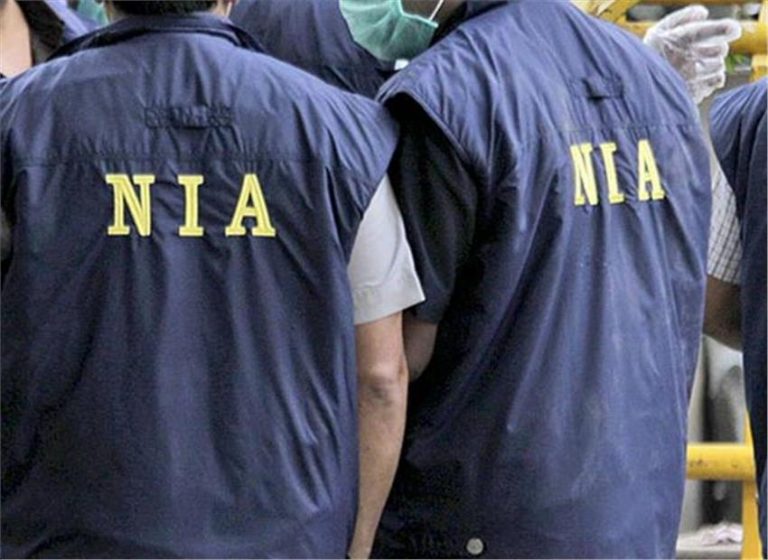
In a major breakthrough in its terror funding investigations, the National Investigations Agency (NIA) has busted a hawala module and arrested 3 operatives of Falah-e-Insaniyat Foundation, an organisation run by Hafiz Sayeed’s Lashkar-e-Taiba. According to reports, the NIA had conducted simultaneous raids at several locations in Delhi on Wednesday.

The 3 arrested operatives are namely Mohammad Salman, Mohammad Salim and a Srinagar based hawala courier named Sajjad Abdul Wani. They are linked to the Dubai based organisation named Falah-e-Insaniyat Foundation. Mohammad Salman, who hails from Mewat in Haryana, was reportedly in regular touch with a Dubai based Pakistani national who in turn, is associated with the deputy chief of Falah-e-Insaniyat Foundation (FIF). The FIF is a front-end organisation of terrorist group Lashkar-e-Taiba run by Hafiz Sayeed.

Salman, according to reports, is from Uttawar in Mewat. He was initially into taxi and dairy business and after incurring losses, had turned towards hawala transactions. NIA officials have stated that he had travelled to Dubai and had got in touch with some Pakistani nationals.

According to reports, the Mewat resident Mohammad Salman is reportedly an old hawala dealer. NIA officials have stated that the group was involved in supplying terror funding through hawala transactions in many areas of Delhi and Mewat. NIA officials raided locations at Daryaganj, Nizamuddin and Kucha Ghasiram and have reportedly recovered Rs 1.56 crores in cash, Rs 43,000 in Nepali currency, 5 pen drives, 14 mobile phones and several other incriminating papers.

The arrested persons were reportedly receiving funds from FIF and delivering it for various terror activities. Officials have reportedly stated that the funds were also being sent to Mewat. The agency is currently attempting to identify the recipients. The raids on Wednesday were a part of an investigation the NIA had launched after an FIR lodged in July that stated that FIF is using hawala links to fund terror in India. It is notable here that the FIF is on the list of organisations in the first schedule of Unlawful Activities Prevention Act (UAPA) with prevention and suppression of terrorism (Implementation of security council resolutions) order,2016.

The Mewat region in Haryana has gained notoriety in recent years as a hotbed of cattle smugglers and criminals. The area frequently sees violent attacks on police forces and is considered a den of criminal activities. It also has a significant Rohingya settlement. The government had earlier asserted that many illegal Rohingyas in the region have links with terror organisations.

The NIA has been investigating many cases of terror funding. Last year in June, it had raided 23 locations in Delhi, Srinagar and Haryana. It had also raided the residences of Kashmiri separatists in its investigations and had arrested several individuals in connections with funding stone pelters in Kashmir.

Marathi newspaper claims RSS chief had justified murder for beef eating, retracts ‘in small font’ later

0

Marathi newspaper LokSatta, published by the Indian Express Group, in an editorial dated 21st September, claimed that RSS chief Mohan Bhagwat had said “Sinners who kill cow have to undergo penance by death as per the Vedas.”


The editorial claimed that RSS chief had said this three days after Akhlaq was lynched in Dadri in 2015 for allegedly consuming beef. It was pointed out by Twitter users that Bhagwat never said such a statement. Eventually, LokSatta expressed regret over mischievously misquoting RSS chief, albeit in small fonts.


“In the editorial titled “Soor Nava.. Pan Padya” statement concerning Mohammed Akhlaq’s murder attributed to SarsaghaChalak Mohan Bhagwat was never made by him. We express our regret at out inadvertent mistake.” said the apology note which was published in small fonts.

Business Standard article on Coal auction revenues ‘falling short’ is sensationalist and poorly argued

A Business Standard article published earlier today suggested that proceeds from coal block allotments and auctions by the Modi government is woefully short of what the government had estimated.

The article titled “After bold estimates, coal auctions, allotments get Rs 56.84 bn in 3.5 yrs”, pitched an amount of Rs 5,684 crore earned till date against a total of Rs 3,35,000 crore that was estimated to flow to states through coal mines e-auctions and allotments over 30 years.

The Business Standard article, which is behind a paywall, makes the following assumptions and assertions:

  1. The government claimed that the potential revenue claimed by the government was Rs 3.35 lakh crore and when these claims were made, 67 coal mines had already been auctioned or allocated. The article does concede that the press release of the government mentioned that this total revenue was to flow over a 30 year period.
  2. The article arrives at an estimated figure of Rs 22,400 crores that “should have been” earned in two years from 67 operational mines and compares that with Rs 5,684 crore earned till date. Here, the author draws a conclusion that all 67 mines are operational and that the revenue cycle would be uniform throughout the period of estimation i.e. he divides 3.35 lakhs by 30 to arrive at an annual figure.
  3. The article assumes that it is the government’s job to put out the ‘potential revenue’ the 83 mines auctioned and allocated by August 2018 could generate if they were working to meet their approved mine plans. A job that the government hasn’t done.
  4. The article says that the government had also claimed that just the first two rounds of the auction (of 29 coal blocks) would see power rates coming down. These rate cuts would be offered (to consumers) by companies bagging coal blocks reserved for the power sector. But the government or its agencies have not put out an assessment of how the benefits of cheaper coal to the power sector have been passed to the consumers through lower electricity tariffs.

Before looking at the numbers closely, it is pertinent to note that some of the assumptions that the author of the article, Nitin Sethi, makes, are too simplistic and thus faulty when employed to suggest success or failure of any big public sector scheme.

The fact that the author assumes that the revenue generation cycle would be uniform and there might not be frontloading or backloading of revenues, is against the common understanding of how any business works. In the case of mines, the revenue generation process is backloaded, as initial phases go into incidents like compliance, capacity building, and making the mines operational.

The same was confirmed by sources in the Ministry of Coal, who further told OpIndia that any delay in operationalisation and non-generation of revenue in the initial year does not represent any loss, but only shifts the incoming revenue from one time period to another.

The data as provided by the ministry officials was not too different when it came to the estimated total revenues over 30 years. The ministry officials put that figure as Rs 3.17 lakh crore as opposed to the Rs 3.35 lakh crore mentioned in the article.

However, they officials pointed out that out of these Rs 3.17 lakh crore, Rs 1.19 lakh crore were towards royalty proceeds i.e. almost 37% of the total proceeds were in form of royalties. The figure of Rs 5,684 crore, which Business Standard tried to pitch against 3.17 lakh crore, however, did NOT include royalties.

The article itself makes mention of that. “These are the proceeds from the auction of 31 and allotment of 58 coal blocks. This revenue is in addition to royalties that the states have always collected from coal mining.” the article says.

Therefore, even if the overly simplistic calculation of the author was employed, the author should have compared the figure of Rs 5,684 crore to an amount that did NOT include the royalties for a fair assessment. Was this an oversight or a deliberate comparison to a much higher number to show ‘failure’, we leave it upon the readers to conclude.

The ministry sources also pointed out that the number of operational mines currently is at 23, which is far below the number of operational mines assumed in the Business Standard article. Since the number of operational mines are less, it is obvious that any comparison with a much higher number would show that the revenues have ‘fallen short’ of the target or original estimates.

If we are to undertake similar simplistic calculations as the author of Business Standard article has undertaken, firstly the figure of Rs 22,400 crore that the article puts as revenue that should have been generated in two years, comes down to Rs 14,112 crore after we remove the royalties part for a fair comparison. And it further comes down to Rs 4,844 cores when adjusted for 23 operational mines as against 67 assumed in the article. So the figure of Rs 5,684 crore, which has actually been accrued, can be argued to be higher than what was originally estimated!

When asked why the number of operational mines were so less, the ministry source explained that after the cancellation of 6 coal blocks, of the remaining 83 coal mines, 33 were Schedule II coal mines i.e. mines which were operational/producing/likely to produce shortly as on date of their cancellation. Remaining 50 coal mines were Schedule I/III coal mines, which are expected to become operational from 2018-19 to 2022-23: 

They clarified that as far as Schedule III coal mines, which are the new mines, the delays have been due to legal and technical issues at the state level. However, for some mines, they are actually ahead of schedule. Thus the article does a very unfair job of assumption about number of mines being operational and revenues being generated in the first couple of years.

Next, when the article assumes that it is the government’s job to put out the ‘potential revenue’ the 83 mines auctioned and allocated by August 2018 could generate if they were working to meet their approved mine plans. It is another fallacious assumption. The estimations are meant to be released by bodies like the CAG or independent research institutions. The government’s job is not to publish presumptive figures on some regular basis.

On the issue of power rates not coming down, the ministry source revealed that these benefits have not been passed on to the consumers yet due to legal troubles.

“Out of the 9 coal mines auctioned for the power sector, 6 coal mines got engaged in litigation as the Successful Bidders of these coal mines have approached the Hon’ble High Court of Delhi challenging the resolution of Ministry of Power for capping the fixed charges of power tariff. Out of the blocks allotted to PSUs (NTPC & State PSUs), 8 are in Court due to dispute with the Mine Developer and Operator. Once these legal hurdles are over the coal supply to the power sector will increase and will have the expected effect on the prices of power,” the ministry source said.


Fact check: Sikkim airport is really India’s 100th operational airport, here is how

While inaugurating the Sikkim airport on 24th September, Prime Minister Narendra Modi said, “Today, it is not only a historic day for Sikkim but also for the country. With the inauguration of the Pakyong airport in the state, the country got its 100th operational airport.” Soon ‘fact checkers’ were working in full force to prove the figure wrong. Unfortunately for the Ministry of Civil Aviation, the figures put by them in the public domain prima facie appear contradictory. Here is the excerpt from the message of Suresh Prabhu, Minister of Civil Aviation and Commerce & Industry from the coffee table book released by the Ministry of Civil Aviation [pdf].

Excerpt from Civil Aviation Ministry coffee table book

Suresh Prabhu claims as of 2013, 76 airports were scheduled for operations by air carriers.

December 2014 reply in Lok Sabha by former Minister of Civil Aviation, Ashok Ganapathi Raju

In December 2014, in a response to a question raised in the Lok Sabha regarding number of operational airports, former Minister of Civil Aviation, Ashok Ganapathi Raju had said there are 125 airports/civil enclaves in the country managed by Airports Authority of India (AAI), of which 94 airports/civil enclaves are operational.

July 2018 reply in Lok Sabha by Minister of State in the Ministry of Civil Aviation, Jayant Sinha

This year in July, Minister of State in the Ministry of Civil Aviation, Jayant Sinha, in response to the question, how many functioning airports are there in the country, he said that the AAI owns 129 airports/civil enclaves in India, of which 101 are operational. [pdf]

OpIndia.com reached out to Ministry of Civil Aviation for clarity on the figures. A senior official from the ministry explained, “There is a difference between an operational airport and an operational airport which has flights scheduled for the common person.” He elaborated, “An airport is operational if it has basic facilities in place, like security, fire station, there is someone manning the airport, keeping it running, whether or not it is open to general public. For example, Bikaner Airport is an operational airport, but there was no scheduled commercial flight for which the general public could buy tickets. Now, with the UDAN scheme of the Central government which aims to increase regional connectivity, the airport is not only operational, it has also got scheduled flights operated by Alliance Air which regularly arrive and depart from the airport. Similarly, Sikkim airport is the 100th such operational airport from which have regular scheduled flights will take off and land. This is the difference between an operational airport and an airport in regular use by the travelling public.”

So essentially, there are over 400 airports, airstrips, flying schools and military bases available in the country of which 130 or so airports are operational, but only 100 (including the newly inaugurated Sikkim Airport) has scheduled flights arriving and departing at these operational airports. Thus, there are now 100 airports available for the common person.

Even after dismissal by France, Rahul Gandhi repeats his lie about the French President on Rafale deal

0

Rahul Gandhi is not only telling one lie after another about the Rafale deal, but he is also repeating them. Perhaps the party has run out of ideas to generate falsehood, that’s why Rahul Gandhi is recycling the lies, even after they have been proven to be fiction.

Addressing a rally in Madhya Pradesh on Thursday, Rahul Gandhi repeated the lie that the French President told him that there is no secrecy clause in the Rafale deal and Indian PM can disclose the details if he wants to do so.


Rahul Gandhi had made this claim in Parliament during the debate on the no-confidence motion against NDA government on July 20 this year.

Immediately after Rahul Gandhi’s ‘explosive’ revelation, France had released a statement denying the claim. The French government said that Rafale deal comes under the security agreement signed between India and France in 2008, and sensitive information about the deal can’t be revealed. Thus proving that Rahul Gandhi had, in fact, lied on the floor of the Parliament.

The statement said:

We have noted the statement of Mr Rahul Gandhi before the Indian Parliament. France and India concluded in 2008 a Security agreement, which legally binds the two States to protect the classified information provided by the partner, that could impact security and operational capabilities of the defence equipment of India or France. These provisions naturally apply to the IGA concluded on 23 September 2016 on the acquisition of 36 Rafale aircraft and their weapons. As the President of the French Republic indicated publicly in an interview given to India Today on 9th March 2018, in India and in France, when a deal is very sensitive, we can’t reveal all details.

French President Emmanuel Macron has also confirmed the existence of the confidentiality pact in the defence deals between the countries in an interview given to India Today. He had said that when a deal involves extremely sensitive business interests, it is not desirable to give out details of such a deal. The details of the commercial agreements should not be made known to rival companies as doing so may hamper the interests of the firms and hence, secrecy is justified, Macron has said.

Rahul had also picked up a French media article and targetted PM Modi recently. The article claimed that former president Francois Hollande has stated that the Indian government had pressurised Dassault to choose Anil Ambani’s Reliance defence. Even this claim was rubbished by both France and Dassault Aviation.

Delhi Commission for Women chief Swati Maliwal wants adultery to continue being crime, gets slammed

Delhi Commission for Women chief Swati Maliwal today expressed her displeasure at the Supreme Court of India verdict on declaring section 497 of the Indian Penal Code on adultery, unconstitutional and calling it “manifestly arbitrary”. Taking to Twitter, Maliwal said that decriminalising section 497 will give licence to married couples for adulterous relationships.


Calling it ‘anti-women decision’, Maliwal said that instead of making the law gender neutral, it was decriminalised. However, her observation didn’t quite go down well with Twitter users who explained it to her that while section 497 is decriminalised, adultery is still a valid ground for divorce but not for criminal prosecution.


Earlier, the law didn’t punish the woman for committing adultery, but instead, the lover could be punished. That way, this step is one more step towards gender neutrality.

A Twitter user even explained to her that the sanctity of marriage she talks about essentially depends on the couple and that it means nothing if one or either of them doesn’t respect and love each other to cheat.

‘Liberals’ have a meltdown after SC refused to refer the Ayodhya dispute to a larger bench

Rajiv Dhawan, counsel for a petitioner in the Ayodhya dispute has expressed his dissatisfaction with the Supreme Court’s latest verdict on the matter. As we have reported earlier, in a majority judgment, the Supreme Court refused to refer the Ram Janambhoomi case to a larger constitution bench. According to Dhawan, the majority judgment will please the majority.


Ashok Swain, who is a professor in Sweden, went so far as to assert that the Supreme Court was now divided along religious lies. His remark perhaps stems from the fact that both the judges who endorsed the majority judgment were Hindus and the only judge who dissented is presumably a Muslim.


Like Dhawan, liberals appear mighty displeased with the verdict which is expected to hasten the resolution of the dispute. Journalist Rajdeep Sardesai speculates that the verdict on the Ram Janambhoomi case would be reached before the 2019 General Elections, thus benefiting the BJP electorally.


Shahid Siddiqui took an issue with bhakts of Shri Rama celebrating the Court’s verdict. He declared that Ram Janambhoomi is ‘Masjid land’.


Journalist Seemi Pasha asserted that the BJP had argued that Mosques are not essential to Islam before the Supreme Court while Haryana CM Khattar issued orders that namaz should be offered only at mosques. She says the BJP should make up its mind. However, one fails to see the connection between the two and she comes off as more confused than anything else.


Another journalist wondered why Mosques are not required for prayers. Perhaps, she isn’t aware that the Ismail Faruqui judgment is concerned with the acquisition of religious places by the state and observed that offering namaz at a mosque wasn’t integral to Islam as long as the Masjid did not hold any special significance in Islam.


Editor of the pro-AAP mouthpiece, Janta Ka Reporter, Rifat Jawaid is particularly displeased with the judgment.


As said before, the judgment by the Supreme Court today is likely to hasten the resolution of the biggest dispute in the country by a great deal. It is rather unfortunate that one section of the political spectrum is very disgruntled by it.