Home Blog Page 7122

Centre set to oppose practices of Polygamy and Nikah Halala in the Supreme Court

0

The Union government of India is set to oppose the practices of Nikah Halala and polygamy in the Supreme Court and is likely to put forth an argument similar to the one taken in the triple talaq issue.

According to a source, there is no change to be expected regarding the government’s stand. The issues of Halala and Polygamy were not looked into by the Supreme Court during the triple talaq case, but the government’s reply was ready. The same would be followed for this case too.

Nikah-Halala is the Islamic practice of remarriage. Where a woman cannot remarry her divorced husband until she marries another person and consummate the marriage and then divorce the new husband. Polygamy is the practice of having more than one wife. Earlier an India Today investigation found that Clerics were charging between Rs. 20,000 to Rs. 1 lakh 50 thousand for such Nikah-halala services.

In March this year, a three-judge bench of the Supreme Court comprising the CJI Deepak Misra and Justices AM Khanwilkar and Chandrachud was hearing a batch of petitions challenging the practices of Nikah-halal and Polygamy.

The petitions were filed in the Supreme Court opposing the practices of Nikah-Halala and polygamy. Petitioners include BJP leader Ashwini Upadhyay, Sameera Begum, Nafeesa Begum and Moullim Mohsin Bin Hussain Bin Adbad Al Kathiri.

Sameera Begum who runs an organization known as “Mission Talaq” is now facing rape and murder threats. She alleges that people have threated to burn her child alive if she does not withdraw the petition from the court.

Upadhyay in his petition prayed that the section 2 of the Muslim personal law (Shariat) Application Act be declared unconstitutional as it violates Articles 14, 15, and 21 of the Constitution. According to him, this particular section of the Muslim Personal Law seeks to validate the practice of polygamy and Nikah-halala.

Upadhyay sought a declaration that provisions of the Indian Penal Code are applicable on all Indian citizens. He wants ‘Triple-Talaq’ is a “cruelty” under section 498A of the IPC and “NiKah Halala” as ‘Rape’ under Section 375, and Polygamy is an offence under Section 494 of IPC.

The government is likely to maintain its stance in the Supreme Court when it re-opens. The argument from the government side is expected to urge the apex court to consider the issues of Triple talaq, Nikah-halala, and Polygamy in the context of gender justice and the over-riding principle of non-discrimination, dignity, and equality.

The government has previously expressed its stand on polygamy by citing examples of other Muslim countries reforming their polygamy and divorce laws. The affidavit filed by the government during the Shayara Bano case stated –

“It is extremely significant to note that a large number of Muslim countries or countries with an overwhelmingly large Muslim population where Islam is the state religion has undertaken reforms in this area and have regulated divorce law and polygamy”.

VIDEO: ‘The Right Picture’ with Ashutosh Muglikar : As GST completes one year, here is what it achieved

0

It has been exactly a year since the landmark Goods and Services Tax was implemented by the Narendra Modi government. While the Congress has constantly maligned the attempt of the government to homogenise indirect taxation, the industry has largely hailed it as a reform of the decade.

However, the misinformation campaign in the media and by the opposition has been relentless. As the reform completes one year today, Ashutosh Muglikar explains the hits and misses of this reform in this latest episode of ‘The Right Picture’.

[youtube https://www.youtube.com/watch?v=vJonOT8Usw8]

You can also watch this episode on YouTube.

Crony capitalism or clean-up of a messy legacy?

0

India went through this summer reading headlines like these:

“No farm loan waiver in sight, Karnataka farmers to hit the streets today”

“Public sector banks write-off bad loans worth Rs 1.2 lakh crore in 2017-18”

“Rs 1.44 lakh crore: That’s the record bad loan write-off by banks in 2017-18

“NPA crisis: Public sector banks write off Rs 1.20 lakh crore in FY18, as against Rs 81,683 crore in FY17”

Reading the above headlines, a tax paying commoner like my aunt, who once asked me the same question, would have thought –

“And I am charged 30 per cent of my income as taxes to see it get flushed down the drains!?” “There surely is going to be a recession like in 2008” 

Out of curiosity, he would go on to read the articles in detail to figure out where his taxes are actually going. And he would conclude – “To the pockets of these crony capitalists”.

This is the information that a commoner is fed and hence concludes – “First demonetization, then GST and now waive off of corporates’ loans. Like the economy was in great shape for them to have written off loans. Is this how the Government rewards an honest, middle class, tax paying citizen?”

But a ‘write off’ is different from a ‘waive off’. And it’s time to understand the issue step by step.

What are Non-Performing Assets (NPA)?

Money lent by banks on which it earns interest over the period are considered assets of the banks. Depending upon the terms of the loan agreement, lenders are required to repay the principal along with interest on agreed upon due dates.

While NPAs, as they are rightly called, are loans which are not performing for the banks, or let us say, which are not contributing to the earnings of the bank.

Technically speaking, NPAs are the loans provided by the banks for which the lender fails to make payment either of the interest or the principal or both, for a period exceeding 90 days from the due date, subject to certain exceptions.

To put it in a simpler way if one borrows Rs 1,00,000 from a bank on January 1st, 2018 for which one agrees to pay a sum of Rs 1,000 as interest every month. If he does not pay the interest on January 31, February 28 and even on March 31 of that year, then the loan is considered to be an NPA by the bank.

Will the bank recognize the above interest as its income for the period January-March 2018?

Yes, the banks will still recognize the income of Rs 3,000 on an accrual basis in its books for the year ended March 31, 2018. Accrual basis is nothing but a method of recognizing an income when it is earned and not when it actually received.

Now, on April 1st, 2018, if one has failed to pay the interest on the loan for a period exceeding 90 days from the due date, the bank will recognize the loan assets as an NPA. As per the Reserve Bank of India (RBI) guidelines, it will also have to reverse the interest accrual of Rs 3,000 which was recognized in its books as interest income for the year ended March 31st, 2018. Further, the bank, in compliance with the Banking Regulations Act, 1949 and the relevant RBI guidelines, will start making provisions for the expected future losses of principal sums lent that may not be repaid.

Now, comes the real question, when and why do we ‘write off’ the NPAs?

For a loan to be written off, they should be considered as loss assets. Which, as per the RBI guidelines mean, loans considered as loss asset and identified as such by the RBI or the bank itself or by the auditors.

Banks first term the loan as an NPA, under which there are sub-categories like sub-standard assets, doubtful assets and then comes the dreaded loss assets category. This categorization of a loan ends when the banks write off. The time taken for a loan to travel through the various categories is greater than 3 years. Which basically means that the default occurred much before demonetization or GST or any other policies of the government.

On realizing this, one might think – “Oh, this shows that the present government lent all our taxes to the crony capitalists, who never payback”

Usually, the banks do not like to create provisions on their bad assets because it negatively impacts on their profitability for the year, denting their market capitalization and investor’s sentiments. The banks used to follow their own method of assets classification and provisions recognition, thereby depicting higher profits and higher loan assets.

RBI recognizing such divergence, issued its guidelines vide notification dated April 18, 2017, requiring all the banks to disclose in their financial statements any divergence in the asset classification and provisioning.

And this is where we introduce a concept of ‘evergreening’ of loans. This is a highly sophisticated technique that the banks have been using since time immemorial to show lesser NPAs, thereby increasing their book profits. You may wonder why the banks do that. Well, the banks are not charitable institutions.

To understand the modus operandi of ‘evergreening’ of loans, let’s say, the loan which turned into an NPA has now been paid back. But this was possible only due to a new loan that was provided with different payback period. So, basically, both the lenders and the banks used to be in a win-win situation wherein the lenders got more time to pay back the loan while the banks could show higher profits and higher loan assets than the actual scenario.

So why the sudden surge in the numbers of NPAs, and its subsequent write-offs?

Yes, it is true that the NPAs have recently increased to a mammoth level and the write-offs make you feel that the Indian economy is in shambles and it could only go down to the 2008 economic crisis. However, the reality is different. The RBI has taken some concrete action from time to time to curb such practices, one of such being RBI guidelines dated February 12, 2018, withdrawing the ‘evergreening’ of loans and this is when the banks were left with no option but to recognize the loss assets and subsequently write them off to clean their balance sheets.

This was when the skeletons fell off the closet of almost all the banks, especially the public sector banks like State Bank of India (SBI) and Punjab National Bank (PNB), which were used as political tool by the then government to grant loans to their favoured corporates.

It is pertinent to note that most of these loans that turned into loss assets were extended in the past decade without any due diligence or a proper mechanism to cater to the vested interest of the party in power. The NPAs were just ‘evergreened’ by the banks to show higher profits thereby increasing the variable pay of the executives and taking investors for a ride.

The eternal question to be asked here is why the current government did not disclose the mess that was left behind by the Congress government.

This question was answered in an interview of Prime Minister Narendra Modi. Following is the relevant extract of the interview:

“Question: While there has been economic growth, private investment in the economy is still tepid. Some sectors like real estate are still in trouble. Venture capital funding of startups has slowed. What message would you like to give to private industry and foreign investors at this juncture?

PM Modi: Today I think, before presenting the first Budget, I should have placed a White Paper in Parliament on the economic situation in the country. This thought had struck me then. I had two paths then. Politics told me that I should put out all the details. But the nation’s interest told me that this information would increase the sense of hopelessness, markets would be badly hit, it would be a big blow to the economy and the world’s view of India would get worse. It would have been very difficult to get the economy out of that… I chose to stay silent in the national interest at the risk of political damage. At that time the situation in public sector banks was coming out… I didn’t put these details out in public. It hurt us, we were criticised, it was made to look like it was all my fault. But I took the political damage in the country’s interest. The impact of all these issues from the past has impacted private investment, like the non-performing assets in banks. I held a session with bankers and told them there will be no call from the government to you. These steps would have tightened the screws.”

However, only recently did the music stop and the silence deafened everyone including the common man. Suddenly, everyone started to speak of the risk India faced due to bad loans. But now, don’t we all agree that this is a result of bad lending practices? Possibly due to bad politics?

Once the NPA mess is understood threadbare, the difference between Write off and Loan waiver becomes essential. The terms are often interchangeably used by the so-called journalists in our esteemed media houses. In fact, the RBI, in an unprecedented move, had to intervene to clarify what’s being reported in our media.

The Oxford dictionary defines ‘write-off’ as “A cancellation from an account of a bad debt or worthless asset.” The same dictionary defined a ‘waive off’ as “Refrain from insisting on or using (a right or claim)”.

If you read the two definitions closely, a write-off signifies that it’s just a cancellation from an account, meaning reduction from an account. However, the term waive off leads to a proposition of relinquishment of a right or a claim of the loan.

To better understand, let us take an example:

You lend a Mount Blanc pen to your friend, Shyam, who wanted to impress his girlfriend, Priya. As days passed by, Shyam does not pick your calls and stops replying to your emails, nor is he traceable. In your mind, you assume the Mount Blanc pen to be gone forever and to find closure, you start accepting that you may never get it back. So in your mind, you WRITE-OFF the pen as your asset. However, please note that the moment you catch hold of Shyam, you will ensure you get your pen back.

Alternatively, imagine a situation where Shyam approaches you and informs you that his girlfriend really like the pen and she kept it for herself. You know that Shyam cannot afford a Mont Blanc pen and hence, out of affection for your friend, you tell him that he need not return the pen. You, then have WAIVED OFF the right to get the pen back.

The above example is exactly what the banks do in case of a ‘write-off’ and a ‘waive off’ respectively. Now a question may arise as to why the banks’ write-off. The answer lies in the complicated income tax provisions applicable to banks. Without getting into the details, banks get to reduce their tax liability when they write-off their bad loans. Also, it makes their balance sheet look cleaner with such loans not being a part of the NPAs anymore.

Relevant extract of the Income-tax Act, 1961 is reproduced hereunder:

Writing off of NPAs

8.1 In terms of Section 43(D) of the Income Tax Act 1961, income by way of interest in relation to such categories of bad and doubtful debts as may be prescribed having regard to the guidelines issued by the RBI in relation to such debts, shall be chargeable to tax in the previous year in which it is credited to the bank’s profit and loss account or received, whichever is earlier. 

8.2 This stipulation is not applicable to provisioning required to be made as indicated above. In other words, amounts set aside for making provision for NPAs as above are not eligible for tax deductions.

8.3 Therefore, the banks should either make full provision as per the guidelines or write­-off such advances and claim such tax benefits as are applicable, by evolving appropriate methodology in consultation with their auditors/tax consultants. Recoveries made in such accounts should be offered for tax purposes as per the rules.

A ‘write-off’ is merely a book adjustment. Whereas, a ‘waive off’ is a relinquishment of the right to receive the loans provided. This again results in a lower tax liability to the banks, however, the borrower pays tax on such waived off loan subject to certain conditions as the borrower need not repay the loan, which in essence is his income.

A ‘waiver’ is when political parties announce that farmers need not repay their loans. The Congress-led United Progressive Alliance (UPA) announced farm loan waivers in 2008 as part of its election manifesto, consequently, they were re-elected. Farm loans aggregating Rs 72,000 crore were waived off subsequently.

In a waive off, the government guarantees to pay the loans to the banks. One may debate on the rationale of the farm loan waiver, but it certainly disrupts the credit culture of the nation.

Sometimes, the banks have loans which are waived off, usually by the governments by calling it a bail-out package. So now, coming back to the original question – “I pay 30 per cent of my income as taxes for this!?”

No. A write off does not mean that the banks are not going to recover the loans from the corporates. With Insolvency and Bankruptcy Code (IBC), 2016, which is also considered as one of the biggest economic reforms and asset securitization industry booming in India, it’s about time that we have more recoveries of the NPAs. One such example is the case of Bhushan Steel where the banks recovered almost the entire loan advanced of a whopping Rs 35,200 crores. Over 2,000 cases have already been closed under IBC, resulting in a massive recovery of NPAs crore, according to published reports.

Gone are those days when media, also termed as the ‘Fourth Pillar of the Nation’ enjoyed an undisputed power without accountability. Thanks to the emergence of social media, people now have access to information like never before with updates from across the world at their fingertips. It thus becomes necessary that media be responsible and provide credible information to its readers while reporting.


Congress mouthpiece National Herald employee in dock allegedly for aiding support to Maoist GN Saibaba

At about 8:07 PM on 30th June, Journalist WhatsApp groups were abuzz with a common message :

“Hello.. An urgent info..Today Maharashtra Police reached reached Press Club of India, Delhi and asked for hall booking records and whereabouts of one of its members Vishwadeepak, a bonafide journalist working with English weekly National Herald as principal correspondent.

The Police claimed that the scribe had endorsed hall booking for a press conference called in defence of jailed DU teacher GN Saibaba.

We fear that the journalist may be detained or arrested anytime.

Please spread the word”

The message clearly mentioned that this ‘journalist’, Vishwa Deepak who is a correspondent with the Congress mouthpiece National Herald might be in the dock for endorsing a hall booking at the Press Club of India for a press conference that was called in defence of jailed Maoist GN Saibaba.

G N Saibaba, a professor of English in Ram Lal Anand College of the Delhi University, was sentenced to life imprisonment by a Gadchiroli sessions court for waging war against India for his alleged Maoist links and involvement in anti-national activities in 2017.

G N Saibaba was first arrested in May 2014 on charges of being a member of the banned CPI-Maoists plus providing logistics and carrying out recruitment for them. He was then provided bail for three months on 30th June 2015 in view of his worsening health. He was given bail again in August 2016, this time by the Supreme Court against the wishes of the Maharashtra Government, which thought to free Saibaba would render him free to propagate his views and brainwash students. In a report published in February 2016, it was reported that Saibaba had recruited as many as four JNU students to carry out Maoist related activists. Incidentally, these students also belonged to the Democratic Students Union (DSU), of which JNU student Umar Khalid is also a member.

The Journalist, Vishwa Deepak has an interesting past too. He was openly pro Afzal and had resigned from Zee News in 2016. The media had tried their best to paint him as a “neutral” regardless of his anti-national views. He has written about GN Saibaba in National Herald, Congress mouthpiece, in a sympathetic tone.

He has in the past also been endorsed by Congress leaders like Priyanka Chaturvedi.


To confirm the news doing the rounds on WhatsApp, OpIndia got in touch with the Office Secretary of Press Club of India, Mr Jitendra Singh.

Mr Singh told OpIndia exclusively that there is some complaint in Maharashtra police station that there was some meeting organised in PCI on a certain date, and some of the attendees might have been Naxalites. He confirmed that the police had asked for details of that particular date as to who booked halls, and the details were provided. On that date, one hall for one meeting was booked by Vishwa Deepak. Though there are no direct allegations against Vishwa Deepak yet and the police are investigating the matter.

OpIndia asked specifically that if the enquiry right now is that whether Vishwa Deepak booked a hall where a press conference in support of convicted Maoist Professor GN Saibaba was held. Mr Jitendra Singh answered in the affirmative also adding that there are no direct allegations against the scribe yet.

He reiterated that the complaint is regarding some meeting that was held in Press Club of India which was in support of GN Saibaba. The police asked which meetings were held on that particular date and the details were provided.

OpIndia further asked how many meetings were held on this date, for which the Police is conducting an enquiry. Mr Singh responded that there were two meetings held and for one of them, Vishwa Deepak had indeed booked a hall. He, however, couldn’t confirm the details of the press conference held. He also said that the press conference was on “social issues” and GN Saibaba might have been mentioned, but he can’t be sure.

When asked what date was being investigated, Mr Singh asked our scribe to call after a while. When he spoke again, he said that the date being probed is 20th April 2018.

Amid renewed chatter about 2016 Surgical Strike, here is how Lt Gen Vinod Bhatia described the unprecedented mission

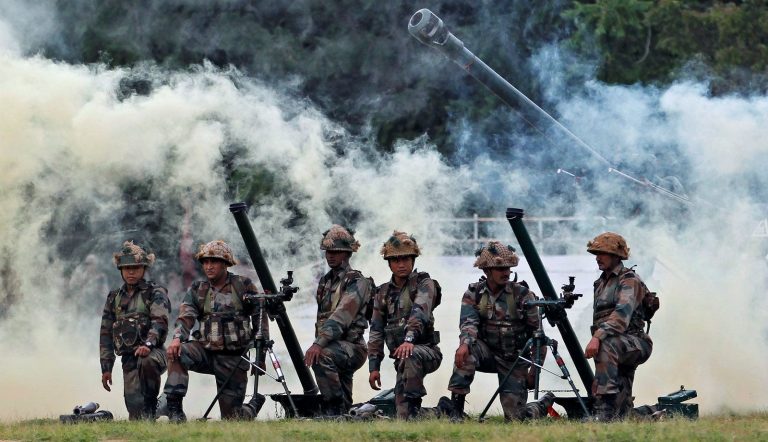
Congress leaders and many other politicians of India had denied the authenticity of the 29 September 2016 Surgical Strike done by the Indian Army to wipe out terror launch pads in the PoK across the Line of control. Recently the Army had released a video footage with a time stamp that established the veracity of the claim.

Congress had come up with claims that there were surgical strikes carried out during their regime too. Congress spokesperson Randeep Surjewala had claimed that UPA II had ordered surgical strikes across the LoC but had never made any noise about it. Surjewala had given 3 dates on which he had claimed that strikes were carried out. 1st September 2011, 28th July 2013 and 14th January 2014.

However, Lieutenant General Vinod Bhatia, who was India’s DGMO from 2012 to 2014, in an earlier interview to Times Now had denied any such Surgical Strikes. Amid the renewed chatter around the strike, Lt Gen Bhatia took to Twitter to replug and reiterate the fact that this Surgical Strike was first of its kind.


Lt Gen Bhatia had stated that the 29 September surgical strike was the first of its kind operation on Pakistani terror launch pads. He added that while the army had always been prepared to carry out such strikes, it had never been executed in a manner like the 2016 strikes. Speaking to Times Now after the 2016 strikes and Congress’ claims, the former DGMO had clarified that in June 2015, the Indian army had done a similar operation inside Myanmar territory. He added that the Indian Army special forces personnel carried out those strikes across a widespread area sweeping from Bhimber to Lipa Valley, Kel and Tapta Pani etc on both sides of the Pir Panjal range. He added that on that occasion Indian Arny proved that it is not only capable of strategic restraint but has strategic resolve too.

Lt Gen Bhatia added that these strikes were both punitive and preemptive in nature. He stated that surgical strikes are very delicate operations planned at the highest level and involve meticulous details and pin-point synchronisation. He asserted that the slightest mistake can result in a national embarrassment and thus they leave no scope for error. He had further added that the Para special forces performed an excellent task with great success and registered zero losses.

He added that local level cross-border operations cannot be called surgical strikes. He explained that these cross-border operations are very common, frequent and it involves only a few members of local units. He explained that such operations happen during pursuit operations, counter infiltration operations and ceasefire violations. He explained that the surgical strike had a much higher level of planning, execution and impact and risk factor involved.

The Directorate General of Military Operations had recently also stated that there are no records of any surgical strike prior to the September 2016 one. In response to an RTI query, the DGMO had stated that there is no record of any surgical strike being carried out between 2004 to 2014. Lt General DS Hooda, who was in charge of the surgical strikes operation has stated yesterday that the order to hit the terror launch pads had come from the central government and the Army had agreed with it.

Kerala Nun accuses Bishop of raping her multiple times, claims the Church did not take any action

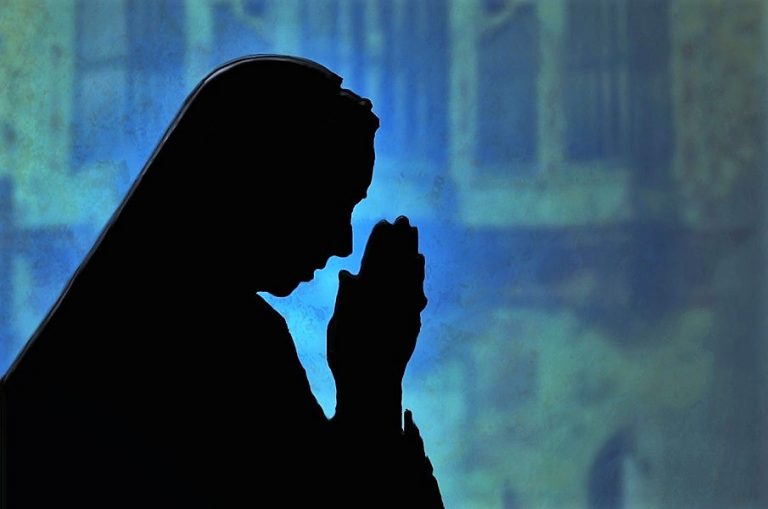
A nun from Kerala has accused a Bishop from Jalandhar of raping her. The accused, Franco Mulakkal, Bishop of the Roman Catholic Diocese of Jalandhar, is said to have raped her at a guest house in Kuravilangad in May 2014 and exploited her sexually on several other occasions. The nun has registered a complaint before the Kottayam district Police chief Harishankar on Friday.

“The bishop first filed a complaint with us on June 23. The complaint said that the nun had raised sexual abuse allegations against him after he removed her from an administrative position. Based on his complaint, we have filed a case under Section 295 A – deliberate and malicious acts intended to outrage religious feelings of any class by insulting the religious beliefs,” the Vaikkom DySP, who is currently investigating the case, said.

The nun has further alleged that she had approached the Syro-Malabar Church authorities over the matter but no action was taken against the Bishop which made her approach the Police. The Bishop has also registered a complaint against the nun accusing her of blackmailing him after disciplinary action was initiated against her. The Bishop also alleged that the nun’s family had threatened to entrap him in a rape case if he did not withdraw the order against her.

The Syro-Malabar Church has been embroiled in controversies for a while. Cardinal George Alencherry, head of the Church, has been accused along with three other of being involved in shady land deals. The same Church, in its doctrinal commission report, had asserted that Yoga wasn’t a way to reach God.

Radia tapes famed Vir Sanghvi pontificates on ‘Love Jihad’ and passport norms in an ill-conceived article

0

Since, Sushma Swaraj’s mishandling of the passport case and subsequent backlash, Internet has been filled with Journalists and lookalikes who have been trying hard to regain whatever little credibility they had left. One such lookalike is Vir Sanghvi, the former columnist and current Editorial Director of Hindustan Times. He now hosts a talk show in CNN-News18.

Sanghvi, just like Vinod Dua from the leftist propaganda website The Wire, also used to host a travel and food show in NDTV and enjoyed similar reverence from the dynasty, albeit not to that extent. Sonia Gandhi released the biography Madhavrap Scindia, which Sanghvi authored in 2009.

Sanghvi in “Asian Angle” has published an article whose title should have been – “I am unaware but hey I have a degree from Oxford so here is an article which is derived from my ignorance and politically coloured view of the world”.

He starts off by branding the entire passport fiasco as a Hindu-Muslim issue and not an administrative one, which is actually what it was. The foreign affairs minister’s selectively highlighting the crude remarks and avoiding genuine criticism also played a significant part in the formulation of opinions of people like Sanghvi and his ilk.

The main criticism which came from the Twitterati was of overzealousness on the Ministry’s part. The ministry hastily reprimanded the officer in question without proper procedural inquiries or counter checks. There were several questions as to why the main accuser went to that particular office and not to the nearest one in Ghaziabad, questions which should be asked by the media but when narrative mongering become virtue such questions are buried, we at OpIndia did ask these questions and the several loopholes that emerged, you can read about the fiasco and the tip-toeing done by the Ministry in this particular case here.

The choice of words in this article is also very telling of the presumptive and politically aided nature of Sanghvi’s article. He uses – “Hindu Vs Muslims” to describe the passport issue and criticism she faced. Now, it is no secret that India is home to the second largest Muslim populous in the world. Despite people like Sanghvi continuously claiming they are in danger, the Muslim populous has continued to prosper in India and Indian Muslims are significantly much more secure and thriving than other nations such as Bangladesh or Pakistan or Kuwait.

He also skips the incident where Sushma Swaraj helped Uzma Ahmad, by securing her return to India, who was held hostage by her husband in Pakistan. Twitterati did not criticize her for helping Muslims then, as it is not doing now. The fundamental difference between people like Sanghvi and the common lot is they are not divorced from reality and the people of India are not bound by their short-sighted ivory-tower preaching, which they masquerade as journalism and opinions.

So to conclude this portion of the article, no, India is not intolerant of Muslims and if there is a country where Muslims find acceptance without any discrimination, it is the Indian Union. Thus the proper heading would have been – “India- A democracy devoid of religious prejudice” but what do I know, I don’t have an Oxford degree.

He mentions ‘Love Jihad’ as a term created by Hindu and it only slid into popular usage in the last three years.

Here is how he describes Love Jihad:

“Love jihad is a term that has only slid into common usage in India over the past three years. It refers to the Hindu Right’s contention that Muslim men are seducing Hindu women and luring them away from their faith as part of a jihad or holy war against Hindus.”

The term ‘Love Jihad’ itself was first used by KS Samson, an office bearer of a Kochi based Christian Association for Social Action (CASA), a voluntary Christian organization, in an interview given to Times of India in 2009. Thus, this assumption that this word has slid into common usage in the last three years is farcical and holds no merit under scrutiny.

It is important to note that the assumption that inter-faith marriages are being branded as cases of ‘Love-Jihad’ is not true. The main difference between an inter-faith marriage and a case of ‘Love Jihad’ is that of deception from any of the party’s part regarding his or her religion. It is only when one engages in deceit in order to marry someone it is termed as ‘Love Jihad’.

The Kerala High Court while reviewing a case of an inter-faith couple observed:

“Any centre for forcible conversion or re-conversion has to be busted by the police whether it is Hindu, Muslim or Christian lest it offends the Constitutional rights. Article 25 (1) of the Constitution of India guarantees to every citizen the right to freely profess, practice and propagate any religion which cannot be trampled upon by subversive forces or religious outfits,”

So, there is a clear distinction between inter-faith marriages and ‘Love Jihad’ one which Sanghvi chose to ignore. These ill-informed assumptions continue throughout the said article. He goes on to say that there are two views in the BJP party regarding this approach towards hard-line communal issues. I have serious doubts about this claim and the germination of such opinion although, Sanghvi is known to be a ‘pen for hire’.

He was one of the most significant elements in the ‘Radia Tapes’ scandal which exposed the sycophantic nature of Indian media elite, and Sanghvi was heard taking pointers from corporate as to what to write and how to write his column. The chance of the same thing happening in this particular piece of writing is not inadmissible. You can read and also heard about how he was ‘trying to meet with Rahul and can’t get to Sonia in the short term’ and thus he will try to get through to Ahmed in this article by Outlook.

He concludes by stating, “this is a new and dangerous India where Twitter takes centre-stage, trolls are instruments of political action, and hatred is becoming a mainstream activity.”

Whereas the honest conclusion should have been – This is a new and confident India where common people have the power to voice their opinions through social media. Different opinions will be given space whether half-Britons like it or not, and where the morally corrupt and politically poised people and their blatant agenda mongering would be exposed.

Social Media, The Great Leveller: Here is why the left and assorted perfumed elites hate it

0

One of the most extraordinary phenomena of the 21st century has to be the manner in which Social Media has taken over our entire lives. Men and women, young and old, the meek and the strong, the poet and the abusive, everyone takes to social media and makes themselves heard. It has truly revolutionized every aspect of our lives. And thus, on the 30th of June, we celebrate World Social Media Day!

See also: Trueindology account blocked again by Twitter

Also read: Twitter locks account of True Indology as it exposed NDTV’s distorted claims of communal harmony in Jammu and Kashmir

Suspended officer Ashish Joshi threatens ‘True Indology’ after being exposed for his lack of knowledgeNot everyone, however, is happy with the unparalleled access social media has provided to everyone across the board, regardless of their economic status, race, gender, educational background, to register their opinions and pass judgments upon those who assume themselves mighty. Those who have suffered most, of course, are journalists who hitherto had a monopoly over the “truth”. But with the advent of social media and the memory of the internet which remembers everything, the credibility of journalists has suffered sucker-punch. And thus, the mainstream media across the world weeps and begs to their political overlords and bureaucratic friends to have the social media regulated so that their credibility, or whatever that is left of it, can be salvaged.

Another unique phenomenon that is observed, which was brought to my notice by a person on Twitter, that social media networks have a tendency to lean heavily towards the right unless stringently regulated. For instance, 4Chan which is devoid of any regulations is heavily rightwing while Facebook and Twitter, which are heavily regulated, have been known to target the free speech of conservatives.

The manner in which the Indian Political Left and the Right collide on social media is also very intriguing. While the journalists and their ilk often resort to involving the employers of those whose tweets they don’t like, the Right restraints itself to humour and sarcasm and mockery. However, amidst provocation by the mainstream Left, it is only a matter of time that the Right embraces the same tactics that are being used against them.

One of the reasons which journalists and other eminent intellectuals cite to enforce a censorship on social media is the rampant abuse that they are subjected to. Unfortunately, social media has a tendency to reflect real life more accurately than we would desire it to be so. And unlike real life, unpleasant people are merely a click away. However, it is only a plausible excuse for those who would like to scuttle free speech. If abuse was the real issue, then there would have been sympathy shown to right-wing women who have been victims of abuse. Instead, they are labelled as trolls. If abuse was the real matter of concern, then politicization of the matter would have never occurred. But, of course, abuse was merely a ruse to target the right-wing to achieve a political objective.

Social Media is the great leveller as eminent intellectuals have discovered to their dismay. One of the great success of social media has to be TrueIndology on Twitter. The person behind the account has been subjected to much abuse and targeted by those who wouldn’t have him spread the light of truth, however, he/she has educated many and continues to educate on Indian history through his/her account on Twitter. The eminent historians have made many attempts to silence him/her and have ridiculed him/her on many occasions and yet, to those who would listen and care about Indian history, he/she offers an opportunity to learn more about their history. And TrueIndology is but one such story. Twitter is littered with accounts who regularly bring the ’eminent intellectuals’ with several books to their name by merely penning a series of tweets.

The main objective of the Left when they seek to censor social media is to regain their hold on power. Their ideas and methods have no hope of succeeding in free and fair competition. Therefore, they seek to engineer circumstances which ensure their victory regardless of who fights the battle. If the objective was anything otherwise, one would expect them to maintain some sort of consistency over the matter. However, time and again, their actions betray their claims of a holier purpose and expose their political partisanship on the issue. Social Media has made it exceptionally easy for ordinary citizens to register their opinion in the ongoing clash of ideas and the intellectual elite despise the fact that the common citizen no longer regards their words as gospel truth and challenges their authority across every domain.

The political landscape has been changed forever by Social Media as well. If one has to gauge the true measure of the power of social media, one only has to look at Donald Trump’s victory in the US Presidential Elections. Trump went against the political establishment of both major political parties, the Pope, the mainstream media, Hollywood and the intellectual elite and yet emerged victorious, solely because he had a dedicate base on supporters on social media who would spread his message on Facebook and Twitter though memes and jokes. It’s for nothing that it is said that Donald Trump is the first President to have been memed into the Presidency. The same goes for Narendra Modi as well. The Bharatiya Janata Party was the first political party in India to truly gauge the power of social media and harness it for its sensational victory in the 2014 General Elections.

Of course, social media has its negatives as well. Social Media has reduced the distance between groups who hate each other and thus gives the appearance that our society is more divided than ever. And to a certain extent, social media is feeding the fault lines within the society to generate frictions within its various sections. Once upon a time, social media was an accurate reflection of reality. And yet, as more and more time passes, social media shapes real life discourse more than ever. More importantly, several studies have revealed that social media adversely affects mental health. Thus, it shows that it’s not merely the establishment elite who have not yet grasped the means to deal effectively with social media. The rest of us too are yet to develop means to cope up with the increasing importance that social media has assumed in our lives. One hopes, as more and more time passes, we manage to maximize the benefits of social networks and reduce the adversities of its use to a bare minimum.

Reuters displays blatant Hinduphobia by comparing Hindu Swastika to the Nazi Hakenkreuz

On Thursday, International news agency Reuters removed an earlier picture of US Ambassador to UN Nikki Haley with a ‘swastika’ seen behind her at a Hindu temple in New Delhi.

The Reuters India Photo twitter handle wrote: “Reuters has removed an earlier photo of U.N. Ambassador Nikki Haley with a swastika seen behind her at a Hindu temple in Delhi. The swastika is an ancient religious symbol for Hindus and Buddhists. It was also used as a symbol by Nazi Germany.”

Haley, who was on a three-day visit to India, visited the on June 28 in the national capital.

The popular media house, Reuters, probably needs a fact check. There is a significant difference between the two symbols, which they have ludicrously compared and have not only hurt Hindu sentiments but also displayed their inherent Hinduphobia.

When translated from its Sanskrit root, Swatika comprises of ‘su’ meaning ”good” and ‘asti’ meaning ”to be”. In other words, well-being. It dates back some 6,000 years to rock and cave paintings. Scholars generally agree it originated in India.

It has also meant a symbol of good luck, prosperity and all things auspicious for other ancient cultures, including the Vikings and Greeks, besides Hindus, Buddhists and Jains.

A religious symbol for Hindus, the Swastika was first mentioned in the Vedas. It symbolises many things like Surya (the sun) and Brahma, the creator. It is seen as a power symbol and is also the emblem of Ganesha, the god of good luck. In both Hinduism and Jainism, the Swastika is used to mark the opening pages of account books, doors and thresholds.

In fact, it is found that the Swatika was also used in Ancient Greece and can be found in the remains of the ancient city of Troy, which existed 4,000 years ago. The ancient Druids and the Celts also used the symbol. It was used by Nordic tribes and even early Christians used the Swastika as one of their symbols, including the Teutonic Knights, a German medieval military order, which became a purely religious Catholic Order.

One is left to believe that the news agency, Reuters, definitely, not completely oblivious to this basic fact, decided to compare the two symbols. This was, for obvious reasons not well received by the Hindus, who were quick to make a jibe at the agency through their tweets.


Twitterati did not hesitate in showing total disregard for this malicious attempt of ‘The Reuters’ to completely disregard the Hindu conceptions.

Many even pointed out that it is rather impossible for The Reuters to have not known the glaring difference between Hindu Swastika and the Nazi symbol.


This is not the first time that Reuters has been caught on the wrong foot. Earlier they had used conjectures to build a narrative of ‘concessional land being provided to Patanjali’. They are yet to issue a clarification or retract their blatant display of Hinduphobia at the time this article was published.

CRPF ready to deploy women commandos in Kashmir to tackle stone pelting Jihadis

The Central Reserve Police Force (CRPF) has prepared a team of women commandoes to tackle stone pelters. According to reports, the deployment of women commandoes is being considered due to the increasing participation of women in the stone-pelting incidents.

These commandoes are reportedly part of CRPF’s ‘super 500’. They have been trained extensively. Being blindfolded and repairing weapons and equipment within a minute are part of their training.

[youtube https://www.youtube.com/watch?v=MF0sd5QandM]

Incidents of stone pelting and attack on security forces have been on the rise in the valley. Recently a young tourist from Tamil Nadu had lost his life when a mob of stone pelting jihadis attacked a bus. It is often the CRPF personnel who become the target of jihadi stone pelters.

On June 1st, in Srinagar, a convoy of CRPF vehicles came under severe attack by a large mob. Videos of the mob of Islamist jihadis were widely circulated but many media outlets and pro-separatist individuals had created a ruckus over a jihadi coming under CRPF vehicle amidst the ensued chaos. Stone pelting jihadis often attack security forces during ongoing anti-terror operations and are known to aid terrorists in escaping.

The central government had announced the suspension of anti-terror operations in the valley in the month of Ramzan. But that did not seem to have an effect on the Islamists as many more incidents of stone pelting were repeated across Kashmir.

Former Jammu and Kashmir CM and PDP leader Mehbooba Mufti had advocated for withdrawal of cases against jihadi stone pelters but the central government had advised against it, stating that it will be demoralising for the security forces as hundreds of personnel are injured every year due to stone pelting attacks. The centre had also stated that going easy with the stone pelters will further encourage the terrorists of the valley to use civilians as human shield.


According to reports, the team of women commandoes will be especially needed in situations where women stone pelters are involved. It is notable here that the CRPF is one of the first organisations to prepare women commandoes for combat operations. The women commandoes have been well trained in Jungle warfare and were also deployed in the Maoist infested areas of central India.