Home Blog Page 7145

Study of Rakhigarhi remains finds no Central Asian trace, lands another blow to Aryan Invasion Theory

0

The lead researchers of the DNA study of Rakhigarhi skeletal remains have stated that they found no central Asian trace. According to a report in Economic Times, Vasant Shinde and Neeraj Rai, the lead researchers of the study have stated that this establishes the Vedic era was guided and founded by totally indigenous people with limited external contact.

The study is soon to be published after a long research period and the researchers believe that the findings prove the Aryan Invasion Theory was flawed and Vedic era evolution of knowledge and culture happened through indigenous people.

Vasant Shinde, the Vice-Chancellor of The Deccan College in Pune and the lead archaeologist of the study, stated that the Rakhigarhi human DNA shows a predominantly local element, especially in the mitochondrial DNA. There are some foreign elements which show a limited mix-up with a foreign population, but the DNA is clearly local. This, added up with the archaeological data of the site establish that the Vedic era that followed was a fully indigenous period.

The burial sites reportedly were quite similar to an early Vedic period, also known as the Rigvedic era. The pottery, brick types and examination of other artefacts, along with the skeletal, dental and cranial examination of the remains indicated a culturally and intellectually advanced civilisation in the region. Neeraj Rai also added that the people were healthy, well built and showed no signs of disease or infections, which indicates they had no lack of health care. Rai is the head of the DNA laboratory of Lucknow’s Birbal Sahni Institute of Paleosciences.

Rai also added that the skeletal remains indicated no trace of warfare to suggest any violent conflicts. He reportedly added that the findings of this study, compared with other excavations of the Rigvedic era indicate towards the continuity of the indigenous civilisation rather than any new Aryan race descending upon them. Rakhigarhi is one of the biggest Harappan civilisation sites discovered so far and is spread across 300 hectares near Hisar in Haryana. The remains are believed to be 6000 years old.

The DNA samples were examined in Centre of Cellular and Molecular Biology in Hyderabad and also sent to Seoul in South Korea and Harvard for further research and establishing accuracy.

Recently in another significant finding, ASI has discovered chariots, weapons and other sophisticated artefacts near Sanauli in Baghpat, UP, which indicates the presence of a highly advanced warrior clan around 2200-1800 BC.

For years in India’s modern History, the Aryan Invasion Theory was considered a gospel truth. The theory states that Aryans, a superior, fair skinned race from central Asia ‘invaded’ the existing civilisations in India and pushed them southwards. Many modern-day researchers and Historians now completely reject it.

NGT lambasts the Karnataka government for it’s cloudburst theory justifying Bellandur lake froth

As reported by India Today, a special commission that has been set up by the National Green Tribunal (NGT) to inspect Bengaluru’s lakes slammed the Karnataka government saying that it had ‘miserably failed to discharge their obligations to the society and their duties.’

The commission stated that due to sheer callousness and disdain of the authorities the biggest and the most beautiful lake in the city has turned into a septic tank of the city.

The report submitted by the commission mentioned that according to material collected, the water holding capacity of the Bellandur Lake has rapidly shrunk due to the random dumping of construction and demolishing waste, municipal solid waste and due to the vast spread of hydrophytes and microphytes in the waters.

Members of the commission also noticed during an inspection that the “Storm Water Drain outlets near the lake were discharging nothing but sewage and effluents and the same was being released into the lake”.

The report also states the commission was shocked to find a road that was constructed in the Varthur lake by dumping C&D waste under the pretext of laying a pipeline. The commission said that the directions of the National Green Tribunal have not been followed in “letter and spirit”.

Sridhar Pabbisetty, CEO, Namma Bengaluru Foundation, says this report only reiterates that the state government is not serious about the Bellandur problem. “They have only been toying around with futile exercises and that too in a demeaning way,” Sridhar said.

National Green Tribunal, last year had pulled up the state government and several agencies involved — BDA, LDA, KSPCB, blaming them for not stopping sewage discharge into the lake, it also pulled up Karnataka law department and other officials for failing to implement orders given by them to clean up Bellandur lake after last year’s fire incident. NGT had scathed both Karnataka Pollution Control Board report and the UD Additional Chief Secretary’s report for contradicting each other on the treatment of sewage and inquired which of the parties were lying.

The court took a suo motto case based on media reports on 20th February last year and had also issued notices to the Centre, state, the state pollution control board and the lake development authority in Karnataka.

Experts say that the froth increases whenever there is excess sewage inflow into the lake and rain aggravate the situation. The residents blame that the froth spilling over to the road near the lake blind the motorists and causes accidents.

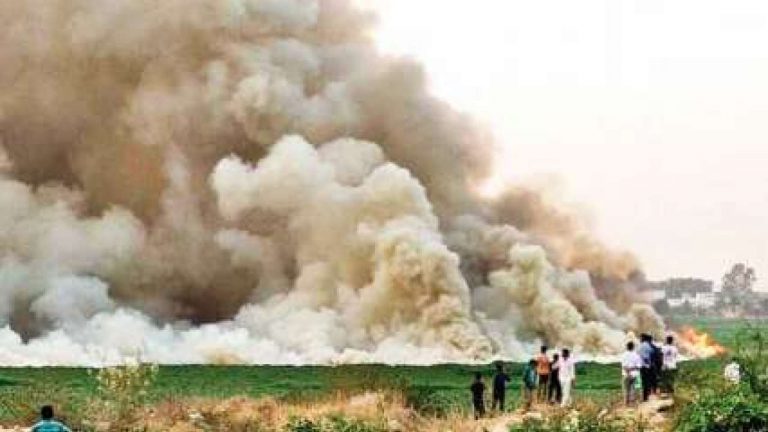
The summer of 2015 was the first time the lake caught fire. This was soon followed by a phenomenon of froth formation, which is perhaps the main cause of concern for the city’s residents. The effluents in the water generate a foam-like substance in the air whenever a fire takes place and the toxicity of this substance leads to several skin allergies, respiratory and other health-related problems, besides its disgusting stench. Since then this lake has repeatedly gripped the city in horror.

Spread across 906 acres, Bellandur Lake is the biggest and one of the oldest bodies of water in India’s Garden City. A few decades ago, the lake was the lifeline for several villages surrounding it. People used it to grow vegetables, cultivate paddy, for drinking and irrigation, as well as to indulge in pursuits, such as boating, fishing, and picnics. But today, the lake is nothing but a cesspool of sewage and a receptor for more than 70 million gallons of sewage per day. And, this contaminated water further flows into Varthur Lake, joining Pennar River.

People speculate over why Rahul Gandhi concluded his press conference in under 3 minutes

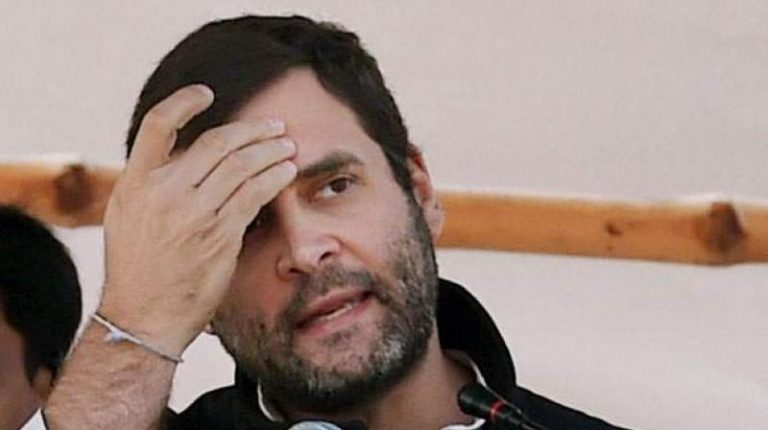
Congress President Rahul Gandhi today addressed the media in Mumbai, Maharashtra where he addressed Congress workers on the sidelines of his appearance in Bhiwandi court which framed charges against him in the RSS defamation case. Just a day prior to his Bhiwandi court appearance, he had addressed party workers in Delhi where he showed off his blinding brilliance which left the Internet in splits. This morning, Rahul Gandhi addressed a press conference in Mumbai, which left drew flak from sections of media who were made to wait for hours for a press ‘conference’ which lasted less than 3 minutes.


Soon, many journalists voiced their disappointment and anger at a damper on a press conference.


Some even questioned the communication, or lack of it, between Congress leaders and Rahul Gandhi.


While some complained about the loss of sleep over nothing.


Congress sympathisers immediately came out to defend the Crown Prince.


If journalists and Congress sympathisers had voiced their views, could Twitterati be far behind?


Some even wondered that after the recent disastrous public appearances, Congress President Rahul Gandhi may not be allowed to speak in public to save the party some embarrassment.


Meanwhile, we are just disappointed that he cut his press meet short. It is an otherwise lazy Wednesday and we could do with some entertainment.

The day my father went to war

0

I distinctly remember that morning of late May 1999. The whole family was up earlier than usual for two reasons. One, I was going to Lucknow from Bareilly for appearing in some competitive entrance examination. And other was that my father was going to war.

It was less than a year since we’d shifted to Bareilly from Guwahati. My mother, my younger brother and I were quite relieved when the posting details came in. Finally, a ‘peace’ posting in a decent sized city! Guwahati was a wonderful place with some of the nicest people you’ll ever meet. But it so happened that the law and order situation started deteriorating from the mid-90s onward (when we had shifted to Guwahati) and remained a bit tense till the end of the decade. There was a spike in activities by United Liberator Front of Assam (ULFA) and movement of army personnel and their families into civilian areas was restricted. I remember watching DDLJ (If you’re not old enough to know what this is, look it up) on children’s day in 1995 in a cinema theatre in the city along with my school friends. That was the only movie I saw in a ‘civilian theatre’ in our 3+ years of stay in Guwahati.

Bareilly was a welcome change. Nice, big cantonment with many facilities. And the best part was that one of my school buddies from Guwahati, who till this day remains my best friend, was also in Bareilly. They’d shifted a few months earlier and his presence meant I didn’t have to start from scratch to build new friends. A new life. Something which is part-and-parcel of the life of a Fauji kid. He would also be of invaluable help to navigate my way around cantonment and the city.

While my father was posted in a Military Hospital in Guwahati, he was part of a Field Ambulance Unit of a Mountain Division in Bareilly. For reference, a division generally consists of 15,000-20,000 troops. These troops are a mix of fighting elements like infantry, artillery, armour and support elements like communication, engineers, medical, ordnance, transport and logistics. The medical part is contained in Field Ambulance Units which provide the first line of medical help for a soldier injured in a war. Field Ambulance Units go where their mother division goes.

Except for one aspect, the transfer from a Military Hospital to a Field Ambulance did not have much relevance in our (brother and self) scheme of things. And that bit was about the number of children in ‘our’ unit (Field Ambulance). The Military Hospital in Guwahati was a pretty big establishment. Which meant a large number of officers and the possibility of a large number of children to play with. And on the rare occasion when children were invited to official parties, you had someone of your age to socialize with. The Field Ambulance was a pretty small formation with a lot of young officers. So, this ruled out the probability of making friends of your age within your ‘own’ unit.

In coming years, my father’s posting to the Field Ambulance in Bareilly was to have a big impact on our collective lives. And ‘peace’ posting turned out to be anything but peaceful.

But on friendship front, all was not lost. Apart from my school buddy, there was a sports complex to rescue. Sports complexes hold an important place in lives of children in a cantonment. Everyone congregates here in the evening. Some play the available sports while others chit-chat. And you can meet and socialize with children of your own age. Friendships formed here can last a lifetime. For example, someone who I met for the first time in Bareilly sports complex and who later became a close friend, recently picked-up his Colonel rank and his now commanding an infantry battalion!

Not to mention that as a common meeting place for teenagers/college going crowd of opposite sex, these sports complexes also witness many a romances bloom. And heart-breaks. During our stay in Bareilly, we also had Priyanka Chopra (yes, yes, same one) occasionally visit the sports complex.

The first year of transfer was spent in doing the usual as in any transfer – stay for a few weeks in an Officer’s Mess, then shift to temporary accommodation and finally, permanent accommodation.

I think it had been hardly a few months since we’d settled in our permanent accommodation when the stories about Kargil started to emerge. That was the first time in my life as a Fauji kid when I heard the word mobilization spoken about in our house. As most wards of army personnel do, I had seen my father go on periodic military exercises. But war and mobilization was something I’d read in books or heard from a maternal uncle who’d fought in 1962, 1965 and 1971 wars.

Well, it so happened that the parent formation of my father’s unit, 6 Mountain Division, was (is) Army HQ Reserve. And is used by AHQ for offensive or defensive tasks as per the requirement. While Kargil was fought mainly by 8 Mountain Division with some sectors under Leh based 3 Mountain Division, 6 Mountain Division was moved in Kashmir as a strategic reserve. In case the balloon had gone up and India decided to cross the LOC, 6 Mountain Division would’ve launched an attack into Pakistan-Occupied-Kashmir.

But all of this I came to know much later when I read books on the Kargil War, including one by General V.P. Malik.

At that point in time, it was speculated that 6 Mountain Division (6 MD) will most likely be going to receive orders to move out to Kargil. There was a strong feeling that the actual fighting of throwing out the Pakistan Army and reclaiming those heights would be done by 6 MD.

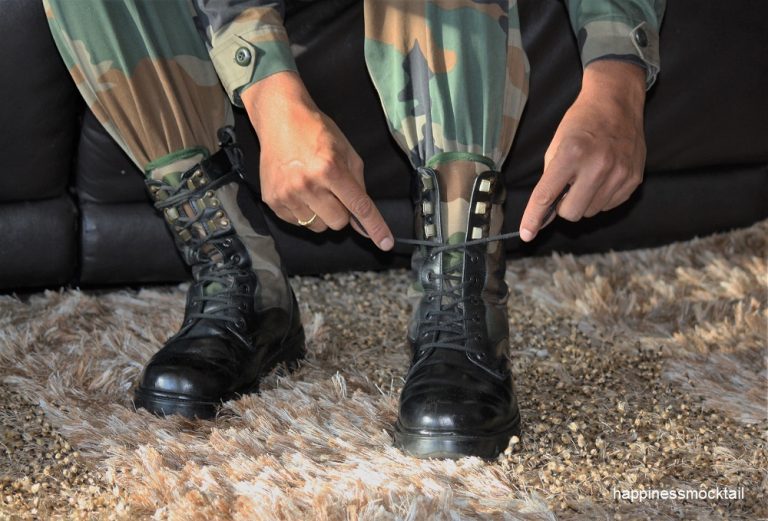
The first thing that happened at home was sorting out father’s uniform and kit. Especially, the combat uniform or as it was known at that time, ‘Cheetah wardi’. Over the course of next week, my father spent most of his time in the unit, working with others to ready it for mobilization when the orders came. There was a buzz in the whole station as every personnel and every unit associated with 6 MD prepared for the marching orders.

Finally, the orders were received and departure day was finalized.

My father was going to war.

For the first time in our lives as the family of an army officer, war became a reality. As was the fact that my father could be injured. Or killed. Yes, my father being from the Army Medical Corps (AMC) had lesser probability of sustaining an injury or being killed as compared to those from Infantry. Those who scaled a near vertical cliffs to evict the enemy. But then war does not follow any rules. An artillery shell does not distinguish between an Advanced Dressing Section (ADS) of a medical unit and a command bunker or a signal post.

And that is exactly what happened. As I learnt many years later, my father had established a medical detachment with surgical team north of Zoji La to cater for a large number of casualties in a particular sector. This detachment started receiving many casualties but within 72 hours of its establishment, it came under intense Pakistani artillery fire. The detachment, along with staff and casualties, was relocated post-haste to a different location in depth.

A day prior to his departure, my father sat down with my brother and me. While we knew what was happening, he explained the scenario and prepared us for the fact that he might be gone for a long time. That in his absence, we were to ensure we don’t trouble our mother and help her out in the household chores. Take care of each other and our studies. As the elder son, I got some additional advice to handle all the outdoor activities. I was also shown all his important personal documents related to army service, banks, insurance, etc. Just in case.

Of course, he never told us where he was going. They never do.

It so happened that on the day he was supposed to leave, I also had to go to Lucknow for some competitive entrance examination. But there was a problem – with almost the entire station moving out, there was no means or person to even drop me at the railway station. Finally, it was my school buddy to the rescue. He came to my house early in the morning on his bicycle. And dropped me at railway station using my dad’s scooter.

Both of us, my father and myself, exited the house together. I touched his feet before he got into his vehicle. He wished me luck. And we hugged. His vehicle left the compound and took a left turn while I took a right turn towards the station.

For about 4+ months, we’d no information about his whereabouts. We didn’t hear from him. We followed the news on TV and newspapers and I kept a tab of all the developments. Finally, first time we heard he was OK was when a fellow officer came back to Bareilly. Of course, he also never shared any details.

It would be eight long months before my father and rest of the formation returned from Jammu and Kashmir. While the war was declared over in July, 6 MD was re-tasked to handle Counter-Insurgency Operations in the Valley. In between, we received letters from him. And occasionally, he also managed to speak to us through army’s internal telephone network.

The cantonment was again full of life and there was a joyous atmosphere. Most families had their first brush with what a war is and how it can impact their lives. Everyone thought the worst was over. And there would finally be peace to enjoy in a ‘peace’ station.

It is said TV brought Kargil War into people’s bedroom. In case of those whose dear ones took part in it, it brought war into our lives.

Alas! Peace was to elude us during our ‘peace’ posting.

Attack on Indian Parliament happened in December 2001 and 6 MD, along with the whole of the Indian Army, was again mobilized.

And my father went to war. Again.

Congress leaders resign in Meghalaya, decide to join the ruling National People’s Party

In a recent turnaround, the opposition party in Meghalaya has suffered a setback, after the members of Ranikor Block Congress in South West Khasi Hills district resigned en-masse and joined the ruling National People’s Party (NPP)

Senior Congress leader Martin M Danggo, who had won for five consecutive terms from Ranikor Assembly constituency, is also expected to quit as a member of the assembly as well as from the primary membership of Congress once the government announces the creation of Ranikor Sub-division. Ranikor, which is 121km from the state capital Shillong, shares border with Bangladesh.

The resignations came in the wake of the refusal of the previous Congress government headed by Mukul Sangma, now the Leader of Opposition, to the local demand to upgrade the Ranikor Community and Rural Development Block to a sub-division.

Danggo’s resignation will reduce the Congress’s strength in the Meghalaya Assembly to 20, equal to that of the NPP, which is running a coalition government in the north-eastern state with the BJP and some regional parties.

“I have raised the matter on the need to upgrade Ranikor to a sub-division with several (former) Chief Ministers DD Lapang and Mukul Sangma but they never realised the need of development of this region,” Danggo said.

Chief Minister Conrad Sangma reacted, “This is a genuine and a longstanding demand (creation of Ranikor Sub-Division) of the people of this region. This region too needs development and the NPP-led government wants to bring the administration more closely to the people.”

Danggo expressed happiness with the announcement by the Chief Minister to upgrade Ranikor administrative unit to a sub-division. “I will resign as a member of the Congress and the assembly once the Chief Minister declares that Ranikor is being upgraded to a sub-division.”

Danggo, a former Public Works Department minister has been in touch with the NPP leadership and had expressed his desire to join NPP even before going to the Assembly polls. The NPP at present has 20 MLAs, while the opposition Congress has 21 MLAs in the 60-member Assembly.

The NPP is leading the coalition Meghalaya Democratic Alliance (MDA) government in the state with the support of UDP, PDF, BJP, HSPDP, NCP and few independents.

Union Minister Mukhtar Abbas Naqvi to host an Iftar party for Triple Talaq victims

Union Minister for minority affairs Mukhtar Abbas Naqvi is scheduled to host an Iftar party for Muslim women which mostly includes Triple Talaq victims, reports The Hindu. The Iftar would be hosted on Wednesday.

As per the report, Naqvi had earlier been on record seeking a disassociation between the Ramzan fast and politics, owing to it denoting abstinence and piety. This Iftar party for Triple Takaq victims though seems to have the approval of the BJP including that of its President Amit Shah, who has expressed the need to highlight Modi government’s outreach to Muslim women.

As per a New Indian express report, this announcement by Naqvi was made just a day after the Congress party announced its decision to host its own Iftar party. Going by reports, the Congress’ Iftar would be hosted by Rahul Gandhi, and will be attended by –  leaders of various opposition parties, former President Pranab Mukherjee and former vice president Hamid Ansari.

What makes things interesting is the fact that Naqvi’s Iftar would be coinciding with the one being hosted by the Congress.

This decision to host Iftar for Triple Talaq victims comes in the light of President Ram Nath Kovind deciding not to host one in the Rashtrapati Bhavan. This as per the president’s press secretary was owing to the decision taken to not observe any religious celebrations in a public building such as Rashtrapati Bhavan on taxpayer’s expense. Such a decision was last seen during the 2002-07 tenure of former president APJ Abdul Kalam.

Even BJP’s close social ally the RSS had refused to host an Iftar party at its Smruti Mandir premises which hosts their founder’s memorial, by stating that it was no place for parties. The RSS’s minority arm –  Muslim Rashtriya Manch (MRM) though had earlier hosted one such party in Mumbai.

Organ transplant racket rocks Tamil Nadu: Foreigners given priority over Indians

According to a report published in The Hindu, an organ transplant racket has surfaced in Tamil Nadu. Officials from Union Ministry of Health & Family Welfare have found that foreign nationals were given precedence over Indian patients in the allocation of organs.

According to the reports, foreigners got about 25% of all heart transplants and 33% of lung transplants in the last year.

The Directorate General of Health Services acted on a specific input that at least three hearts from brain-dead patients went to international patients in recent months in Chennai. Acting on the input, they convened an urgent meeting in New Delhi recently and framed stricter guidelines for allocation of organs to foreigners.

Prof. Vimal Bhandari, the Director of National Organ and Tissue Transplant Organization (Notto), first talked about the possibility of an organ transplant trade in Tamil Nadu. He reflected upon the proactive involvement of the state to find a solution in this matter. He explained that they can only set guidelines at a national level but health being a state subject, the state has to take action.

The rule regarding the allocation of organs determines the candidate based on two criteria, the date of registration and the medical condition of the patient. Criteria such as gender, race and wealth do not come into the fray in deciding who should get the transplant. The transplantation of Human Organs Act, 1994 makes it illegal to buy or sell organs in India.

In 2017 alone, foreigners were the recipients of 31 heart transplants, 32 lung transplants, and 32 heart and lung transplants. In contrast, Indians received 91 heart transplants, 75 lung transplants, and 6 heart and lung transplants.

Revised opposition-approved ‘government lateral entry notice’ text leaked

Modi Government this week announced that it will allow 10 Joint secretary level positions to be filled by a lateral entry of non-IAS professionals. This, to no one’s surprise, hasn’t gone down well with people with whom nothing has gone down well since May 2014 (except a few riots and protests here and there).

This is the previous notice issued by Govt:

The people opposing this move have raised some valid points if one stretches the definition of valid points and hence the government has revised its notice to address these concerns. Opindia has exclusive access to text of this leaked notice thanks to our direct access to PMO.

Some of the important concerns of eminent intellectuals and politicians are that the notice calls for “indian nationals” (which resembles Indian nationalists instead of saying Indian passport holders) for the purpose of “nation building” (Sanghi speak for oppressing minorities and dalits and adivasis), “outstanding individuals with expertise” (making anyone from left ineligible cause who has time to gain expertise in anything when a revolution is going to overthrow the dictatorship of the bourgeois and fascists), and that they have even dared to clearly mention the sectors the applicant must have experience in – none of them being media, NGO, freelance protester, writer, lifelong JNU PhD candidate, intellectual, evangelist  – thereby ruling out pretty much everyone who can give pro-people insights about sectors they have no clue about.

These are real worries and should have been addressed before this notice was released. Behen Mayawati fears Capitalists entering the government through this mechanism and Sitaram Yechury fears hardcore Sanghis – the kind who put angry hanuman graphic on the rear of their cars – entering the government, while other intellectuals fear someone who has never been to a litfest or knows how to spell palimpsest may infiltrate.

“We have changed eligibility criteria so that the opposition and intellectuals would be very pleased,” a senior govt official we spoke to on the matter told us on condition of anonymity before emailing us the text of the new notice. Here’s the notice sent to us (exclusive to Opindia)

New Revised Notice:

“The Government of India invites secular and pessimist Indian nationals (but with at least a few visits to Pakistan) willing to contribute towards secularism and idea of India, to join the Government at the level of Joint Secretary, which is a crucial level of Senior Management in Government of India (on the days Gandhi family and loyalists are on vacation).

Government is looking for ten (10) forever protesting individuals with experience in dharnas, protests, writing columns only other column writers read, troll-bait tweets, books with 1-2 stars on Amazon and with experience in blocking any constructive action in these sectors – 1. Revenue, 2. Financial services, 3. Economic affairs, 4. Agriculture, cooperation, farmers’ welfare, 5. Road transport and highways, 6. Shipping, 7. Environment, forest and climate change, 8. New & renewable energy, 9. Civil aviation, 10. Commerce”

Opindia asked the senior official if such strict eligibility criteria will reduce the pool of candidates and lower the chance of hiring the right candidate to which he said “not really, we started with lists of signatories who got Modi’s US visa banned, the ones who signed to free Yakub Menon etc and already have a shortlist of all candidates that exactly match all the criteria that will please opposition and intellectuals.

On a little more prodding, the senior official sent us a pic in which (completely coincidentally) all of the shortlisted candidates are pictured together.


Remains to be seen if BJP supporters will cherish this rare moment of Government-Opposition consensus or see devil where there is none and claim it reminds them of Sonia ji’s NAC.

‘Iranian law of compulsory headscarf direct violation of my human rights’: Chess star pulls out of Championship

Grandmaster Soumya Swaminathan, Indian chess star and former world junior girls’ champion has pulled out of the Asian Team Chess Championship to be held at Iran. Soumya has cited the Iranian law of a compulsory Hijab for women as a violation of her personal rights.

The Asian Team Championship is scheduled to be held at Iran from July 26 to August 4. Expressing her decision to withdraw from the said championship, Soumya took to Facebook to share her thoughts. She stated that she does not wish to be forced to wear a headscarf or Burkha. She added that the Iranian law is a direct violation of her basic human rights including her freedom of expression and right to freedom of thought, conscience and religion.

Soumya Swaminathan

Soumya also added that she is very disappointed to see that a player’s rights and welfare are being given such less importance while organising official championships. She added that it is a huge honour for her to represent India but while she is willing to make adjustments for the sake of sport, some things cannot be compromised. She reiterated that there is no place for religious dress code in sports and that the only way to protect her rights is to not go to Iran.

Soumya’s decision has won support and admiration in social media.


Previously, Indian shooter Hina Sandhu had also pulled out of the Asian Airgun meet held in Iran in 2016 citing the same reason.

It is notable here that even Iranian women have been protesting against the compulsory headscarf law since months. In late December, the image of 31-year-old Iranian woman Vida Movahed became an iconic symbol of the movement when she took off her hijab and waved it, standing on the top of a pillar box. Since then, hundreds of Iranian women have taken to streets and been jailed, even vanished protesting against the Islamic law of a compulsory hijab for women. The Islamic regime in Iran has been cracking down ruthlessly on protestors.

‘Damages a serious matter’, UP Governor writes to Yogi to take action against culprits after Akhilesh trashes government accommodation

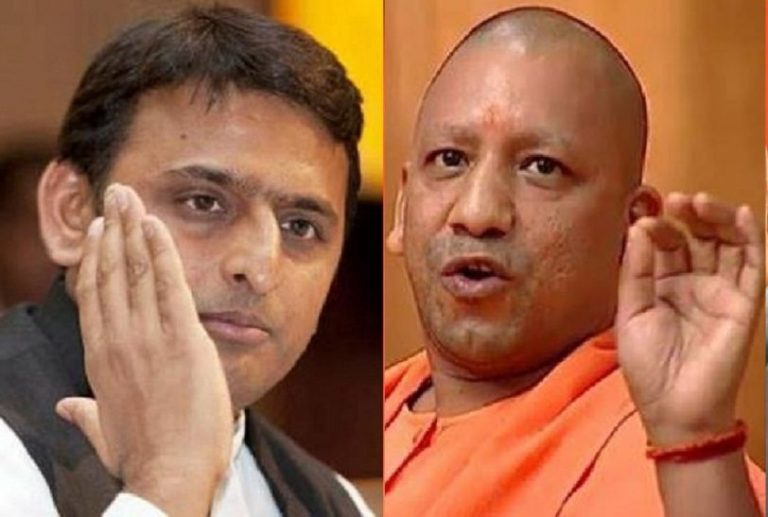
Uttar Pradesh Governor Ram Naik has written to the Chief Minister of Uttar Pradesh over the issue of damages found at government bungalow recently vacated by former chief minister Akhilesh Yadav. Terming it a ‘serious matter’, Naik has asked the government to take action against the culprits. Pointing out that the maintenance of official bungalow is done using taxpayers’ money, he has asked the government to take proper action after investigation.

The letter comes days after the Yogi government asked the estate department to thoroughly scrutinise all five bungalows vacated by former chief ministers of Uttar Pradesh and match with a checklist so that missing items can be identified. The estate department has reportedly found everything intact in other bungalows except Akhilesh’ which he left in ruins after taking away things like plants and flooring.

When Akhilesh was confronted regarding his kind of ‘socialism’, he arrogantly gave veiled threats to the bureaucrats by saying how the government keeps coming and going, but they will be there. And that he knows who have done this (open the government accommodation for media to click pictures). He also tried to ‘show them their place’ by reminding them how they once picked cups and plates in front of him.

Meanwhile, Samajwadi Party has termed the video clips of the house which have surfaced an ‘attempt to tarnish Akhilesh’s image’ saying his popularity was constantly growing after defeating the BJP in the bypolls.