Home Blog Page 7192

Internal sabotage and poor ticket distribution probable cause of BJP failing to secure a majority in Karnataka?

Sachin Reddy, who has got his predictions more accurate than anyone else, has elucidated the reasons why the Bharatiya Janata Party fell short of a majority in Karnataka. According to him, internal sabotage played a significant part in seats where the BJP lost by narrow margins.


In Gubbi, for instance, the BJP candidate lost to JD(S) by a margin of 9000 votes while a BJP rebel Dileep Kumar secured 30000 votes.


A similar pattern was observed in in Indi, Bailanhongala and Jamakhandi.


Poor management of caste equations and ticket distribution cost the BJP several seats as well, especially Bidar.


However, the biggest boost to the BJP came from Central and Coastal Karnataka where it bettered its tally from 2008. The Modi-Shah factor worked in the coastal region while B.S. Yeddyurappa carried the day in Central Karnataka.


While the BJP fell short of a majority, the Congress and JD(S), despite going at each other’s throat throughout their election campaign formed an alliance. However, with dissenters from both parties poised to support BJP, BS Yeddyurappa has been sworn in as the chief minister with 15 days to prove his majority on the floor of the house.

The conclusion appears to be that although 104 seats is a remarkable performance by the BJP, without internal sabotage and better ticket distribution, it could have comfortably secured a majority on its own.

Leaving on a jet plane : Karnataka Congress MLA goes ‘missing’ as his comrades remain imprisoned

In a dramatic twist, once the poorest MLA in Karnataka, Congress’ re-elected MLA from Maski, with a vote margin of just 213 votes, has gone ‘missing’. As reported by The News Minute, Pratapgouda Patil has slipped out of Congress’ hands and taken a flight out of HAL airport, possibly a private jet, and flown off to an undisclosed location.

The report says that Patil never boarded the bus to Eagleton resort where the Congress MLAs were holed up last night, and has since been untraceable. Patil is the second confirmed MLA who has reportedly defected to the BJP.

Anand Singh, MLA-elect from Vijaynagara, who was once a BJP minister in Karnataka, had only defected to Congress in January to get a seat for the Assembly elections. Eventually, after the results were declared, Singh did not turn up for the Legislature Party meeting and by evening it was reportedly confirmed that he had switched sides to the BJP.

BJP’s Yeddyurappa took oath today morning at 9 am as the 23rd Chief Minister of Karnataka after Karnataka Governor Vajubhai Vala invited him to form the government and prove his majority on the floor of the Assembly in 15 days.

Yeddyurappa was insulted for predicting the date of his swearing in ceremony, turns out he was right

The Karnataka elections have been fiercely fought by the Congress and BJP. The campaigning phase was rife with allegations and counter allegations, jibes and counter jibes. The Congress played every ace up its sleeve, from dividing Hindus into fractions by giving Lingayats ‘minority status’, to making under the table deals with radical Islamist outfit PFI, to attempting to tear the nation based on the North-South divide. However, BJP secured 104 seats and now, Yeddyurappa has been sworn in as the Chief Minister with 15 days to prove his majority on the floor of the house.

Siddaramaiah has been completely sidelined by Congress after the results have been declared. The Chief Ministerial post has been pawned off the JD(S) like an alliance carrot leaving Siddaramaiah, who was so confident of ruling Karnataka once again, high and dry.

As all elections, both parties were confident of victory. On one fine morning, Yeddyurappa had declared that he will be sworn in as the Chief Minister of Karnataka on 17th May 2018. This was many days before the campaigning had even come to a close.

While nobody expects political rivals to accept such wild assertions graciously, Siddaramaiah, in his true Congress demeanour, decided to hurl insults at Yeddyurappa.


In the video tweeted by a user @Vande_Mataram, a journalist asks Siddaramaiah for his comments on the assertions of Yeddyurappa. Siddaramaiah rhetorted, “He is mentally disturbed”.

What is extremely disturbing is the abysmal level at which the Congress dragged the political discourse through this election. What is shocking is the reaction of journalists present to such abysmal comments.

None of the journalists present took offence to what was being said or the insult hurled by one politician on the other. Instead, journalists are heard laughing hysterically at the comment.

Now that the election is over and BS Yeddyurappa has been sworn in as the Chief Minister on 17th May, right on the date he asserted, one wonders what Siddaramaiah will say now.

Dear Rahul Gandhi, you deserve to stay

0

I came across an article which talked about a ‘viral’ post on Facebook which ‘ripped apart’ those who felt Rahul Gandhi should quit. The piece sings praise for Congress President Rahul Gandhi who lost the third election straight since he took charge of the party in December last year. The viral post is by Peri Maheshwar, founder and CEO of Careers360, a career counselling firm.
But no, Congress President Rahul Gandhi deserves to stay.

It has been over 24 hours since Karnataka election results have been out and after high drama, BJP’s Yeddyurappa, with 104 seats, just took oath despite Congress and it’s post-poll ally JDS had well over the magic number to form the government. The Governor has given BJP 15 days to prove majority on the floor of the Assembly. And while Karnataka Congress was facing one of the major crisis, as a run up to 2019 elections where Rahul Gandhi wants to show himself as a serious prime ministerial candidate, Congress President was missing. It took him over 36 hours to make his first public statement, that too a tweet, devoid of any emotions. Here is why Rahul Gandhi deserves to stay.

– Because as captain of the sinking ship, he further managed to sink it lower by taking the seat tally in Karnataka Assembly from 122 in 2013 to 78 in 2018.

– Because with Rahul Gandhi and Siddaramaiah as an option, Karnataka brought BJP from 40 seats in 2013 to 104 seats in 2018.

– Because despite not having crossed the halfway mark, Congress, despite all the money and muscle power the grand old party has at its disposal, it is the BJP that is forming the government in Karnataka and not Congress.

– That under Rahul Gandhi’s esteemed leadership, Congress has lost 3 elections in six months time, Gujarat, Tripura and now Karnataka.

– Because whenever a time comes to own up to your failures, Rahul Gandhi is missing. After losing Gujarat and Himachal Pradesh elections, Rahul Gandhi went to watch Star Wars. During Tripura results, he was in Italy, ‘visiting‘ his Italian grandmother for Holi. And now, after Karnataka elections, Rahul is again missing in action. Even the call to H D Deve Gowda offering support to form an alliance was reportedly made by his mother, Sonia Gandhi.

– Because your caste-based divisive politics of declaring Lingayats a different ‘religion’, a ‘minority’ at that, didn’t work. It did help people see the true picture of Congress, though.

– Because your wild conspiracies of ‘aircraft malfunction’ didn’t get you the sympathy you thought would get. Perhaps he hoped to remind people of the death of Sanjay Gandhi in the aircraft crash in 1980.

– Because Congress dropped Siddaramaiah like a hot potato and crawled to JDS and declared Kumaraswamy as CM candidate should JDS choose to accept Congress’ support despite JDS having half the numbers of Congress. Shows it is not the public you want to serve but the power you crave for.

– Because you are an asset to the BJP because if the other option is you, anyone in right mind would choose the other. Unless the other option is even more terrifying like Arvind Kejriwal or Mamata Banerjee.

– Because Congress lost in 14 seats out of the 25 seats you campaigned in. Even the seat where your mother campaigned in, Vijayapura (Bijapur) City, lost out to BJP.

– Because your dream of becoming Prime Minister of India, just because you’re born in a particular family where you were brought up make-believing that post of the PM should be served to you on a platter, will remain a dream. Because democracy still trumps dynasty.

And so, Rahul Gandhi, you deserve to STAY.

Unknown gunmen taking away ballot boxes to death of BJP’s presiding officer, Bengal’s panchayat polls counting begins

Counting is underway in the Bengal Panchayat Polls, which has had a bloody run.


Yesterday, unidentified gunmen were seen escaping with ballot box from polling booth in Malda’s Ratua.


Earlier on Tuesday night, Rajkumar Roy, Presiding officer deputed in Raniganj was kidnapped on duty from polling booth and later found murdered near railway booth near railway track.


The bloodshed during the run up to the Panchayat Polls left everyone shocked, especially when Trinamool Congress MP Derek O’Brien even tried to defend the violence by claiming how number of murders have come down. Earlier, BJP worker had died after allegedly being thrashed by TMC goons. The BJP had also accused the ruling TMC of using violence in order to prevent its candidates from filing nominations for the Panchayat polls in the state.

The panchayat polls are crucial for TMC as they are being seen as a warm up to the 2019 elections where Mamata is eyeing the top post. 40 of the West Bengal’s 42 Lok Sabha seats are located in the districts went to the polls on Monday.

Midnight drama at the Supreme Court, Yeddyurappa’s swearing-in to happen on schedule

After the Karnataka Governor Vajubhai Vala had invited BS Yeddyurappa to form the government and prove majority on the floor of the house within 15 days, the Congress-JDS alliance, after stashing away their MLAs safely in a resort, moved to the Supreme Court to stay the swearing-in ceremony. In a rather unique kind of politico-judicial drama, the Supreme Court, after hearing the case for almost 4 hours, refused to stay Yeddyurappa’s swearing-in ceremony scheduled to take place at 9 am today.


According to reports, Abhishek Manu Singhvi, on behalf of the Congress-JDS alliance sought an urgent hearing of the matter after filing the petition against Yeddyurappa’s swearing-in ceremony. The SC reportedly agreed to hear the case at 1.45 am. CJI Deepak Mishra assigned a bench comprising three judges namely Justices AK Sikri, SA Bobde and Ashok Bhushan to hear the matter.

At the hearing advocate, Mukul Rohatgi represented the BJP while ASG Tushar Mehta represented the central government in the matter. The Congress-JDS alliance had reportedly termed the Governor’s decision as ‘unconstitutional’.


Mukul Rohatgi, objecting to the petition had reportedly added that the Governor’s job is to invite oath and the President and Governor are not answerable to any court. He also reportedly stated that the court should not stop a constitutional functionary in functioning his official duties.

After hearing the matter for several hours, the three-judge bench reportedly refused to stay the oath taking ceremony at 9 am. The bench has reportedly stated that the Governor’s decision cannot be overruled as it is a constitutional authority. The bench, however, has made it clear that the government formation will be subjected to the final outcome of the case.

The bench asked for the letter that the BJP sent to the Governor claiming to form the government in Karnataka. As per the latest reports, the SC bench has now scheduled the further hearing of the matter at 10.30 am on Friday.

It is notable here that the SC had similarly held an urgent late-night hearing in 2015 for a petition to stop the hanging of terrorist Yakub Menon.

Ambulance stuck outside Congress HQ in Bengaluru as power takes precedence over public

An ambulance is seen stuck outside the Congress Headquarters in Bengaluru as the road was jam packed with traffic owing to the political drama that is taking place in Karnataka after the high octane elections.


In the video, an ambulance can be seen being stuck in the traffic pile up despite heavy police presence. The Times Now reporter also states that before this ambulance was stuck, the two ambulances which passed on the same road also faced lot of difficulties to pass through.

A huge bus can also be seen parked outside, which was reportedly there to take the Congress MLAs to a resort to prevent them from defecting.

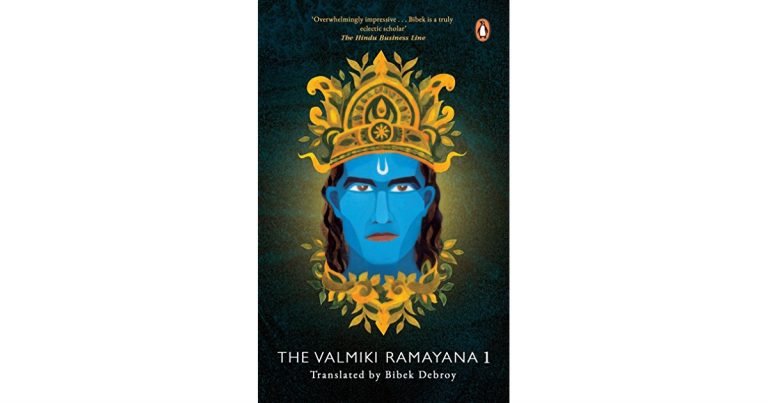
Book Review : The Valmiki Ramayana, Vol. 1, translated by Bibek Debroy

0

Having gone through the marathon of translating the unabridged Mahabharata, the Ramayana would have seemed like a sprint to Bibek Debroy. In any case, this is another stellar effort that succeeds in bringing out the beauty and emotions of the epic, as much as the limitations of a faithful translation permit.

Unlike the Mahabharata translation, that spanned five years, and with one volume coming out every six months or so, the Ramayana translation was released as a single three-volume set in 2017. The first volume covers the first two kandas – Baal and Ayodhya and ends with Sita accepting the gift of ornaments from Anasuya and the three – Rama, Sita, and Lakshmana entering Dandakaranya.

I doubt much value would be added were I to attempt a summarization of the Ramayana itself, so I will use this review to point out some interesting things about the translation itself.

First, the style of the translation is very similar to the one followed in the Mahabharata. There is a sense of familiarity in that sense. The copious footnotes follow you throughout, like a faithful companion. More on that later.

If I had to single out one takeaway from this first volume, it was the indescribably moving dialogue and emotions that the epic conveys. When Rama goes to Dashratha’s palace one last time before leaving for the forest, a desperate father tries one last attempt to hold his son back, first by exhorting him to “Imprison me and become the king of Ayodhya today!” and then pleading him to stay, if only for one more night – “O son! However, it is night now, when one should never leave. Do not go today. Spend the night with your mother and me, so that we can see you.” An equally distraught Rama is still steadfast and speaks a brutal truth – “Even if we obtain these objects with qualities today, who will give them to us tomorrow?”

Kousalya’s sorrow is heartbreaking, as she ponders her fate – “Had I not had a son, I would not have been this miserable. My sorrow is greater since I see that I will now be without a son. Had I been barren, I would have had only one sorrow in my mind. There would have been no torment but for the fact that I don’t have a son.” and the taunts from the younger and prettier Kaikeyi and other queens – “I have heard many disagreeable words that shatter the heart. Though I am superior to them, I have heard them from my inferior co-wives.” Knowing Rama’s devotion to his parents, Kousalya makes one last resort, telling Rama that “I am not giving you permission. You should not go to the forest.” The dutiful son is caught between his mother and father, and can but utter that “I do not possess the strength to act contrary to my father’s words” and then pleads with his mother, “O Queen! Grant me permission to go to the forest. I am requesting you, on my life. Perform the benedictions.” If people find an echo of these words and sentiments in twentieth-century drama and cinema, it is a testimony to the Ramayana’s immortal human appeal.

Among all, perhaps the most moving plight is that of Bharata. Away at his maternal home with Shatrughna when the banishment of Rama is planned and executed, he returns to a forlorn city and the suspicions of all his loved ones. He has to tell his mother, “Like applying salt on a wound, you have imposed a sorrow on another sorrow. You have made my father die and have turned Rama into an ascetic.” Whether it is Kousalya, sage Vasishtha, sage Bharadwaja, the nishada king Guha, or Lakshmana, Bharata is looked upon suspiciously by all. He has to bear the burden of his mother’s ambitions, and the text brings out his plight in an extremely moving way.

In chapter 1 of Bala Kanda, when Narada tells the rishi Valmiki about the Ramayana, or in chapter 3, when Valmiki summarizes the Ramayana before composing the epic, there is no mention of Sita’s agni-pariksha. It is probably neither here nor there, but given that this episode has acquired a disproportional aura and hue over the millennia, its absence from the summary may suggest something.

A peculiarity that struck me was the occurrence of the word humkara, which occurs four times in the first volume itself. The first is when sage Kapila destroys the sons of king Sagara by uttering the sound of humkara. The second is when Sthanu (Shiva) burns down Kama with the utterance of the sound of humkara. The third is when Vasishtha burns down all one hundred of Vishwamitra’s sons with his humkara. The fourth is when Vishnu countered Shiva’s bow with a yawn and humkara. There is only one such use of the word humkara in the entire Mahabharata, according to Bibek Debroy. This is another of those peculiarities that leads me to wonder when the use of the word and sound of humkara become common in Hindu texts.

Returning to the point about footnotes, the ubiquitous presence of footnotes was something I had pointed out when reading the Mahabharata translation (see this post), and Dr. Bibek Debroy’s footnotes do not disappoint here either. Take, for instance, chapters 51 and 52, when King Viswamitra visits sage Vasishtha’s hermitage, and the sage requests his cow, Shabala, to provide a meal for the king and his army. Bibek Debroy tells us that: (i) Shabala means speckled or spotted. This was a kamadhenu, a cow that could yield every object of desire, (ii) that the six types of flavour that Vasishtha requested Shabala to provide food with are ‘caustic, acidic, sweet, salty, bitter and alkaline, (iii) the four types of food are those that are chewed (charvya), sucked (chosya or chusya), licked (lehya), and drunk (peya). Or when Rama is about to leave for the forest for fourteen years, and when his mother, Kousalya, asks how will Sita manage, she refers to her as “shyama”. Shyama can mean dark, but the footnote (number 209) tells us – “We have deliberately not translated shyama. Usually, this means dark. But shyama also means a woman who has not had children and it is this second meaning that is intended here.” Or when King Janaka decides to bestow his two daughters in marriage, he says, “I state this in three ways.” The three ways, the footnote tells us, are via thoughts, words, and deeds. Or when Rama prepares for his coronation the next day, he spends the night in Vishnu’s shrine. The footnote tells us that this shrine was inside the palace, and the image – idol, murti – is now believed to be in the Srirangam shrine! With more than nine-hundred footnotes, the translation is enriched by these clarifications and explanations.

Unlike the Goldman translation, where the translator went to great pains to assert out that the epic was a work of fiction, here, Bibek Debroy correctly mentions that the factuality of the epic is mostly an irrelevant question when it comes to the translation. One could point to the existence of Ram Setu (also known as Adam’s Bridge) at Rameswaram – the place the Ramayana mentions Rama and his army as having crossed over the ocean to Lanka, or to the study that confirmed the existence of all 182 plants, flowers, and trees mentioned in the Ramayana from the north to the south, and so on, but that is a matter for discussion in a different place. A translation is not the place to conduct battles over ideologies or agendas, and this translation steers clear of that minefield. For that matter, while the author broaches the subject of the greater antiquity of the Ramayana and Mahabharata, he steers clear of pronouncing any definitive verdict in the matter. Reading the translation, I certainly got the impression that there is a greater sophistication in the society as described in the epic, and which would seem to suggest that perhaps the events in the Ramayana took place at a later point in time than the Mahabharata, but that is one opinion, and one which is not going to be settled anytime soon.

People who have read the epic in Sanskrit say there is a divine quality if you will pardon the expression, that translations cannot quite capture. Indeed, as Dr Bibek Debroy writes, “There is no substitute for reading the original Sanskrit, more so for the Valmiki Ramayana than the Mahabharata.” True though that might be, if one lacks the patience for the unabridged or a knowledge of Sanskrit, the next best thing would be to read a faithful translation of the unabridged original. Retellings, adaptations, narrations, abridgements – all have their own space and place, but with such a creative freedom to re-interpret the Ramayana also comes the onerous responsibility to neither inject one’s own ideology or agendas nor try and improve upon the original. Sadly, it’s a burden more often shirked than borne these days. Hence, for a medium-sized epic like the Ramayana, reading the translation, in full, is certainly something I would suggest, and Bibek Debroy’s translation I would heartily recommend.

Buy from Flipkart, Amazon IN, Amazon, Kindle

Another blow to third front : AAP loses deposits in all 29 seats it contested in Karnataka

0

In another blow to the proposed third front, one of its key members AAP lost its deposit in all 29 seats that it contested in Karnataka. Prithvi Reddy, AAP’s Karnataka convener who took on Congress heavyweight K J George from Savagnanagar, could only manage 1,861 votes and acquired a distant fourth position.

The Party had contested in 29 seats, 18 of which were from Bengaluru and 11 from other parts of the state. Reflecting on this rout faced by AAP in Karnataka elections Reddy reflected, “We were washed out but I cannot understand why. We got a lot of support but that could not be converted into votes”.

AAP’s abysmal performance comes on the back of talks about a federal front comprising all leading regional parties to counter the surge of BJP at the national level. AAP previously secured a blank mandate in Goa and later in Gujrat polls.

Vote percentage of Parties in Karnataka elections

While, it’s offshoot, Swaraj India, founded by AAP ex-member Yogendra Yadav has secured a fair amount of vote in its debut election in Karnataka. Swaraj secured 0.2% of the total vote count. They have contested in 11 constituencies in Karnataka. Swaraj released a statement regarding their Karnataka elections –

“Swaraj India had contested 11 assembly seats in the Karnataka assembly elections 2018. Our candidates have polled a total of 79,400 votes. This is a creditable beginning, better than other new entrants. While we did not win any seat, our candidate and general secretary Darshan Puttannaiah finished second fighting against the money and power of the JD(S) which is a truly encouraging beginning.”

This indicates the underlying differences that are prevalent in regional parties, if this continues then it is hard to imagine regional parties coming together and even if they do, the question as to how viable this front would be, still persists.

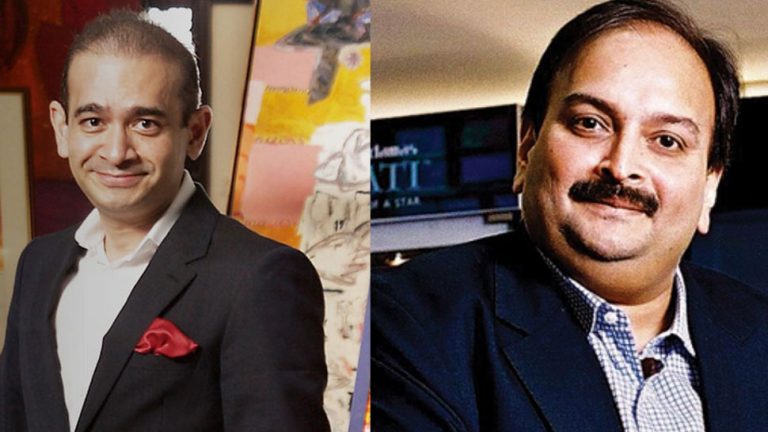
PNB scam: Mehul Choksi named ‘wanted’ in CBI chargesheet

The Central Bureau of Investigation (CBI) has filed second charge-sheet of 12,000 pages in Mumbai’s special CBI court where he is named as ‘wanted’.


Earlier in April, a non-bailable warrant was issued against Nirav Modi, also an accused in the PNB scam and Mehul Choksi. Prior to that, the Enforcement Directorate had issued summons to them and their passports were revoked.

The development comes a day after the PNB recorded a net loss of Rs. 13,417 crore in its Q4 earnings for the quarter ended 31st March 2018. As per reports, the second charge sheet in the PNB fraud case relates to loss of Rs. 7,000 caused to the bank due to alleged malpractices carried out by Choksi’s companies in connivance with few PNB staffers and officers.

The initial chargesheet filed on Monday which named 19 people arrested in relation to the case and firms. The charge-sheet filed on Monday also named Usha Ananthasubramanian, Allahabad Bank’s CEO, who headed the PNB from August 2015 and May 2017 and was also Executive Director of PNB from July 2011 to November 2013. She also headed Bharatiya Mahila Bank which merged with State Bank of India in April last year.