Home Blog Page 7244

Delhi police to charge Shashi Tharoor in Sunanda Pushkar’s mysterious death : Times Now

0

In one of the biggest crime mysteries in the country involving the wife of a senior Congress politician, Shashi Tharoor is set to be charged with abetment to suicide and destruction of evidence.


We had earlier reported that Delhi Police had informed the Supreme Court that they will file the status report in the Sunanda Pushkar Murder Case within a week. A close aide of BJP MP Subramanian Swamy, Ishkaran Singh Bhandari, has hailed the most recent development as a vindication for Swamy who has been fighting the case in the Court for a long time.


Sunanda Pushkar was found dead in a hotel room at Delhi on January 17, 2014. Earlier, AIIMS had confirmed that hers was an unnatural death.

Bangladesh scraps reservation in government jobs following massive student protests

0

The Sheikh Hasina led Bangladeshi government on Wednesday scrapped reservation in the country of government jobs following massive student protests. National capital Dhaka one of the main points of protests saw groups of students blocking key roads and highways, besides clashing at the Dhaka university which resulted in injuries to more than 100 students.

The quota in Bangladesh up until now stood at 30% for families of freedom fighters, 10 percent for women, 10 percent for state districts, 5 percent for the minorities and 1 percent for the disabled. The anti-reservation protesters had demanded that the quota be brought down from 56 per cent to 10 per cent.

Prime Minister Sheikh Hasina though decided to scrap the quota altogether to avoid the repeated suffering of general people. As per Hasina, classes at various universities were suspended and the Vice Chancellor’s house too was attacked. With regards to the traffic jams, she questioned as to why should the general public suffer repeatedly.

Over the point of reforming the quota system Hasina argued that the moment a reform is carried out, another group might emerge in the future seeking further reforms. She thus contended that if there was no quota, there won’t be any trouble.

In order to soften the blow for those bereft of reservation, Hasina claimed that a different arrangement will be made for disabled individuals and belonging to ethnic minorities.

As per due procedure, a cabinet secretary led committee will forward this recommendation to the Prime Minister who will then approve it. Following the approval, a circular validating it will be issued by the public administration ministry.

The reservation system in Bangladesh was open for reforms in the past, and just on 3 March, the public administration ministry had issued a circular saying that if no quota based candidate was found for a particular seat, it would be filled via the merit list.

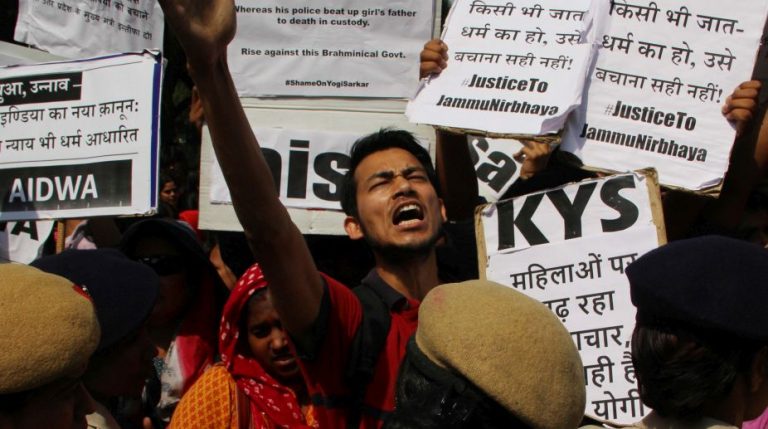
Journalist claims she was groped and ‘lynched’ in Rahul Gandhi’s midnight march

0

The midnight vigil called for by the Congress president Rahul Gandhi turned out to be a nightmare. Sister of Rahul Gandhi, Priyanka Gandhi Vadra had to admonish the participants during the vigil for their behaviour. Angry Priyanka Vadra told that those who were present at the vigil had to know the reason for their presence. She also asked those who wanted to push others could go home.


In addition to this Mausami Singh of India Today, known for her support to Mani Shanker Aiyar when he grabbed the mike of Republic journalist, also claimed to have been ‘lynched’ and ‘groped’ at Rahul Gandhi’s midnight vigil. She says [watch from 5:40 in below video] :

Even I was quite shocked. I have covered many candlelight marches and agitations. The way Congress workers went berserk was absolutely shocking. They were so lost and out of control in taking selfies, pushing people around trying to get closer to their leaders.  In fact, there was a Congresswoman worker who was bitterly weeping because she was pushed and shoved so badly that Priyanka had to call for her and get her into the ring. That statement Priyanka made that “all of you stay quiet and march till India gate” was the beginning of a horrific, horrific pushing and shoving which carried on till India Gate.

Priyanka had to literally make a sprint till the India Gate. [..] Her daughter was petrified. She was literally in tears. [..] I was the only woman journalist. I also got lynched. I also got groped. Groped in the dark. [..] It was an unruly behaviour of the Congress people, they were there for their leaders. They came there, they stood there, they participated in the march, but they completely forgot that why were they at all there? What was the purpose? You came here for women’s safety, women’s security and look the way you treat your women and your colleagues. 

Another video surfaced on Social Media where Priyanka Vadra is seen trying to escape the crowd. She is also seen hitting someone with her elbow who was presumably misbehaving with her.


This is not the first occasion on which women journalists have faced difficulties in Congress events. In August 2017, a woman journalist had been groped at a Youth Congress rally in Delhi. Ironically, this event, where another journalist was groped was also organised to protest against the “government’s failure to maintain law and order”.

It is indeed ironic that both times the Congress party organised protests to either “raise their voice” against declining law and order situation, or this time, raise their voice against the brutal rape in Kathua, women journalists have ended up being groped, harassed and humiliated.

Perhaps it is time for Congress to first protest against its own cadre. Volunteers who can’t seem to respect women while demanding security for women. Perhaps for Rahul Gandhi politicization of such issues is more important rather than focussing on the security of women.

Pakistan bars the ousted PM Nawaz Sharif from holding office for life

0

Pakistan’s Supreme Court on Thursday indicted Pakistan’s disposed Prime Minister Nawaz Sharif, his daughter Maryam and son-in-law Captain Mohammad Safdar over corruption allegations linked to ownership of London properties. According to reports, the charges may see the Pakistan Muslim League-Nawaz (PML-N) chief getting jailed.

Sharif, 67, resigned in July after the Supreme Court disqualified him from holding office over an undeclared source of income.

The companies identified so far include three British Virgin Islands-based companies Nescoll Ltd, Nielsen Enterprises Ltd and Hangon Property Holdings Ltd, incorporated in 1993, 1994 and 2007 respectively. These companies have reportedly been used to channel funds to acquire foreign assets, including some apartments along Park Lane in London’s Mayfair area.

The innuendo that the companies were meant to hide or launder ill-gotten wealth or to avoid taxes called his credentials into question.

Latest ruling addressed an ambiguity over his disqualification and whether he was barred from office for life or a specific period. Sharif and his family have denied wrongdoing. Earlier, they told the Supreme Court that their London property was bought through investments in companies owned by the Qatari ruling family.

The former Prime Minister has called the leaks the work of people “targeting me and my family for their political aims”. In an address to the nation on 5 April 2016, he said those “who use ill-gotten wealth don’t keep assets in their own names”.

Reports show that, The National Accountability Bureau (NAB) filed three corruption references against the Sharif family in September last year in light of the Supreme Court’s July 28 verdict in the Panama Papers case. Three time former Prime Minister Nawaz Sharif was disqualified from the Parliament in July last year following Supreme Court probe into panama papers.

The references against the Sharif family pertain to the Al-Azizia Steel Mills, offshore companies including Flagship Investment Ltd, and Avenfield properties of London.

Nawaz is accused in all three cases whereas Maryam and Safdar are accused in the Avenfield reference only.

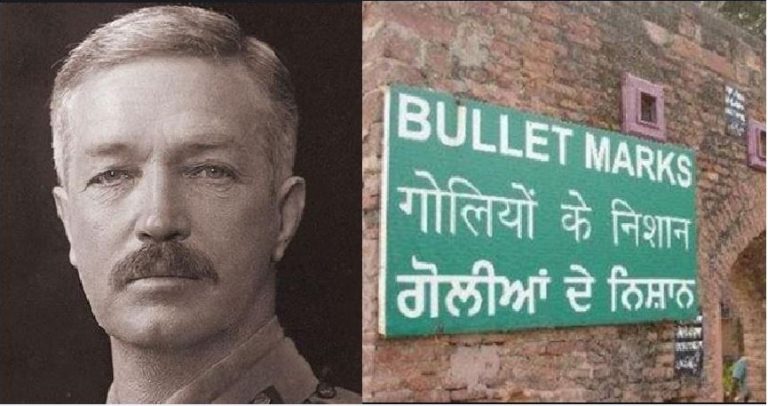
How Reginald Dyer, the General who ordered Jallianwala Bagh massacre, was honoured by some Indians

0

“I fired and continued to fire until the crowd dispersed, and I consider this is the least amount of firing which would produce the necessary moral and widespread effect it was my duty to produce if I was to justify my action. If more troops had been at hand, the casualties would have been greater in proportion. It was no longer a question of merely dispersing the crowd, but one of producing a sufficient moral effect from a military point of view not only on those present but more especially throughout the Punjab. There could be no question of undue severity.”

General Dyer defending his actions on April 13, 1919, in Jallianwala Bagh

Jallianwala Bagh massacre by the British was one of the worst events in the history of India. As per British official records, 379 unarmed Indians were killed and 1100 were injured because of a British General’s merciless massacre in Amritsar’s Jallianwala Bagh. Other sources claim that the number of people killed was as high as 1000 and 1500 Indians had been injured in the massacre. Several accounts give different numbers. The General decided to fire upon the people gathered in the field because they had defied his orders not to step out.

The reason for the gathering as per some accounts was to protest against the arrest and deportation of two leaders Satya Pal and Saifuddin Kitchlew. Other accounts suggest that many of those who were present were unaware of the martial law order which banned gatherings in Amritsar.

An account of the tragedy according to a book ‘The Jurisprudence of Emergency’ by Nasser Hussain [PDF] is reproduced below (emphasis added) :

In Amritsar, 13 April 1919 was a day marked by the heat and dust characteristic of the Punjab at that time of the year. General Dyer, who had been in the city since 11 April, spent the morning marching around the city, reading a proclamation forbidding the residents from leaving the city or gathering in processions or assemblies. By 1:00 P.M., however, finding the weather too hot, he returned to his headquarters. Soon after, he received reports that an alternative procession during the morning was announcing a gathering at Jallianwala Bagh at 4:30 P.M.

The city was observing the fourth consecutive day of Hartal or general strike, and there were funerals being held for people shot by the military on 10 April. Adding to this tension was the fact that many people had come into the city from out of town, as it was the day of the Baisakhi festival—the Hindu New Year. It is estimated that by the afternoon some twenty thousand people had assembled in the bagh, some in open defiance of General Dyer’s proclamation, but others merely in the spirit of the festival, as the bagh was adjacent to the holy Golden Temple. By 4:00 P.M. General Dyer received information that the meeting was being held and immediately set out with his troops and armoured vehicles

Jallianwala Bagh was actually not a park or garden at all, but an unused ground in the shape of an irregular rectangle about 250 yards long and 200 yards wide. Houses built with their back walls to the area had effectively enclosed it on three sides. The fourth side had a boundary wall of around 5 feet, with a few narrow lanes serving as exits. Unable to get his armoured cars through these lanes, General Dyer approached the ground on foot and stationed his troops, twenty-five on either side of him.

Then without any warning, he opened fire. In the panic that followed, some people lay on the ground to avoid the bullets but were trampled as others rushed toward the exits. As the crowd thickened around such points, General Dyer directed the fire at them. The firing lasted for ten to fifteen minutes, and a total of 1,650 rounds of ammunition were used. Only after nearly running out of ammunition did General Dyer cease firing and withdraw, without determining the casualties or providing for any medical assistance. The official estimate, later on, was that 379 people had been killed, with thousands more seriously injured.

What is more insensitive was that some British conservatives cheered him and worse still, some Indian elites collected money for General Dyer as he was forced to retire from service for his brutal act. The Nobel Laureate Rudyard Kipling called him ‘the man who saved India’ and initiated collections for his homecoming prize.

The Governor of Punjab Micheal O’Dwyer supported Dyer’s actions. O’Dwyer was dismissed for his actions in Punjab in the subsequent year. In spite of this, both O’Dwyer and General Dyer had Indian and English admirers. They collected money worth 26,000 euros and presented it to Dyer. General Dyer was made an honorary Sikh as per the book  ‘The Butcher of Amritsar: General Reginald Dyer’ by Nigel Collet.

An article in India Today claims that Governor O’Dwyer was also given a fund of rupees 1.75 lakh collected by Punjabi elite like Kunj Bihari Thapar, Umar Hayat Khan, Chaudhary Gajjan Singh and Rai Bahadur Lal Chand. It is indeed tragic to know that the British had such loyal support in India even after their brutal act in Jallianwala Bagh.

EC will hear a petition seeking cancellation of ‘palm of hand’ symbol for Congress party

0

The Model Code of Conduct states that the election campaigning of political parties must stop 48 hours before the polling date. Citing this reason a petitioner by name Ashwini Upadhyay has said that Congress can’t use this symbol as it is an indivisible part of human body. Since Congress leaders can wave at voters before 48 hours, it would be a display of party symbol (a violation of model code of conduct). Therefore it has to be cancelled as per Upadhyay. His complaint says :

“Since the election symbol of Indian National Congress is ‘Hand’, its candidates, supporters and agents always carry it, even when campaigning is stopped [..] it is a violation of Model Code of Conduct and Section 130 of the Representation of the People Act 1951 in every election.”


“Every time a candidate of the said party or his supporter passes through voters in public gathering, they use ‘Palm of Hand’ to solicit votes for Congress candidate, not only prior to the polling, even on the polling day within the 100 meters,” stated Upadhyay.

Mr Upadhay also highlighted the history of the party symbols allocated to Congress in his complaint. It says :

“Election Commission allotted election symbol ‘Pair of Bullock carrying Yoke’ to Indian National Congress and it successfully contested the first four general elections with this symbol. After the internal split, Congress contested fifth general election with election symbol ‘Cow and Calf’ and after another internal split, the Election Commission allotted election symbol ‘Palm of Hand’ to Indian National Congress.” 

We will have to wait and watch as to how this will be dealt by Election Commission.

Sunanda Pushkar case: Delhi Police to file Status Report Affidavit within a week

0

The Delhi Police today informed the Supreme Court that they will fill the status report affidavit in the high profile Sunanda Pushkar murder case. Subramanian Swamy, who had filed a PIL in the case informed today.


The next date for the hearing of the case has been set for May 7th. Swamy had earlier petitioned the Supreme Court regarding the conduct of the Delhi police. The PIL which was dismissed by Delhi High Court was accepted by the SC and the SC had issued a notice to the Delhi Police in February. As per the PIL, the Delhi police has to explain their conduct thus far to the SC.


Sunanda Pushkar, the wife of senior Congress leader Shashi Tharoor was found murdered in her hotel room on January 17, 2014. Her death had raised several suspicions and later the AIIMS had confirmed that her death was not natural.

Recently, a report on DNA had stated that it was clear to the Delhi Police from the beginning that Sunanda’s death was not natural. Sunanda’s autopsy report had reportedly revealed that she had died of poisoning. There were injury and injection marks on her body. The Delhi Police have also faced criticism for their reported negligence in the investigations and the AIIMS board that submitted the autopsy report also had pulled up the Delhi Police for not including circumstantial evidence statements regarding the physical injuries on Pushkar’s body.

Ghulam Nabi Azad’s polling agent who was ‘secular’ is now ‘communal’

0

Certain media houses had reported that the chief of Jammu Bar Association BS Slathia was a polling agent of Congress Rajya Sabha leader Ghulam Nabi Azad. Slathia has come into the limelight because of his demand for a CBI investigation in the Kathua rape case.


Ghulam Nabi Azad accepted that Slathia was his polling agent. But he attributed Mr Slathia’s recent behaviour to the BJP. He said that Slathia was ‘secular’ but BJP vitiated the atmosphere so badly that now these individuals have turned ‘communal’.

A lawyer in Jammu DS Rajawat had accused Mr Slathia had threatened her and asked her not to appear for the Kathua victim. Slathia had denied these charges.


Slathia has clarified that he is not opposed to justice for the Kathua victim, but wanted a CBI probe in the matter. He argued that government can hand over the Kathua case to CBI as it had done in the case of rape and murder of two women in Shopian based on public demand.

Delhi HC issues notice to top media houses for disclosing identity of victim in Kathua rape case

The Delhi High Court has issued notices to several media houses including NDTV, CNN-NEWS18, Times of India, Hindustan Times, among others, for disclosing the identity of the Kathua gang-rape victim. The Division Bench of Acting Chief Justice Gita Mittal and Justice C Hari Shankar took suo moto cognizance of the matter and has sought a response from the media houses on why action should not be taken against them.

Am emotional Justice Mittal also lamented the fact that none of the organizations and authorities, who claim to work for the welfare of women and children, made any complaint about the illegality being committed during the coverage of the heinous crime.

The victim, an 8-year old girl from the Bakerwal Muslim community, was reported missing on the 10th of January near the Rasana village. Her body was discovered a week later in the woods. The investigation has been mired in controversies and communal polarization with the Jammu Bar Association demanding a CBI investigation into the issue and certain sections of the political spectrum choosing to score political points over the issue.

Kathua rape : Who hardened my heart?

0

I write this with much shame. An 8 year old girl was …. I don’t need to say it. Horrible. It’s just horrible. I hope the killers hang. I have always been somewhat ambivalent about capital punishment, but when you see a crime of this kind, it brings out a primal desire to see retribution.

They should hang. No mercy.

However there is something else I am ashamed of. I have seen a number of posts on social media, both from “friends” and of course from “foes” asking to drop everything else : party sympathies, ideological camps, left-right-center and outrage.

Sorry. I can’t join.

I am all for hanging the killers and rapists … not once but several times over if possible … but I cannot join the social media outrage.

And for that I am sorry. My heart has hardened.

A public outrage is a community activity. It is an act of solidarity between people. And for me to feel like I could join, I have to feel like a part of the community.

What does that mean? It means that when I stand next to you and demand justice, I have to trust that you would do the same if I was the victim. And in this case, I know you would not. I know from objective evidence that you would not.

Sorry, I cannot stand next to the ‘secular’ politicians, the biased media, the ‘liberal’ elite and Washington Post columnists and carry out my outrage. Because I know for a fact that you would not stand up for me if I was the victim, or in this context, if the victim was my daughter, my wife, my sister, or my mother.

There is a reason there is no outrage over the rape and murder of the 6 year old girl in Bihar. You know it well.

There is a reason the rapes and murder of minors all over Assam in the last few days are not being reported. You know it well.

It could be against a human being. It could be against a horse. It could even be against a random statue. If you can find a way to connect an act of violence to someone you see as “Hindu right” you will outrage over it. If not, you come up with things like “tyranny of distance” and “political context” to justify your lack of interest in the incident.

The liberal elite is ignoring the rapes in Assam and Bihar deliberately and they know it. And when I dare to question their deliberate silence, they scream “whataboutery” and try to shame me. Maybe 10 years ago, they would have succeeded in shaming me, but not any more. Congratulations, your cynical game has hardened my heart.

When a heinous act happens in Kathua, you go over triumphantly to the Washington Post, telling the whole world about the evils of “Hindu nationalists”. But an Islamic terrorist gets to be the “son of a headmaster”.

Don’t tell me they are treating it as a special case because Kathua was a hate crime and that there was support for rapists. First of all, I don’t trust your narrative. There are accounts that show that people, whom these self-declared liberals accuse of shielding the rapists, were protesting against other issues. In all likelihood, a strawman has been created.

However, for sake of argument, let me agree that it was a hate crime (and for that I want these monsters hanged, right away) and that there was support for the rapist — a rarity that has spurred our ‘liberals’ to treat it as a special case.

I literally needed to spend just one minute on Google and found out about this incident that happened just two months back (one month after the Kathua incident). A girl was pressurised to change her religion in Uttar Pradesh. When she refused, she was raped by four men belonging to a particular community. When police went to arrest the rape accused, local people, including a Samajwadi Party leader belonging to the same community supported the rape accused. This incident could not make headlines. This incident could not outrage the same crowd.

This is just one incident I could dig out after spending one minute on Google. Various similar incidents don’t even make it to news reports, because “moral compass” of our media doesn’t allow them to highlight such cases. So when the liberals tell me that it’s the hate crime they are up against and are not driven by some other agenda, they convince me as much as Hitler would convince me about the rights of Jews.

Make no mistake, it is not about saying one crime cancels out another. It is about why I can’t join the outrage of the liberal elite. Because there is a pattern in what they do, and what drives them. It is not driven by care for the victim. It is not driven by opposition to hate crime.

A boy in Bengal’s Basirhat made a Facebook post. Immediately, mobs start baying for his blood. The town burns. One innocent person, an elderly man, is already murdered. Liberal websites publish the name and age of the young boy who made the Facebook post, some even give the name of his school and the grade he studies in … making it that much easier for frenzied mobs to find him and murder him.

Washington Post columnists don’t care about that. Was that not hate crime?

A flower seller in Karnataka’s Moodabidri is murdered in broad daylight in the city’s market area. The next day, the 60 years old man who is the main eyewitness to the crime, goes missing and is then found dead. Big celebrity journalists write signed articles explaining why there should be no outrage over this crime. The guy with “moral compass” comes up with “political context” excuse.

Who hardened my heart? You did. Your excuses for not outraging on certain hate crimes did.

In the heart of Bengaluru city, a man gets his throat slit open because he is a Hindu activist. This is done by specially trained operatives from Kerala, who have received formal training in slitting throats open with one slash of the knife. They call it Operation Murghi Cut.

You don’t outrage. You tell me not to outrage. You are too busy eating your beef steak to worry about Operation Murghi Cut.

As a Hindu, I know that my life is worth nothing to you. If they slit my throat tomorrow in the next round of Operation Murghi Cut, you won’t give a damn. If tomorrow I was burned alive inside a railway compartment, you and your friends would come looking for someone to say that I had not paid Rs 2 for a cup of tea — and then you would implicate me in my own murder. My life isn’t even worth Rs 2 to you. Not even 59 of our lives are worth Rs 2 to you.

Unless I was a Dalit and the murderer was from a “higher caste”. Then, my dead body would be of great use to you. Then editors of major newspapers would jump for joy and tweet out : “Gayaa! Ab Dalit vote bhi gaya!” In other words, you would use my dead body for your Bharat Tere Tukde Honge cause.

A young Dalit scholar, with everything ahead of him, tried to commit suicide. Your people blocked the area and wouldn’t let the police enter for a long time. We will never know if it was too late to revive him. Because you needed a dead body to feast on.

Let me tell you: that young boy was my brother. You brainwashed him, your ideology destroyed his hopes and ambitions and finally drained his life. He wanted to be a science writer like Carl Sagan and you wanted his dead body so that you could do “Bharat ke tukde”. I will never forgive you.

I can never forgive that your people come to my community and distribute caps with caste names written on them, so that we all turn against each other. Your people dig up old British battles from 200 years ago and then give them a diabolical caste spin just so we start fighting again.

I am a Hindu. I am a Bengali. We have lost a third of our country already. In whatever is left, we are getting squeezed further and further. You laugh while the Bangladeshis overwhelm us in West Bengal and Assam. I know that you would like me and my people wiped off this earth.

I am ashamed that my heart has been so hardened. But it is you who has hardened my heart.

I am sorry but when I see a horrific tragedy like Kathua, it reminds me that if something so terrible were to happen to someone close to me, you would not stand by me. If I tried to raise my voice, you would shake me off casually, calling on me to stop “whataboutery.”

I am sorry but I cannot join your outrage.

Prolonged apartheid hardens our hearts. Every other day when I open Twitter, I see someone lying in a pool of blood in Kerala or Bengal, with dozens and dozens of stab wounds. That person was also someone’s son, someone’s husband and someone’s father. He was my brother too. You don’t care because you don’t think of him as a brother, possibly not even as a human being.

If today four European tourists were murdered brutally in Punjab, there would be an outpouring of rage. What if a British woman, a defenceless schoolteacher, was brutally assaulted by several men with sticks while she was riding her bicycle? We would all be outraged.

But in that fateful summer of 1919, this was not the case. The Indians who gathered at Jallianwala Bagh on April 13, 1919 were not particularly bothered about the assault that had happened on Miss Sherwood just two days ago. Their hearts had been hardened by the inhumanity of the British Empire that they had been facing for decades. And sure enough, on that day in Amritsar, inside the walled garden with the blocked entrance, they were met with the very same inhumanity.

I hope they hang the rapists and the killers, but I can’t join your outrage. My heart has been hardened. Sorry.