According to the Open Magazine, a new document has surfaced which suggests that the Indian National Congress might have been in discussions with the disgraced Cambridge Analytica to organize its campaign in the upcoming Assembly election polls in Karnataka, Madhya Pradesh and Chhattisgarh, apart from the 2019 General Election itself. Open Magazine claims that it is in possession of a detailed proposal by the firm that outlines its plan to turn around the fortunes of the party that appears to be in decline.
The papers state that the firm’s help will be critical ‘when the INC faces its first existential challenge at the 2019 Lok Sabha and competes with the incumbent BJP’. The firm plans to use ‘a combination of data analytics, behavioural science and targeted communications’ to help the Congress party. Whistle-blower Chris Wylie in a disposition to the UK House of Commons also claimed that the Congress party was one of the clients of the firm. He said in response to an MP’s question, I believe their [Cambridge Analytica’s] client was Congress. I know that they have done all kinds of projects both regional… I don’t remember a national project, but regional… I mean India is big. One state can be as big as Britain. But they do have offices there and they do have staff there. I believe I have some documentation in India which I can also provide.
Cambridge Analytica and its parent’s firms are reported to have been involved in over 200 elections in multiple countries across the world. Recently, Quartz reported that Cambridge Analytica and its parent firm significantly influenced South Asian politics. The SCL group claims that it came to Indonesia at the behest of “pro-democratic groups” to “assist with a national campaign of political reform and democratization.” During the assignment, the firm organized massive rallies at universities to help students “let off steam”. It sponsored “organized avenues of protests” to draw students away from violent protests. The SCL documents state, “Large rallies were organised at each university. This was achieved by establishing a rally committee and financing activities and coverage across the country.” They add, “The events were so large that there was a general feeling amongst students that their voice really had been heard.” In Thailand, its mandate was supposed to ascertain the pattern of vote-buying behaviour in constituencies and identify how open a particular constituency was to accept a change in their behaviour.
It has been reported that Cambridge Analytica was interfering in elections in Nigeria and Kenya as well. But the verdict appears to be that they were not very successful with their strategy. However, the failure in one particular scene should not be translated to mean that they weren’t able to elections elsewhere. The firm supposedly managed the successful election campaign of President Donald Trump which saw him score the most improbable election victory of the century thus far.
The Congress has been in troubled waters since the scandal broke out. After alleging the BJP of a data leak, the official apps of the Indian National Congress and Karnataka Chief Minister Siddaramaiah disappeared from the Play Store. It became apparent that a section of the media is trying to protect the Congress party but with the emergence of an image that showed the Congress party symbol adorning Cambridge Analytica’s office and now the document assessed by Open Magazine, Congress’ involvement with the disgraced firm is becoming harder to deny every day.
Janeudhari Pandit Rahul Gandhi – an avatar of the Congress President that was discovered in the run up to last year’s Gujarat assembly elections – these days is busy showing how he and his party support Dalits.
Among massive steps he has undertaken for Dalit empowerment is tweeting furiously whenever he or his party can plug in the rhetoric of Dalit rights or empowerment. For them, though, it doesn’t matter that in the process they end up spreading fake news about atrocities against Dalits or end up eulogizing an incoherent demagogue who didn’t exactly have favorable views about Dalits.
He did the same again earlier today, attacking BJP and the RSS over the SC/ST act dilution controversy even though it was not the government that diluted the law. A Supreme Court ruling has mandated that some preliminary inquiry must be done by the police before acting on any complaint filed under the (prevention of atrocities) SC/ST act, which the court said was aimed at stopping the misuse of the law. It didn’t matter to him that the BJP led government had, on the contrary, filed a review petition against the ruling.
While Rahul Gandhi trying to score political points over Dalits is entirely understandable and even legitimate given the kind of politics we are attuned to seeing in India, it amuses me no end when Congress tries to project itself as the messiah of Dalits, and gets away with it.
As someone born in Bihar and having witnessed the deeply casteist politics and society in the state, Congress being a party sympathetic to Dalits sounds as much bizarre to me as Dawood Ibrahim being a person who is paragon of patriotism. But wait, there are journalists who do try to paint Dawood as patriotic, so it’s not really surprising that Congress gets away with it.
However, I decided to pen down my thoughts because sometimes what we assume to be a common knowledge, becomes ‘revelations’ for many; something that was witnessed yesterday when many people on Twitter shared stories about Lalu Yadav’s jungle raj, and they were surprised to find that their stories, which they thought were common knowledge, ended up ‘opening the eyes’ of many.
Congress being painted as a party that was ‘naturally’ supported by the Dalits comes as a shock to me, for I can’t imagine that scenario due to the political history of Bihar that I have witnessed and heard about.
Let me explain why.
I was born in an upper-caste family in Patna, Bihar. Virtually every member of my family supported the Congress party. Not just members of my family, members of the extended family from both the parents’ side, and members of the same caste too supported Congress as their ‘natural party’.
We were so much emotionally attached to the party and the Nehru-Gandhi family, that when Rajiv Gandhi was assassinated, I, barely an eleven years old boy then, cried as if someone in the family had died. Obviously, I had no idea about politics then, but this shows the extent of support the party enjoyed among the upper castes.
The fact that Congress was the preferred and the ‘natural party’ of the upper castes in Bihar is not only supported by my anecdote, but by the fact that Congress could never get back to power in Bihar – they were reduced to being a marginal player – once Lalu Yadav rose to power riding on slogans that targeted the upper castes.
It is a separate story that the same Lalu is now a loyal soldier of the same party, but that’s an analysis for later day.
One may argue that Congress being the preferred party of the upper castes does not essentially mean that Dalits didn’t like the party or that the party didn’t like the Dalits. However, when you note that Congress’ demise in Bihar is synonymous with upper castes losing political clout and rise of the other castes in power structure, you can’t infer it any other way.
Bihar was and possibly continues to be one of the most caste sensitive states in India. One can’t deny the power imbalance between the upper castes – four castes primarily, viz. Brahmins (also called Baabhan in local dialects), Bhumihars (who are supposed to be Brahmins as well, technically), Rajputs, and Kayasthas (also termed as Lala) – and rest of the castes. This imbalance resulted in frequent and consistent social friction.
In Bihar, even Baniyas are listed in the backward castes, while almost everywhere else in the country they are supposed to be a forward caste. There was a widespread belief – and it was not entirely unfounded – that the aforementioned four castes enjoyed disproportionate power and wealth in the society.
During the 90s, Lalu rose to power with the slogan – ‘bhura baal’ saaf karo (get rid of the ‘brown hair’) – where bhura baal didn’t mean brown hair, but actually was a term coined to symbolize the four upper castes: Bhu-mihar, Ra-jput, Baa-bhan, and L-ala. It was a clarion call against a set of people and it worked like magic. Lalu lahar (Lalu wave) in Bihar was as good as Modi wave, in fact, much potent.
Due to the sheer caste arithmetic in his favor, his supporters as well as detractors believed that Lalu will break all records and rule for a record duration, breaking the communists’ record in the neighboring West Bengal. He indeed in a way represented aspirations of the lower castes – OBCs as well as the Dalits.
Again, Lalu’s fall from that position of might and invincibility is another topic of analysis. But what I want to highlight is the vertical division in the society between the upper castes and lower castes (including the Dalits) where they virtually stood for opposite things and their interests clashed. So, if the upper castes supported the Congress, it’s ridiculous to suggest that the party was a pro-Dalit party, at least in Bihar.
One can wonder how come Congress continued to rule Bihar if only a handful of castes supported it. What about the numerous assembly elections that returned Congress to power? How come it took only Lalu in the 90s to exploit an arithmetic that was so obvious for anyone else to exploit?
That’s where I’ve to fall back on anecdotes because our ‘intellectuals’ clearly have not been honest in assessing Congress’ legacy in these matters.
Stories from elders would reveal how the lower castes, especially the Dalits, were not even aware of their democratic rights, especially in the villages. Either they just wouldn’t vote – while ballot papers would be stamped in their names – or they would forcibly be kept away from voting.
The ‘booth capturing’ by Lalu’s goons was inspired from these acts earlier by the upper castes, who captured booths for the Congress party. Lalu’s men took it to a new level, which was one of the reasons for their downfall.
A village elder would tell me that earlier, for a few bucks, Yadavas would wield lathis on behalf of Bhumihars and capture booth, but they (Yadavas) soon realized that if they possessed the power of lathi, why should they wield it for Bhumihars and settle for a few bucks when the entire government treasury could be theirs!
I’m sure every village in Bihar has such stories, which somehow our darbari historians won’t write about prominently, because finally someone would ask why the pure and pious Dalit friendly Nehru-Gandhi family didn’t ask their local leaders to stop this mockery of electoral process and blatant violation of democratic rights.
Irony is that many such ‘historians’ would cite Belchi massacre near Patna during the post-emergency days when Congress was out of power for the first time in center and was also out of power in the state. Indira’s visit to Belchi, where at least 8 Dalits were killed (not by men belonging to the any of the aforementioned four upper castes by the way), is shown as proof of how she won back public support, especially support of Dalits.
At best she might have impressed Dalits of a one particular village by making a personal visit, but to suggest that Dalits voted for Congress in Bihar en masse has to be a fiction. There was no reason why they should vote for a party that hardly gave them any share in power and which patronized those goons who’d chase them away from polling booths or do much worse things to their life and dignity.
Due to this history and context of caste politics in Bihar, I find it entirely farcical and ironic when Congress tries to paint itself as a party that has cared for Dalits or the lower castes. Two of their citadels – Bihar and Uttar Pradesh – were the first to become Congress mukt, much before Narendra Modi was even a force to reckon with, and the reason was rise of politics of so-called lower castes.
That’s why I find the pro-dalit statements, rather noises, by Rahul Gandhi mere a lip service. While he and some others in Congress have expressed regret over the 1984 anti-Sikh genocide, not one leader of Congress has expressed regret for what they did to the lower castes via their proxies. Keeping people away from voting is murder of democratic rights. Patronizing goons who unleashed caste violence is literally patronizing murder.
But no one asks the family such questions. The latest trend is to hound and insult anyone who dares to put a question to Rahul Gandhi, so that the Congress President can continue with his meaningless rhetoric. Today, he is essentially blaming BJP and RSS for a mess and imbalance created by elements emboldened and promoted by his party and family.
Nonetheless, these questions have to be asked and these stories need to be told, else the darbari historians will get a free run and Rahul Gandhi’s tweets will become part of the history textbooks a few years down the line.
US-based self-proclaimed journalist posted a video of claiming ‘Hindutva fanatics’ destroying 25 Muslim owned businesses and properties in Aurangabad on 25th March’.
India: This video sent to me allegedly shows Hindutva fanatics destroying 25 Muslim owned businesses and property in Aurangabad on 25 March. pic.twitter.com/lRI6rx1SRA
Aurangabad in Bihar had violent communal clashes following the Ram Navami celebrations in the state.
The video Werleman has shared was actually of violence which took place in Maharashtra at an event to mark 200 years of the Bhima Koregaon battle near Pune on 1st January this year.
Maharashtra: Violence between two groups during an event to mark 200 years of the Bhima Koregaon battle near Pune yesterday, vehicles set on fire pic.twitter.com/5RpITAK4qB
Despite the fact that many people pointed it out to him that the video he shared is fake, he still has not brought down the video which could flare communal violence.
You now know this is false. This isn’t the first time either. When are you going to stop?
This is not the first time Werleman has shared unverified and false videos which could incite communal violence. During Kasganj violence, he had tweeted that the Kasganj police was taking the help of ‘Hindu Extremist mob’ to arrest Muslim people. He had also accused the police was ‘beating’ dozens of Muslim youth which got called out by Kasganj Police. Before that, he had shared a video accusing the RSS of moral policing a young Muslim man and his Hindu girlfriend, which was far from reality. In fact, earlier, too, he had tried to flare communal violence by spreading half-truths to promote his narrative of Hindu extremism.
CJ Werleman has been a regular offender. His obsession with relating everything to Hindu extremism and inventing lies out of thin air seems to have gone over the edge. However, he is unlikely to mend his ways as agenda trumps everything.
As per a report published in Amar Ujala, the Yogi government in Uttar Pradesh had cut the electricity in BSP’s guesthouse situated at the Lal Bahadur Shastri Marg for non-payment of dues. The report has claimed that the electricity bill was also not paid for BSP supremo Mayawati’s Mal Avenue residence. The report has claimed that the total electricity dues of these properties were a whopping Rs 1.68 crores.
In all these dues were spread around three electrical connections, namely one for the residence and two for the BSP guesthouse. For the residence, the dues amounted to Rs 94.41 lakhs and the pending amount for the guesthouse connections was Rs 45.69 lakhs and Rs 27.99 lakhs respectively. Incidentally, when it came to the guesthouse, the dues were never paid from the time the connection was provided.
As a result of the outstanding amount, the Lucknow Electricity Supply Administration (LESA) threatened to cut off the electricity supply. LESA came true on its threat and cut-off power supply to the guest house on 23rd March, thereby plunging it into darkness. With the guesthouse continuing to remain “powerless”, Mayawati as per reports finally relented and paid all the outstanding dues on Friday. Following this, the power was restored to the guesthouse that evening.
Ever since coming to power the Yogi government has expressed its seriousness to improve the electricity situation in the state. This includes the government announcing a “24×7 Power for All” initiative to provide round the clock quality, reliable and affordable electricity to customers by 2019.
As per this announcement, all the Below Poverty Line (BPL) cardholders would be given free electricity connections by the Yogi government and poor residents who do not have BPL cards would need to pay a nominal amount of Rs 80 to Rs 120.
The task though might be easier said than done considering, just 32% (92,72,706) out of the total 2,89,46,089 rural households in the state were electrified back in 2017. Another 29% out of the total have received power but haven’t been formalised.
For the remaining 39%, the infrastructure was rolled out for including 50,000 households in the electricity net but it still rendered about 21% or 60 lakh rural households without electricity. When it comes to urban households, about 15 lakh of them were without electricity last year.
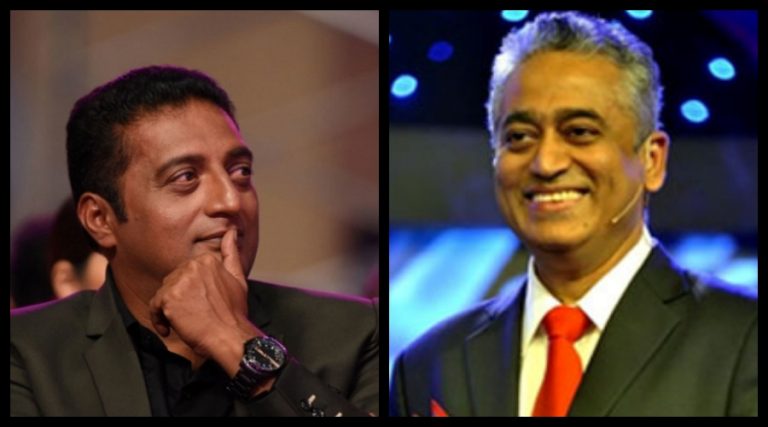
On 31st March, India today broadcasted a show named ‘Karnataka Panchayat’, where a lot of key issues were to be discussed. A discussion on “TheCulture Wars” comprised of a panel with Babul Supriyo and Malavika Avinash, representing the BJP, followed by Prakash Raj and Khushbu Sundar, on the other side. The discourse was “moderated” by Rajdeep Sardesai, although one could plausibly suggest that he was with the latter two.
When you devote a debate towards ‘culture’, I would expect you to ask critical questions to the state government about its stance with regard to ‘fault lines’ like that of caste, community, language and religion. But that soon translated to a poorly adjudicated discussion on very compelling issues.
To me, the most striking condition of the debate was the audience’s perpetual appreciation for Prakash Raj’s pseudo-analysis on issues. His shallow declarations did not suit for the ‘ profound’ and ‘calm’ person he projects himself to be. In fact, I was a little startled with how he appealed to the audience, despite contradictions in his ideas (which will be explored as the article progresses).
The discussion began with Rajdeep asking Prakash Raj, as to what part of Hindutva upsets him. Prakash Raj’s response was rather ambiguous. He began by talking about what a “diverse” country India is and how it suits the nation. All this rhetoric, backed up by the claim that Hindutva is ‘uncultured’ and ‘ritualistic’ and has no place in India.
These are swooping generalisations, that deserves a little backing up. Rajdeep asked, what specifically makes Prakash Raj hate Hindutva?
Here is how he responded-
“You don’t talk about Hindutva, when somebody is speaking about the preamble of our constitution; you come and sprinkle gaumutra here. Then they should drink a glass of gaumutra everyday: it’s a ritual. You don’t say that to us. If Yogi ji is talking about Hindutva, and if one balika has been taken by a Muslim, he can’t say that we’ll bring 100 balikas (convert them).”
We need to be very clear, with what Prakash Raj was asked; he was questioned on why he specifically disliked Hindutva. What does he, in turn, tell us?
He tells us about Anantakumar Hegde asking for a change in the preamble of the constitution. He tells us about Yogi Adityanath’s remarks on conversion. Firstly, I cannot believe that the campaigner for questions and “just asking” hashtags, suddenly takes issue with two questions on the preamble.
But more importantly, Prakash Raj must remember that he cannot condemn Hindutva by quoting statements here and there because these remarks by no means define Hindutva. He tells us Hindutva cannot exist in India and backs that up by randomly picking incidents where “practitioners of Hindutva” say something condemnable. And he uses those words against the entire ideology. But that is not how it works.
When you propound the idea of Hindutva being unsuited to India, you need to have more to show, than condemning remarks by certain practitioners of ideology. If you really take issue with Hindutva, then oppose its fundamentals, instead of cherry picking incidents.
For instance, Mamata Banerjee and her party call themselves “secular” and “inclusive”. But when she banned Durga Visarjan, can I say that the secularism led to her banning it? Can I say secularism is unsuited to India?
Connecting the idea of secularism to a controversial action is just as bigoted as connecting the ideology of Hindutva to a condemnable remark.
And if Prakash really believes in attributing the ideology’s suitability to its adherents, why does he shy away from attributing a lot of the humanitarian aid done by the RSS during natural disasters? Surely then, using his logic, I could use the gestures to call Hindutva an altruistic ideology.
Unfortunately, Prakash Raj’s shallowness in terms of understanding the other side comes out explicitly when he tells us about his objection to the BJP’s Hindutva.
Speaking of ideology, have a look at this clip, where Prakash Raj assumedly “lashes out” at the BJP in the same debate.
REFERENCE 1:52-2:05
Notice how he says the “BJP has no ideology” and then in about 10 seconds, he says they “push their ideology onto us”. Prakash Raj needs to make up his mind: does the BJP lack ideology, or do they have a muscular ideology, which they “push onto others”?
Contradictions everywhere, with no resolution. I would tell you that there is nothing remotely reasonable in what he asserts. It actually looks like Prakash Raj lashes out, not at the BJP, but at his own words!
It did not take long for Khushbu Sundar to express her discontent with the government and support Prakash Raj. She emotively conveyed her thoughts on how the Modi government is “restricting her choice”, and that was a green signal for Rajdeep to bombard the floor with beef ban questions (but more on that later). Khushbu, in these exact words, said:
The BJP’s motto has been to propagate one nation and one religion; that has been the aim of the BJP, who have been propagating that. Secondly, we have seen BJP government in the past. We have seen a great leader and a wonderful statesman, such as Atal Bihari Vajpayee leading this country. We still consider him to be one of the best leaders of our country… We didn’t have this divide of Hindu, Muslim, Sikh, Christian then.
It is quite unfortunate that such mistaken impressions pass off as truth when conveyed emotively. Let us examine the logic behind this. Khushbu literally implies that India was a utopia before May 2014 and that it suddenly became a divided nation as the BJP came to power. Do not forget, 2008 (under the Congress regime) was the year with the most amount of instances of communal violence. Before the audience and Prakash Raj applaud Khushbu’s fallacies, I simply ask them: where was this beautiful, inclusive, pluralistic utopia in 2008? What happened to the utopia in Muzaffarnagar and loads of other incidents of hatred?
Secondly, the Congress party paints the picture of it being a “responsible opposition” that genuinely appreciates good leaders like Atal Bihari Vajpayee. Malavika Avinash rightly pointed out that the Congress party showed no hesitation when calling Vajpayee a fascist. Let us also not forget Sanjay Jha’s remark, calling him “the weakest prime minister India ever had”.
Guess what her response (that was thunderously applauded by the India Today audience) was. She said, “that way, even Amit Shah called Mahatma Gandhi a Chatur Baniya”.
Think about what that means.
She basically justifies calling Vajpayee a fascist and ‘ the weakest PM’, because Amit Shah called Gandhi a name, which was frankly, not even derogatory. Not even a denial when Malavika pointed out the fact that Congress criticises for the sake of criticising and that they never really had a firm stance on a person or an issue.
Today Mrs Sundar tells us that Vajpayee was one of the best; 3 years ago, the opposite was said by her party. So what credibility would a party with such a wishy-washy stance, have?
But if she really intends to play this game of whataboutery, I have a lot to say. For example, when she talks about communalism, I too can call out the shameful acts of provocation by the youth Congress workers in Kerala (where openly they butchered a calf on the road). Her response was that “they had been expelled”.
Let me tell Madame that expulsion requires being thrown out of the party. Forget being expelled, they were not even suspended from the party for a month! Is that how unaware (of the fallacies run by their party) the Congress spokespersons are?
It is even more saddening when moderators let it slide.
As the discussion continued, Babul Supriyo had said that mutual respect was necessary for a multicultural society. Citing the example of a pork shop not being opened in a Muslim area (for its believed impurity), he said that beef eaters needed to respect the constitution and Hindu community by not entertaining smuggling and slaughtering of cows.
Prakash Raj once again came back into the picture has a lot to say on “choice” and “his right to eat”. Rajdeep Sardesai too had backed him up, claiming victimhood for being called “anti-national due to eating beef”. Malavika Avinash quite simply responded by saying:
“There is a law in place in Karnataka against cow slaughter since 1960. We weren’t in power in 1960. Who made the law? It was the Congress government who made the law. You still want to slaughter cows? Go ahead. But you are breaking the law.”
She also happened to mention Mahatma Gandhi and his stance on cow slaughter. She said:
“Are you going to tell Gandhi not to have loved cows? He did believe that there should be no cow slaughter in this country. Was he not the greatest symbol of peace.”
I cringed at the response of Mr Sardesai when the point was brought up by Malavika. His exact response to Gandhi’s stance was:
“The same Gandhi said cow slaughter will not be a fundamental right. But it will be a directive principle. Read Gandhi Madam.”
Mister Sardesai has not understood the purpose of a directive principle. A directive principle is something that must be strived towards, by the state. Becoming the largest exporter of cow meat does not suit the criterion of being “strived towards”, especially when Mahatma Gandhi utterly condemned cow slaughter.
Another directive principle involving article 45 asks the state to provide compulsory education to all children up to 14 years of age. Does that mean that provision of education is only “directive principle”?
Obviously not. Just like education until a certain age, withdrawal of cow slaughter must be strived towards. Being the world’s largest exporter does quite the opposite.
There is a purpose behind analysing this debate. We must know that certain media houses wish to take voters away from the key issues that the state of Karnataka faces, during the time of elections. The entire discussion of Karnataka’s future must be discussed on the basis of the groundbreaking matters that impact citizens of the state. The moment an entire day of discourse, on this impactful state, is wasted on immaterial discussions, whataboutery and cherry-picked outrage, we need to object. Skewed moderators, and “activists” who claim to “represent the people’s views” should not be allowed to fool people by taking the discussion away from these questions.
The next time Prakash Raj claims to be “just asking”, we need to ask him where his questions went when the Siddaramaiah government divided Hindus. Or are those with his ideology ineligible to face his questions?
In another shocking incident in Assam, reports have emerged of a Maulvi in Assam who raped a 19-year old from Biswanath Chariali which resulted in the girl getting pregnant. She was forbidden from telling anyone about it. However, the matter came to light when the victim felt an acute pain in her stomach as she was 5-months pregnant and her mother had to take her to the hospital. The name of the accused is Abdul Shahid.
Speaking to TIME8, the victim’s mother said, “I am a daily wage earner, so I leave my daughter alone and go to work every day. My daughter has always considered the Maulavi as her brother. I believed him, and he did such an evil thing to her five months back.” She added, “She was being given a bottle of medicine because she was unwell, which was actually meant for the abortion. After she consumed the medicine, her entire body started swelling. Thinking that she might be suffering from jaundice, I took her to the hospital. I didn’t know about it until I was informed in the hospital about it.”
The victim told the same media outlet, “The Maulavi did a wrong thing with me five months back. On asking what would happen to me now, he gave me some medicine, and I got sick after consuming it. So, I had to tell the truth to my mother. He had asked me not to tell anyone and that he will marry me. And I was five months pregnant.”
Amidst the growing rate of crimes against women, various groups have demanded the harshest possible punishment for the accused. The state has also witnessed various protests over the recent spate of rapes in the state.
The Piyush Goyal-led Indian Railways has managed to set one of its best safety records during the Financial Year 2017-18, as claimed by an Indian Express report. As per the report, the Railways has for the first time managed less than a hundred accidents in a financial year.
Number wise FY 2017-18 saw 73 accidents which were 29% lower than the figure of 104 in 2016-17. Comparatively, FY 17-18 saw 39 derailments as opposed to 68 last year and eight unmanned crossing accidents as opposed to 15 in the previous year.
The railways have also set another new record in the form of transporting more than 1,160 million tonnes of freight in 2017-18, which is considered as the highest ever. In comparison, the total freight loading in 2016-17 was 1,109 million tonnes. As per the report, the total freight transportation has been on the rise for the last five years.
Historically going by a fact sheet [PDF] issued in the Lok Sabha, the railway accidents first came down to three figures in 1968-19 with 908 accidents. The accident figures then stayed in three figures since then except for 1980-82. As per the data, the figures have stayed below 200 since 2006-07 when the numbers were recorded to be 195. To put the railway safety in perspective, the Indian Railways had recorded a whopping 2,131 accidents back in 1960-61.
Even though the numbers of accidents might have been fewer in 2017-18, the image of the Indian Railways in terms of safety suffered a blow when erstwhile Rail Minister Suresh Prabhu resigned last August, following two back to back serious train accidents. These accidents included derailment of Kalinga Utkal Express which resulted in 22 deaths and injured 150 and derailment of Kaifiyat Express which injured over 70 persons.
These might also be some form of scepticism with regards to these latest figures, considering reports have alleged that Indian Railways might be misrepresenting data relating to punctuality, accidents and failure of assets.
The Islamic fundamentalist organisation Darul Uloom Deoband has today stated that they will not conduct ‘nikah’ or weddings where dance and music are part of the ceremonies. Darul-Uloom-Deoband added that music and dance are against the religion.
They have also added that if a wedding ceremony has dance and music events before solemnisation and without the knowledge of the cleric then it is a different matter.
According to reports, Mufti Azhar Hussain, identified as a ‘city qazi’ stated that they will not solemnise ‘nikah’ in ceremonies where there is music and dance because they are against Islam.
We won’t conduct ‘Nikah’ in weddings where music and dance is happening and DJ is there.This is against Islam,will boycott such weddings.If the music and dance happened before the nikah ceremony and qazi didn’t know then its different: Mufti Azhar Hussain,City Qazi #Deobandpic.twitter.com/RNYLqgLrbQ
The Uttar Pradesh based Deoband, which is a powerful and influential Islamic organisation, has issued many such fatwas in the past. Recently they had banned body-hugging outfits and designer burqas stating that a woman’s burqa is supposed to protect her from prying eyes and body-hugging or designer burqas are ‘haraam’ as they attract attention.
Deoband has also issued a fatwa against women sharing their photographs or selfies on social media. They stated that Islam does not allow women to show their faces to the public. In February they had issued a fatwa stating that women cannot take the shopkeeper’s help while trying out new bangles in a shop. They called it a big sin and against ‘sharia’ to let a stranger touch their hands.
Deoband’s fatwas are not limited to just women. Recently they had also issued a fatwa stating that life and property insurance policies are ‘haram’. They stated that life and death are in the hands of Allah and because insurance companies earn interest on the premium amount paid, such policies are ‘haram’ and ‘un-Islamic’.
Teesta Setalvad, who has been under scanner multiple times for allegedly cheated victims of 2002 Godhra riots, and “embezzled funds” collected in their name and violating FCRA norms, has now been booked for allegedly securing central government funds worth Rs. 1.4 crore between the years 2010 and 2013 for her NGO Sabrang, fraudulently.
Raees Khan, a former associate of social worker Teesta Setalvad had lodged a complaint with Ahmedabad crime branch alleging the funds which were meant to be used for educational purposes were misused. The HRD ministry then headed by Kapil Sibal, had allegedly sanctioned the funds to her ‘Sarva Shiksha Abhiyaan’ illegally.
In his complaint, Pathan has accused Setalvad and Sabrang Trust of trying to ‘mix religion with politics’ and spreading communal disharmony through curricular material prepared for the UPA led central government.
Earlier, Sabrang Communication and Publishing Pvt Limited, with which Teesta is associated, received $ 2.9 lakh from Ford Foundation as grant to “address communalism, caste-based discrimination in India, including media strategies”. But unlike the Sabrang Trust, this company was not registered under FCRA and hence was a violation.
Earlier in 2011, it was reported that a key prosecution witness in the Best Bakery case had alleged that she was lured and misguided by Teesta into giving a false testimony. The witness named Shaikh Yasmeen Banu had also claimed that Rais Khan who is supposedly a close aide of Teesta, met her along with Muslim leaders to allege threat to her life and asked her to shift to Mumbai where she would be taken care of.
Then in 2014 multiple FIRs were filed against Teesta in Gujarat for tweeting objectionable pictures of Hindu gods. She was booked under sections 153 (a), 295 (a) of the IPC for promoting enmity on grounds of religion and deliberate, malicious acts intended to outrage religious feelings respectively. She was also booked under section 65, 66 (a), 66 (b) and 67.
As per reports, some British Sikhs along with Kashmiri separatists are planning an anti-India campaign in the UK during Prime Minister Modi’s UK visit this month. The protest is reportedly backed by Pakistan-origin British MP Lord Nazir Ahmed. Prime Minister Modi, along with heads of 53 Commonwealth nations will be in the UK for “Commonwealth Heads of Government Meeting” from 16th to 20th April.
The Sikh Federation UK has announced that it will join a protest demonstration with other UK based groups which will be protesting against Prime Minister Modi outside one of the venues of the meeting. One of the main demands would be the release of British national Jagtar Singh Johal who was arrested in Punjab for alleged targeted killings. It is also reported that Kashmiri separatists have hired several open roof tourist buses with signage of ‘Free Kashmir’ and ‘Modi not welcome’ where women and children are expected to be brought in to board these tourist buses which will pass through important tourist places including the Parliament, White Hall, Trafalgar Square, Piccadilly and Buckingham Palace.
It is reported that working on behest of Pakistan based militants, including Wadhwa Singh of Babbar Khalsa International, these UK-based Sikhs held a meeting at a Gurudwara in London to plot their strategy. It is believed that they got their instructions from Pakistan based Sikh militants whose sole objective is to conduct acts of terror against India.
As per British Government Whips’ Office, House of Lord’s website, Member of Parliament Lord Nazir Ahmed is also planning to raise a question on Kashmir and Punjab in the House of Lords on 16th April. The Pakistani origin MP is also president of the all-Party Parliamentary group on Kashmir and is known to be working on an anti-India campaign in the UK Parliament. This, however, is not the first time such news has surfaced. The same PoK origin Lord Nazir Shah had organised “black day” protests outside the India House on Republic Day. He was then met by “Vande Mataram” chants.