At the heart of the Rs 11000 cr scam Nirav Modi PNB scam, is one simple problem: reconciliation. As explained here, 2 of the bank staffers who are alleged to be involved in this fraudulent activity issued the LOU’s from their PNB branch but never made relevant entries in the Bank accounting systems. Foreign bankers trusting the SWIFT instructions and LOU’s extended credit and transactions were happening all this while. A simple reconciliation of SWIFT messages and outstanding liability could have detected this fraud long ago.
Amazingly, this exact modus operandi was highlighted by RBI at least twice. In his keynote address at the ‘International Seminar on Cyber Risk and Mitigation for banks’ organized by CAFRAL in Mumbai on September 7, 2016, S. S. Mundra, Deputy Governor, RBI spoke about this issue (emphasis added):
In the beginning of the year, Bangladesh Bank was the target and an attempt was made to steal US$1 billion and ultimately the attackers could successfully get away with US$81 million. Recently, in India too, a similar attempt was made on a commercial bank by generating fraudulent payment instructions on the Nostro accounts and transmitting them over SWIFT messaging system. Though monetary loss could be prevented with proactive follow-up with the concerned paying / intermediary banks, the incident has reinforced the fact that the various stakeholders have not learnt the lessons yet. We have also come across instances of fraudulent messages confirming documentary credits being transmitted using SWIFT infrastructure. Although, the latter incidents were mainly a result of the failure of internal controls and non-adherence to “four eyes principles”, it is also on account of reliance on disparate systems whereby SWIFT transactions could be done without originating a corresponding transaction in the CBS.
If this was not enough, it was reported that RBI had in around December 2016, asked banks to match the documents shared through SWIFT with the actual documents in their base or core banking system to find out whether systems have been misused.
This instruction had come after a similar fraud was stopped before it started. The banks in question discovered that their SWIFT had been compromised to create fake documents. Hackers had infiltrated the systems of three government-owned banks — two headquartered in Mumbai and one in Kolkata — to create fake trade documents that may have been used to raise finance abroad or facilitate dealings in banned items. There was a fraudulent duplication of trade documents like letters of credit (LC) and guarantees.
In the first case (involving another Mumbai-based public sector bank), the bank had a narrow escape after a large American bank to which hackers had tried to transfer funds suspected that something was amiss. If the hackers had their way, the local lender would have lost $150 million.
Soon after the breaches were reported to the Reserve Bank of India, the regulator last month directed several banks to cross-check all trade documents issued over the past one year. The cross-check is very much like the cross-check we had recommended in our earlier post: A simple reconciliation between SWIFT and the core banking solution (CBS) of a bank i.e. the main accounts of the bank.
The question now to be asked is, in spite of RBI once hinting at this scam and once directing actions to prevent such scams, why did PNB not take any action on these orders? If the RBI orders had been followed, the scam would have been detected at a much earlier stage.
It is being said that 2 PNB officials were in collusion with the Nirav Modi group. Then why did senior bank officials not follow the RBI guidelines? In an ordinary case, a bank is audited at least 4 different levels: a Concurrent audit, a statutory audit, an internal audit and an RBI inspection. Did none of these 4 levels of checks and balances bother to follow RBI orders?
The saving grace, in this case, is the authorities have been quick and have already managed to seize gems and gold worth Rs 5100 crores from the premises of Nirav Modi. RBI officials too, have maintained that the issue is under control. One only hopes that the clean up is thorough and all the people who are guilty of omission or commission are punished.
The financial world was shaken up yesterday after revelations of a massive financial scam by Nirav Modi was unearthed. Amidst the political cacophony, the truth was lost. For a scam that started in 2011, Congress was quick to rope in Narendra Modi and alleged that Nirav Modi met the PM in Davos earlier this year. Minister Ravi Shankar Prasad held a press conference and cleared the air.
#NiravModi did not meet PM Modi at Davos. Nirav Modi had arrived in Davos on his own and was present at CII group photo event: Union Minister Ravi Shankar Prasad in Delhi pic.twitter.com/9WINkuz4LQ
Senior journalist Aditya Raj Kaul also provided evidence that rendered Congress’ allegations false. He mentioned how WEF associate organisation Schwab Foundation had Firestar Diamond of Nirav Modi as their partner and his presence in Davos had no government role.
Congress jumped the gun by saying that Nirav Modi of #PNBScam fame was part of PM @narendramodi’s official delegation at Davos for World Economic Forum (WEF).
Reality: WEF associate organisation Schwab Foundation has Firestar Diamond of Nirav Modi as their partner. No Govt role. pic.twitter.com/0mmIeqMrQ8
During the raid precious stones, gold and diamonds worth Rs. 5,100 crore was seized under the Prevention of Money Laundering Act.
Stock worth Rs 5100 Cr including Gold & Diamond jewellery, Precious stones etc recovered during searches was seized under PMLA. Certain records have also been resumed for further investigation. Bank balance worth Rs 3.9 crore in accounts & fixed deposits has also been freezed.
The Congress party has been trying hard to pin the Punjab National Bank fraud on the Modi government. Its sole evidence to paste this fraud on the government is a picture in which Nirav Modi posed with the Prime Minister along with many other businessmen at Davos. We had reported the complete details about the fraud earlier in the day.
Billionaire Nirav Modi steals 12,000 crores right under the nose of the Modi Govt and flees the country. Ironically, Nirav Modi was later spotted with PM Modi in Davos. https://t.co/fb97wLhPBC
The general secretary of CPIM, a close ally of Congress has been more direct in his insinuations regarding Nirav Modi’s escape.
If this person had fled India before the FIR on Jan 31, then he is here, photographed at Davos with PM, a week before the FIR, after having escaped from India? Modi govt must clarify. #NiravModi#PublicMoneyLootpic.twitter.com/gQQnKQNjDo
Rahul Gandhi has managed to deploy his newfound sense of humour and wit into play in politicising the Nirav Modi fraud which has in fact originated under UPA tenure in 2011.
Guide to Looting India
by Nirav MODI
1. Hug PM Modi
2. Be seen with him in DAVOS
Use that clout to:
A. Steal 12,000Cr
B. Slip out of the country like Mallya, while the Govt looks the other way.
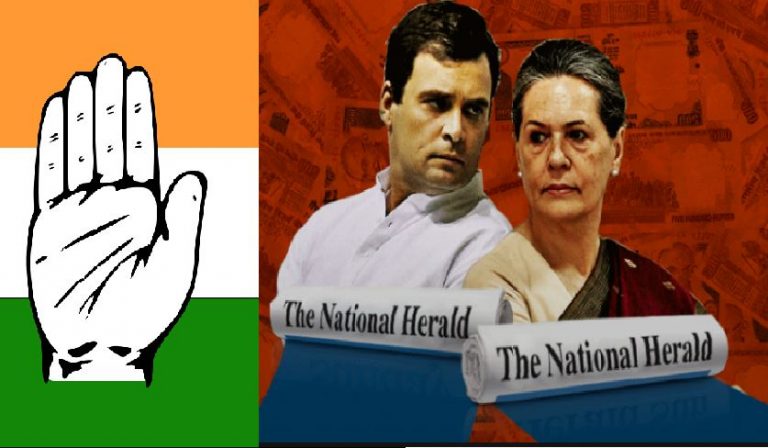
National Herald runs polls about corruption and Nirav Modi’s escape
Meanwhile, the Congress mouthpiece is busy trying to gauge the public opinion regarding the fraud and so called corruption under Modi government. Unfortunately, it seems to be getting an unfavourable response on both its polls.
Do you think corruption has vastly decreased in India, as Prime Minister Narendra Modi claims?
Since they are unable to get a favourable response on their polls the staff of National Herald are now blocking Twitter users who they feel are ‘influencing’ the polls adversely.
It appears as thought the mouthpiece of the Congress party is muzzling the democratic voice of people on Twitter by blocking those who speak against. Is this the ‘democratic legacy’ of the founder of National Herald?
Yesterday the Indian financial sector was rocked by a startling revelation of a fraud that took place in one branch of the State-owned lender Punjab National Bank. In the cacophony of accusations, both from the party in power and the opposition, the voice of reason is lost. Here is my attempt to explain the modus operandi and what could be done to avoid this in future.
But before that a simple explanation of certain terms used:
Basic Terminology and Usual procedure:
In an import-export transaction, the parties involved generally do not meet face to face. Hence they involve their respective bankers to bring a level of trust and faith to the transaction. Banker solves the very basic issue that “what if Indian person sends money to the supplier and he doesn’t supply goods at all or what if the supplier sends the goods and the Indian person doesn’t pay up”? That’s where the Bankers come into the picture.
A Letter of Undertaking (LOU) is a confirmation issued by a local bank (in this case PNB) on behalf of its customer (in this case Nirav Modi and his entities) to another bank outside India (in this case branches of Axis Bank etc) for conducting an international transaction. The letter simply states that if the customer fails to pay for the goods then the Bank (read PNB) shall pay on its behalf. So once a banking entity confirms payments, the foreign supplier has nothing to worry about and they may supply the goods (in this case diamonds).
Once the foreign Bank/Branch receives the LOU they approve the “buyer’s credit” for the borrower (in this case Nirav Modi and his entities), which is then transferred to an account called the “Nostro account” of the bank which issued the LOU. In simple terms, the “Nostro account” is a foreign currency bank account held in another bank for cross-border transactions. To initiate this transfer the Banks don’t communicate via emails etc but use a very secure system called SWIFT to send messages. Once the SWIFT message is sent by Indian Bank and confirmed by the foreign banks the money transfer is initiated.
The Modus Operandi:
As per the reports, 2 of the bank staffers were involved in this fraudulent activity. Firstly they would issue the LOU’s from their branch but never made relevant entries in the Bank accounting systems. Moreover, it is alleged that Nirav Modi’s entities did not have credit facilities with PNB which entailed them access to LOU’s. So it can be said that these LOU’s were off balance sheet items.
After this, the Complaint filed by PNB with the Central Bureau of Investigation, also alleges that the staffers sent SWIFT messages to foreign bankers and completely bypassed the Core Banking System/software. Foreign bankers trusting the SWIFT instructions and LOU’s extended credit and transactions were happening all this while. As per further reports, the total value of such transactions is well over INR 11000 crores.
Systemic Failure:
As is clear from the above, that a gap in the process and system seems to have been unduly used by just two people which has caused a flurry in the Indian banking system. This is nothing but a clear case of systemic failure, audit failure on the part of internal auditors, risk managers and even the management as well as the RBI and Finance Ministry. Heavily depending on my corporate governance background, I can say that a simple reconciliation of SWIFT messages and outstanding liability could have detected this fraud long ago. That this reconciliation is not happening since 2011, is nothing short of shocking.
To dig further, it must also be probed if there was any gap in the software that is used by the Bank. How can a single person access, approve and complete a transaction by bypassing the system altogether that too over such a long period and for such high-value transactions? If one branch knew this loophole, is it ok to say many others could well be aware of this too? I shudder to think on those lines.
For now, we wait for further information to trickle in. The Enforcement Directorate has conducted raids and the main accused have apparently fled the country in the first week of January itself.
For a party which came to power on plank of non corruption and self proclaimed assertion of being a ‘common man’, Aam Aadmi Party seems far from common. As per reports, and RTI filed by IANS, the AAP Government has spent an average of Rs. 70.5 crore annually in past 3 years on advertisements, four times more than previous Congress Government. This includes expenditure on print, electronic and outdoor advertising.
As per Hindustan Times report, in the first year of coming into power, Kejriwal Government spent Rs. 59.9 crore on advertisements. In the following year, the expenditure was Rs. 66.3 crore, which went up to Rs. 85.3 crore this year, averaging at Rs. 70.5 crore. Against this, the previous Congress Government spent Rs. 17.4 crore on an average in the last five years of its rule from 2008-13. The expenditure includes, among others, advertisements with photos of the chief minister and other ministers in newspapers and hoardings, commercial spots on TV and radio, and tender notices published in newspapers.
Here, it should be noted that Delhi Government has given ads applauding Delhi Government work in publications in other parts of the country, like Tamil Nadu, Odisha and Gujarat. These states are so geographically apart that this appeared like a futile exercise in wasting public fund to sing their own praises.
In September 2016, the Central Government came down heavily on AAP for spending extravagantly, in violation of Supreme Court guidelines, asking AAP government to reimburse the ad expenditure back to the exchequer. Last year, in April, too, Kejriwal was asked to reimburse Rs. 97 crore his party spent on promotional advertisements.
The Bharatiya Janata Party (BJP) won a thumping 282 seats in the 2014 Lok Sabha election. The Congress was reduced to a historic low of 44 seats. Since then the BJP strength has since been reduced to 274, with the party losing 4 by-polls and 4 by-polls yet to be conducted in the seats it held in 2014. Congress has won all these 4 seats from the BJP.
Each by-poll however has its own story. There have been 27 by-polls for different reasons to this sixteenth Lok Sabha. It is instructive to look at the profiles of each of these 27 seats, starting with 1989 Lok Sabha election. The year 1989 is significant because it is with this election that the BJP started making a dent at the national level. So how various parties fared since 1989 gives a good picture of relative party strengths in each seat.
Let us look at these elections by year.
2014 By-polls
Soon after the Lok Sabha polls, first set of by-polls were conducted in late 2014. There were 5 seats which went to polls again. The details of these five seats are below:
click on the image for a larger size
Vadodara in Gujarat has been a traditional BJP stronghold. As the Prime Minster Narendra Modi retained his Varanasi seat and resigned from Vadodara, BJP won the seat again easily retaining most of the 72% vote share. Similarly, Mainpuri has been a Samajwadi Party (SP) stronghold. As the party patriarch Mulayam Singh Yadav resigned, the new Yadav scion Tej Pratap Singh won the seat easily, increasing the vote share for SP by 6%.
BJP stalwart Gopinath Munde passed away in June 2014, which led to the Beed by-poll. His daughter Pritam easily retained the seat, significantly increasing the BJP vote share from 51% to 70%. The Kandhamal seat in Odisha, which was formed after the delimitation exercise in 2009, saw a by-poll due to the death of the sitting Biju Janata Dal (BJD) MP. While BJD retained the seat increasing its vote share from 50% to 61%, the BJP pushed the Congress to the third spot, going from 13% to 23% vote share.
In Medak in Telangana, K Chandrasekhar Rao vacated his seat as he took over as the Chief Minister of the new state. His party Telangana Rashtra Samiti won the by-poll easily.
All in all, there were no major surprises in the 2014 by-polls.
2015 By-polls
There were three by-polls in 2015, details of the seats as below:
click on the image for a larger size
In Warangal in Telangana, the TRS retained the seat it won in 2014 easily. In Bangaon in West Bengal, the Trinamool Congress Party (TMC) won again without surprises.
The first by-poll shock for the BJP was in the Ratlam-Jhabhua constituency in Madhya Pradesh (MP). The party had won 27 of the 29 seats in MP in 2014, so this was a keenly watched contest. However Ratlam (earlier Jhabua) has been a stronghold of the Congress since 1980. Congress candidate Dileep Singh Bhuria won the seat from 1980 till 1996. Kantilal Bhuria then held the seat for the party from 1998 till 2009. In 2014, the BJP poached Dileep Singh Bhuria to contest against Kantilal Bhuria and won the two-cornered fight by 10% margin, polling 50.4% against Congress’ 40.4%. As Dileep Singh Bhuria’s death necessitated the by-poll, Kantilal Bhuria wrested his old seat again, in a perfect inversion of votes, polling 50.2% as against 41.9% for the BJP.
2016 By-polls
2016 witnessed 5 by-polls across the country and none of them produced any great surprises:
click on the image for a larger size
In Lakhimpur in Assam, a poll was necessitated as the sitting MP Sarbananda Sonowal took over as the CM of the state after a BJP win. The party retained the seat maintaining its 55% vote share.
In Tura in Meghalaya, veteran leader PA Sangma passed away. His son Conrad contested on the Nagaland People’s Party ticket and retained the seat won in the past by his father and his sister Agatha.
In Cooch Behar in West Bengal, the TMC won easily increasing its vote share from 39.5% to 59%. The BJP was also a big gainer going from 16.3% vote share and third place to 28.3% vote share and second place.
In Tamluk in West Bengal, TMC again won easily against the main opponent Communist Party of India (Marxist) or CPIM which maintained its second spot. The BJP vote share went up from 6.4% to 15% but the party remained in the third place.
The Shahdol election in MP was interesting. This has been a strong BJP seat for a while. This election was necessitated as the veteran party leader Dalpat Singh Paraste passed away. The by-poll was held just days after demonetization, when the country was in turmoil, adjusting to the lack of cash in the system. The Congress campaigned heavily with Jyotiraditya Scindia camping in the constituency for several days. The 25% win margin of 2014 was reduced significantly, but the BJP retained the seat with 6% vote share difference.
2017 By-polls
Last year saw 4 more by-polls in 3 different states as below:
click on the image for a larger size
In Srinagar, Farooq Abdullah snatched the seat won by him and his son Omar in the past from the rival Mehbooba Mufti’s party. This election saw poor polling with just under 90,000 voters exercising their right to vote in the face of militants trying to disrupt the polls.
In Malappuram in Kerala, the Indian Union Muslim League retained its stronghold with ease. The CPIM mounted a strong challenge, with the BJP retaining its 7% vote from the 2014 election.
The two big battles of Punjab saw Congress go one up on the BJP. In Amritsar, the by-poll took place after Amrinder Singh was nominated as the Punjab CM. In the tri-cornered fight against the BJP and Aam Aadmi Party (AAP), the Congress retained the seat again easily. The BJP had already lost in the assembly election in the Shiromani Akali Dal alliance, and with its star local Navjot Singh Siddhu defecting to the Congress, the writing was on the wall.
Gurdaspur was a loss for the BJP. Its MP, veteran actor Vinod Khanna passed away, leading to the by-poll. The party chose to nominate a relatively unknown local leader who eventually lost to the Congress strongman Sunil Jakhar in a no-contest. The BJP went down from 46.2% vote share to 35.6% vote share. But the real story in Gurdaspur was the meltdown of AAP. In 2014, Khanna won with a 13% margin with AAP polling 16.6%. While Khanna was a big name candidate, Congress had won the seat as recently as 2009, and his 2014 win came through vote division as AAP was in fray. In the by-poll, AAP went down to 2.7%, and the entire anti-BJP vote consolidated.
2018 By-polls
This brings us to 2018, which started off on a poor note for the BJP courtesy the two defeats in Rajasthan. This year will see 10 by-polls as below, 3 of which have taken place as of now:
click on the image for a larger size
In Uluberia in West Bengal, the TMC won easily, with BJP displacing the CPIM as the second largest party, but staying way behind the TMC.
The two by-polls in Rajasthan were interesting. Rajasthan has traditionally been a swing state and the Congress leaders Sachin Pilot and Ashok Gehlot left no stone unturned in winning these two seats from the BJP. Alwar, though not a big BJP bastion, had seen the party win 3 times in the last 8 elections. Congress won this seat with a 57% vote share against the 40% polled by the BJP, creating a significant gap.
Ajmer was the biggest loss for the BJP since 2014. Of the 27 seats up for by-polls since 2014, this had been the second strongest seat for the party after Gorakhpur. The BJP won Ajmer 6 of the last 8 times and one of the losses was to Sachin Pilot in a close election. The Congress went from 40.3% to 50.6% as the BJP declined from 55.1% to 43.6%. This seat was not a washout for the BJP, and the 7% gap i.e. a 3.5% vote swing, is not a big one to surpass. But of the four seats it has lost to Congress, this undoubtedly has been the worst loss.
Seven seats are yet to go to by-polls. Of these, the Anantnag seat has been vacant as the Kashmir militancy has put paid to any hopes of a poll. BJP has a big stake in all the other six seats. Three of these – Araria, Gorakhpur, and Phulpur will go to polls on March 11th.
Araria in Bihar was last won by the Rashtriya Janata Dal (RJD) MP Mohammed Taslimuddin. The Janata Dal (United) or JDU then fought independently. The BJP and the JDU in total had almost 50% votes in 2014, 8% more than what RJD polled. The JDU has made life easier for the BJP by announcing it will not contest the by-poll. So a BJP-JDU alliance should be the favourite to win this seat, with the RJD supremo Lalu Prasad Yadav languishing in jail on corruption charges.
In Uttar Pradesh (UP), the BJP has three seats to retain. Gorakhpur, represented by Yogi Adityanath, now the UP CM, should be the easiest one to win. The party hasn’t lost this seat since 1991. However neither Phulpur nor Kairana are straightforward.
Phulpur, the seat once represented by India’s first PM Jawahar Lal Nehru, has elected a BJP MP only once in 2014! Keshav Prasad Maurya, now the Deputy CM in UP, was the sitting MP. There are rumours that the opposition may field a combined candidate to test a potential Mahagathbandhan in the state ahead of the 2019 Lok Sabha polls. In 2014, the BJP got 52.4% votes with SP 20.3%, Bahujan Samaj Party (BSP) 17%, and Congress 6%. If Mayawati, the BSP supremo indeed contests this seat as a consensus candidate, it will be a big challenge for the BJP to overcome.
Kairana shot to national infamy with communal riots in 2014 leading to exodus of several Hindu families from the region. The Yogi government has since stabilized the law and order situation in the region. Yet the BJP has won this seat only twice before and it not a natural party stronghold. It polled 50.5% in 2014 ahead of SP 29.5%, BSP 14.3%, and Rashtriya Lok Dal (RLD) 3.8%. The challenge here will be to retain the 2014 vote share.
Finally, there are two interesting seats in Maharashtra. Maharashtra is one state where the BJP expects to make significant gains in 2019 if it contests alone without a Shiv Sena alliance. Hence the Bhandara-Gondia and the Palghar polls assume extra significance.
The Bhandara-Gondia seat was won by the BJP candidate Nana Patole in 2014 who has since quit the party and joined the Congress. He had defeated the NCP stalwart Praful Patel, who has won this seat 4 times in the past. The NCP has allied with Congress again for the future polls and Patel himself has not been very visible in the NCP circles of late. This makes for an interesting situation where both the Congress and the NCP may want to stake claim to the seat, but only one of them can contest in an alliance. Will the BJP be able to leverage this fault line?
Palghar, which was designated as a Lok Sabha constituency in 2009 has seen one win by Bahujan Vikas Aghadi (BVA) and one by BJP in 2014. This seat has six assembly constituencies of which Boisar, Nalasopara, and Vasai are BVA strongholds. The Palghar town itself has a Shiv Sena member of legislative assembly (MLA). The BJP has two MLAs in Dahanu and Vikramgad. In 2014, the BJP polled a comfortable 53.8% against the 29.6% of BVA. But formally, the BJP and Shiv Sena alliance is now broken while the BVA will be keen to win its stronghold seat again. The circumstances make for another tricky fight for the BJP.
Writing on the wall?
The by-poll story thus is not as skewed against the BJP as it is made out to be. The party has had to contend difficult seats as well as localized adverse factors in several cases. A strong show in the six remaining by-polls in 2018 can create a positive momentum for the BJP. Continuing losses however will be bad for the party’s morale as the 2019 Lok Sabha polls loom large.
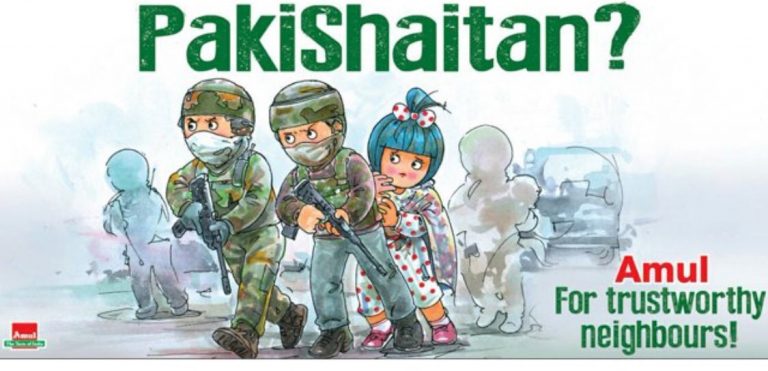
Over the years, over and above the great quality milk and milk products, Amul has also given the tongue in cheek commentary on socio-political topics in India and world. In response to the ongoing ceasefire violations, Amul’s latest poster calls Pakistan ‘PakiStaitan’.
This has ruffled quite a few feathers in the liberal world who are calling out Amul for ‘damaging’ the peace talks with the neighbour.
Srinagar based journalist and editor-in-chief of ‘Rising Kashmir’ questioned how the peace dialogue could take place between two nations if a leading corporate house puts an ad like this.
When a leading corporate house puts an advt like this, how can you expect peace and reconciliation in the region. #India#Pakistan peace rest in peace pic.twitter.com/rWkIRc1e8n
Amul ad has also triggered fear for ‘things to come’.
Btw Amul got a new Sanghi chief a month back.This is the first indication of how “utterly butterly disgusting” things will now go.This seems to be a promo of things to come. https://t.co/07Bu245Hwk
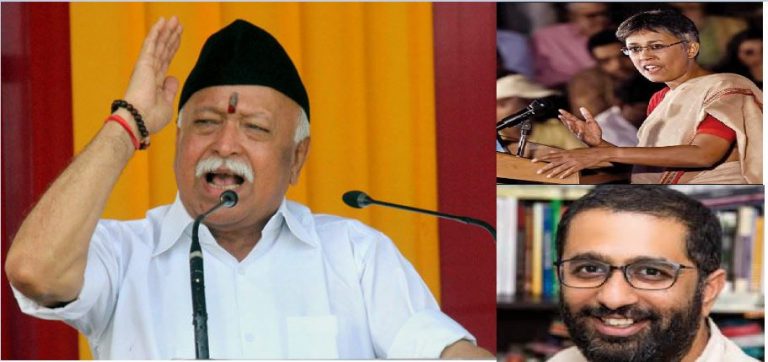
The media and left-liberal gang which has condoned Naxal violence and treated with kid gloves have spared no efforts in twisting the statements of RSS chief Mohan Bhagwat in Muzzafarpur. We had published the exact words he spoke in an earlier report.
“We are not a military organisation, our discipline is like that of the military. If the nation needs it, and if the constitution and the law says, then it will take 6-7 months to prepare (a/the)army. If sangh’s swayamsevaks are taken, will get ready in 3 days”
This statement was trying to emphasise that RSS activists are more disciplined and therefore, they could be trained faster than an ordinary citizen. However, this was twisted by media. Media reported that RSS was claiming that its volunteers can be trained faster than army men.
Sermons published by ‘intellectuals’ on a misrepresented comment
The ‘intellectual’ gang pounced on this opportunity to write opinion articles on how an armed militia like RSS could be a threat to the concept of the Indian state. It is well known that the same gang was sympathising the activities of Naxals of India. They have also been silent on the political violence by communist parties in Kerala and West Bengal. However, they are always ready to pounce on an opportunity to write sermons on RSS.
In an editorial published in Indian Express, director of a ‘think tank’ named Takshashila institution wrote the following lines even after admitting that the statements of RSS chief were misrepresented in media.
What is of greater importance to the Indian republic is why the RSS should be mobilising a fighting force. No state can survive if it does not command a monopoly over the legitimate use of violence inside and outside the country. In fact, the question of the Constitution or laws calling upon the RSS to fight does not arise at all. Between the armed forces, territorial army, central paramilitary forces, reserve police, home guards and NCC, India can muster several million troops that are more than adequate to address any internal or external threat. And large numbers of them can be mobilised within days.
There is little doubt that most RSS activists and volunteers are motivated by intense patriotism and Hindu nationalism. Even so, it is wrong and deeply worrisome to suggest that its volunteers have any role to play in national defence or internal security. The Republic of India does not and must not outsource its fundamental responsibilities to political organisations.
However, the same ‘intellectual’ had felt that the attack by Naxals was just a troubling development and a not a grave threat to constitution or laws of the land. Why is just a ‘troubling development’ rather than a worrisome threat to the existence of the Indian state?
ITBP countered the Naxal attack, but the attack itself is a troubling development. https://t.co/X4oL21axdR
On another occasion, he chose to throw the blame of insurgency on the police forces rather than blaming the violent activities of Naxalites. In the case of RSS, the source of worry (that too a hypothetical manufactured one) is Hindu nationalism. But in the case of Naxalites, the source of the problem is the police force.
Unlike Punjab, the Naxal insurgency arose because the police were the problem. So central intervention is necessary.
Urban Naxalites join the party in festival of hypocrisy
Yet another alleged urban Naxal Nandini Sundar who is accused of the murder of a tribal man, and allegedly has close contacts with hardline Naxalites and Maoists didn’t lose an opportunity to criticise the RSS.
Panda(Naxal) told he helped social activists Nandini Sundar,Bela Bhati&Manish Kunjam meet Naxals commanders: DM Awasthi,DG Naxal Ops C’garh pic.twitter.com/6B6RSztfJM
A professor who allegedly has contacts with commanders of Naxal group criticising the RSS chief about his hypothetical army is truly a fine example of hypocrisy in modern India.
If this is not anti-national, what is? The RSS has its own private army – let no one later say they were not warnedhttps://t.co/BxrZde6Qpj
This Delhi University professor had also posted a tweet sympathising with Naxals when a school bus was attacked by those protesting against the movie Padmaavat.
When adivasis defend their land and honour they are called Naxalites and killed. When ‘Rajputs’ attack children and burn cities they are invited to film previews.. This country has nothing but double standards – name your caste, class or gender … and you can choose your justice
Violence in all its hues has to be condemned. Sympathising one form of violence and condemning/condoning others will set a dangerous trend for the future.
Watch out for hypocrites who hold pole positions in academia
The hypocrisy and double standards of these personalities will be forgotten. The selective silence of these people who hold pole positions in academia and ‘intellectual’ circles is indeed worrying. They have the ability to frame the debate in their favour and influence gullible audience in the future as well. Thus, the trend of twisting arguments and using them to further political agenda of these groups must be watched closely and criticised.
The Ujjwala yojana has been one of the most successful programs of Modi government. The scheme has brought a major change in the quality of life of women and poor in the country. The scheme has reached 8 crore homes as of February 1, 2018.
The PM met 100 beneficiaries of Ujjwala yojana yesterday in the LPG panchayat organised by the President in the Rashtrapati Bhavan.
During the interaction with Ujjwala Yojana beneficiaries, spoke in detail about the measures taken by the Central Government to further ‘Ease of Living.’ Also elaborated on the importance of ending all forms of discrimination against the girl child. https://t.co/x7ajFOSUPmpic.twitter.com/QUipZgdGUd
Women who spoke to DD News after the interaction heaped praise on Modi’s Ujjwala scheme and spoke about how it had brought a change in their lives. One of the respondents said that Modi has shown how a ‘New India’ can be made through his work.
Another woman responded that her kids were going hungry to school. But she said that she is able to cook in time and send her kids to school. Another younger beneficiary said that she was able to study better as she is spending less time on cooking.
I got an opportunity to know first hand how the Ujjwala Yojana is bringing smiles on the faces of several women. pic.twitter.com/totAV0S0gl
One of the respondents said that a lot of time was being spent on getting wood fuel, but now the problem has disappeared after getting a Ujjwala gas connection. A woman respondent said that the older women were also tutored in the usage of LPG gas. One of the beneficiaries also said that she was able to get more sleep as she spent less time on cooking after getting an LPG connection under Ujjwala scheme.
All respondents expressed happiness over their interaction with the PM and thanked him for his work.
In yet another gaffe, so-called ‘journalists’, ‘economists’ and politicians used the data presented in a draft report of the World Bank titled ‘Systematic Country Diagnostic (SCD) for India’, adding that in India regular jobs are “urgent priority” to malign the Modi government. According to data, between 2005 and 2012, over 13 million population entered the working age, while only 3 million jobs were created.
Compare this with the approximately 7 million jobs generated in a single fiscal year (2017-18) found out by a study conducted by IIM professor and an SBI economist. We had reported in detail about this study earlier.
Livemint uses jobs data of 2013, anti- Modi brigade scores a self-goal by using this info
Critics of Modi and his performance on jobs front used a data of the UPA era to criticise the current government. The graph used in the Livemint article on salaried employment clearly says that the data is taken from the report ‘World development indicators 2013’. How can the data that is 5 years old be used to criticise Modi in 2018?
Prominent journalists, politicians and ‘economists’ used this graph to criticise Modi.
Rupa Subramanya used this UPA era data to take a dig at the Prime Minister by saying that the World Bank is not into ‘Pakoranomics’, which is a term used by the opposition to hit out at Modi’s economic policies.
The graph was also used by the newest liberal darling and media created “youth icon” :
TMC leader Derek O’ Brien and Congress MP Rajeev Satav also proceeded to malign the Modi government based on data that was an indictment of the Congress government.
The DNA report on the topic shot in its own foot by trying to bring in ‘Pakoda’ comment of the PM into the debate while reporting jobs figures of UPA regime in its article, which is incidentally, exactly what Ms Rupa Subramanya did.
Far from criticising Modi, the draft report by World Bank criticises the jobs data of Manmohan Singh led UPA itself. The anti- Modi brigade must stop using UPA’s job record to further its anti ‘pakodanomics’ rhetoric. In fact, Modi government has done better than UPA in terms of salaried jobs as per the IIM study. Perhaps it would serve the anti-Modi brigade well, if they stopped embarrassing themselves repeatedly and sacrifice their own credibility, in a bid to mock the Prime Minister.