Home Blog Page 7336

These 9 achievements indicate that the Narendra Modi government has surpassed UPA by miles

0

Narendra Modi launched a scathing attack against the Congress in the Lok Sabha yesterday and mentioned the various ways in which his government had either improved upon or completed or implemented a novel scheme for the benefit of the economically weaker sections of the country. We look at 9 issues through which the NDA government has definitively surpassed the UPA.

1. INFRASTRUCTURE DEVELOPMENT

During the tenure of the Congress government, the rate of construction of National Highways was 11 km/day whereas the same for the Modi government has been 22km/day during the first 3 years of the Modi government. Moreover, around 80000 km of roads were constructed during UPA-2 whereas around 1,20,000 km of roads have been constructed under the Modi government until now.

Between 2011-14, optical fibres were provided to only 59 Panchayats, and since Narendra Modi took over, optical fibres have reached over 1 lakh Panchayats.

During the last 3 years of the previous government, only 12000 MW of renewable energy was produced and under this government, 22000 MW have been produced already.

The shipping industry has been revolutionized by the NDA government with millions of rupees of investment and a string of new ports. The industry is set to play a major role in the grand economic story of India.

2. THE BIDAR KALBURGI RAILWAY LINE

The Bidar Kalaburgi line was announced by the Atal Bihari Vajpayee government and the foundation stone was laid in 2000. But even after 16 years, including 10 years of the UPA government, the project had not been completed.

During the UPA regime, only 37 km out of the 110 had been completed. It was only after Narendra Modi came to power that the remaining 73 km were laid and the line was finally inaugurated by the Prime Minister in October last year.

3. THE BARMER REFINERY

The Congress could claim that the foundation stone for the project was laid down by Sonia Gandhi. However, it was the only thing that had been done under the Congress according to the Prime Minister and the project saw no further development. The project was seen as a last-ditch effort by the Congress to win some votes in the looming Assembly elections but the BJP scored a thumping victory and the project got stalled as Vasundhara Raje believed it was a poor deal for the state.

Under the Modi government, Barmer is set to have India’s first Greenfield Bharat Stage VI refinery cum petrochemical project. And Rajasthan is expected to make a saving of Rs. 40000 crores as a result of the revised plan.

4. THE DHOLA-SADIYA BRIDGE

The feasibility study for the project was first conducted under the Atal Bihari Vajpayee government in 2003. The project was then approved in 2009, 6 years after the feasibility study was started, and construction finally began in 2011. However, due to delays, the project which was set to be completed by 2015 was delayed to 2017. The longest bridge in India, named after Bhupen Hazarika, was inaugurated by Prime Minister Modi on the 26th of May, 2017.

5. AVIATION POLICY

The UPA government had not deemed it necessary for the country to have its own aviation policy. It was Narendra Modi’s government in 2016 which cleared India’s first Civil Aviation Policy. Under the aviation policy, the 5/20 rule was no longer applicable and new airlines could open up for international routes without first having to complete 5 years of domestic service and operating at least 20 flights.

Moreover, the NDA government has given a big push to the creation of new airports in tier 2 and 3 cities and the restoration of abandoned airports. 450 flights are operational till now but the figure is expected to reach 900 by the end of the year.

6. BAMBOO: FINALLY, IT’S GRASS IN INDIA

Apart from increasing the MSPs of various agricultural products, the Narendra Modi led government has introduced various reforms in the sector. Until it came to power, the Bamboo was regarded as a ‘tree’ by the government of India and as a consequence, farmers could not cut and sell it.

The NDA government has reformed it and declared it a grass, as it is treated all across the world, and farmers can now engage in the selling of Bamboos.

7. GST

The Congress has perhaps raised the most hue and cry over the greatest economic reform in India post liberalization of the economy. Between its rants that it was initially its own idea and simultaneously screaming that it is a disastrous move by the Modi government, the Congress forgets that the GST that was proposed by the UPA was opposed by their own governments in states. And GST could not be passed because the Congress failed to create a consensus between states on the issue. Narendra Modi after extensive consultations and discussions with the states managed to reach a consensus on the subject and the GST finally came into force in 2017.

8. SCHEMES FOR THE POOR

The Narendra Modi government has launched various schemes targeted towards benefiting the poor and the lower middle class.

Under the Ujwala Yojana, over 2 crore families under the BPL have received free LPG connections. The main beneficiaries of this scheme are women who were keen on switching to LPG as soon as free connections were made available.

The Jan Dhan Yojana which was aimed at financial inclusion for the poor has over 30 crore beneficiaries.

Through the Pradhan Mantri Awas Yojana, the Narendra Modi has aimed to build 2 crore homes by 2022. The scheme is directed to benefit low-income, middle-income and economically weaker sections of society.

9. ACTS

The NDA government has ratified, amended and implemented various Acts to further the interest of the nation and the marginalized sections of society.

The Prohibition of Benami Property Transaction Act (PBPT) amended the loopholes of the previous Benami Act and came into effect in November 2016. The amendments provide for the confiscation of Benami property and imprisonment and fine for the violators of the law.

The Enemy Property (Amendment and Validation) Bill which was passed in Parliament in 2017 amended a 49-year-old law and declared that the descendants of those who have acquired the citizenship of Pakistan and China will no longer be able to inherit the property of their predecessors.

The Congress was reluctant to act on the matter because they feared it will hurt the sentiments of Indian Muslims. Apart from the 2 Acts, the government has also been trying to pass the Triple Talaq Bill which would liberate Muslim women from the heinous practice but has been unable to do so because of the opposition.

Paper balls, paper planes and balloons in UP Assembly: Samajwadi Party protests against encounters of dreaded criminals

0

Yogi Adityanath has always spoken of the necessity of both Shastra and Shaastra and amidst rising clamour from the National Human Rights Commission, he reaffirmed his commitment towards Shastra in an event at Gorakhpur. Answering his critics on his policy of encounters, the Chief Minister of Uttar Pradesh said, “Suraksha ki guarantee har vyakti ko milni chahiye. Lekin jo log samaj ka mahaul bigadna chaahte hain, jinlogon ki bandook ki nok pe vishwas hai, unhe bandook ki hi bhasha mein jawab dena chahiye. Yeh main poori spashta ke saath prashaasan se kahoonga.” Previously, he had said, “criminals will be jailed or killed in encounters.”


The Uttar Pradesh Police has been conducting encounters against dreaded criminals at a remarkable frequency since the Mahant of Gorakhnath Math took over as the Chief Minister of the state. Thus far, over 1,100 encounters have been conducted and 38 criminals have been eliminated. Hundreds of others have been arrested.

Although the public has been supportive of the Chief Minister’s drive to root out lawlessness from the society, not every political organization was pleased with the actions of the police. A notice was sent to the UP government in November for the encounters by the National Human Rights Commission (NHRC). However, most displeased were the members of the Samajwadi party who protested in the Assembly holding placards with slogans such as “Nirdoshon ki farzi encounter band karo (stop fake encounters of innocents)” and “Kansganj ke sampradayik hinsa mein nirdosh logon pe zulm bandh karo (stop harassing innocents in Kansganj)”.

During their protest, the Opposition resorted to throwing paper planes, paper balls and balloons at Governor Ram Naik. Attacking the Opposition, Yogi Adityanath said, “This type of behaviour shatters the parliamentary tradition … Paper balls were thrown, balloons were flown. The use of foul language for the governor by the Samajwadi Party members in the presence of their leaders is indeed unparliamentary and a despicable act.” Also, the Chief Minister said the behaviour of the Samajwadi Party MLAs pointed towards the reason behind the anarchy in the state previously.

From his words and recent statements, it seems clear that Yogi Adityanath’s conviction towards restoring law and order in the state has not shattered despite stiff opposition from political parties as well as the NHRC. And it seems inevitable that the NHRC’s words will fall on deaf ears and its complaints will go unheeded.

Congress party starts a data analytics department in yet another attempt to match BJP on social media

0

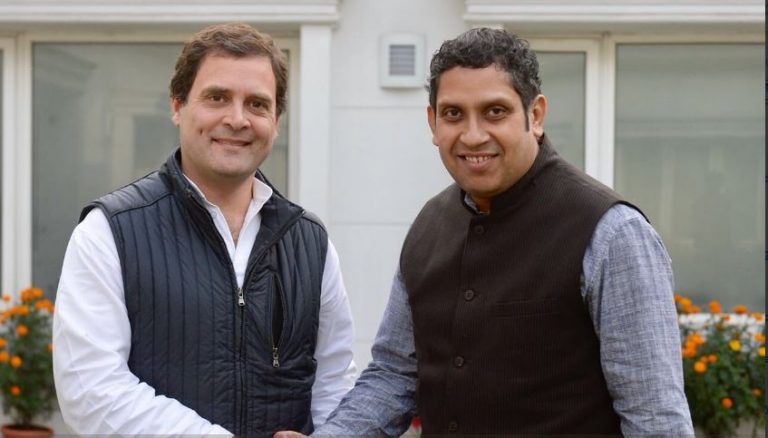
The Congress president announced the new ‘data analytics’ department of his party on February 5th. The department will be headed by Praveen Chakravarthy, a senior fellow at IDFC institute. It appears that the Congress is taking steps to match BJP as far as its social media capabilities are concerned.


What is data analytics?

Data analytics is basically a software technology used for extracting information from any pile of data. There is a distinct difference between data and information. Data is a collection of facts that may be useless. However, information is processed data which can help in making decisions.

For example, contents of a thousand tweets are mere data. However, an analysis which separates tweets on politics, sports, cinema and other topics is ‘information.’

The governments push for understanding pulse of people through data analytics 

The information and broadcasting ministry under Smriti Irani has been pushing for the establishment of media units in various parts of the country to gauge the pulse of people. The same machinery will be used to reach out to people and communicated to the electorate regarding government programmes. According to reports, the media units will be set up in smaller towns and cities in UP, Jharkhand, Tamil Nadu, Karnataka, Maharashtra and Rajasthan.

Social media was actively monitored by the government for responses to the schemes and programmes announced during the finance minister’s budget speech. The aim was to understand which scheme was gaining appreciation. It also picked up people’s criticism regarding budget provisions.

The Congress party is trying to match the BJP’s social media strategy

The Congress party has mocked the ‘marketing‘ skills of current PM consistently. It had also criticised him for managing the Vibrant Gujarat summit’s communication outreach with the assistance of APCO. However, it has realised that the times have changed and there is a need to have a good communication strategy. Therefore it is striving hard to match BJP’s communication machinery.

Congress was caught with its pants down for using Kazhak bots to enhance the image of Rahul Gandhi on social media. Yesterday a video of its social media head Divya Spandana asking her party workers to create multiple accounts on Twitter. So, finally, they have realised that they need more ‘accounts’ on Twitter to ‘enhance’ the image of a clueless and unsalable product that is Rahul Gandhi.

It has also been reported that the Congress party has been trying to hire the firm called Cambridge Analytica to manage its social media strategy. Whether they have hired or not is still not clear.

Praveen Chakravarthy has now joined the team of such durbari servants. Praveen had co-authored a propaganda article along with Jairam Ramesh with an aim to disprove findings of an IIM study on jobs data We had debunked the theories presented in that article. So, good luck to Praveen Chakravarthy on his new mission. He will now be using sophisticated algorithms to understand how many real Twitter accounts still fell that Rahul Gandhi is unfit to become a leader of a big country like India.

What is however evident, is that Congress is bereft of new ideas and has to mooch off the BJP to market their product. Whether it was Rahul’s temple run in Gujarat, his recent soft Hindutva approach (which obviously didn’t last very long) or now, his push to understand the electorate through Social Media (in which, he has to rely on bots and fake accounts, squarely messing that strategy up too). While they keep losing elections after elections, it stands to reason that Rahul Gandhi can’t seem to capitalise on methods as well as BJP. Or perhaps, as they say : Good marketing can’t sell a bad product.


Bomja village in Tawang district becomes India’s richest village as NDA pays land acquisition dues from 2013

0

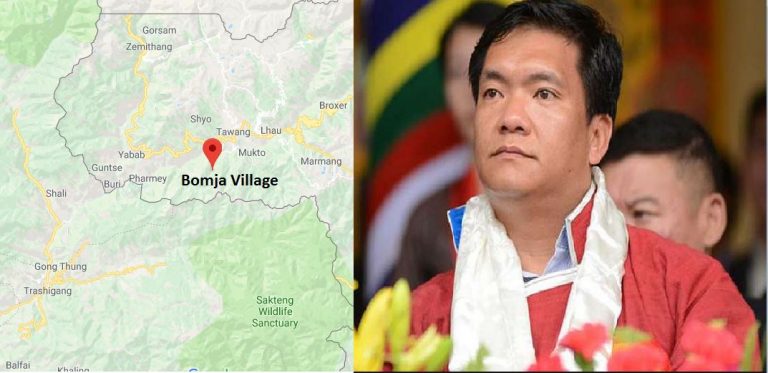
The Congress party vehemently opposed the amended Land Acquisition bill moved by the NDA, but the record of Congress seems to be pathetic as far as payments for land acquisition is concerned. The residents of Bomja village had not received payments for land acquired by the defence forces for setting up garrisons five years ago.

The defence ministry has released 40.8 crores of funds for paying the amount to residents of Bomja, whose 200 acres of land was acquired in 2013. The villagers were given the cheques ranging from 6.73 crores to 1,09 crores by the chief minister of Arunachal Pradesh, Pema Khandu. Mr Khandu also mentioned that the state was seeing growth and development because of the proactiveness of Narendra Modi government at the centre.

Prior to Tawang, Hiware Bazar was the richest village in India where there were 60 millionaire families out of 235 families in the village. Hiware Bazar is in Ahmednagar district of Maharashtra. Bomja displaces Hiware Bazar as all 31 families in the village are now crorepatis.

The overnight change in Bomja village shows how the NDA government’s commitment to the development of Northeast and fulfilling commitments regarding dues to people from whom it has acquired land.

Has Tharoor forgotten the damage done to the constitution by the Congress Party?

0

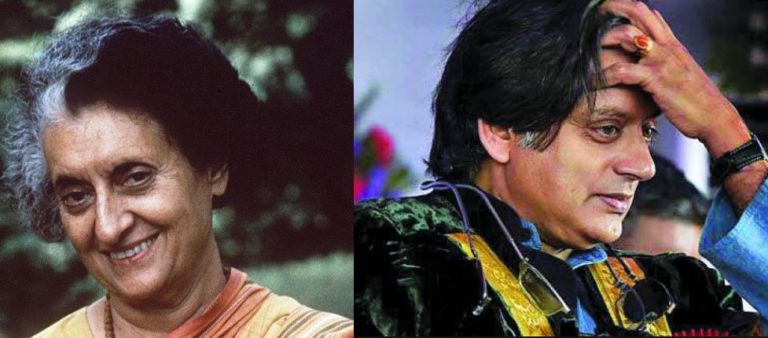
The Congress party’s blue-eyed boy Shashi Tharoor recently told the media that BJP was planning a major assault on the constitution once it gets a 2/3rd majority in both houses of the parliament.

“I think a lot of their real agenda is waiting for the time when they have both Houses under their control. And once they do, I think you can certainly look to a major assault on the Constitution. Then the question is, will the Supreme Court stand by the basic structure doctrine and interpret it to include these principles of equality, freedom of religion, freedom of worship, non-discrimination, etc., which would make it impossible to reduce the Constitution to the document of a religiously-derived majoritarianism,” Mr Tharoor told IANS in an interview.

However, India has forgotten the huge damage done to the constitution by the Congress party under the leadership of Indira Gandhi during the emergency years. This is not a surprise since Congress controlled media has managed to wash off the ugly stories of the emergency era from public memory.

The 42nd Amendment gave unlimited powers to Parliament regarding constitutional amendments

42nd amendment (1976) enacted by Congress party is one of the most comprehensive and ruthless attacks on the Constitution of India. It changed the balance of power between judiciary, parliament and executive that was carefully inserted into the constitution by the founding fathers of India. In 1976, Indira Gandhi had 2/3rd majority in Lok Sabha and many opposition leaders were in jail. As a result of this, she was able to push through the atrocious 42nd amendment. (INC seats in Lok Sabha – 352, Rajya Sabha – 72)

Parliament is allowed to amend the constitution as per norms mentioned the article 368 of the constitution. The judiciary, under Article 32 has powers to outlaw any law (including constitutional amendments) void and null if it is in violation of fundamental rights of people (under Article 32).

However, the Congress party, led by Indira Gandhi took away this power from the judiciary entirely. This would ensure that any change done to the constitution by the parliament led by her would not be examined by the courts. It is perhaps the most atrocious attack on the constitution. The text of 42nd amendment says (emphasis added)

55. Amendment of article 368.- In article 368 of the Constitution, after clause (3), the following clauses shall be inserted, namely:-

“(4) No amendment of this Constitution (including the provisions of Part III) made or purporting to have been made under this article whether before or after the commencement of section 55 of the Constitution (Forty-second Amendment) Act, 1976] shall be called in question in any court on any ground.

(5) For the removal of doubts, it is hereby declared that there shall be no limitation whatever on the constituent power of Parliament to amend by way of addition, variation or repeal the provisions of this Constitution under this article.”

Term of Parliament extended to suit Congress party’s needs

The 42nd amendment also extended the term of all assemblies and Lok Sabha from 5 years to 6 years to ensure that she would have more time to stay in power if elected to office after the emergency. This is also a significant amendment since the opposition was weak and many of its leaders had been jailed under the emergency. The political calculation of this move cannot be ignored. The 42nd amendment said (emphasis added) :

17. Amendment of article 83.-(1) In article 83 of the Constitution, in clause (2), for the words “five years” in the two places where they occur, the words “six years” shall be substituted.

30. Amendment of article 172.-(1) In article 172 of the Constitution, in clause (1), for the words “five years” in the two places where they occur, the words “six years” shall be substituted.

Powers of the states diminished by moving subjects to concurrent list

The powers of states and central government are distributed as state, central and concurrent lists as per the seventh schedule of the constitution. The centre has complete control over subjects listed in its list and an upper hand in the concurrent list. The states have complete control over subjects listed in the state list. The 42nd amendment moved five subjects from state to concurrent list thereby reducing the powers of the state as decided by the makers of the constitution. These five subjects were :

  • Education
  • Forests
  • Protection of wild animals and birds
  • Weights and measures
  • Administration of justice (excluding Supreme court and High courts)

Congress has done maximum damage to Constitution in the history of India

If we analyse the journey of India so far and try to find a party that did the most damage to constitution and civil liberties and constitution in Indian history, we will find that the party is Indian National Congress. Thus, the Congress party and Shashi Tharoor must introspect on the damage done to the constitution by its own leader rather than creating fear among the people regarding the ‘changes’ constitution that will be brought into the constitution by the BJP if it gets a 2/3rd majority necessary to push through most of the constitutional amendments.

Girl accuses Muslim man of forcing her to wear Hijab and convert to Islam under false pretext of marriage

0

The Hyderabad police has filed a case against a man, who has been alleged to have sexually exploited and cheated a girl under false pretext of marriage. Reports have claimed that he even forced the 25 year old to wear a Hijab, convert to Islam and even observe Muharram.

The couple had met at an office in Somajiguda four years ago, after which they became close.

The victim while speaking to the media, lamented how she was fooled by him for about four years. She claimed she did everything he asked of her, which included following every Islamic ritual. Things were so advanced that their wedding date was fixed, but then he shockingly pulled out, under the pretext that she wasn’t properly following any of the religious rites.

The victim as a result has called for justice:


As per Uma Maheshwara Sharma the Deputy Commissioner of Police (DCP), Rachakonda, they have received a complaint and a case has been registered in this regard under section 376, 417 and 420 India Penal Code (IPC). These sections pertain to rape, cheating and dishonesty.

Such incidences though unfortunately have become a somewhat common norm in the recent days.

It was reported that a Jharkhand woman in January had alleged that a Muslim man named Tanveer Akhtar Khan aka Tannu had cheated, tortured and attempt to convert her by deceit and force after marrying her.

Things though are even known to take a far worse turn.

In Meerut Uttar Pradesh, a Dalit girl has accused a Muslim youth of forcibly trying to convert and marry her. When she resisted the same, the youth and a few of his associates reportedly kidnapped her, after which they gang-raped her for a week.

In December it was shockingly reported that In-laws had raped and murdered a Hindu woman after she had refused to convert to Islam.

National Fisherfolk Forum takes offence to Supreme Court lawyers being compared to them

0

The National Fisherfolk Forum has issued a press statement against Supreme Court Judge D Y Chandrachud. Justice Chandrachud had made the following comment on February 5th.

“Let us not reduce the dialogue of the court to the level of fish market”

Justice Chandrachud was hearing a case on the Judge Loya death matter in the apex court where he made the remark. The raging noise and debate in the courtroom by senior advocates Dushyant Dave and Pallav Shishodia had reached to such a level that Justice Chandrachud had to intervene.

The remarks of Justice Chandrachud have now angered the National Fisherfolk Forum, a national confederation of state-level fisher federations. They have taken offence to being compared to the lawyers and have expressed their pain and displeasure as they claim that the sentiments of the entire fishing community have been hurt.

They have asked Justice Chandrachud to withdraw his remarks ‘in the same forum’ where it was uttered, that is, in a courtroom of the SC. They have also mentioned that they have found the remark derogatory.

The Judge Loya death case has seen many dramas inside the courtroom. Earlier too, Justice Chandrachud had to reprimand the advocates and assert that the SC needs to look at all the aspects of the case and cannot base their hearing on articles of Caravan, Indian Express, The Wire and The Scroll. Advocate Dushyant Dave on that day had even tried to argue that Harish Salve should not be allowed to participate in the case, simply because he had appeared for Amit Shah. Justice Chandrachud had shut down that argument too.

It is indeed amusing that fisherfolk, who were not the actual targets of the Judge, have taken offense to this comment, whereas the real targets i.e. the lawyer community do not seem to have been offended. Perhaps it is the air of “intolerance” which has made our fisher folk angry!

To the eminent journalists: Here is what ‘co-opted media’ truly looks like

The other day eminent journalist Sankarshan Thakur published an op-ed in The Telegraph accusing the media of being “co-opted by the government”

Untitled.png

Thakur’s article is only the latest in a long line of whining from establishment journalists about the mere existence of (somewhat) right wing media in this country. More than three full years into Modi’s term, India finally has one mainstream (perhaps two) right wing English news channels and one mainstream right wing Hindi channel. A drop in the ocean when compared to the extensive network of left wing propaganda across news channels, academic campuses and the internet. When you adjust for the fact that the BJP has a majority in the Lok Sabha and runs 19 states along with its allies, it’s not even a drop in the ocean.

But that does not stop this drop (or less than a drop) from being an eyesore for eminent journalists who have dominated media for decades in this country.  Like I pointed out in an earlier article, Republic TV reporters face a stunning level of hostility (including stuff bordering on physical violence) from the larger journalistic fraternity.

Shekhar Gupta derisively refers to these two or three (somewhat) right wing networks as “commando-comic” channels. Some like Sankarshan think that media has been “co-opted” by the government.  Others call them “India’s North Korean channels,” without even realizing the irony that North Korea is the epitome of leftism. The liberals should ask their revered Communists about North Korea and Kim Jong-Un; Shri Pinarayi Vijayan is a big fan.

How come liberal journalists don’t see that right wing media in our country is a mere drop in the ocean? The answer goes beyond mere bias and selfishness. The problem is that our “eminent” journalists have been bred in an environment where they never expected to encounter a right wing thought in their whole lives.

Imagine if tomorrow a Martian were to suddenly fly in from space and land on Planet Earth. That single Martian would get more attention than the other 7 billion people in our world. Just like that, eminent journalists today are running around, freaking out and screaming their heads off : OMG! OMG! Look! A Right Winger!

Do you, Sankarshan, know what “co-opted” media looks like? Then open the Telegraph itself and read this article by your editor Manini Chatterjee :

“As Rahul Gandhi formally takes over as president of the Indian National Congress today, there is a chorus of voices asking him to “reinvent” himself and the Grand Old Party. He should do neither.”

Begging that Rahul Gandhi shouldn’t change a thing about himself nor anything about the Congress Party. Begging that things in India should stay exactly the same as they were during the six decades of Congress rule. Now, *that* is an example of media that has truly been “co-opted.”

I really recommended folks to read Manini Chatterjee’s entire article. The image that will come to your mind is that of an old loyalist rubbing her nose on the ground in submission.

But neither Sankarshan Thakur, nor Shekhar Gupta nor anyone else in the liberal media can see that. Because this state of grovelling submission to the Nehru-Gandhis is seen as perfectly normal.

Sankarshan probably doesn’t even realize how pitiable he sounds when devoting an entire paragraph to complaining about how Narendra Modi took away free trips for journalists on the Prime Minister’s plane. He is not alone, we have seen Suhasini Haidar do the same and we have even seen Barkha Dutt refer to this.  Well, Sankarshan, if travelling on the PM’s official jet was not a huge privilege, then as many as 3.5 years after Modi took office, we wouldn’t be seeing whole paragraphs in newspapers complaining about the loss of that privilege, would we?

But eminent journalists continue to show a remarkable lack of self-awareness. Living in a world of their own, they actually think that the Indian media has not questioned Narendra Modi enough. Perhaps they don’t realize that Narendra Modi was India’s first Prime Minister to be held personally accountable for petty theft of Rs 8000 from some missionary school in Delhi. Questions that should have been directed at a local police constable were directed towards the Prime Minister’s Office.

A rape of a nun in a non-BJP ruled state by illegal Muslim immigrants from Bangladesh? Blame Narendra Modi, of course!

And yet they actually think media has been “co-opted” by this government!

They actually wonder aloud why Narendra Modi has not held press conferences or faced difficult interviews. Would they dare to ask a similar question about Madam Sonia Gandhiji during her period of supremacy from 2004-2014? Show me one article, one op-ed published in a major newspaper complaining about that.  Of course not, because submission to Nehru-Gandhis is seen as “normal,” even a requirement for being a journalist.

That is what it truly means to have co-opted journalism, where media is so compromised that submission to a ruling family is seen as a fact of life.

Co-opted journalism is when a leading journalist gets into an argument on Twitter with a private citizen and while replying with a legal notice, he tags the media in charge of a certain political party, almost as if marking attendance. Because the lines between that party and the journalist have practically disappeared.

Co-opted journalism is when the political editor of Hindustan Times jumps for joy like this at the possible electoral consequences of the suicide of a young man.

Untitled.png

It’s not just the leading journalists; it’s the foot soldiers too. You probably never heard a name like Ifrah Mufti. She is a small-time journalist working for The Hindustan Times and participates in downright abusive hashtags like #JaahilPMModi. Folks like Ashutosh Mishra or Supriya Bhardwaj (both India Today/Aaj Tak) are not household names. But those on Twitter know them as unofficial spokespersons of AAP or Congress.

Is your news report being written by someone like Ifrah Mufti or Ashutosh Mishra? Most people reading wouldn’t know.

That is co-opted media in its purest form, when every little foot soldier owes allegiance to the old establishment.

Most people reading this garden variety article in the Indian Express bashing Yogi Adityanath would not realize that the author Amaresh Misra threatens to behead any Modi supporter in front of their mother.

Just yesterday, The Print had to distance itself from “freelance contributor” Harnidh Kaur after it was discovered that she publicly wished for the assassination of Narendra Modi. Less than a year ago, the Quint had to end its association with journalist Vikas Malhotra, who had also wished publicly for Modi to be assassinated while campaigning in Varanasi.

Few people in India know their names or their faces. But the Harnidh Kaurs and Vikas Malhotras of the world will move on with their careers, writing more and more reports and opinion pieces that the public will consume without knowing their political history.

“Being attracted to a 12 year old doesn’t make you a pedophile.”

Shocked?

Believe it or not, this sentence actually appeared in print last month in the Deccan Chronicle. The context? The author was trying to defend Communist leader (late) A K Gopalan and his “mutual attraction” towards a 12 year old girl when he was a 38 year old man.

The Deccan Chronicle piece does not give away the name of its author. We will never know who it was. But what we can say with reasonable certainty is that this author will go on to have a long career in media, writing articles on intolerance, communal harmony, how great the Nehru-Gandhis are and how much of a dictator Narendra Modi is. We will be reading this stuff without knowing that the author will gladly support even paedophilia as long as a Communist does it.

Now, *that* is co-opted media.

CBI to probe how Chidambaram got hold of confidential papers regarding investigation into Aircel-Maxis deal

0

On Thursday it was reported that, the Enforcement Directorate (ED) had found a classified CBI status report ‘draft’ pertaining to the Aircel-Maxis deal while raiding senior Congress leader P Chidambaram’s New Delhi residence on January 13th.

CBI reportedly submitted the status report to the Supreme Court in a sealed cover to the SC double bench of Justices GS Singhvi and K Radhakrishnan on August 1, 2013 when Chidambaram was a Union Minister in the UPA-2 cabinet.

Reports claimed that as per ED sources, the unsigned draft found with Chidambaram, pertained to only those portions of the CBI report to the apex court that dealt with the Aircel-Maxis case of 2006 when Aircel was sold to Maxis – a Malaysian company – in a deal that allegedly violated foreign investments protocol.

The ED in this matter has been probing the role of then Finance Minister P Chidambaram, in granting the FIPB approval, which allegedly involved a total amount of about Rs. 3,500 crores, even though Chidambaram only had powers to approve project proposals worth Rs 600 crores. For any amount exceeding Rs 600 crores, Chidambaram was required to take an approval of the Cabinet Committee on Economic Affairs (CCEA).

As per a report by the Pioneer, Chidambaram was privy to the report before the investigative agency put it up before the Supreme Court. It alleged that the report was leaked to Chidambaram by a serving Joint Director of CBI in connivance with an IPS officer from Himachal Pradesh cadre.

Chidambaram’s son Karti too has been under scrutiny over allegations that his firm received about Rs 1.16 crores from Aircel and other companies in form of a ‘consultancy fee’.

With the news about the leak now out in the open, the CBI has now started an internal inquiry over how the draft related to the Aircel-Maxis matter reached Chidambaram’s home. After the report was recovered by the ED, a note was sent to the CBI asking it to verify whether the document was real.

As per other reports, the CBI is examining some papers seized in the probe to determine whether they were part of some draft report.

Ola’s river taxis begin route learning exercise in Assam

0

App-based taxi service provider Ola has started working on its ambitious river taxi service plan in Assam. Just a few days ago, Ola’s vice president of operations Vijay Ghadge had signed a MoU with the government of Assam in the ongoing Global Investor Summit: Advantage Assam.


Ola cabs was launched in Assam in 2014. The capital Guwahati is on the banks of vast Bramhaputra river and riverboats are a widely used mode of commute here. Ola is now looking ahead to bring machine operated boats which can be booked online, called on demand and even cancelled through a mobile app. The machine operated boats will be faster and safer than the conventional ones.

For the initial phase, Ola is planning to ferry high-speed river taxis in the Lachit ghat, Machkowda to north Guwahati route. The proposed taxis will bring down the time of commute to 2 to 5 minutes from the 45 minutes it takes by road.

Within days of signing the MoU, Ola has already started route learning exercise on the Brahmaputra river channel. As per a report, Director of Assam’s Inland Water Transport (IWT) department Bharat Bhushan Dev Choudhary has stated that Ola had launched a one seater petrol vessel and once they finalise the route and come up with fares and other paperwork, the department will proceed with permission granting.

Ola is expected to start operating the river taxis within a week’s time. Terminal facilities at the pickup and drop off points will be provided by the IWT Department. The IWT Department is also planning a scheme “Jibon Dinga’ to extend subsidies and financial help to local youth who want to operate their own river taxis across the state.

The current river taxi proposal comes soon after another major step was taken by the Inland Waterways Authority of India when in December last year Union minister of shipping Nitin Gadkari had flagged of the first cargo transportation along the Pandu-Dhubri route along the Bramhaputra.

At the flagging off ceremony in Majuli island, the minister had declared that river transport is the next big step his ministry is working on their aim is to bring down logistics cost and time taken to transport. The Pandu Dhubri route falls under National waterway-2 which is a 891 KM stretch of Bramhaputra from Sadiya to Dhubri. He had also announced the construction of five bridges along the NW-2 and a roll-on roll-off ferry service in Majuli.


A similar project has now been announced for the National Waterway-1 which stretches from Haldia to Prayag on the Ganga-Bhagirathi-Hooghly river system.


Waterways in India are vastly underutilised. They can be a major source of revenue and business when explored and maintained properly. Assam has become the pioneer for Indian states in utilising its water resources for growth and economic prosperity.