On Thursday it was reported that, the Enforcement Directorate (ED) had found a classified CBI status report ‘draft’ pertaining to the Aircel-Maxis deal while raiding senior Congress leader P Chidambaram’s New Delhi residence on January 13th.
CBI reportedly submitted the status report to the Supreme Court in a sealed cover to the SC double bench of Justices GS Singhvi and K Radhakrishnan on August 1, 2013 when Chidambaram was a Union Minister in the UPA-2 cabinet.
Reports claimed that as per ED sources, the unsigned draft found with Chidambaram, pertained to only those portions of the CBI report to the apex court that dealt with the Aircel-Maxis case of 2006 when Aircel was sold to Maxis – a Malaysian company – in a deal that allegedly violated foreign investments protocol.
The ED in this matter has been probing the role of then Finance Minister P Chidambaram, in granting the FIPB approval, which allegedly involved a total amount of about Rs. 3,500 crores, even though Chidambaram only had powers to approve project proposals worth Rs 600 crores. For any amount exceeding Rs 600 crores, Chidambaram was required to take an approval of the Cabinet Committee on Economic Affairs (CCEA).
As per a report by the Pioneer, Chidambaram was privy to the report before the investigative agency put it up before the Supreme Court. It alleged that the report was leaked to Chidambaram by a serving Joint Director of CBI in connivance with an IPS officer from Himachal Pradesh cadre.
Chidambaram’s son Karti too has been under scrutiny over allegations that his firm received about Rs 1.16 crores from Aircel and other companies in form of a ‘consultancy fee’.
With the news about the leak now out in the open, the CBI has now started an internal inquiry over how the draft related to the Aircel-Maxis matter reached Chidambaram’s home. After the report was recovered by the ED, a note was sent to the CBI asking it to verify whether the document was real.
As per other reports, the CBI is examining some papers seized in the probe to determine whether they were part of some draft report.
App-based taxi service provider Ola has started working on its ambitious river taxi service plan in Assam. Just a few days ago, Ola’s vice president of operations Vijay Ghadge had signed a MoU with the government of Assam in the ongoing Global Investor Summit: Advantage Assam.
Ola cabs was launched in Assam in 2014. The capital Guwahati is on the banks of vast Bramhaputra river and riverboats are a widely used mode of commute here. Ola is now looking ahead to bring machine operated boats which can be booked online, called on demand and even cancelled through a mobile app. The machine operated boats will be faster and safer than the conventional ones.
For the initial phase, Ola is planning to ferry high-speed river taxis in the Lachit ghat, Machkowda to north Guwahati route. The proposed taxis will bring down the time of commute to 2 to 5 minutes from the 45 minutes it takes by road.
Within days of signing the MoU, Ola has already started route learning exercise on the Brahmaputra river channel. As per a report, Director of Assam’s Inland Water Transport (IWT) department Bharat Bhushan Dev Choudhary has stated that Ola had launched a one seater petrol vessel and once they finalise the route and come up with fares and other paperwork, the department will proceed with permission granting.
Ola is expected to start operating the river taxis within a week’s time. Terminal facilities at the pickup and drop off points will be provided by the IWT Department. The IWT Department is also planning a scheme “Jibon Dinga’ to extend subsidies and financial help to local youth who want to operate their own river taxis across the state.
The current river taxi proposal comes soon after another major step was taken by the Inland Waterways Authority of India when in December last year Union minister of shipping Nitin Gadkari had flagged of the first cargo transportation along the Pandu-Dhubri route along the Bramhaputra.
At the flagging off ceremony in Majuli island, the minister had declared that river transport is the next big step his ministry is working on their aim is to bring down logistics cost and time taken to transport. The Pandu Dhubri route falls under National waterway-2 which is a 891 KM stretch of Bramhaputra from Sadiya to Dhubri. He had also announced the construction of five bridges along the NW-2 and a roll-on roll-off ferry service in Majuli.
A similar project has now been announced for the National Waterway-1 which stretches from Haldia to Prayag on the Ganga-Bhagirathi-Hooghly river system.
Waterways in India are vastly underutilised. They can be a major source of revenue and business when explored and maintained properly. Assam has become the pioneer for Indian states in utilising its water resources for growth and economic prosperity.
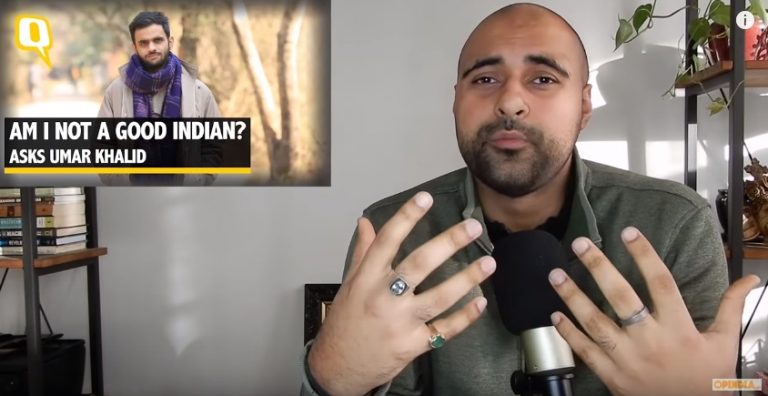
After a comprehensive video nailing the myths around the FRDI bill, this week on The OpIndia Recap, Sham Sharma offers his rebuttal to the The Quint’s extremely dishonest video on Umar Khalid.
The Left media has chosen its heroes and are doing what they can to force these people into the mainstream. It is vital, thus, that these “heroes” be questioned and this agenda be called out an exposed for what it is.
PM Modi’s jibe in the Rajya Sabha has set the cat amongst the pigeons. During his speech, Modi referred to an old speech of ex-Home Minister L K Advani to mention that AADHAR was actually conceptualised at that point. Hearing this, Congress MP Renuka Chaudhury started laughing hysterically.
Rajya Sabha speaker and Vice President Venkaiyah Naidu chided her for her “unruly behaviour”. PM Modi too did not let the opportunity go. He requested the speaker that he must not stop Renuka Chowdhury. He added further, “many years after Ramayan we are getting to hear such a hearty laughter.”
It took a while but soon social media users began deciphering the cryptic comment. There was a debate whether Modi was referring to the Taraka the demon or Shurpanakha, Ravana’s sister. This debate seems to have been settled by left liberals.
NDTV’s Nidhi Razdan batted for “freedom of laughter”:
But the slightly slower ones began defending Shurpanakha, thus giving rise to the Shurpanakha Defence League. Sagarika Ghose chose to paint Shurpanakha as the victim of a “patriarchal” society, who was wronged at the hands of a “righteous oh-so-pure male hero”. Her husband Rajdeep Sardesai seemed to concur and retweeted her:
Columnist Ashok Swain too joined the league, claiming that Shurpanakha was “misunderstood” and called the act, an “act of cowardice” by a “male chauvinist”.
Both argued how Shurpanakha’s love for Ram was treated in an unduly harsh manner by Ram. Using such a line of argument perhaps served multiple purposes: defending Shurpanakha was akin to defending the Congress MP who is said to laugh like her PLUS it was a golden chance to train their guns at a Hindu God namely Ram.
Alas, social media users made them realise how their understanding of the incident was totally wrong. History buff social media user TrueIndology parsed through the ancient texts to show that Shurpanakha was not the victim and had in fact tried to kill and eat Sita, which is why Laxman had to take the step of chopping her nose off.
Lakshmana pierced the nose of Shurpanakha not because he was a male chauvinist. The jealous cannibal Shurpanakha was about to kill and eat Sita@sagarikaghose should be booked for hurting religious sentiments, promoting enemity, disturbing communal harmony, inciting riots pic.twitter.com/f6ChTCYq0G
It is indeed comical how a mild retort by Modi, to a woman who was uncouth, has evoked such a response that our secular left liberals have begun rewriting Indian texts and have found shelter in attacking Hindu Gods. It is another issue that talking in such a manner about some other religions can trigger off riots.
In recent days, the Yogi Adityanath led UP government has adopted a no nonsense approach towards crime in the state, and hasn’t even shied away from taking the “encounter approach”.
It has been reported that until the 31st of December, 30 notorious criminals were eliminated by the police force and over 2000 criminals were arrested including 1688 accused who carried rewards. As many as 15 encounters were conducted in the space of 48 hours in February, which led to the arrests of 24 wanted criminals and the death of a gangster.
The clampdown has also been witnessed in UP’s Kairana which witnessed a mass Hindu exodus. Here wanted criminals who used to extort Hindu businessmen are either being arrested or eliminated.
Now the Yogi government seems to have turned its attention to the “cheating mafia” in the state following which a whopping 5 lakh students have dropped out of exams in two days.
As reported, the Yogi government has clamped down on the “cheating mafia” which has infested the exam conducted by Uttar Pradesh secondary education council. Even though the exam has merely entered the third day, about 5 lakh students have opted out of it. As a result of the strictness, subjects like Hindi and Home Sciences have become troublesome for certain students.
On the first day of the examination, the state’s secondary and higher education minister Dr. Vinod Sharma made surprise checks in four districts of the state and ordered the installation of CCTV cameras in the classrooms.
Besides this, a special task force comprehensively clamped down on cheating in Allahabad which included arresting three people including a school principle, thereby sending a strong message. Also in the resultant action about 144 impostors were caught in a single day.
Issuing numbered answer sheets, the number which will be noted in a register to avoid substitution of the written scripts. This measure has been undertaken in 50 districts prone to cheating.
Security cover while answer scripts would be transported from schools to checking halls.
District magistrate, departmental officials to be held accountable in case mass cheating is caught.
Providing district school inspectors secret information via local intelligence units.
Reports claim that as a result of such measures, the cheating mafia has suffered a blow thereby boosting the state government’s efforts to ensure cheating-free exams.
Jignesh Vadaraja is an unknown name in media and national circles. But if you happen to visit the lanes of Halol, Gujarat, the industrial hub, Vadaraja is known to all and revered by all. In spite of this, a simple google search will throw up exactly zero search results for Jignesh, such is the shroud of secrecy over this persona. We could not even find a picture of Jignesh online.
So who is this Jignesh? Jignesh is currently in the unenviable position of being a supplier to at least 4 PSUs in Gujarat, some of which are direct competitors to one another. Normally, PSUs, sign agreements with their suppliers restricting them from supplying the same products to competitors. But Jignesh bhai not only supplies to multiple PSUs, but also some private companies.
How did Jignesh bhai scale such heights of business?
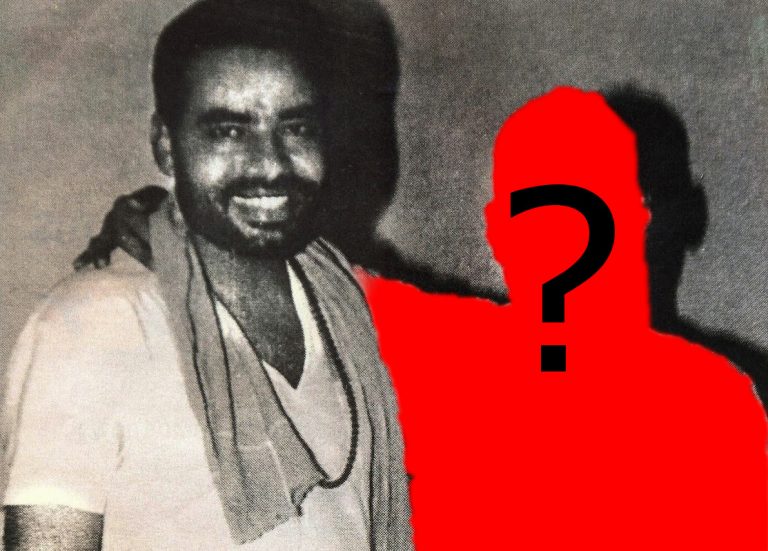
It all started in Vadnagar a few decades ago. He and the current PM Narendra Modi were batch-mates for 2 years in the local middle school. They were never in the same class, but they shared a unique bond: Both were the best openers for a game of gully cricket in their mohalla. Locals who witnessed that era spoke to us saying that Jignesh and Modi opened for the same team and in the process, notching solid partnerships. Stats pulled up from Cricinfo show how Modi picked Jignesh in his team 73% of the time.
Artist’s impression
In spite of their clearly close association, Jignesh today refutes any allegations that his meteoric rise in business is due to his proximity with Modi.
He says: “Modi was my batch-mate and cricketing partner. I have also had water at his house a few times after a match. But all these were just casual interactions and have no connection with my business”.
We move to 2003 in Gujarat, when Modi had just become the Chief Minister. While Modi had reached the pinnacle of state politics, Jignesh had a small family run shop in Vadnagar itself. Just as Modi’s rise in politics started, Jignesh’s life also changed for the better. Firstly, he moved from Vadnagar to a nondescript town called Halol. Within a few years, the sleepy town of Halol would emerge as a industrial hub due to Modi’s policies and Jignesh would directly benefit from this.
Once in Halol, Jignesh set shop with a meagre capital of Rs 2,000 (adjusted for inflation to Rs 50,000). He employed just one person, who happened to be his younger brother. Miraculously, his fortunes changed within a few years as all around him, private and public enterprises began setting up industries.
Jignesh, who had acquired his shop for a very cheap price, now suddenly owned an enterprise in a commercial hub. This coincided with his childhood friend Modi’s multiple business summits promoting Gujarat as a place for industry to come and set up shop.
Once factories and offices sprouted, Jignesh’s business started flourishing. From supplying to local town-folk, Jignesh began playing in the big league now, getting orders after orders from executives of multinational companies. Soon his “fame” spread, and Modi’s chum began getting orders straight from the corporate entities themselves. Within a few years, Jignesh’s products were found in PSUs as well as Private companies, often rivals.
The terms and conditions of these orders are most intriguing. Generally PSUs pay their suppliers after a 90 to 180 days credit period. Jignesh on the other hand gets paid upfront before he hands off his wares. We asked companies for any KYC details maintained by them, but shockingly, none of them had any documents about Jignesh, although none hesitated in calling him a “regular supplier”.
It is standard practice for PSUs to buy any material only after obtaining bids, expression of interests, etc. The most competitive bidder at the least price usually wins the order. But all PSUs we spoke to, admitted candidly that Jignesh was not subjected to such due processes. In fact, they even acknowledged that some of Jignesh’s competitors had the same product at cheaper rates. When asked about this discrepancy, a PSU head honcho remarked ” Jignesh’s products are just better”. He however had no scientific tests by independent authorities to confirm that Jignesh’s products were superior, hence preferred.
Another oddity in this “verbal contract” of supply is that the rate which Jignesh charges varies regularly. Some of his main raw materials, which are under significant government control, routinely increase in price. Jignesh promptly passes on the additional cost to his customers. Consumer Affairs Minister Ram Vilas Paswan expressed his inability to control the prices of these raw materials stating that such variations in prices were “seasonal”.
Backed by such regular flow of orders from PSUs, Jignesh has managed to bag a substantial borrowing. Coincidentally, these loans from national banks, were taken by Jignesh post 2014 i.e. after Modi’s rise to the top of the food chain. The entire borrowing of Jignesh is fully unsecured, with no primary security and no collateral. How is this possible? All the loans are under a scheme by Modi’s central government. In fact, it is Modi’s pet scheme and its odd how it has directly benefited his close childhood friend’s business.
We asked Jignesh about how he managed to secure loans from Government banks, at a time when Modi is the PM, under a scheme which the PM has himself devised. Jignesh simply stated that the loan was given by the banks looking at his creditworthiness and hard-work.
Jignesh is a supplier to PSU’s and private companies. He has his corporate headquarters in Halol. He has raised many loans (unsecured) from banks. Yet, none of his financials are publicly available. An undercover reporter also noted that he may be involved in tax fraud, since his sales invoice is undated, and does not mention either his PAN or GSTIN.
As per Jignesh himself, most of his business is in cash, and yet he claims that during demonetisation he did not face much hassles since his cash balance at 8th November was a few thousand rupees, with no Rs 500 and Rs 1000 notes. Modi’s pal had it easy street during demonetisation and he did not receive a single notice from Income Tax department either.
The extent of Jignesh’s influence in the power corridors of Halol can be gauged from the next fact. Normally, suppliers line up the offices of PSU head honchos, asking for supply orders. But the big guns of PSUs themselves make a beeline at Jignesh’s premises. Many a times these executives themselves collect the orders instead of Jignesh delivering them. It is apparently “good exercise” for the bosses, hence they personally visit Jignesh.
Jignesh’s industry too has received a lot of direct publicity from PM Modi himself. In a recent interview, PM Modi spoke at length about this industry and extolled to the nation, the virtues of being in this line of business. At the time of going to press, it was unknown whether Jignesh’s business received a major boost in sales thanks to his friend’s endorsement. The only other time Modi associated with a brand, was when Reliance used his photo to promote their 4G services.
Although Modi has backed his product, research suggests that the product comes from a super set which has been known to cause health issues in people. One of the crucial raw materials in his product is a proven carcinogen. Yet Jignesh claims he has never once been visited by any regulatory authority, not in Modi’s tenure as CM nor in his tenure as PM.
Thanks to his good “fortune”, Jignesh has diversified into other businesses.
Firstly, he has begun a segment where he now produces one of the raw materials required by his main business, thus creating a vertical integration in his business. He has also begun dealing in ancillary products and has expressed desires for more horizontal integration which will increase his margins and appeal among customers.
While Jignesh Vadaraja is famous enough, if you ask for Jignesh “Patel” no one will know him. This is because Jignesh Vadaraja is actually a pseudonym of Jignesh Patel. Why does Modi’s close friend have 2 names? Why does anyone need 2 names?
Jignesh claims that he acquired the alias of Vadaraja since he was the “King of Vadas” in Halol. As mentioned above, Jignesh’s vada-pav stand in Halol has been flourishing. All the same, the amazing similarity of Jignesh’s new name and the name of a US based journalist who has been sued by Jay Amit Shah cannot be ignored.
In times when the country’s GDP is in doldrums, sale of Vada pavs at Jignesh’s stall in Halol are booming. Backed by supplies to major PSUs (some have their own canteens), Jignesh has raised major loans under the Mudra scheme, which was created by Modi. Whenever onion and tomato prices rise, he raises his selling price. He requires no tenders & no bids. He gets paid in hard cash, upfront. He does not have a GST number. Business heads personally come to eat and collect vadas at his stall. But still, Jignesh claims all this good fortune has nothing to do with his friendship with Modi.
Jignesh’s stall, where customers from minority section are literally told: ‘Tumhe uski keemat chukani padegi’ (You will pay)
– Mohini Singh left a very successful career in psephology to become an investigative journalist with a leftist rag called theliar.in. She is famous for accurately predicting the outcome of UP Assembly election
Narendra Modi has reached Tripura to campaign for the BJP-IPFT alliance in the Assembly Elections of the state to be held on 18th February. In a rally in the Sonamura town of Tripura, the Prime Minister urged the voters to shun the CPI(M) and choose the BJP to secure a bright future for the state.
Narendra Modi highlighted the Rose Valley scam and the alleged role of the CPI(M) government in it. He also spoke about the climate of fear created by the party in the state alluding to the recent deaths of journalists in the state. Narendra Modi spoke of the BJP’s vision for the state and emphasized his party’s focus on the 3 Ts for Tripura: Trade, Tourism and Training of the Youth.
Ab Manik nahi chahiye, Manik se mukti le lo, ab aapko hira chahiye. Hira ka H matlab Highway, I matlab I way(digital connectivity) ,R matlab Roadway, A matlab Airway: PM Modi in Tripura’s Sonamura pic.twitter.com/MdHQFPh4Hp
Narendra Modi is expected to address another rally in Tripura on the 14th. Chief Minister of Uttar Pradesh, Mahant Yogi Adityanath is also expected to attend rallies on the 11th and 12th. A host of other BJP bigwigs are also expected to visit the state as election fervour reaches its peak. A recent opinion poll gave the BJP-IPFT alliance the edge ahead of the elections.
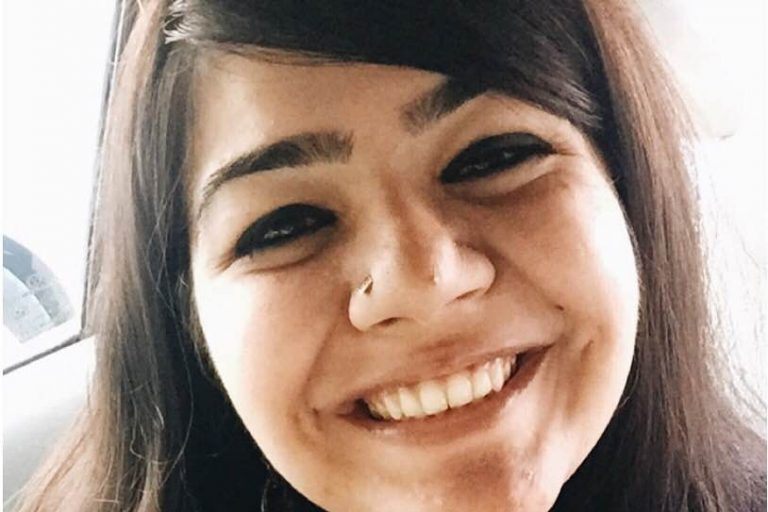
A Twitter user who wished for the assassination of Prime Minister Narendra Modi when he was Gujarat’s Chief Minister, deleted her tweets after her old tweets resurfaced causing her embarrassment. Taking a jibe on the then Gujarat Chief Minister, Narendra Modi, the user named Harnidh Kaur had tweeted in April 2013 that the only similarity between Mahatma Gandhi and Modi would be if someone assassinates Modi. Kaur writes for Shekhar Gupta’s website The Print.
In the now deleted tweet, Kaur had appended ‘seriously’ as if making it clear to her readers that she was not being facetious while wanting Narendra Modi assassinated.
Many users pointed it out to Shekhar Gupta, Founder and Editor in Chief of The Print and asked him if he would like to clarify or take action against Kaur, who is published by The Print:
Earlier, too, Kaur, who identifies herself as an atheist and a Sikh, alternately depending on mood of her tweets, had deleted her tweets abusing Lord Ram, perhaps hinting that her hatred was not limited to Narendra Modi, but for the community that he belongs to:
However, Kaur is not the only columnist associated with newly launched left-leaning portals to wish death upon the Prime Minister. Like Kaur, in January last year, a Times Now journalist, Prashant Kumar, had also wished for the assassination of Modi.
Earlier, Suprateek Chatterjee, a columnist with The Quint had also tweeted death wish on Modi. That is not the only time The Quint has given a platform to people who go upon wishing death and political assassination. Vikas Malhotra, an author at The Quint, too preferred political assassination (of PM Modi) to create history. While The Quint has distanced itself from these columnists and removed their articles, no action was taken against Kumar of Times Now.
One wonders whether Gupta will take any action against his ‘murderous’ columnist.
In a major breakthrough, the UP police have successfully arrested the absconding brothers of main accused Salim in the Chandan Gupta communal murder case, on Wednesday. The brothers named Waseem Javed and Naseem Javed too are amongst the 18 accused in the matter.
Chandan was brutally killed in the communal violence which was triggered on Republic Day following a Tiranga yatra by the ABVP. While all the details of the whole incident are yet to emerge, Chandan’s father who since then has received death threats, alleged that his son was killed for refusing to chant “Pakistan Zindabad”.
The family of Chandan has since then openly challenged those opposed to the Tiranga march by unfurling a 50 feet high national flag on their terrace:
The police in this matter were quick to act and on 31st January had arrested the main accused Salim and 120 others. The two brother of his Naseem and Waseem though continued to evade arrest and have now finally been apprehended.
As per a tweet issued by the Kasganj police, it along with the special operations group team arrested the duo from near Hazara nahar on Charrah road. The police have also recovered two country-made rifles and two cartridges from them.
Besides this, the police have also managed to recover the weapon used to kill Chandan Gupta on Wednesday. Also, a country made a weapon, it was recovered based on the information provided by Salim during interrogation.
Local reports have claimed that the station in-charge Ripudman Singh received information that Naseem and Waseem were standing near the Hazari nahar bridge and were planning to flee to an unknown destination. As a result a force was rushed to the spot and the two were successfully apprehended. They were brought in front of a court in the evening and from there, were sent to the jail. The two brothers as per the report have confessed to their crime during interrogation.
During the interrogation, they have allegedly claimed that they were angered by some hooting carried out during Tiranga Rally. As a result of this, they pelted stones and fired shots at the rally.
Classified CBI (Central Bureau of Investigation) status report ‘draft’ on the 2G scam has been reportedly found by the Enforcement Directorate (ED) from the house of Congress leader P Chidambaram’s house. The status report was reportedly submitted by the investigative agency to the Supreme Court in a sealed cover to the SC double bench of Justices GS Singhvi and K Radhakrishnan on August 1, 2013 when Chidambaram was a Union Minister in the UPA-2 cabinet. Such reports from investigative agencies are not meant to be made available for anyone else except the Supreme Court.
The draft was reportedly found by the ED during the raids at Chidambaram’s Jor Bagh residence in Delhi on 13th January. According to Economic Times report, an ED official on condition of anonymity, said, he document seized was an “unsigned draft” and contained only those portions of the CBI report to the apex court that dealt with the Aircel-Maxis deal. The ED has now asked the CBI to give its opinion on the draft even as the CBI looks at investigating how the report leaked.
ED found an unsigned copy which means report was leaked from CBI. ED had brought this to knowledge of CBI. Content of the report has been verified by CBI. CBI has instituted an inquiry on how the report reached the residence of P Chidambaram: ED Sources
According to Daily Pioneer, the CBI was to place another detailed status report in a sealed cover before the Supreme Court’s 2G Bench of Justices Arun Mishra and Amitava Roy on 23rd January. On the last date of hearing on 4th January, the Judges insisted that CBI should file the status report on 23rd January. However the 23rd January hearing did not take place as one of the Judges was on leave. So, it seems like Chidambaram was privy to the report before the investigative agency put it up before the Supreme Court. The Supreme Court has shown its displeasure on the delay in Aircel-Maxis probe. As per this report, the CBI Director has ordered an internal probe on the same. Daily Pioneer says that according to their sources, the report was leaked to Chidambaram by a serving Joint Director of CBI in connivance with an IPS officer from Himachal Pradesh cadre.
The report further says,
Chidambaram acknowledged the seizure of the CBI’s draft status report and also put his signature on the receipt of seized materials handed over to him by ED investigators. But he did not satisfactorily answer how the CBI documents came to his custody, sources said.
The draft report details Chidambaram’s role in the scam and his collusion with then Telecom Minister Dayanidhi Maran in illegally executing the Aircel-Maxis deal. The report also spoke about the statements of Finance Ministry officials on the role of Chidambaram in approving the Maxis’ takeover of Aircel without sending the files to Cabinet Committee on Economic Affairs.
CBI’s internal vigilance team is checking the role of officers from Superintendent-level in the Delhi’s Anti Corruption Branch on the leakage of the draft status report. CBI’s top brass first started doubting the “existence of moles within” when it’s Look Out Circular (LOC) against Chidambaram’s son Karti was ‘leaked’ after which he approached the Madras High Court for cancellation of the circular.
The CBI is probing whether Chidambaram’s son, Karti Chidambaram, benefited from the FIPB clearance to the Aircel-Maxis deal in 2006 when his father the Union finance. Chidamabaram has repeatedly denied any impropriety and maintained the clearance followed regular procedure.