Home Blog Page 7445

Kerala: Fake audio of Bengali labourer’s ‘murder’ makes 400 migrant workers flee Kerala

0

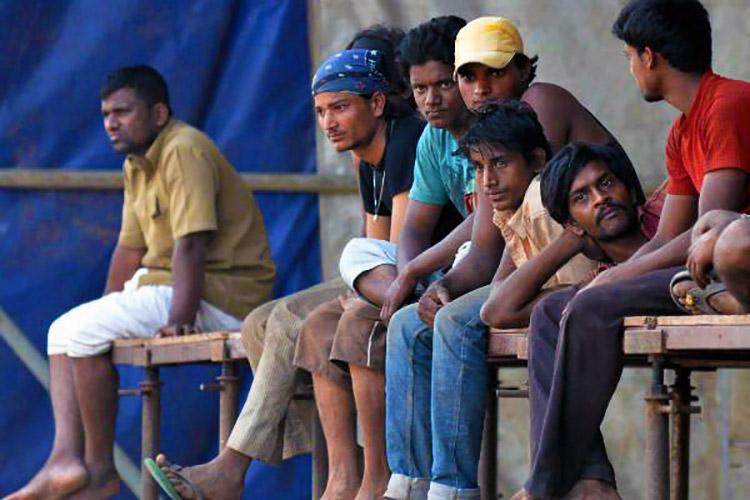
A fake audio clip claiming a Bengali worker was beaten by a hotel owner in Sweet Meat Street in Kozhikode and later put to death by hanging. The audio clip that surfaced over WhatsApp, claimed migrant workers from northern and eastern parts of the country were facing death threats in Kerala. This led to nearly 400 migrant workers to flee from Kozhikode in Kerala.

The false campaign also used videos of mob lynching elsewhere to scare and trigger panic among the workers. The rumours were spread mainly among the migrant workers from Assam, Bengal and Orissa, which resulted in shutting down of two hotels as migrant workers left for their home states.

As per reports, pictures of the mob killings that took place in north India are being used with the messages to scare away the workers. While the messages have turned out to be false, the panic it has triggered has forced many migrants to flee Kerala. Hotel owners have lodged complaints with the district collector against the complaint.

Kerala’s racial intolerance has been on the rise as per media reports. This racial intolerance is not just limited against people from the North and Eastern states. A 45-year-old migrant worker from Tamil Nadu, whose leg was severed by his roommate in a drunken brawl in Malappuram district, was denied treatment by three hospitals, including two government medical colleges in Kerala.

Recently, Kerala state Public Works Minister G Sudhakaran has used the N-word against a world bank official Dr Bernard Aritua. Following the racist slur, instead of apologising, he claimed he didn’t know the word was banned.

After OpIndia expose, The Wire selectively alters its story, gets further slammed by readers

0

On Sunday, a website named “The Wire” came out with a sensational news report titled, The golden touch of Jay Amit Shah, which insinuated that businesses of BJP President Amit Shah’s son had seen a dramatic surge after Narendra Modi became the Prime Minister in 2014.

While it appeared some sort of investigative journalism from a distance, a closer look and scrutiny revealed that the article was based on shoddy research, lack of knowledge about financial issues, and dishonest narrative of selective facts. OpIndia highlighted these shocking shortcomings in an article.

In our article, we had also pointed out how the reporter had made extremely naive errors like reading negative numbers as positive integers. We had also pointed out that article was not forthcoming about the profit/loss figures during the FY 2015-16 year when the surge in revenue from 50,000 in the previous year to about 80 crore had happened.

As it turned out, even after the spike in the revenues, the company named Temple Enterprises Pvt Ltd, had registered a total loss of 1.48 crores in that financial year, which rather proved that Jay Amit Shah had no such “Golden touch”.

What further eroded this “Golden touch” narrative by the The Wire was the Revenue and Surplus figures or the net worth of the company. As it turned out, the touch of Jay Amit Shah was so “golden” that the net worth of the company plummeted from about Rs 19 lakh as of 31st March 2015 to negative Rs 80 lakhs a year later. So understandably the company was in trouble financially and soon shut shop.

But The Wire report on the other hand claimed that the Reserves and Surplus had JUMPED from 19 lakh to Rs 80 lakh in one year (reading a negative number as positive). This single point was enough to discredit the fact checking capabilities and financial literacy of the website, and as a result they predictably got called out.

Now it seems that The Wire decided to clarify on that point and issued a corrigendum, which itself was inaccurate. This is what they initially issued (emphasis added):

“In an earlier version of the article, it was stated that the reserves and surplus of Temple Enterprise rose to 80.2 lakh in 2015-16, whereas it turned negative compared to the previous year. The direction of change, which is inconsequential to the company’s overall performance, has been duly corrected.”

Going by the above corrigendum, The Wire’s interpretations of a company’s health were interesting to say the least, as they clearly didn’t think that financial health doesn’t point to “overall” performance.

This amused various twitter users:


The Wire then seems to have realised that they had again erred, and as pointed out above, and issued a fresh corrigendum (emphasis added):

“In an earlier version of the article, it was stated that the reserves and surplus of Temple Enterprise rose to 80.2 lakh in 2015-16, whereas it turned negative compared to the previous year. The reserves of the company at the end of the year are inconsequential for the larger investigation into the huge increase in turnover of the company.”

However, it should be noted that The Wire is focusing on just one problem in their original report. They have not clarified about:

  • The innuendo that Jay Amit Shah got a  loan of about 15.78 crores from a Non-Banking Financial company (NBFC), while it just recorded a revenue of Rs 7 crore. The article failed to mention that this is a standard operating procedure of a NBFC.
  • Claiming that Kusum Finserve, another company Jay Amit Shah, had raised a loan of Rs 25 crore from a cooperative bank against a collateral valued at under Rs 7 crore. The corrigendum does not mention that it was a Letter of Credit and not a loan.
  • Raising question about Jay Amit Shah’s partnership getting a loan of Rs 10.35 crore loan from a public sector enterprise, Indian Renewable Energy Development Agency (IREDA) when the fact is that IREDA explicitly states that any any private entity in India can apply for a loan.
  • And finally the “Golden Touch” narrative built based on the surge in turnover while the company had actually turned a loss of Rs 1.48 crore in the financial year.

The Jay Amit Shah story: Low on Facts, High on innuendo

After a hiatus of a few months, journalist Rohini Singh makes a comeback. Singh was last seen as a journalist with Economic Times. She was on the forefront of their coverage of the Uttar Pradesh elections of 2017. To say she read Uttar Pradesh wrong, would be an understatement, and soon after the results she disappeared from public gaze as well as social media. In 2016, she had attempted to expose “irregularities” relating to then Gujarat CM Anandiben Patel, and the attempt was debunked here.

Now, around a month before Gujarat elections, she is back, this time with a leftist site called TheWire, which itself has been party to fake news in the past. Singh’s latest scoop is titled: “The Golden Touch of Jay Amit Shah” and documents the rise of Amit Shah’s son’s businesses, and how they coincide with Narendra Modi becoming prime minister. Of course, words like “scam” are not thrown around, but nudge-nudge-wink-wink statements and questions are asked.

But this article is not about Rohini Singh. This is about facts. And the lack of facts in the article in thewire.

The “Golden Touch” setup

Firstly, Singh places the proposition before us, which justifies the title of “Golden touch”:
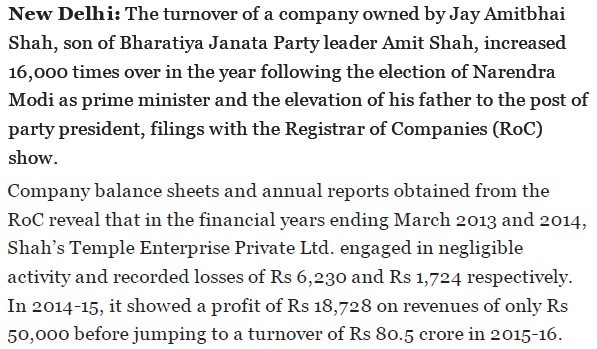
The innuendo is clear: No sooner did Modi become PM, a failed business of Amit Shah’s son, became an overnight success. First of all, the year in which the revenue shoots up, coincides with the year in which Temple Enterprises Pvt Ltd,  went in for one major change: Jay Amit Shah was appointed as director in the company just before the financial year started, in January 2015. Perhaps, this is when the company decided to expand.

Secondly, “Revenues” or “Turnover” refers to total sales or service income. “Profit” or “loss” refers to such Revenues minus all expenses incurred. Now, let us tabulate the above data:
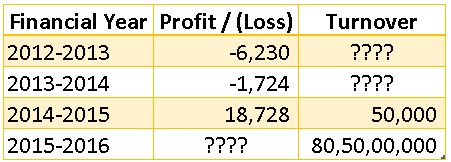
The above table is made up only from the data provided by Singh. Does it seem odd, when you notice that she mentions the profit figure for 3 years, but then in the 4th year, “forgets” the profit figure and instead focuses on turnover? One of the crux of the article is that the turnover jumped 16000 times, hence Mr Jay Amit Shah has the “golden touch”. But would a man with the “golden touch” incur a loss of Rs 1,48,00,551 (Rs 1.48 crores)? Yes, as per the same Registrar of Companies (RoC) filings (link at the end) which Singh quoted so much, this company with Rs 80.50 cr revenues, had Rs 81.99 cr as expenses, and incurred a loss of Rs 1.48 crores as soon as Modi came into power.

Of course, revealing such information would puncture the entire narrative that Jay Amit Shah’s business was successful just as Modi came into power. Hence, this small piece was hidden by Singh.

But was it hidden completely? No. She mentions this loss in another paragraph, after she has built the case of the “golden touch”. However, here there is no context given, and more innuendo follows:
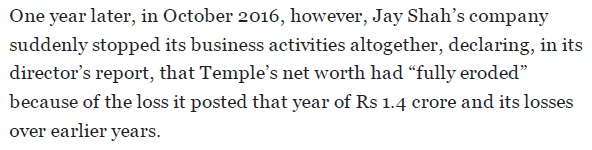
In a latter paragraph:

Note the innuendo: suddenly stopped its business. Net worth “fully eroded”. Little abnormal. The language clearly raises suspicion on the “sudden” closure and of the claim of net worth being eroded. Some basics again: Net worth is the amount by which assets exceed liabilities, which is generally equal to Shareholders’ funds (Capital) + Accumulated profits/loss. Have a look at the company’s Net Worth in the Financial year when it had the “golden touch”, and within 7 months of which, it stopped business activities:
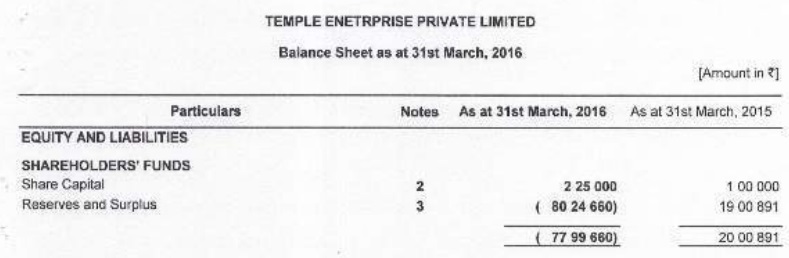
From Rs 20 lacs of shareholders’ funds on 31.03.2015, thanks to the “golden touch” year, the networth became NEGATIVE Rs 77.99 lacs on 31.03.2016.

So to put this entire thing in context: Jay Amit Shah had a “golden touch” due to which, his company incurred a loss of Rs 1.48 crores as soon as Modi came into power, ended up with a negative net worth of Rs 77.99 lacs, and shut down business activities. Quite a “golden touch” that!

Too completely prove, how illiterate or devious Singh is, read this paragraph:

Rohini Singh, former journalist at Economic Times, now writing for TheWire.in, just claimed that Reserves and Surplus which turned negative Rs 80.2 lacs from positive Rs 19 lakhs “jumped”! Even grade school children are taught that numbers with brackets with them are negative figures, and basic financial literacy means you know that negative reserves are losses!

After the above, it may not even be necessary to read the remaining article and take any of its “facts” on face value.

The mysterious loans given to the man with the aforesaid “Golden Touch”

The next thread of innuendos by Singh is how Jay Amit Shah’s concerns got loans from various entities. Firstly, this loan:
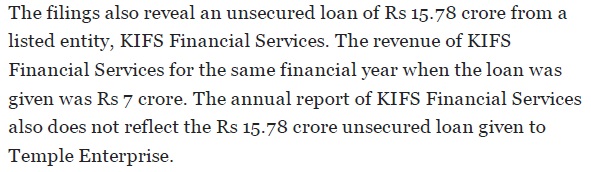
In another paragraph, Singh mentions that  KFIS is a Non-Banking Financial company (NBFC). As seen above, Singh again puts up some figures: Loan given Rs 15.78 crores,  Revenue Rs 7 crores. Prima facie these numbers can evoke shock. How can someone with an income of Rs 7 crores lend Rs 15.78 crores? Well that is what NBFCs do!. An NBFC is almost like a bank i.e. it lends money to borrowers, but unlike a bank, does not accept bank deposits from public. Hence it is called a “Non-Banking” Financial Company.

The revenue earned by NBFCs is of course interest on loans. Thus, if an NBFC extends loans of Rs 1000, the income can be expected to be around Rs 100 to Rs 200 from that loan, depending on the interest rate varying from 10% to 20% (on a very high side).  Thus it is perfectly normal for NBFCs to have low revenues but high loans. For example, Bajaj Finance, which is one of India’s biggest NBFCs had Rs 9977 crores Revenue vs Rs 57,683 crores of loans given for March 2017 i.e. Loans were almost 6 times more than revenues. Singh clearly does not understand financial companies. Lastly, she claims that the loan given was not mentioned in the balancesheet of KFIS. Do banks or NBFCs list out the names of all their borrowers on the balancesheet? Are they even allowed to do so? No! Just to be sure, check the above linked balancesheet of Bajaj Finance, which is also a listed NBFC.

Next she mentions how Kusum Finserve, another concern of Jay Amit Shah, had managed to raise a loan of Rs 25 crore from a cooperative bank against collateral valued at under Rs 7 crore. Oddly, she herself busts this, when she puts forth the reply from Jay Shah’s lawyer. There was no “loan” of Rs 25 crores. There was only a Letter of Credit (LC) of up to Rs 25 crore.

What is an LC? An LC is an obligation taken by a bank, to pay the agreed amount to the seller on behalf of  its customer. An LC is mostly used for imports, and the money is paid to the seller abroad, against an import bill. The amount is utilised as and when imports are made by the buyer, and replenished as and when further sales are made. Since the amount under an LC is paid against purchases of actual goods, the goods act as security for such amount, and hence the initial security given is usually lower than the total LC limit. When the bank actually pays the money to the selelr abroad, it has dual security: That of the property given before using the LC, and also of the goods which are bought using the LC. Again, a business journalist should have known this.

The last loan in question is a Rs 10.35 crore loan from a public sector enterprise, Indian Renewable Energy Development Agency (IREDA). She again uses innuendo to question how a Public Sector enterprise gave a loan to the same Kumsum Finserve. This concern had applied for a loan for the project of for a 2.1 MW wind energy plant. It is also mentioned that “The Wire has reached out to IREDA about its lending policies and will add its response later.”

Maybe the wire did not have an internet connection, because the entire terms and conditions of availing loans from IREDA is available on the site, and any private entity in India can apply for a loan! It is important to note here that the mission of IREDA is to promote, develop and extend financial assistance for renewable energy and energy efficiency/ conservation projects. It has sanctioned around Rs around Rs 37,000 crore of credit for clean energy projects so far and further Rs 28,000 crore to developers, which aids generation capacity of around 7,000 MW. It plans to sanction around Rs 13,000 crores this financial year. Not quite the puzzle now is it?

Low on Facts, High on Innuendo.

So what does this major “expose” by Rohini Singh prove: It shows how a company owned by Amit Shah’s son, made a loss of Rs 1.48 crores as soon as Modi came into power, and eroded its net worth, forcing it to shut operations. Another company took standard business finance facilities from a cooperative bank. These finance facilities were misrepresented by Singh as “loan”. It also made use of a Government scheme to promote renewable energy by taking a loan for a wind power project. While narrating this Singh could not even distinguish between a negative reserves position from a positive position.

Perhaps this is why The Economic Times did not have faith in Singh.

Links:

Annual Report of Jay Amit Shah’s company Temple Enterprise Private Ltd

Copy of article in TheWire (in case it goes down in a “cyberattack”)

With inputs from @muglikar_  and @attomeybharti 

Why the Indian mainstream media is hated by many – just 5 reasons

0

An accident has taken place, where people are dying. A man imperils his safety and tries to rescue a woman. However, based on part of a video clip, he is labeled a molester rather than an exemplary citizen. The mistake is established as a longer video is found. So the media-person who labeled this rescuer a molester should say sorry to the individual, right?

Wrong. Indian media ethics – what little remains in the profession – is not just wafer thin; it is also devoid of commonly accepted societal norms of logic and decency. The accuser issued a general regret – “I erred, won’t happen again”. There was no compensation, not even a word, for the model citizen turned global poster boy of Indian male sexual deviancy.

A debate rages on Twitter every day, how abusive RW (short for right wing, dog whistle for Modi supporting Hindus) are towards media. There is no doubt that media-persons face a barrage of strong language and counters every day on Twitter. But why is that? There are five key reasons.

Showing mirror to power

Media-persons often like to standby their favourite dictum – comfort the afflicted, afflict the comfortable, attributed to American humourist Finley Peter Dunne. They also want to show mirror to the power of the day. In a two-tier system, when politicians represented power, and media represented the conscience keepers, this dictum worked smoothly. With the advent of social media however, we now have a three tier opinion making system.

Media loves to believe it has all the rights to question the politicians – the unsaid part being especially the ones who they don’t like – but gets agitated when the same yardstick is applied to them. Twitter user and editor of OpIndia Rahul Roushan says – Establishment is the bunch that systematically controls your thoughts through media and academics, not the government that’s there for 5 years. Media however doesn’t like accountability, but demands sweeping, discretionary powers.

While media has direct access to their bête noire political class, social media users can only exercise their right of questioning on Twitter. When they are denied access and answers, they write strong words.

Collective mediocrity trumps individual brilliance

Let’s say a Twitter user says “all doctors are thieves”. What is the likely reaction to this statement? Some people may agree with the sweeping generalization, most won’t. Some doctors may actually reason saying “not everyone is a thief – look at me”. Some doctors may even agree that due to crass commercial tendencies of a few individuals, the entire profession is getting a bad name. But what’s the probability of the best doctor on Twitter shooting an angry tweet-storm tagged to this user’s employer and saying “where do these abusive people come from?” Zero – this will never happen for doctors. Or engineers, CAs, or lawyers. In fact this won’t even happen for politicians!

This however happens every single time for media-persons. Make a statement like “media is wrong” and quite likely the best in the business will send you a direct message in passive aggressive tone saying “you bhakts will just not get it”. Don’t believe it? Well, I would love to add screenshots of DMs from a national business editor – an absolutely rocking, delightful, and knowledgeable individual – but let’s not get there.

Media is the only profession where individual brilliance comes to the rescue of collective mediocrity. This is the only profession where the best in the business defend the worst in the name of professional solidarity. And this is the only business where participants believe that they are all above average when it comes to professional morality – laws of central tendency be damned.

Consumer is the king – or not

Every neighbourhood kirana shop in Hindi belt will likely have a sticker – “grahak bhagwan ka roop hota hai.” The consumer is king, but not in Indian media business. This is the only industry in India, which has no responsibility for the consumer – the lay reader. Of course, the reasons are structural.

While most people believe Indian media is in the business of taking news to the readers, in reality this business is about taking influence, or rather the threat of it, to the powers that be. Long before Google create a product out of the user, Indian media had perfected the model. Our media aggregates readers and sells their collective influence in form of threats – what if! – to politicians to influence decisions or industry to get advertisements.

Their consumers are advertisers and people in important positions, but not the readers.

Residual competence

Look at any professional career in India – there are entrance tests to qualify before one is accepted in a good quality educational institute and there are exams to clear before one gets out of these institutes and starts practicing the said profession. Engineering? Check. Medicine? Check. Accountancy? Check. Law? Check. Design? Check. Management? Check.

Media? Uncheck.

One can get an admission to most media schools without any real entrance competition. There is no tollgate on who makes it. So who really makes it? Well, anyone who could not make it anywhere else will be a significant part of the population studying journalism. What does that say about the competence in the system? Not a lot, theoretically.

Over time, this available incompetence meets irresistible access – access to the power. And it assumes that the gatekeeper is the owner of the mansion. For the qualifications and skills of a gatekeeper, the media-persons start owning mansions in the posh Jor Bagh. Sometimes literally.

Consequences are inconsequential

What happens when you or I do a terrible job at work? When we lose a deal? When we don’t deliver a project? When we make a mistake? You or I get fired. Or least take a bonus cut. Or at the minimum, we get no wage hike as a consequence.

What happens when a media-person wrongly and incompetently accuses a person of being a molester? She is praised by her fellow professionals for expressing regret. Don’t believe it? Check the Twitter timelines of any Indian media employee from October 4th 2017. Even the sane one – and there are many in the profession despite the general mediocrity – heaped praises on the concerned newspaper, its editor and the reporter for expressing regret. Guess we are lucky no one demanded a Bharat Ratna for the said reporter for being regretful.

Media-persons face little or no consequences for acting in the disinterest of the readers. Yes, they may face consequences of their real consumers’ ire – a politician or an industrialist may well get someone fired. But it would not be for the lack of job skills.

So here we are – say something strong to someone incompetent, shaping a public discourse, potentially incorrectly, and who is not likely to face any consequence of this action – and you will be labeled abusive. The little power of narrative disintermediation which social media has bestowed upon you is abusive to the media-persons – it has taken away their carte blanche.

When you can neither peek in the mirror nor break it, it is best to call the ones holding the mirror abusive. For it is not your words they are labeling – it’s your intent. Something’s got to give, to quote Ravi Shastri – we just don’t know when.

Retired Armyman Lt Gen H S Panag posts misleading pictures of martyrs, gets called out

0

Lt Gen H S Panag, a former Commanding Officer with the Indian Army today posted images of the martyrs who died in the Indian Air Force chopper crash in Arunachal Pradesh on Friday.


The image is of the bodies of the martyrs wrapped in plastic bags and makeshift coffins made of cardboard. At first glance, it seems like an insult to the martyrs, especially on a day when India celebrates 85th Air Force Day.

He further tweeted images of the the coffins laid down, where it appears disrespectful to keep the bodies of martyrs like that.


Soon, outrage started pouring in for the alleged mistreatment of martyrs by the ‘nationalist’ government.


An abusive troll masquerading as journalist, Swati Chaturvedi also chimed in for fear of missing out on targeting Modi.


Soon, images of the bodies of the martyrs, giving full respect to them, were shared, which revealed that the initial images were from the time the bodies were recovered.


One would expect Lt Gen Panag, of all people, would know how retrieval from remote location would work, especially when weather conditions are not favourable.


There is no doubt that the martyrs, even when their remains are being evacuated from inhospitable terrain, deserve utmost respect, but insinuating that the government, the Army or the Air Force deliberately disrespected them is utterly disgusting. Guess when you have a political point to score, respect for the uniform you once donned gets thrown out of the window.

Has ‘Operation Gujarat’ of the Left liberal cabal started?

0

In April 2017, a person named Shivam Vij, who is deputy editor on HuffPost India, wrote a post titled “When Will Indian Liberals Stop Falling Into The Right-Wing Trap?”. The former associate editor with the Left leaning website Scroll. in had repeated the casteist strategy here, by saying that left liberals should talk about caste atrocities. He had said (emphasis added):

Why do liberals see Hindu-Muslim as the only narrative worth fighting for? Hindu-Muslim polarisation seeks to unite Hindus against Muslims. The politics of Mandal served to fragment the Hindutva cause. We have known this since the ’90s, but our liberals never learn.

Great that liberals spoke up for Pehlu Khan, but if only they had raised their hashtags for Jaysukh Madhad, a Dalit who was recently killed in Gujarat for the crime of winning a panchayat election.

This, he argued, was the only way to halt BJP’s political domination.

Shockingly, this divisive thought was endorsed by people like senior journalist Shekhar Gupta, and Congress leader Shashi Tharoor. Incidentally, the Pakistani senate, in a policy paper drafted by a 13 men committee, advocated exactly this: India’s own fault-lines in their alienated groups such as Dalits, must be highlighted.

This tactic had in fact worked in India before. In the run up to the Bihar elections in 2015, we saw many such caste violence related storied being propped up by the media.

Media houses like The Hindu and DNA ran a story claiming that a Dalit family in Uttar Pradesh was stripped by police. Multiple sources later confirmed that the family had stripped on its own accord, as a sign of protest.

Amnesty International, the human rights group, hosted a petition to help 2 dalit sisters in UP, who were apparently ordered to be raped by a Khap Panchayat. But, when BBC visited the said village and the villagers said there was no such order passed. The local police also said that their investigations revealed that there was no such order passed. The village council also denied such allegations. The petition, by then, had gone viral.

Then, the news channels went into overdrive discussing an alleged revenge murder of Dalit children by upper caste Rajputs. But a few days later, as investigations went ahead, initial theories were trashed. Forensic experts who investigated the crime scene concluded that the “origin and source of fire was from inside the room and not from outside”. The report also apparently that there were “no traces of outside entry” into the premises.

Another story claimed that an old Dalit man was killed because he tried to enter a temple in Uttar Pradesh. This was subsequently picked up by various media outlets. But other media houses reported that the Dalit man was in fact killed by a drunkard.

In all the cases, a story of caste atrocity was created and given credence to by the media. TV debates were held. Outrage was fuelled. And in most of these cases, the original angle of caste friction eventually fizzled out.

Now, with the Gujarat elections coming up, the Left-liberal playbook is being revisited. We saw the first act of the drama last week. A shocking news was reported from a Limbodara village near Gandhinagar where a 17 year old Dalit boy named Digant Maheria was allegedly stabbed by upper caste men for sporting a moustache.

This resulted in outage on social media and also an attempted protest outside the state secretariat by Dalit leader Jignesh Mewani for demanding the resignation of the Gujarat Home Minister for reportedly having failed to protect the Dalits.

On Friday, 3 days after the incident, the Gujarat Police via its probe concluded that the whole incident was fake and the boy had made up the allegations to generate publicity after being convinced to do so by an influential NGO.

According to local news portal Desh Gujarat, the police probe revealed that:

  • There were no signs of blood in the location where the attack was supposed to have taken place
  • CCTV footage and clothes were checked and they did not support the version of events recounted by the boy
  • A paan shop owner near the given location too claimed that no such incident had occurred there
  • Even questioning and checks failed to corroborate the incident

Later as stated in the Desh Gujarat report, while interrogation the boy broke down and confessed to setting up the whole incident. He confessed that he and his two friends brought a sharp shaving blade and he in-turn asked them to attack him with it.

The two friends as well corroborated this version by stating that they caused the injury after being pressurised by the boy. The boy later also confessed that he escalated the issue by talking to the media persons for getting coverage. He claimed he was inspired to do so by some NGO people. According to him, he used to visit and speak with them which inspired him to carry out this stunt.

And just like that, the first story of caste atrocity in Gujarat fizzled out. Although, we have the truth now, the damage may have already been done. Social media was full of news about this incident. A social media campaign involving putting one’s own pictures with mustache was launched too. Freelance activists and protestors too chimed in with their protests, but was torn between supporting the Dalit discourse vs. calling out protests sporting moustache as patriarchal and show of masculinity.


It remains to be seen whether Gujarat will see more such reports coming out. Gujarat elections are more of a prestige battle than anything else. PM Modi and Amit Shah, both hail from Gujarat, and even a decrease in vote share or margin of victory will be called a defeat of Modi and Shah. In such a situation, opposition can be expected to cook up all sorts of controversies, and when it comes to caste violence, we already have precedent.

In a twitter fight, Adnan Sami calls Omar Abdullah sadistic sore loser

0

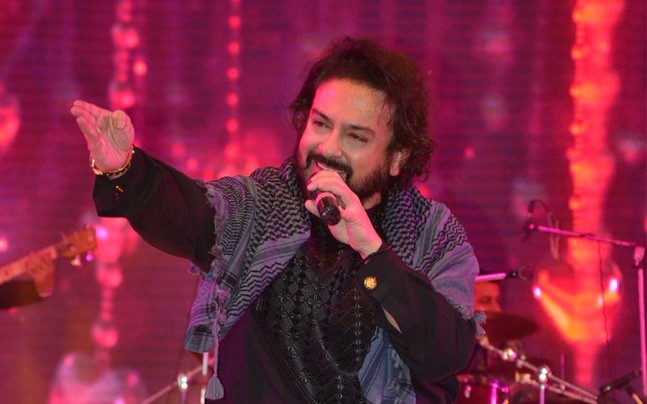
Pakistan-born singer Adnan Sami, who recently took citizenship of India, held an enthralling concert in Srinagar yesterday. However, former Chief Minister of Jammu and Kashmir, Omar Abdullah took this moment to be bitter and settle political scores.


Meanwhile, photographs of the venue before the start of the event, with empty seats started making rounds on social media.


Soon, Abdullah tweeted what a pity it is to see empty seats in the concert.


Referring to the 2013 Zubin Mehta concert in Kashmir, where Peoples Democratic Party (PDP), which was in the opposition had dismissed the concert which ended on a sour note, Abdullah, who was the Chief Minister then, made a snide remark.


Sami replied to this with pictures of a jam-packed concert, lightheartedly telling Abdullah to ‘grow up’


But Sami’s response got him a little rattled.


That is when Sami upped his attack on the former J&K CM and called him a sadistic sore loser.


Abdullah got into a defensive and asked Sami if this reactions on social media is worth the ‘gossip piece’ it may lead to? Sami, however, ended up giving him a lesson or two on how music should be above politics.


However, Abdullah got a lot of flak for his snide ‘stay safe’ parting note to Sami.


One thing is clear: Adnan Sami is not one to take things lightly.

Kerala’s leftist govt now trying to stop NIA probe into state’s “Love Jihad” case

0

The whole issue of Love Jihad has almost become synonymous with Kerala in recent months.

We had reported that the Supreme Court had ordered the National Investigative Agency (NIA) to probe an alleged love jihad case of a girl named Akhila Asokan. In that case the marriage of the girl with a man named Shafin Jahan, had been declared null and void by the Kerala High Court thanks to a petition by the girl’s father. The father had alleged that the girl was forced to convert after being abducted and wrongly confined at an illegal Islamic conversion center.

The plot had later thickened after it was reported that a common mentor named Sainaba, associated with the radical group Popular Front of India (PFI), “lured” the two girls including Akhila into accepting Islam.

Now in an interesting development, it has been reported that the communist Left Front government of Kerala told the Supreme Court on Saturday that there was no need for a NIA probe into the matter.

It reportedly told the court in an affidavit that the state police was effectively investigating the case. Its affidavit also claimed that the state police’s investigation had not revealed any offences which warranted a probe by the NIA. It also claimed that the state government was competent enough to conduct such a probe.

Intrestingly the government had earlier expressed no such objections about the NIA probe. The next hearing of the case is on Monday.

What is the reason behind the State government’s sudden reluctance to let the probe go ahead. Is it now afraid that the probe would open a can of worms?

We had recently reported that the NIA government is already making substantial headway into the whole matter by probing a total of 32 love jihad cases which have reportedly happened in the state. The agency has also asked the Kerala police to give details of alleged forced conversions which have been carried out in Therbiyathul Islam Sabha in Kozhikode, which is a religious centre authorised by the Kerala government.

It may also just be the beginning as the total love jihad cases in the state are pegged at 92 and the NIA has claimed that it would be uncovering the whole racket.

Twitter reminds Arvind Kejriwal of his hypocrisy on caste based politics

0

Delhi Chief Minister Arvind Kejriwal today took a holier than thou stand and tweeted how he wishes elections were fought on agenda of education rather than caste and religion.


Twitter, of course, is an unforgiving place for the odd-even politician who changes his stand as per flavour of the season. He was soon reminded of his own promises and statements he had made during earlier elections where he and his leaders made caste-based and religion-based comments to woo voters.


The user was referring to Arvind Kejriwal’s tweets and promises during Punjab elections held earlier this year.


AAP rebel leader Kapil Mishra, too, joined in in calling out Kejriwal’s duality.


He was also reminded how he donned various roles to appease his voter-base.


Not only him, but his other associates, too, have indulged in divisive caste-based politics.


This just goes out to show that the white elephant of Indian politics has different teeth to show and different to chew.

Why shaming Hindus for alleged pollution on Diwali is completely misplaced

0

It is that time of the year when all Hindus are shamed for celebrating one of their most important festivals – Diwali. Apart from lights, the festival is celebrated with fireworks. The common point of accusation against the Hindus is that the festival causes pollution, and serious harm to health of kids and adults alike. Plus we are also reminded of animals getting disturbed by loud noises and being hazardous to birds.

While smoke is an issue on Diwali day, let us take stock of the facts about pollution – and Diwali’s contribution to it. There are few threads in this problem:

  • The overall pollution levels and the source thereof
  • The persistence of firecracker pollution
  • The economics of fireworks in the recent years.

A Greenpeace report claims that all around the year, the Indian metropolis are uninhabitable with respect to air quality. Particularly Delhi, has the distinction of being the most polluted city in the world. Average year round air pollutant levels in Delhi were more than 5 times the safe levels as specified by India and were 10 times higher of that as specified by WHO.

The report identified construction and vehicular traffic to be the two largest contributors of pollution. The third largest contributor was practice of burning paddy husk in nearby states. While such a detailed analysis has not been done for other cities, anecdotal evidence suggests that construction dust may be the biggest culprit, when it comes to air pollution.

Besides construction dust and vehicular pollution, bad infrastructure (as in bad roads) creates suspended particular matter that are effective respiratory pollutants. This is particularly true of metros where civil amenities are more of a wish than a reality. From the above points, it is clear that majority of the pollution in our cities is a persistent year round issue and is not singularly caused during Diwali.

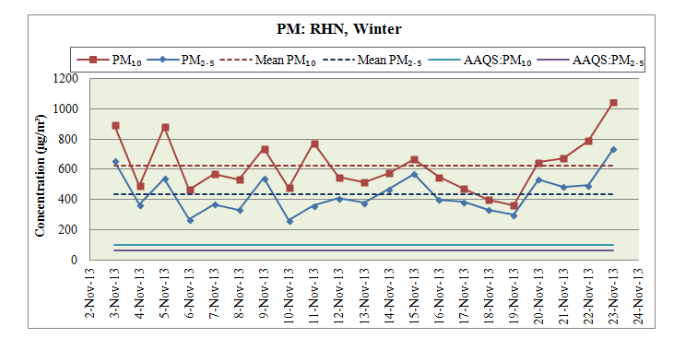
There was a research paper published by IIT-Kanpur in 2016, which studies the issue of pollution and its causes in great detail; in and around the National Capital Region. One particular figure in this report is educative. The figure has been reproduced below:

The time series graph shows the pollution levels in Delhi during the month of November (year) 2013. The first data point is Diwali day – and one does see that the pollutant levels were much higher than the mean [red and blue dotted lines]. What is interesting however, are the pollution level spikes on the 5th of November, on the 9th and 11th, and on 21 through 23rd.

In fact, the pollution levels on the 23rd of November are far higher than on Diwali day. One may argue that the Diwali pollution persists for three weeks, but the data falsifies such a hypothesis. In fact, we find that the pollutant level on Diwali day falls well below the mean levels by the next day. Furthermore, the median pollutant levels across the month also seem to be well below mean levels. These two data together suggests that the pollution caused by Diwali is extremely short-lived (less than 24 hrs), and is no worse than the usual sporadic spikes of pollutants that are observed in Delhi.

Another aspect of Diwali that gets condemned is the noise pollution. While firecrackers used to be noisy (upto 140 dB) in the past, continuous revisions in acceptable noise levels have brought down the overall noise levels to less than 100 dB – and that was the maximum noise by a firecracker. In fact, the overall noise levels across several cities were measured to be between 60 dB and 90 dB (far lesser than the 100 dB of the noisiest cracker). Compare this with a typical noise level in a city junction: honking creates noise in excess of 100 dB.

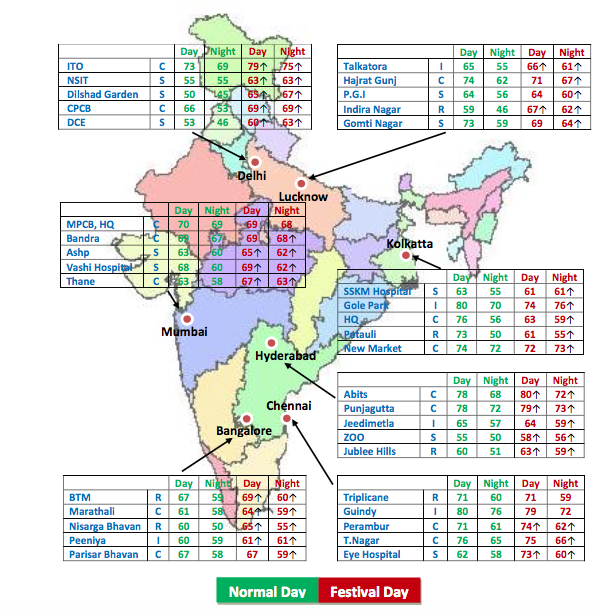
A look at the differential noise between a normal day and Diwali noises shows that in many places, the differences are marginal. In fact, in some cities, the differences are so marginal that one may consider it to be well within expected variation.

This figure is from a Central Pollution Control Board study on pollution during Diwali across India (2014). Sadly, this report doesn’t provide confidence intervals for the noise levels; nor does it provide any P-values for the differences in noise between normal and Diwali day. What is clear, is that Diwali is likely to be as noisy as any normal working day in Indian cities:

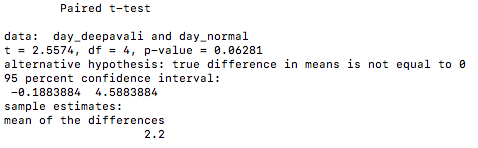
A statistical test for Bangalore for Normal and Diwali days (screen shot below) shows that the mean difference in noise between a normal and festival day in the city is barely 2 dB. In other words, the difference is negligible. Diwali doesn’t create any extra-ordinary noise pollution than an normal day
Last but not least, we come to the question of economics. Several reports such as this one point out that fire cracker sales have been falling drastically, on an annual basis. This particular report cites a 20% reduction YoY in sales for five consecutive years. Such drastic reduction in fire cracker sales would mean at least a halving of total sales (taking a base line of 100 INR, -20% CAGR for 5 years leaves us with 32 INR – or a 68% reduction).

In one particular year, 2015-2016, the fall was 25%. Yet, some newspaper reports claimed a 40% increase in pollution on Diwali due to firecrackers. This doesn’t compute: how can one cut down firecracker purchase by almost 70%, and still end up with 40% increased smoke?

Does it mean that firecrackers are creating 3 times as much smoke as before? While it is “possible”, it is not probable. And the jury will be out on this one until specific studies are done. On the other hand, given the first graph we saw – one could argue that majority of the pollution is due to other causes, and Diwali smoke only marginally adds to it. This seems to be the more likely scenario – at least for Delhi.

In summary, pollution increase during Diwali – of both the air, and noise, is likely marginal, and more importantly, extremely temporary in nature. Vilification of both the festival and those who celebrate it on environmental grounds, seems like vested hatred than anything else.

Editor’s note: This article was originally published on Author’s blog “Rumbles of a Lonely Mammoth” and has been re-published here with due permissions.