Home Blog Page 7594

3 retweets by Kejriwal within a day that made a fool out of himself

0

Arvind Kejriwal is known to be an active Twitter user, like all his supporters are. He often makes news through his tweets and uses it as an important tool for his political campaigning. Only yesterday he made news when he got into a Twitter fight with Congress leader Captain Amarinder Singh as part of Punjab assembly elections campaign.

Popular opinion was that Captain won the Twitter fight. Thought that may not change the ground reality where AAP is expected to throw a tough challenge to both Badal and Captain, this “defeat” surely got the AAP supremo a little upset; this reflected in his choice of retweets that virtually boomeranged on himself.

To divert attention from this Twitter defeat, Kejriwal re-tweeted some other messages attacking the union government and Prime Minister Modi. However, those retweets ended up pointing fingers at Kejriwal himself.

The first of these retweets, while he was in the middle of fight with Captain, was a retweet of an AAP-leaning humour-parody account titled “History of India”. It attacked Modi for not acting against UPA corruption after coming to power.

Arvind Kejriwal retweets
Assumption is that public won’t question Arvind Kejriwal ever?

Discounting the fact that most of the corruption cases are sub-judice and the government can’t be expected to influence judiciary (and when government went after cases like National Herald or corruption in Delhi secretariat that went back to Sheila Dixit regime, Arvind Kejriwal too had joined chorus of political vendetta), the irony was lost on Kejriwal himself who claimed to have 370 pages proof against Sheila Dixit.

Perhaps he was sure that the humour-parody account won’t point out this irony, so he re-tweeted happily.

The second of these ironical retweets came up after he gave up on Twitter fight with Captain. It was a retweet of news blog Janta Ka Reporter, better acknowledged as a mouthpiece of Aam Aadmi Party. It questioned why media didn’t discuss snoopgate, which was related to “private life” of Narendra Modi.

Kejriwal retweets
No one in media discusses private life of Arvind Kejriwal. And is it about private lives of Varun and Sandeep, or misuse of public posts?

Perhaps Kejriwal forgot that media did discuss snoopgate, and it was even an election issue before the 2014 general elections. However, this tweet exposes the irony that “Aaloogate” was never discussed by any media. In case you’re wondering, Aaloogate refers to claims of a journalist and former aide of Arvind Kejriwal, who accused him of having extra-marital affairs with a girl 16 years younger to him.

All leading media organisations and journalists have kept mum on this, and now Kejriwal wonders why private life of Narendra Modi is not discussed.

And the final retweet, completing hat-trick of irony, came up when Kejriwal re-tweeted Congress leader Salman Khurshid claiming rising intolerance in the country while citing examples of isolated and fabricated incidents.

Kejriwal retweets
Achchhe din for sure as Mr. Khurshid, who had dared Kejriwal to visit his constituency and go back safely, is now being retweeted by Kejriwal.

This retweet came within a day after Arvind Kejriwal had asked Captain Amarinder Singh as to why BJP folks were supporting the Congress leader in the twitter fight. It is true that many BJP supporters were indeed supporting Captain by re-tweeting his tweets.

But by his own logic, why is he now re-tweeting a Congress leader? Sab mile huye hain ji?

Troll CM Kejriwal finally meets his match on Twitter, runs away from Debate challenge

Delhi CM Arvind Kejriwal officially does not have any portfolio allotted to him, although he is the Chief Minister of Delhi. The common joke was that he had been handed the Twitter ministry, on which his job was trolling opponents. Earlier this year we saw how Kejriwal had tried to troll Modi, but social media trolled him instead. Kejriwal tries to troll many political leaders, but rarely do they pay any attention to him. But this time it was different.

It all started with Capt Amrinder Singh of the Congress, tweeting this:


To this, Troll CM Kejriwal had this reply:


Most politicians back-off at this stage, since the adage goes that wrestling with a pig will make you dirty, and the pig happy. But Captain was in the mood for a “dangal”. He promptly questioned Kejriwal on his tall claims of jailing many people if he came to power:


A severely embarrassed Kejriwal sidestepped this question altogether, but he had to have the last word, hence diverted the topic to something else:


But Captain was not about to give up:


And with this next tweet, he challenged Kejriwal for an open debate:


And Kejriwal accepted the challenge! But with conditions!! He didn’t accept the debate challenge for himself, but on behalf of four of his party members. He claimed that any of the four would come to debate with Captain!


And that was the full toss Captain was waiting for:


No sooner did this happen, Twitter exploded and exposed Kejriwal’s dual standards. In his pre-CM days, Kejriwal would keep challenging opponents to debates and claim victory when they refused to come:


Finally Kejriwal replied, but by that time the damage was done:


Even after this tweet, people reminded him of his multiple logical fallacies:


And even as this was unravelling, the Indian Express came to Kejriwal’s rescue to spin the episode as “Kejriwal accepts challenge”:


(Tweets updated till time of posting)

Update: Captain has hit back:


//platform.twitter.com/widgets.js


//platform.twitter.com/widgets.js

Man goes to Madarsa to understand Muslim viewpoint, is accused of interference

0

Dehradun based Alok Bhatt decided to take an extra step and learn about common Indian Muslim’s views on issues like triple talaq and Uniform Civil Code (UCC), but little did he know that he will find himself in middle of a controversy and unknown calls following this rather admirable effort.

Alok, who is an active Twitter user, visited a local Madarsa on Saturday and talked to a few children studying there and other men accompanying those children or managing affairs of the Madarsa. Later, he shared his experience in shape of a series of tweets.

In his tweets, Alok praised the hafiz (caretaker) of Madarsa for being welcoming and talked to a few students about their studies, career plans, etc. Later he talked to a couple of men about their views on ongoing debate over triple talaq and UCC.

One of the men, Alok spoke to, opened up and told him about his sister who was divorced by her husband and she was left to fend for herself. He accepted that it was unfair on his sister, but claimed that triple talaq was part of the Holy Quran, as was told to him by a Maulavi the previous day.

Alok was given some pamphlets, which were distributed in the Madarsa for the women in local community to fill up. Muslim women were supposed to sign these pamphlets and declare that they were “fully satisfied” with rulings of Islamic Shariah, particularly about marriage, inheritance, and divorce, and that they “fully support” the All India Muslim Personal Law Board (which has vowed to retain the triple talaq practice).

Pamphlet to support personal laws
A sample pamphlet that Alok saw in the Madarsa (a higher resolution variant can be seen by clicking here).

It should be noted that the Law Commission has asked people to send their views on UCC and other related issues, and it appears that Madarsas are being used to create this public “support” in sync with views of the AIMPLB. This “wave of support” will later be conveyed to the Law Commission, declaring that Muslim women in India are happy with the status quo.

But are they really happy? When Alok probed the man further and asked for his views on triple talaq given what his sister had to undergo, the man got emotional, and said – what can we do? we are poor – and went inside.

Alok later shared his experience on Twitter and made a case about importance of understanding Indian Muslims by having a dialogue with them as a commoner – a conclusion anyone can hardly disagree with.

However, phone calls started coming in the following day after his series of tweets were shared by many. People claiming to speak on behalf of Muslim organizations told him that he shouldn’t have visited the Madarsa and talked about issues like talaq to young children (even though he talked to them only about studies).

There was a call that virtually accused him of trying to “interfere” in religious matters and of “misinterpreting” Islam. Perhaps this accusation flew from the fact that Alok had asked one Maulavi about proof of triple talaq being present in Quran – an argument many Muslim scholars too have made (that triple talaq is nowhere mentioned in the Quran).

These phone calls didn’t stop and Alok found himself in the middle of a controversy that he never intended to trigger. His tweets had suddenly become “controversial”. He even tweeted “I will NOT delete the tweets” last night, but found the pressure from certain quarters a bit too much.

“My entire intention was to reach out, but I was being accused of interfering,” Alok said when OpIndia.com got in touch with him, “As tone of calls changed, I realized that perhaps it is better that I don’t talk about this. I don’t want to get into some legal trouble, being accused of blasphemy or creating enmities between communities when my intentions were just the opposite. What better proof of my clear intention than the fact that I left my telephone number with the Madarsa teacher?”

As a result, on Monday morning, Alok deactivated his Twitter account.

He still can’t believe that he had to face this after such an honest dialogue without any ill will or bias.

“It was so poignant, humbling, and yet so troubling experience when I heard the story of someone’s sister,” Alok told OpIndia.com on phone, “But I didn’t know that I will have to face calls from unknown people asking me to explain my visit and intentions.”

Alok told OpIndia.com that he will wait for the “controversy” to die down and then will decide whether to be back on Twitter.

And while Alok decides not to tweet or say anything on the matter, those pamphlets are being signed by Muslim women, who perhaps don’t even know what they are signing on, telling the Law Commission that they don’t need any change.

For someone bullied for his art, Karan Johar is not doing justice to this YouTuber

0

Karan Johar can lay claim for being one of the most harassed movie makers in India, for having his Freedom of Expression throttled at multiple stages. His movies like My Name Is Khan, Wake Up Sid and most recently Ae Dil Hai Mushkil faced troubles from goons for various reasons. Even when he was involved in the AIB Roast, various issues were raised for his insensitive jokes. Given this, you would think Johar would probably empathise with artistes who get bullied into submission under various garbs. But think again.

Meet Jaby Koay. He is based out of California in the United States of America, and is a filmmaker who reacts to movies and trailers and shoots some of his own work. He also does trailer-reactions to Indian movies by the dozens and has a substantial fan following, earning him requests from Indians to do more Indian movies. And this is probably because he does a good job, and is not the usual condescending American.

Recently, Koay had been getting fan requests to do the trailer of ‘Dear Zindagi”, the upcoming movie starring Shahrukh Khan and Alia Bhatt. But he just wouldn’t do a trailer reaction for the movie. This obviously had his fans a bit bothered and hence, Jaby decided to make a fresh video, explaining why he didn’t do Dear Zindagi:

Jaby explains that few months back, when he did the trailer reaction to Johar’s Ae Dil Hai Mushkil (ADHM), he got his first “copyright strike” from the team of ADHM. He explains that a “copyright claim” is where companies say someone is using their material hence they will demand a piece of his revenues. On the other hand, a “copyright strike” is much more serious and when a youtuber gets three such strikes, his channel gets shut down. And from here on he explains that ever since he got that notice, he is scared, and hence has avoided any movie which has any remote connection with Dharma Productions, and which is why he will not touch Dear Zindagi, which is also co-produced by Dharma Productions. He even tweeted about this when he got the notice, asking for help:


So here is an American youtuber, who does hundreds of movie trailer reviews across the world, and he manages to get threatened into avoiding all of Karan Johar’s movies, because a source of income for him is at stake. Why? just because he used ADHM’s movie trailer.

In his video he expresses his surprise and bewilderment as to what he did to deserve this notice. Hence he asks his fans to politely ask Dharma Productions, to allow him to do Dear Zindagi’s trailer reaction. His reaction is pretty understandable since he has done this for hundreds of movies, yet he gets a notice only for ADHM!

While Jaby was clueless, some Ajay Devgn fans were prompt to suggest that this had something to with Jaby’s positive reaction to Shivaay’s trailer. So is this what a victim of “censorship” Karan Johar does to other artistes? We hope Dharma Productions don’t sue us for using their movie’s poster!

Bihar students blast media for focusing only on caste in school beating case

0

MUZAFFARPUR: A few days back a video of some students of Kendriya Vidyalaya Gannipur mercilessly beating up a fellow student had gone viral. NDTV carried an article by the victim student where he claimed that he was beaten up as he was a Dalit and because he was getting good grades.

The incident made national news with Union HRD Minister Prakash Javdekar taking cognizance of the situation and promising action against those responsible and helping the victim. As a result, around twenty teachers of that school were transferred and the principal was suspended by Kendriya Vidyalaya Sangathan (managing body of the chain of schools).

The school saw visits by many politicians including senior BJP leader Sushil Kumar Modi, who claimed that Dalits were not safe in Bihar. Local administration too swung into action and a case under the SC/ST act was filed, making arrest of the principal a possibility.

Now these developments have sent other students and their parents into state of panic. With exams around the corner, they fear that the mass transfer of teachers and suspension of the principal could adversely affect their future. Already classes have been suspended in the school ever since the case got nationwide attention.

Some students have now come out in support of the principal and are blaming politicians and media for the current situation. A video showing some angry girls from the school has gone viral where these girls can be heard condemning the violence against the student, but finding it troublesome that only caste was made the focus by the media and then by the politicians.

One girl in the beginning of the video claims that she herself is a Dalit but didn’t face any discrimination in the school, while another girl, angrily, asks media to stop focusing entirely on caste:

Those accused of beating up the student have been arrested and sent to remand homes as they were juveniles. Reports suggest that these juvenile offenders had a history of indulging in such violence in the school. Even their father is an accused in a murder case and currently lodged in jail.

This surely puts the school administration in question as to why these guys were not taken to task earlier if they had a history of such acts. Did the teachers fear retribution or were they being irresponsible? However, it also suggests that caste could not be the only reason for the criminal behavior by these goons.

Nonetheless, the case exposes many flaws in our education system – how schools are not safe from bullies, how outsider and political intervention can upset normal functioning of schools, and how media and politicians should be extra careful when dealing with issues that can impact young lives.

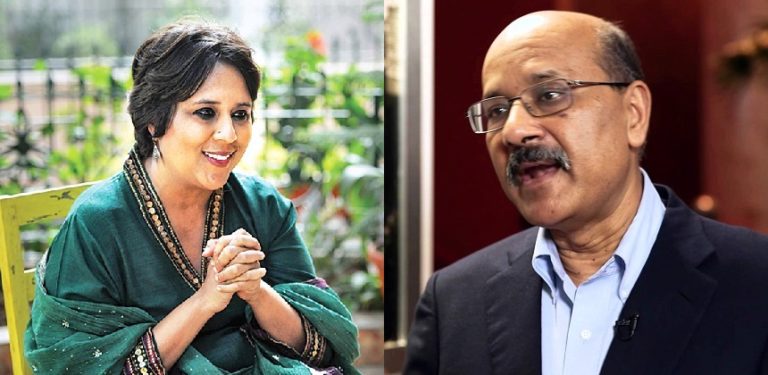
The curious case of Barkha Dutt and Shekhar Gupta’s joint venture

0

In the beginning of this year, senior journalist Shekhar Gupta of the coup story fame and controversial journalist Barkha Dutt of Radia tapes fame announced launch of The Print – a news media startup. They tweeted almost the same thing while making the announcement:


There was much excitement – mostly from Mr. Gupta and Ms. Dutt themselves and their fans – about this new venture that was another in a series of news media startups that followed ventures like leftist propaganda blog Scroll, its not-for-profit clone The Wire, AAP mouthpiece Janta Ka Reporter, and Patrika group’s Catch News that was led by Shoma Chaudhary of Tarun Tejpal fame.

In individual capacities, both Mr. Gupta and Ms. Dutt had taken interesting professional decisions before this announcement was made public. Mr. Gupta had “restructured” his relationship with India Today group, which he had joined after quitting The Indian Express, in a way that allowed him to form his own venture, while Barkha Dutt had done the same with respect to NDTV.

With their announcements coming on heels of such career decisions, it was assumed that The Print was their joint-venture. However, company records told a different story. Shekhar Gupta had formed a company called Mediascape where Barkha Dutt was not publicly listed as a director even six months after the announcement, while Shekhar Gupta was not listed as a director in a company formed by Barkha Dutt.

OpIndia.com checked the public records of all the companies where either Shekhar Gupta or Barkha Dutt were listed as directors, and found that none of these companies had both of them listed together as directors. The only place where both of them were listed together as co-founders was the bio or tweets of Twitter account of The Print.

However, the bio of The Print on Twitter was changed in July this year, and Barkha Dutt’s name was removed as co-founder.

This happened at a time when Barkha Dutt was involved in yet another controversy where Pakistan based terrorist Hafiz Sayeed had praised her for “doing good work in Kashmir”. She was also involved in a war of words with Arnab Goswami at the same time, lobbying with fellow journalists to attack Arnab.

People online wondered if this was the reason Barkha Dutt’s name was removed. Was Shekhar Gupta trying to disassociate himself from Barkha Dutt after she was praised by a terrorist?

Once such questions were asked by many on the social media, Barkha Dutt’s name was added back as co-founder within a day by The Print:


As always, these two media personalities, who love to ask questions to others, chose to ignore the questions about why Barkha Dutt’s name was removed in first place.

Now around 10 weeks later, Barkha Dutt’s name has gone missing from The Print’s bio on Twitter again. We noticed it after The Print actively started promoting its flagship event Off The Cuff with industrialist Mukesh Ambani.

In the invite for the Off The Cuff event with Mukesh Ambani, Barkha’s name as a co-host was missing, though her company “Barkha Dutt Live Media” was mentioned as being in alliance along with 5 other brands.

Not only Barkha Dutt’s name was missing, but Barkha herself was missing from the event, as confirmed by herself:


Also notable is the fact that while The Print and Shekhar Gupta have been advertising the interview with Mukesh Ambani almost non-stop on Twitter, Barkha Dutt hasn’t sent out a single tweet, except the one above, about it, let alone advertising it (at the time of writing this report, which is five days after the event got over).

Maybe because Mukesh Ambani said he likes to watch Arnab Goswami at prime time?

Or maybe because Shekhar Gupta and Barkha Dutt have parted ways and are no longer partners in The Print? If so, what caused this rift? Did Barkha leave voluntarily or was she asked to leave due to continuous controversies surrounding her?

We got in touch with The Print both on Twitter as well as through email on Tuesday and waited for their response for 4 days. We sent reminders too, but we received no response. We will update this report if we receive a response.

In absence of any response, we conclude three things:

  1. For some reason, The Print doesn’t want to disclose who owns the brand legally.
  2. Removal of Barkha Dutt’s name as co-founder, twice since inception, indicates that something is not working between Shekhar Gupta and Barkha Dutt.
  3. Our celebrity journalists love to ask questions, but hate to answer them.

Varun Gandhi’s alleged Honey-trap, Karma and the UP elections

The year is 1978. Jagjivan Ram, the then Defence Minister in the Janata Party government, was a powerful opponent of Indira Gandhi, whose party had just lost the elections. It was said that Ram even had a chance of becoming the first ever Dalit Prime Minister.

On the other side we had Maneka Gandhi, daughter-in-law of Indira, and the editor of a magazine named “Surya”. In a case of political vendetta, explicit pictures of Jagjivan Ram’s son Suresh Ram, in a compromising position with a 21-year-old Delhi University student, were splashed across the centrespread of the magazine.

Cut to the present, Maneka Gandhi must be praying to the heavens hoping that there is no Surya Magazine in present times.

Maneka’s son Varun Gandhi is at the centre of a controversy over allegations that he had leaked defence secrets to controversial arms dealer Abhishek Verma. It has been alleged that Verma “blackmailed” Gandhi, who was a member of the defence consultative committee, into sharing sensitive information on crucial military deals.

US-based C Edmonds Allen, an international arms dealer and lawyer, whose earlier complaints had led to investigation of arms dealer Abhishek Verma, has written to the PMO that Varun Gandhi has been “honey trapped and compromised” by Verma. Allen’s letter is said to be accompanied by a compact disc containing hundreds of intimate photos of Gandhi, collected since 2002.

Varun on his part has squarely denied the claims, for lack of any evidence, and has threatened a law-suit for defamation. He claims to have met Abhishek Verma only during his post-graduation days in 2002, and not after that.

Through a public letter to citizens, Varun has further claimed that he “never attended a single meeting of the Defence Consultative Committee” and thus he neither sought nor possessed any information or knowledge of any sensitive information. He also denies meeting Allen ever, and claims that the letter could be a publicity stunt by Allen. He doesn’t mention the pictures or the issue of being honey-trapped in the letter, but calls the claim of him being blackmailed as ludicrous.

As far as the pictures are concerned, they are indeed highly explicit, and we can’t publish them. Allen has claimed that these pictures were authentic and not digitally or otherwise tampered. They do appear authentic, but this should be left to forensic experts, which is why we are not publishing them.

However, we can talk about it for sure. In the pictures accessed by OpIndia.com, Varun Gandhi looks inebriated, to say the least, and in compromising position with a female. In some pictures, his eyes even seem closed. This is crucial since the pictures seem to have been clicked by a third person, using a high resolution camera. Remember, these pictures are from more than 10 years ago, when selfies weren’t a thing nor were sex-tapes to be released online.

So from the photos, some questions arise: Was Gandhi heavily under the influence of some drugs or intoxicants? Does this explain why his eyes seem closed? Does this also explain why he “allowed” a third person to click pictures of him in compromising positions? Was he indeed a victim of blackmailing but chose not to go to police about it?

Whatever the case maybe, Varun is in a soup. What makes matters worse for him is that even BJP has instructed its spokespersons not to defend him. They have either kept mum or have said they wouldn’t like to compromise with national security.

With the Uttar Pradesh elections coming up, this episode can act as a blessing in disguise for BJP. Varun Gandhi has been pushing the BJP to annoint him as the CM candidate of UP. Just a few days before BJP’s national executive meeting in Allahabad in June this year, massive hoardings came up urging BJP to press for Varun as the CM candidate. The posters had Varun’s face juxtaposed with those of Modi and BJP president Amit Shah.

Varun’s mother Maneka Gandhi too has been engaged in some war-fare with BJP. In a move to back her son for UP CM’s post, Maneka tried is alleged to have moved some pawns to defame Smriti Irani, the other contender in the UP CM race. Coupled with the fact that Maneka tried to team up with an abusive journalist known to do hit-jobs on RSS and BJP, she and her son were losing popular support among core BJP supporters.

How will BJP play this episode is yet to be seen. Will they play the silent game and let things move as per the media narrative? Or will they go for the jugular and severe ties with the other Gandhi parivar? Will we see a situation where a Gandhi searching for another political party, may end up joining a party, desperately searching another Gandhi?

Is someone at JNU planning Rohith Vemula part 2?

0

Najeeb Ahmad, an MSc student at JNU reportedly got into a scuffle with some fellow students in his hostel room and went missing since October 15. JNUSU and his family members have since blamed ABVP for his “abduction”. JNUSU, continuing with its revolutionary ways, then proceeded to confine the Vice Chancellor of JNU to his admin block as part of their protests.

What everyone in the media and the left wanted to portray as a open and shut case of ABVP assaulting Najeeb Ahmad and the latter disappearing, has now been called out thanks to ex-JNU student and columnist Abhinav Prakash. The alternative narrative came to light when Abhinav Prakash visited the campus to find out more about the affair.

No involvement of ABVP in the Najeeb Ahmad episode

Abhinav’s findings show that ABVP was nowhere in the picture. It was Najeeb who first assaulted three fellow hostel mates, who were campaigning for the hostel election for the post of mess secretary. It is alleged that Najeeb got infuriated when he saw one of the students wearing ‘sacred thread’ and there was no provocation from the campaigning students.

The accusation that Najeeb slapped a student without provocation is corroborated by copies of the minutes of the meeting held between the warden and the students, on the night of the event:

Minutes of the meeting

The minutes clearly show that Najeeb accepted that he slapped the people who came to his room, without provocation. He made this confession in front of his room-mate Quasim and the hostel President Alimuddin, amongst others including the senior warden.

Two of those assaulted by Najeeb were Dalits, but the hostel warden, himself a Dalit, allegedly prevented the use of Prevention of Atrocities against SC/ST act against Najeeb. Najeeb was then asked to vacate his hostel room by the warden. Najeeb admitted his fault and agreed to leave the hostel within a week, and that should have been the end of the story.

There were also reports of Najeeb exhibiting strange behaviour and his roommate Quasim (one of the signatories in the above minutes of the meeting) even asking for a change of room as he feared Najeeb and his behaviour.

Irked by the warden’s stand and the fact that Najeeb had to accept his mistake, the left started putting pressure on hostel president Alimuddin to get the earlier resolution changed. When the president didn’t oblige, some of these students started whipping up communal sentiments by accusing Alimuddin of betraying the ‘Qaum’ (community).

Then Najeeb suddenly disappeared. And the incidents of that night were given a new twist. Students belonging to the left organisations started claiming that Najeeb was virtually “lynched by a mob” that night. Questions remain that if such a serious violence against Najeeb did happen, why did the minutes, signed by the President of JNUSU who belongs to one such organisation, not mention that? Was Najeeb taken so some hospital? Why was no FIR filed? These questions remain unanswered.

Despite circumstantial evidences not backing them, the new narrative was built by these left leaning student organisations, ably assisted by the mainstream media, where Najeeb was painted as a victim and the students who were slapped by him were painted as aggressors. News reports further suggested that Najeeb had been “abducted” by some people, pointing fingers at ABVP.

According to his mother, Najeeb had called her up at 2 AM following that night’s incidents to tell her about the fight he had, which prompted her to rush to JNU from Badaun in Uttar Pradesh. She also talked to him at 11 AM when she reached Anand Vihar in Delhi, and Najeeb confirmed that he was in his hostel room. Later he was not found there when his mother reached JNU at around 12.30 PM. He had left his mobile phone in his hostel room. If left is to be believed, a student was abducted in broad day light around noon.

Apart from the claim of abduction sounding preposterous, eye witnesses state that Najeeb had actually left campus the next day in an auto-rickshaw on his own. A CCTV footage of this incident would have proved or disproved this claim, just as minutes of the meeting prove what happened that night, but JNU has no CCTV cameras installed. When the administration proposed so, whole of JNU had protested against their installation as they didn’t want the ‘state’ monitoring their fiefdom.

Intimidation and threats

The chain of events doesn’t stop here. Now violent elements are threatening students of JNU who are going against the narrative. Ex-Joint Secretary of JNUSU and ABVP activist Saurabh Sharma who posted the copies of the minutes on Facebook to defend his organisation being dragged into the incident, is now getting death threats. A letter from Jahangirpuri sent by some ‘Sahid Khan’ says that “he will find and cut” Sharma into pieces and that “he will burn down the entire ABVP and the other students of JNU”.

Threats
Threats

Even the hostel president Alimuddin took to social media and complained of being harassed by some groups. The hostel where it all happened – Mahi-Mandavi hostel – is being branded a “Sanghi hostel” by the left student groups.

A larger game at play

So why did all this happen? Was Najeeb the sole person responsible for it? Apparently no.

It is feared that many parties to create a Rohith Vemula kind of a situation again, with Najeeb Ahmad as the scapegoat, with someone else pulling the strings. Whether Najeeb became a part of it voluntarily or involuntarily is not known yet.

But whatever may be the case, the controversy has again put JNU in news with a narrative that ‘our campuses are not safe’ blaming a particular ideology. This will continue to grow in days to come, before the truth comes out, if it ever does.

Tolerance vs Mutual respect – How India should treat its immigration policy

0

The Government of India is considering a few amendments in regards to the Citizenship Act of 1955. The government has already set up a joint committee of parliamentarians who are examining the Citizenship (Amendment) Bill, 2016 which will look into the matter of granting Indian citizenship to Hindus, Sikhs, Jains, Parsis, Christians and Buddhists from our neighbouring countries who have been living in India for a minimum period of six years. You can check The Citizenship (Amendment) Bill, 2016 here (pdf link).

There have already been a few articles that have discussed this matter. There was an article in the Times of India that was critical of this move by the government. There have been a couple of other pieces in Swarajya magazine – here and here – that have given a slightly more contrarian and nuanced view of the same.

Whom do we let in to stay with us in our country has never been an easy issue to tackle. The 1st issue that we will have to tackle in a secular democratic republic like India would be that the basic premise of the Bill violates the fundamental constitutional principle of treating each individual as a separate entity, as it appears to equate citizenship with specific religions only.

Immigration has been an issue a major portion of the world is struggling with. Whether it’s Europe, USA or India, immigration is an extremely touchy issue. Who do we let in? What can be considered a valid process of granting people asylum in any country? In fact, what should be the larger immigration policy of any country irrespective of whether it is an asylum seeker or an economic migrant?

But does compassion mean one becomes stupid and lets anyone in without any formal process? What should be the basic philosophy or ideology behind an immigration process? How do we go about vetting the people we want to let into our society beyond the economic/education parameters.

I believe immigration policies should be shaped on the principle of “Mutual Respect” which was proposed by Rajiv Malhotra in his book Being Different. Every country/society/group has a grand narrative. In the case of the group of people that live together in the entity named India our grand narrative is a pluralistic value system, which has come out of a wide range of decentralized open Dharmic Darshanas. It is this plural Dharmic value system that has let people of all denominations in from time immemorial.

Now the critics of the Citizenship (Amendment) Bill, 2016 say that this bill is discriminatory. But is that really the case? Take the case of Pakistan for example. Can we say that people who follow a very rigid/exclusivist/expansionist faith system like Salafi Islam merge into a pluralistic secular democratic society like India? We just have to look at the way Hindus, Christians and Sikhs have been treated in Pakistan.

For that matter what has been the trend when it comes to Hindus/Atheists in Bangladesh? A cursory look at the numbers in both these countries clearly indicates that Hindus and other minorities are being persecuted and their numbers have been declining consistently. They are either converted forcefully or murdered. In such a scenario how can anyone in their right mind object to letting in these persecuted minorities in India? Also, how can anyone who is in their senses say that we should let in the butchers of these very people into India along with them because a society cannot be selective in its choice of people it wants to let in?

If we allow people with such rigid mindsets in our society, we just create more fissures in our society. Indian Islam is already under threat from Salafi extremism. Why do we want to self inflict even more pain?

Also, as a Nireshvara (atheist), I feel letting such people in is a direct threat to my existence. Just look at the numbers provided in the Pew polls that cover Pakistan and Bangladesh. A significant chunk of the population in those two countries believes that the punishment for apostasy and blasphemy should be death. A significant majority of citizens in these countries want religious laws to govern every aspect of their life. Are these beliefs compatible with a secular democratic republic like India? How can we use secularism and democracy to let a set of people in who are completely against those very set of values that we value and cherish so much?

Anyone who comes into India should pass the test of “mutual respect”. Mere “tolerance” is not enough anymore. If India’s larger narrative is that all paths are equally valid then anyone coming inside India should be asked what they think about this inherent value system of India. Immigration has to be a tool not just to help the persecuted. It should also see to it that fault lines aren’t created in the society.

Will a practicing Salafi Muslim say that idol worship/atheism are fine? If it isn’t fine, what does he/she think ought to be done about it? Should we let in people who think atheists or idol worshippers ought to be killed? If an immigration policy leads to ghettoisation is that policy sound?

Demography matters. If some people believe that individuals carrying beliefs that are antithetical to ours will suddenly come and change those beliefs, I’m sorry, those people are extremely naive. Maybe they have been listening to John Lenon’s song “Imagine” a little too much.

Systems based on “tolerance” will fail. Western societies are based on tolerance. Just see what’s happening there right now. Every society has to graduate from tolerance to mutual respect. And people who refuse to do that, well, they can stay where they are.

Just because a few left leaning politicians and activists have a death wish it does not mean everyone has to die. Wanting to stay alive is a basic human instinct. Why bring such people over here? What purpose does it solve?

I am not saying that we stop being humanitarian. But one can only be humanitarian if one stays alive! And while no one wants to say, it the fact of the matter is that when a society gets to a point where the quotient of Islamists increase, it leads to a significant increase in violence, terrorism and all sorts of other problems.

Wherever Salafi Islam enters, there are violent clashes. Islam that is practiced in its current form in Pakistan & Bangladesh is incompatible with pluralism of India. Stats don’t lie. If Salafi Islam is plural why are the Hindu numbers in Pakistan and Bangladesh dwindling? Also have we forgotten Kashmir?

Immigration can’t become a tool where you inflict wounds upon yourself. India as a country has to be selective in its immigration policies. It should only let in people who believe in “mutual respect”.

What I am trying to do is to say something that has been discussed in our drawing rooms for many years. I have no intention of stereotyping all Muslims in Pakistan and Bangladesh. I am sure there are a lot of good folks amongst them. I am not someone who has hatred in his heart. But tell me one simple thing, when you look at the stats in those Pew polls don’t you get worried?

I will end this article by quoting a small excerpt of a speech given by a gentleman called Salim Mansur to the Standing Committee on Citizenship and Immigration in Canada. You can check the full text of the speech here.

“If the level of immigration in Canada is being maintained and defended on the basis of the need to deal with the problems of Canadian society in terms of aging population, fertility rates among Canadian women, skilled labour requirements, and maintaining a growth level for the population consistent with the growth of the economy, then this policy needs to be re-evaluated. We cannot fix the social problems of Canadian society by an open immigration policy that adds to the numbers at a rate that puts into question the absorptive capacity of the country, not only in economic terms, but also, if not more importantly, in cultural and social terms, and what this does to our political arrangement as a liberal democracy.

The flow of immigration into Canada from around the world, and in particular the flow from Muslim countries, means a pouring in of numbers into a liberal society of people from cultures at best non-liberal. But we know through our studies and observation that the illiberal mix of cultures poses one of the greatest dilemmas and an unprecedented challenge to liberal societies such as ours, when there is no demand placed on immigrants any longer to assimilate into the founding liberal values of the country to which they have immigrated. Instead, a misguided and thoroughly wrong-headed policy of multiculturalism encourages the opposite.”


Goa Elections Part 2: A look at the opposition and the probable outcome

0

In the first part of analysing the Goa elections, we looked at the BJP’s standing in Goa. But BJP’s future cannot be looked at in isolation, without considering its opponents. This part will cover that aspect and by the end of the post, we would get a birds eye view of the current scenario, and also what one can expect in the upcoming elections:

Coming to the opposition, the Congress continues to be the main opposition party. In many ways, the national political scenario mimics what happens in Goa. Before the current BJP Government came to power, Goa was ruled by the Congress Government, which oversaw the biggest scam Goa has ever seen: The mining scam. The CM was more of a compromise candidate, who allowed his ministers to have a free run. BJP’s 2012 campaign was very person centric, focused around Parrikar. The result was BJP getting an absolute majority for the very first time. The Congress was routed and managed to get just 9 MLAs out of 40. This is very much like what happened in 2014 at the centre. But the Congress is in even bigger trouble in Goa.

1 out of the 9 MLAs is officially with the Congress, but he has been openly batting for BJP, has a post in the current Government, and is lining up for a BJP ticket in the upcoming elections. Another MLA has been expelled for 6 years for anti-party activities. His wife, continues to be in Congress, but since her husband, who is the real influencer is out, she may follow suit. That brings down the effective Congress tally to 6. Factor in 2 more Congress MLAs who are rumoured to be moving to BJP’s alliance partner MGP. All-in-all, a dismal scenario.

One of the major reasons for this downfall of Congress is the severe infighting. There are around half-a-dozen former CMs in the Congress party, who are mostly no longer MLAs, forming the old guard, all of whom would like to revitalise their careers. There is also the younger group, most of whom are MLAs, and are unhappy with the machinations of the old guard.

The public though largely continues to see Congress as a corrupt party which destroyed Goa. Sure, there maybe some who would go back to the Congress having tried BJP last time, but the Congress is overall in pretty bad shape.

Then we have around 5 MLAs who won as independents or as part of a regional party. Micky Pacheco’s Goa Vikas Party (GVP), which fought the last elections with BJP’s support and won 2 seats, has now gone anti-BJP, but Pacheco is having trouble managing his other MLA itself, who may contest with BJP’s support. GVP’s fortunes are on the downfall. 2 more independents have formed another regional party called Goa Forward Party (GFP), with their only ideology being that of occupying the anti-BJP space. The main leader of GFP is an ex-Congressman and is said to still influence the Congress High Command at the centre.

GFP has been hankering for a Mahagathbandhan with Congress and NCP, but Congress has been unyielding to the demands of the likes of GFP. Although they are playing hardball now, one expects, as elections draw closer, at least these 3 parties will have an explicit or implicit alliance. Or else they may all find it very difficult to survive since all of them are vying for broadly the same voter base.

Finally we have AAP which has self-declared itself as the winner of Goa. This was based on a survey done by a little known firm in Goa, which gave AAP 35% of the voteshare, but still managed to show the BJP combine as the single largest entity. The findings of the poll have been disputed as being self-contradictory by many experts, but AAP has cherry-picked the most favourable metric and splashed it all over Goa.

Having said that, AAP is the first party to have gotten into campaign mode, with their door-to-door campaigning. AAP’s stock was sky high a few weeks ago, but has come down considerably after AAP’s implosion at Delhi, and even further after Kejriwal’s comments on surgical strikes. The problem AAP faces is that the people in AAP currently represent an assorted set of individuals with no common ideology. Some come from the background of pro-Marathi lobby, while the party is trying to woo the Christian voters, who will never vote for such people.

This is not to say AAP is completely devoid of leaders. Recently Elvis Gomes, a bureaucrat, quit his Government post to join AAP. Hi enjoys a clean image, and could very well be the CM face. Another tall leader is Dr Oscar Rebello, who has been involved in various civil society movements in the past, although he is unlikely to contest elections. The other leader though are either imports from diverse backgrounds or unknown quantities. AAP’s views on major prickly issues which face Goa are also unknown, the common refrain being “the people will decide”.

The difficulty in analysing AAP is no-one is sure about their real on the ground influence. Their main voter base will obviously be a chunk of the Congress votes, largely Christians, while trying to wean away a portion of the Hindus as well. AAP’s success or failure depends entirely on how many votes can they pull away from the Congress: Will it be a Delhi 2013 repeat where BJP emerged as the largest party as AAP broke into Congress’s votebank? Or will it be a Delhi 2015 scenario where AAP steals almost the entire voter base of Congress leaving the Congress destroyed?

Delhi 2015 will be unlikely because Goa is not Delhi. Goan demographics are skewed with Christians touching almost 85% in some constituencies in the sub-district Salcete, which has 7 constituencies and where on an average Christians make up 54% of the voters. The scene is dramatically opposite in the rest of Goa, where they make up just 26% of the population on an average, falling to 7% in a few seats. Hence even a Delhi 2015 like consolidation of the Christian vote towards AAP will have a bearing only in a few constituencies.

So to sum up: BJP has weakened since 2012, MGP looks to get stronger. Congress is tottering and will need a Mahagathbandan with NCP and GFP to manage to put up a fight. AAP is an unknown quantity. So what will happen? There have been five opinion polls in Goa till now:

The predictions
The predictions

All of them point to the BJP-MGP combine being the leaders. While the numbers are debatable, the fact is this: the opposition to the BJP is utterly fractured. Even if the Mahagathbandhan takes shape, there is the AAP which will eat some of its votes. In fact AAP may eat into the anti-BJP votes and help BJP win a few seats where it came second last time around. But if the voters decisively swerve to AAP, then AAP may wrest these seats.

As of today, certainly BJP has it neck ahead, mainly because of the There-Is-No-Alternative (TINA) factor. Even in other states we have seen that BJP has performed well against Congress but stutters against a strong regional force. The regional parties in Goa have influence in just 3-4 constituencies hence are not a force to reckon with. Only AAP could prove to be a challenger, but for that they need to ensure the utter demolition of the Congress, and to gain any critical mass, they have to spread their influence beyond the Christian belt, which seems unlikely.

While Goa will lose out in national coverage thanks to Uttar Pradesh and the other northern state elections, the temperatures are surely going to soar here.