Home Blog Page 943

Anthony Fauci, who came under fire for his mishandling of Covid, says Donald Trump’s wounds from assassination attempt are superficial

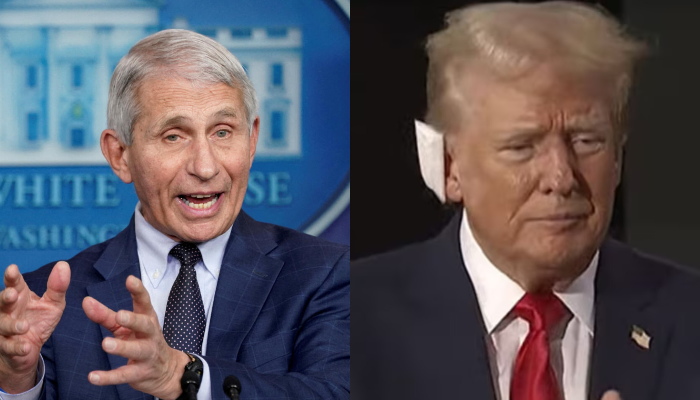
Dr Anthony Fauci downplayed the injuries sustained by Donald Trump during the attempted assassination last weekend, referring to the gunshot wound that grazed Trump’s right ear. Fauci called the injury “superficial” when he was asked about Donald Trump’s injuries by CNN’s Wolf Blitzer on 19th July. Anthony Fauci, the former head of the National Institute of Allergy and Infectious Diseases counselled both Donald Trump and President Biden during the COVID-19 epidemic.

Fauci alleged, “I don’t think there is much more to it. I mean, from what we’ve seen and what we’ve heard, it was a bullet shot that grazed his ear and injured his ear, according to the physicians who examined him. There was no further damage.” The 83-year-old further stated that he believed the former president was “in the clear” based on his doctor’s assessment and subsequent activities including his arrival at the Republican National Convention in Milwaukee just two days later. Fauci said, “It seems to have been a superficial wound to the ear, and that’s all.”

Anthony Fauci made the remarks following the Republican National Convention this week, during which the 78-year-old presidential nominee Donald Trump covered the gunshot wound on his ear with a white bandage. “I think he’s in the clear as far as I can see,” Fauci stressed.

Meanwhile, Dr Sanjay Gupta, the chief medical reporter for CNN, stated earlier on 19th July that Donald Trump might be experiencing “psychological trauma” after the incident that left one rally goer dead and two others critically injured.

The former president’s campaign has not disclosed the type of medical care he has received or how they intend to track his health in the upcoming weeks. Sanjay Gupta urged for a “full public assessment” of Trump’s wounds to inform voters about his status. Gupta stressed, “The concern is that gunshot blasts near the head can cause injuries that aren’t immediately noticeable, such as bleeding in or on the brain, damage to the inner ear, or even psychological trauma.”

Trauma neurosurgeon Sanjay Gupta stated that following a gunshot wound, a “thorough evaluation” might provide a clearer picture of the physical and mental impairments and aid in a quicker recovery. He added, “The good news is that most physical symptoms of an injury would probably have revealed themselves over the past few days. At this point, however, the Trump campaign hasn’t yet shared whether a full workup was done at the time or if there has been any follow-up since.”

Donald Trump survived an injury on his right ear during his campaign rally in Pennsylvania where a bullet grazed his ear. He was immediately taken to a hospital as blood streamed from the wound and he has been wearing a bandage over his right ear ever since the attack.
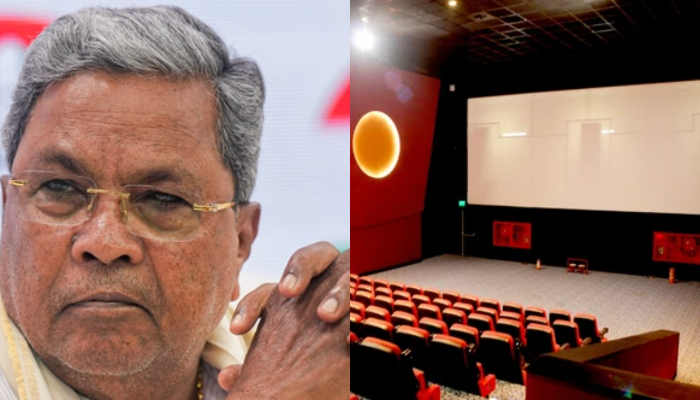
Congress government in Karnataka proposes 2 per cent cess on cinema tickets and OTT subscription fees, bill tabled in the assembly

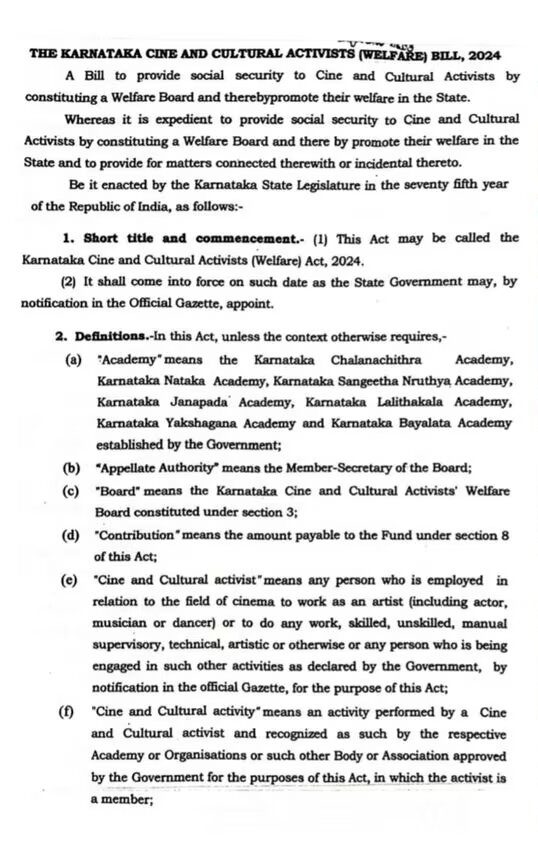
After increasing bus fares, diesel and petrol prices, now the Congress administration of Karnataka has imposed a 2 per cent tax on OTT subscription fees and movie tickets. On 19th July, the Karnataka Cine and Cultural Activists (Welfare) Bill, 2024 was tabled in the assembly. The Karnataka Cine and Cultural Activists Social Security and Welfare Fund is a proposed government financial scheme intended to support the state’s cine and cultural activists.

As per the bill, a ‘Cine and Cultural Activists Welfare Cess’ will be levied in the state on movie tickets, subscription fees and associated establishment earnings. The administration has announced that the cess will be between one and two per cent. The rate will be updated every three years. The Karnataka Cine and Cultural Activists Welfare Board would be set up by the government, with Bengaluru serving as its headquarters and the Labour Minister functioning as its chairman, per the bill.

The govt intends to expand this cess to theatre productions held within the state, according to Labour Secretary Mohammad Mohsin’s statement. A welfare board consisting of seven members will be constituted for cultural activists and film industry workers as part of the bill. One-third of the board members will be nominated for a three-year term. The board wants to promote social security programs for film industry workers using the money raised from the cess.

“The cess will be levied at rates which will be notified by the government and shall not exceed 2 per cent but shall not be less than 1 per cent on cinema tickets, subscription fees, and all revenue generated from the related establishments,” stated the bill.

While cess on movie tickets will be collected from theatres, it is not sure how the cess on OTT subscriptions will be collected. Because OTT subscriptions are not state-specific and payments are made online. Officials from the labour department revealed that they are now figuring out how to collect the cess on OTT subscriptions.

The Karnataka Cine and Cultural Activists’ Welfare Board will receive the government-collected cess. Minister-in-charge, Department of Labour, Additional Chief Secretary/Principal Secretary/Secretary, Department of Labour, Labour Commissioner along with seventeen members appointed by the government including cine workers and others will be a part of the board.

The bill read, “Cine and cultural activists include any person employed in the cinema field as an artist (such as an actor, musician, or dancer) or in any skilled, unskilled, manual, supervisory, technical, or artistic role. This also includes individuals engaged in activities declared by the government for this Act. Cine and cultural activists recognised by government-approved academies, such as the Karnataka Chalanachithra Academy, Karnataka Nataka Academy, Karnataka Sangeetha Nruthya Academy, Karnataka Janapada Academy, Karnataka Lalithakala Academy, Karnataka Yakshagana Academy, and Karnataka Bayalata Academy, are covered under this bill.”

An estimated 2,355 people, including artists and technicians, are working in the film industry, according to the Karnataka Film Workers’ Artists’ Technicians’ Union. However, a large number of part-time technicians and artists might not be listed with any state organization. A distinct identity card will be issued to each enrolled member so they can make benefit claims. The method by which the cess will be applied to OTT subscriptions, which are normally administered via internet services devoid of physical addresses, is not entirely clear. Talks over whether or not OTT subscriptions would be included are still underway, according to Mohsin. It appears that the local film industry’s OTT productions are the main focus.

Meanwhile, the finance advisor to Karnataka Chief Minister Siddaramaiah, Basavaraj Rayareddy, on 11th July unveiled that the state’s lack of funding for development projects is a result of guarantee schemes. The crisis stemmed from the fact that large sums of money had to be put aside for the giveaways. “Many MLAs are demanding funds for development works in their constituencies, however, there is no money with the government. We are spending approximately Rs 65,000 crore on guarantee schemes. Since I am the financial advisor, I somehow managed to get the grant for lake development project. People want development. But believe me, there is absolutely no money. Since I am the financial advisor, I managed to get funds for the lake development project here,” he mentioned while addressing an event at Mangaluru village in Yelburga taluk in Koppal district.

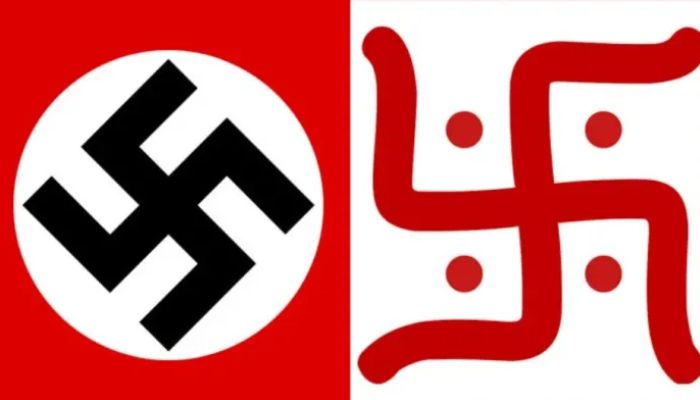
Swastika vs Nazi Hakenkreuz: When Oregon Education Department recognised the distinction between holy Hindu symbol and Nazi hate symbol

In what was a major victory for the Hindu community living across the United States and the world over, in 2021, the Oregon Education Department officially recognised the distinction between the sacred religious symbol, Swastika, and the Nazi’s ‘Hakenkreuz’.

According to the official website Oregon.gov, the Education Department had released an official communication titled, “Every Student Belongs — Learning the difference between symbols”. 

(Source – Oregon.gov)

In the release, the Oregon Education Department described Swastika as “a Sanskrit word and is used to symbolize auspiciousness and elements of the natural world in many religions and cultures, including in Hinduism, Buddhism, Judaism, Jainism, and some Native American religions and cultures.” 

It pointed out that the hooked cross image is often wrongly labelled as Swastika but in reality it is Nazi’s Hakenkreuz, notorious as a hate symbol. 

The Education Department had added, “While the hooked cross image is commonly referred to as a ‘swastika,’ the actual Nazi and Neo-Nazi symbol is correctly labeled as a ‘hakenkreuz’, the German word for ‘hooked cross’. Connect the dots through education and clarification about the terminology.” 

Hindu Swastika and Nazi Hakenkreuz are not the same

There is a huge difference between the two symbols – the sacred religious symbol – Swastika and the Nazi hate symbol – Hakenkreuz. 

Notably, when translated from its Sanskrit root, Swastika comprises of ‘su’ meaning ”good” and ‘Asti’ meaning ”to be”. In other words, well-being. It dates back some 6,000 years to rock and cave paintings. Scholars generally agree it originated in India.

It has also meant a symbol of good luck, prosperity, and all things auspicious for other ancient cultures, including the Vikings and Greeks, besides Hindus, Buddhists, and Jains.

A religious symbol for Hindus, the Swastika was first mentioned in the Vedas. It symbolises many things like Surya (the sun) and Brahma, the creator. It is seen as a power symbol and is also the emblem of Ganesha, the god of good luck. In both Hinduism and Jainism, the Swastika is used to mark the opening pages of account books, doors, and thresholds.

In fact, it is found that the Swastika was also used in Ancient Greece and can be found in the remains of the ancient city of Troy, which existed 4,000 years ago. The ancient Druids and the Celts also used the symbol. It was used by Nordic tribes and even early Christians used the Swastika as one of their symbols, including the Teutonic Knights, a German medieval military order, which became a purely religious Catholic Order.

Furthermore, the American Jewish Committee, one of the country’s oldest Jewish advocacy organizations, released a leaflet clarifying the distinction between the Swastika used for millennia by Hindu, Jain, and Buddhist cultures and the deformed Nazi version of it.

However, out of ignorance, cultural insensitivity, and deliberate intentions, many conflate the two symbols, furthering Hinduphobia which has been rampantly observed throughout the world. A notable case recently surfaced from Australia where Uber had de-platformed a Hindu woman from their portal for 5 months because her name was Swastika. But she later won after she fought against this decision.  

*Previous information in this article was based on reports that appeared in the media. It has been amended to reflect the factual position after clarification by Coalition of Hindus of North America (COHNA)

Former Pakistan Army soldiers and trained terrorists behind recent terror strikes in Jammu: Report

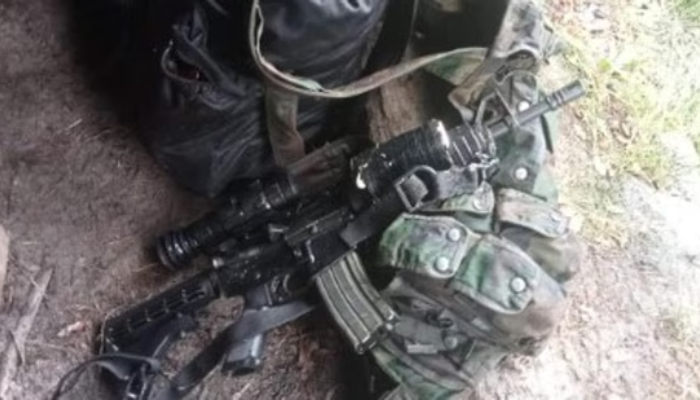
Chinese steel core bullets, precision fire, and M-4 US carbines equipped with binoculars mean that terrorists engaged in recent attacks in Jammu and Kashmir could have been Special Service Group (SSG) regulars from the Pakistan Army who have retired or they might have been guerrilla fighters with extensive training, reported Hindustan Times. A senior police officer also validated the claims of intelligence agencies.

The first clear application of M4 carbine with Chinese steel core bullets by Pakistani terrorists took place on 20th April 2023, during an ambush of an army truck in the Tota Gali district of Poonch, resulting in the deaths of five troops. He said, “Though we could not confirm with certainty that there are some former Pakistan army regulars among the terrorists, the guerrilla warfare tactics being employed by the terrorists in recent attacks in Jammu strongly indicate that they are not commoners carrying firearms. They either seem to be former Pakistan army regulars or terrorists well-trained in guerrilla warfare. We are facing battle-hardened terrorists equipped with sophisticated weaponry in the dense jungles.”

The main infantry weapon and service rifle of the United States military, the M4 carbine assault rifle, was created in the 1980s as a scaled-down version of the M16A2 assault rifle. Chinese steel core ammunition consists of a cartridge with a steel core bullet that can penetrate deep into armour and is coated in a metal jacket. “The current situation developing in the Jammu region is a matter of serious concern. Immediate action is the need of the hour. Reportedly some Pakistan Army regulars are guiding these terrorist groups along with some of the local terrorists of Jammu region, who had earlier crossed across and settled in Pakistan,” informed former director general of police (DGP) Dr SP Vaid.

According to intelligence sources, weapons that the United States left behind in Afghanistan are now entering Jammu and Kashmir through Pakistan. The Rajouri-Poonch sector and other places south of the Pir Panjal mountains that separate the Jammu and Kashmir regions experienced an increase in terrorist activity during the past two years. For counterterrorism activities, the army has reinforced the intelligence network, reorganized its units and dispatched more soldiers to the area.

Since Pakistan-based terror groups have made the districts of Jammu, Rajouri, Poonch, Reasi and Kathua their obvious targets, security forces have likewise adjusted their responses. While 20 soldiers died in the Rajouri-Poonch area last year, seven soldiers were killed in counterterrorism operations in the Kashmir Valley. Meanwhile, twenty terrorists were gunned down in the Rajouri-Poonch area and fifty were neutralised in the Kashmir Valley in 2023.

Terrorists struck a pilgrim bus in Reasi on 9th June, resulting in 42 injuries and 10 fatalities including women and children. On 26th June, an encounter broke out in the Gandoh area of Doda district between terrorists and security personnel, which led to the deaths of three terrorists.

Army Chief General Upendra Dwivedi to visit Jammu amidst terror attacks

General Upendra Dwivedi, the Chief of Army Staff, is scheduled to visit Jammu on 20th July to assess the security situation following a recent upsurge in terror incidents in the region. Furthermore, he is anticipated to communicate with the local troops and senior leadership. The formation commanders will brief him on the locations being taken by the security forces. There’s also probably going to be a security review meeting with other security agencies.

The visit by the Army commander comes after four Indian Army soldiers, including Captain Brijesh Thapa, were killed on 16th July in action during a confrontation with terrorists in the Doda district of Jammu and Kashmir. This will be his second visit. He travelled to the Poonch-Rajouri sector on 3rd July to evaluate the security conditions along the Line of Control (LoC). The Indian Army is modifying its deployments in the area in accordance with intelligence inputs and security requirements in light of the infiltration of highly trained Pakistani terrorists in the Jammu region.

The Indian Army has placed about 500 Para Special Forces commandos into the area to track down the 50 to 55 terrorists from Pakistan who have infiltrated the area in an attempt to resurrect terrorism there, based on sources. The intelligence services have also strengthened their presence in the region and are attempting to eliminate the infrastructure that supports terrorism there, including overground employees. According to sources, the Army has already dispatched troops to counteract Pakistan’s proxy invasion in the area, with one brigade of around 3,500–4,000 soldiers.

The top brass of the Army on the ground has been developing plans to find and eliminate the terrorists, who have access to the newest weapons and communication technology. With two Rashtriya Rifles forces, the Romeo and Delta forces as well as other regular infantry divisions stationed nearby, the Army already possesses a counterterrorism infrastructure.

(With inputs from ANI)

Civil Aviation Ministry says operations back to normal a day after biggest IT outage caused massive disruptions globally, Crowdstrike says core issue resolved 

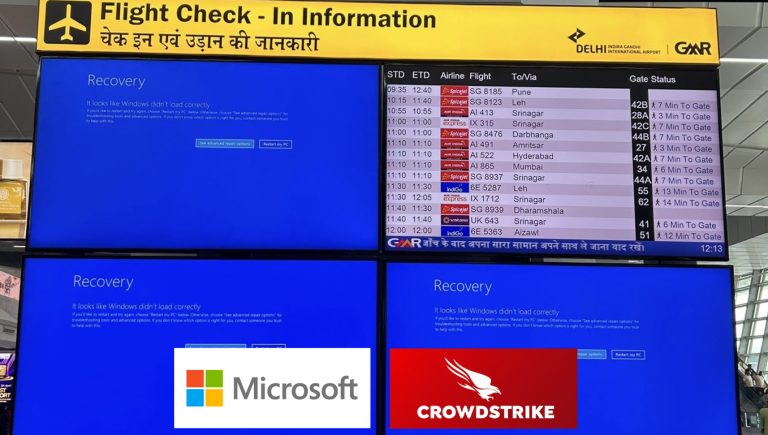
On Saturday (20th July), people in large numbers could be seen standing outside Airports across India a day after a technical glitch in Microsoft’s Crowdstrike caused massive disruptions globally. The disruption was caused by a faulty update of Crowdstrike software and it is being described as the world’s biggest IT outage. Although the situation has improved significantly since Friday’s pandemonium, passengers continue to face challenges. Crowdstrike said that while the core issue has been resolved, a full return to normalcy could take several days.

On Saturday, the Ministry of Civil Aviation stated that flight operations were smooth and airline systems were back to normal across all airports a day after the global outage. In a statement, the ministry said that all issues related to travel adjustments and refund processes were being taken care of.

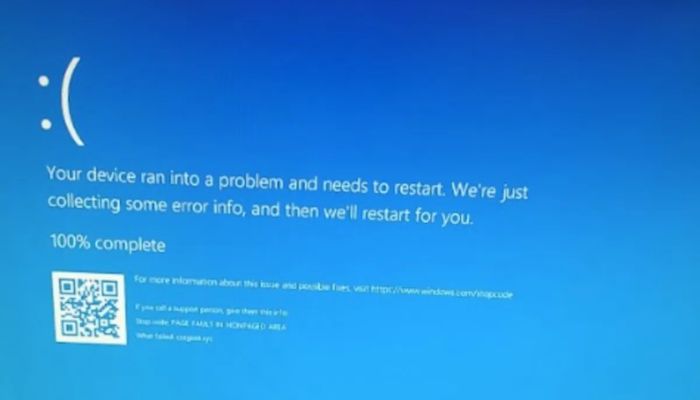
It is now clear that the root cause of the global Microsoft outage was a faulty update to its Falcon Sensor software which was issued by CrowdStrike for Windows systems. Microsoft said that the issue began at 1900 GMT on Thursday when Blue Screen of Death (BSOD) errors began popping up and computers crashed. In India, the outrage reportedly began at around 9.39 a.m. IST on 19th July. 

(Image Source – NDTV)

Soon, the outage triggered a shutdown-like situation for global airlines, banks, healthcare, and financial institutions on Friday. According to reports, Microsoft’s outage caused maximum disruptions in the aviation sector as over 5000 flights were cancelled globally. 

The Indian airline carriers cancelled over 200 flights with IndiGo being the worst-hit carrier as it alone canceled 192 flights. In the United States, at least three major airlines, American, United, and Delta, grounded all flights, according to the Federal Aviation Administration. Reportedly, 3,000 US flights were canceled while another 11,000 were delayed. Likewise, UK rail services were also severely impacted as the faulty update caused Windows to crash. 

Hours after Windows started crashing because of its faulty update, CrowdStrike released a software patch as a fix. 

Microsoft had said, “After an extended period of monitoring, we’ve determined that the issue is mitigated, and all previously impacted Microsoft 365 apps and services have recovered.”

CrowdStrike’s CEO George Kurtz acknowledged the error and issued an apology for the massive disruption. The firm also promised to undertake a full investigation and to take steps to prevent similar incidents in the future. However, it ruled out apprehensions of it being a security incident or a cyberattack. 

CrowdStrike revealed, “The update that occurred at 04:09 UTC was designed to target newly observed, malicious named pipes being used by common C2 frameworks in cyberattacks. The configuration update triggered a logic error that resulted in an operating system crash.” 

The firm confirmed the problem was due to a defect in a content update for Windows hosts and not a security incident or cyberattack.

Meanwhile, airlines and other affected industries including banking and hospitals are working to clear the backlogs caused because of yesterday’s outage. It is pertinent to note that while outages are not uncommon and it is often caused by technical errors or cyberattacks, however, the scale of yesterday’s outage has caused concerns.  

Several domain experts have expressed concerns that the global outage highlights the need for diversification in software application usage and Operating systems to avoid over-dependence on a few firms like Google and Microsoft. According to them, the outage has exposed the vulnerability of interconnected technologies on a global scale and highlighted the need for improved contingency plans to mitigate future IT outages. 

They have expressed apprehensions that while the latest case was of a faulty update which was corrected after a few hours, mischievous actors or cyberattacks in the future could cause disruptions on a wider scale and for a prolonged period which requires more focus on advancing cybersecurity measures, and reducing over-dependence on few hegemonic firms.

Meanwhile, many experts, X users, and journalists pointed out that India needs its own Operating System and other necessary Software setups to make it immune from future global IT outages. Additionally, there are apprehensions that non-India-based firms can deliberately cause disruption or could threaten to exploit this leverage as part of their parent country’s geopolitical stance vis-a-vis India. 

Ola founder, Bhavish Aggarwal wrote, “Imagine if our electricity grid was controlled by companies outside of India. Similarly our ‘digital grid’ is even more important. And all of it is controlled from outside of India.”

Haryana: Sonepat Congress MLA Surender Panwar arrested by ED in illegal mining case

On Saturday, July 20, Enforcement Directorate (ED) arrested Congress MLA Surender Panwar in an illegal mining case. Panwar is the MLA from Sonepat seat in the state of Haryana. Earlier in January this year, ED had searched premises linked to Surender Panwar and his aides.

The arrest of the Congress MLA is in connection with a money-laundering case linked to illegal mining in Yamunanagar in Haryana and some other areas of the state. The money laundering case investigation came following several FIRs of the Haryana Police to probe alleged illegal mining of boulders, gravel and sand in the past in Yamunanagar and nearby districts even after the lease expiry period and court’s order.

Along with investigating potential fraud in illegal mining, ED is also looking into the ‘e-ravan’ system, an online site introduced by the Haryana government in 2020 with the goal of streamlining tax and royalties collection and preventing tax evasion in mining regions, as per a PTI report.

Notably, Surender Panwar resigned from his position and sent it to Haryana assembly speaker in July 2022, claiming personal reasons such as dangers to his family’s safety and well-being. However, later he withdrew the resignation.

Bollywood actor Sonu Sood justifies spitting in people’s food, says it is Humanity; equates spitting on food with Lord Ram eating Shabri’s ber

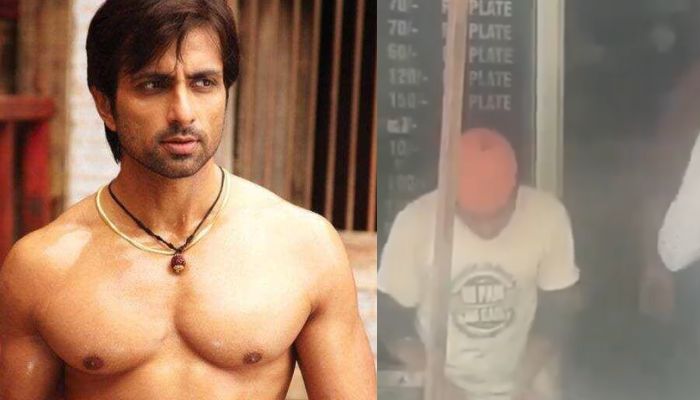
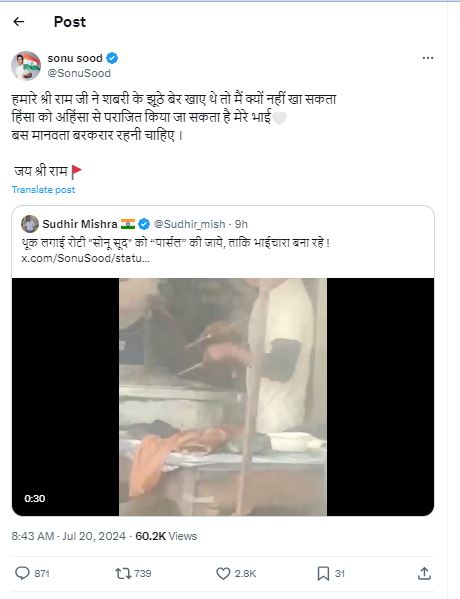
Bollywood actor Sonu Sood landed himself in a fresh controversy on Saturday (20th July) as he came out in defence of a miscreant who was seen on camera spitting on rotis he was preparing for his customers. In a post on X, Sonu Sood equated the miscreant’s act of spitting on rotis to that of Ramayana’s Shabri who had tasted berries before giving them to Lord Ram. The Bollywood actor claimed that if Lord Ram could eat Shabri’s berries, why can’t he eat rotis that have been spat upon? He defended the act of spitting by describing it as an act of “Humanity”. 

Sonu Sood wrote, “Our Shri Ram Ji ate the tasted berries of Shabri, so why can’t I eat them (rotis spat upon)? Violence can be defeated by non-violence, my brother. Humanity must remain intact. Jai Shri Ram”

However, his social media post soon triggered outrage from X users who called him out for defending the act of spitting on the customer’s food. Several X users pointed out that the intention behind Mata Shabri tasting berries was to give only sweet berries to Shri Ram, out of devotion to her Lord while the miscreant’s act was driven out of religious hatred.

An X user, Rosy, requested Sonu Sood to visit the said dhaba and make a video of himself eating the spit-soiled rotis.

Several users also objected to his analogy where he equated the miscreant with Shabri and by extension likened himself with Lord Shri Ram. 

Political analyst Abhishek Tiwari responded to his post saying, “The miscreant roti-maker is not Mata Shabri and you aren’t Ram.” Mata Shabri is the symbol of love, this person is spitting in hatred, he added. 

Another user wrote, “Shame on you for this Bizarre comparison of Prem of Shabri vs Thuk J!;had just to prove your one-sided secular ideology. U don’t have respect for those Kanwariya who follow Satvik food, their tapasya worship of many days is nothing for you. Disgusting” 

It is pertinent to note that Sonu Sood made the post in the wake of recent order passed by the Uttar Pradesh government where it has asked eatery owners and operators, falling on the route of Kanwar Yatra, to display their names. Earlier, it was alleged that several miscreants were running their eateries/carts under false Hindu names which at times created a law and order situation. Reacting to it earlier, Sonu Sood argued that eateries should have nameplates displaying ‘Humanity‘ as their identity. He made the recent controversial post while reacting to a user who highlighted that the UP government’s order asking food vendors to display names is important as some miscreants had been accused of spitting in customers’ food.

Drones, videography of Brij Mandal Jalabhishek Yatra, and more: Nuh administration heightens security measures following last year’s Islamist violence

Following last year’s violence when Islamists launched a planned attack on thousands of Hindus participating in the ‘Brij Mandal Jalabhishek Yatra,’ the Nuh administration is implementing heightened security measures for this year’s Shobha Yatra. This year, the yatra will take place on 22nd July amidst a large police deployment. The Police will maintain a strict vigil as drones will be deployed to videograph the entire yatra. Special teams have been formed to monitor social media platforms. Additionally, Police personnel will be deployed in the mountains near the Nalhar Mahadev temple.

Administration officials said permission has been granted for the procession. However, they have prohibited arms, lathis, DJs, and loudspeakers during the Shobha Yatra. Vehicles entering the district from all routes including Kundli–Manesar–Palwal Expressway (KMP) will be thoroughly checked. 

The Police have also formed a dedicated social media wing to flag incendiary posts and constituted a committee of both Hindu and Muslim members, authorities said on Friday (19th July).

On 22nd July, the Jalabhishek Yatra will commence from Nuh’s Nalhar temple and it will culminate at Singar via Jhirka’s Jhir mandir in Ferozepur amid heavy deployment of Police. 

Nuh Deputy Commissioner Dhirendra Khadgata stated that three drones have also been deployed. He said, “Around 1,600 police officers will be deployed on the day of the yatra and one company of RAF (Rapid Action Force) and IRB (Indian Reserve Battalion) are also in place in case of an exigency.”  

Gurugram South DCP Sidhant Jain said that a social media cell comprising four officers has specifically been asked to monitor content posted online to flag any incendiary posts and take necessary action. 

He added, “We have also appealed to the people in the area not to participate in the procession and to pray at their local temples. However, no restriction has been placed on any community in Gurugram.” 

DC Khadgata said, “We have 100 volunteers who will help police with the coordination of the movement along the yatra. Thorough checking will be in place to crack down on contraband or any weapon.”

Ahead of the Yatra, the police had filed an FIR against two persons, a minor and a lawyer, earlier this month. 

Brij Mandal Jalabhishek Yatra committee convenor Surender Singh said, “Around 8,000 devotees from Haryana and its neighbouring districts are expected to take part in the day-long procession, which will begin with the ritual bathing of the Shiva idol at Nalhar temple and culminate at the Radha Krishan temple in Singar village in Punhana. It will also halt at a Shiva temple in Ferozepur Jhirka on the way.” 

He added, “Besides the devotees from outside Nuh, 2,000 local devotees will also be expected to turn up at each of the three temples. Around 50 prominent saints will also join the procession.” 

Nuh Shobha Yatra violence

On 31st July 2023, violence broke out in Haryana’s Nuh, Mewat district during the ‘Brij Mandal Jalabhishek Yatra,’ where Islamists launched a planned attack against thousands of Hindus participating in the Shobha Yatra. Islamists torched several vehicles, pelted stones, and opened indiscriminate fire on Hindu devotees part of the Shobha Yatra, leading to clashes and communal tensions in Haryana’s Nuh, a Muslim-majority region. 

Islamists have claimed the riots happened because of Bajrang Dal activist and Gau Rakshak Monu Manesar. Old videos of Monu were circulated to instigate Muslims saying he was going to Nuh on that day. The video that was mostly circulated was from October 2022. Detailed reports can be checked here. Furthermore, a cyber crime police station was attacked in Nuh and Police officials were injured

During the investigation into the riots, OpIndia accessed over 25 FIRs and complaints that provided a clearer picture of what happened during the violence. Based on information available via FIRs, complaints, and witnesses, it appeared that the attack was pre-planned. According to the Police, children from a Madarsa were also involved in the attack. The Police also arrested Congress MLA Mamman Khan who was later released on bail.

Bangladesh: Death toll rises to 105 as students clash with law enforcement authorities over quota politics

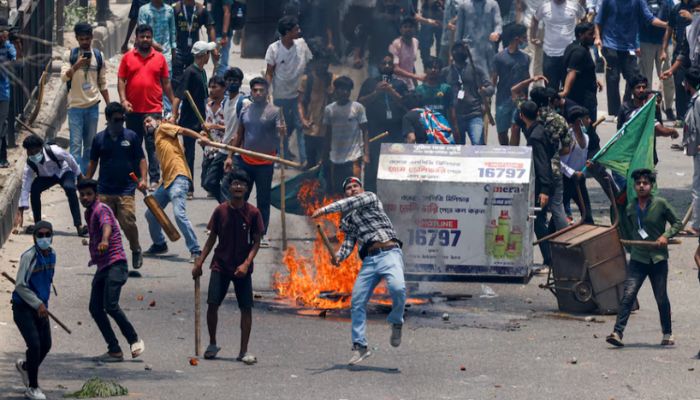
The violent protests between students and law enforcement authorities in Bangladesh over ‘quota politics’ have led to over 105 deaths and 2500 injuries so far.

As per reports, more than 52 people were killed on Friday (19th July). The agitation over the reinstatement of the 30% quota to the families of the freedom fighters of the 1971 Bangladesh Liberation War has been ongoing for over a month.

On Friday, the protestors freed 100s of prisoners from a jail in the Narsingdi district of Bangladesh and then set the facility on fire. The police had banned all public gatherings, rallies and processions to bring the law and order situation under control.

A day earlier, anti-quota protesters set fire to the headquarters of the state broadcaster Bangladesh Television (BTV) in Dhaka.

The Background of the Controversy

Bangladesh had 56% reservations until 2018 for certain groups in government jobs, which are considered lucrative in Bangladesh.

These groups include disabled individuals (1%), indigenous communities (5%), women (10%), people from underdeveloped districts (10%) and families of the freedom fighters of the 1971 Bangladesh Liberation War (30%).

This left only 44% of seats for selection based on merit. There were large-scale protests in 2018 by student groups, which forced the then-Sheikh Hasina government to abolish the quota altogether.

In June 2024, the High Court in Bangladesh overturned the decision of the government and held the scrapping of 30% reservation for families of freedom fighters as illegal. This sparked fresh protests from student groups.

The Appellate Division of the Supreme Court upheld the decision of the High Court on 4th July 2024, leading to widespread demonstrations. Following appeals by the Sheikh Hasina government, the court asked all petitioners to maintain the status quo until 7th August 2024.

However, the protesting students are steadfast in their demands and are willing to even endanger their lives to prevent the implementation of the 30% quota yet again.

Uttar Pradesh Govt notifies State Capital Region in the line of Delhi-NCR, six districts including Lucknow to be included for planned development

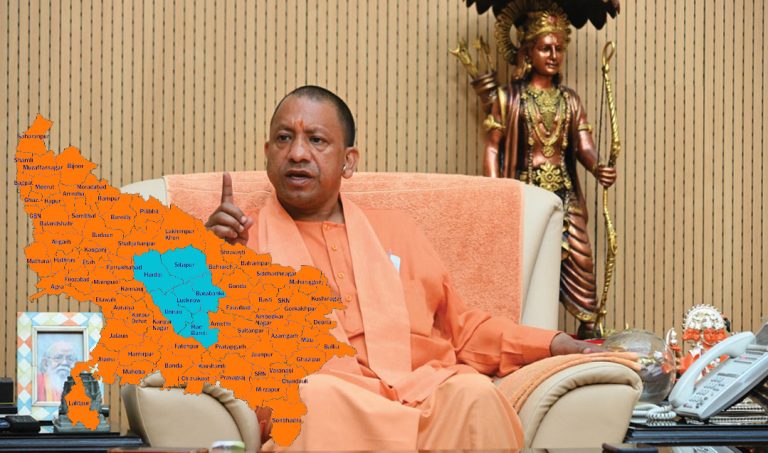
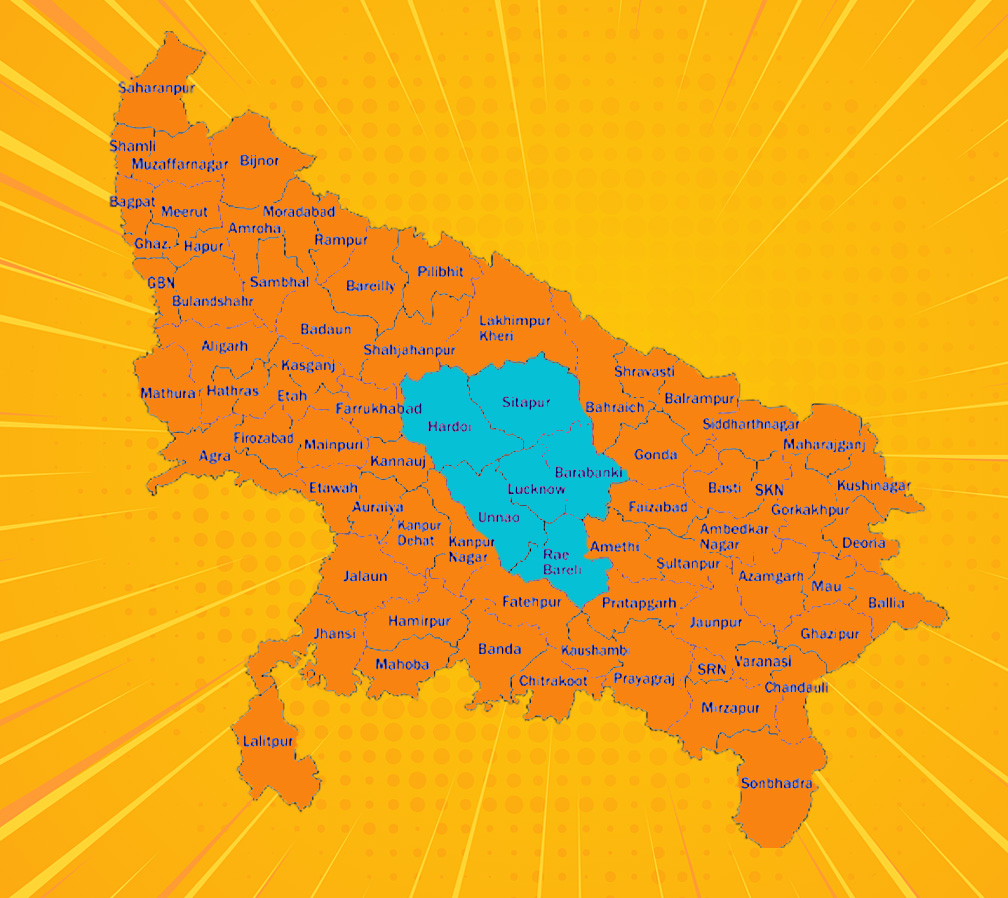
The Yogi Adityanath government in Uttar Pradesh has issued a notification forming the State Capital Region in the line of Delhi-NCR. Undre this plan, a state capital region will be created around Lucknow. The notification has been issued to include six districts under this SCR after a cabinet meeting.

The Uttar Pradesh State Capital Region will be created by combining Lucknow, Unnao, Rae Bareli, Barabanki, Sitapur and Hardoi districts. A total area of ​​27,860 square kilometers will be included in the state capital region of Uttar Pradesh.

The notification also formed an authority named ‘Uttar Pradesh State Capital Region Development Authority’, which will act as the umbrella body to coordinate with other agencies and departments to push for rapid urbanisation within Lucknow and its neighbouring districts.

The Chief Minister will be the Chairman of the Authority. The Chief Secretary will serve as the vice-chairman, and the Principal Secretary of the Housing and Urban Planning Department will be the convening member. Divisional Secretaries, Additional Chief Secretaries and Secretaries of several important departments will be members. DMs of all the 6 districts and vice-chairmen of development authorities will also be members.

Officers nominated by the Government of India and the Ministry of Defence will also be its members. Major city and village planning officials will also be ex-officio members. Divisional Commissioner Lucknow will be the Secretary of the SCR Authority.

After the formation of SCR, connectivity infrastructure like expressways, metro, trains etc covering the entire area will be developed. These projects are expected to bring big real estate development in the region. It is expected the area will grow and transform like Noida-Ghaziabad in NCR.

While Lucknow would act as the key driving force, the authority would integrate Barabanki, Rae Bareli, Unnao, Hardoi and Sitapur as part of the SCR by planning new road corridors, mass rapid transport system and other interlinkages to integrate the six districts as a holistic urban area.

The initiative will create massive employment opportunities in infrastructure projects like building roads, bridges, railways and metro etc. This will lessen the increasing burden on capital Lucknow.

After the formation of the SCR, new bylaws will be implemented in the 6 districts. The practice of haphazardly building houses, societies and encroachments will be curbed. The districts surrounding Lucknow will have metro connectivity, enabling people to live there instead of settling in Lucknow. The state capital region will also have a fleet of electric buses for connectivity.  

The entire traffic system in the SCR will be connected to an Integrated Traffic Management System, and CCTV surveillance will increase.

It is also proposed that Lucknow and Kanpur metro can be connected via Unnao in future. The infrastructure of Kanpur and Lucknow airports will also be developed.