

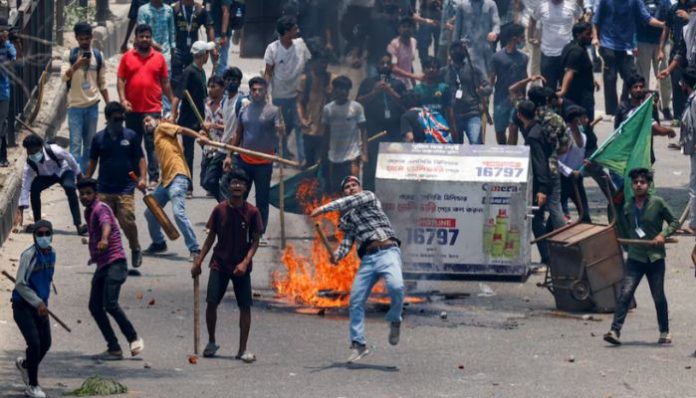
The violent protests between students and law enforcement authorities in Bangladesh over ‘quota politics’ have led to over 105 deaths and 2500 injuries so far.
As per reports, more than 52 people were killed on Friday (19th July). The agitation over the reinstatement of the 30% quota to the families of the freedom fighters of the 1971 Bangladesh Liberation War has been ongoing for over a month.
On Friday, the protestors freed 100s of prisoners from a jail in the Narsingdi district of Bangladesh and then set the facility on fire. The police had banned all public gatherings, rallies and processions to bring the law and order situation under control.
??⚡ It is reported that 105 people are dead due to the ongoing unrest in Bangladesh. Hundreds are said to be injured. pic.twitter.com/0rCFCQFlym
— War Watch (@WarWatchs) July 19, 2024
A day earlier, anti-quota protesters set fire to the headquarters of the state broadcaster Bangladesh Television (BTV) in Dhaka.
The Background of the Controversy
Bangladesh had 56% reservations until 2018 for certain groups in government jobs, which are considered lucrative in Bangladesh.
These groups include disabled individuals (1%), indigenous communities (5%), women (10%), people from underdeveloped districts (10%) and families of the freedom fighters of the 1971 Bangladesh Liberation War (30%).
This left only 44% of seats for selection based on merit. There were large-scale protests in 2018 by student groups, which forced the then-Sheikh Hasina government to abolish the quota altogether.
In June 2024, the High Court in Bangladesh overturned the decision of the government and held the scrapping of 30% reservation for families of freedom fighters as illegal. This sparked fresh protests from student groups.
The Appellate Division of the Supreme Court upheld the decision of the High Court on 4th July 2024, leading to widespread demonstrations. Following appeals by the Sheikh Hasina government, the court asked all petitioners to maintain the status quo until 7th August 2024.
However, the protesting students are steadfast in their demands and are willing to even endanger their lives to prevent the implementation of the 30% quota yet again.


