

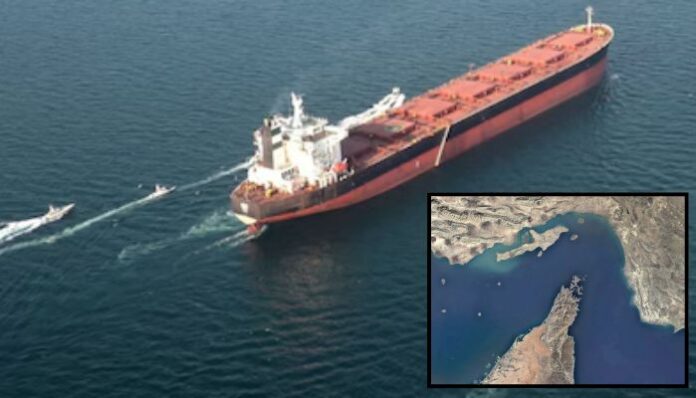
Iran has slightly eased its position on the movement of ships through the Strait of Hormuz, one of the world’s most important oil routes. A senior Iranian representative at the UN said that the waterway is still open, but not for vessels linked to what Iran calls its “enemies,” mainly the United States and Israel.
UPDATE: Iranian envoy says ships can pass through Strait of Hormuz with Iran's approval
— Al Jazeera Breaking News (@AJENews) March 22, 2026
🔴 LIVE updates: https://t.co/e9uZyJaysT pic.twitter.com/1hB5dYQpFv
This clarification came just hours after Donald Trump warned that the US could strike Iran’s power plants if the strait is not “fully open” within 48 hours. His statement had raised fears of further escalation in the already tense situation.
President Donald J. Trump has posted to his Truth Social platform warning that if Iran fails to reopen the Strait of Hormuz within 48 hours, the US will begin targeting Iranian power plants. The message was posted at 7:44pm EST. pic.twitter.com/BweskY3ZaX
— OSINTdefender (@sentdefender) March 21, 2026
Iran blames the US and Israel for tensions
Speaking at the International Maritime Organisation, Iran’s representative Ali Mousavi said that ships not linked to hostile countries can still pass through, but they need to coordinate with Iranian authorities for safety. He also made it clear that Iran sees US and Israeli actions as the main reason behind the current crisis.
“Diplomacy remains Iran’s priority. However, a complete cessation of aggression as well as mutual trust and confidence are more important,” Mousavi said.
Iran says Hormuz open to all but ‘enemy-linked’ ships amid US threat https://t.co/LsaaYEGGNM https://t.co/LsaaYEGGNM
— Reuters (@Reuters) March 22, 2026
Global concerns over energy supply
Iran had earlier restricted movement through the strait on 28th February, saying it “won’t even allow a litre of oil” to reach the US, Israel, or their allies. Since then, many ships have avoided the route due to security concerns.
This has raised serious worries globally, as nearly one-fifth of the world’s oil and gas passes through this narrow waterway. The US has tried to form a naval group to escort ships, but many NATO countries are reluctant to get directly involved in any military action against Iran.
