

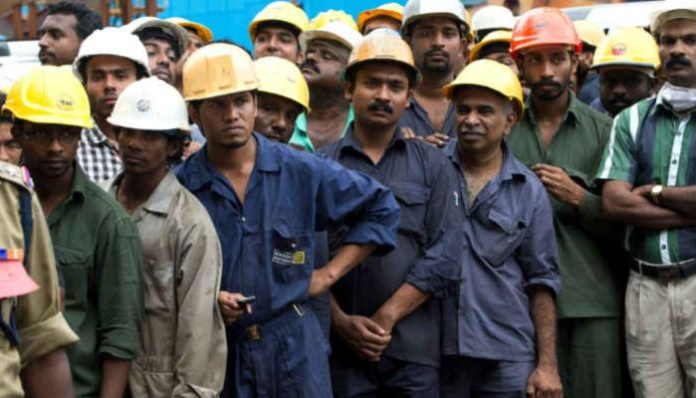
In a major development, the Modi government has announcement enforcement of four Labour Codes in India, starting from Friday (21st November).
These include the Code on Wages (2019), the Industrial Relations Code (2020), the Code on Social Security (2020) and the Occupational Safety, Health and Working Conditions Code (2020).
These Labour Codes will rationalise a whopping 29 existing labour laws, modernise labour regulations, enhance the welfare of workers and lay the foundation for a future-ready workforce.
Shramev Jayate!
— Narendra Modi (@narendramodi) November 21, 2025
Today, our Government has given effect to the Four Labour Codes. It is one of the most comprehensive and progressive labour-oriented reforms since Independence. It greatly empowers our workers. It also significantly simplifies compliance and promotes ‘Ease of…
In a statement, PM Modi said, “Shramev Jayate! Today, our Government has given effect to the Four Labour Codes. It is one of the most comprehensive and progressive labour-oriented reforms since Independence. It greatly empowers our workers. It also significantly simplifies compliance and promotes ‘Ease of Doing Business.’”
He added, “These Codes will serve as a strong foundation for universal social security, minimum and timely payment of wages, safe workplaces and remunerative opportunities for our people, especially Nari Shakti and Yuva Shakti. It will build a future-ready ecosystem that protects the rights of workers and strengthens India’s economic growth. These reforms will boost job creation, drive productivity and accelerate our journey towards a Viksit Bharat.”
It must be mentioned that most labour laws in India were framed prior to the country’s independence. At that time, the economy and nature of work were radically different from what it is today. As such, it was essential to codify the obsolete labour laws across States into 4.
Changes brought in by the new Labour Codes which comes into force from 21st November 2025
- Mandatory appointment letters to all workers to ensure transparency, job security, and fixed employment.
- All workers to get social security coverage including PF, ESIC, insurance
- All workers to receive a statutory right minimum wage payment.
- Employers must provide all workers above the age of 40 years with a free annual health check-up.
- Employers must provide provide timely wages to employees.
- Women are permitted to work at night and in all types of work across all establishments, subject to their consent and required safety measures.
- ESIC coverage and benefits are extended Pan-India
- Simplified processes and reduction in Compliance Burden.
- Fixed-Term Employees (FTE) are eligible for gratuity after 1 year instead of 5
- Gender-neutral pay and job opportunities, explicitly prohibiting discrimination—including against transgender persons.
- National Floor Wage to ensure no worker receives a wage below the minimum living standard.
