

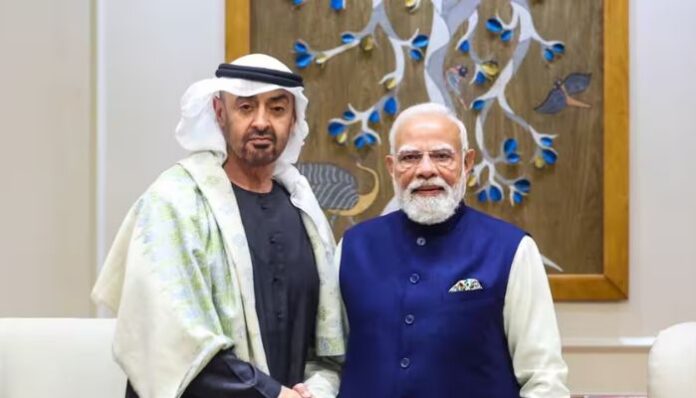
UAE President Sheikh Mohammed bin Zayed Al Nahyan’s sudden visit to India is now being linked to a series of developments that have unsettled Pakistan. Immediately after the short trip, the UAE decided to withdraw from its plan to operate Islamabad International Airport, a project under discussion since August 2025. The move is being seen as a sign of shifting priorities in the region.
Abu Dhabi Backs Out Of Pakistan Airport Deal After UAE Leader's India Visithttps://t.co/blLRXFADcH pic.twitter.com/V0FPZbwQEA
— NDTV WORLD (@NDTVWORLD) January 26, 2026
Soon after returning from India, Sheikh Mohammed approved the release of around 900 Indian nationals from prisons in the UAE, calling it a goodwill gesture. At the same time, Pakistan received confirmation that Abu Dhabi was no longer interested in the Islamabad airport project.
The development was confirmed by Pakistan’s leading daily, The Express Tribune, which reported that the UAE could not finalise a local partner and had lost interest in moving ahead. The development has caused concern in Islamabad, including for Prime Minister Shehbaz Sharif and Army Chief Asim Munir.
The airport deal was considered necessary for Pakistan, which is struggling with a weak economy and looking for foreign investment. Officially, the UAE has said there was no political reason behind the decision and described it as a commercial call. The timing has drawn attention, especially amid rising tensions in the Gulf region.
Relations between the United Arab Emirates and Saudi Arabia, once close allies, have cooled in recent years, particularly over differences related to Yemen. Pakistan has moved closer to Riyadh, signing a defence agreement in September 2025. It has also been discussing Turkey’s role in a proposed security grouping often referred to as an “Islamic NATO.” These moves have not gone unnoticed in Abu Dhabi.
At the same time, ties between India and the UAE have continued to grow stronger. The contrast between India’s rising partnership with Abu Dhabi and Pakistan’s weakening ties has become increasingly clear over the past few months.
UAE President’s surprise visit to India last week
Sheikh Mohammed bin Zayed’s surprise visit to New Delhi last week. The trip, which took place on the 19th of January, included a visit during which he met Prime Minister Narendra Modi. A joint statement later confirmed that the visit was planned and held at Modi’s invitation.
Both leaders strongly condemned terrorism, including cross-border terrorism, and agreed on several outcomes that would typically take much longer to finalise. The speed of the visit and the presence of senior UAE ministers led to widespread discussion, with many noting that such a short trip signalled urgency and importance.
Taken together, the release of Indian prisoners, the growing closeness between India and the UAE, and the cancellation of a significant investment plan involving Pakistan have all unfolded within days of each other. While no official link has been stated, the timing has sent a clear message across the region.
For Pakistan, the developments highlight how fast regional equations are changing. For decades, the UAE was one of Pakistan’s largest trade partners and a significant source of jobs and remittances. Over time, issues such as weak infrastructure, safety concerns, and governance problems have strained relations.
