

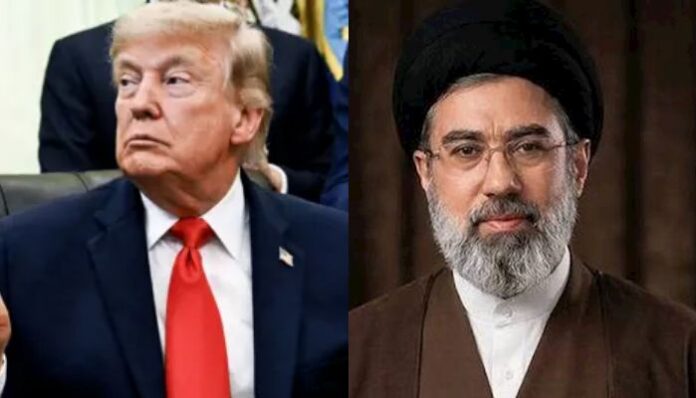
On Wednesday, 1st July, the United States and Iran concluded another round of indirect talks in Doha, Qatar, but there was no breakthrough. Instead of discussing long-term peace or Iran’s nuclear programme, both sides mainly focused on implementing parts of the temporary agreement reached two weeks ago that helped halt the recent conflict.
According to media reports, the two-day talks centred on two key issues, restoring normal shipping through the Strait of Hormuz and unfreezing Iranian funds held abroad. Both matters are considered crucial for carrying forward the ceasefire understanding reached after the fighting in June.
Qatar’s Foreign Ministry said the next round of talks will take place after the funeral of Iran’s late Supreme Leader Ayatollah Ali Khamenei, who is scheduled to be buried on 9th July.
UPDATE: US–Iran Talks in Doha End Without Major Breakthrough
— Netram Defence Review (@NetramDefence) July 2, 2026
The latest round of indirect U.S.–Iran talks in Doha concluded with no major breakthrough, but both sides agreed to continue negotiations.
Key discussion points included:
– Freedom of navigation in the Strait of… pic.twitter.com/5KzAQPSMa9
The ministry said the latest discussions had made “positive progress” on issues linked to the memorandum that ended the conflict and were “building on the outcomes” of an earlier summit held in Switzerland.
The nuclear issue yet to be discussed
Although US President Donald Trump said negotiations on Iran’s nuclear programme were moving in the right direction, officials familiar with the Doha meetings said the subject was not discussed during this round as the talks were mainly technical. “The denuclearisation of Iran is moving along well. They’ve had very good meetings, and we’ll see,” Trump told reporters in Washington.
US Vice President JD Vance acknowledged that the nuclear issue would be taken up separately at a later stage. “Obviously, we’re worried about the nuclear issue; we’re going to start talking about that,” he said.
The negotiations were held indirectly, with American and Iranian officials meeting separately through mediators from Qatar and Pakistan. Iran’s delegation was led by Deputy Foreign Minister Kazem Gharibabadi, who confirmed that the talks had concluded. However, neither side indicated whether they had narrowed their differences.
🔴 ‘Positive progress’ in US-Iran indirect talks in Doha: Qatar spokesman
— Arab News (@arabnews) July 2, 2026
🔴 US-Iran talks to continue after Iran supreme leader’s funeral https://t.co/Il7QsmM0YQ pic.twitter.com/MKmNaGRZ01
Interestingly, senior US officials, including special envoy Steve Witkoff and President Trump’s son-in-law Jared Kushner, who had earlier been expected to participate in high-level discussions, did not attend the meetings.
Strait of Hormuz remains a key concern
One of the biggest issues discussed was the future of the Strait of Hormuz, one of the world’s most important shipping routes. Before the recent conflict, nearly one-fifth of the world’s oil and liquefied natural gas trade passed through this narrow waterway.
While commercial shipping has partially resumed, uncertainty remains after both countries exchanged attacks last weekend following an Iranian strike on a cargo vessel.
According to senior Iranian sources, Tehran wants international recognition of its authority over the Strait and has said it plans to begin collecting tolls from ships starting in mid-August, after a toll-free period agreed under the temporary arrangement comes to an end.
Despite these tensions, Trump struck an optimistic tone, saying, “I think they’ve come a long way.” His remarks reassured global markets. Oil prices dropped to their lowest level in four months as investors became more hopeful that a wider conflict could be avoided.
At the same time, Iran’s state media reported that a foreign container ship had run aground outside the shipping lane designated by Iranian authorities.
