

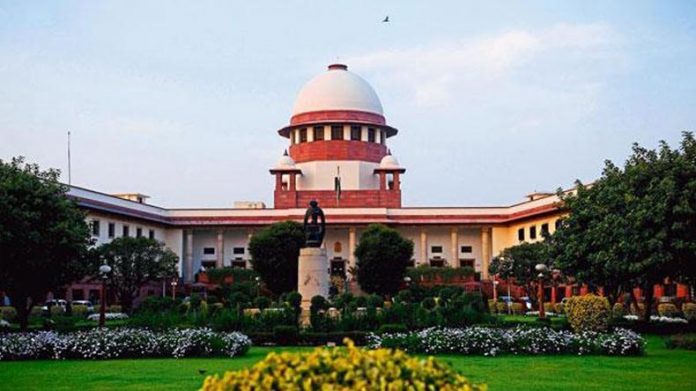
The Supreme Court on Wednesday reserved its order on the matter of referring the Ram Janambhoomi dispute to a court-appointed and monitored mediation.
Supreme Court reserves order on the issue of referring Ram Janmabhoomi-Babri Masjid title dispute case to court appointed and monitored mediation for “permanent solution”. pic.twitter.com/JoC907Mgcm
— ANI (@ANI) March 6, 2019
The Court further asserted that the involved parties will suggest the name of the mediators and that the order will be passed soon.
Advocate Rajeev Dhavan, appearing for Muslim petitioners in the case, said that the Muslim petitioners “agreeable to mediation”. The Hindus, however, were opposed to the idea and remarked that mediation will be a failure.
“You are looking at the outcome even before mediation is attempted. This is also about heart and mind and healing of relations,” Justice SA Bobde had said reacting to the opposition from Hindu parties involved.
Earlier, Justice Bobde had said, “We have no control over what happened in the past, who invaded, who was the king, temple or mosque. We know about the present dispute. We are concerned only about resolving the dispute.”
He also remarked that while the process of mediation is on, reports should not assign motive to anyone involved.
Supreme Court on Ayodhya Ram Janmabhoomi-Babri Masjid land dispute case: Justice SA Bobde says, “When the mediation is on, it should not be reported on. It may not be a gag, but no motive should be attributed to anyone when the mediation process is on.” https://t.co/PFTl4FNY54
— ANI (@ANI) March 6, 2019
Justice Chandrachud, too, expressed his concerns with mediation on the matter. “How do we bind millions of people by way of mediation? It won’t be that simple,” he said before adding “Desirability of resolution through peaceful talks is an ideal situation. But how do we go about it is the real question.”


