

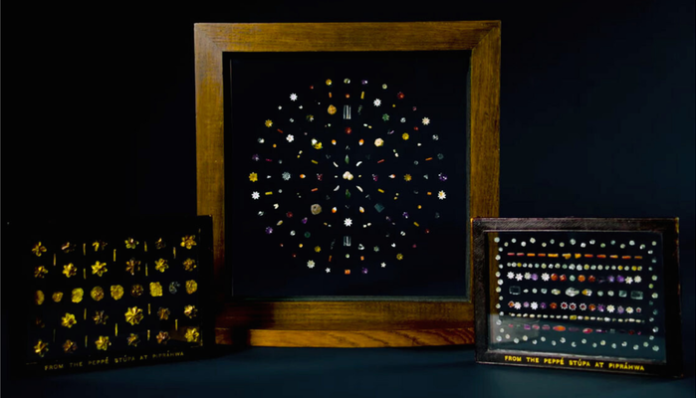
After successfully preventing the auction of the ancient Piprahwa gems, the Indian government has been able to bring back the sacred relics associated with Lord Buddha. The Piprahwa relics were discovered in 1898, but were taken out of the country during the British rule. Now, the relics have returned to India 127 years after their discovery.
Prime Minister Modi on Wednesday (30th July) informed about the return of the gems to India. “A joyous day for our cultural heritage! It would make every Indian proud that the sacred Piprahwa relics of Bhagwan Buddha have come home after 127 long years. These sacred relics highlight India’s close association with Bhagwan Buddha and his noble teachings. It also illustrates our commitment to preserving and protecting different aspects of our glorious culture,” PM Modi wrote on X.
A joyous day for our cultural heritage!
— Narendra Modi (@narendramodi) July 30, 2025
It would make every Indian proud that the sacred Piprahwa relics of Bhagwan Buddha have come home after 127 long years. These sacred relics highlight India’s close association with Bhagwan Buddha and his noble teachings. It also… pic.twitter.com/RP8puMszbW
“It may be recalled that the Piprahwa relics were discovered in 1898, but were taken away from India during the colonial period. When they appeared in an international auction earlier this year, we worked to ensure they returned home. I appreciate all those who have been involved in this effort,” he added.
It may be recalled that the Piprahwa relics were discovered in 1898 but were taken away from India during the colonial period. When they appeared in an international auction earlier this year, we worked to ensure they returned home. I appreciate all those who have been involved…
— Narendra Modi (@narendramodi) July 30, 2025
An announcement about the gems being put on auction was made in February this year by Sotheby’s, a global auction house. The date of the auction was set as May 7, 2025, in Hong Kong. But, the news of the auction of the relics attracted the scorn of historians, archaeologists, and the followers of Buddhism worldwide, which soon turned into a global movement leading to the intervention of the Indian government.
On May 2, 2025, the Director General of the Archaeological Survey of India (ASI) wrote to the Consulate General of Hong Kong, requesting to halt the auction with immediate effect. A bilateral meeting took place the same day between Culture Minister Shri Gajendra Singh Shekhawat and Rt Hon Lisa Nandy, UK Secretary of State for Culture, Media and Sport, for the prevention of the auction of the gems.
This was followed by a legal notice being served to Sotheby’s by the Indian government in May 2025. On May 6, 2025, a high-level Indian delegation led by the Secretary, Ministry of Culture, including the Joint Secretary (East Asia Division, MEA) and the Consul General of India to Hong Kong, held discussions with Sotheby’s representatives.
During the discussions, the Indian delegation highlighted the significance of the relics for Buddhists globally and said that they rightfully belonged to India as they were taken away in an unauthorised manner during the colonial period. The same day, Sotheby’s confirmed the postponement of the auction.
What are Piprahwa gems
The Piprahwa gems are a collection of ancient jewels, dating back to the 3rd century BC. These were buried along with the cremated remains of Buddha at Piprahwa, a village alongside the Indo-Nepal border in Uttar Pradesh. In 1898, a colonial landlord named William Claxton Peppé ordered the excavation of a Stupa on his estate in Piprahwa. During the excavation, five reliquaries were found containing bone fragments, ash, and gemstones, including amethysts, corals, garnets, pearls, rock crystals, shells, and gold.
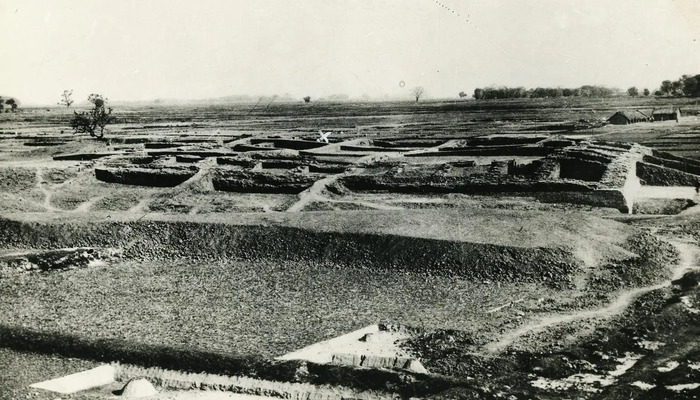
An inscription in Brahmi script on one of the excavated caskets confirmed that the relics were deposited by the Sakya Clan and belonged to Buddha. The excavation marked a significant discovery in Buddhist history. Out of over 1800 excavated items, some were gifted by Viceroy Lord Elgin to King Rama V of Siam. Parts of the items were allocated to temples in Burma and Ceylon. The remaining items were divided between the Indian Museum, Kolkata and Peppé.
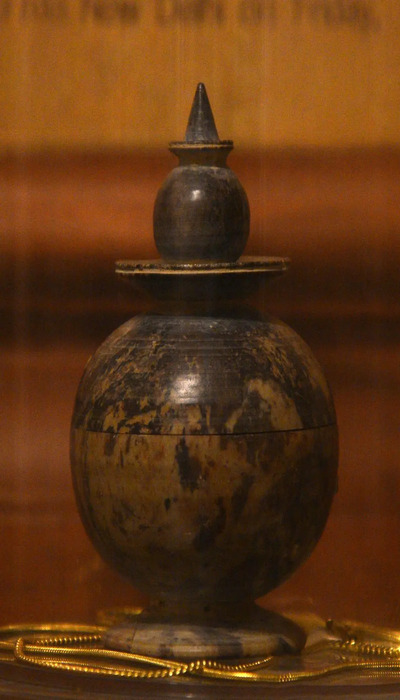
The excavated items are of immense religious significance for Buddhists, who consider them as Sharirk Dhatu (corporeal relics). According to Naman Ahuja, professor of Indian Art and Architecture at Jawaharlal Nehru University, Buddhism recognised three main types of relics, the most precious being Sharirik Dhatu or the remnants from the physical body of the Buddha himself.
Buddhists believe that the items buried along with the cremated ashes of Buddha in the original caskets of Buddha comprise Sharirik Dhatu. According to Buddhist belief, the bodies of great masters turn to crystal over time. These are said to transform into quartz, rock crystal, amethyst, and other such forms. This is the reason that the auction of these sacred relics invoked opposition by Buddhists worldwide.


