

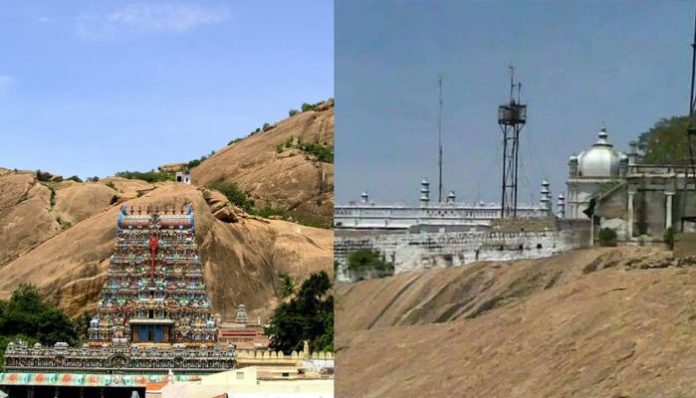
The Madras High Court has finally put an end to the long-running dispute over the Thiruparankundram Hill in Madurai, a site deeply sacred to Hindus as it houses the ancient Arulmighu Subramania Swamy Temple, one of the six abodes of Lord Murugan. In its latest judgment, the court has upheld the temple’s ownership of the entire hill, banned animal sacrifice, and prohibited using the name “Sikkandar Malai” for the hill.
The ruling was delivered by Justice R. Vijayakumar on Friday, 10th October after a split verdict earlier this year by two judges, Justice J. Nisha Banu and Justice S. Srimathy. Acting as the third judge, Justice Vijayakumar settled the matter once and for all, ruling in favour of the Hindu petitioners, S. Paramasivam, M. Kannan @ Solai Kannan, and A.P. Ramalingam of the Hindu Makkal Katchi.
The petitioners had approached the court demanding a complete ban on animal sacrifice and Muslim prayers on the hill, arguing that Thiruparankundram Hill is a sacred Hindu site where the practice of Kandoori (animal sacrifice) near the Sikkandar Badhusha Dargah defiled the religious purity of the temple and the surrounding area.
Court’s key observations and verdict
The court noted that the Archaeological Survey of India (ASI) had declared about 172 acres of the hillock as a protected monument through gazette notifications issued in 1908 and 1923. Under Rule 8 of the Ancient Monuments and Archaeological Sites and Remains Rules, 1959, bringing animals for any purpose or cooking and consuming food on the protected site is prohibited without permission from ASI.
The bench ruled that even if animal sacrifice was claimed as a customary religious practice, it cannot be allowed unless a competent civil court formally recognizes it. Therefore, it prohibited all forms of animal sacrifice, cooking, and consumption of non-vegetarian food in the Nellithoppu area until further orders.
The court also rejected the renaming of the hill as “Sikkandar Malai,” saying it was a “mischievous attempt to change its identity.” The court cited historical records that have always referred to the area as Thiruparankundram Hill.
Referring to past legal precedents, Justice Vijayakumar mentioned a 1920 civil court decree and a 1931 Privy Council decision (AIR 1931 PC 212) that confirmed the temple’s ownership of the entire hill, except for a small 33-cent area at Nellithoppu, which belongs to the Dargah.
The court further said, “If a person owns a house in the City of Madurai, he is at liberty to name the said house as per his wishes. However, he cannot either by himself or insist the others to call the entire City as per the name chosen by him.”
Justice Vijayakumar said that since the title in favour of Mohammedans applied only to a tiny portion, it was wrong to claim ownership or naming rights over the whole hill.
Limited permission for Muslim prayers
While asserting the Hindu temple’s rights over the hill, the court also made sure to balance the rights of both communities. It allowed Muslims to offer prayers only in the 33-cent area at Nellithoppu and that too only during Ramzan and Bakrid. The court also said that the temple pathway and steps must not be defiled, blocked, or disturbed in any way.
The judge clearly stated that no new religious practice can be introduced unless it is recognized by a civil court. This ruling, therefore, upholds Hindu sentiments and simultaneously puts a legal stop to unrecognized practices such as animal sacrifice.
With this, the High Court has confirmed the temple’s ownership, banned animal sacrifice, and recognized limited prayer rights for Muslims during specific festivals, putting a lid on a conflict that had been simmering for years.
How the dispute began
The Thiruparankundram issue has been at the centre of communal tension in Madurai for the past few years. Hindus believe that the entire hill is sacred, not just because it houses the Subramania Swamy Temple, but also because of the ancient Jain caves and centuries-old traditions tied to Lord Murugan worship.
However, the conflict escalated after Muslim groups began claiming parts of the hill as belonging to the Sikkandar Badhusha Dargah, referring to it as “Sikkandar Malai.” The Hindu community saw this as an attempt to Islamize a sacred Hindu space.
?Hindu voices roaring in TamilNadu!
— ?? Sangitha Varier ? (@VarierSangitha) February 4, 2025
Against the Izzlamics attempted take over & their anti Hindu Dravidian support.#Thiruparankundram the sacred Kandhar Malai,belongs to our Lord Murugan & Hindus alone.@hindumunnani_tn is going all out to protect our faith ?… pic.twitter.com/0xpkianGje
On 4th February 2025, thousands of Hindus gathered at Palakkanatham in Madurai to protest against these claims. The protest, organized by the Hindu Front and supported by over 50 Hindu organizations, including the BJP, RSS, Hindu Munnani, and VHP, drew a massive crowd of devotees who raised slogans hailing Lord Murugan and protecting the temple’s sanctity.
? முருகன் யுகம்?
— J.K.GogulBalaji (@JKGogulBalaji) February 4, 2025
திருப்பரங்குன்றம் முருகனுக்காக மதுரை பழங்காநல்லதத்தில் கூடிய காவிப்படை ?
வெற்றிவேல் முருகனுக்கு அரோகரா !#SaveThiruparankundram #Thiruparankundram #Madurai pic.twitter.com/CIg8fxrEOd
The protesters accused the state government and local authorities of turning a blind eye to encroachments on the hill in the name of religion. They also demanded a complete ban on animal sacrifice, calling it disrespectful to a site revered by millions of Hindus.
Muslims were attempting to convert the hill into an Islamic place of worship
The issue is believed to have begun last year on 27th December after a Muslim family led by Syed Abu Dahir, a 53-year-old from Malaiyadipatti attempted to take animals on the hill for sacrifice. The police detained the family which further irked 20 Islamists to protest against the police. This was followed by a protest by Muslims in January this year demanding free access to the hill. demanding the continuation of animal sacrifice calling it an old tradition. They even named the hill as ‘Sikandar Hills’.
On 18th January then, the Muslims led by the SDPI organized Sammanboj on the hill in which they had planned to sacrifice goats and chickens for meals. The police were informed about the plans backed by several social media posts that affirmed the Muslim community’s intentions. Hindu Munnani members meanwhile resisted Muslims’ effort to sacrifice animals on the hill, one of Lord Murugan’s six sacred abodes. They said that Muslims were attempting to convert the hill into an Islamic place of worship.
The police then posed barricades on the site informing the Muslims that sacrificing the animals was prohibited atop the hill, however, they could carry the cooked meat and consume it there. Following this, clashes erupted between Jamath members and the police, further intensifying the situation.
On 21st January, DMK Manapparai MLA Abdul Samad conducted and unofficially survey of the hill and claimed control of the premise. Indian Union Muslim League MP Nawaz Kani also claimed that the entire property was Waqf property and every Muslim had the right to pray at Dargah the way he wanted. He reiterated that the sacrifice of animals atop the hill was an old tradition and that it should continue.
It is crucial to note that Thiruparanundram Hill is a religious site of crucial significance to Hindus due to the presence of ancient Jain caves and Lord Murugan Temple atop. Several Hindus have worshipped the temple for centuries. The Jain caves on the hill, which have now been painted green, also date back to the 2nd century BCE and these have Tamil Brahmi inscriptions on them, as surveyed by the Archaeological Survey of India (ASI).
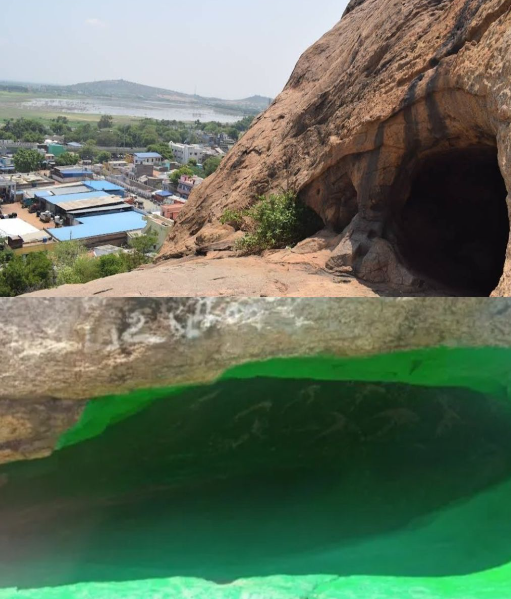
However, the Muslims who were creating chaos around the hill have begun claiming the hills as ‘Sikandar Hills’ behind the Sikandar Badusha Dargah.
Police orders and political reactions
On 22nd January, the Madurai district police officially barred Muslims from transporting livestock for sacrifice to the Dargah. They clarified that while cooked meat could be taken for consumption, the transport of live animals like goats or chickens was not allowed.
The order triggered backlash from Muslim leaders. IUML MP Nawaz Kani protested against the police decision, claiming that animal sacrifice had been a long-standing tradition at the Dargah. He also argued that the property was Waqf land and that the restriction was temporary.
Kani compared the situation to Kashi Vishwanath and Gyanvapi, saying that both the temple and mosque coexisted peacefully there and that the same could happen in Thiruparankundram.
However, his remarks drew sharp criticism from Hindu leaders. Tamil Nadu BJP chief K. Annamalai said Kani’s comments were “divisive” and hurtful to Hindu sentiments. He said, “In the spiritual land of Tamil Nadu, all religions have their own rules of worship at their places. But what is happening at Thiruparankundram Subramanya Swamy Temple is unpleasant. Consuming non-vegetarian food at the Murugan Temple hill is not just wrong but a provocation to start a religious conflict.”
Annamalai added that Tamil Nadu had always been a land of religious harmony, and attempts to disturb that peace for political reasons were unacceptable.
Muslims’ claim over the Hill: A century-old dispute
While many thought this controversy was new, the Muslim claim over the Thiruparankundram Hill goes back more than a century. Historical records show that Islamists have been trying to assert ownership since the 19th and early 20th centuries by calling the hill “Sikkandar Malai.”
In the year 1931, the Islamists made similar claims saying that the hill was a Muslim property and that its name was ‘Sikandar Hills’. The Privy Council on 12 May 1931 took cognizance of the matter and said that Thiruparankundram Temple had proven its historical possession of the unoccupied portions of the hill, treating it as its property for generations.
The judgment recognized that the village of Thiruparankundram, where the temple is located, was part of the temple’s endowment. The council also noted that the temple’s ‘Ghiri Veedhi’ (circumambulation path) and the hill’s surroundings were historically part of the temple’s sacred land.
The subordinate judge at the time said clearly that “Malai means hill” and “prakaram” means the outer area of the temple, confirming that the entire hill forms part of the temple’s sacred precinct.
The records also show that there was no evidence of interference by Muslim rulers or invaders on the hill in the past. Some Muslim houses or small structures may have been built during brief periods of Muslim rule, but that did not change the temple’s ownership. Even the East India Company had recognized the temple’s rights over the land.
The Privy Council judgment explicitly stated that the hill was primarily a Hindu temple property, and the rights of the temple “could not be infringed upon by any other religious group.”
Historical and religious importance of Thiruparankundram
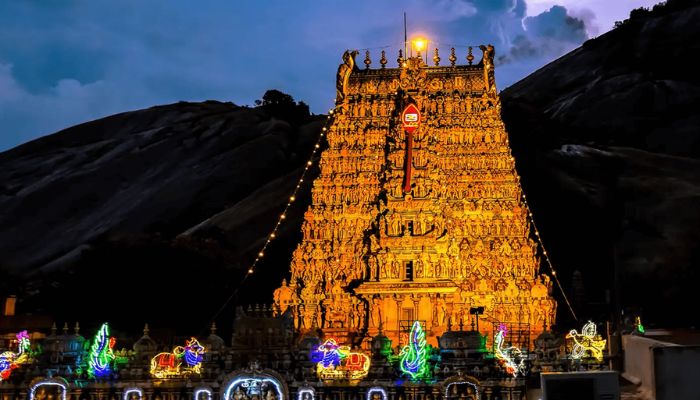
Thiruparankundram isn’t merely a temple hill, it’s one of Lord Murugan’s six homes, and millions of pilgrims from all over Tamil Nadu and elsewhere come here annually. The temple of Lord Subramanya Swamy is carved straight out of the rock of the hill, demonstrating how old and holy it is.
The hill also features 2nd-century BCE Jain caves with Tamil Brahmi inscriptions, preserved by the ASI. Hindus were recently infuriated when a few unknown individuals painted these ancient Jain caves green, an action perceived as intentional vandalism. The ASI registered a complaint under the Ancient Monuments and Archaeological Sites and Remains Act, 1958, and the Prevention of Damage to Public Property Act, 1984.


