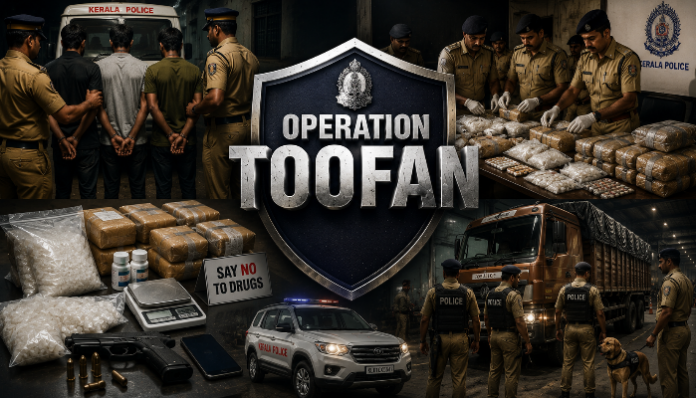
Kerala’s new government has adopted a multifaceted approach to combat drug trafficking, which has grown to be a serious threat to the state. On 2nd June (Tuesday), home minister Ramesh Chennithala announced “Operation Toofan: The Narco Hunt,” which is a statewide effort to fight the rising drug crisis and dismantle drug trafficking rings. It is one of South India’s biggest anti-drug drive.
He described the program as “a systemic, borderless policy offensive designed to serve as a national benchmark in the eradication of synthetic drug networks.” He explained the rationale behind the name and explained that it was picked because a traditional cleanup was insufficient and a “legislative and operational storm” is required to completely eliminate the firmly ingrained syndicate.
Chennithala asserted that the authorities are going to implement a model of total neutrality in accordance with this objective and state borders, social standing or political clout would not protect traffickers. “Coordinated via interstate protocols with neighboring DGPs (Director-General of Police) and powered by an advanced Cyber Wing targeting dark web networks, this operation introduces a rigorous law enforcement model,” he added.
Proudly announcing "TOOFAN: The Narco Hunt"—a systemic, borderless policy offensive designed to serve as a national benchmark in the eradication of synthetic drug networks.
— Ramesh Chennithala (@chennithala) May 23, 2026
Why "Toofan"? Because a conventional cleanup wasn't going to cut it, we needed a legislative and… pic.twitter.com/985KYHbcOv
Chennithala declared, “The structural blueprint is finalised. As schools reopen and the new academic year commences on 1st June, Operation Toofan goes into full effect to guarantee secure campuses and a protected future. Kerala Police set to action.” The project would be formally launched at the Government Higher Secondary School for Girls at Cotton Hill in Thiruvananthapuram.
The Kerala Police, which will spearhead the operation, also posted about it on 28th May remarking, “Through a people’s resistance where the public, schools, and families join hands with us, we can ensure peace in our homes and a fearless atmosphere on our streets,” to obliterate the mounting epidemic.
തൂഫാൻ🔥
— Kerala Police (@TheKeralaPolice) May 28, 2026
ദി നാർക്കോ ഹണ്ട്🥷🏻
ജൂൺ1മുതൽ📈
ആരോഗ്യകരമായ നാളേക്ക് ഒന്നിച്ചു മുന്നേറാം🫂
ലഹരിയുടെ വേരറുക്കാം⛓️💥
പൊതുസമൂഹവും വിദ്യാലയങ്ങളും കുടുംബങ്ങളും ഞങ്ങളോടൊപ്പം കൈകോർക്കുന്ന ഒരു ജനകീയ പ്രതിരോധത്തിലൂടെ നമ്മുടെ വീടുകളിൽ സമാധാനവും, തെരുവുകളിൽ ഭയരഹിതമായ അന്തരീക്ഷവും ഉറപ്പാക്കാം. pic.twitter.com/ljkDdzngqY
Police earlier executed large-scale raids throughout the Thiruvananthapuram city. The action, which was organised jointly with the Thiruvananthapuram Corporation, resulted in the confiscation of prohibited tobacco supplies from stores. Five sacks of tobacco goods were recovered alongside several illegal bunk shops and roadside booths used for such unlawful activities were taken down under the Medical College police limits.
The latest effort occurred after Kerala Police undertook multiple targeted law enforcement campaigns. In an attempt to improve public safety as well as law and order across the state, it held 1,663 people earlier this year under “Operation Round Up,” including habitual criminals and absconding perpetrators.
The proposed crackdown on drugs
The drive would involve coordination with agencies of central government, police and enforcement from other South Indian states to address the issue of interstate drug rings. A watchful eye would be kept on drug users, traffickers, suppliers and promoters. The mission combines innovative investigative methods and technology-driven surveillance to confront the rapid expansion of synthetic drugs. There would be a special focus on shielding kids from drug networks.
The police intend to shut down the supply chain through monitoring social media groups that mainly engage in the sale of synthetic medicines and by tracking suspicious financial activities. Drone-assisted smart patrols will be implemented in high-risk regions, and wastewater analysis could be introduced in residential areas and educational institutions to detect drug-consumption hotspots.
According to the home department, the campaign would also involve tougher measures against drug mafias, including as the seizure of assets connected to such networks and anti-drug awareness programs through a unique curriculum in schools. Additionally, the aim is to strengthen community-led resistance to substance abuse. Community participation activities would be used to identify hot spots at the grassroots level.
It is anticipated that networks encouraging youngsters to consume drugs would be targeted with special measures. Officials conveyed that surveillance would be improved to prevent the distribution of chemical and synthetic opioids along with hybrid cannabis. Strict measures on the sale of tobacco products close to schools as well as the usage and distribution of drugs in places like upscale hotels and DJ events are part of the move.
A digitally enabled system would be set-up to enable the prompt reporting of drug-related incidents. The introduction of WhatsApp chatbots and mobile applications would allow people to anonymously exchange information on drug use and trafficking.
Moreover, authorities stressed that violations under the NDPS (Narcotic Drugs and Psychotropic Substances) carry harsh punishments. The death sentence could be applied when synthetic drugs are found in commercial quantities. Large-scale cannabis smuggling might end up in a 20-year prison sentence, while cannabis cultivation could entail a 10-year behind bars.
Drug use attracts a one-year jail term. The PIT-NDPS (Prevention of Illicit Traffic in Narcotic Drugs and Psychotropic Substances) Act’s preventative detention provisions permit the custody of repeat offenders without charge or trial for a maximum of two years. The average penalty is doubled for a convict over another drug infraction after serving a previous term.
Meanwhile, Kerala police aim to employ a little-used legal clause in the NDPS Act to keep first-time drug users to not turn criminals. They want to grant legal immunity to individuals caught in possession of small amounts of narcotic substances if they voluntarily seek treatment at approved de-addiction units.
According to police chief Ravada A. Chandrasekhar, they are looking into the application of Section 64A of the NDPS Act, which provides exemption from prosecution to addicts who choose medical treatment, reported The New Indian Express. District police heads have been instructed to consider the possibility of legitimately rehabilitating first-time offenders under this provision.
The immunity applies solely to cases concerning minor amounts of drugs that are covered by bail. Treatment at a de-addiction facility approved by the government is essential for those desiring the concession. The protection would expire and prosecution might start if the patient discontinues treatment midway or commits fresh offences.
Drug-related incidents reported across the state
On 30th May (Saturday), major amounts of narcotic drugs and psychotropic substances, such as methaqualone, methamphetamine, and hashish oil, meant for illicit distribution and trafficking were intercepted in Kochi, Malappuram and Thiruvananthapuram. by the Directorate of Revenue Intelligence (DRI)’s Cochin Unit under “Operation Chakravyuh.”
More than 24 kilograms of narcotic drugs and psychotropic substances were uncovered. 5 people have been arrested under the NDPS, including key members of the trafficking network. The contraband was identified in various modes of smuggling, comprising outbound export goods, concealment in courier consignments and passenger baggage at airports.
On 17th April, a person from Malappuram district, was nabbed after arriving at Calicut International Airport from Muscat. Officers from the DRI Cochin Zonal Unit’s Calicut Regional Division and Kannur Regional Team apprehended the passenger based on specific intelligence.
They acquired two packets totalling 1974 grams that contained crystal methamphetamine. The drugs were hidden in food packages in his checked-in luggage. Their estimated worth was 1.58 crores in the black market. On 2nd March, the agency confiscated 1.931 kilogram of crystal methamphetamine from a local of Palakkad at Calicut International Airport.
DRI’s Cochin Zonal Unit likewsie arrested 21 people in connection with various NDPS crimes and retrieved narcotic drugs and psychotropic substances worth about ₹70.76 crore in Kerala during the previous fiscal year.
On 2nd April, 36-year-old Mohammed Haneefa P, a resident of Poolappoyil in Mukkam and 45-year-old Reihanath of Beypore were taken into custody by the authorities. The former was in possession of 517 grams of MDMA (3,4-methylenedioxymethamphetamine). 2.286 kilograms of MDMA were located during a subsequent raid at a home he had rented in Poolappoyil where he had been conducting business for the previous six months.
According to insiders, Haneefa is considered to be one of the state’s main drug dealers, frequently obtaining MDMA from Bengaluru and Delhi. A currency counting machine, several digital scales and packing supplies necessary for narcotics distribution were found during the action.
Drug epidemic grips Kerala
The operation takes place at a critical juncture as the state experiences a drastic spike in drug-related instances and synthetic drugs become more prevalent in educational institutions. The drug cartels function through highly encrypted social media platforms and online networks. They entice students with free samples, trigger addiction and then take advantage of them as local distributors and couriers.
The number of cases registered under the NDPS Act surged sharply from 27,530 in 2024 to 36,314 in 2025. The pattern is indicative of a broader issue the state has been encountering lately. With 30,697 cases reported in 2023, Kerala had the highest tally of NDPS cases in the nation, according to data from the National Crime Records Bureau (NCRB).
Similarly, the grand scale of illegal products that crosses borders has turned out to be a challenge for both the Excise Department and the Kerala Police. Over the past ten years, drugs valued at ₹554.57 crores have been captured but it is believed to be just a tiny fraction of the figure successfully trafficked into the state.
More than 48,371 cases have been reported, comprising over 50,000 youths and students. The primary supply chains, manufacturing laboratories, bulk suppliers and interstate transit networks have remained largely unaffected by enforcement actions which have predominantly accomplished only peripheral arrests.
“The drug menace in Kerala is now becoming extremely serious. It’s an issue I have raised in Parliament, and I have not had a satisfactory response from the authorities. We need to have a war on drugs in Kerala. We need a very serious consciousness-raising effort which unites all religions and political parties. We need the state government to collaborate with the Central government to identify the sources of supply,” expressed senior Congress leader and Thiruvananthapuram Lok Sabha MP Shashi Tharoor, last year.
Kerala Governor Arif Mohammed Khan echoed similar sentiments in 2022. and charged, “Kerala is replacing Punjab as the capital of drugs.” The state recorded 27,700 drug-related cases in 2024, three times more than Punjab’s slightly over 9,000 incidents. Kerala is reporting 78 cases per lakh inhabitants considering its population.
All of its 14 districts are reportedly impacted. Half of the thirty homicides that were reported in the state during the first two months of 2025 had a connection to drug abuse. Kerala has regularly dominated the list of NDPS Act cases during the last three years, according to data presented in the Rajya Sabha on 12th March 2025. The number documented by the state climbed from 26,918 in 2022 to 30,715 in 2023 and 27,701 in 2024.
Cannabis, commonly referred to as ganja, is frequently dubbed as a mild drug in local communities there. Ground reports, however, indicated that it has evolved into a doorway to more serious addiction. Many adolescent addicts disclosed that their addiction began with casual ganja smoking in school, which quickly progressed to harmful substances such as MDMA, cocaine and marijuana.
Kerala’s drug problem did not emerge suddenly. The state is extremely susceptible due to an array of interrelated variables. Kerala’s 590-kilometre coastline meets the Arabian Sea. It makes international trade easier, but it also serves as a tempting entry point for drugs. Traffickers have also grown bolder in their exploitation of the international maritime channels near Kerala’s coast.
Its close proximity to other transportation hubs, like Chennai and Bengaluru, has led to the creation of overland supply lines for illegal goods as drug syndicates try to drive the state’s youth into severe drug addiction. Hence, “Operation Toofan” hopes to destroy the roots of such networks and aims to liberate the state from the suffocating hold of the drugs.