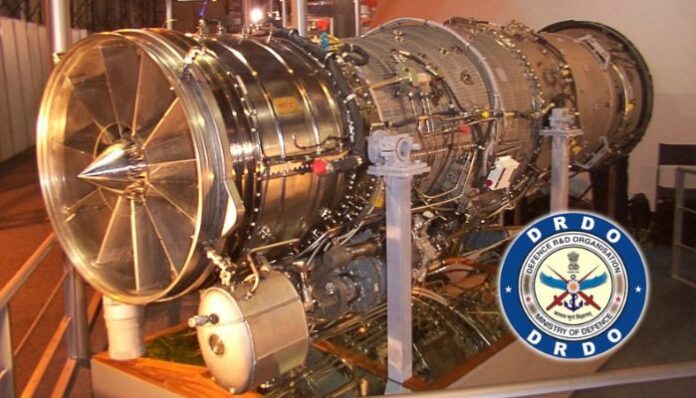
The indigenous Kaveri engine is set for its ultimate revival for India’s fighter jets. Under a Kaveri 2.0 push, the Defence Research and Development Organisation (DRDO), through its Gas Turbine Research Establishment (GTRE) laboratory, has reportedly restarted the development of the Kaveri afterburning turbofan engine.
Reports suggest that the DRDO is reviving the long-dormant Kaveri engine programme to produce a viable indigenous fighter jet engine, curbing reliance on foreign suppliers. What appears to have been the immediate trigger is the ongoing delays and sharp price rises in American GE F404/F414 engine supplies for Tejas Mk1A, and other ambitious programmes, including the Advanced Medium Combat Aircraft (AMCA) and the unmanned Ghatak UCAV.
What is believed to have shifted the Indian government’s focus back to indigenous Kaveri is America’s GE Aerospace quoting a three times higher price for each F414 engine, which was initially quoted to be around ₹70-80 crore.
The GTRE is reported to be planning to flight-test an afterburning Kaveri variant, which is likely to generate around 73 kN thrust using the existing afterburner, on an older Limited Series Production Tejas Mk1 airframe. This would act as a flying testbed, with trials expected to take place around 2030, serving as a technology demonstrator. After this, the DRDO is expected to pivot to testing a more powerful under-development 84-85 kN-class version of Kaveri with an upgraded afterburner.
Kaveri engine: Conceived in the 1980s, abandoned in 2008 and revived in 2026
The Kaveri engine project began in the mid-1980s with its full-scale development authorised in 1989. Kaveri was to be developed to power the indigenous Light Combat Aircraft, LCA Tejas. Kaveri project was aimed at achieving a lightweight, high-performance afterburning turbofan with a target of around or over 85 kN thrust to meet the Tejas requirement, with a strict weight limit of 1,100 kg.
However, the engine struggled to consistently achieve the required thrust and could reach 72 kN wet in later configurations; in addition, weight issues further caused complications.
There were also turbine blade failures, performance decay at high altitude, combustion instability, and compression system gaps.
What further placed hurdles were the post-1998 Pokhran nuclear tests sanctions. These sanctions restricted access to critical technologies and materials. Since India lacked high-altitude test facilities at that time, it had to depend on Russia at high testing costs.
Cost overruns and delays also placed the Kaveri engine on the back burner. While the original target was 1996-2000, it got pushed to 2009, and by 2009, only 2 of the 6 milestones were achieved. Meanwhile, the spending exceeded Rs 1,892 crore, while the original estimate was around Rs 382 crore.
By September 2009, the Kaveri project was officially delinked from the Tejas programme. Tejas proceeded with imported GE Aerospace’s F404 engines, since Kaveri, in its early configuration, could only produce 70–75 kN of thrust, well below the 90–100 kN required for frontline fighter aircraft.
In 2013, DRDO’s negotiations with France’s Snecma collapsed in 2013 as the French engine manufacturer offered only a partial solution by replacing Kaveri’s core with their existing Eco Core, rather than transferring the latest engine technologies in full.
The Kaveri engine, however, was not scrapped entirely as the DRDO continued work on derivatives and material science, and a dry variant for the Ghatak UCAV, although the full afterburning fighter version was put on the back burner for years until now.
All hopes for a full-fledged indigenous Kaveri engine for Indian fighter jets had been dashed. However, a rather unusual turn of events unfolded in late May 2025, when a bunch of patriotic citizens, defence experts and defence enthusiasts rallied behind India’s long-standing but underfunded indigenous jet engine project through an online trend “Fund Kaveri Engine”.
The “#FundKaveriEngine” trend reflected public sentiment urging the Modi government to prioritise and accelerate the development of the Kaveri engine that symbolised India’s aspiration for self-reliance in military aviation technology.
OpIndia reported back then how several netizens urged the government to even impose additional taxes but fund the Kaveri engine. People spammed PM Modi’s and Defence Minister Rajnath Singh with their creative requests to revive the Kaveri engine project.
The online trend soon gained mainstream media attention and ultimately the Defence Ministry. Although it is obvious that the online campaign was not the sole cause, it created momentum and conveyed public sentiment to the policymakers that India’s own technology deserves renewed investment instead of relying largely on imports.
By February 2026, a major milestone was achieved when Defence Minister Rajnath Singh witnessed a successful full afterburner test of the Kaveri using a newly designed afterburner module developed with BrahMos Aerospace backing.
And now, the DRDO has restarted the development of the Kaveri afterburning turbofan engine. While it will not be an overnight revolution, as jet engine development is among the hardest engineering challenges, prioritising development of indigenous defence technologies, especially in an era of increasing geopolitical volatility, is paramount. Even though the 2030 flight-test target seems ambitious, if it succeeds, Kaveri 2.0 would transform India’s aerospace autonomy.