

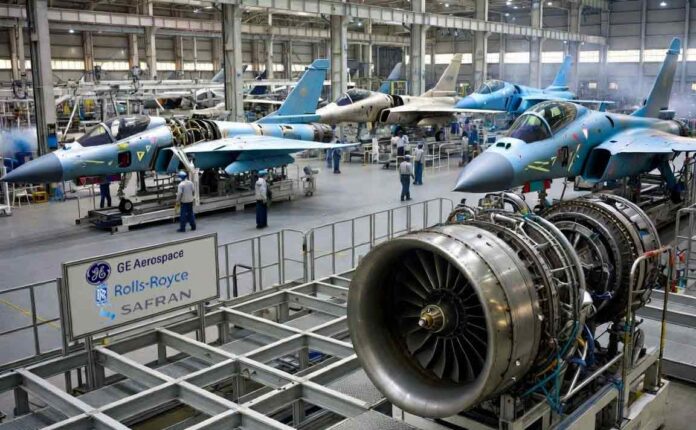
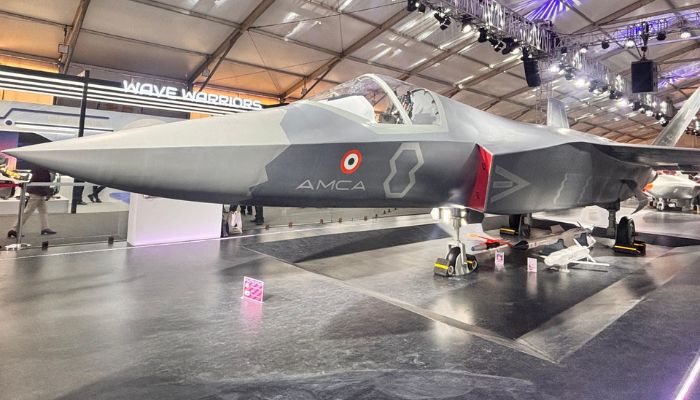
The Advanced Medium Combat Aircraft (AMCA) project, India’s flagship fifth-generation stealth fighter programme led by the Aeronautical Development Agency (ADA) under DRDO, is facing a massive engine dilemma that threatens to impact its development timelines and overall strategy. While it was expected that lessons had been learned from the much-delayed Tejas project and AMCA will be completed as per schedule, now this project is also staring at potential delays.
The aircraft was originally designed around the GE F414 engine to meet performance requirements for prototypes and initial production lots, allowing the stealth platform to proceed with a proven powerplant while indigenous options matured. However, the GE deal is now mired in commercial uncertainty over sharply escalated costs, and the programme is facing the consequences of this early design choice, even as work on indigenous development of an engine capable of producing at least 120 kN (kilonewton) of power progresses slowly.
The GE engine partnership covers both the F404 and F414 turbofans, serving as critical powerplants across India’s indigenous fighter programmes. For the Tejas Mk1 and Mk1A variants, India has relied on the GE F404-GE-IN20 engine with approximately 80-85 kN thrust with afterburner. These have largely been procured through direct imports under contracts supporting the initial fleet and the 83 Mk1A aircraft, with only limited local assembly or component manufacturing handled by HAL.
However, persistent supply chain disruptions and delays in deliveries from GE have repeatedly slowed production rates, forcing the imposition of liquidated damages on the American company and contributing to postponed squadron inductions for the Indian Air Force.
For the more powerful Tejas Mk2, the HAL Twin-Engine Deck-Based Fighter (TEDBF), and the initial AMCA Mk1 including prototypes and early production aircraft, the GE F414-INS6 with around 98 kN thrust was selected. Technical negotiations for co-production and technology transfer, targeting around 80 per cent indigenisation in manufacturing, assembly, testing, and overhaul capabilities in India, have made substantial progress. The goal has been to induct the first locally manufactured F414 engines by the late 2020s.
HAL and ADA have been handling the negotiations for the F414 engine separately for the Tejas Mk2 and AMCA programmes. The two organisations are negotiating separately for the same engine because their requirements are different. Full import options remain available for early aircraft to maintain momentum, while the long-term vision emphasises progressive localisation to build domestic expertise and reduce reliance on foreign supplies. GE has also committed support for prototype development, testing, and certification of the AMCA.
Commercial Negotiations Hit Deadlock
Despite these advancements on the technical front, commercial negotiations have stalled due to a dramatic increase in costs, which have risen by around 300%. What was initially discussed in the range of ₹70-80 crore per engine has reportedly surged to over ₹200 crore per unit, accompanied by additional demands running into several thousand crores for establishing dedicated production lines, infrastructure, and related facilities. As per reports, this figure has reached around ₹6,000 crore.
As AMCA is a two-engine jet, ₹200 crore for an engine means ₹400 crore in engine cost alone for the jet, which makes the fifth-generation fighter very expensive. As per reports, ADA is negotiating for the procurement of 15 F414 engines for the five AMCA prototypes. Two engines are needed for each aircraft, while one is needed as a spare. Therefore, if GE’s price is accepted, India is looking at paying around ₹3,000 crore for engines for five prototypes only.
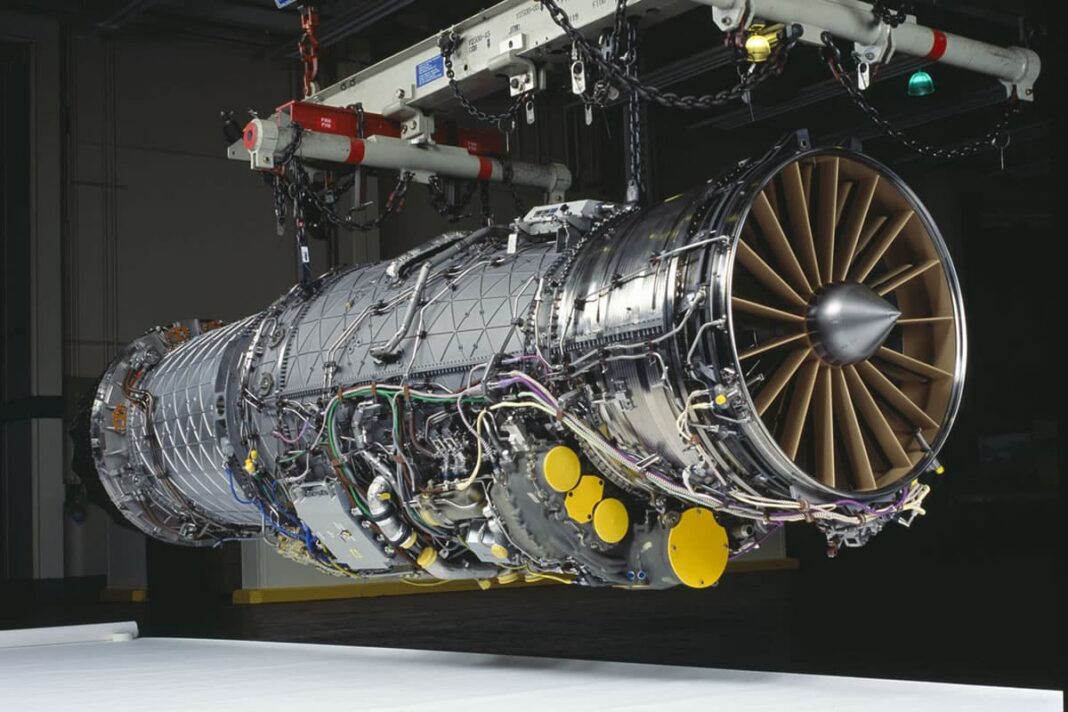
Besides the prototypes, the F414-INS6 turbofan engine has also been planned as the interim powerplant for AMCA Mk1, before an indigenous engine is developed with the collaboration of a foreign partner. With this massive hike in price, whether the AMCA project will go ahead with the GE F414 engine has become uncertain, unless there is a breakthrough in price negotiations.
Three private consortia, Tata Advanced Systems, the L&T-BEL-Dynamatic group, and the Bharat Forge-BEML-Data Patterns combine, have been shortlisted for prototype development and eventual production responsibilities, with one expected to be selected. HAL has been kept out of this core airframe effort. As soon as the private partner is selected, prototype development will begin, and the engines will be required for that for integration with the airframe.
Design Before Deal
This engine uncertainty has placed the AMCA project in a difficult position, as the aircraft’s design parameters were set with the F414’s characteristics in mind well before the deal for the engine with GE was finalised. The AMCA design is locked to the GE F414 engine, which means replacing the engine becomes very difficult. The fact that the design for the jet was finalised before the deal for engine was finalised creates question on the decision.
Any prolonged delays or cost escalations now risk cascading effects on prototype flights targeted for the late 2020s and subsequent induction timelines around the mid-2030s, at a time when the Indian Air Force urgently needs to bolster its squadron strength. If a different engine is chosen, it will also mean some redesign of the jet and a delayed production schedule.
Unreliable Supplier
Apart from the increased cost, GE remains an unreliable supplier of engines. It has not been able to supply the F404 engine for the Tejas Mk1 and Mk1A, delaying the production of the indigenous 4.5th-generation fighter by the Indian Air Force. The Indian Air Force has yet to receive a single Mk1A despite ordering 83 aircraft in 2021, due to the failure of GE to supply the engines. After ordering 83 Tejas Mk1A in 2021, the IAF placed a repeat order for 97 more jets in 2025, and not a single jet has been delivered.
HAL is supposed to deliver 16 jets per year, and 180 deliveries are planned by 2032-33. But while HAL has made some Mk1A airframes, they are not flying because there are no engines. The American company has delivered just 6 engines under the new contract, all of which have been used in Tejas Mk1 jets.
Moreover, only 8 F414 engines have been delivered by GE for testing and prototype development of Tejas Mk2.
Indigenous Engine
Amid this situation of unviable cost and supply delays, New Delhi is reportedly actively examining alternative options. Notably, the defence ministry is already in talks with major engine makers for producing engines locally for future versions of AMCA and the planned sixth-generation fighter plane. This is as per the original plan, which included using GE engines for Tejas MK2 and AMCA initially, and then move towards an indigenously developed engine with a minimum of 120 kN thrust.
French engine maker Safran and British company Rolls-Royce are the two major contenders for partnering with India in developing and manufacturing the engine.
While it is already decided that India will develop an engine in collaboration with Safran or Rolls-Royce for later versions of Tejas Mk2 and AMCA, it needs to be seen whether the defence ministry decides to drop the GE engine altogether for these projects due to cost escalation and delays in deliveries.
If the GE engine is dropped, the projects will get further delayed, and the govt will have to accelerate the process of selecting the foreign partner and start work on the development of the engine as soon as possible.
Rolls-Royce offer
In this challenging backdrop, Rolls-Royce has put forward a robust and detailed pitch for a comprehensive Made-in-India engine programme tailored to the AMCA’s needs. The British aerospace major has proposed jointly designing and manufacturing a new 120 kN-plus thrust class fighter engine entirely in India. According to their final offer, if the contract is signed by the end of 2026, the engine core could undergo testing by 2030, the first test flight could take place by 2034, and series production could begin by 2036.
The proposal emphasises 100 per cent technology transfer, with all intellectual property developed under the project remaining with the Indian government. Rolls-Royce has outlined plans to establish India as its fourth global propulsion hub after the UK, the US, and Germany, encompassing full-spectrum capabilities in design, development, manufacturing, maintenance, repair and overhaul (MRO), and future upgrades. This ecosystem would support not only military aero-engines but also civil aviation, naval, and other propulsion requirements from a unified industrial base.
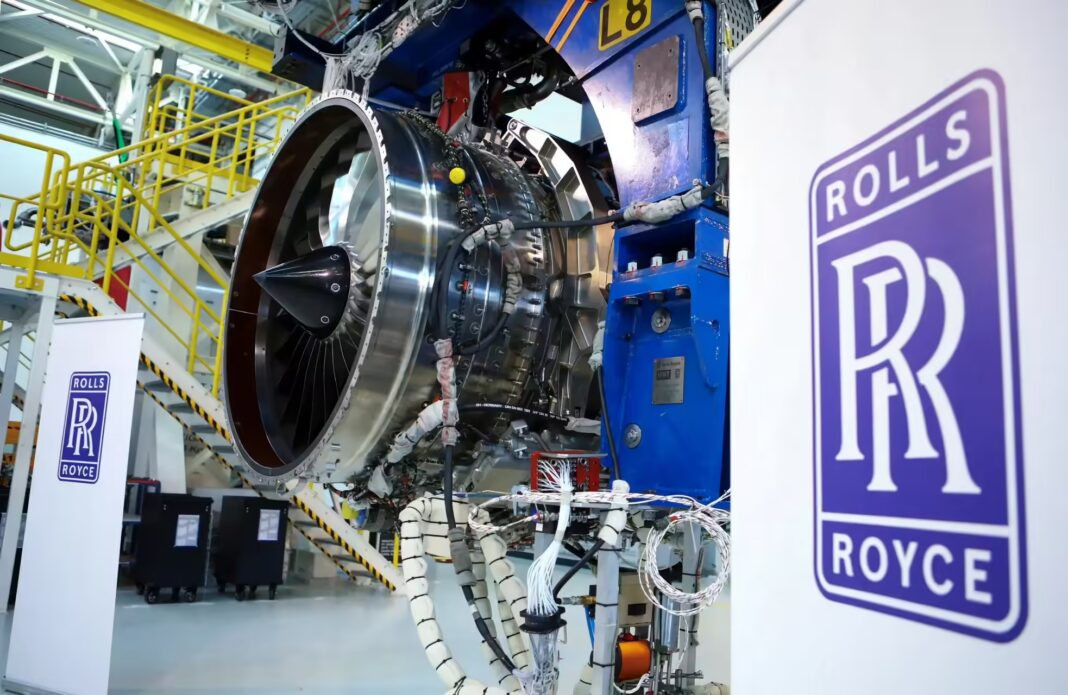
Senior executive Sashi Mukundan has stressed the company’s proven track record of independently developing new engines at regular intervals and its commitment to conducting the complete effort, including a fresh design and hot-section work, on Indian soil.
French major Safran has similarly positioned itself with a strong proposal for co-development of an engine with GTRE, focusing on a 120-140 kN class engine with full technology transfer, including critical hot-section technologies, and Indian ownership of intellectual property. Safran’s offer focuses on deep integration with Indian entities for design, testing, certification, and production infrastructure in India, building on their existing helicopter engine manufacturing presence in the country.
Rolls-Royce vs Safran
Both Rolls-Royce and Safran have made compelling proposals for powering India’s Advanced Medium Combat Aircraft (AMCA) with a high-thrust indigenous engine in the 120 kN-plus class, offering full technology transfer, Indian ownership of intellectual property, and a Made-in-India development model. Therefore, the Government of India has a tough job of selecting one company.
India has historically found greater comfort in partnering with Safran and the French defence industry in general due to a long and reliable track record of cooperation. France has been a trusted supplier since the Mirage 2000 era, delivering the Rafale with significant offsets and technology sharing, supporting Scorpene submarines, and collaborating on projects like BrahMos. Safran is already supplying the engines for the Rafale jet.
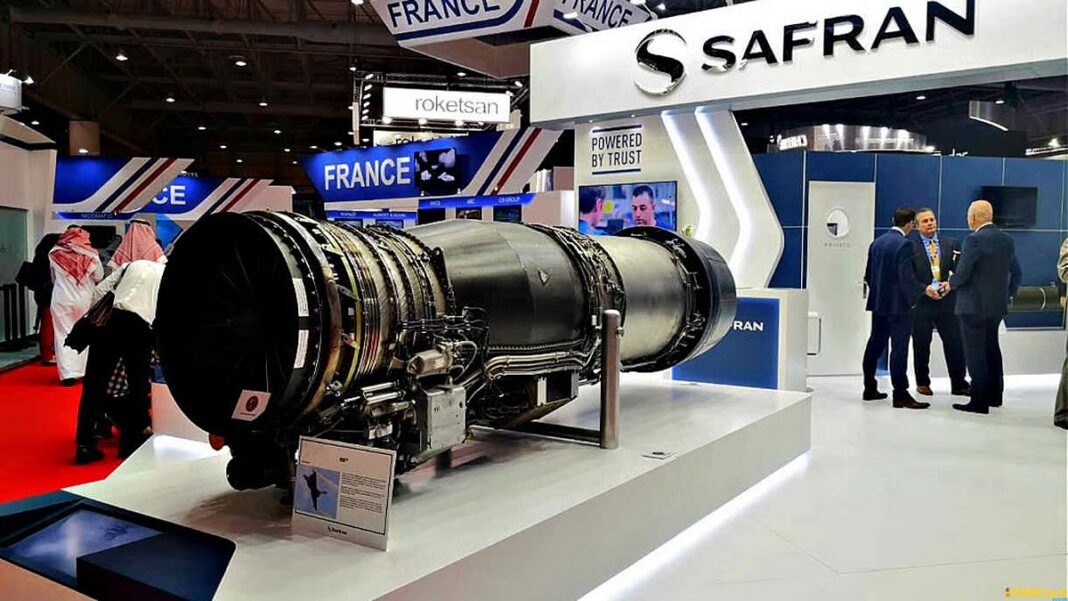
French partners have generally demonstrated willingness for meaningful ToT without the stringent end-user restrictions or sudden policy shifts often associated with US suppliers. French defence deals are also generally immune from sudden sanctions that US may impose. This history of consistent support, even during geopolitical challenges, makes Safran a low-risk, battle-tested collaborator for a complex programme like the AMCA.
That said, Rolls-Royce’s offer is also highly attractive and competitive. It brings deep expertise in fifth-generation propulsion drawing from programmes like the F-35’s F136 development and a bold vision for building sovereign Indian capabilities through a dedicated propulsion hub.
The comprehensive industrial commitment could accelerate India’s ecosystem beyond just one engine, positioning the country as a global player in aero-propulsion. Both options represent a step forward from previous dependencies, and the final choice will likely balance technical timelines, industrial offsets, and strategic partnership depth. India’s decision will be crucial for achieving true self-reliance in fighter engines while meeting the AMCA’s demanding performance requirements.
Unreliability of the USA as a defence partner
The current situation has once again highlighted that the United States remains an unreliable long-term partner for India in critical defence technologies. While collaboration in certain areas continues, these recurring challenges underscore the risks of over-dependence on any single foreign supplier.
GE engine deal is not the only one to face massive delays, several other defence deals with the US in recent years saw similar fates. The growing strategic partnership between India and the United States has been repeatedly tested by execution delays in major defence acquisitions. While political and diplomatic engagement has strengthened, with India designated as a Major Defence Partner, participation in the Quad, and initiatives like INDUS-X, the actual delivery and sustainment of US-origin equipment have often faced significant hurdles. These delays stem from supply chain disruptions, bureaucratic processes in the US export control system, commercial negotiations, geopolitical factors, and occasional diplomatic leverage.
The Apache AH-64E attack helicopters for the Indian Army serve is prominent recent example. India signed deals for 22 AH-64E Apaches for the Indian Air Force around 2015 (valued at about $2.2 billion), with deliveries largely completed between 2019 and 2020 after some initial slippages. However, the Indian Army’s follow-on order for six more helicopters, contracted in 2020, encountered prolonged delays. Deliveries were pushed well beyond the original 2024 target, and by early 2025, not a single helicopter from this batch had arrived, with Boeing citing supply chain issues.
It is therefore imperative that serious work on fully indigenous engine development for India’s fighter aircraft projects, including the AMCA and future platforms, begins in earnest without further delay. Accelerating efforts through GTRE, private sector participation, and strategic partnerships focused on complete technology absorption and IP ownership will be essential to achieving genuine self-reliance in propulsion, the heart of any modern combat aircraft, and ensuring that ambitious programmes like the AMCA do not remain hostage to external commercial or geopolitical uncertainties.
Kaveri Engine Programme
India is in this situation now because of the decades-long ambitious program to develop an indigenous engine, the Kaveri engine, formally known as the GTX-35VS, failed to produce an engine fit for 4th and 5th-generation fighters. While it was to power the Tejas fighter jet, that plan was dropped because the engine could not produce the desired output.
Developed by the Gas Turbine Research Establishment (GTRE) under DRDO, the programme faced technical challenges in the past, particularly in achieving consistent thrust levels and reliability for manned fighter applications. The focus has now shifted to a more practical path through the Kaveri Derivative Engine (KDE), a dry variant without an afterburner optimised for unmanned platforms.
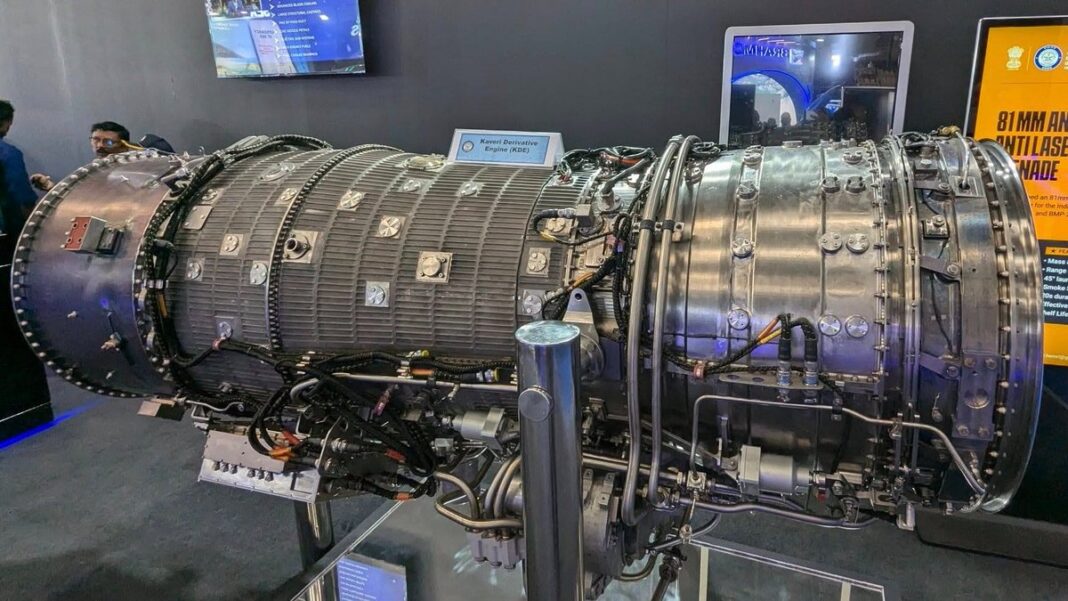
Godrej Aerospace has delivered the first production-standard unit (D1), with D2 and D3 expected in the first half of 2026. Ground testing, endurance trials, and high-altitude evaluations (including on a Russian Il-76 testbed) have shown steady progress, with only limited flight test hours remaining for certification milestones targeted later in the year.
Recent milestones have boosted optimism around the programme. In February 2026, Defence Minister Rajnath Singh witnessed a successful full afterburner test of an updated Kaveri configuration, highlighting improvements in the hot-section and afterburner design. GTRE is now advancing toward flight trials of an afterburning variant, potentially in the 73 kN range initially, scaling to 80-85 kN with a new afterburner module under development.
Indian test facilities are also being expanded, including a National Aero Engine Test Complex, to reduce dependence on foreign infrastructure for high-altitude and other critical evaluations. While the core Kaveri architecture continues to serve as a vital technology demonstrator, its derivatives are positioned to power stealthy unmanned combat aerial vehicles like the Ghatak UCAV in the near term.


