

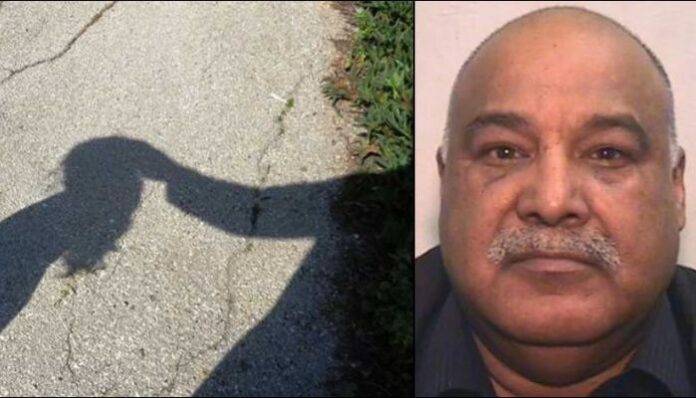
The release of Shabir Ahmed, one of the main convicts in Britain’s most notorious child sexual abuse case, has triggered widespread protests and renewed anger across the country. After spending 14 years in prison, Ahmed has walked free under an early release scheme, leaving victims fearful and many people demanding that he be deported to Pakistan.
However, the old British immigration law and Pakistan’s past refusal to accept similar offenders have made the issue more complicated. The issue has once again brought attention to one of the darkest criminal cases in modern British history.
Who is Shabir Ahmed, and what were the charges against him?
Shabir Ahmed was born in Pakistan and moved to Britain several decades ago, where he settled permanently. In 2012, a British court identified him as the leader of a nine-member gang involved in the sexual exploitation of vulnerable and underage girls in the town of Rochdale.
The court found him guilty of 30 counts of rape and other serious sexual offences involving minor girls. He was sentenced to 22 years in prison.
During the trial, it came out that Ahmed and the other gang members targeted girls from troubled and poor backgrounds. They gained the victims’ trust by offering free food, cigarettes and alcohol before trapping them in a cycle of repeated sexual and mental abuse.
The victims later told investigators that they were so frightened that they were forced to call Ahmed “Daddy.” The case exposed major failures in Britain’s policing and child protection systems and remains one of the country’s most shocking child abuse scandals.
The victims are scared after the early release of Ahmed from jail
Ahmed was released recently after serving 14 years in prison under Britain’s early release scheme. Although he is no longer behind bars, authorities have placed him under strict monitoring.
He now wears a GPS electronic tag that tracks his movements at all times. He has also been banned from entering Rochdale and nearby Oldham to reduce the risk of coming into contact with his victims.
Even with these restrictions, his release has deeply upset survivors of the abuse. One victim told the media that she fears not only for her own safety but also for the safety of her children. She said the news of Ahmed’s release has reopened old wounds and left many victims afraid to leave their homes.
The anger has also spread to local communities. Protesters have taken to the streets in Rochdale, while groups of local residents have started night patrols, saying they want to help protect victims. Many people believe someone convicted of such serious crimes should not be living freely in society.
The loophole in the 1971 immigration Act that shielded Ahmed
Following his conviction, the British government removed Ahmed’s British citizenship. As a result, he is now legally considered a Pakistani citizen.
Despite that, the government has not been able to deport him immediately because of a provision in the UK’s Immigration Act 1971.
Under the law, Commonwealth citizens who arrived in Britain before 1973 and had legally lived in the country for at least five years are protected from deportation in many cases.
Since Pakistan was a member of the Commonwealth at that time and Ahmed arrived in Britain in the late 1960s, he falls under this legal protection. This has made it difficult for British authorities to remove him from the country, despite the seriousness of his crimes.
The case has led to growing criticism of the old law, with many arguing that it was never meant to protect people convicted of grave offences.
Pressure on Britain as Pakistan refuses to take back convicts
The case has now put the British government under increasing political pressure. Several senior leaders have said that the decades-old immigration law should not be allowed to protect dangerous criminals.
Prime Minister has directed the Home Office to review Ahmed’s case and examine possible legal options. At the same time, lawmakers are discussing a new immigration bill in Parliament that could make it easier to deport people convicted of serious crimes by changing or updating the existing law.
Even if the legal hurdle is removed, another challenge remains. Britain still needs Pakistan’s cooperation to complete any deportation process.
British officials have already held discussions with the Pakistani government, but Pakistan has previously refused to accept similar offenders. Earlier, two other members of the Rochdale grooming gang also had their British citizenship removed, yet Pakistan declined to allow them to enter the country.
Some British politicians have now argued that if Pakistan refuses to accept Ahmed as well, the UK should consider reducing the foreign aid it provides to Pakistan.
For now, Ahmed remains in Britain under strict supervision, while the legal battle over his deportation continues. His release has once again raised difficult questions about public safety, justice for victims, immigration laws and international cooperation in dealing with convicted criminals.


