

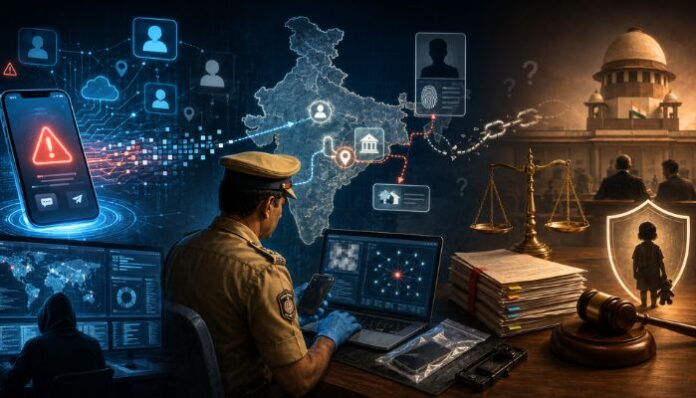
Cross-border child sexual exploitation and abuse material investigations often begin far from the country where suspects or victims are eventually found. In September 2022, the CBI searched around 59 locations across 21 States and Union Territories under Operation Megh Chakra after information from New Zealand Police reached India through INTERPOL. The case demonstrated how foreign intelligence can be developed into an Indian investigation.
The CBI plays two different roles in such cases. It can directly investigate CSEAM offences through its specialised Online Sexual Abuse and Exploitation unit, and it also functions as India’s National Central Bureau for INTERPOL, helping Indian and foreign law-enforcement agencies exchange information and seek international assistance. INTERPOL itself does not conduct raids or arrests in India, and a Red Notice is not an international arrest warrant.
Another important tool is INTERPOL’s International Child Sexual Exploitation database, or ICSE. India joined the system through the CBI in 2022. The database allows specialised investigators to compare images, videos and clues across countries, potentially connecting material found in India to an already identified victim, offender, location or investigation elsewhere. A 2023 CBI case in Thanjavur showed how ICSE material and digital forensics could lead investigators from online imagery to a physical location and suspects.
Large operations have shown how widely these networks can spread. Under Operation Carbon in 2021, the CBI registered 23 cases against 83 accused. Megh Chakra later showed how foreign intelligence could trigger simultaneous action across India. In 2025, cases in Hisar and Aizawl demonstrated another model, with Google-generated CyberTipline reports, ICSE data and Indian cyberforensics converging during the same investigations. In Aizawl, the CBI said the process helped identify and rescue a minor victim.
India has also created BHARATPOL, launched in January 2025, to give Indian law-enforcement agencies a digital route to NCB-New Delhi and international cooperation mechanisms. By February, 51 agencies and more than 500 unit offices had been connected to the system.
Foreign intelligence, however, is only a lead. Indian investigators must still connect accounts and devices to people, authenticate electronic evidence, preserve chain of custody and build a case capable of surviving in court. India now has stronger infrastructure for cross-border investigations, but public data on how many such operations ultimately produce chargesheets, convictions and identified victims remains limited.
Read the full article on Chapter One Magazine.


