

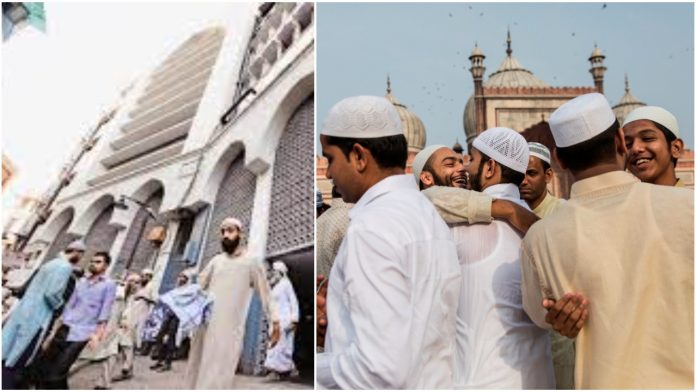
The Delhi High Court Friday (April 1), granted permission for the reopening of the mosque at Delhi’s Nizamuddin Markaz for the month of Ramzan. According to reports, the court has allowed the reopening of five floors, including the Ground floor as well as four floors, of the masjid premises.
Delhi’s Nizamuddin Markaz, which has been shut since March 2020, was the same location where the Tablighi Jamaat congregation was held, which resulted in a massive spread of the Covid-19 virus in India, with attendees hiding from authorities and spreading the infection to almost all states.
Notably, the Markaz had in between reopened for a day on the occasion of Shab-e-Barat under the direction of the Delhi HC. The bench of Justice Jasmeet Singh, while granting permission to reopen it in the month of Ramzan said that the order was in continuation of the March 16 order which imposed various conditions for the reopening of the premises for the occasion of Shab-e-Bharat.
No Tablighi activities only prayers can be offered clarifies Delhi HC while allowing reopening of Markaz in Ramzan
Justice Jasmeet Singh clarified that no Tablighi activities and lectures can take place on the premises and only prayers can be offered.
The court also ordered the installation of CCTV cameras at the entry, exit, and stairs of each floor of the premises, and stated that it is the Markaz management’s responsibility to ensure that the cameras are fully operational during the entire month of Ramzan.
The order was issued in response to a request from the Delhi Waqf Board for the full reopening of the mosque at Nizamuddin Markaz. The Court was told that because the latest order of the Delhi Disaster Management Authority (DDMA) removed all restrictions on religious places, people should be allowed to pray at the Markaz mosque as well.
Notably, on Shab-e-Bharat, the Single-member bench of Justice Manoj Kumar Ohri had given a nod to reopen the Nizamuddin Markaz. He had removed the restriction for a congregation liming only 100 people on one floor and has agreed to open the three floors at the Markaz. The Court has ordered the management to look after the strict obeyance of Covid-19 protocols and social distancing to be followed when devotees offer namaz on the campus.
Nizamuddin Markaz and coronavirus outbreak in 2020
In last week of March 2020, hundreds of Tablighi Jamaat attendees were found living inside the markaz, many of which were in violation of their visa rules. Many of the attendees were found to be covid-19 positive and despite showing symptoms had continued to stay there or move to interiors of country without getting themselves tested. Subsequently many were moved to quarantine centres to ensure treatment and arrest the spread of virus. However, even then, many Tablighi Jamaat attendees had attacked healthcare workers and even created ruckus at quarantine centres.


