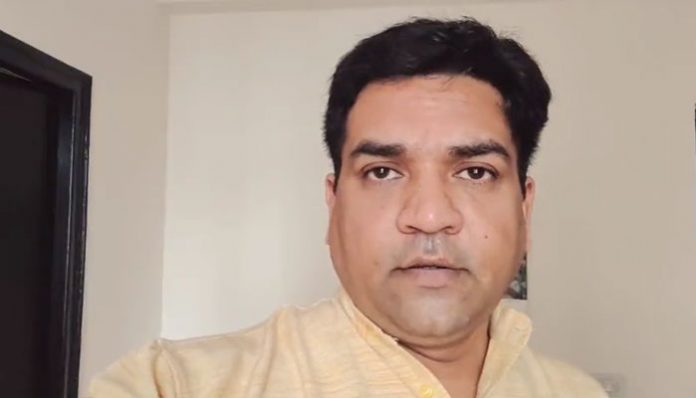
On April 21, Bharatiya Janata Party leader Kapil Mishra lashed out at Bangladeshi and Rohingya illegal immigrants. He said these people are just like ‘cancer’ and hurting society. Calling them a threat to national security, Mishra urged all political parties to rise above politics and find a solution to the problem. Mishra added the issue is not about Hindus or Muslims, but it is about the safety of the country and our future generation.
बांग्लादेशी और रोहिंग्या घुसपैठिये कैंसर है देश के लिए
— Kapil Mishra (@KapilMishra_IND) April 21, 2022
ये हिन्दू मुसलमान का नहीं
पूरे हिंदुस्तान का मुद्दा है
ये हत्या, लूट, चोरी, अपहरण, नशे , जनसंख्या विस्फोट में लगे है
कांग्रेस और AAP इन्हें बचा रहे हैं
रामनवमी पर हमलों को गम्भीरता से लेना होगा
बात देश की है pic.twitter.com/Ytka2ocI6F
Mishra, in his statement, said, “The issue of Bangladeshi and Rohingya illegal immigrants is not about Hindu and Muslim. It is about India. Wherever these people are, they are hurting society like cancer. These illegal immigrants are increasing the crime rate. Bangladesh and Rohingya illegal immigrants indulge in crimes like chain snatching, theft, murder, kidnapping and drug peddling etc. Hanuman Janmotsav Shobha Yatra was attacked in their colony. Police personnel were shot. From where these illegal immigrants are gaining such courage?”
Questioning why renowned advocates are fighting their cases in Supreme Court, he said, “Renowned advocates are fighting their cases in Supreme Court. These people are a threat to national security. These people are a threat to the security of Delhi. These illegal immigrants are a threat to our children. I feel all political parties should rise above the politics and stand together against these illegal immigrants. Do not make it a Hindu-Muslim issue.”
Mishra urged everyone not to make it a Hindu-Muslim issue by giving inflammatory statements. He said, “Do not give statements like ‘Muslims are in danger’ or ‘The houses of Muslims are being attacked. No. These are illegal immigrants. These Bangladeshi and Rohingya illegal immigrants are cancer. We have to find a solution together. The people of Delhi, the people of India, must come together. It is a matter of the safety of our children. It is a matter of India’s security.”
Jahangirpuri violence and aftermath
On the auspicious occasion of Hanuman Jayanti, a Shobha Yatra was being taken out by Hindu organizations and devotees from Jahangirpuri. When the Shobha Yatra reached the front of the mosque located in the area, stones were pelted, and shots were fired at the procession. Police personnel and devotees got injured during the attack. Several arrests were made by the Police.
On Wednesday, North Delhi Municipal Corporation ran an anti-encroachment drive in the region. However, the Islamic organization Jamiat Ulema-e-Hind approached Supreme Court against the drive. The court ordered to maintain the status quo. Dushyant Dave and Kapil Sibal argued against the anti-encroachment drive.