Home Blog Page 1143

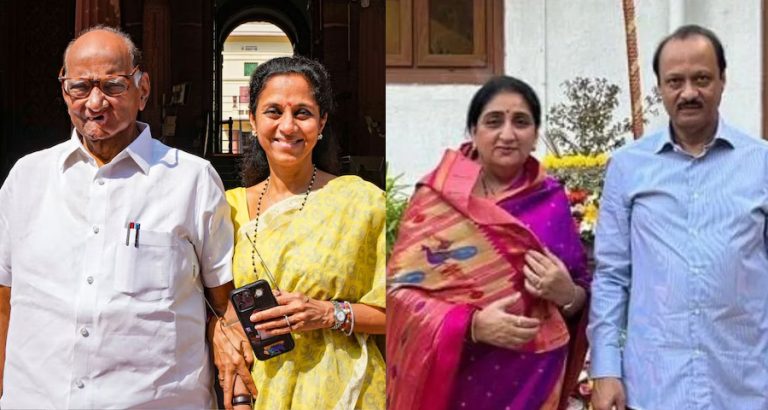
In-house battle in Baramati – A look at how political equations work out for Supriya Sule and Sunetra Pawar in the polls

On 18th April 2024, three-term MP Supriya Sule filed her nomination for Baramati Lok Sabha Constituency in Maharashtra’s Pune District on the Nationalist Congress Party (Sharadchandra Pawar) faction ticket.

The daughter of one the tallest leaders of Maharashtra, Sharad Pawar, Supriya Sule will be pitted against her sister-in-law, debutant Sunetra Pawar, wife of Deputy Chief Minister of Maharashtra Ajit Pawar. The polling for this crucial high-octane battle is due on the 7th of May 2024. 

The Pawar family led by veteran leader Sharad Pawar himself, which has been a dominant force on Maharashtra’s political landscape is now set to witness an unprecedented in-house battle making it one of the most prestigious ones in the 2024 General Elections.

Baramati Lok Sabha Constituency is made up of six assembly segments namely Daund, Bhor Indapur, Purandar, Khadakwasla, and Baramati. Let’s analyze how the political equations work out for both the Pawars.

1. Daund – Subash Kul & family have been a dominant force in the Daund region with Subhash Kul himself a three-term MLA along with his wife Ranjana a one-term MLA with Indian National Congress and later with the undivided NCP. The Kul family’s dominance was something not to the liking of the Pawar Senior. In 2009 when Subhash Kul’s son Rahul contested on NCP ticket it is rumored that Sharad Pawar threw his weight behind Ramesh Thorat, a rebel NCP leader who fought on an independent ticket. Thorat did manage to defeat Kul in 2009 but Rahul Kul had his revenge against Thorat & Pawars by winning 2014 on RSP ticket with BJP’s support & 2019 assembly elections on a BJP ticket. Considering the past, the Kul family who are now with the BJP will ensure that Sunetra Pawar gets a lead from their region and have the last laugh.

2. Bhor – Anantrao Thopte an arch-rival of Sharad Pawar a six-term INC MLA before losing his seat again at the behest of Sharad Pawar in 1999. Thoptes and Pawars have often been fighting elections against each other for a few decades for dominance of District Cooperative Banks & Milk Federations. His son Sangram is the current Congress MLA, but he too has been a victim of Pawar Politics when he was denied a chance to be the speaker of the Legislative Assembly in 2021 during the Uddhav Thackrey-led MVA Government. Sharad Pawar paid a visit to Thopte’s residence in Bhor last week to patch up and win some support for the sake of his daughter. Though INC & Sharad Pawar NCP are in alliance it is very difficult that the Thoptes will be interested in helping and will see this Pawar Vs Pawar duel as a good chance to exact some revenge.

3. Indapur – A stronghold of former INC leader Harshvardhan Patil who won this seat between 1995-2009 often locking horns with Ajit Pawar during his entire career. He lost two consecutive elections in 2014 & 2019 being defeated by a NCP candidate. Unable to take on the Pawar heat, he later went on to join BJP in 2019. Though Ajit Pawar NCP and BJP are now in alliance, Patil opposed the candidature for Sunetra Pawar and raised an issue with Deputy CM Devendra Fadnavis who then arranged a meeting of Patil & Ajit Pawar at his official residence in Mumbai. Immediately after that, Devendra Fadnavis addressed a rally in Indapur in support of Sunetra Pawar. Patil is trying to secure a political future for his daughter Ankita and will ensure that he garners maximum votes for Sunetra Pawar and stays in the good books of the BJP.

4. Purandar- Vijay Shivtare a two-term MLA with undivided Shiv Sena (2009 & 2014) and a close confidante of Chief Minister Eknath Shinde has had a bitter relationship with Ajit Pawar who publicly vowed to defeat Shivtare just before the 2019 assembly elections and managed to do halting the winning streak of Shivtare. When Sunetra Pawar’s candidacy was announced Shivtare vehemently opposed it and threatened to file for nomination as an independent candidate. It was only after a personal intervention from CM Shinde & DCM Fadnavis that Vijay Shivtare buried the hatchet & is now seen actively supporting and campaigning for Sunetra Pawar.

5. Khadakvasla – An assembly segment close to Pune City has BJP’s Bhimrao Tapkir as its incumbent MLA since 2011 and is seen as a segment where Ajit Pawar NCP will manage a comfortable lead with the help of its ally BJP.

6. Baramati – A home assembly segment and the residence of both Pawars, Baramati has always been an Ajit Pawar fortress which has elected him as its MLA since 1991. The local party cadre of NCP functionally reported to Ajit Pawar who ran the day-to-day operation while Sharad Pawar was out on the party’s national duties. So it is quite natural that the local cadre will stand behind Ajit Pawar which now in hindsight is a headache for Supriya Sule as she finds herself on the back foot in her town.

Overall, the odds seem to be stacked against Supriya Sule and Sharad Pawar probably stares the first defeat in his entire political career on his ground. The battle is not only fought on the ground but there are some mind games at play too. Initially Ajit Pawar in a rally appealed to citizens to vote for a candidate with a “Pawar” surname. Responding to it Sharad Pawar as shrewd as he is known to be, hit back at his daughter-in-law Sunetra Pawar by calling her an ‘outsider’ and sentimentally appealing to voters in his rallies to vote for his daughter Supriya who he believes is the ‘real’ Pawar.

Whoever wins this battle, one thing is clear that Sharad Pawar’s past political actions have come back to haunt him. He managed to dodge the political odds during the last assembly elections of 2019 by garnering sympathy following his famous rally speech amidst heavy rains in Satara. Will the old political warhorse manage to beat the odds once again? This outcome will decide whether the current political equations in Maharashtra stay or will witness a major upheaval yet again. Only the 4th of June can tell!  
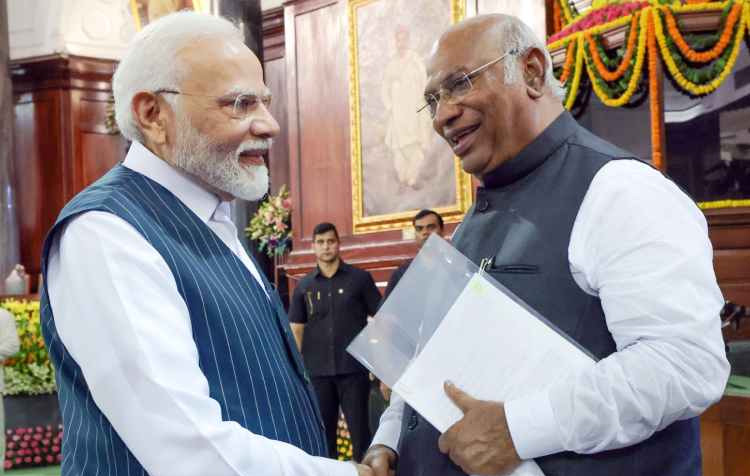
Congress president Kharge writes to PM Modi seeking time to meet him to explain party’s manifesto, claims he is misinformed

0

Congress National President Mallikarjun Kharge on Thursday wrote a letter to Prime Minister Narendra Modi and sought time from him to explain in person the party’s ‘Nyay Patra’.

In his two-page letter, the Congress chief said he is neither “shocked” nor “surprised” by the language used by the prime minister in his recent speeches.

“I am neither shocked nor surprised by your language or your speeches over the last few days. It was expected that you and other leaders from your party would start speaking in this manner after you saw the dismal performance of the BJP in the first phase of the elections. The Congress has been talking about the deprived poor and their rights (Nyay). We are aware that you and your government do not have any concern for the poor and dispossessed,” Kharge wrote to the PM.

The Congress has been talking about the deprived poor and their rights (“nyay”), he said and added, “Your ‘suit-boot ki sarkar’ works for the corporates whose taxes you reduced, while the salaried class pays higher taxes. The poor pay GST even on food and salt and rich corporate claim GST refunds. That is why when we talk of inequality between rich and poor, you are purposely equating it with Hindu and Muslim. Our manifesto is for the people of India whether they are Hindu, Muslim, Christian, Sikh, Jain, or Buddhist. I think you have still not forgotten your pre-independence allies, the Muslim League and Colonial Masters.”

He further said that Congress has always served to empower the poor and the Modi government has looted the money of the poor through Demonetisation.

“Your government was the one who used Demonetisation as an “organized loot and legalized plunder” to transfer the money deposited by the poor in the banks to the rich in the form of loans. Then as a part of conscious design, these loans were surreptitiously written off by your government. The lakhs of crores of corporate loans that your government has written off since 2014 are the transfer of wealth from poor to rich. No farmer’s loans, artisans loans, MSME loans, or student loans were waived off by you,” he added.

Kharge further said that the BJP government has repeatedly turned away from the atrocities that the poor and backward women are facing in the country.

“Today, you talk about their mangalsutra. Isn’t your government responsible for the atrocities against women in Manipur, atrocities against Dailt girls, garlanding of rapists? When farmers are committing suicide under your government, how are you protecting their wives and children? Please read about the Narf Nyay which we will be Implementing when we come to power,” he said.

The Congress chief further said that it has become a habit of PM Modi to seize on a few words taken out of context and create a communal divide.

“It has become a habit for you to seize on a few words taken out of context and create a communal divide. You are lowering the dignity of the chair by speaking in this manner. When all of this is over, people will remember that the Prime Minister of the country used such vulgar language for fear of losing an election,” he said.

Kharge said that the Congress Nyay Patra aims at providing Nyay to the youth, women, farmers, labourers, and marginalised people across all castes and communities.

“You are being misinformed by your advisors about things that are not even written in our manifesto, I would be more than happy to meet you in person to explain our Nyay Patra so that as the Prime Minister of the country you don’t make any statements that are false,” he said.

Launching a scathing attack on the Congress party, PM Modi earlier on April 21 alleged that the Congress wants to take away the gold and property of people and distribute it among “those having more children.”

“Their Mangalsutra, the question is not of the cost of gold in it, it is linked to her dreams of her life. You are talking of snatching it in your manifesto…will distribute gold and redistribute. When it was their government, they had said that Muslims have the first right over the country’s wealth. Who will you distribute after collecting the wealth, distribute it to those who have more children, and distribute it to infiltrators. Will the money of your hard labour be given to infiltrators, is this acceptable to you? Congress manifesto is saying that they will calculate the gold of mothers, sisters and then redistribute the wealth to those whom the Manmohan Singh government had said that the first right to resources is of Muslims. Brothers, sisters, this thinking of urban Naxals, my mothers, sisters, they will not allow even your Mangalsutra to remain in your possession, they will go to this extent,” PM Modi had said at a rally on April 21.


This news report is published from a syndicated feed. Except for the headline, the content has not been written or edited by OpIndia staff)

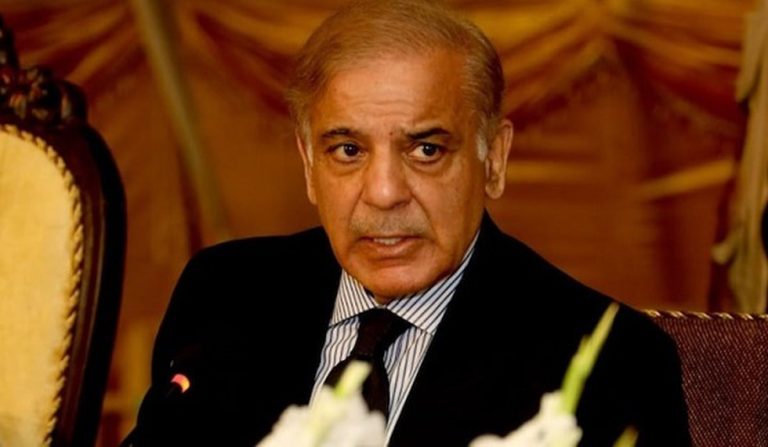
‘We feel ashamed when we look at them’: Pakistan PM Shehbaz Sharif laments over Bangladesh’s economic growth before country’s business community

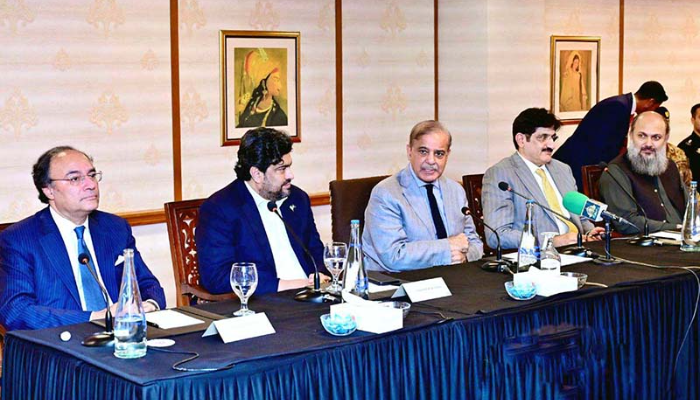
On 24th April, Pakistan Prime Minister Shehbaz Sharif met with the business community and expressed how the economic collapse has dragged their nation far behind Bangladesh. Subtly alluding to the thriving economy of Bangladesh, he stated that “East Pakistan” which was “once considered” a burden on the nation has achieved enormous progress in industrial expansion.

The prime minister bemoaned, “I was quite young when we were told that it’s a burden on our shoulders. Today you all know where that ‘burden’ has reached (in terms of economic growth) and we feel ashamed when we look towards them.”

As reported by Dawn, the business community in Pakistan thinks that doing business under the current conditions was “almost impossible”, especially given the high cost of energy and the unpredictable policies of the government. Arif Habib, the chief of Arif Habib Group, mentioned, “You have made a few handshakes after taking the charge that has produced good results and progress on the IMF deal is one of them.”

He added, “I suggest you do a few more handshakes. One of them is regarding trade with India, which would greatly benefit our economy. Secondly, you should also (patch up) with a resident of Adiala Jail (a reference to jailed PTI leader Imran Khan). Try to fix things at that level as well and I believe that you can do it.” The prime minister declined to explicitly address the worries about political stability, but claimed he had taken note of the recommendations for economic expansion and had promised to bring businesses to Islamabad soon so they could sit down with him “until all the issues are resolved.”

“The prime minister is keen to support the industry by doubling exports and reducing business costs but it seems impossible in the current situation,” complained Zubair Motiwala, a prominent industrialist and chief of the Trade Development Authority of Pakistan (TDAP), who heads the Karachi businessmen’s body called Businessmen Group (BMG) during his presentation.

He added, “Due to the increasing cost of doing business with these gas and electricity prices, our competitors would soon take us over and get Pakistan’s export orders. It is surprising that we want to increase exports and local manufacturing, but we are increasing energy prices by including cross-subsidies, which has resulted in a gas tariff of Rs 2,600 per unit for industrial heating and Rs 3,100 per unit for captive power.”

The businessman questioned “if any business can survive with such an increase in the current international market situation,” making reference to the gas rates from six months ago when they were priced at Rs. 1,150 and Rs. 1,350 per unit, respectively. “The industry is willing to pay 100% of the gas price without any subsidy. We don’t want any subsidy. We just want the industry to get a fair gas price.”

He argued that Pakistan was burdened with capacity charges as a result of the “unnecessary capacity” of power plants, which prevented surplus electricity from being either sold or given to companies at a reduced rate. “This unnecessary capacity is also increasing the circular debt issue in the power sector. Therefore, it is necessary to introduce a scheme to reduce the flat tariff for industrial consumers, which will increase electricity consumption and also help reduce the circular debt issue.”

Mass arrests in US after Shaheen Bagh-type encampments in US universities by pro-Palestine protestors: Here’s how US supports the same elements in India

It was in December 2019 that Delhi’s Shaheen Bagh became the epicentre of the anti-CAA protests. Shaheen Bagh protests that lasted for three months were marked by Hinduphobic and anti-India propaganda. Many years have passed and now Shaheen Bagh-like encatchments are showing up not in India but the United States with pro-Palestine students protesting in varsities across the country amidst the ongoing Israel-Hamas war. In response to the protest encampments, the US administration is taking firm action and making arrests of unruly protestors. The very same US government takes delight in preaching to the Indian government on human rights when it takes action against riot mongers in the garb of ‘student activists’ like Umar Khalid and downplays their criminal activities.

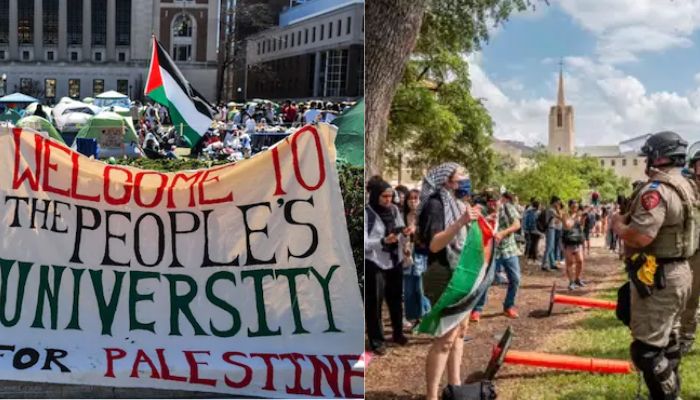
Universities have become a safe haven for wokes, liberals and Islamists in the US. Several universities in the US are witnessing large-scale protests anti-semitic in support of Palestine and have set up tent encampments inside the varsity campuses. These Palestine sympathisers are demanding the US government to stop doing business with Israel and put pressure on the country to stop its strikes in Gaza. The demand stems from the Boycott, Divestment, and Sanctions movement, which has been campaigning against Israel’s policy against Palestinians for decades. Following the Israeli retaliation to Hamas’s brutal attack in October 2023 this anti-Israel movement has regained traction.

As Columbia University sought the New York Police Department’s intervention in removing pro-Palestinian protesters from campus it sparked a series of violent protests around New York City and nationwide.

Following the arrest of 108 Columbia University protesters, including Isra Hirsi, daughter of Islamist and Hamas sympathiser Rep. Ilhan Omar, institutions including New York University, Yale University, the University of Illinois, and the University of California, Berkeley, and the University of Southern California, organised protests and extended ‘solidarity’. The protestors have set up ‘Liberated Encampment Zones’ inside these universities.

The protests first erupted on the 17th of April when Columbia University President Nemat “Minouche” Shafik faced questioning concerning on-campus anti-Semitism during a hearing before the Republican-led House Committee on Education and the Workforce.  The subsequent police action to demolish the encampment escalated tensions, triggering the pro-Palestinian students leading a protest.

JNU’s infamous ‘Azadi’ slogans echo in US varsities

Interestingly, many Indian-origin woke students have also been actively partaking in these anti-Israel protests.

Arguments like suppression of freedom of expression, right to protest, dissent etc common in the typical Jawaharlal Nehru University (JNU) protests in India are being put forth by the demonstrators in the US. In fact, the usual Azadi and dafli (tambourine) method of protest has metastasised to the United States as ‘Azadi’ slogans which used to be raised in JNU for Kashmir were this time raised in the US for Palestine.

As seen in a protest video that recently went viral online, a woman protestor was raising slogans in Hindi in support of a ‘free Palestine’ as her fellow protesters chant “azadi” in chorus.

“Arey hum kya chahte, Azadi… Palestine ki, Azadi… arey chheen ke lenge, Azadi… Hai haq hamara, Azadi… (what do we want…freedom… Palestine’s freedom…. we will snatch this freedom which is our right….),” the woman is heard chanting in the video near the Low Memorial Library. The woman said to be of Indian origin also raised “Biden sunle, Azadi…. Netanyahu sunle, Azadi… Modi sunle, Azadi“.

The presence of Indian-origin students in pro-Hamas protests warrants recalling the case of Riddhi Patel, an anti-Hindu, Hamas supporter who was arrested earlier this month for threatening city council members including Republic Mayor Karen Goh in Bakersfield in California. Later, the Center on Race, Poverty and the Environment (CRPE) fired anti-Hindu ‘activist’ Riddhi Patel from her job.

Mass arrests in US varsities amidst intense pro-Palestine protests

On Wednesday, the police started arresting the anti-Israel protestors from the University of South California. Meanwhile, dozens of protestors were taken into custody violently from Texas University. Police were seen in riot gear, holding batons, and surrounded a group of protestors before arresting them one by one.

Even a Fox 7 Austin photojournalist was also arrested by the police on 24th April.

Meanwhile, the suspension of the Harvard Undergraduate Palestine Solidarity Committee, a pro-Hamas student group, has sparked protests at Harvard University in Massachusetts.

Over 40 to 48 protestors were arrested on Monday at an encampment at Yale University, while 133 protestors were taken into custody at New York University this week. On Tuesday, around 9 pro-Palestine protestors were arrested from the University of Minnesota. Following this Rep. Ilhan Omar arrived at the varsity to support the protestors.

Netanyahu equates US university protests to 1930s Nazis

In a video message shared to his X profile, Israeli PM Benjamin Netanyahu condemned “an antisemitic surge” in the United States, citing anti-Israel and pro-Palestinian protests.

“What’s happening in America’s college campuses is horrific. Antisemitic mobs have taken over leading universities. They call for the annihilation of Israel. They attack Jewish students. They attack Jewish faculty. This is reminiscent of what happened in German universities in the 1930s. It’s unconscionable. It has to be stopped. It has to be condemned and condemned unequivocally. But that’s not what happened. The response of several university presidents was shameful,” PM Netanyahu said.

“Now, fortunately, state, local, federal officials, many of them have responded differently but there has to be more. More has to be done. It has to be done not only because they attack Israel, that’s bad enough, not only because they want to kill Jews wherever they are, that’s bad enough, it’s also when you listen to them, it’s also because they say not only, ‘Death to Israel. Death to the Jews,’ but ‘death to America,” the Israeli prime minister added.

Mass arrests to control pro-Palestine protests in US varsities, lectures to Indian government when it deals strictly with same people in India: The great hypocrisy of the US

On one hand, the US administration is making mass arrests to end the anti-semitic protests in its universities on the other it shields similar elements and even terrorists in India’s case when the Indian government takes stringent action against them.

As OpIndia recently reported, the US State Department on 22nd April released its Country Reports on Human Rights Practices including India. The report was rife with whitewashing of the likes of Umar Khalid who do the very same thing in India.  

While backing Umar Khalid, the blue-eyed boy of left-liberals in India, the US State Department has qualms about overlooking the facts and insinuating that somehow deliberate delays are being caused in the bail of Umar Khalid, who was booked in the larger conspiracy leading to the anti-Hindu Delhi Riots of 2020. Interestingly, while in its own country, the US administration arrests journalists covering pro-Palestine protests, it backs the likes of Siddique Kappan and emphasises their Muslim identity. Kappan was arrested by the UP Police on October 5, 2020, when he was proceeding to ‘cover’ the Hathras case where a 19-year-old Dalit woman had died. He alongside three others was booked under UAPA and sedition charges. The US State Department failed to mention that Siddique Kappan whom it called ‘Kerala-based journalist’ was an office bearer of the now-banned Islamist organization Popular Front of India(PFI).

The blatant double standards of the US government is alarming. It expects the Indian government to go soft on anti-India student ‘activists’, and ‘journalists’ and also wants to defend the ‘human rights’ of dreaded criminals like Atiq Ahmed, while it crushes student protests in its own universities in the strictest possible manner. US’s Janusian approach when it comes to dealing with anti-national elements and protests raises questions over its seriousness regarding human rights issues. Why would it want the Indian government to let the anti-India ‘activists’ dance on its head in the name of human rights, freedom of expression and whatnot while it crushes similar elements in its own country to restore ‘law and order’.

In March this year, the United States Commission on International Religious Freedom (USCIRF), raised ‘alarm’ over the Citizenship Amendment Act notified in India. The USCIRF commissioner David Curry even lamented the arrest of ‘student activists’ and ‘human rights activists’ like Umar Khalid, Sharjeel Imam and Meeran Haider saying that they were arbitrarily detained during 2019 anti-CAA protests for “peacefully protesting”. This came despite the fact that Imam was booked under UAPA for his provocative speeches at Jamia Millia Islamia University and Aligarh Muslim University during anti-CAA protests in 2019. He is alleged to be one of the masterminds of the February 2020 anti-Hindu riots in North-East Delhi, which killed 53 people and injured over 700 during anti-CAA protests.

Excerpt from USCIRF press release dated 25th March 2024 (Source:uscirf.gov)

The United States whitewashes and downplays the anti-social and anti-national behaviours of adherents and propagators of the same ideology in India while detaining, arresting, and violently suppressing the same people in its own country. In a blatant display of its hypocrisy, the US prioritises law and order when faced with widespread protests, while in the case of countries like India, it preaches human rights, freedom of expression and whatnot.

Delhi: YouTuber Manish Kashyap joins BJP at party headquarters in the presence of Anil Baluni and Manoj Tiwari

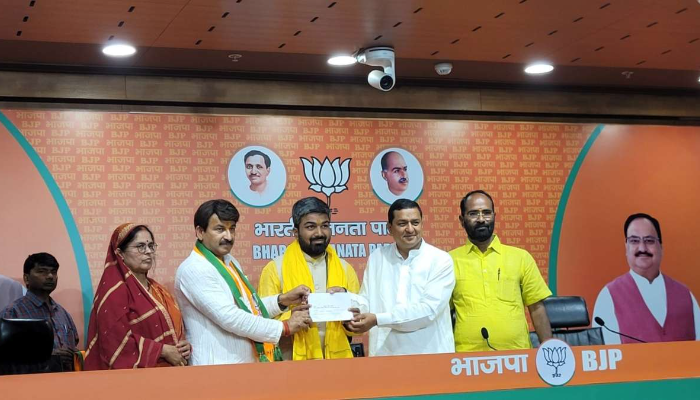
On 25th April, prominent YouTuber from Bihar, Manish Kashyap also known as Tripurari Kumar Tiwari joined the Bharatiya Janata Party (BJP) in the presence of party leaders Manoj Tiwari and Anil Baluni, around 11 am. He arrived in Delhi along with Manoj Tiwari and reached the BJP office in Delhi where he was officially inducted into the party. 

Manish Kashyap who is a resident of the Bettiah district and describes himself as “Son of Bihar” had started campaigning for the West Champaran seat. He had intended to stand for office as an independent candidate in the Lok Sabha election, but he has now decided against it and joined the BJP. He had previously run as an independent candidate from Bihar’s Chanpatia assembly seat in 2020 and lost.

Manish Kashyap gained popularity after being apprehended by the police after he shared an alleged fake video of an assault on workers from Bihar in Tamil Nadu. He was sentenced to around nine months in prison. Tamil Nadu had booked him under NSA charges. However, it was found that the video was created by the main accused Rakesh Ranjan Kumar, a native of Gopalganj district in rented accommodation in Patna. The YouTuber was eventually granted bail in all cases in December of last year.

With more than 8.75 million subscribers, he has a large following on YouTube and has long focused on social concerns in Bihar. He has been making videos for years which are very popular not only in Bihar but also in other parts of the Hindi-speaking regions.

Wealth redistribution: Supreme Court says ‘won’t go by Marxist interpretation’- Details

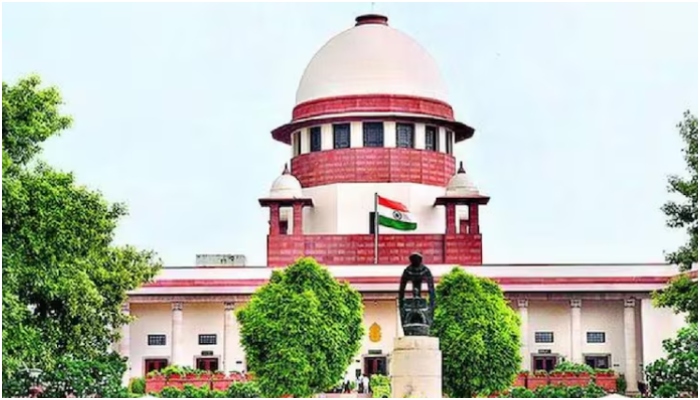
Amidst the political slug-fest over wealth redistribution, the Supreme Court announced on Wednesday (24th April) that it will not follow Justice V R Krishna Iyer’s 1977 Marxian interpretation of Article 39(b) of the Constitution, which stated that a community’s “material resources” would consist of private properties for reallocation to serve the benefit of all.

A nine-judge bench comprising of of CJI D Y Chandrachud, and Justices Hrishikesh Roy, B V Nagarathna, S Dhulia, J B Pardiwala, Manoj Misra, R Bindal, S C Sharma, and A G Masih, said there must be a line drawn between assets of the community held in trust by the present generation for future generations and property that is privately owned.

“We don’t have to go as far as the Marxist socialist interpretation by Justice Krishna Iyer [of Article 39(b) in Ranganatha Reddy case of 1977]. But community resources will surely include resources which the present generation holds in trust brd on inter-generational equity,” the CJI said.

The CJI discussed the views on community property, including Marxist socialist, capitalist, and Gandhian perspectives. He stated that community property includes natural resources, which are governed by sustainable development norms. However, he also acknowledged that forests, lakes and mines, even if held privately, would constitute community resources, benefits arising from which for the greater common good could not be stultified invoking individual rights.

“The Marxist socialist view is everything belongs to the state and the community. The capitalist view puts importance on individual rights. And there is the Gandhian view of holding resources in trust for protecting inter-generational equity,” the CJI said.

We cannot conclude that Article 39(b) does not apply to privately held properties such as water, forests, and mines. However, it should not be extended to the point of seizing someone’s personal property for distribution, stated CJI D Y Chandrachud.

Senior advocate Uttara Babar contended that Article 39(b) only addressed the “distribution” of community resources for the larger common benefit, not how these resources are to be obtained, which requires the state to adopt additional legislative and executive measures.

The bench concurred that Article 39(b) was not a vehicle for acquiring community resources but advanced an objective anticipated by the Constitution writers. It stated, “This is an important point which the SC must deal with.”

According to Advocate T Srinivasa Murthy, Article 39(b) cannot be interpreted as a resource acquisition provision. If the government wishes to acquire a housing project to provide housing for the poor, it must first offer appropriate compensation to the present owners, he added.

“It is not really necessary for the state to specifically call for the aid of Article 39(b) and make a declaration to that effect to get the protection under Article 31C as the power to acquire for a public purpose upon payment of a reasonable compensation is inbuilt in the existing law,” he said.

“The theme of social and economic justice running through Articles 38 and 39 of DPSP is aimed at making all citizens active participants in the nation’s economy while at the same time maintaining their dignity. These Articles are aspirational rather than seeking to make mere applicants and beneficiaries of citizens. It is equality of status, facilities, and opportunities that is the focus, not equality of result,” Murthy said.

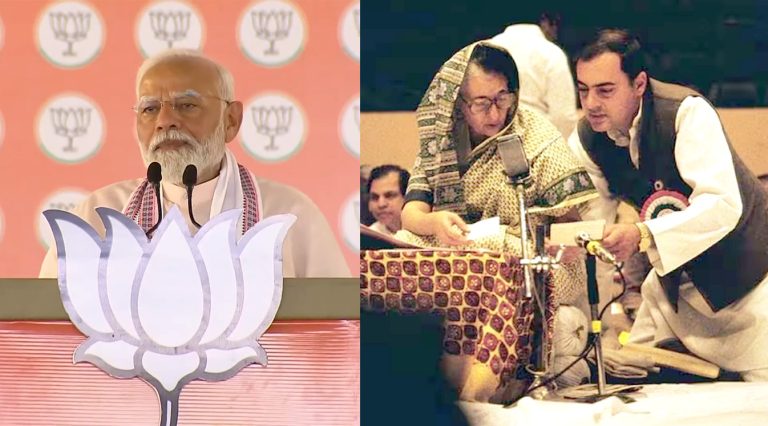
PM Modi hits Congress hard on inheritance tax, recalls how Rajiv Gandhi abolished it just before his children inherited Indira Gandhi’s estate

After Congress leader Sam Pitroda opened a pandora’s box by proposing inheritance tax, the matter has snowballed into a huge controversy, with PM Narendra Modi using it to target the Congress party. After saying that Congress policy is “Congress ki loot, zindagi ke saath bhi, zindagi ke baad bhi”, PM Modi today slammed the party for revoking the inheritance just before transferring Indira Gandhi’s estate to her grandchildren, so that they don’t have to pay the Estate Duty which was in force for over three decades.

Addressing a Vijay Sankalp Rally in Morena, Madhya Pradesh, PM Modi said, “The facts relating to Inheritance Tax are eye-opening…When former PM Indira Gandhi died, her children were going to get her property. But there was a rule earlier, that before the property goes to the children some part of it was taken by the government, Congress had made such a law earlier. There were discussions that when Rajiv Gandhi inherits the property, part of it will go to the government…To save the property so that it does not go to the government, the then PM Rajiv Gandhi scrapped the Inheritance law…”

PM Modi said that Rajiv Gandhi repealed the law to save his own money. He also asked the people, the journalists, and the left-liberal ecosystem to listen it carefully how the Congress party repealed an act just to save their family wealth.

He then added, when it came to themselves, they removed the law itself. And now, after that matter has resolved, now to come back to power, they want to bring back the same law with more stringent provisions. PM Modi said, ‘After earning massive properties during 4 generations without paying taxes, now these people want to grab the hard-earned income of common people like you, they want to look half of your properties by imposing taxes. That is why the country is saying, “Congress ki loot, zindagi ke saath bhi, zindagi ke baad bhi”, PM Modi added.

It is notable that yesterday OpIndia had reported how the Rajiv Gandhi govt in its first budget in 1985 had repealed the Estate Duty Act of 1953, which imposed inheritance tax, just a month before former PM Indira Gandhi’s Will was published. The Will was published on 2 May 1985, after which it was executed, and the Estate Duty Act, 1953 was repealed on 1 April 1985, just a month before.

As per Indira Gandhi’s Will, her estate worth about $175,000, over ₹21.50 lakh, was handed over to her three grandchildren, Rahul Gandhi, Priyanka Gandhi and Varun Gandhi. The current value of this estate will be over ₹4.2 crore.

As per a report by United Press International (UPI) from 2 May 1985, in the will signed in 1981, Indira Gandhi had appointed her son Rajiv Gandhi and his wife Sonia Gandhi as executors of the will, but didn’t give anything to them. She also didn’t leave anything for her estranged daughter-in-law, Menaka Gandhi. The will was published after Rajiv Gandhi presented it at a court to certify it.

As per the Will, bulk of Indira Gandhi’s estate was a farm and a farmhouse under construction in Mehrauli, worth $98,000, which was to be divided equally among the three grandchildren. They were also given cash, stocks and bonds amounting to around $75,000, along with copyrights to books written by Indira Gandhi and Jawaharlal Nehru. Indira Gandhi’s antique articles and personal jewellery worth around $2,500 was left to Priyanka Gandhi alone.

All three recipients were minors at that time, therefore Rajiv Gandhi and Sonia Gandhi were given the responsibility of handling the property till they became adults.

While India had inheritance tax for over three decades, the Gandhi grandchildren didn’t have to pay any tax on this inheritance because the tax regime was abolished just a month ago before the Will was executed. The UPI report from 2 May 1985 said, “Under a finance bill that took effect April 1, all death duties in India have been abolished and no inheritance tax will be assessed on the Gandhi estate.”

Bankrupt Pakistan’s business leaders urge PM Shehbaz Sharif to restore trade ties with India to save the economy

0

In a bid to navigate Pakistan’s economic challenges, Prime Minister Shehbaz Sharif convened with the business community, aiming to rejuvenate the economy through robust exports. However, amidst expressions of appreciation for the government’s recent strides, concerns over political instability loomed large during the hour-long meeting at the CM House in Karachi, Dawn reported.

Acknowledging the government’s efforts, Arif Habib, Chief of Arif Habib Group, commended recent developments, stating, “You have made a few handshakes after taking the charge that has produced good results and progress on the IMF deal is one of them.” He urged the Prime Minister to extend this spirit of cooperation further, suggesting trade talks with India and reconciliation with jailed PTI leader Imran Khan as potential avenues for bolstering the economy.

“I suggest you do a few more handshakes. One of them is regarding trade with India, which would greatly benefit our economy. Secondly, you should also [patch up] with a resident of Adiala Jail (a reference to jailed PTI leader Imran Khan). Try to fix things at that level as well and I believe that you can do it,” he said, according to Dawn.

Prime Minister Shehbaz Sharif, in response, refrained from addressing the political dimension directly but emphasized his commitment to economic growth. “You all are great minds of business… Let’s focus on genuine industrial and agricultural growth and double the exports in the next five years,” he urged, highlighting his vision for revitalizing the economy. Drawing inspiration from Bangladesh’s economic transformation, he underscored the potential for Pakistan’s industrial prowess to soar.

Despite the Prime Minister’s optimistic outlook, concerns echoed through the chamber regarding the feasibility of his ambitious plans within the current economic landscape.

Zubair Motiwala, a prominent industrialist, raised poignant questions about the viability of doubling exports amidst rising energy costs. “The prime minister is keen to support the industry by doubling exports and reducing business costs but it seems impossible in the current situation,” he lamented, pointing to exorbitant gas and electricity prices that threaten Pakistan’s competitiveness in the global market.

Motiwala’s presentation shed light on the pressing challenges facing Pakistan’s industrial sector, particularly the burden of capacity charges and the escalation of circular debt in the power sector. He emphasised the need for fair gas prices and a strategic approach to tackle surplus electricity, advocating for policies that stimulate industrial growth without exacerbating financial strain.

Prime Minister Shehbaz Sharif, while refraining from immediate responses to political queries, assured the business community of his commitment to resolving economic hurdles. “I would listen to you and make a plan to put that into action,” he affirmed, pledging to convene further discussions to address industry concerns comprehensively.

As the meeting drew to a close, the Prime Minister reiterated his resolve to engage with stakeholders across the country, signalling a collaborative approach to economic revival. “I would soon invite businessmen from all across the country to Islamabad and sit with them till all the issues aren’t resolved,” he promised, Dawn reported.

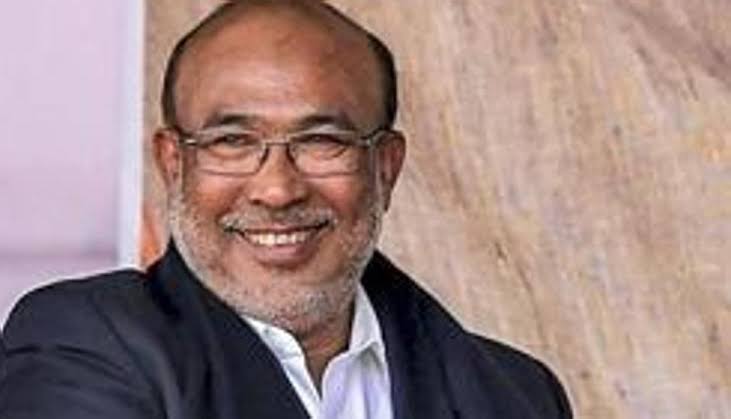
Manipur govt’s war on drugs: Chief minister N. Biren Singh shares video highlighting success against state’s massive drug problem

Manipur’s chief minister, N. Biren Singh, uploaded a video on 25th April demonstrating how his administration has been effectively combating the state’s severe drug problem. He informed, “We have seized heroin, opium, tablets, etc. worth over Rs 60 thousand crores. Destroyed over 20 thousand hectares of poppy plantations. No. of persons arrested: 3066. Cases registered: 2461. Persons convicted under NDPS: 225. Only to save our Indian youths. We will continue.”

The chief minister also attached a 2:19-minute clip titled “Turning the Tides: Manipur’s Resolute War on Drugs” briefly describing how drug trafficking and illicit poppy production had been engulfing the state from the inside out. It shows footage taken from a helicopter of multiple tracts of hillsides where poppy cultivation took place.

The video stated, “Manipur’s geographical proximity to the Golden Triangle (Myanmar, Laos, Thailand and Vietnam) made it a primary transit route for drug trafficking. It threatens to transform the state into a major poppy production and trafficking hub. Under the leadership of Chief Minister, N. Biren Singh, the BJP-led coalition government declared war on drugs. This will help eradicate the poppy plantation, drug trafficking, and abuse in the state.”

It highlighted, “The drug issue was challenging and required more intensive actions. Drone footage of massive deforestation and extensive environmental damages caused by poppy plantations angered CM N Biren. During the period from March 2022 to March 2023, the campaign yielded impressive results.”

It pointed out the adverse effects of drug plantations on nature and mentioned, “Drugs like cannabis, opium, and yaba have catastrophic environmental impacts that range from deforestation to land sinking. Poppy cultivation causes substantial harm to the environment. Mountain slopes deforested for illicit crops expose them to landslides, mudslides, and floods.” The video added, “With more public support, the war on drugs became intensified and more effective. Poppy planters were provided alternative crops and equipment by the state government.”

Notably, a similar video was shared by the Bharatiya Janta Party in December of last year and the chief minister expressed, “The drugs menace poses a serious threat not only to the people of Manipur and the Northeast but to every youth of our Nation. With massive public support, the War on Drugs campaign launched by the Manipur State Government has reaped many successes and brought positive changes to people’s lives in the state,” while reacting to the post.

The war on drugs campaign and Manipur violence

The War on Drugs campaign was started in November 2018 by the Manipur government. According to the BJP, the campaign resulted in remarkable achievements including the elimination of 3,420 acres of illegal poppy farms. The ethnic violence that erupted on 3rd May is believed to have been sparked by a plot by well-connected transnational drug traffickers to prevent the destruction of their poppy farms under the Manipur government’s War on Drugs campaign. However, the protest was triggered by the hill-majority Kuki tribes’ opposition to the valley-majority Meiteis’ demand for Scheduled Tribes (ST) status.

The 1,640-kilometer border between India and Myanmar has a 400-kilometer section in Manipur and poppy farming is a major industry in the neighbouring nation. The porous border trading town of Moreh was among the most severely hit locations by the riots, aside from Churachandpur. The northernmost point of Myanmar’s Chin State is located about 60 kilometers from this Indian border town. There, the United Nations Office on Drugs and Crime (UNODC) discovered a “very high” poppy crop density of more than 6 acres per square kilometer or about five football fields per square kilometer. The district of Churachandpur is also only 65 kilometres from the border of Chin State which is home to a large number of poppy fields.

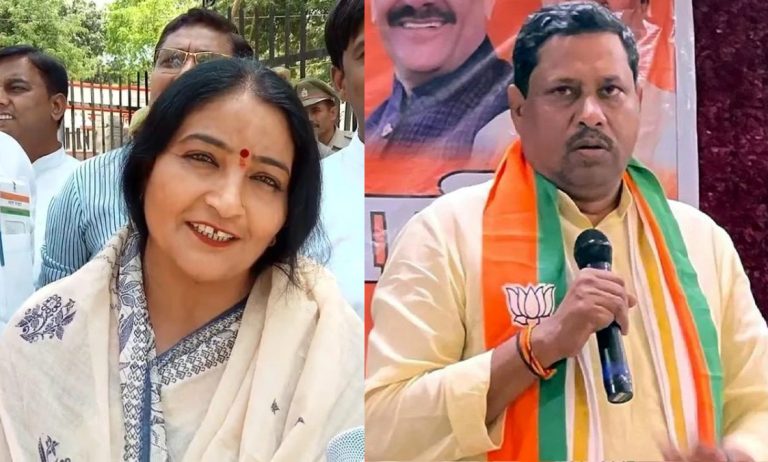
BJP MP Ram Shankar Katheria’s wife Mridula Katheria to contest against him as independent from Etawah Lok Sabha constituency

0

In a unique political twist, Mridula Katheria, who is the wife of BJP MP Ram Shankar Katheria, has decided to run for the Etawah Lok Sabha seat as an independent candidate.

It’s worth noting that in the 2019 Lok Sabha elections, Mridula had filed her nomination papers from Etawah but later withdrew. Meanwhile, her husband, Ram Shankar Katheria, emerged victorious in the 2019 Lok Sabha election from Etawah.

While speaking to the media, she said, “I have filed a nomination as an independent candidate…I will contest the elections. I will contest against him (BJP MP Ram Shankar Katheria).”

The Etawah constituency is scheduled to go to the polls on May 13.

In another development, Congress leaders Priyanka Gandhi Vadra and Rahul Gandhi are likely to contest the Lok Sabha election from Rae Bareli and Amethi seats, respectively, sources said on Thursday.

According to the sources, the final decision will be taken after April 26 and nominations can be filed next week. Phase 2 of the elections is scheduled for Phase 2. In this phase, Wayanad, from where Rahul Gandhi is contesting, will go to the polls.

Smriti Irani defeated Congress leader Rahul Gandhi in the 2019 Lok Sabha elections from Amethi. Irani has again been fielded by the Bharatiya Janata Party from the seat.

Smriti Irani defeated Congress leader Rahul Gandhi in the 2019 Lok Sabha elections from Amethi. Irani has again been fielded by the Bharatiya Janata Party from the seat.

Apart from its traditional strongholds of Rae Bareli and Amethi, the Congress is also contesting in Varanasi, Ghaziabad and Kanpur.

Amethi and Rae Bareli Lok Sabha constituencies will vote in the fifth phase of the Lok Sabha elections on May 20.

However, Rahul Gandhi will not find the going easy in his erstwhile bastion, as Union Minister Smriti Irani has been campaigning extensively in the constituency.

Rae Bareli has been a Congress bastion since 1960, with both Feroze Gandhi and Indira Gandhi having represented it. Sonia Gandhi has been the MP from the constituency since she won the 2006 by-election. With Sonia moving to the upper house, the Congress is likely to field Priyanka Gandhi, who is a general secretary in the party.

Uttar Pradesh sends the maximum number of MPs, 80 in total, to Parliament. The first phase of voting in the state has already taken place on April 19.

The remaining Lok Sabha constituencies in Uttar Pradesh will cast their votes in the subsequent phases of the election, namely, Phase 2 on April 26, Phase 3 on May 7, Phase 4 on May 13, Phase 5 on May 20, Phase 6 on May 25, and Phase 7 on June 1. The counting of votes will occur on June 4.


This news report is published from a syndicated feed. Except for the headline, the content has not been written or edited by OpIndia staff)