Home Blog Page 1349

Minor NEET aspirant girl gang-raped in Kota by 4 students, accused arrested under POCSO

0

Rajasthan Police have apprehended four students taking NEET coaching in Kota for brutally raping a 16-year-old student who was also preparing to take the medical entrance exam, officials confirmed on Thursday (14th February). A charge under the POCSO Act has been registered against the accused persons. 

In her police complaint, the minor stated that one of the four accused called her fraudulently to his flat, where he gang-raped her with three of his acquaintances. According to the authorities, the accused are adults, but their identities have yet to be published due to security concerns. All the accused persons are aged between 18-20. 

The incident is said to have happened on 10th February, and the case was filed on 13th February. Police have confirmed that the suspects have been arrested.

In the words of authorities, the victim befriended a boy from Uttar Pradesh on social media a few days ago. During the conversation, she learned that he was preparing for NEET and lived in a leased flat in the Landmark area.

On 10th February, the boy asked the victim to meet him at his flat, where three of his friends were already present. After the girl arrived at the flat, the four of them reportedly gang-raped her.

The remaining three defendants are thought to be from West Bengal and Bihar. All of them were coaching in Kota and are currently being questioned by authorities. The police have organized a special team to investigate the case.

“The victim is a resident of UP and was preparing for NEET (National Eligibility Entrance Exam) in Kota for about a year,” said Additional Superintendent of Police, Uma Sharma.

According to the police, a day after the event, the accused allegedly intimidated the victim not to tell anyone about it. Following the incident, the victim experienced sorrow and attempted suicide. Her friends came over to support her, and she lodged a case.

AAP denies encroaching on judiciary’s land in Delhi, claims in Supreme Court that office allotted to it in 2015 later included in court expansion plan

0

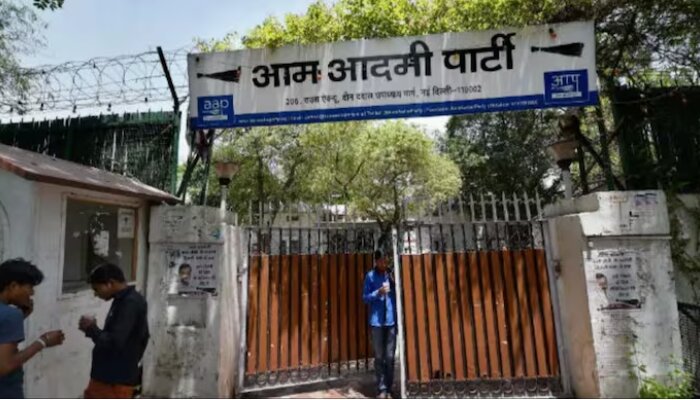
On 15th February, the Aam Admi Party (AAP) claimed that there was no encroachment at the Rouse Avenue court where the party’s office is located. The party claimed in the Supreme Court that it had not intruded on any land designated for the Delhi judiciary, and the plot was legally allotted to it. The AAP submitted an affidavit in the Supreme Court claiming that the stated plot was allotted to it by the Delhi Government in 2015. The affidavit was filed in response to the court’s order to vacate the encroachment by a “political party” in land intended for the Delhi judiciary.

According to the party, the Land and Development Office (L&DO) of the Government of India designated the site for the expansion of the Rouse Avenue Court complex in 2023, while the same land was allotted to it earlier. However, the attorneys for the AAP declared that the party is prepared to leave its present location if the court guarantees the selection of a different location for the construction of a new party office that complies with its national party status.

The party requested intervention in the case in its application and stated that it should be heard before the court issues any directives. The petition explained that the purpose of the allocation of office space for official party operations is to level the electoral playing field and is a crucial part of public funding for elections in India.

AAP has argued that as a Political Party of National Importance, it is provided with the aforementioned property, which is Bungalow No. 206, Rouse Avenue, Deen Dayal Upadhyaya Marg, New Delhi, following the Land & Development Office (L&DO) of the Government of India’s Policy Guidelines for Allotment of Land to Political Parties, dated 9.11.2012. AAP has the right to two office locations, one for its National Unit and another for its Delhi State Unit under the aforesaid standards but it has currently only been given an office area (the subject premises) for its Delhi State Unit.

The Subject Premises were formally assigned to the Applicant by the Government of National Capital Territory of Delhi (GNCTD) on 31st December 2015 for its State Unit Office, as per the Application of Intervention submitted by AAP. This was completely in line with the party’s entitlement as a State Party at the time, it claimed. Furthermore, AAP said that a notice of cancellation of the allotment was overruled by an order issued by the Delhi High Court on 23rd August 2017.

It alleged, “In view of this, there is no question of the Applicant ‘encroaching’ on a space that was duly allotted to it in 2015 and that has been in its possession since then. The Subject Premises had been in the Applicant’s occupation long before it was earmarked for extending the Rouse Avenue Court Complex.”

AAP said that as per its knowledge, on 18th September 2020, the L&DO granted 3.03 acres of land to GNCTD to construct more courtrooms for Rouse Avenue Court which is scheduled to be located next to the Rouse Avenue Court. On 12th December 2023, L&DO stated that in addition to the unoccupied property next to the Rouse Avenue Court complex, a bituminous road and the Aam Aadmi Party office that are located at the site also need to be allotted for expansion of the court. AAP claimed that the L&DO made took decision without considering the presence of its office.

The application read, “There is no explanation forthcoming for why due diligence was not exercised by the L&DO by examining the pre-existing status of the land and its vacancy.” The party maintained that despite its requests in 2017, no action was taken in response to its proposals for another location.

Although the party is willing to leave the property, it has asked the Court to make sure it is given another space because the immediate vacation would leave the AAP without any office in Delhi. This is especially important because of the upcoming General Elections and the fact that the other five national parties operate out of their designated offices in Delhi, the party claimed.

AAP noted, “Therefore, while the Applicant remains ready and willing to vacate the Subject Premises, it is submitted that this Hon’ble Court direct that such vacation be required only after at least one of the two office spaces that the Applicant is entitled to are allotted to it in the New Delhi Municipal area of a nature appropriate to the Applicant’s status as a National Party. Such a direction need not cause any further delays in the construction of courtrooms in Rouse Avenue, since the Subject Premises are not located in the portion of the land where construction is planned as per the design approved by the Hon’ble High Court of Delhi.”

The Aam Aadmi Party (AAP) came under fire from the Supreme Court on 13th February after it was notified that the party had “encroached” on territory designated for the Delhi High Court. The court expressed displeasure that the AAP political office, located at Rouse Avenue in Delhi, was built over encroached land. The Court then mandated that all intrusions be cleared from the property.

Notably, the Court became aware of the problem when it was handling a case involving the nation’s court system. The matter was being heard by a three-judge panel that included Chief Justice of India (CJI) DY Chandrachud, Justices JB Pardiwala and Manoj Misra.

The current AAP office is a government bungalow, earlier allotted to union ministers. The house at 206, Deen Dayal Upadhyaya Marg, with a huge garden was allotted to AAP in 2015, after which the party moved its office from Patel Nagar. After gaining national party status, AAP is trying to find land to construct its national headquarters but has not been successful so far. It wanted a plot on Deen Dayal Upadhyaya Marg, where the new headquarters of BJP and Congress are located, apart from the current AAP office, but the authorities told them that there is no vacant land parcel available. As per central govt rules, national parties are eligible for allotment of land at concessional rates.

How the Modi government corrected and strategically implemented Sonia’s shoddily drafted Andhra Pradesh Reorganisation Act of 2014

The Andhra Pradesh Reorganisation Act, 2014 has not only resulted in the splitting of erstwhile Andhra Pradesh into two states – Telangana and Andhra Pradesh – but has also been the cause of two historical events in the country’s polity. 

The infamous pepper spray incident in the Lok Sabha occurred when this bill was tabled in the Lok Sabha in February 2014. Desperate to not have it passed, a Congress MP, Lagadapati Rajagopal, pulled out a pepper spray from his pocket and unleashed it on hapless members of the 15th Lok Sabha. Sonia Gandhi had to suspend her own members from the Lok Sabha to enable the passage of her own government’s bill. 

Everyone remembers the now famous line by Modi in 2018 while replying to the No-Confidence Motion (NCM) against his government – “I wish the opposition all the best in bringing the same motion in 2023 too”! The misgivings surrounding the implementation of the AP Reorg Act were the primary reason that led to this no-confidence motion! 

The drafting of the act was so careless and shoddy that the Modi government had to redraw the boundaries of the two states, in its very first cabinet meeting in May 2014. The urgency was to ensure that there were no issues for the official bifurcation to happen on June 2nd, 2014. Over the next 10 years, it became the responsibility of the Narendra Modi government to clean up many shoddy aspects of this mess and meet the 10-year deadline that UPA put on multiple projects. 

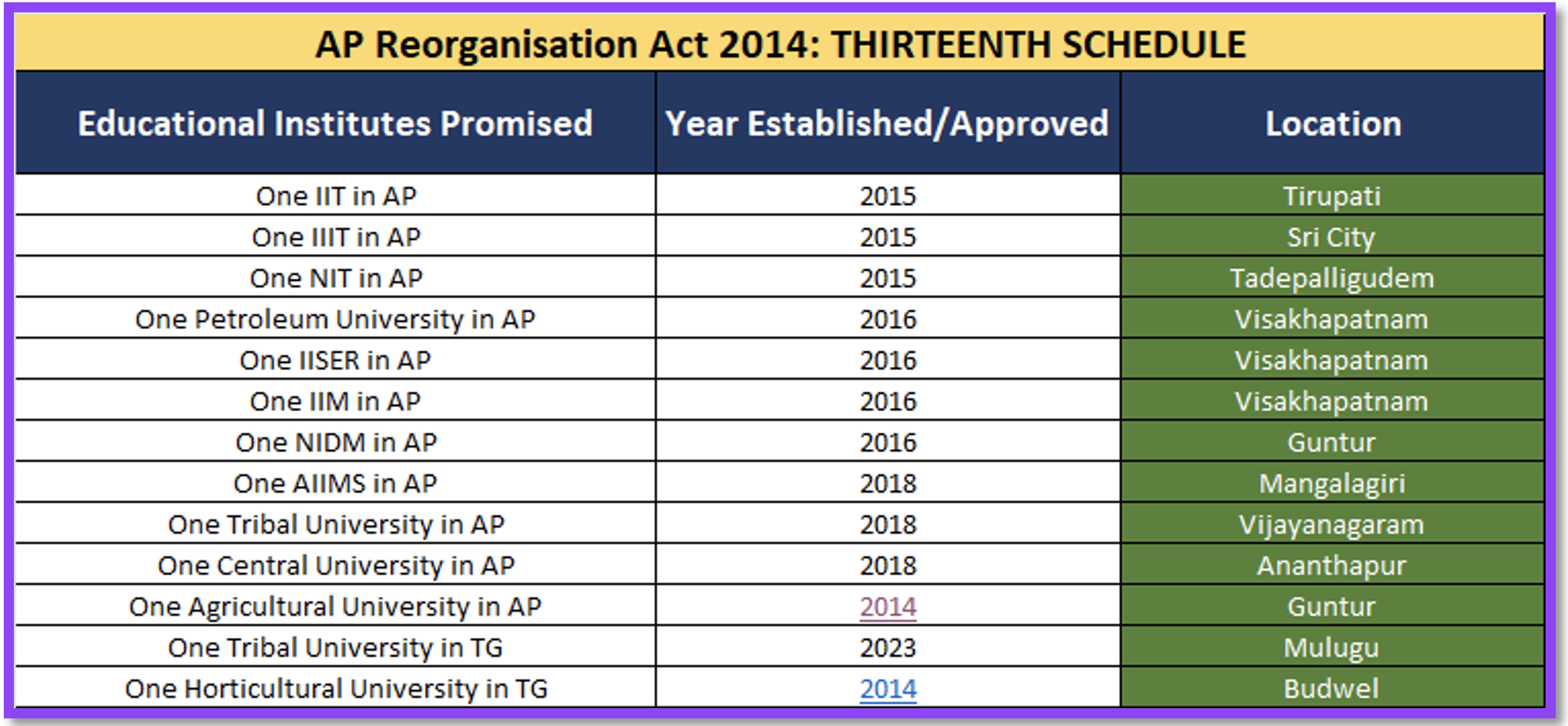
The Thirteenth Schedule of this Act promises 13 different educational institutions – 11 in Andhra Pradesh and 2 in Telangana. This was done to make up for the lack of good institutes outside of the Hyderabad region. As we can see in the table below, the Narendra Modi government has either approved or established all these institutes in these 10 years. 

All institutes started imparting classes within a year of getting approvals. The last approval came for the Tribal University in Telangana in October 2023. Unfriendly media tried to make a mountain out of molehill for certain aspects of these approvals, just to make Chandrababu Naidu look good, but you can see from the table that most institutes were functioning in the first term of NDA itself (though they had 10 years of time to just approve!). 

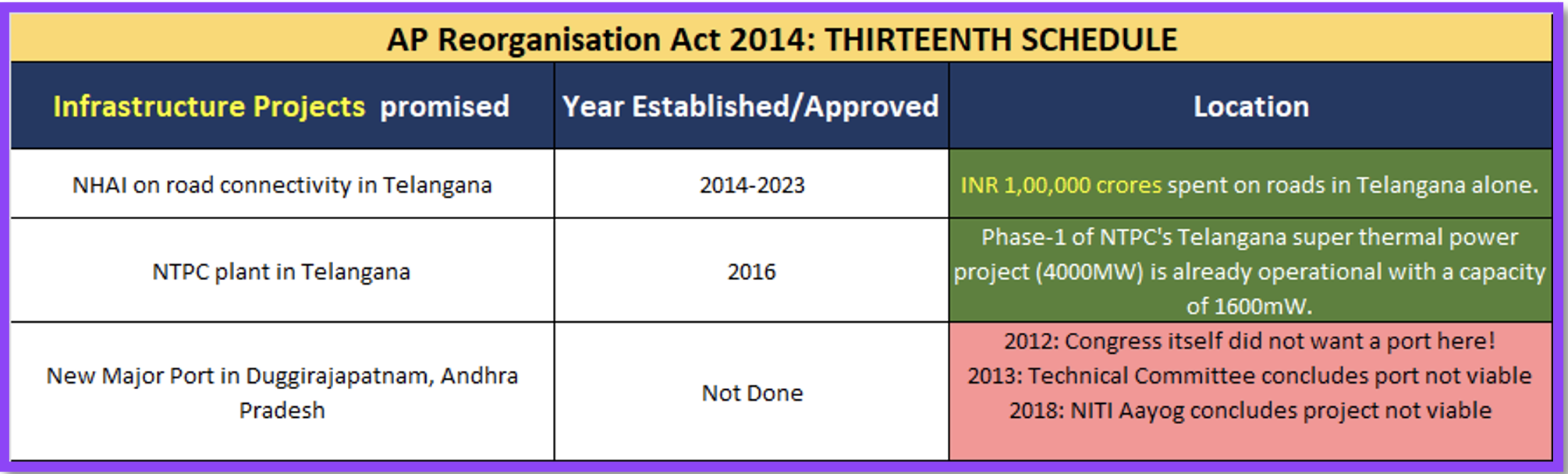
The second aspect of the Thirteenth Schedule is a shining example of how carelessly Sonia Gandhi’s government prepared the Act and left it to Modi to clean it up. The Act promised three infrastructure projects as mentioned in the table below:

A vague definition that NHAI will improve road connectivity in interior areas of Telangana was promised in the Act. Little would Sonia Gandhi have realized that Narendra Modi will simply transform the road infrastructure in the entire India, let alone Telangana. A whopping INR 1,00,000/- crores were spent on just roads for Telangana (out of which NHAI spent 75,000 crores!). The next promise is for a 4000 MW NTPC plant. Modi government approved this in 2016 and Phase-1 (with 1600MW) is already operational. 

We now come to the promise that was not fulfilled – “The Government of India shall develop a new major port in Duggirajapatnam, Andhra Pradesh”. In the year 2012, Congress’s own Chief Minister recommended that a port cannot be built in Duggirajapatnam. In the year 2013, the UPA government’s technical committee concluded that a port was not viable there because of environmental issues and more importantly would be a hassle for ISRO’s launch center in Sriharikota. Yet, Sonia Gandhi decides to promise the development of a port in this very town. 

NITI Aayog gives another attempt – and concludes that in addition to clearance issues, it just doesn’t make sense to have a major port so close to Chennai (80 km), Ennore (80 km), and Krishnapatnam (40 km)! The project therefore had to be shelved. The state government tried to establish another port at a town called Ramayapatnam but isn’t pursuing it any further. It’s really sad how Sonia Gandhi, knowingly promised something that she knew wasn’t recommended by anyone. 

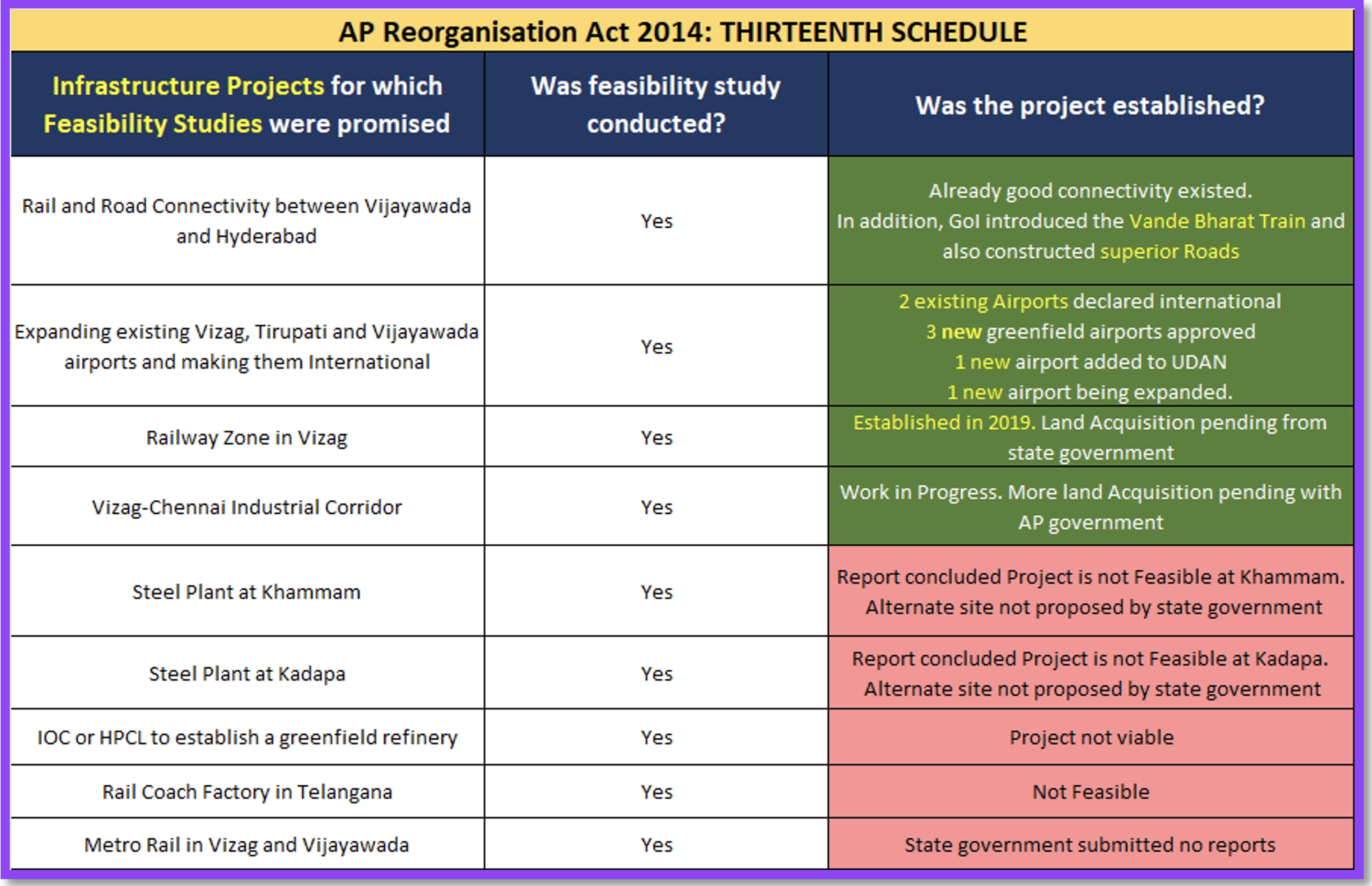
The shoddy job doesn’t end here. The Thirteenth schedule promises a lot of “feasibility studies” for multiple infrastructure projects, as listed in the table below. 

Yet another vague promise of “improving rail and road connectivity between Vijayawada and Hyderabad” was made. Today, we have excellent road connectivity not just between these two cities, but across the entire two states. The investments in railways also ensured better connectivity not just between these two cities, but in the entire two states. Little did Sonia Gandhi realize at that time, that Modi would transform connectivity in India like never before! 

A promise was made to merely do a “feasibility study” of expanding the existing 3 airports and making them international too (while one was already International!). Modi went multiple steps further – expanded 2 of the other airports to international; gave approvals to 3 new greenfield airports; added 1 new airport to UDAN and approved the expansion of another new airport! Little did Sonia Gandhi realize Modi would transform our transport sector like this in India, let alone Telangana! 

Feasibility studies were promised, within 6 months, for 4 projects – steel plants at Khammam in Telangana and Kadapa in Andhra Pradesh; for greenfield refinery; and a rail coach factory. All feasibility reports have concluded that none of these projects are viable! Sonia Gandhi’s chicanery in portraying a mere promise of “feasibility study” as a promise of actual implementation is simply unparalleled. So technically while the Modi government fulfilled the promise of conducting feasibility studies for all projects, he has faced a lot of (unfair) flak for actually not establishing unviable projects! Even then, the Modi government wanted to work with the state governments for alternate sites for these projects, but the state governments showed no interest. 

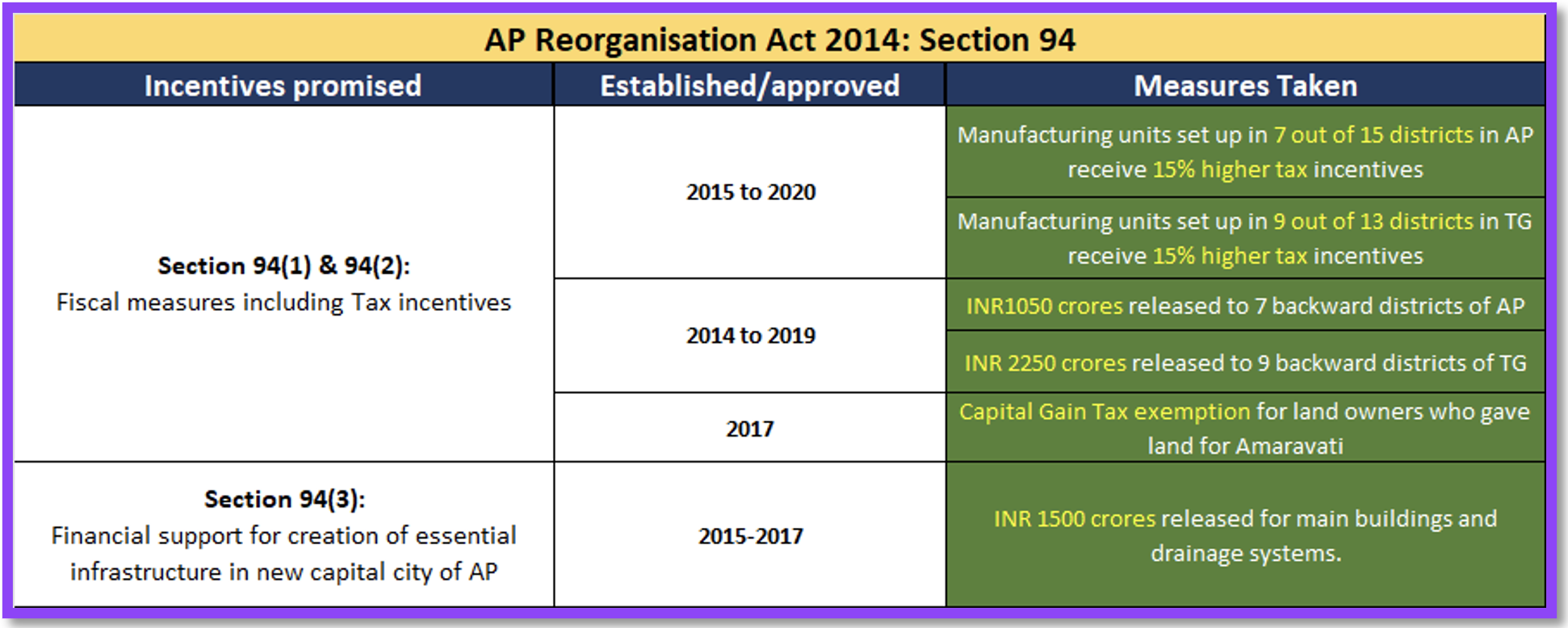
The vagueness does not extend to just Educational Institutes and Infrastructure projects. Section 94 of the Act gives a vague promise of fiscal incentives “as necessary”. This can mean anything under the sun! The Modi government has made a meaningful implementation of this vague promise by funding backward districts in both states and providing other incentives, as listed in the table below. 

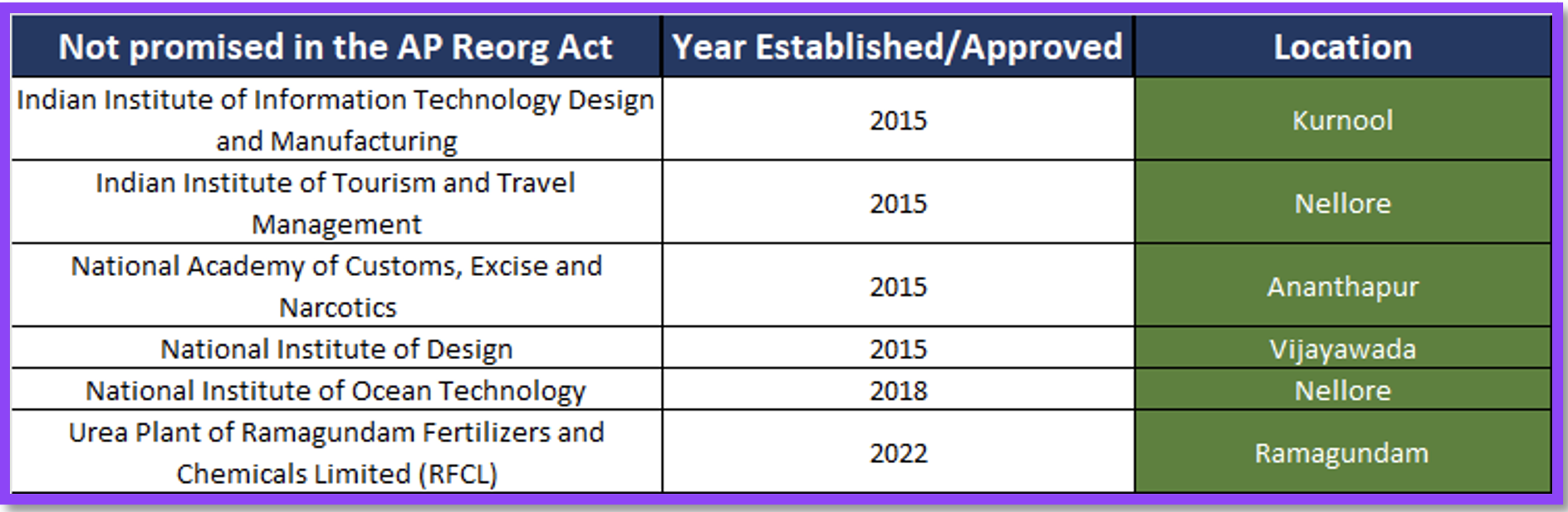
There was a vague promise of financial support for the capital city – the Modi government released INR 1500 crores for this too (the High Court, Secretariat, and Assembly were built with these funds, in addition to drainage systems). In addition to what was promised, the Modi government established institutes and projects that were not promised in the act too. 

If you are not from Andhra Pradesh, you would now be wondering what exactly is the problem when the Modi government fulfilled all promises and more! The core issue was the promised Special Status to Andhra Pradesh on the floor of the Rajya Sabha by Prime Minister Manmohan Singh (but not included in the Act). He assured the special status for 5 years (2014 to 2019). 

Venkaiah Naidu from the BJP told the house that when the BJP comes to power, they will extend this to 10 years. Special Status for 10 years was sold as the panacea for all ills that will befall AP when the split happens. This was sold by the BJP, TDP, and Jana Sena parties in the run-up to the 2014 elections. After the elections, because of recommendations from the 14th Finance Commission, the Modi government did not give the promised special status but instead gave a special package. 

This did not go well with the people of Andhra Pradesh who were already emotionally charged. No amount of factual discourse helped create a sense of confidence among the people. It was a promise broken – no two ways about it, but the remedial measures were good. It was a double failure not to communicate them properly. 

However, this broken promise should not be an excuse to forget the shoddy and perhaps dangerous way in which the state was split. We should never forget how Congress MPs had to form a ring around the country’s Home Minister in the Lok Sabha, to prevent an attack from other Congress MPs; how violence was employed by Congress MPs in the Lok Sabha; how Congress Cabinet ministers did not have access to the Act before it came to the Cabinet; how the Home Minister of India stood up and said that though he is supposed to own the Bill, he will relegate that responsibility to another minister Jairam Ramesh because he drafted the bill; and how the live telecast of Lok Sabha was cut off when the bill was put to vote! Sonia Gandhi’s lack of respect for process and norms resulted in one of the most badly prepared splits of a state. 

The Act is so badly drafted that even now there are unresolved issues between the Telangana and AP state governments (For example, Jairam Ramesh failed to list 12 institutions whose assets have to be distributed between the states and now they are fighting for them!). Let’s hope that India never has such careless people at its helm again. 

Congress party claims all their bank accounts have been frozen, alleges that I-T department is asking Rs 210 crore

The Congress party has alleged that the Income Tax department has frozen its bank accounts. The party alleged that democracy has ended in India with the freezing of bank accounts of the country’s main Opposition party.

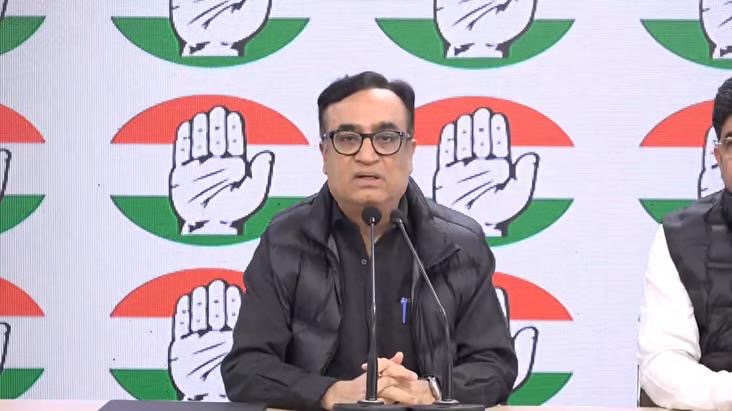
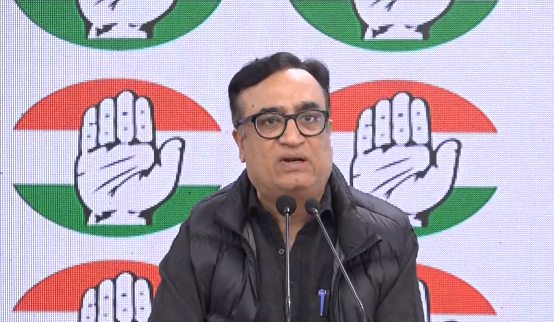
In a press briefing on Friday (16th February), Congress Treasurer Ajay Maken said that the party learnt that the banks are not honouring the cheques issued by the party.

He said that a demand of Rs 210 crore has been made by the I-T department on flimsy grounds over a case relating to income tax returns of 2018-19.

“It is not only the accounts of the Congress party that have been frozen but the democracy has been frozen in our country. When the principal Opposition party’s accounts have been frozen just two weeks before the announcement of the national elections, do you think democracy is alive in this country?” Maken said.

He claimed that the money of the Congress party has not been received from the corporates, bonds nor “big money which comes from big houses”.

Maken added that the money frozen has come through crowdfunding by Congress workers. “We collected around Rs 25 crores from the crowdfunding by our workers. 95% of this which is less than Rs 100 has been collected legally through UPI. This money has been collected through online funding, no cash has been taken. The Youth Congress has collected its money through membership drive,” he claimed.

Maken added, “On the other hand, more than Rs 6,500 crores which were collected through unconstitutional corporate bonds which have been pronounced unconstitutional by the Supreme Court, that account of the BJP still exists.”

This controversy comes a day after the Supreme Court struck down the electoral bonds scheme as unconstitutional and ordered the SBI to stop accepting the bonds and return such money received in the past 15 days which has not been encashed yet to the purchaser.

Elvish Yadav snake venom case: Cobra, Krait venom confirmed in FSL report, legal trouble increases for the influencer

0

Difficulties of Bigg Boss OTT fame Elvish Yadav, who is being investigated for allegedly using snake venom at rave parties, appear to be worsening. A major revelation has emerged regarding the availability of snake venom at rave parties. Noida Police transferred the concerned samples of the evidence obtained from the rave party held in Noida to Jaipur FSL for investigation. In the FSL report, toxins from snakes of the Cobra Krait species were discovered to have been used at the parties.

Yadav was linked to a case in November of last year involving the supply and ingestion of snake venom at a Noida rave party. The Drugs Department, the Forest Department, and the Noida Police jointly busted the event and arrested five people identified as Jaikaran, Rahul, Titunath, Narayan, and Ravinath. Some unmanned individuals are also named in the report.

The Noida police had recovered 9 snakes, including 5 cobras from the accused men. The reptiles were reportedly caught from different places and their venom was sold at exorbitant prices.

The Noida police filed an FIR against the social media influencer after his involvement came to light when they questioned the five arrested culprits.

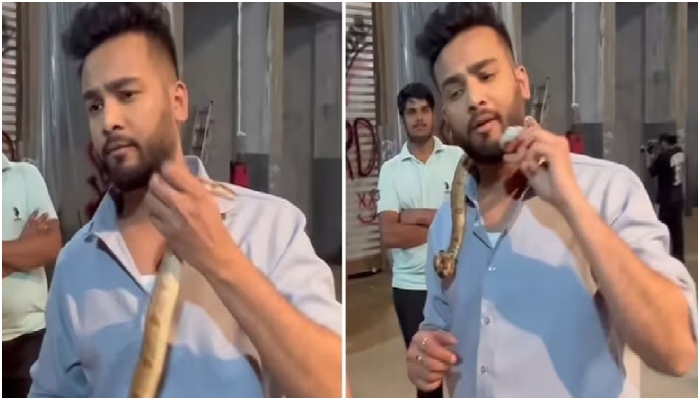
The culprits are reportedly close aides of the social media star and revealed that they used to supply snakes for his parties. A video showed him playing with and holding a snake. The offenders admitted that Elvish Yadas was a member of their gang.

Soon after the bust, the NGO PFA, led by BJP MP Maneka Gandhi, filed a legal complaint against the social media influencer.

Officials questioned Elvish about all of the recordings and images obtained throughout the investigation. However, the YouTuber disagreed with the charges made against him.

Elvish Yadav recently got into deep trouble when a video of him slapping someone at a Jaipur restaurant went viral. He got into an altercation with other diners at a restaurant. According to a few accounts, Elvish responded after an unnamed person said something insulting to him.

Snake venom is commonly used as a recreational drug. According to reports in the media, smuggling is a multimillion-dollar unlawful industry. In November 2022, the Border Security Force (BSF) in West Bengal’s Dakshin Dinajpur district confiscated a jar carrying 2.14 kg of snake venom, worth Rs 17 crore on the international market.

In a research paper published by Aseem Mehra, Debashish Basu and Sandeep Grover in the ‘Indian Journal of Psychological Medicine’ in 2018, they reviewed the existing literature and case reports on the use of ‘snake venom’ in India for recreational purposes.

The researchers found that the abuse of the toxic saliva was common in patients with a history of opioid (commonly called drug) abuse. The snakes commonly used for such intoxication include cobras, kraits, and green-coloured snakes.

The study found that those using snake venom would take the bite from the reptile either on their tongue or feet.

The snake bite has been associated with jerky body movements, blurred vision, and unresponsiveness, referred to as a ‘blackout’ by the patient, lasting 1 hour. However, upon awakening, the consumer feels a heightened arousal and sense of well-being that lasts 3-4 weeks.

They also noted one case of abuse of snake venom at rave parties in Mumbai in 2015, which was similar to the allegations levelled against Elvish Yadav.

Increased MSP, three-fold increase in fertiliser subsidies under Modi govt: Here is how the agriculture sector transformed in 10 years

Police are on high alert in the national capital. There is a traffic snarl-up on the roads in Delhi. The ordinary citizens are concerned. The situation arose from the ‘Dilli Chalo’ march. The alleged farmers from Punjab have left their farms and barns, clashing with police on the Haryana border, to make their way to Delhi.

The Prime Minister is being threatened in this drama going on in the name of agriculture and farmers’ welfare. There is planning to bring down Prime Minister Narendra Modi’s popularity graph. There are posters supporting Khalistan. Before the Lok Sabha elections, attempts are being made to destabilise the country in the name of farmers. These have the backing of opposition parties, including the Congress party.

The notion that this charade is more about politics than it is about the well-being of farmers is further bolstered by the way the Modi government has worked for the agriculture sector. In 2014, Narendra Modi took over as prime minister. The country’s budget for agriculture has grown by nearly five times since then. In the last ten years, food grain production has hit all-time highs. There has been a 62.5% increase in the minimum support price (MSP). The fertilizer subsidy has increased. Farmers are receiving direct financial support through initiatives like Kisan Samman Nidhi.

Simply put, over the ten years of the Modi government, a great deal of effort has been made to advance the welfare of farmers. On the ground, their effect is also evident. This explains why these attempts to cause ruckus in the name of farmers only have a limited impact. The common people do not support these so-called farmers.

Significant increase in MSP under the Modi government

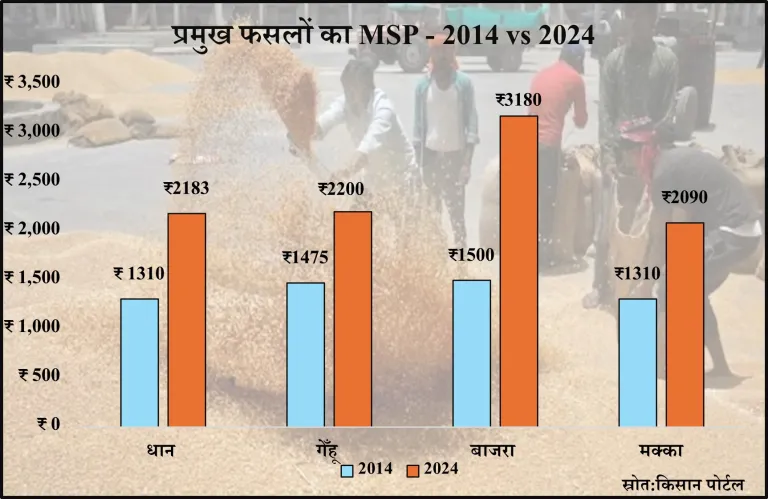
The government pays farmers a price known as the Minimum Support Price (MSP) for their crops. Every harvest year, the government releases these prices. Punjabi farmers primarily cultivate wheat and paddy. Regarding their support prices, the national MSP for paddy was Rs 1310 (per quintal)and the MSP for wheat was Rs 1475 (per quintal)in 2014, the year Prime Minister Narendra Modi took office.

If we talk about the prices at present time, there has been a significant increase. For the crop season 2023-24, the government has kept the MSPs for paddy and wheat at Rs 2183 (per quintal) and Rs 2200 (per quintal), respectively. It used to be between Rs 1310 and Rs 1475 in 2014. In this case, when compared to 2014, the MSP for paddy has climbed by 66.6%, while the MSP for wheat has increased by around 50%. It is not true that the prices of only these crops have gone up. The government has focused on other crops as well.

In addition to paddy and wheat, the Modi government has boosted the MSP for other crops such as millet, maize, and pigeon peas. Since 2014, the government has increased the MSP for millet by a total of 106%. The price surged from Rs 1500 (per quintal) in 2014 to Rs 3180. In 2014, the MSP for Arhar dal was Rs 4300 (per quintal), but it has since raised to Rs 7000 (per quintal). That means the MSP has risen by 62%. This shows that the Central Government takes the issue of MSP very seriously. In the last decade, there has been an average growth rate of 62.5% in this direction.

Government procurement of crops increased by 30% under the Modi government

The Narendra Modi-led government has not only increased the MSP, but it has also steadily increased the number of crops procured at MSP rates. The Central Government’s report shows that in 2014-15, the government purchased 761 lakh metric tonnes of the crop at MSP. This figure has risen to 1062 lakh tonnes for 2022-24. This suggests that the country’s government procurement of crops increased by around 30% during this period directly benefitting the farmers.

Fertiliser subsidies tripled under the Modi government

In addition to boosting the MSP and purchasing additional food grains, the central government has focused on lowering farming costs. The central government has continually increased fertiliser and seed subsidies. According to a report, the central government provided farmers with fertiliser subsidies worth Rs 73,067 crore in 2014-15. By 2022-23, the figure reached Rs 2.54 lakh crore.

The country’s fertiliser production is expanding as fertiliser subsidies improve. If we look at urea production, it was 225 lakh tonnes in 2014 and has now scaled to 284 lakh tonnes. Moreover, Nano urea is also being produced in the country.

Fivefold increase in agriculture budget, Kisan Samman Nidhi also increased

Since 2014, the agriculture budget has increased five times. In 2013-14, the UPA government allocated Rs 29,687 crore to the agricultural sector. The interim budget for 2024-25 shows a rise to Rs 1.27 lakh crore. This demonstrates that the amount of money allocated to agriculture has increased by 436% during the last decade. In addition to raising the agricultural budget, the government has provided direct incentives to them through schemes such as Kisan Samman Nidhi. Every farmer receives Rs 6000 per year under this initiative.

Since February 2019, the government has directly deposited Rs 2.82 lakh crore into farmers’ accounts. More than 11 crore farmers in the country benefit from this plan. In Punjab, 8.5 lakh farmers benefit from this initiative.

Punjab derailed under Congress-AAP governments

Punjab is one of India’s major food-producing states. However, this picture has changed in recent years. According to data published by the Reserve Bank of India, food production in Punjab has not increased during 2017-18. This condition is extensively observed with Punjab’s key crops, rice and wheat.

It is worth noting that the Punjab government changed in 2017, with the Congress party beating the Akali-BJP alliance Following this, in 2022, the Aam Aadmi Party defeated the Congress. Both parties have been accused of mismanaging the state and misleading farmers.

Politics dominating farmers’ protests

This time, the farmers’ protest is being referred to as Farmers Movement 2.0. One of the issues emphasised last time was about farm laws. However, this time there is no such issue. The demands made by the farmer’s union are also vague. On the contrary, Khalistan supporters are raking up their outrageous demands exploiting the farmer’s protest.

From the same rally, farmer leader Jagjit Singh Dallewal issued a statement in which he discussed pulling down Prime Minister Modi’s graph. Following this comment, doubts are being asked as to what Prime Minister Modi’s graph has to do with farmers’ protests and demands.

The Modi government’s initiatives in the agriculture sector also demonstrate that the country’s farmers’ situation has undergone a significant positive change. In such a scenario, the prevalence of political motives driving the protest and efforts to achieve them cannot be dismissed.

Lawyer files PIL in SC over Sandeshkhali unrest, demands impartial probe either by CBI or SIT; seeks transfer of case outside West Bengal

0

On Thursday (15th February), Supreme Court lawyer Alakh Alok Shrivastava filed a PIL in the Supreme Court seeking an investigation into the cases of violence in Sandeshkhali, either by the Special Investigation Team (SIT) or the Central Bureau of Investigation (CBI). Advocate Shrivastava also demanded the transfer of investigation and subsequent trial of the case outside of the state.

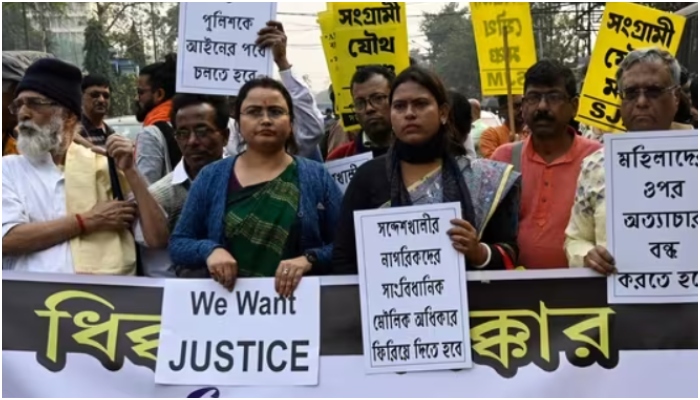
The agitation in West Bengal’s Sandeshkhali district continues, with protesters, including many women, demanding the arrest of Trinamool leader Shajahan Sheikh and his associates. Sheikh and his cohorts are accused of land grabbing and sexual harassment. 

Advocate Alakh Alok Srivastava described the incident as highly unsettling and expressed a realistic concern that a free and fair investigation and trial of the instant case could not be conducted in West Bengal, and so the case should be transferred outside the state of West Bengal in the interests of justice.

“The inaction of the local police authorities is evident from the fact that the said main accused Sheikh Shahjahan is absconding and has not been arrested till now. Furthermore, there are serious allegations of the local police authorities acting hand in glove with the said main accused Sheikh Shahjahan at the behest of the ruling dispensation and thus, it is further in the interest of justice to transfer the investigation of this case to Central Bureau of Investigation (“CBI”) or a Special Investigation Team (“SIT”) under the monitoring of this (Supreme Court) court,” the plea stated.

Advocate Alakh Alok Srivastava’s PIL also sought to constitute a committee of three retired High Court judges, similar to the committee formed in the Manipur tragedy case.

He urged the Supreme Court to give orders granting compensation to victims of sexual assault in Sandeshkhali under the relevant victim compensation scheme and deploying central paramilitary forces to protect the witnesses/victims involved.

He also sought direction to conduct the trial in the case upon completion of the probe, in a Fast-Track court in Delhi, in an expeditious and time-bound manner.

He further urged the apex court to issue directions to the West Bengal government to initiate stringent disciplinary action as well as penal action against the ‘erring policemen’.

Meanwhile, a fact-finding team led by BJP head JP Nadda is scheduled to visit the region today.

Former DGP and Rajya Sabha MP Brij Lal, who is a part of this team, condemned the violence in Sandeshkhali, alleging that it was carried out by Bangladeshi immigrants with the backing of the ruling party.

“BJP National President JP Nadda has formed a fact-finding team with 2 Union ministers and 4 MPs, including myself. There is absolute anarchy in West Bengal… All these incidents are being done solely by Bangladeshi immigrants who have been made to settle there by Mamata Banerjee as a vote bank. They have also been provided with ration cards and Aadhar cards. Sandeshkhali is a result of this… Rape and extortion are very common organised crimes of the TMC. The main accused, Shahjahan Sheikh is on the run and is being shielded by the TMC. Most of the crime in the state of West Bengal is being executed by Bangladeshi immigrants with the full support of the TMC…CAA-NRC should be immediately implemented in the state. It is difficult to do so, but the President’s rule needs to be imposed in West Bengal…” he said.

According to the reports, the team arrived in Kolkata on Thursday (15th February) night. This comes after Nadda directed the team to visit the region, speak with women who have accused the Trinamool leader of sexual assault, and submit a report to him.

Violence in Sandeshkhali

Hundreds of women residents of Sandeshkhali took to the streets on Thursday (8th February) with brooms, sticks, and farming tools, and blocked the roads. They demanded the immediate arrest of TMC leader Sheikh Shahjahan and his two aides Shiba Prasad Hazra and Uttam Sardar, whom they have accused of sexual assault and land grabbing.

The women had accused the trio of making their lives miserable for quite some time. The tension intensified on Friday (9th February) after angry villagers, led by women, in and around the Sandeshkhali area of North 24 Parganas, attacked the properties of Sheikh Shahjahan including a poultry farm owned by Shahjahan’s close confidant and Trinamool Congress leader Shibu Hazra.

The locals said that the poultry farm was set up on a plot of land that the Trinamool Congress leader had forcefully usurped. They also said that the poultry farm had developed into a centre for several illicit operations.

Locals also stated several other instances where Sheikh Shahjahan and his aides had forcefully grabbed lands from poor villagers. On Saturday (10th February), the local police imposed Section 144 in various areas in Sandeshkhali and also banned the use of the internet in 16 panchayats scattered over the two blocks of Sandeshkhali-I and Sandeshkhali-II.

Meanwhile, BJP leader Archana Majumdar has said that TMC members and the local police “jointly raided” the houses of protesting women and BJP workers. Majumdar said that the police even arrested and tortured them.

In a bid to pacify the angry villagers of Sandeshkhali, the TMC leadership suspended Uttam Sardar from the party for six years. The suspended TMC leader and Zilla Parishad member was subsequently arrested in the Sandeshkhali police station area. In the meantime, the Mamata Banerjee-led-TMC government arrested a former CPI(M) MLA named Nirpada Sardar in connection to the case on Sunday (11th February).

The Communist party leader was taken from his residence in Tollygunge to the Babsdroni police station. Thereafter, he was transferred to the Basirhat police station in North 24 Parganas district.

Nirpada Sarkar was arrested under Indian Penal Code (IPC) Sections 120 B, 147, 148, 149, 379, 427,435, and 436. The family of the CPIM MLA, who won from the Sandeshkhali constituency in 2011, said that the arrest of Nirapada Sardar was made without any prior notice.

The West Bengal CM Mamata Banerjee, meanwhile, gave a clean chit to her aide Shahjahan Sheikh and his supporters whom the local women of Sandeshkhali have accused of land-grabbing and sexually assaulting them under coercion. Mamata added that there are no records of rape with the West Bengal police. She hinted that the women of Sandheskhali have not been wronged and that this is a conspiracy hatched by the BJP to target TMC’s leader Shahjahan Sheikh.

Bihar: Muslim mob pelts stones as Hindu procession passes through ‘Kasai Mohalla’ in Darbhanga, Saraswati idol broken, houses ransacked, many injured

On Thursday (15th February), a Hindu procession carrying a Saraswati idol for immersion in the Darbhanga district of Bihar was attacked while passing through the Kasai Mohalla (Butchers’ Colony) in Muriya in the Bhalpatti OP sector. The Islamist mob pelted stones, stole from the houses nearby, vandalised the area and also broke into pieces the Saraswati idol. The Hindu procession was being carried to mark the festival of Basant Panchami on 14th February.

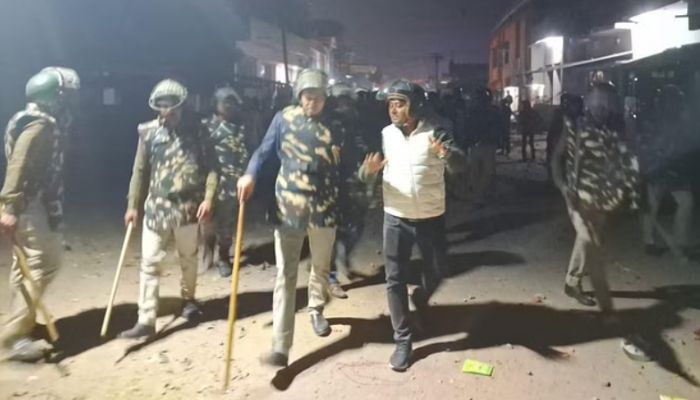
Half a dozen houses were also ransacked when the mob looted the houses during the chaos. Darbhanga DM Rajiv Roshan and SSP Jagunath Reddy rushed to the spot as soon as the incident was reported. The administration deployed heavy security to establish peace in the area.

According to the reports, Hindus were peacefully going for idol immersion in Tarasarai Muria Tola. Suddenly some people started pelting stones at them while passing through Kasai Mohalla – a Muslim-dominated area. As soon as the stones were thrown, the matter worsened and the clash erupted. The miscreants damaged the Saraswati idol. Not only this, they also vandalised many houses of local villagers.

As soon as the incident was reported, a large number of security forces from the district police reached there. The police tried to calm the matter and later facilitated idol immersion.

Darbhanga District Magistrate Rajeev Roushan said, “During Saraswati idol immersion, there was fierce stone pelting between two sides in Tarasarai Muria of Bhalpatti OP area. Efforts are being made to identify the miscreants. The incident took place on the way to immerse the idol. We had talks with both parties and the due work of the immersion has been completed. The clash began on from where to turn the idol’s procession on the road. At the same time, the houses of some people have also been targeted in this incident. Those who have done this are also being identified. Strict legal action will be taken against such miscreants.”

Darbhanga’s SSP Jagunath Reddy said, “Because of the incident, the situation has been brought under control with a large number of BMP district police and staff of several other police stations. The idol is being immersed. Many people also suffered injuries due to stone pelting. At present, the matter is under control.”

A similar attack was perpetrate din Darbhanga on 22nd January when stones were pelted at the Shri Ram Shobha Yatra at the time.

Assam will soon have its first semiconductor packaging plant worth 25,000 crores, says Union Minister Rajeev Chandrasekhar

0

Union Minister of State for Electronics and IT, Skill Development and Entrepreneurship Rajeev Chandrasekhar announced on Thursday that Assam will soon have its first-ever semiconductor packaging plant worth nearly Rs 25,000 crore.

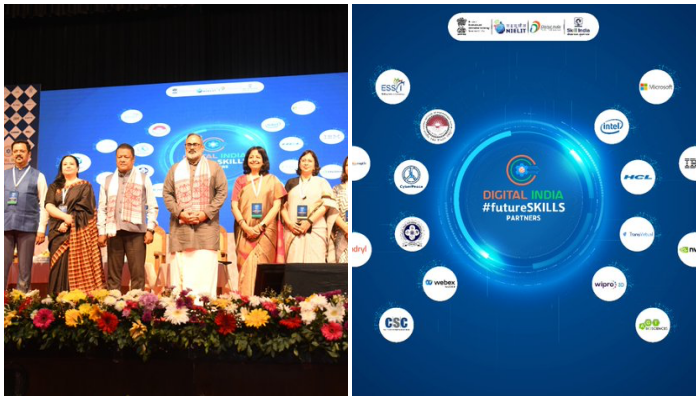
He made this announcement during his address at the first-ever Digital India Future SKILLS Summit, which was held at the Birinchi Kumar Baruah Auditorium, Gauhati University.

“It was because of the leadership of Chief Minister Himanta Biswa Sarma, that a semiconductor packaging plant will be established in partnership with the Assam Government and TATA Group. We will soon obtain all approvals and submit it to the cabinet for final approval. Young Indians aspiring to enter the world of semiconductors won’t have to leave their state or travel to other cities anymore,” the Union Minister said.

The Minister also emphasised how India’s economy has undergone significant progress over the past decade, from being a ‘fragile 5’ to now ranked as the world’s ‘top 5’ economy.

“This significant milestone under the leadership of PM Narendra Modi has unleashed many opportunities for young Indians, particularly in emerging technology sectors where India is on the same starting line as the rest of the world. Through futureSKILLS, we want to convey to our young Indians that in the coming years, due to the policies of our Hon’ble PM Modi ji, numerous opportunities will open up for them,” the Minister said.

Students need to empower and equip themselves with skills in areas such as AI, cybersecurity, and semiconductors. Today, the world’s biggest companies in these fields, including NVIDIA, Intel, AMD, HCL, Wipro, and IBM, are present here today in Guwahati. They all share a singular message — there are tremendous job opportunities, but building skills for it is very important. The objective of this summit is to motivate young Indians to fully immerse themselves in the world of skills,” he added.

The Minister affirmed that with initiatives like futureSKILLS, India is poised to lead the way in shaping the future of technology. This endeavor will cultivate a globally competitive talent pool accessible not only to Indian companies but also to organizations worldwide, setting a new standard in the global tech landscape.

“Our PM has created a three-pronged strategy to shape the future of tech — futureDESIGN for design innovation, futureLABS for innovation around systems, and futureSKILLS for preparing our Young Indians from Guwahati to Mumbai to Bengaluru to J&K with capabilities in emerging sectors. Today, Indians are very important players and participants in shaping the future of emerging technologies like AI, semiconductors, and cybersecurity,” Rajeev Chandrasekhar said.

The Digital India futureSKILLS Summit, hosted by the Ministry of Electronics and Information Technology (MeitY) through the National Institute of Electronics and IT (NIELIT), witnessed the convergence of esteemed dignitaries, industry leaders, academia, policymakers, and technology enthusiasts to deliberate on strategies for catalysing future-ready talent for India & the world.

Minister Chandrasekhar also highlighted that FutureSKILLS is about bringing to your attention the world of opportunities in areas that require many skilled people.

These futureSKILLS are needed in emerging areas like semiconductors, electronics, HPC, and cybersecurity, among others. These are technologies where India is on the same starting line as the rest of the world.

Assam Education Minister Dr. Ranoj Pegu said that the government of Assam has taken many steps for the digital skilling of youths in Assam.

He said, “Projects worth Rs. 1800 crore have been implemented by the Assam Govt. to skill our youths in Industry 4.0 across 77 polytechnics and ITIs. Recently, an agreement has been signed with TATA, which has also allotted 150 acres of land to establish the semiconductor industry near Guwahati.”

Among the key speakers of the summit were Kuntal Sensarma, Economic Adviser, MeitY, Jaya Jagadish, Head, AMD India, Ruchir Dixit, Vice President & Country Manager, Siemens EDA, Lingraju Sawkar, President, Kyndryl India, Ganesh Gopalan, CEO and Co-Founder, Gnani.AI, Prof. Subhasis Chaudhuri, Director, IIT Bombay.

During his address, Ganesh Gopalan, CEO and co-founder of Gnani.AI, said that India is the best place to start an AI company today.

He said, “Globally, around 100 million jobs will be created in AI, this is a huge opportunity for us Indians to grab a lot of these jobs. The market in areas like cybersecurity will explode, which will create at least a few more million jobs for us to grab. India is stepping in the right direction, and the Futureskills Summit is a fantastic initiative. It is fantastic to see the kind of progress that has been made. There is no better time to start a company in AI today, and there is no better place than India to do that.”

Expressing similar sentiments about India’s opportunities and the role of young Indians, Ruchir Dixit, Vice President & Country Manager, Siemens EDA, said, “It is estimated that in the next five years, we will have a shortage of 4 lakh skilled workers in the electronics industry, and this is our opportunity. This is the most exciting time for me because I am seeing for the first time – an opportunity to be married to a platform.”

Emphasising the need for skilling, Kuntal Sensarma, Joint Secretary & Economic Adviser, MeitY said that skills are the passport to prosperity, MeitY is focusing on Skilling on various aspects of emerging technologies.

He underlined that the summit will help to formulate a roadmap to transform India into a global talent hub and capitalise on the opportunities thrown up by emerging technologies.

Focusing on the importance of the semiconductor industry, Jaya Jagadish, Head, of AMD India mentioned that the semiconductor industry is often referred to as the backbone of modern technology. It has played an instrumental role in defining the world we live in today. From smartphones to smart cities, from Artificial Intelligence to Virtual Reality, semiconductors are the invisible force driving innovation across every sector.

Quoting former President of India, APJ Abdul Kalam, Lingraju Sawkar, President, Kyndryl said that a dream is not what wakes up you in the night, but it what keeps you away from sleeping. This summit gave us the opportunity to dream big, really move from being to job generator to job provider for every youth.

Prof. Subhasis Chaudhuri, Director, IIT Bombay, said that the government has started many skilling programmes such as PMKVY, SANKALP, UDAAN etc. and similarly NIELIT is also leveraging New Education Policy 2020, which allows more such options for the talents of today to leverage that for their career upgradation.

Dr. Y. Jayanta Singh, Executive Director, NIELIT Guwahati delivered vote of thanks at the conclusion of the Digital India #futureSKILLS Summit in Guwahati.

In his address, he expressed gratitude to all the dignitaries, industry leaders, policymakers, academia and technology enthusiasts who contributed to the success of the event.

The presence of these prominent industry leaders in Guwahati underscores the significance of empowering the youth of Assam and the entire region with digital skills.

The Exhibitions showcasing Future Skills has also been inaugurated by the Union Minister of State Rajeev Chandrasekhar and he interacted with numerous representatives of Start-ups and academia. The summit also organised an exhibition that showcased over 30 innovative future skills technologies & solutions.

The summit facilitated more than 30 strategic collaborations between NIELIT and leading industry players and academia such as Intel, HCL, Microsoft, Kyndryl, IIM Raipur, IIITM Gwalior and Wipro, etc. These collaborations aim to bridge the gap between academia and industry, ensuring that educational programs are tailored to meet industry standards and demands.

In addition to this, four engaging panel discussions were held on key themes such as Semicon India, IndiaAI, Cyber Security & Emerging Technologies and Digital India’s Talent for the Global Workforce.   

(This news report is published from a syndicated feed. Except for the headline, the content has not been written or edited by OpIndia staff)