Home Blog Page 1395

Delhi HC rejects plea seeking pre-censorship of content against Rohingya Muslims on Facebook, says it is a ‘treatment worse than the disease’

0

The Delhi High Court on 31 January rejected a petition seeking pre-censoring of content against Rohingya Muslims on Facebook. The plea was filed seeking an order compelling the Union Government to prohibit Facebook India from allegedly spreading “hateful and harmful content” against the Rohingya population on the social media network, but it has been denied by the Delhi High Court.

Acting Chief Justice Manmohan and Justice Manmeet Pritam Singh Arora, who composed the division bench, stated that the notion of censoring any Facebook posts against Rohingyas beforehand is an example of “a treatment that is worse than the disease.”

The court said that the Information Technology Rules, 2021, and their grievance redressal process, along with the legal requirements of social media platforms to refrain from promoting the transmission of hate speech are enough, and it is not possible to order pre-censoring of content. The court pronounced, “Consequently, this Court is of the opinion that in view of the aforesaid Rules the direction sought by the Petitioners to Union of India to restrain Facebook from allegedly promoting, amplifying and spreading hate speech covered by Section 153 and 500 of IPC (Indian Penal Code) and particularly hate speech against Rohingyas does not arise for consideration.”

It further declared that under Article 226 of the Indian Constitution, a party who has been wronged cannot give up on a complete system of remedy provided by an Act to seek High Court jurisdiction. “Consequently, as there is a robust grievance redressal mechanism in existence, the Petitioners have an alternative efficacious remedy and are at liberty to avail the redressal mechanism as per IT Rules, 2021, with respect to any objectionable posts.”

As a result, the bench dismissed the PIL Public Interest (Litigation) filed by two Rohingya refugees, Kawsar Mohammed and Mohammed Hamim, against Facebook India, alleging that the social media platform’s algorithmic features encourage the spread of “hateful and harmful content” that targets the Rohingya individuals. The petitioners had been living in Delhi for the past two to five years after fleeing ethnic conflict in Myanmar.

On Facebook, they attempted to get an order to stop using its virality and ranking algorithms, which they claimed promoted hate speech and acts of violence against communities of colour. Additionally, a request to alter the petition was made, urging for the Union Government to be instructed to take enforcement legal measures to prevent Facebook from purportedly disseminating hate speech against the Rohingya minority.

Facebook requested that the plea be dismissed because it makes no mention of the ineffectiveness of the regulations implemented by the social media giant. The Meta platform argued that the Central Government has enacted the IT Rules of 2021 which has put in place a three-tier system to tackle offending posts, including hate speeches, on social media platforms.

The bench noted that as there is no assertion in the writ suit that the government and Facebook have disregarded its statutory duties under the IT Rules 2021, the reliefs sought against Facebook are not viable. The court also noted that it seems the petitioners were not aware of the relevant provisions of the IT Rules before today’s hearing.
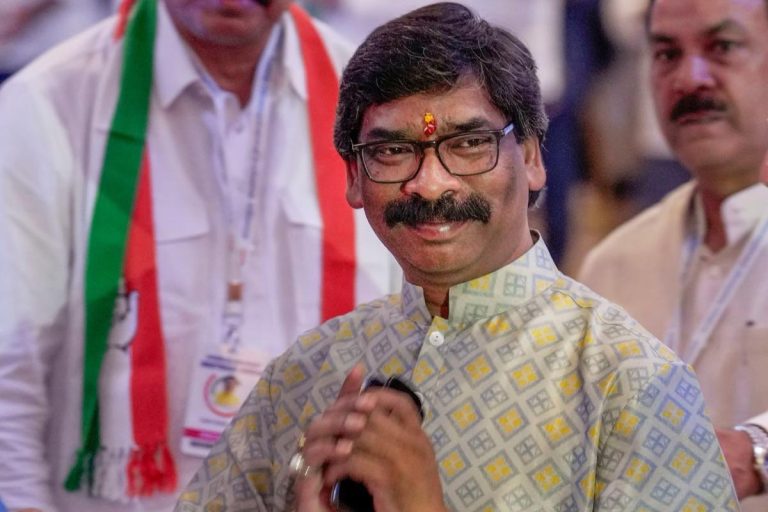
Jharkhand CM Hemant Soren resigns amid reports of arrest by ED, JMM elects Champai Soren as new CM

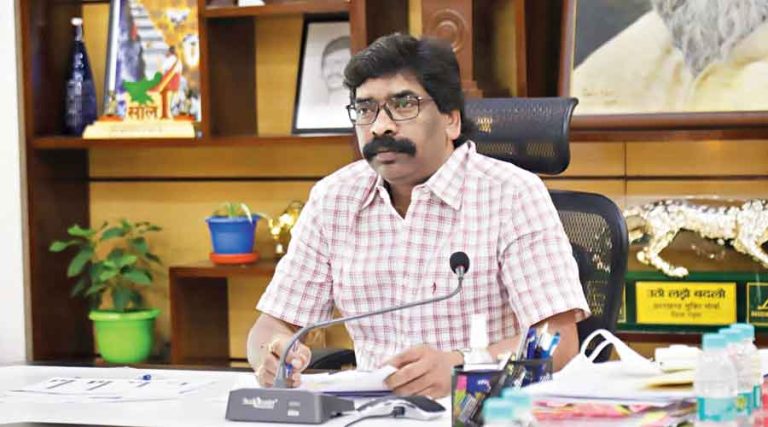
The Jharkhand CM Hemant Soren resigned amid reports of his arrest by the Enforcement Directorate. As per reports, the central agency was unsatisfied with the responses provided by the chief minister during questioning, following which it arrested Soren. The JMM elected Champai Soren as the new chief minister of the state.

The ED is currently investigating at least three cases related to benami properties and illegal mining involving Soren.

For more than six hours, a group of Enforcement Directorate (ED) officials interrogated Chief Minister Hemant Soren at his official residence, which eventually culminated in his arrest.

Soren is likely to resign before his arrest, reports said. According to BJP MP Nishikant Dubey, Champai Soren was proposed by the legislature party for the post of Chief Minister. “Hemant Soren ji could not make Kalpana Soren ji the Chief Minister due to opposition from the family,” Dubey tweeted.

The Jharkhand CM had allegedly tried dodging interrogation by the Enforcement Directorate in connection with a major land scam case. Soren had already skipped 9 ED summons before the central agency finally questioned him on Wednesday.

The ED had written to Jharkhand CM asking him to provide a date for questioning on January 29 or 31, or else the agency itself would go to him for questioning, in connection with a money-laundering case linked to an alleged land scam.

Earlier on January 22, ED issued a summons to Soren for the ninth time, asking him to be available for questioning between January 27 and 31 in the case.

Meanwhile, on January 20, the Enforcement Directorate arrived in Ranchi to question the Jharkhand Chief Minister in the land scam case. The eighth summons was issued to Soren on January 13, asking him to be available for questioning between January 16 to 20, in the case.

According to the Enforcement Directorate, the investigation pertains to a “huge racket of illegal change of ownership of land by the mafia” in Jharkhand. The ED officials are investigating the illegal purchase and sale of 4.55 acres of land under military control in Ranchi. 

Lucknow: Syed Abdul Alim Jafri identified himself as Nihal, drugged and sexually assaulted a married Hindu woman, forced her to convert to Islam and marry him

0

A Hindu woman was drugged and raped by an engineer named Syed Abdul Alim Jafri in Lucknow. Furthermore, he pressured her to convert to Islam and marry him. He even threatened to make her explicit video viral on social media when she protested. He has been arrested by the authorities from Noida.

According to media reports, the accused met the victim, a resident of Lucknow through Facebook in the year 2020. He introduced himself as Nihal. He then lured her to meet him one day, incapacitated her with drugs and proceeded to sexually violate her. He also recorded the horrifying act on camera after which he repeatedly abused her.

After a few days, the perpetrator started to compel the woman to embrace Islam and tie the knot with him. She revealed that he seduced her with presents and asked her to become Muslim. However, she wasn’t prepared and objected to it. He intimidated her when she didn’t fulfil his demands and even threatened to kill her.

He began harassing her to change her religion and marry him otherwise he would upload the explicit video online. The woman said that he used to take her to mosques and madrasas whenever he visited Lucknow and attempted to force her to pray. She became tired of his outrageous behaviour and moved to a different house in Ghazipur but he did not leave her.

The culprit tracked her down and continued to pester her by visiting her residence due to which she confined herself to the four walls of her home out of fear. However, nothing deterred him and he persisted in pursuing as well as threatening her despite everything. She eventually grew immensely distressed and reported him to the police.

The offender works for a private software company in Noida and lives in Shivani Nagar, near the Madianav police station in Lucknow while the Hindu woman is from the Gudamba police station region of Uttar Pradesh’s capital. The woman’s spouse is reportedly employed in Gujarat, according to media sources. Further investigation into the matter is underway.

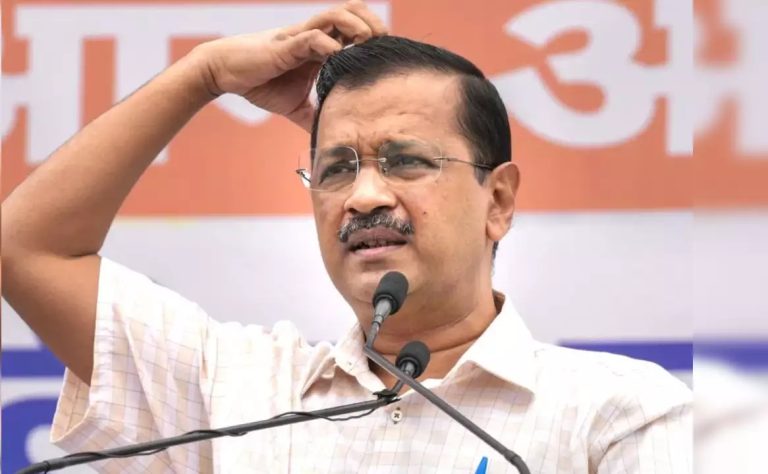
Excise policy case: ED issues summons to Delhi CM Arvind Kejriwal for the fifth time, asks to appear on 2nd February

0

The Enforcement Directorate (ED) has issued a fifth summons to Delhi Chief Minister Arvind Kejriwal in the money laundering probe related to irregularities in the Delhi excise policy 2021-22 case, asking him to join the investigation on February 2.

The fresh summons to the Delhi CM followed the fourth summons which he had skipped on January 18.

Kejriwal has so far skipped four previous summons issued by the ED on January 18, January 3, November 2, and December 22, calling them “illegal and politically motivated.”

The ED wants to record Kejriwal’s statement in the case on issues like the formulation of policy, meetings held before it was finalized, and allegations of bribery.

While skipping the fourth summons issued by the ED, Kejriwal termed it “illegal,” saying he was ready to cooperate, but the agency intended to arrest him and stop him from election campaigning.

“All four notices sent to me (by the ED) are illegal and invalid in the eyes of the law. Whenever such general, non-specific notices were sent by the ED in the past, they were quashed and declared invalid by courts. These notices are being sent as part of a political conspiracy,” Kejriwal said after skipping the fourth notice.

The case against the Aam Aadmi Party supremo is based on a First Information Report (FIR) alleging multiple irregularities in the formation and implementation of the Delhi excise policy (2021-22) by the Central Bureau of Investigation (CBI). The policy was withdrawn after allegations of corruption.

In its sixth charge sheet filed in the case on December 2, 2023, naming AAP leader Sanjay Singh and his aide Sarvesh Mishra, the ED has claimed that the AAP used kickbacks worth Rs 45 crore generated via the policy as part of its assembly elections campaign in Goa in 2022.

On Kejriwal’s role, one of the six charge sheets filed in January 2023 states that Kejriwal told businessman Sameer Mahendru that former AAP communications in-charge Vijay Nair “is his boy” and that he should trust him.

The excise policy was aimed at revitalizing the city’s flagging liquor business and replacing a sales-volume-based regime with a licence fee for traders. It promised swankier stores and a better buying experience. The policy introduced discounts and offers on the purchase of liquor for the first time in Delhi.

Lieutenant Governor Vinai Kumar Saxena’s move to order a probe into alleged irregularities in the regime prompted the scrapping of the policy. The AAP has accused Saxena’s predecessor, Anil Baijal, of sabotaging the move with a few last-minute changes that resulted in lower-than-expected revenues.

Two senior AAP leaders–Manish Sisodia and Sanjay Singh–are already under judicial custody in the case. Sisodia, who was the then Delhi Deputy Chief Minister, was arrested by the CBI on February 26 following several rounds of questioning, and on October 5, the ED arrested Singh, who is a Rajya Sabha member.


(This news report is published from a syndicated feed. Except for the headline, the content has not been written or edited by OpIndia staff)

Bhiti royal family fought with Babur to save Ram Janmabhoomi: Aurangzeb attacked in rage after 150 years to vandalise the Jharkhandi Mandir

On Monday 22nd January 2024 in Ayodhya, the idol of Ramlala was consecrated in his grand temple. On this occasion, while Hindus across the country and the world celebrated a Diwali-like festival, those Ram Bhakts were also remembered who sacrificed everything in the name of Lord Ram in the 500-year-long struggle. The initial important mention among these sacrifices is that of Mehtab Singh, the reigning king of Bhiti at the time. In 1526-27, he achieved martyrdom by repelling the soldiers of Mir Baqi who attempted to desecrate and demolish the temple.

Nevertheless, the resistance of this devotee of Lord Rama resulted in Mughal emperors venting their fury on the temples in his jurisdiction and Bhiti. Evidence of Mughal brutality is still seen in the Bhiti tehsil area of Ambedkar Nagar district. Most of the leftist historians, who spent their entire lives praising the cruel and inferior Mughal emperors, might not have visited Bhiti. Here not only were idols broken by entering temples, but women and palace servants were also massacred.

Very few people would know that hundreds of years after Babur’s death, Aurangzeb attacked Bhiti considering it as a stronghold of Ram Bhakts. The OpIndia team visited those areas and compiled all the evidence.

Aurangzeb remembered the enemies of his ancestors

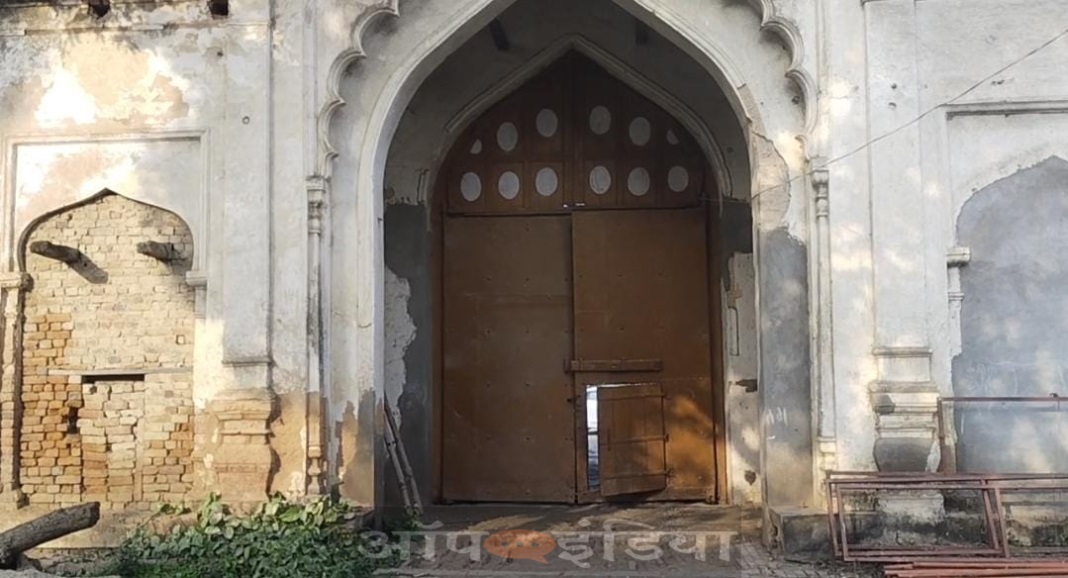
OpIndia first visited the palace of Raja Mahtab Singh. Wear and tear was seen in many places in the palace. Some elders standing outside the palace said that they were originally from Bhiti. They told us that the vandalism in many parts of the palace dates back to the Mughal era. Raja Mehtab Singh killed many of Babur’s soldiers while defending Ramjanmabhoomi. Aurangzeb, a descendant of Babur, ascended the throne nearly 130 years after the struggle in 1527 to protect Ramjanmabhoomi. He started demolishing temples including the holy Kashi Vishwanath.

Rajkumar Jaydatt Palace still bears marks of vandalism. Image Source: OpIndia Hindi

The elders standing around told us that Aurangzeb had also made a list of Hindu kings who fought his ancestors at any given time. Among these names, the name of Bhiti Naresh Mehtab Singh was at the top of his hit list. In the year 1669, when Aurangzeb’s forces went out to demolish the Kashi Vishwanath temple, he also included Bhiti in the map made of the route. Troops from Delhi looted villages on the way, raped Hindu women and demolished temples.

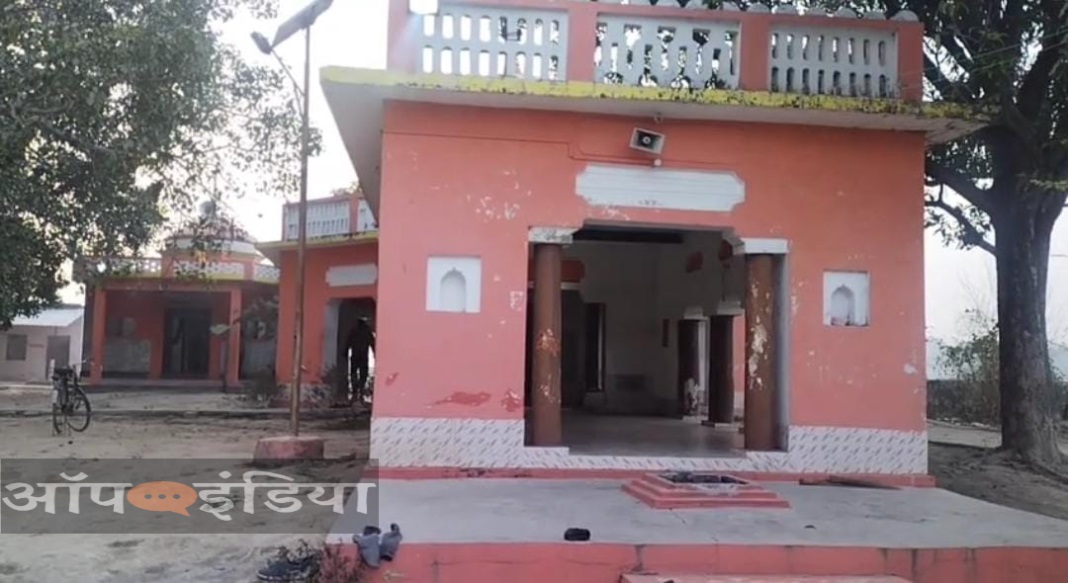
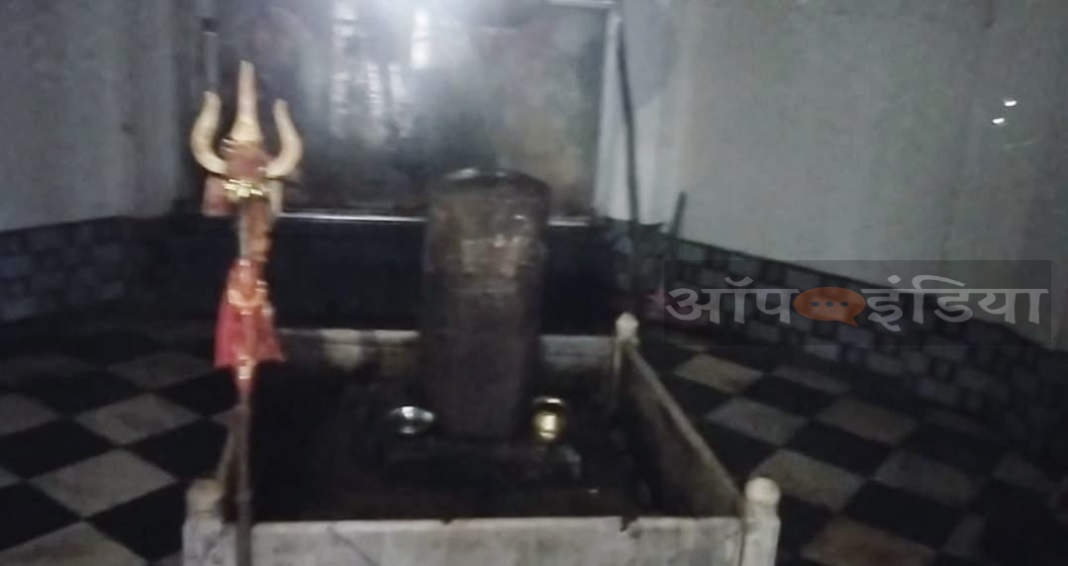
Jharkhandi Mahadev Mandir Bhiti. Image Source: OpIndia Hindi

Marks of saw still seen on Shivling

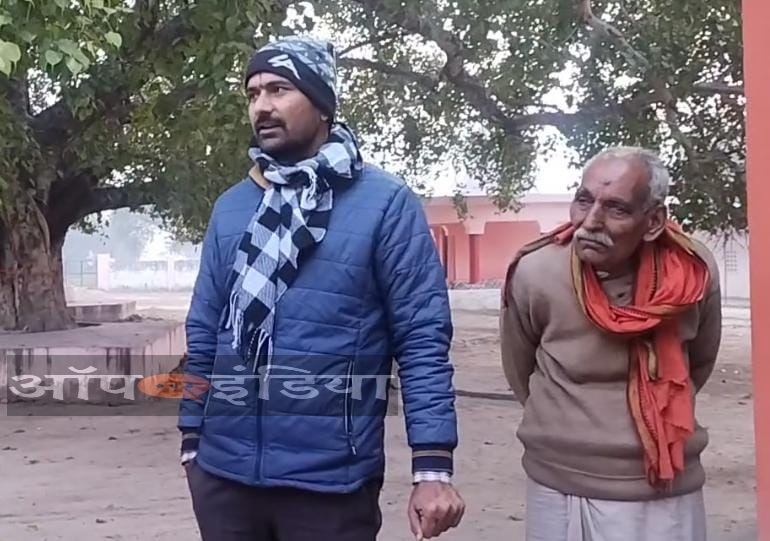
Local residents told us about the Jharkhandi Mahadev temple on Umraan Road, about 2 km from Bhiti Mahal. When we reached the Mahadev temple, we found some devotees and the priest of the temple present there.

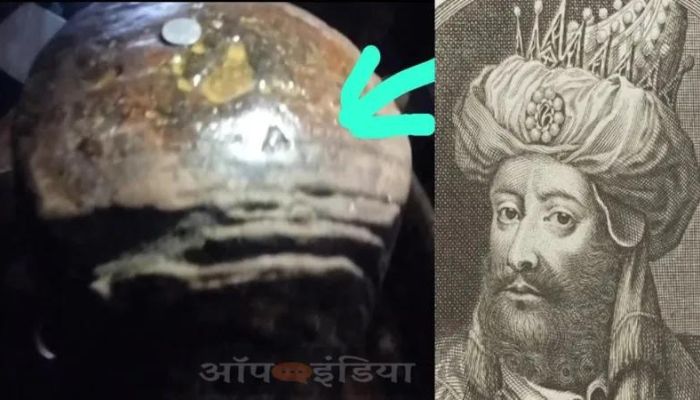
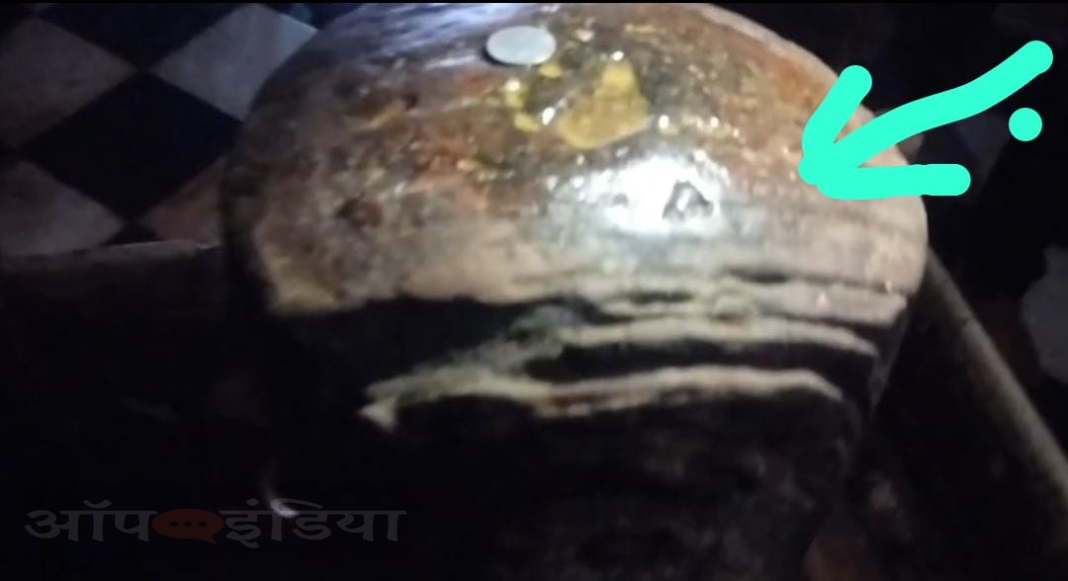
Munna Mishra, the priest of the temple, told us, “About 250 years ago, that temple was a victim of Aurangzeb’s cruelty.” We were taken to the sanctum sanctorum. There is a very ancient Shivalinga in the sanctum sanctorum, whose age is said to be more than 1000 years. There are many scratches on the Shivling with cut marks. Even today, this temple is a major centre of faith for local Hindus. A big fair is held here in Mahashivratri.

Aurangzeb had reached to break this Shivling. Image Source: OpIndia Hindi

The priest of the temple further told us that despite all efforts, the Mughal army could not cut the Shivling. Angered by this, on Aurangzeb’s orders, his soldiers desecrated the entire temple, demolished the walls and broke the idols. According to the priest, just a few years ago, the idols broken in Aurangzeb’s attack were lying in a corner of the temple in a mutilated condition. Saddened by the animals and birds spreading dirt on those idols, some villagers took them to Ayodhya and immersed them in the Saryu River. These included idols of Lakshmi, Parvati and Lord Ganesha.

Shivling cut by Saw. Image Source: OpIndia Hindi

Queens and servants were killed in nearby villages

The priest of the temple claimed that after breaking the shrine, the Mughal army turned towards Sonarpurwa, a village about 1 km away. Here lived goldsmiths who worked for the Bhiti royal family. The queens were hiding in this area to escape the clutches of the Mughal army. On reaching here, Aurangzeb’s companions first looted Sonarpurwa and then beheaded the queens along with their servants. According to the priest, till some time ago, human skulls were found inside a well in excavation, which is from the time of the attack of the same Aurangzeb.

Priest of Jharkhandi Shiva temple and local villagers speak to OpIndia. Image Source: OpIndia Hindi

Statues vandalised at Chandapur village

The priest of the Jharkhandi temple further said in a conversation with us that Hindu deities were also worshipped at Chandapur village, about 3 km away from there. The Mughal army, which had already come with all the information, turned towards Chandapur village after looting Bhiti Mahal, Jharkhandi Temple, Sonarpurwa. The temples present here were demolished.

A few days ago, some farmers found an idol of Lord Vishnu buried in the soil. This idol is said to be thousands of years old and it is now with a Nishad family. This historic place has now been leased out to farmers. However, it was claimed that if the place is duly excavated, then more historical things can be found.

Our forefathers fought and sacrificed

Ajit Kumar Dubey, a local villager present at the temple, spoke to OpIndia. He claimed that elders in his acquaintance tell about this attack by Aurangzeb. At that time, not only the soldiers of the Bhiti royal family but also the surrounding villagers fought the Mughal army. Many villagers laid their lives in this fight. Many of Aurangzeb’s attacking soldiers were also killed. The Bhiti royal family often came to worship the Jharkhandi temple which was attacked by Aurangzeb’s forces. The Bhiti royal family also built a temple on the banks of the Bisuhi River.

Ajit claimed that the main reason for Aurangzeb’s attack was the love shown by the Bhiti residents for Lord Ram 125 years ago and the sacrifice they made along with their king in Ayodhya. Many devotees from villages like Bhiti Bazar, Umranwa, Dukhi Dubey ka Purwa, and Dubane ka Purwa near Jharkhandi Mahadev temple came to the temple premises during our visit and interview. All of them said that the cruelty shown by Aurangzeb in the temple still pains their minds. For this temple, the local BJP leader has also arranged tin sheds and seating benches for the devotees.

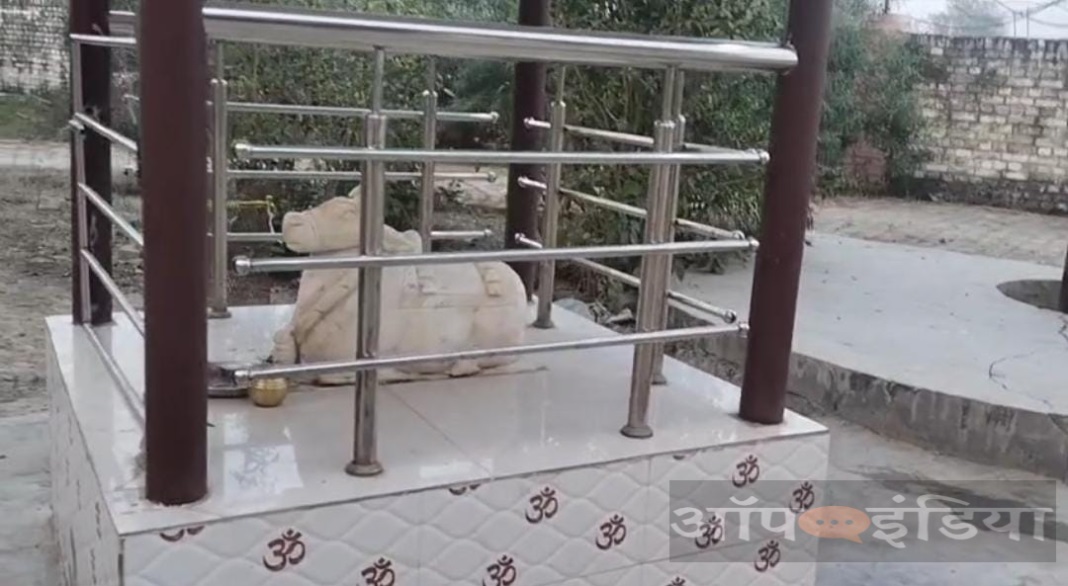
Nandi in the Jharkhandi temple. Image Source: OpIndia Hindi

However, this cruelty shown by Aurangzeb could not distract the Bhiti royal family. About 200 years after Aurangzeb’s attack, Prince Jaydutt Singh of Bhiti was martyred while fighting the jihadi cleric Amir Ali, who went out to attack Ramjanmabhoomi. In this war, Amir Ali was also killed along with all his companions.

Tamil Nadu: Devotees allegedly assaulted and harassed by staff at Palani Dandayuthapani Murugan Temple, Hindu group slams DMK govt

0

On 3rd January, devotees of the Palani Dandayuthapani Murugan Temple in Tamil Nadu were allegedly assaulted and harassed by temple staff, resulting in indignation and charges against the state’s Dravida Munnetra Kazhagam (DMK) government. This event occurred amid rising tensions following a recent Madras High Court judgment mandating notice boards in temples barring entry of non-Hindus and non-believers in Hindu temples.

According to accounts and social media footage, devotees were shoved and pushed by temple staff, prompting widespread condemnation from Hindu groups. The Hindu Munnani, a prominent Hindu body, condemned the incident and demanded an immediate investigation.

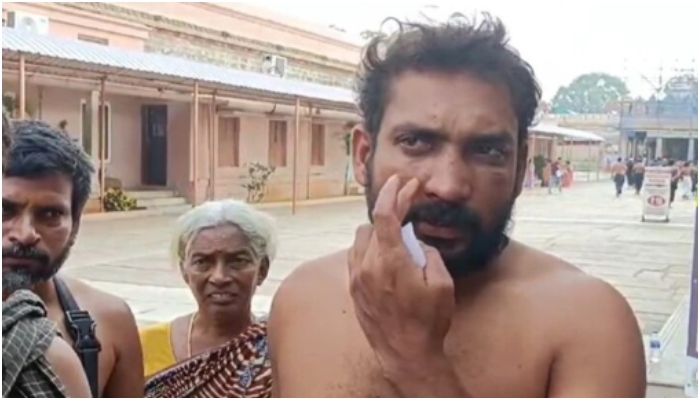
A Sabarimalai devotee from Andhra Pradesh was reportedly badly beaten by outsourced security personnel, who were recognized as party cadres and people of various religious backgrounds. The assault caused noticeable injuries and bleeding.

During the global observance of the Prana Pratishtha event on 22nd January, the DMK administration in Tamil Nadu first rejected permission for poojas (rituals) and Anna Dhan (food offerings) in temples. After directions from both the Supreme Court and the High Court, permission was reluctantly given. However, processions remained banned across the state.

A separate incident occurred earlier this month at the Palani temple, where devotees were allegedly prevented from chanting, playing Nagaswaram, and performing drum ceremonies. Hindu Munnani, a Hindu outfit, vehemently condemned the conduct.

The Hindu Religious and Charitable Endowments (HR and CE) department in Tamil Nadu received controversy after worshippers were allegedly charged Rs 1000 for mobile phone safekeeping, despite an original notification indicating a fee of Rs 5. Following the darshan, approximately 200 devotees confronted temple staff, engaging in a heated debate over the excessive fees. The situation necessitated a decrease of Rs 500, with a warning that anyone unable to pay would be placed in the donation box.

In the given matter, responding to a petitioner’s complaints, Justice S Srimathy determined that the issue was more widespread and should be enforced similarly to all Hindu temples in Tamil Nadu. As a result, she asked officials to implement the stipulated standards in all Hindu shrines. Before this, the DMK government made strong arguments, highlighting its secular nature and voicing concern about potentially offending minority religious sensitivities. The administration appeared to be less concerned about Hindus, who rely heavily on temple money.

The respondents’ counsel provided counterarguments, citing examples from temples such as Arulmighu Ranganathaswamy Thirukovil Srirangam, Arulmighu Sowriraja Perumal Tirukkannapuram, and Bhuvarahaswamy Temple Srimushnam. Non-Hindus were actively involved in worship ceremonies, highlighting the diverse and inclusive practices found within Hindu temples. The lawyer argued that, as a secular government, both the state and the temple administration have a responsibility to protect residents’ rights. They claimed that erecting notice boards prohibiting non-Hindus would potentially harm religious sensibilities and violate constitutional rights.

Even before the day ended, another incident at the Palani temple sparked outrage among devotees across the state. According to reports, the temple management set up a special lane for Erode devotees who were bringing Kavadi, a traditional offering. Tensions intensified as Edappadi devotees, seeking to circumvent a lengthy waiting period, attempted to utilize the authorized route for Erode devotees. In the subsequent incident, A Chandran, an Edappadi devotee, was allegedly pulled, thrashed, and broken skull by temple guards and officials.

Both Chandran and his kid, who were hurt in the event, were taken to the Palani Hills Temple hospital and are receiving treatment. Outraged by the violence, about 500 Edappadi followers protested, demanding that the security officers responsible face consequences. The temple administrators told the protesters that those involved would be suspended, prompting them to disperse. However, a faction remained resolute, demanding accountability for the security officers.

These crimes have exacerbated the already high legal and communal tensions around the Palani temple. Devotees have expressed rising worries about the temple’s management and the preservation of their religious rights.

Several occurrences in Tamil Nadu have raised concerns about the DMK government’s attitude to religious and civic issues, which follows the Dravida model of minority appeasement.

The Veerbadra Swamy Temple management cancelled a volleyball match on the temple grounds in Paradanna School Village, Tirupatur district, despite objections from devotees who expressed concerns about potential hazards for women and children. Devotees have expressed concern that Muslims would attend the event inebriated.

In Edaiyarpalayam, the police allowed a Periyar Dravidar Kazhaga event in which speakers made disrespectful remarks about Lord Muruga. However, a significant number of Hindus attended the gathering, disturbing it and forcing the speakers to leave.

An illegally built mosque in Mettupalayam Thekkam Patti village was recently dedicated to help ten Muslim families. While approved for residential use, the facility was turned into a mosque and outfitted with government-provided power, water, and other infrastructure.

On the 26th, police rejected permission to display the national tricolor in response to Christian opposition. Additionally, clearance for the Paravai Kavadi on Thiruchendur Road near the Mani Aiyar Hotel was denied, prompting devotees to conduct a road roko.

A mosque in the middle of the road remains undisturbed, and a new bus stop has been built without removing it, forcing motorists to take detours. Despite court judgments, the DMK government has not removed mosques or churches established on water bodies or government land. It has, however, faithfully followed directives in the case of Hindu temples.

Following a High Court ruling, the Greater Chennai Corporation intends to demolish a structure built by temple management in Villivakkam. Even though the demolition does not impede vehicular traffic, the corporation claims that it is part of a three-year plan to deconstruct over 200 temples across the state, citing encroachment.

These occurrences highlight the ongoing dispute over the DMK government’s attitude on religious and civic issues, raising worries among numerous populations about the protection of their rights and cultural customs.

‘We will come with swords in our hands to slaughter you collectively’: What ISIS magazine says on Hindus, Ayodhya, NIT Srinagar issues and more

0

On 30th January, the 32nd issue of Voice of Khurasan was circulated on several social media and dark web platforms. Voice of Khurasan is an Islamic State-backed online magazine. In a recent issue, ISIS has threatened Hindus. They threatened “Sar Tan Se Juda” over multiple issues, including the illegal structure of Babri, the Gujarat Riots 2002 and more.

ISIS picked up NIT case accusing Hindu student of blasphemy

In an article titled “Would you desire me to slay him?” there was a mention of the National Institute of Technology (Srinagar) matter where a Hindu boy was accused of using derogatory language against Prophet Mohammed.

In November 2023, a Hindu student at Srinagar National Institute of Technology (NIT) was booked for alleged blasphemy after he shared a video of the son of the Hamas leader criticising Prophet Muhammad. The Hindu NIT student had shared an already viral video of Mosab Hassan Yousef making critical comments about Islam and the Prophet Muhammad to his Instagram story.

Source: Voice of Khurasan Issue 32

An FIR was registered against the Hindu student on Tuesday after massive protest and sloganeering erupted at the NIT campus over the said video. While the footage neither featured the Hindu boy nor he created it, instead shared the video edited by some YouTuber, the Muslim students at NIT Srinagar demanded his arrest, accusing him of ‘blasphemy’.

The Muslims of NIT Srinagar and several other Islamists not only demanded his arrest but also raised ‘Sar Tan Se Juda’ slogans against the Hindu boy.

Notably, the said was in a relationship with a Muslim student in the same institute. The Islamists hounded the couple, and the Hindu student had to flee Kashmir. Furthermore, many Hindu students were shifted out of Srinagar following the controversy. Notably, the Hindu student did not indulge in any sinful act. He just shared an already viral video of the son of a Hamas leader.

Provoking Muslims using disinformation

ISIS pointed out that the incident took place in a region where Muslims are in the majority, and it was a “clear provocation to war”. The terror organisation continued to state that it was an indication that it was the same Kashmir where non-Muslims, specifically Hindus, once feared for their lives and kept their opinions hidden; there is now a growing boldness. ISIS claimed that it was a sign that if they [Hindus] could overpower Muslims for even a day, they would not let the Muslims “live in peace”.

ISIS further claimed that Muslims are facing attacks in different forms in the cities that Hindus dominate [used organisations like RSS], including economically, physically and psychologically. To support the argument, the terror outfit mentioned the unfortunate incident that happened in Aligarh, Uttar Pradesh, where a woman was accidentally shot in the head by an Assistant Inspector.

Reports suggest that the 55-year-old woman, identified as Ishrat Nigar went to the police station to get her passport verified. While she was getting the work done, SI Manoj Sharma of a nearby police station came to collect his weapon. When a constable was handing over the gun, it was accidentally fired. The woman later died at the hospital during treatment. Notably, the incident’s videos clearly show that it was an unfortunate accident, and the law is taking its course. However, ISIS used the incident to claim it was a case of government employees vs Muslims.

‘We are saying to the government of India…Yes! Indeed, we shall come with swords in our hands to slaughter you collectively—[Yes!] We shall come to avenge Babri masjid, [we shall come to avenge] the persecuted [Muslims] of Gujarat, Kashmir, Muzaffarnagar,” the magazine threatened alongside a picture of an ISIS terrorist wielding a knife and a kneeled captive wearing the archetype orange suit and sitting in front of him.

Source: Voice of Khurasan Issue 32

Issuing threats to the Indian government and Hindus

The ISIS-backed magazine did not stop there. They continued to issue a threat of “Sar Tan Se Juda”, or slaughter, at the end of the article. ISIS urged the readers to remember the words of terrorist Fahad Tanveer Shaikh alias Abu Umar Al-Hindi, who had threatened to kill Hindus. In 2016, a video of two ISIS terrorists who hailed from Kalyan surfaced on the internet.

Fahad Tanveer Shaikh and Aman Naeem Tandel were featured in the video. It was reported that both of them were promoted to the top leaders of the terror outfit. While ISIS magazine claimed Fahad issued the threat against India and Hindus, reports suggested that the words used by the magazine were of Aman. He had said, “We will return (to India), but with a sword in hand, the Babri Masjid, and the killings of Muslims in Kashmir, in Gujarat, and Muzaffarnagar.”

Fahad and Aman were among four Muslim boys who fled home to join ISIS in 2014. Fahad was killed in 2017. Aman was killed in 2016.

The threat in the article further read, “At last, it is obligatory upon the people of knowledge to safeguard the honour of the Prophet g and make it evident to the masses in time of fitna, and they are those who possess the knowledge to take a firm stand against that which demands attention!!”

Voice of Khurasan, an ISIS-backed magazine, started publishing in 2021. It has published 32 issues; the most recent in January 2024. In the previous issues, the magazine has issued multiple threats against Hindus and the Government of India. Furthermore, it indulges in provoking Muslims to join and donate to terror outfits.

RBI bars Paytm Payments Bank from onboarding new consumers with immediate effect, banking transactions to be stopped from 29 February

Reserve Bank of India on 31 January directed Paytm Payments Bank to onboard new customers with immediate effect. Moreover, all banking transactions including fund transfers using any mode will be terminated from 29th February. The action has been taken over persistent non-compliance and continued material supervisory concerns in the bank, warranting further supervisory action, the RBI stated in a press release.

The direction was issued by the central bank under section 35A of the Banking Regulation Act, 1949. The bank has also been directed to appoint an IT audit firm to conduct a comprehensive System Audit of its IT system. Onboarding of new customers by Paytm Payments Bank Ltd will be subject to specific permission to be granted by RBI after reviewing report of the IT auditors.

As per the directions of RBI, no further deposits or credit transactions or top ups shall be allowed in any customer accounts, prepaid instruments, wallets, FASTags, NCMC cards, etc. after 29th February, 2024, other than any interest, cashbacks, or refunds which may be credited anytime.

However, withdrawal or utilisation of balances by its customers from their accounts including savings bank accounts, current accounts, prepaid instruments, FASTags, National Common Mobility Cards, etc. will be permitted without any restrictions, upto their available balance. Apart from this, any other banking services, like fund transfers, BBPOU and UPI facility can’t be provided by Paytm Payments Bank after February 29, 2024.

The RBI also directed the termination of Nodal Accounts of One97 Communications Ltd and Paytm Payments Services Ltd at the earliest, which must be done before 29th February. “Settlement of all pipeline transactions and nodal accounts (in respect of all transactions initiated on or before February 29, 2024) shall be completed by March 15, 2024 and no further transactions shall be permitted thereafter,” the RBI statement added.

Mass marriage of hundreds of women without grooms: FIR against govt officials after major scam unearthed in UP Group Marriage Scheme

0

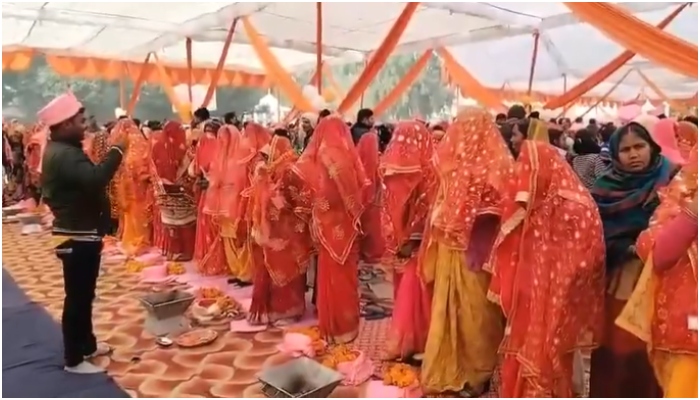
A scam related to Hindu marriages has come to the fore from the Baliya region of Uttar Pradesh where around 568 girls were reported married without grooms for money. As per the reports, the incident is said to have happened on 25th January, and the girls who pretended to be brides executed the marriage rituals alone, without their prospective husbands.

It is believed that the local administration had faked the event to gain the state money offered under the Chief Minister Group Marriage Scheme. Under the scheme, the state offers Rs 51,000 to every poor girl during her marriage. The organizers of the event gathered random girls and lured them to pose as brides for money. Some of the girls had arrived at the location for sightseeing, where they were offered the lucrative proposal. The girls performing marriage rituals alone were told that they would get a proportion of money for performing fake marriages.

The video of the incident is making rounds on social media. It was first posted by journalist Sachin Gupta on X. “On January 25, 568 couples got married under the Chief Minister Group Marriage Scheme. A large number of brides were garlanded without the groom. Many had been married many years ago. There were many brothers and sisters. All this happened just to pose as couples and get photographs taken and to share government money,” he said.

In the video, the girls in bridal attire are seen garlanding themselves as per prompts given on the loudspeaker. A small number of men with garlands are also seen, but they didn’t marry the women actually.

According to the report, the girls who posed as brides included Muslim girls who also wore burqa, women who had been married for years, and also those who had come to the state as tourists.

An FIR in the case has been filed against 9 people including the ADO. An investigation committee has also been formed to look into the matter. The state seems to have taken cognizance of the event and has stopped the payment of monetary aid under the Chief Minister Group Marriage Scheme.

Jharkhand CM Hemant Soren lodges FIR against ED officials under SC/ST Act for searches at his Delhi house, accuses them of “tarnishing his image”

As Jharkhand CM Hemant Soren is facing an Enforcement Directorate probe in a money laundering and land scam case, the CM lodged an FIR against ED officials under the SC/ST Act. As per reports, Hemant Soren filed the case under the Scheduled Caste and Scheduled Tribe (Prevention of Atrocities) Act, accusing the ED officials of “tarnishing his image”.

This comes after the Enforcement Directorate searched his house in Delhi on Monday in connection with the case. The agency seized ₹36 lakh in case, a BMW SUV and some “incriminating” documents at Soren’s residence, as per agency officials.

“An FIR has been lodged against some senior ED officials… we got the application from the Chief Minister,” Ranchi Senior Superintendent of Police, Chandan Kumar Sinha, told PTI confirming the case filed against ED officials.

In his complaint, Soren claimed that his image has been maligned by the ED officials who reached his Delhi residence without any prior information and allegedly propagated false news, the SSP added.

The Jharkhand CM is wanted for interrogation by the Enforcement Directorate in connection with a major land scam case. Soren has already skipped 9 ED summons. The current summon to him is the 10th summon by the probe agency. The ED had written to Jharkhand CM asking him to provide a date for questioning on January 29 or 31, or else the agency itself will go to him for questioning, in connection with a money-laundering case linked to an alleged land scam.

Earlier on January 22, ED issued a summons to Soren for the ninth time, asking him to be available for questioning between January 27 and 31 in the case.

Meanwhile, on January 20, the Enforcement Directorate arrived in Ranchi to question the Jharkhand Chief Minister in the land scam case. The eighth summons was issued to Soren on January 13, asking him to be available for questioning between January 16 to 20, in the case.

According to the Enforcement Directorate, the investigation pertains to a “huge racket of illegal change of ownership of land by the mafia” in Jharkhand. The ED officials are investigating the illegal purchase and sale of 4.55 acres of land under military control in Ranchi. 

The ED had opened a probe into three cases of land fraud based on numerous First Information Reports filed by the Jharkhand Police and the West Bengal Police against Pradip Bagchi, Bishnu Kumar Agarwal, Bhanu Pratap Prasad as well as others under various Indian Penal Code sections.